
Guided imagery meditation is a practice where you use vivid mental visualization, often with a narrator or recorded voice, to create calming internal experiences that reduce stress, process emotion, and restore mental clarity. For introverts, who already live much of their lives in rich inner worlds, it can feel less like learning something new and more like finally having permission to do what your mind naturally does. Put simply: your imagination becomes the tool, and the practice gives it direction.
My introduction to guided imagery came during one of the most overstimulating periods of my career. I was running a mid-sized advertising agency, managing a team of twenty-three people, fielding client calls from three Fortune 500 accounts simultaneously, and trying to appear as energized at 5 PM as I had at 8 AM. I wasn’t. I was running on empty and calling it leadership.
A colleague mentioned she’d been using a guided imagery recording before difficult client presentations. I was skeptical, the way INTJs tend to be skeptical of anything that sounds soft or unstructured. But I tried it. And something in me recognized it immediately, like a part of my brain that had been waiting for exactly this kind of invitation.

If you’re exploring tools for emotional wellbeing and mental recovery as an introvert, our Introvert Mental Health Hub covers a wide range of topics, from anxiety and sensory sensitivity to emotional processing and self-compassion. Guided imagery fits naturally into that broader conversation about what actually helps when the world feels like too much.
Why Does Guided Imagery Feel So Natural to Introverts?
Most introverts I know, myself included, have always had a rich internal life. We process experiences inwardly. We replay conversations, imagine future scenarios, and often find more comfort in a well-rendered mental image than in external stimulation. That’s not escapism. It’s how our minds are built.
Career Coaching for Introverts
One-on-one career strategy sessions with Keith Lacy. 20 years of Fortune 500 leadership as an introvert, now helping others build careers that work with their wiring.
Learn More50-minute Zoom session · $175
Guided imagery works precisely because it meets the introvert mind where it already lives. You’re not being asked to perform, socialize, or respond to external demands. You’re being invited inward, which is where many of us have always felt most at home.
There’s also the matter of depth. Introverts tend to process at a level that goes beyond surface experience. When I visualize a quiet forest path during a guided session, I’m not just picturing trees. I’m noticing the texture of bark, the quality of light between branches, the particular stillness that only exists in places where no one expects anything from you. That depth of engagement is what makes the practice so effective for people wired this way.
Many highly sensitive people find this especially true. If you’ve ever experienced what’s described in our piece on HSP emotional processing, you’ll recognize that the introvert’s inner world isn’t just active, it’s layered. Guided imagery gives that layered processing something constructive to work with, a mental environment designed for restoration rather than reaction.
What Does the Science Actually Say About Guided Imagery?
I want to be careful here, because the wellness space is full of overclaimed benefits and vague appeals to “research.” So let me be specific about what the evidence actually supports.
Guided imagery has been studied in clinical contexts, particularly around pain management, anxiety reduction, and pre-procedural stress. A body of work published through the National Institutes of Health supports its use as a complementary intervention for stress-related conditions, noting meaningful effects on psychological distress when used consistently. The mechanism isn’t mysterious: when you vividly imagine a calming scene, your nervous system responds similarly to how it would if you were actually there. Heart rate slows. Cortisol production decreases. The body doesn’t always distinguish between a real experience and a deeply imagined one.
That’s not magic. It’s the same neurological principle that makes your palms sweat when you imagine giving a speech, or makes your mouth water when you picture a meal you love. The brain’s response to vivid imagery is physiologically real.
Additional research available through PubMed Central points to guided imagery’s role in reducing anxiety symptoms, particularly when paired with relaxation techniques like slow breathing. For those of us who carry anxiety quietly, the kind that doesn’t announce itself dramatically but hums underneath every interaction, this matters.
The National Institute of Mental Health notes that anxiety disorders are among the most common mental health conditions, and that non-pharmaceutical interventions, including relaxation-based approaches, play a meaningful role in comprehensive care. Guided imagery sits comfortably within that category.

How Does Guided Imagery Help With Sensory and Emotional Overload?
One of the most consistent things I’ve heard from introverts, and experienced myself, is that the hardest part of a difficult day isn’t the difficulty itself. It’s the accumulation. By 3 PM on a day that included back-to-back meetings, a tense client call, and a team conflict I had to mediate, my mind wasn’t just tired. It was saturated. Every new piece of information felt like it had nowhere to land.
Guided imagery creates what I think of as mental white space. It doesn’t add more content to process. It gives your nervous system a structured pause, a chance to stop receiving and simply be somewhere else for a while.
For highly sensitive people in particular, this kind of overload is familiar territory. The experience of HSP overwhelm and sensory overload isn’t just about being in a loud room. It’s about the cumulative weight of processing more deeply than average, noticing more, feeling more, absorbing more. Guided imagery offers a specific kind of relief for that: it replaces an overwhelming external environment with a carefully constructed internal one.
I remember a specific afternoon during a product launch campaign for a major retail client. The open-plan office was at full volume, the account team was in crisis mode, and I had a strategy presentation due in two hours. I slipped into a conference room, put on headphones, and did a ten-minute guided imagery session. I visualized sitting at the edge of a lake at dusk. Nothing dramatic. Just stillness and water and the particular quality of fading light.
When I came back out, the office was exactly as loud as before. But I wasn’t. That’s the shift guided imagery creates: not a change in circumstances, but a change in your capacity to meet them.
Can Guided Imagery Help With Anxiety That Runs Deeper Than Stress?
Stress and anxiety aren’t the same thing, though they often travel together. Stress tends to have a source you can point to: the deadline, the difficult conversation, the overloaded schedule. Anxiety is often more diffuse. It exists even when nothing specific is wrong, a low-grade hum of worry that follows you from room to room.
Many introverts carry a particular flavor of anxiety. Not the kind that shows up as visible panic, but the kind that lives quietly in the body, tightening the chest during social situations, replaying past interactions at 2 AM, generating elaborate what-if scenarios about things that haven’t happened yet. If any of that sounds familiar, the exploration of HSP anxiety and coping strategies may resonate alongside what guided imagery offers.
Guided imagery can be particularly useful for anxiety because it interrupts the thought patterns that feed it. Anxiety thrives on unstructured mental space. When your mind has nothing specific to focus on, it often defaults to worry. Guided imagery gives your mind something vivid and absorbing to engage with instead, not to suppress the anxiety, but to create enough distance from it that your nervous system can settle.
Academic research from the University of Northern Iowa has examined the use of relaxation techniques including imagery-based approaches in reducing anxiety, with findings that support their value as accessible, low-barrier interventions. The accessibility piece matters: you don’t need equipment, a therapist present, or a specific location. You need a quiet space and fifteen minutes.

What Types of Guided Imagery Work Best for Introverts?
Not all guided imagery is created equal, and I say that from experience. I’ve tried sessions that felt intrusive, where the narrator’s voice was too directive, too cheerful, or too insistent that I feel a specific emotion at a specific moment. That kind of guided imagery often backfires with introverts, because we resist being told what to feel. Our internal experience is our own, and we know when it’s being managed rather than supported.
The formats that tend to work best for introverts share a few qualities. The narrator offers suggestions rather than commands. The imagery is specific enough to be immersive but open enough to allow your own mind to fill in details. The pacing is slow, with genuine silence built in rather than constant narration. And the environment described is quiet by nature: natural landscapes, empty rooms, still water, open sky.
Nature-Based Imagery
Forest paths, mountain overlooks, ocean shores at dawn. These resonate because they combine sensory richness with solitude. There’s no social complexity in a forest. No one needs anything from you. The introvert’s nervous system tends to respond quickly to these environments, real or imagined.
Safe Place Visualization
This type asks you to construct or recall a specific place where you feel completely secure. For some people it’s a real location from childhood. For others it’s entirely invented. The therapeutic value comes from the vividness and the emotional associations, not from whether the place actually exists. Many therapists use this approach as a grounding technique for people working through emotional difficulty, as noted in clinical resources from PubMed’s mental health treatment literature.
Future Self Visualization
This format invites you to imagine yourself at a future point, having moved through a current challenge. It’s less about relaxation and more about perspective. I’ve used this one specifically before difficult conversations with clients or board members, not to script what I’d say, but to spend a few minutes inhabiting the version of myself who had already come through it. That shift in temporal perspective tends to reduce the emotional charge of whatever I’m facing.
How Does Guided Imagery Support Emotional Processing for Deep Feelers?
One of the things I’ve noticed about my own emotional life as an INTJ is that I don’t always have immediate access to what I’m feeling. I can identify a problem analytically before I’ve registered it emotionally. The emotion comes later, often when I’m alone and quiet, sometimes hours or days after the fact.
Guided imagery creates the conditions for that delayed emotional processing to happen more intentionally. When you’re in a calm, internally focused state, emotions that have been waiting for space tend to surface. That’s not always comfortable. But it’s almost always useful.
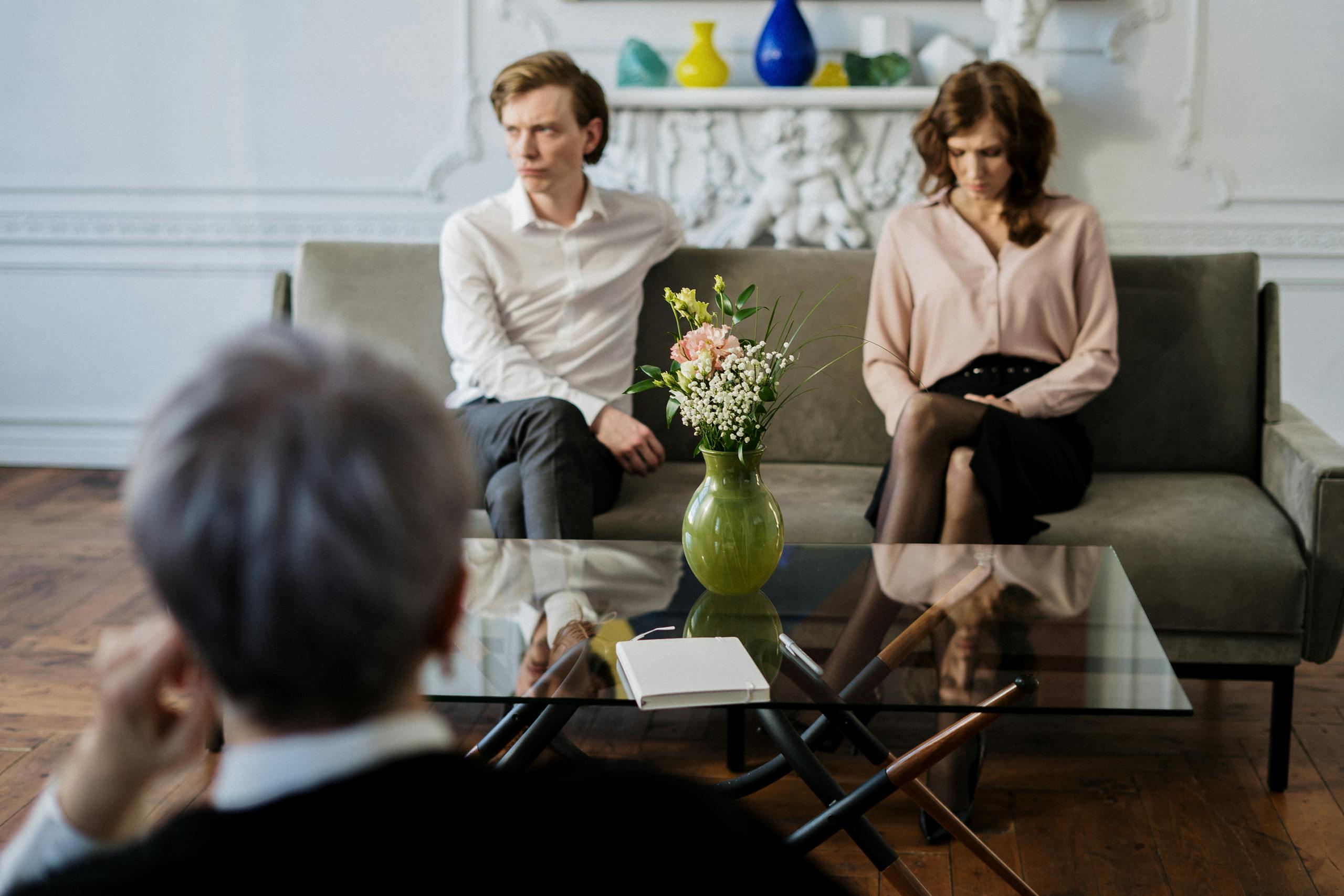
For highly sensitive people, who often experience emotion at an intensity that can feel overwhelming, this kind of structured processing is particularly valuable. The double-edged nature of HSP empathy means that deep feelers often carry emotional weight that belongs to other people as well as their own. Guided imagery can help create a kind of internal sorting process, a way to distinguish what’s yours from what you’ve absorbed, and to release what doesn’t belong to you.
I watched this play out with a creative director I managed at my agency, a highly sensitive person who was extraordinarily talented but chronically depleted. She absorbed every tension in the room, every client’s frustration, every team member’s stress. She didn’t have a practice for releasing any of it. Eventually she burned out. Looking back, I wish I’d known then what I know now about tools like guided imagery, not just for myself but for the people I was responsible for leading.
Does Guided Imagery Help With Perfectionism and the Fear of Getting It Wrong?
Does Guided Imagery Help With Perfectionism and the Fear of Getting It Wrong?
One of the quieter struggles that runs through introvert life, and through my own experience leading agencies, is perfectionism. Not the kind that produces excellent work, though it can do that too, but the kind that makes rest feel unearned, that turns every decision into a potential failure, and that whispers that you haven’t done enough to justify stopping.
Guided imagery is, in a sense, practice at being imperfect. You can’t do it wrong. Your visualization doesn’t have to be cinematic or emotionally profound or spiritually significant. It just has to be yours. That’s a surprisingly difficult thing for perfectionists to accept, and accepting it in a low-stakes context like meditation can begin to shift the pattern elsewhere.
If perfectionism is something you wrestle with, the conversation in our piece on HSP perfectionism and breaking the high standards trap offers a useful frame. Guided imagery doesn’t solve perfectionism, but it creates a daily space where the standard is simply showing up and being present, which is genuinely countercultural for people wired to hold themselves to impossible measures.
There’s also something worth naming about rejection sensitivity, which often travels with perfectionism. The fear of getting it wrong is frequently rooted in a deeper fear of being seen as inadequate, of being rejected for falling short. If that resonates, our exploration of HSP rejection processing and healing addresses the emotional architecture beneath that pattern in ways that complement a meditation practice.
How Do You Actually Build a Guided Imagery Practice That Sticks?
I’ve started and abandoned more wellness practices than I care to count. Meditation apps that went unused after two weeks. Journaling habits that lasted a month. The pattern was always the same: I’d begin with genuine intention, then gradually deprioritize it when things got busy, which in agency life meant almost immediately.
What made guided imagery different for me was that I attached it to something I was already doing. I started using a ten-minute session as a buffer between work and evening. Not as a formal ritual with candles and silence, but as a practical transition: close the laptop, put on headphones, let the imagery do its work. It became a kind of decompression chamber between professional and personal life, a way to actually leave work behind rather than just physically relocating.
A few things that help make the practice consistent:
Attach it to an existing habit. The research on habit formation, summarized well in behavioral psychology literature, consistently shows that new behaviors stick when they’re anchored to established ones. Guided imagery after your morning coffee, before your afternoon walk, or as part of winding down for sleep all work as anchor points.
Keep the sessions short at first. Ten to fifteen minutes is enough to produce a genuine shift. Longer sessions aren’t inherently better, especially when you’re building the habit. The consistency matters more than the duration.
Choose a narrator whose voice doesn’t irritate you. This sounds trivial but it isn’t. If the voice creates friction, you’ll find reasons not to show up. Spend time sampling different recordings before committing to one.
Don’t evaluate the session while it’s happening. The INTJ in me wanted to assess whether the visualization was “working” in real time. That assessment mind is the opposite of what the practice needs. The American Psychological Association’s work on resilience emphasizes that recovery practices require a kind of non-judgmental engagement to be effective. Trust the process, even when your analytical brain wants to grade it.
What Should You Expect When You First Start?
Honest answer: probably some restlessness. The first few sessions often feel awkward, particularly for introverts who are accustomed to their internal world being self-directed. Having someone else guide the imagery can feel presumptuous at first, like a stranger rearranging your living room.
That friction usually eases within a week of consistent practice. Your mind learns to follow the guidance rather than resist it, and the distinction between “my imagination” and “guided imagination” begins to blur in useful ways. What you’re building is a kind of mental flexibility, the ability to shift your internal environment on purpose rather than being at the mercy of whatever your mind generates by default.
Some people also notice that difficult emotions surface during early sessions. That’s normal and worth expecting. When you create stillness, what’s been moving beneath the surface has room to rise. If that feels destabilizing rather than manageable, it may be worth exploring this alongside a therapist, particularly one familiar with somatic or imagery-based approaches.
The longer-term effects tend to be cumulative rather than dramatic. You’re less reactive after a difficult conversation. You recover from overstimulation more quickly. The mental white space that guided imagery creates in practice begins to exist more naturally in daily life. That’s the kind of change that’s hard to point to but easy to feel.

Is Guided Imagery the Same as Mindfulness Meditation?
They’re related but distinct. Mindfulness meditation typically asks you to observe what’s already present, your breath, your thoughts, the sensations in your body, without trying to change it. Guided imagery is more active: you’re constructing a specific mental environment rather than observing what already exists.
Both have value. Many people find that mindfulness is harder to access when they’re in a heightened state of stress or anxiety, because observing a racing mind can amplify rather than calm it. Guided imagery offers a more structured entry point in those moments. It gives the mind something to do, a direction to move in, rather than asking it to simply sit with itself.
For introverts who find pure mindfulness frustrating, guided imagery is often a more accessible starting place. And for those who already have a mindfulness practice, imagery work adds a complementary dimension, one that engages the creative and narrative capacities of the introvert mind rather than asking them to be set aside.
My own practice has evolved to include both. I use mindfulness in moments when I want to observe what’s happening internally without interference. I use guided imagery when I need to actively shift my internal state, before a difficult meeting, after a depleting day, or when anxiety is running ahead of what the situation actually warrants.
If you’re interested in exploring the broader landscape of mental health tools and strategies for introverts and highly sensitive people, the Introvert Mental Health Hub is a good place to continue that exploration, covering everything from emotional regulation to managing the particular stresses that come with being wired for depth in a loud world.
About the Author
Keith Lacy is an introvert who’s learned to embrace his true self later in life. After 20 years in advertising and marketing leadership, including running agencies and managing Fortune 500 accounts, Keith now channels his experience into helping fellow introverts understand their strengths and build fulfilling careers. As an INTJ, he brings analytical depth and authentic perspective to every article, drawing from both professional expertise and personal growth.
Frequently Asked Questions
How long should a guided imagery session be for beginners?
Ten to fifteen minutes is a practical starting point. Longer sessions aren’t necessarily more effective, especially when you’re building consistency. A shorter session you actually complete is worth more than a longer one you abandon halfway through. As the practice becomes habitual, you can extend the duration if it feels natural.
Can guided imagery meditation replace therapy for anxiety?
No, and it’s worth being clear about that. Guided imagery is a complementary practice, not a clinical treatment. For anxiety that significantly affects your daily functioning, professional support from a therapist or mental health provider is important. Guided imagery works well alongside therapy, often helping to reinforce the regulation skills developed in clinical settings, but it isn’t a substitute for that support.
What if my mind wanders during guided imagery?
It will. That’s not failure, it’s just what minds do. The practice isn’t about maintaining perfect focus on the imagery at all times. It’s about gently returning to the visualization when you notice you’ve drifted. Each return is the practice. Over time, the wandering tends to decrease and the periods of immersive focus tend to lengthen, but neither outcome should be treated as a measure of success or failure.
Are there specific times of day that work best for guided imagery?
Consistency matters more than timing. That said, many people find guided imagery particularly effective at transitions: morning before the day begins, midday as a reset, or evening as a way to separate work from rest. Avoid times when you’re so tired that you’ll fall asleep immediately, unless sleep is the goal, in which case sleep-focused guided imagery recordings are specifically designed for that purpose.
Can introverts create their own guided imagery scripts rather than using recordings?
Yes, and many introverts find this deeply satisfying. Writing your own script engages the same reflective and creative capacities that make guided imagery effective in the first place. You can record yourself reading it, or simply memorize the key elements and allow the imagery to unfold from there. The advantage of self-created imagery is that every detail is precisely calibrated to your own internal landscape, which often produces a stronger sense of immersion than a generic recording.