
Introversion is a genuine personality trait, not a mood, a phase, or a personal flaw. It describes a consistent, stable pattern in how a person processes stimulation, restores energy, and engages with the world around them. Most people who identify as introverts aren’t choosing to be quiet or withdrawn. They’re simply wired differently, and that wiring shows up in predictable, documented ways across a lifetime.
That distinction matters more than most people realize. Calling introversion a trait rather than a habit or a preference changes everything about how you understand yourself and how you stop apologizing for the way you naturally operate.

If you’re still piecing together what introversion actually looks like across different situations and personalities, our Introvert Personality Traits hub is a solid place to get oriented. It covers the full range of how this trait expresses itself, from the subtle to the unmistakable.
What Makes Something a Personality Trait?
Before we can firmly answer whether introversion qualifies as a trait, it helps to understand what personality psychologists actually mean when they use that word. A personality trait isn’t just something you do occasionally. It’s a consistent pattern of thinking, feeling, and behaving that holds across different situations and across time. Traits are relatively stable. They show up whether you’re at work, at home, or at a dinner party you’d rather have skipped.
Career Coaching for Introverts
One-on-one career strategy sessions with Keith Lacy. 20 years of Fortune 500 leadership as an introvert, now helping others build careers that work with their wiring.
Learn More50-minute Zoom session · $175
Introversion fits that definition well. It’s not something that flickers in and out depending on the day. People who score high on introversion measures tend to show those tendencies consistently, even as their social skills improve and their confidence grows. The trait itself doesn’t disappear. What changes is how well a person understands it and works with it.
Personality researchers have spent decades mapping the major dimensions of human personality. One of the most widely studied frameworks, the Big Five model, places introversion and extroversion on a single continuum as one of its five core dimensions. The research published in PubMed Central examining personality structure consistently places this dimension among the most reliable and cross-culturally stable traits we’ve identified. That’s not a small thing. It means introversion isn’t a cultural artifact or a passing psychological trend. It’s a fundamental axis of human personality.
What I find personally meaningful about this framing is how much it recontextualized my own history. Spending two decades running advertising agencies while quietly wishing I could process things more slowly, think before speaking, and avoid the endless parade of networking events wasn’t weakness. It was a trait operating in an environment that didn’t fully accommodate it. That’s a very different story than the one I used to tell myself.
Where Does Introversion Come From?
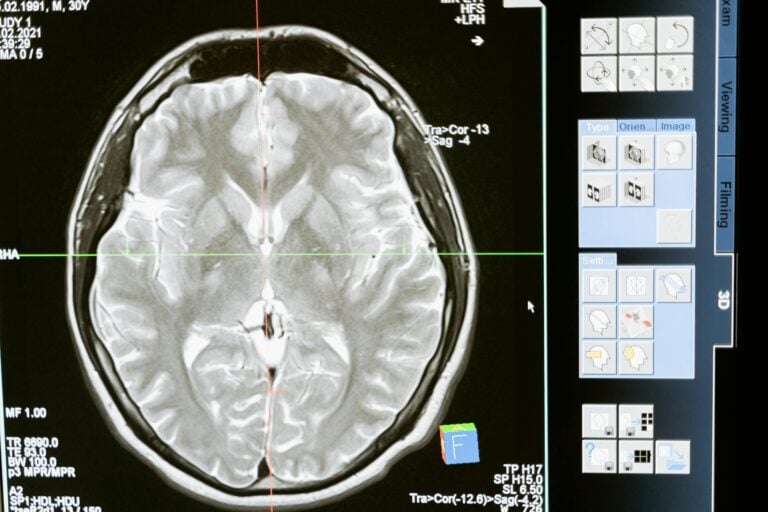
One of the strongest arguments for introversion being a genuine trait rather than a learned behavior is that it appears to have biological roots. The conversation around introversion and neuroscience is nuanced, and I won’t overstate what we know, but the basic picture is fairly consistent: introverts and extroverts appear to process stimulation differently at a neurological level.
Introverts tend to be more sensitive to external stimulation. What energizes an extrovert, a loud room, a packed social calendar, constant interaction, can genuinely exhaust an introvert. This isn’t a choice. It’s closer to a physiological reality. The introvert’s nervous system is simply responding to input at a higher intensity.
Genetics also appear to play a role. Twin studies have consistently found that introversion and extroversion have a meaningful heritable component, meaning some portion of where you fall on that spectrum is influenced by your biology from birth. Work published by the American Psychological Association on personality stability across the lifespan suggests that while traits can shift slightly with age and experience, their core structure remains remarkably consistent.
And speaking of age, there’s something worth noting here. Many introverts report feeling their introversion more strongly as they get older, not because they’re becoming more antisocial, but because they become more honest about their actual preferences. Psychology Today has explored this pattern, noting that introversion can become more pronounced with age as people stop performing extroversion for social approval. That tracks with my own experience. My forties felt like finally exhaling.

How Does Introversion Actually Show Up as a Trait?
Knowing introversion is a trait is one thing. Recognizing how it expresses itself in real life is something else entirely, and honestly, it’s where the insight becomes useful.
Traits don’t announce themselves with a label. They show up in the texture of daily decisions, in the way someone responds to an unexpected meeting request, in the preference for a long email over a quick phone call, in the need to sit with a problem privately before bringing it to a group. If you want a thorough look at how these tendencies cluster together, the piece on introvert character traits here on the site goes deep on the specific qualities that define this personality orientation.
What I noticed most acutely during my agency years was the processing piece. My mind doesn’t work well on demand. Give me a question in a meeting and I’ll give you a decent answer in the room, but give me the same question with twenty minutes of quiet and I’ll give you a much better one. That’s not a skill gap. That’s a trait. It’s how my internal architecture works, and once I stopped treating it as a deficiency, I started designing my work around it instead of fighting it constantly.
Some of the most specific and sometimes surprising expressions of this trait are worth paying attention to. The article covering 15 traits introverts have that most people don’t understand captures a lot of the nuance that gets lost when people flatten introversion into “shy” or “antisocial.” Those misreadings do real damage, particularly in professional environments where introvert traits get misread as disengagement or lack of ambition.
One of the most common misreadings I experienced personally: silence in a meeting being interpreted as having nothing to contribute. In reality, I was processing more carefully than anyone else in the room. The contribution came later, in the follow-up email, in the strategy document, in the quiet conversation after everyone else had gone home. That’s a trait operating exactly as designed. It just needed an audience that could read it correctly.
Is Introversion the Same for Everyone Who Has It?
No, and this is where the conversation gets genuinely interesting. Introversion is a trait, but traits exist on a spectrum, and they interact with other traits, experiences, and contexts in ways that make every introvert’s expression of it somewhat unique.
Some people fall squarely in the middle of the introversion-extroversion continuum. These individuals, often called ambiverts, can draw on qualities from both ends depending on the situation. They’re not confused or inconsistent. They simply have a more flexible set point. If you want to understand how that middle ground works in practice, the overview of ambivert characteristics is worth reading. It clarifies a lot of the “but I’m not always introverted” confusion that comes up regularly.
Gender adds another layer of complexity. The way introversion is expressed and perceived can differ significantly depending on social expectations and cultural context. Introversion in women, for instance, is sometimes read through a different lens than the same trait in men, with different assumptions attached and different pressures applied. The piece on female introvert characteristics addresses this specifically, and it’s a perspective worth understanding whether you’re an introvert yourself or someone trying to understand the introverts in your life.
There’s also the question of what happens when someone who leans extroverted starts showing more introverted behaviors. Social exhaustion, a preference for depth over breadth in relationships, or a growing need for solitude don’t necessarily mean someone has “become” an introvert. They might be experiencing the natural variation that exists even within extroversion, or they might be what some describe as an introverted extrovert. The introverted extroverts behavior traits article explores this overlap with more specificity than most people expect.
Can a Trait Be Both Stable and Changeable?
This is a question I’ve sat with for a long time, and it deserves a careful answer. Personality traits are generally considered stable, but stable doesn’t mean frozen. There’s an important distinction between a trait shifting and a person developing better strategies for working with their trait.
An introvert who becomes a skilled public speaker hasn’t lost their introversion. They’ve built a capability that sits on top of their trait. The underlying wiring hasn’t changed. What’s changed is their toolkit and their relationship to the situations that trait creates. I know this firsthand. Over twenty years of agency work, I became genuinely competent at client presentations, new business pitches, and team meetings. None of that made me less introverted. It made me a well-practiced introvert with a wider range of available behaviors.
The research on personality development across adulthood suggests that people do show modest shifts in personality traits over time, particularly toward greater agreeableness and conscientiousness as they age. Introversion and extroversion can shift slightly too, but the shifts tend to be gradual and relatively small. The core trait persists.
What changes more dramatically is self-awareness. An introvert who understands their trait can structure their life to honor it. They can choose careers, relationships, and daily rhythms that work with their wiring rather than against it. That’s not changing the trait. That’s finally respecting it.
How Does Introversion Fit Into Broader Personality Frameworks?
Introversion doesn’t exist in isolation. It’s one dimension within larger systems that describe human personality with varying degrees of precision and usefulness.
In the Big Five model, introversion is the low end of the extroversion dimension. It correlates with preferences for quieter environments, smaller social circles, and more internal processing. In the Myers-Briggs framework, introversion is one of four preference dichotomies, pairing with or against extroversion as the first letter in a four-letter type. The Verywell Mind overview of the Myers-Briggs Type Indicator provides useful context for how this framework positions introversion within a broader personality description.
As an INTJ, my introversion doesn’t operate alone. It interacts with my intuitive processing, my preference for thinking over feeling in decision-making, and my judging orientation toward structure and planning. Those combinations shape how my introversion expresses itself in ways that look different from an INFP’s introversion or an ISTP’s. The trait is the same in name, but its texture varies considerably depending on what it’s paired with.
The Myers-Briggs Foundation’s work on personality type and learning highlights how introversion shapes not just social behavior but cognitive style, including how people prefer to receive and process information. That’s a broader claim than most people associate with the word “introvert,” and it points to just how pervasive a trait this actually is.
Understanding which specific qualities are most central to introversion also matters. Not every quiet behavior is an introvert trait, and not every introvert is quiet in the same way. The piece examining which quality is more characteristic of introverts cuts through some of the noise around this question and gets to what actually distinguishes introverts at the core.

Why Does It Matter That Introversion Is a Trait and Not a Choice?
This is the part that I think carries the most practical weight, especially for introverts who’ve spent years wondering what’s wrong with them.
Framing introversion as a choice, a bad habit, or a fear response invites a particular kind of self-criticism. If it’s a choice, then choosing differently should be simple. If it’s a fear, then overcoming it becomes the goal. Either framing positions the introvert as someone with a problem to fix. That framing is wrong, and it’s done a lot of damage.
Framing introversion as a trait changes the conversation entirely. Traits aren’t problems. They’re the raw material of a personality. They come with genuine strengths and genuine challenges, and the work isn’t to eliminate them but to understand them well enough to build a life that fits them.
Some of the most capable people I worked with over my agency career were deeply introverted. I had a creative director who was almost painfully quiet in group settings, the kind of person who’d go two hours in a brainstorm without saying a word. But give her a brief and two days of uninterrupted time, and she’d come back with work that made the room go silent in a completely different way. Her introversion wasn’t a limitation. It was the engine of her best thinking. The problem was never her trait. The problem was a meeting culture that couldn’t read it.
The empathic depth that often accompanies introversion is another piece of this. Many introverts process social and emotional information with unusual care and attentiveness. The Psychology Today overview of empathic traits touches on qualities that overlap heavily with introversion, including sensitivity to others’ emotional states and a tendency to absorb the emotional atmosphere of a room. That’s not a liability. In the right context, it’s a significant professional and relational strength.
Understanding introversion as a trait also has implications for how organizations are structured, how teams are managed, and how performance is evaluated. An environment that rewards only extroverted behavior isn’t a neutral environment. It’s one that systematically undervalues a significant portion of its people. That’s a structural problem, not a personal one.
What This Means for How You See Yourself
Somewhere around year fifteen of my agency career, I stopped trying to perform extroversion and started paying attention to what actually worked for me. I restructured my mornings to protect thinking time. I started sending follow-up notes after meetings instead of trying to compete in real-time discussions. I got more selective about which events I actually attended and stopped treating every missed happy hour as a professional failure.
None of that required changing who I was. It required understanding who I was clearly enough to make better decisions. That’s what happens when you stop treating introversion as something to overcome and start treating it as a trait to work with.
The research on personality and well-being consistently finds that authenticity, living in alignment with your actual personality rather than performing a different one, is strongly associated with psychological health. That’s not a small finding. It suggests that the cost of chronic extroversion performance for introverts isn’t just fatigue. It’s a genuine toll on well-being over time.
Accepting introversion as a stable trait isn’t resignation. It’s accuracy. And accuracy is the starting point for everything useful that follows: better career decisions, better relationship structures, better daily rhythms, and a much quieter internal critic.
There’s a lot more to explore when it comes to how introversion expresses itself across different people and contexts. Our complete Introvert Personality Traits hub pulls together the full picture, from the science to the lived experience, in one place.
About the Author
Keith Lacy is an introvert who’s learned to embrace his true self later in life. After 20 years in advertising and marketing leadership, including running agencies and managing Fortune 500 accounts, Keith now channels his experience into helping fellow introverts understand their strengths and build fulfilling careers. As an INTJ, he brings analytical depth and authentic perspective to every article, drawing from both professional expertise and personal growth.
Frequently Asked Questions
Is introversion considered a personality trait by psychologists?
Yes. Introversion is widely recognized as a core personality trait within major psychological frameworks, including the Big Five model of personality, where it sits at the low end of the extroversion dimension. It describes consistent patterns in how a person processes stimulation, restores energy, and engages socially, and it remains relatively stable across a person’s lifetime.
Can introversion change over time?
Traits can shift slightly across a lifetime, particularly with age and major life experiences, but the core of introversion tends to remain stable. What often changes is a person’s relationship to their introversion. Many introverts develop stronger social skills or greater comfort in extroverted environments without actually becoming less introverted. The trait persists. The strategies around it evolve.
Is introversion genetic or learned?
Both biology and environment play a role, but introversion has a meaningful heritable component. Twin studies consistently show that where a person falls on the introversion-extroversion spectrum is influenced in part by genetics. That doesn’t mean environment has no effect, but it does mean introversion isn’t simply a habit that can be unlearned with enough effort or practice.
What’s the difference between introversion as a trait and shyness?
Introversion and shyness are different things, though they’re often confused. Shyness involves anxiety or discomfort around social situations. Introversion describes a preference for less stimulation and a tendency to restore energy through solitude rather than social interaction. An introvert can be socially confident and skilled while still needing significant alone time to recharge. Shyness is about fear. Introversion is about energy and processing style.
Does being an introvert mean you dislike people?
No. Introversion is not about disliking people. Most introverts value deep, meaningful relationships and can be warm, engaged, and genuinely interested in others. What introversion describes is a preference for the quality of social interaction over the quantity, and a need for solitude to restore energy after extended social engagement. An introvert can love people and still need significant time away from them to function well.