

ADHD and shyness in girls often get tangled together in ways that leave real struggles invisible for years. A girl who seems quiet, dreamy, or overly sensitive is rarely the first person a teacher flags for an ADHD evaluation, yet inattentive ADHD presents in exactly those ways, especially in girls and young women who have learned to mask their symptoms beneath a veneer of compliance.
What makes this particularly complicated is that shyness, introversion, and ADHD-related withdrawal can look nearly identical from the outside, while being fundamentally different experiences on the inside. Getting that distinction right matters more than most people realize.

My own experience as an INTJ who spent decades misreading himself gives me a particular sensitivity to this topic. I was not a girl with ADHD, but I was someone whose inner life was consistently misread by the people around me. The quiet, the distance, the preference for working alone: all of it got labeled as aloofness or arrogance when it was simply how I was wired. That kind of misreading has costs. For girls whose ADHD goes unrecognized because it looks like shyness or introversion, those costs can be significant and lasting.
Before going further into what separates these traits, it helps to have a grounding in the broader landscape of personality and energy. Our Introversion vs Other Traits hub covers the full range of how introversion intersects with other personality characteristics, including anxiety, sensitivity, and neurodivergence. ADHD in girls sits right at the heart of that conversation.
Why Are Girls with ADHD So Frequently Missed?
The short answer is that the clinical picture of ADHD was built largely on research conducted with boys. The hyperactive, impulsive child bouncing off classroom walls became the cultural shorthand for what ADHD looks like, and girls rarely fit that picture. Girls with ADHD are more likely to present with the inattentive type: drifting during conversations, losing track of assignments, struggling to follow multi-step instructions, and spending enormous mental energy just trying to keep up with what everyone else seems to manage effortlessly.
Career Coaching for Introverts
One-on-one career strategy sessions with Keith Lacy. 20 years of Fortune 500 leadership as an introvert, now helping others build careers that work with their wiring.
Learn More50-minute Zoom session · $175
That profile gets read as daydreaming, immaturity, or sometimes shyness. A girl who zones out in class is not disruptive. She does not draw attention. She draws concern only when her grades slip, and by then she has often developed a whole architecture of compensating behaviors designed to hide the fact that she is struggling.
I managed a creative director at one of my agencies who had been diagnosed with ADHD in her late thirties. She told me she had spent her entire school career being described as “bright but scattered” and “shy in group settings.” Her teachers assumed the quietness was social anxiety. What was actually happening was that group settings overwhelmed her executive function. She could not track multiple conversations, regulate her attention, and appear socially appropriate all at once. Withdrawing was not shyness. It was triage.
That distinction matters because shyness and ADHD-related social withdrawal have different roots, even when they produce similar behavior. Shyness is fundamentally about fear of negative evaluation. ADHD-related withdrawal is often about cognitive overload, emotional dysregulation, or the exhaustion of masking. Treating one as the other means the actual need never gets addressed.
What Does Shyness Actually Mean, and How Is It Different from Introversion?
Shyness is a fear response. Introversion is an energy preference. That distinction sounds simple, but it gets blurred constantly, including by the girls and women living with one or both traits. A shy person wants connection but fears judgment. An introverted person may genuinely prefer solitude and find social interaction draining, not because they fear it, but because it costs something that quiet time restores.
If you want to get a clearer read on where you or someone you care about falls on this spectrum, the Introvert Extrovert Ambivert Omnivert Test is a useful starting point. It helps separate the energy-based dimension of introversion from the fear-based dimension of shyness, which is the first step in understanding what is actually going on.
For girls with ADHD, the picture gets more complex because ADHD itself can produce social behaviors that look like shyness. Emotional dysregulation, which is a common but underrecognized feature of ADHD, means that social interactions can feel unpredictable and exhausting. A girl who has been told she is “too much” or “too sensitive” may pull back from social situations not out of fear of judgment, but because she has learned that her emotional responses do not match what is expected. That withdrawal gets labeled shyness. The underlying driver is something else entirely.

How Does ADHD Masking Make Girls Invisible to the People Who Could Help Them?
Masking is the process of suppressing or camouflaging ADHD symptoms to appear neurotypical. Girls tend to be better at it than boys, partly because of socialization and partly because the inattentive presentation of ADHD is less externally visible to begin with. A girl who has learned to sit quietly, copy her neighbor’s notes when she loses track, and smile through confusion has effectively hidden her ADHD from everyone around her, including sometimes herself.
The cost of masking is significant. It is cognitively exhausting, and the energy spent on appearing fine is energy not available for actual learning, creativity, or connection. Many women who receive a late ADHD diagnosis describe a specific kind of relief: not just at having an explanation, but at being able to stop performing normalcy quite so relentlessly.
From a personality perspective, masking can look a lot like introversion. A girl who is quiet, who does not volunteer answers, who seems to prefer working alone, who avoids group projects: all of those behaviors are consistent with introversion. They are also consistent with a girl who is spending so much cognitive energy managing her ADHD that she has nothing left for social performance.
Understanding what extroverted behavior actually means can help clarify this. Extroversion involves gaining energy from social interaction and external stimulation. A girl who avoids social interaction because it is genuinely draining may be introverted. A girl who avoids it because she cannot manage the cognitive demands while also appearing socially competent may be dealing with something neurological. Those are different situations that require different support.
Running agencies for two decades, I watched this play out in professional settings too. I had employees, mostly women, who were extraordinarily competent in one-on-one settings but seemed to shut down in team meetings. For years, I read that as introversion or shyness. In at least a few cases, I later understood it differently. The meeting environment, with its unpredictable pace, multiple speakers, and implicit social demands, was simply too much to manage alongside the actual work of thinking.
Can a Girl Be Both Introverted and Have ADHD?
Absolutely. Introversion and ADHD are not mutually exclusive, and in fact the combination is more common than most people expect. An introverted girl with ADHD will have an energy preference for solitude and internal processing, and she will also have dysregulated attention, difficulty with executive function, and potentially significant emotional reactivity. The introversion does not cancel the ADHD, and the ADHD does not cancel the introversion.
What it does mean is that her experience of both traits will be shaped by the other. An introverted person with ADHD may find that the solitude they crave is also the environment where their ADHD symptoms are hardest to manage, because there are no external structures to organize their attention. Conversely, they may find that the hyperfocus capacity of ADHD gives them extraordinary depth in the subjects they care about, which aligns with the introvert’s natural pull toward depth over breadth.
Hyperfocus, worth clarifying here, is not a contradiction of ADHD. It is a hallmark of it. ADHD involves dysregulated attention, not absent attention. A girl who cannot follow a classroom lecture but can spend four hours absorbed in a novel or a drawing is not faking her struggles. Interest-based attention regulation is one of the defining features of ADHD, and it is part of why the condition gets missed so often in high-achieving girls who can hyperfocus their way through subjects they love.
There is also a personality dimension worth considering here. Some people move fluidly between introverted and extroverted behavior depending on context, which is sometimes described as being an omnivert or ambivert. The distinction between those two is worth understanding, and our piece on omnivert vs ambivert breaks it down clearly. A girl whose social behavior seems inconsistent, sometimes withdrawn and sometimes surprisingly engaged, may not be personality inconsistent at all. She may be responding to which environments allow her ADHD to function better.

What Role Does Emotional Sensitivity Play in This Picture?
Emotional dysregulation is one of the most underrecognized aspects of ADHD, and it shows up differently in girls than in boys. Boys with ADHD tend toward external emotional expression: outbursts, frustration, physical reactions. Girls are more likely to internalize, experiencing intense emotional reactions that they have learned to suppress or redirect. That internalization can look like sensitivity, moodiness, or anxiety. It can also look like shyness, because a girl who feels things intensely and has been told she overreacts will often pull back from situations where her emotions might show.
There is a meaningful body of clinical literature on how ADHD presents differently across genders, including work published through PubMed Central that documents the internalizing patterns more common in girls with ADHD. The picture that emerges is of a population that suffers significantly but quietly, which is exactly the kind of suffering that goes unaddressed for the longest time.
What I find particularly striking about this, having spent years in environments that rewarded a certain kind of emotional containment, is how much we tend to pathologize sensitivity in some contexts and ignore it entirely in others. A girl who cries easily gets labeled emotional. A girl who withdraws to avoid crying gets labeled shy. Neither label points toward what might actually be happening neurologically.
Additional research available through PubMed Central examines the compounding effects of anxiety and ADHD, which frequently co-occur, particularly in girls. When anxiety is present alongside ADHD, the shyness-like withdrawal becomes even more pronounced, and the ADHD can be almost completely obscured by the more visible anxiety symptoms. Clinicians treating the anxiety without addressing the underlying ADHD often find that progress stalls.
How Do These Traits Interact with Social Personality Patterns?
One of the things that makes ADHD in girls so hard to identify is that their social presentation can vary dramatically depending on the environment. In a structured, one-on-one setting, a girl with ADHD might seem perfectly engaged and socially comfortable. In a chaotic group setting, she might go completely quiet. That variability gets read as moodiness or inconsistency, when it is actually a fairly predictable response to how different environments affect executive function.
This variability also intersects with where someone falls on the introversion spectrum. A girl who is fairly introverted but not extremely so will have a different experience than one who is strongly introverted, and both will interact with ADHD differently. Our exploration of fairly introverted vs extremely introverted gets into how the degree of introversion shapes daily experience, which matters when you are trying to understand a complex picture that involves multiple overlapping traits.
At one of my agencies, I worked with a senior account manager who had been described throughout her career as an “introverted extrovert,” someone who could perform extroversion when needed but clearly preferred quieter environments. She was diagnosed with ADHD in her mid-forties, and she told me afterward that what people had read as her introversion was partly genuine and partly the exhaustion of managing undiagnosed ADHD in a demanding client-facing role. She had been spending so much energy compensating that she had nothing left for social performance. The introversion was real. The exhaustion was also real. They were not the same thing, even though they looked identical from the outside.
If you have ever wondered whether your own social patterns reflect introversion, something else, or some combination of both, the Introverted Extrovert Quiz can help you get a clearer read on where your natural tendencies actually sit.
Why Does Late Diagnosis Happen So Often for Girls and Women?
The average age of ADHD diagnosis for girls is significantly later than for boys, and many women do not receive a diagnosis until adulthood, sometimes well into their thirties, forties, or beyond. There are several reasons for this, and they compound each other in frustrating ways.
First, the diagnostic criteria were developed primarily from studies of boys, so the inattentive presentation that is more common in girls was less well understood for decades. Second, girls tend to develop stronger compensatory strategies earlier, which masks their symptoms effectively enough that they appear to be managing fine. Third, when girls do show signs of struggle, the first explanations offered are often anxiety, depression, or social difficulties rather than ADHD.
Fourth, and perhaps most insidiously, girls are socialized to be quiet and compliant in ways that make inattentive ADHD nearly invisible. A boy who cannot sit still is a problem. A girl who cannot pay attention but sits quietly is just daydreaming. The social expectation of female quietness accidentally provides cover for a neurological condition that desperately needs to be seen.
It is worth noting, because this comes up frequently in online discussions, that ADHD is not something that develops in adulthood. The DSM-5-TR requires that symptoms be present before age 12 for a diagnosis to apply. When adults suddenly experience attention difficulties with no childhood history, that points toward other causes: anxiety, depression, burnout, sleep disorders, or significant life stress. A genuine ADHD diagnosis in an adult means the symptoms were always there, even if they were never recognized or named.
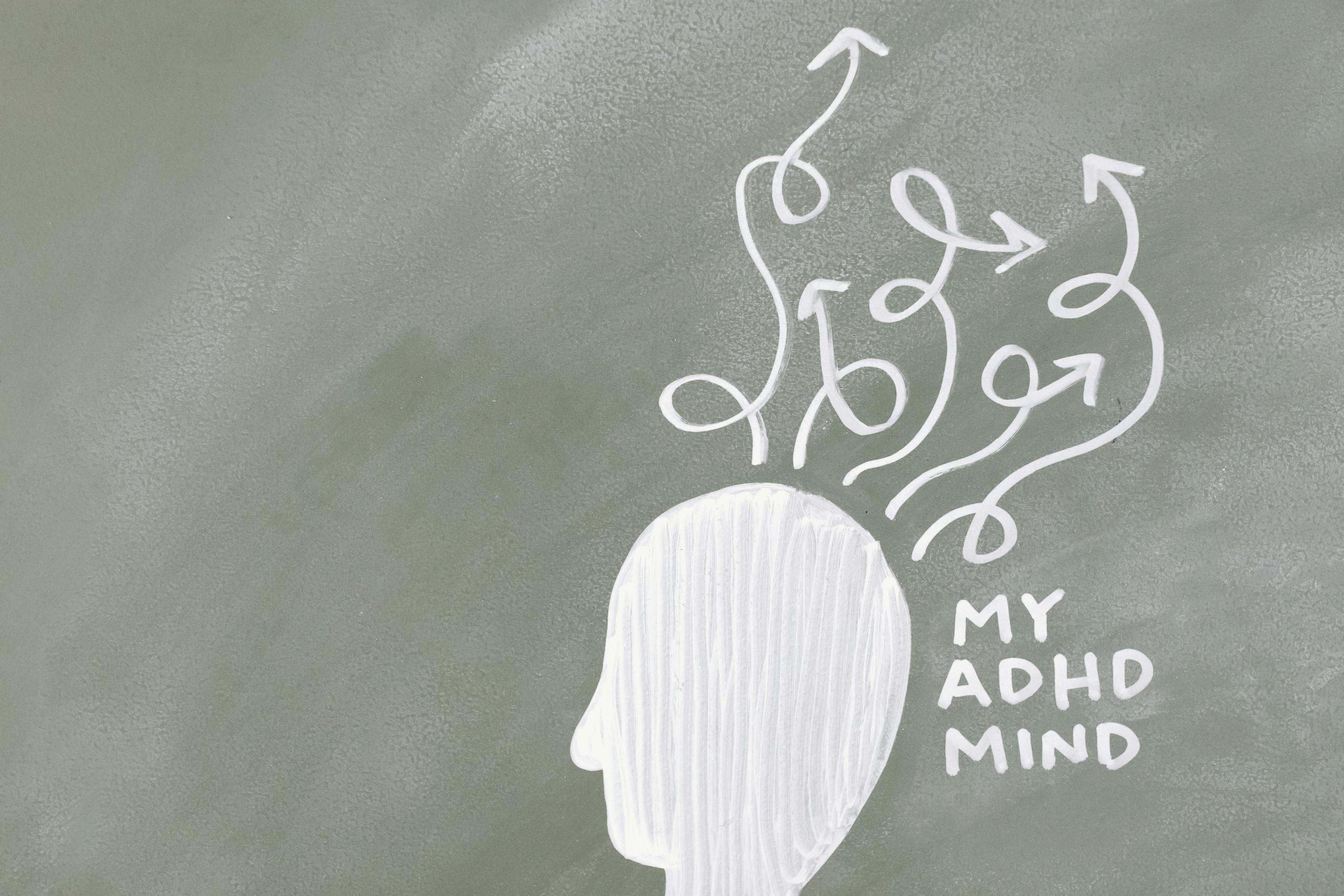
What Can Parents, Teachers, and Partners Do Differently?
Awareness is the starting point, and it is more powerful than it might sound. A teacher who knows that ADHD in girls often looks like quiet distraction rather than disruptive behavior will ask different questions. A parent who understands that withdrawal might be cognitive overload rather than shyness will respond differently. A partner who recognizes that emotional sensitivity might have a neurological component will approach conflict differently.
Concrete things worth paying attention to include: consistent difficulty finishing tasks despite clear intelligence and effort, a pattern of losing things or forgetting commitments, emotional reactions that seem disproportionate to the situation, significant variability in performance depending on interest level, and social withdrawal that seems tied to cognitive demands rather than fear. None of these alone indicates ADHD, but a pattern of them, especially one that has been present since childhood, is worth taking seriously.
For girls themselves, particularly adolescents who are starting to notice that their experience does not quite match what they see around them, the most useful thing is language. Having words for the difference between shyness and introversion, between introversion and ADHD-related withdrawal, gives a girl the ability to describe her own experience more accurately. That accuracy is what makes it possible to ask for the right kind of help.
The Frontiers in Psychology journal has published work on how self-understanding and accurate self-labeling affect outcomes for people with neurodivergent traits. The finding that resonates most with my own experience is that the gap between how someone experiences themselves and how they are perceived by others is itself a source of significant distress. Closing that gap, even partially, matters.
Where Does the Confusion Between These Traits Do the Most Damage?
The most significant harm happens when a girl internalizes the wrong explanation for her own experience. A girl who is told she is shy when she is actually managing undiagnosed ADHD may spend years working on her shyness, pushing herself into social situations that are genuinely overwhelming, and wondering why the effort never seems to produce the results it should. She is solving the wrong problem.
Similarly, a girl who is told she is just introverted when she is actually struggling with ADHD-related executive dysfunction may feel guilty for not being able to manage what she sees as ordinary demands. Introversion is a valid personality trait, not a limitation. ADHD is a clinical condition that responds to specific interventions. Conflating them means someone who could be helped is not getting help.
There is also a version of this that plays out in the other direction. Some girls who are genuinely introverted get pushed toward ADHD evaluations because their quietness and preference for solitude are read as symptoms. Understanding the difference between personality traits and clinical conditions protects against over-pathologizing normal variation, which matters just as much as not missing real conditions.
Some people find they move between social modes in ways that do not fit neatly into any single category, which is part of why understanding different personality frameworks can be useful. The distinction between an otrovert and an ambivert is one of those nuances that helps explain why the same person can seem extroverted in one context and deeply introverted in another, without either observation being wrong.
What I have come to believe, after years of trying to understand my own wiring and watching others try to understand theirs, is that the goal is not to find the single correct label. The goal is to build an accurate enough picture that the support you seek actually addresses what is happening. Labels are tools, not destinations.

The intersection of ADHD, shyness, and introversion in girls is one of the more nuanced topics in our broader exploration of how personality traits interact with neurological differences. You can find more context and related articles throughout our Introversion vs Other Traits hub, which covers the full range of ways introversion overlaps with, and differs from, other aspects of how people are wired.
About the Author
Keith Lacy is an introvert who’s learned to embrace his true self later in life. After 20 years in advertising and marketing leadership, including running agencies and managing Fortune 500 accounts, Keith now channels his experience into helping fellow introverts understand their strengths and build fulfilling careers. As an INTJ, he brings analytical depth and authentic perspective to every article, drawing from both professional expertise and personal growth.
Frequently Asked Questions
Is shyness the same thing as introversion in girls with ADHD?
No, shyness and introversion are distinct traits, and neither is the same as ADHD-related social withdrawal. Shyness is rooted in fear of negative evaluation. Introversion is an energy preference for quieter, less stimulating environments. ADHD-related withdrawal often stems from cognitive overload or emotional dysregulation. A girl can have one, two, or all three of these experiences at once, but they have different causes and respond to different kinds of support.
Why are girls with ADHD so often diagnosed late or not at all?
Girls with ADHD are frequently missed because the condition was historically studied in boys, whose hyperactive-impulsive presentation is more externally visible. Girls more often show the inattentive presentation: daydreaming, losing track, struggling with organization, and withdrawing socially. These behaviors are less disruptive and more easily attributed to personality traits like shyness or introversion. Girls also tend to develop stronger masking strategies earlier, which hides their symptoms from teachers, parents, and clinicians.
Can a girl be both genuinely introverted and have ADHD?
Yes. Introversion and ADHD are not mutually exclusive. An introverted girl with ADHD will have a genuine preference for quieter environments and internal processing, and she will also experience the executive function challenges, attention dysregulation, and emotional reactivity associated with ADHD. The two traits interact in complex ways. For example, the solitude that restores an introvert’s energy may also be the environment where ADHD symptoms are hardest to manage without external structure.
What is ADHD masking and how does it affect girls specifically?
Masking is the process of suppressing or camouflaging ADHD symptoms to appear neurotypical. Girls tend to be particularly skilled at masking because their inattentive presentation is less visible and because social expectations encourage quiet compliance. Common masking strategies include copying others’ notes when attention drifts, smiling through confusion, and withdrawing from social situations to avoid revealing struggles. Masking is cognitively exhausting and often leads to burnout, anxiety, and a deep sense of being misunderstood.
How can I tell if my daughter’s quietness is introversion, shyness, or something else?
Pay attention to the pattern behind the behavior. A genuinely introverted girl will tend to recharge through solitude and prefer depth in her relationships, but she will not show consistent difficulty completing tasks, losing things, or managing her emotions disproportionately. A shy girl will want connection but fear judgment, often showing visible anxiety in new social situations. If the quietness is accompanied by a pattern of executive function struggles, emotional intensity, significant variability in performance based on interest level, or a history of these patterns since early childhood, a conversation with a clinician who specializes in ADHD in girls is worth pursuing.