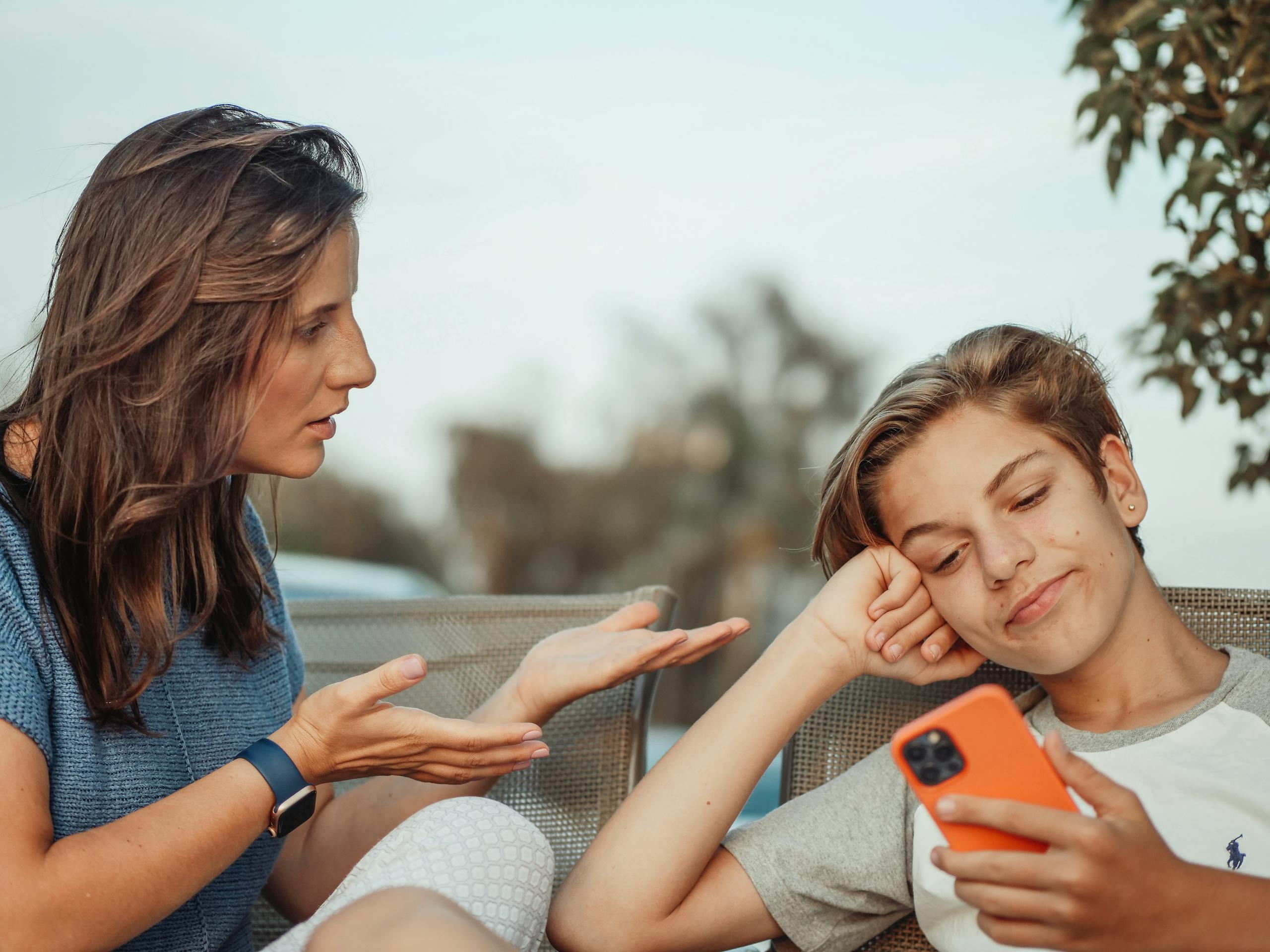

An agent-based model for shyness is a computational simulation that uses individual “agents,” each programmed with behavioral rules, to study how shyness emerges and spreads through social environments. Rather than asking a shy person to describe their experience after the fact, these models watch patterns form in real time, revealing dynamics that self-report and intuition consistently miss. What makes this framework so compelling for anyone thinking seriously about introversion is that it forces a clean separation between shyness as a trait and shyness as a social outcome.
That distinction matters more than most people realize. Shyness and introversion get collapsed into a single category constantly, in workplaces, in pop psychology, and in the way people describe themselves on personality quizzes. Pulling them apart, which is exactly what agent-based modeling helps us do, changes how we think about quiet people entirely.

Before we get into the mechanics of these simulations, it helps to situate this conversation within a broader question that I explore throughout my Introversion vs Other Traits hub: what actually makes introversion distinct from shyness, anxiety, or any number of other traits that get lumped together? Agent-based modeling offers one of the most rigorous answers available, and it comes from a direction most people would never think to look.
What Is an Agent-Based Model and Why Apply It to Shyness?
Agent-based modeling (ABM) is a simulation approach borrowed from complexity science. You build a virtual population of individual agents, assign each one a set of behavioral rules and characteristics, then let them interact and observe what emerges at the group level. It has been used to model everything from traffic flow to disease transmission to financial markets.
Career Coaching for Introverts
One-on-one career strategy sessions with Keith Lacy. 20 years of Fortune 500 leadership as an introvert, now helping others build careers that work with their wiring.
Learn More50-minute Zoom session · $175
Applying it to shyness is a relatively recent development in personality and social psychology, and the results have been genuinely illuminating. The core insight is this: shyness is not just an internal state. It is a pattern that develops between people over time, shaped by feedback loops, social reinforcement, and environmental conditions. A simulation can capture those dynamics in ways that a survey or a lab experiment simply cannot.
I spent more than two decades running advertising agencies, and one of the things that always fascinated me was how team dynamics shifted depending on who was in the room. Bring in a particularly forceful extroverted account director, and quieter team members would visibly shrink. Remove that person, and those same quiet individuals would suddenly have ideas, opinions, strong creative instincts. The “shyness” I was watching wasn’t fixed. It was responsive to the environment. Agent-based models are built to capture exactly that kind of responsiveness.
Published work in computational social science, including research available through PubMed Central, has explored how individual-level behavioral tendencies aggregate into group-level social phenomena. Shyness fits this framework well because it is fundamentally relational. You cannot be shy alone. The trait only activates in the presence of others, which makes it ideal for simulation.
How Does the Model Actually Separate Shyness from Introversion?
One of the most persistent confusions in personality psychology is treating introversion and shyness as synonyms. They are not. Introversion describes where you draw energy from. Shyness describes a fear of, or discomfort with, social judgment. An introverted person may have zero social anxiety. A highly extroverted person can be profoundly shy. These are independent dimensions, even though they often appear together and get described with the same language.
In an agent-based model, you can encode these as separate variables. Give each agent an “energy preference” parameter (representing introversion or extroversion) and a separate “social fear” parameter (representing shyness). Then run the simulation and watch what happens. What researchers consistently find is that the social fear parameter drives avoidance behavior far more powerfully than the energy preference parameter does. Shy extroverts avoid social situations despite wanting connection. Introverts without social fear engage selectively and on their own terms, without distress.
If you’ve ever wondered where you fall on this spectrum, the Introvert Extrovert Ambivert Omnivert Test is a good starting point for mapping your own tendencies before thinking about whether shyness is part of your picture.
As an INTJ, I have always been comfortable with solitude and selective in my social engagement, but I was never afraid of a boardroom presentation or a difficult client conversation. What I found draining was the performative socializing that had nothing underneath it, the cocktail hour small talk, the forced team-building exercises that my extroverted colleagues seemed to genuinely enjoy. That is introversion. Shyness would have looked different. It would have included dread, avoidance, and a fear of being evaluated negatively. I had preferences. I did not have fear.

What Do the Simulations Show About How Shyness Spreads and Stabilizes?
One of the most striking findings from agent-based approaches to social behavior is that shyness can spread through a group even when only a small number of agents carry a high “social fear” parameter at the start. Here is how that works in practice.
When a shy agent consistently withdraws from interaction, other agents receive less engagement than they expect. Some of those agents then recalibrate their own approach, becoming slightly more hesitant in future interactions. Over many simulation cycles, what began as a localized trait in a few agents gradually shifts the social temperature of the entire group. Interactions become shorter, more guarded, less reciprocal. The group develops a culture of low social risk-taking, even among agents who started with no shyness parameters at all.
I watched this happen in a real agency I ran in the early 2000s. We had brought in a brilliant creative team, but two of the senior members had significant social anxiety. They rarely spoke in group critiques, gave minimal feedback, and kept to themselves in ways that read as aloof to the rest of the team. Within about six months, the whole creative department had gotten quieter. Junior staff stopped pitching ideas as freely. Brainstorms became exercises in waiting for someone else to go first. The “shyness” had propagated, not because others had caught a trait, but because the social environment had shifted in response to consistent withdrawal signals.
Agent-based models predict exactly this kind of cascade. And importantly, they also show that introducing even a small number of agents with high social confidence can reverse the trend, though it takes considerably longer to rebuild social openness than it did to dampen it. That asymmetry is one of the more sobering insights these simulations produce.
Understanding how personality traits interact in group settings is also central to thinking about where you fall on the introversion spectrum. The difference between being fairly introverted versus extremely introverted matters here, because the more withdrawn an agent is from social interaction, the more pronounced its effect on the surrounding social environment tends to be in these models.
How Do Environmental Variables Change the Simulation Outcomes?
One of the real advantages of agent-based modeling is that you can manipulate environmental conditions systematically and watch how outcomes change. Researchers have explored variables like group size, interaction frequency, the presence of social hierarchies, and the availability of low-stakes interaction opportunities. The results consistently show that environment shapes the expression of shyness far more than most people expect.
Small groups with frequent low-stakes interactions produce the fastest reduction in shy behavior across the agent population. Large groups with infrequent, high-stakes interactions produce the opposite: they amplify shy withdrawal and make it more persistent. This maps directly onto what we know about how shy people actually experience the world. A party of 200 strangers is categorically different from a dinner table of six, even if the shy person’s underlying trait level is identical in both settings.
Findings from PubMed Central research on social behavior and personality reinforce the idea that context is not just background noise when studying personality traits. It is an active variable that shapes how traits manifest and whether they intensify or diminish over time.
This has practical implications that go well beyond academic modeling. If you are an introvert managing a team that includes shy individuals, the structure of your meetings matters enormously. I shifted my agency’s creative review process after noticing how much better ideas surfaced in smaller groups. We moved from all-hands critiques to rolling sessions of four or five people. The quality of participation from quieter team members improved substantially, not because their shyness disappeared, but because the environment stopped triggering it as intensely.
A related dynamic shows up when you think about different personality configurations in the same group. The way omniverts and ambiverts function socially is worth understanding here, because in agent-based terms, they act as buffers. Their flexible social behavior tends to moderate the extremes in a group, reducing both the social dominance of highly extroverted agents and the withdrawal patterns of highly shy ones.

What Does Extroversion Look Like Inside These Models?
To fully appreciate what agent-based modeling reveals about shyness, it helps to understand how extroversion is encoded in the same simulations. Extroverted agents are programmed with higher approach motivation, meaning they initiate interactions more frequently, sustain them longer, and recover more quickly from social rejection signals. They also tend to increase their interaction frequency in larger groups, which is the opposite of what introverted and shy agents do.
What the models reveal is that extroverted behavior is not inherently “better” for group outcomes. In certain simulation conditions, highly extroverted agents crowd out quieter ones, reducing the diversity of information that circulates through the group. The groups that perform best on complex problem-solving tasks in these simulations tend to be mixed, with a range of approach and withdrawal tendencies that creates a natural rhythm of speaking and listening.
If you want to think carefully about what extroverted behavior actually involves at a trait level, the piece on what extroverted means breaks it down in a way that complements this simulation-based perspective nicely.
A piece from Psychology Today on the value of deeper conversations touches on something the models also suggest: the quality of interaction, not just the quantity, shapes social outcomes in meaningful ways. Extroverted agents generate more interactions, but introverted agents, when they do engage, tend to produce longer, more substantive exchanges in the simulation. Both patterns have value. Neither is universally superior.
Can Agent-Based Models Capture the Ambivert and Omnivert Experience?
One of the genuinely interesting challenges in applying agent-based modeling to personality is handling the people who don’t fit cleanly at either end of the introvert-extrovert spectrum. Ambiverts, who sit in the middle of the continuum, and omniverts, who swing between high extroversion and high introversion depending on context, require more complex parameter structures in the models.
For ambiverts, researchers typically assign approach motivation parameters that are moderate and relatively stable across contexts. These agents neither initiate interactions as aggressively as high-extrovert agents nor withdraw as consistently as high-introvert agents. They occupy a kind of social middle ground that, in simulation, turns out to be remarkably adaptive. They can sustain connection with the widest range of other agent types, which makes them natural connectors in group simulations.
Omniverts are more complex to model because their behavior is context-dependent rather than trait-stable. An omnivert agent might be programmed to switch between high-approach and high-withdrawal modes based on environmental signals, energy level parameters, or recent interaction history. This creates more unpredictable patterns in the simulation, which actually mirrors the real-world experience of omniverts quite accurately. If you’re uncertain whether your own pattern fits the omnivert or ambivert description, the comparison between otrovert and ambivert tendencies might help clarify the distinction.
What the models show is that neither ambiverts nor omniverts are simply “shy” or “not shy.” Their relationship to social fear parameters is independent of their energy preferences, just as it is for clear introverts and extroverts. A shy ambivert looks very different from a confident ambivert in simulation, even though both occupy the same middle position on the introvert-extrovert axis.
What Happens When Shyness and Introversion Coexist in the Same Agent?
This is where the modeling gets particularly interesting. When an agent is encoded with both high introversion (low approach motivation, preference for fewer interactions) and high shyness (high social fear, avoidance of evaluative situations), the behavioral outcomes are more extreme than either trait alone would predict. The two parameters compound each other.
A shy extrovert will approach social situations despite fear, because the drive for connection is strong enough to override the anxiety. A confident introvert will engage selectively but without distress. A shy introvert, though, gets pulled in two directions simultaneously: low motivation to approach and high fear of being evaluated when approached. In simulation, these agents have the most restricted social networks, the fewest interactions, and the slowest recovery from negative social experiences.
Recognizing which combination you’re working with matters practically. The introverted extrovert quiz can help you start to map your own social tendencies, which is useful groundwork before trying to assess whether shyness is a separate layer on top of your introversion.
I managed an account planner early in my career who was both deeply introverted and genuinely shy. She was brilliant, one of the most perceptive strategic thinkers I’ve worked with, but she was nearly invisible in group settings. Her introversion meant she preferred depth over breadth in her social interactions. Her shyness meant she feared judgment intensely in any evaluative context. Helping her meant addressing both dimensions separately. We found ways to structure her contributions that didn’t require performing in front of a group, and we worked on building her confidence in lower-stakes settings first. The modeling insight would have told us the same thing: treat these as distinct parameters, not a single problem.

What Are the Limitations of Using This Model for Real Human Behavior?
Agent-based models are powerful, but they are not mirrors of reality. They are simplified representations, and the simplifications matter. Human beings are not agents with fixed parameters. We change over time, we carry histories that shape our responses in ways no simulation fully captures, and we operate within cultural contexts that vary enormously across geography, generation, and community.
Shyness, in particular, has a strong developmental component. Many adults who describe themselves as shy were not born that way. Their shyness emerged from specific experiences, from a critical parent, a humiliating classroom moment, a workplace where their contributions were consistently dismissed. Agent-based models can encode some of this through learning parameters that allow agents to update their behavior based on past interactions, but the richness of human developmental history is difficult to capture computationally.
Work published in Frontiers in Psychology highlights how personality research continues to grapple with the gap between laboratory or computational findings and the complexity of lived experience. Agent-based modeling is a tool for generating hypotheses and identifying patterns. It is not a replacement for the kind of nuanced, contextual understanding that comes from actually listening to people describe their experiences.
There is also a risk of using these models to pathologize natural variation. Not every shy behavior is a problem to be solved. Some people genuinely prefer limited social engagement, and that preference serves them well. The goal of understanding shyness through simulation is not to engineer everyone toward extroverted behavior. It is to understand the mechanisms well enough to support people who are experiencing distress, while leaving alone those who are simply living differently.
The Psychology Today framework for introvert-extrovert conflict resolution makes a similar point in a practical context: understanding the mechanisms behind personality differences is valuable precisely because it allows us to work with people as they are, rather than trying to reshape them into something more convenient.
What Can This Framework Teach Introverts About Their Own Social Patterns?
Even if you never read a line of computational social science, the conceptual framework that agent-based modeling uses is genuinely useful for self-reflection. Thinking of your social behavior as a set of parameters that interact with environmental conditions, rather than as a fixed personality verdict, opens up a different kind of self-understanding.
Ask yourself: in which environments does your social discomfort spike? Is it large groups, evaluative situations, unfamiliar settings, or interactions with authority figures? That pattern of activation tells you something specific about whether you are dealing with introversion, shyness, or some combination. Introversion tends to produce consistent, context-independent preferences for lower stimulation. Shyness tends to spike in specific evaluative or unfamiliar conditions, regardless of group size.
The Harvard Program on Negotiation has explored whether introverts face disadvantages in high-stakes social situations, and the finding is more nuanced than the popular narrative suggests. Introverts who are not shy often perform comparably to extroverts in negotiation settings. The disadvantage, where it exists, tends to be more closely linked to social anxiety than to introversion itself. The agent-based framework would predict exactly this: it is the social fear parameter, not the energy preference parameter, that drives avoidance of high-stakes interactions.
For me personally, this distinction became clearer over years of client work. I was never reluctant to walk into a difficult meeting. What I found draining was the social performance required before and after the meeting, the schmoozing, the relationship maintenance, the small talk that seemed to be the real currency of agency life. That was introversion talking. When I encountered colleagues who avoided the difficult meetings themselves, who found excuses not to present, who sent others in their place, I was watching something different. That was closer to shyness, or social anxiety, and it required a different kind of support.

Why Does This Distinction Matter Beyond Academic Interest?
There is a real cost to conflating introversion and shyness, and it runs in both directions. Introverts who are not shy get misread as anxious or avoidant, and they receive advice calibrated for a problem they don’t actually have. Shy people, whether introverted or extroverted, sometimes get told to “just be more confident” or “put yourself out there more,” as though shyness were simply a choice being made incorrectly.
Agent-based modeling makes the cost of this confusion visible in a way that is hard to argue with. When you program a simulation that treats shyness and introversion as a single parameter and then try to intervene on one, you find that interventions designed for shyness (gradual exposure, confidence-building, reducing social fear) have little effect on introversion, and vice versa. The parameters are independent. Interventions need to be targeted accordingly.
For anyone thinking about career paths, this matters practically. Resources like the Rasmussen guide to marketing for introverts are built on the correct premise that introversion is a trait to work with, not a problem to overcome. That framing only holds, though, if you are clear about whether introversion is actually what you are dealing with, or whether shyness is also in the picture and needs its own attention.
Similarly, fields that involve significant interpersonal work are more accessible to introverts than many people assume. The question of whether introverts can thrive as therapists is a good example of how the introversion-shyness distinction plays out in professional contexts. Introversion does not preclude deep, meaningful connection with others. Shyness might create more specific challenges in clinical work, particularly around initiating difficult conversations or managing evaluation anxiety. These are different problems requiring different solutions.
My full exploration of how introversion relates to other personality traits, including shyness, anxiety, and the introvert-extrovert spectrum, lives in the Introversion vs Other Traits hub, where I bring together research and personal perspective on all of these distinctions.
About the Author
Keith Lacy is an introvert who’s learned to embrace his true self later in life. After 20 years in advertising and marketing leadership, including running agencies and managing Fortune 500 accounts, Keith now channels his experience into helping fellow introverts understand their strengths and build fulfilling careers. As an INTJ, he brings analytical depth and authentic perspective to every article, drawing from both professional expertise and personal growth.
Frequently Asked Questions
What is an agent-based model for shyness?
An agent-based model for shyness is a computational simulation that populates a virtual environment with individual agents, each assigned behavioral parameters including social fear levels and approach motivation. By watching how these agents interact over many simulation cycles, researchers can observe how shyness emerges, spreads, and changes in response to different social conditions. The value of this approach is that it separates shyness from other traits like introversion, treating them as independent variables rather than aspects of a single personality dimension.
How does agent-based modeling distinguish shyness from introversion?
In agent-based models, introversion is typically encoded as a preference for lower-stimulation environments and fewer but deeper interactions, while shyness is encoded as a social fear parameter that triggers avoidance in evaluative or unfamiliar situations. These parameters are independent of each other, meaning an agent can be highly introverted without being shy, or highly extroverted while being profoundly shy. When researchers manipulate one parameter without changing the other, the behavioral outcomes diverge significantly, confirming that these are distinct traits requiring different kinds of support and intervention.
Can shyness spread through a social group according to these models?
Yes, and this is one of the more striking findings from agent-based approaches to shyness. When shy agents consistently withdraw from interaction, other agents receive less engagement than they expect and begin to recalibrate their own social behavior. Over many simulation cycles, this can shift the entire group’s social culture toward greater guardedness and lower risk-taking, even among agents who began with no shyness parameters. The reverse process, rebuilding social openness, takes considerably longer than the initial dampening, which has real implications for workplace and community environments.
What environmental factors reduce shyness in agent-based simulations?
Agent-based simulations consistently show that small groups with frequent, low-stakes interactions produce the fastest reduction in shy behavior. Large groups with infrequent, high-stakes interactions do the opposite: they amplify withdrawal and make shyness more persistent over time. The presence of socially confident agents can also help reverse shy dynamics in a group, though this effect is slower to develop than the initial spread of shy behavior. These findings suggest that structural changes to social environments, such as smaller meeting formats and more regular low-pressure interactions, are more effective than simply encouraging shy individuals to “try harder.”
What are the limitations of applying agent-based models to human shyness?
Agent-based models are simplified representations of reality, and several important limitations apply when using them to study human shyness. Human beings carry developmental histories that shape their social behavior in ways no simulation fully captures. Shyness in real people often emerges from specific experiences rather than fixed trait parameters, and cultural context varies enormously across populations. The models are best understood as tools for generating hypotheses and identifying patterns, not as complete explanations of individual behavior. They also risk pathologizing natural variation if applied carelessly, since not every shy behavior represents a problem that needs solving.