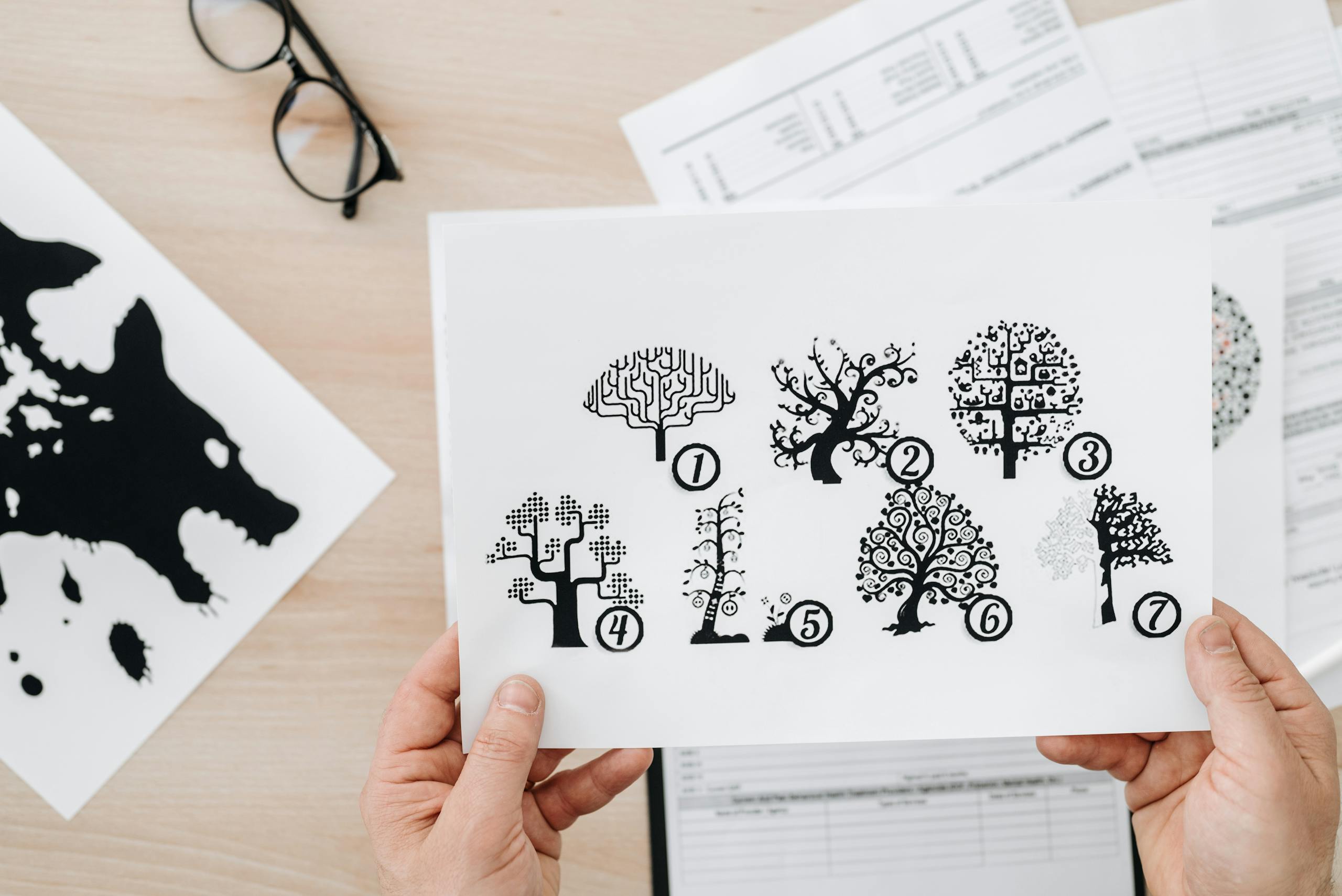

An ambivert test on BuzzFeed is a quick, fun quiz designed to tell you whether you fall somewhere between introversion and extroversion on the personality spectrum. These quizzes typically ask about social preferences, energy levels, and communication styles, then place you on a sliding scale rather than forcing a binary label. They’re genuinely entertaining, and sometimes surprisingly accurate, but they’re also missing some important nuance about what it actually means to sit in the middle of the personality spectrum.
If you’ve taken one of these quizzes and felt like the result almost fit but not quite, you’re probably picking up on something real. The ambivert label is more complicated than a ten-question pop quiz can capture, and understanding why that gap exists might tell you more about yourself than the result ever could.
Our Introversion vs Other Traits hub covers the full spectrum of personality differences, but the ambivert conversation sits at a particularly interesting crossroads, where pop psychology, real science, and lived experience don’t always line up neatly.

Why Do People Turn to BuzzFeed for Personality Answers?
There’s something genuinely appealing about a BuzzFeed quiz. They’re fast, they’re low-stakes, and they give you a label without requiring you to sit with a 500-question inventory for an hour. When I first started questioning whether my own personality style was working against me in the advertising world, I wasn’t turning to academic journals. I was looking for quick answers that would help me make sense of why I found certain situations exhausting while my colleagues seemed energized by them.
Career Coaching for Introverts
One-on-one career strategy sessions with Keith Lacy. 20 years of Fortune 500 leadership as an introvert, now helping others build careers that work with their wiring.
Learn More50-minute Zoom session · $175
That impulse is completely understandable. Personality labels serve a real function. They give us language for experiences we’ve been carrying around without words. Telling someone “I think I might be an ambivert” opens a conversation that “I’m sometimes outgoing and sometimes not” doesn’t quite capture. The BuzzFeed format taps into that need efficiently, even if it can’t go very deep.
What these quizzes do well is introduce people to the idea that introversion and extroversion aren’t binary opposites. That’s genuinely valuable. Many people grow up thinking they’re either one or the other, and discovering that a spectrum exists can be a real relief. The problem comes when the quiz result becomes the whole story instead of a starting point.
Pop personality quizzes also tend to conflate introversion with shyness or social anxiety, which is a persistent misconception. Introversion is fundamentally about where you get your energy, not about whether you’re comfortable around people. Someone can be socially confident and deeply introverted. Someone can be shy and extroverted. A BuzzFeed ambivert test that asks “do you enjoy parties?” without asking “do you feel drained afterward?” is measuring the wrong thing. For more on what extroversion actually involves at its core, it’s worth reading about what it truly means to be extroverted, because the definition matters more than most people realize.
What Does “Ambivert” Actually Mean, and Is It Real?
The ambivert concept has been around longer than most people realize. Psychologist Hans Eysenck’s work on personality dimensions laid groundwork for understanding introversion and extroversion as a continuum, and later researchers noted that most people don’t cluster at the extreme ends of that continuum. They land somewhere in the middle. So in that statistical sense, ambiverts are very real, and arguably represent the majority of people.
Where it gets complicated is in how we use the word. Some people identify as ambiverts because they genuinely sit near the center of the spectrum and experience roughly equal pulls toward social engagement and solitude. Others use the label because they’re introverts who’ve learned to perform extroversion well, often out of professional necessity. Those are meaningfully different experiences, and a BuzzFeed quiz can’t distinguish between them.
I spent the better part of two decades in the second category without knowing it. Running an advertising agency meant constant client presentations, team meetings, new business pitches, and industry events. I got reasonably good at all of it. From the outside, I probably looked like someone who thrived in those environments. On the inside, I was managing a very careful energy budget, and the withdrawal period after a big client day was something I scheduled around like a physical recovery. That’s not ambiverted behavior. That’s an introverted person with well-developed coping strategies, which is a completely different thing.
The distinction between being fairly introverted versus extremely introverted matters here too. Not every introvert experiences the same intensity of energy drain from social situations. Someone who’s fairly introverted might genuinely enjoy social events in moderation and need only a short recovery period. That person might reasonably score as an ambivert on a BuzzFeed quiz, even though introversion is still their dominant orientation. A quiz that doesn’t account for degree can easily misclassify them.

How Is an Ambivert Different From an Omnivert?
One thing BuzzFeed quizzes almost never address is the difference between someone who consistently sits in the middle of the spectrum and someone whose social orientation shifts dramatically depending on context or mood. Those two experiences feel similar from the outside but are quite different internally.
An ambivert tends to have a relatively stable middle-ground orientation. They’re neither strongly energized by social interaction nor strongly depleted by it. An omnivert, by contrast, can swing between strongly introverted and strongly extroverted states, sometimes unpredictably. The comparison between omnivert vs ambivert is worth understanding before you accept any quiz result at face value, because if you’re someone who sometimes craves deep solitude and other times genuinely thrives in crowd energy, the ambivert label might not be the right fit at all.
I’ve worked with people across my agency years who fit the omnivert description more closely. One account director I managed was electric in client meetings, the kind of person who seemed to draw energy from a room full of people, and then would disappear for days into focused solo work and become almost unreachable. She didn’t fit neatly into any single category, and trying to manage her schedule the way I managed a consistent extrovert’s would have been a mistake. Understanding that her swings were part of her wiring, not inconsistency, made me a better manager.
A quiz that asks ten questions on a Tuesday afternoon is going to capture one snapshot of a person who might look completely different on a Friday evening. That’s not a flaw in the person. It’s a limitation of the format.
What Should a Better Ambivert Test Actually Measure?
If you want a result that actually means something, the questions matter enormously. A well-constructed personality assessment doesn’t just ask about behavior. It asks about energy, recovery, preference, and context. The difference between “do you enjoy talking to strangers?” and “how do you feel two hours after a long social event?” is the difference between measuring behavior and measuring the underlying orientation that drives it.
Good ambivert assessments also account for the fact that behavior changes with context. Most introverts can engage warmly in one-on-one conversations but feel overwhelmed in large groups. Most extroverts can handle solitude but prefer not to sustain it for long. A quiz that doesn’t vary its social scenarios is going to produce skewed results.
There’s also the question of what you’re actually trying to find out. If you want to know whether you’re an introvert or extrovert in a general sense, a broader assessment like the introvert, extrovert, ambivert, and omnivert test covers more ground and gives you more useful distinctions than a single-axis ambivert quiz. Knowing which of those four categories feels most like home is a more actionable starting point than knowing you scored 57% on an ambivert scale.
Psychological research on personality measurement consistently finds that self-report accuracy improves when questions are specific and behaviorally grounded rather than general and abstract. Asking “I enjoy meeting new people” is far less reliable than “After attending a three-hour networking event, I typically feel energized / neutral / drained.” The specificity forces honest reflection rather than aspirational self-presentation. A piece published in PubMed Central on personality and social behavior highlights how context-dependent many personality expressions actually are, which is exactly why single-snapshot quizzes struggle to capture the full picture.

The “Introverted Extrovert” Problem That Quizzes Create
One of the more confusing outcomes of BuzzFeed-style personality quizzes is that they often produce results like “you’re an introverted extrovert” or “you’re an extroverted introvert” without explaining what that actually means in practice. People walk away with a label that sounds meaningful but leaves them more confused than when they started.
The introverted extrovert quiz at Ordinary Introvert approaches this differently, by helping you understand what it actually feels like to be wired one way but adapted to behave another. That’s a genuinely useful distinction. An introvert who’s become skilled at extroverted behavior hasn’t changed their fundamental wiring. They’ve built a set of professional tools. Knowing which is which helps you make better decisions about where to spend your energy and where to protect it.
My own experience with this was fairly stark. By the time I’d been running my agency for about a decade, I had become genuinely good at reading a room, working a conference floor, and delivering presentations that felt spontaneous even when they were carefully prepared. People who met me in those contexts assumed I was naturally extroverted. My team knew better, because they saw what happened in the days after a particularly heavy week of client-facing work. The competence was real. The energy cost was also real. A quiz that caught me on a Tuesday after a quiet weekend would have told a very different story than one taken on a Friday after a full client week.
There’s also a related phenomenon worth naming. Some people who identify as ambiverts based on quiz results are actually highly sensitive introverts who’ve developed strong social skills over time. The Frontiers in Psychology research on personality and sensitivity points to how sensory and emotional sensitivity can shape the way introverts experience social environments, sometimes making them appear more flexible than they actually are in terms of energy management.
Is There a Difference Between an Otrovert and an Ambivert?
You might have come across the term “otrovert” and wondered whether it’s just another word for the same thing. It’s not quite. The distinction between otrovert vs ambivert is worth a moment of attention, particularly if you’ve taken a BuzzFeed quiz and found the result doesn’t quite capture your experience.
The otrovert concept generally describes someone who presents as outgoing and socially engaged but is internally oriented and reflective, essentially an introvert whose social presentation doesn’t match their internal processing style. An ambivert, by contrast, genuinely sits between the two poles rather than leaning toward one while performing the other. These are different experiences, and conflating them leads to misunderstanding your own needs.
For anyone who’s ever thought “I’m good at being social, so I must not be a real introvert,” this distinction matters. Being socially capable doesn’t mean you’re not introverted. Introversion has always been about internal processing and energy, not social skill. Some of the most socially effective people I’ve worked with over the years were deeply introverted. They’d simply learned that social competence was a professional requirement and had invested in developing it without losing their fundamental need for quiet and depth.
The Psychology Today piece on introverts and deeper conversations captures something important here: introverts often engage very well socially when the context allows for genuine depth. It’s the shallow, high-volume social interaction that depletes them. An ambivert test that asks “are you good at making conversation?” is measuring something different from “what kind of conversation fills you up versus drains you?”

What to Do With a BuzzFeed Ambivert Result
Say you’ve taken the quiz and it told you that you’re an ambivert. Now what? The result is most useful if you treat it as a prompt for self-reflection rather than a definitive answer. Ask yourself the questions the quiz probably didn’t.
Start with energy. After a full day of social interaction, do you feel roughly neutral, energized, or genuinely depleted? That single question is more diagnostic than most quiz items combined. If you’re consistently depleted after heavy social days regardless of how much you enjoyed them, you’re probably more introverted than the quiz result suggests. If you feel flat and restless after long stretches of solitude, extroversion might be a stronger pull than you’ve acknowledged.
Consider context specificity as well. Do you feel the same way about social interaction regardless of the setting, or does it vary dramatically? A business dinner with three people you respect might feel completely different from a cocktail party with thirty strangers, even though both are “social situations.” Ambiverts tend to be relatively consistent across contexts. Introverts and extroverts often show strong context dependence.
Think about your default state when you have genuine freedom of choice. Not what you do when work requires it, or what you do to be a good friend or partner, but what you reach for when no one is watching and nothing is required. That default reveals more than any quiz result. During a period when I had a light client schedule and could structure my days however I wanted, I almost always chose solitary mornings, deep-focus work blocks, and quiet evenings. That wasn’t introversion as a coping mechanism. It was introversion as a preference, which is a meaningful distinction.
It’s also worth noting that personality isn’t fixed across your lifetime. There’s reasonable evidence that people’s positions on the introversion-extroversion spectrum can shift somewhat with age, major life events, and sustained changes in environment. A result from a quiz you took at 22 might not accurately describe you at 42. The label is a snapshot, not a permanent identity.
When the Quiz Result Opens Something Bigger
Sometimes a BuzzFeed ambivert quiz does something unexpectedly useful. It gets someone thinking about their personality for the first time in a serious way. That initial curiosity, even when sparked by something lightweight, can lead somewhere genuinely meaningful.
Many people who come to Ordinary Introvert started their self-understanding process with a pop quiz, a casual article, or a friend saying “you seem like an introvert.” The entry point doesn’t have to be rigorous to open a door worth walking through. What matters is what you do with the curiosity once it’s been activated.
For me, the process of understanding my own introversion took years and came through professional failure as much as self-reflection. Watching myself burn out after particularly demanding client cycles, noticing which team dynamics energized me and which ones left me hollow, recognizing that my best strategic thinking always happened alone rather than in brainstorms, all of that data accumulated slowly. No quiz gave me that picture. My own careful attention did.
The PubMed Central research on personality and wellbeing suggests that accurate self-knowledge about personality traits is associated with better decision-making and higher life satisfaction. That’s a compelling reason to go deeper than a quiz result, not because the quiz was wrong to exist, but because the insight available on the other side of genuine self-understanding is worth pursuing.
Understanding your position on the introvert-extrovert spectrum also has real professional implications. A piece from Rasmussen College on marketing for introverts points out that introverts often excel in roles requiring deep listening, careful analysis, and sustained focus, qualities that are genuinely valuable in client-facing work when channeled correctly. Knowing you’re introverted rather than ambivert might actually reframe how you approach your career rather than limit it.

Using the Ambivert Concept Productively
Even if a BuzzFeed quiz isn’t the most precise instrument, the ambivert concept itself is worth holding onto, not as a fixed identity, but as a reminder that personality exists on a continuum. Very few people are pure anything. Most of us have a dominant orientation and a secondary capacity that we draw on when needed.
As an INTJ, my dominant orientation is strongly introverted. My secondary capacity for strategic social engagement is real and developed, but it operates differently from genuine extroversion. Knowing that distinction has helped me structure my professional life in ways that protect my core energy while still showing up effectively in high-stakes situations. I stopped trying to be consistently extroverted and started building recovery time into my schedule as a non-negotiable professional practice.
The ambivert framing can be similarly useful for people who feel guilty about not being purely one thing. You don’t have to choose a side. You don’t have to explain why you loved last weekend’s dinner party but dread the company retreat. Personality is complex, contextual, and allowed to be both things at once. What matters is that you understand your own patterns well enough to make choices that support your energy rather than deplete it.
Negotiation contexts offer a useful illustration of how this plays out practically. A Harvard Program on Negotiation piece on introverts in negotiation makes the point that introverts often bring real advantages to high-stakes conversations, including careful listening, patience, and the ability to read situations without needing to fill silence. Those aren’t ambivert qualities. They’re introvert strengths. Knowing the difference helps you lean into what’s actually working rather than compensating for a perceived deficit.
The broader conversation about where you fall on the personality spectrum, and what that means for how you work, relate, and recover, is one worth having with more depth than a quiz allows. Our complete Introversion vs Other Traits hub is a good place to continue that conversation with more nuance and context.
About the Author
Keith Lacy is an introvert who’s learned to embrace his true self later in life. After 20 years in advertising and marketing leadership, including running agencies and managing Fortune 500 accounts, Keith now channels his experience into helping fellow introverts understand their strengths and build fulfilling careers. As an INTJ, he brings analytical depth and authentic perspective to every article, drawing from both professional expertise and personal growth.
Frequently Asked Questions
Are BuzzFeed ambivert tests accurate?
BuzzFeed ambivert tests are entertaining and can introduce useful concepts, but they lack the depth and precision of validated personality assessments. They typically measure behavioral preferences rather than the underlying energy dynamics that define introversion and extroversion. Treat them as a starting point for self-reflection rather than a definitive result.
What is the difference between an ambivert and an introvert?
An ambivert sits near the center of the introversion-extroversion spectrum, experiencing neither strong energy gain from social interaction nor significant depletion from it. An introvert, by contrast, tends to feel drained by extended social engagement and restored by solitude, even when they enjoy social situations in the moment. The distinction is primarily about energy management rather than social skill or enjoyment.
Can an introvert score as an ambivert on a personality quiz?
Yes, this is quite common. Introverts who have developed strong social skills through professional necessity often score in the ambivert range on behavioral quizzes because they’ve learned to perform extroverted behaviors effectively. The quiz measures what you do, not necessarily how you feel doing it or how you feel afterward. A more accurate picture comes from tracking your energy levels before and after social situations over time.
Is being an ambivert better than being an introvert or extrovert?
No personality orientation is inherently better than another. Ambiverts do have certain contextual flexibility that can be useful in some professional settings, but introverts and extroverts each bring distinct strengths that ambiverts may not possess as strongly. Strong introverts often excel at deep focus, careful listening, and sustained independent work. Strong extroverts often excel at rapid relationship building, high-energy environments, and collaborative momentum. The ambivert advantage is adaptability, not superiority.
How can I get a more accurate read on my personality type than a BuzzFeed quiz provides?
Start by tracking your energy patterns over several weeks rather than relying on a single quiz moment. Notice how you feel before and after various social situations, what kinds of interaction restore you versus deplete you, and what your default choices are when you have genuine freedom. You can also try more comprehensive assessments that distinguish between introvert, extrovert, ambivert, and omnivert orientations, and consider whether the ambivert label or a different category fits your experience more accurately.