
Art depicting shyness captures something that clinical definitions tend to flatten: the felt experience of shrinking, watching, and longing from a careful distance. Across centuries of painting, sculpture, photography, and illustration, artists have returned again and again to the quiet figure at the edge of the frame, the downcast eyes, the body turned slightly away. These images resonate because shyness is not simply a personality quirk. It is a specific, visceral way of moving through the world.
What makes this art so compelling is also what makes it so frequently misread. Shyness, introversion, and social anxiety are three distinct experiences, yet artists and viewers alike have blurred them together for generations. A painting of a solitary figure staring out a rain-streaked window might be depicting grief, deep introversion, or the particular social fear that defines shyness. The visual language overlaps. The emotional truth underneath each image does not.
Before going further, it is worth anchoring this conversation in the broader landscape of personality. If you have ever wondered where shyness fits relative to introversion, extroversion, and the spectrum in between, our Introversion vs Other Traits hub maps that territory in detail. Shyness is one thread in a much larger weave, and understanding its place changes how you read both the art and the people it represents.
Why Have Artists Been Drawn to Shyness for Centuries?
There is something visually arresting about restraint. A figure who holds back, who watches rather than participates, who occupies the periphery of a scene, creates natural tension in a composition. The eye is drawn to what is withheld as much as to what is expressed. Artists throughout history have understood this instinctively, even when they lacked the psychological vocabulary to name what they were portraying.
Career Coaching for Introverts
One-on-one career strategy sessions with Keith Lacy. 20 years of Fortune 500 leadership as an introvert, now helping others build careers that work with their wiring.
Learn More50-minute Zoom session · $175
In the Dutch Golden Age, interior scenes frequently featured figures caught in moments of private feeling. A young woman reading a letter alone, a servant pausing at a doorway, a child half-hidden behind a curtain. These images were not explicitly labeled as portraits of shyness, yet they carry its signature: the sense of someone present but not fully arrived, aware of being observed but unable to fully meet that gaze.
By the Romantic period, the solitary figure became a deliberate symbol. Caspar David Friedrich’s paintings of lone figures standing before vast landscapes are often read as expressions of sublime longing, but there is also something recognizable in that posture to anyone who has ever felt most themselves when slightly removed from the crowd. The figure does not turn toward us. The figure faces away, absorbed in something we cannot fully share.
I spent years managing creative teams at my advertising agencies, and I noticed something similar in how my shyer team members positioned themselves in meetings. They would take seats at the far end of the table, angled slightly toward the wall. Their body language mirrored those painted figures: present, attentive, engaged, but maintaining a small buffer between themselves and the full force of the room. It was not disengagement. It was a different mode of participation entirely.
What Does Shyness Actually Look Like in Visual Art?
Shyness has a visual grammar that artists have developed over centuries. Certain poses, gestures, and compositional choices appear repeatedly across cultures and time periods, forming a kind of shared visual language for this particular inner state.
Averted eyes are perhaps the most universal signal. In portraiture, direct eye contact conveys confidence, authority, or intimacy. When a subject’s gaze slides away from the viewer, it introduces uncertainty, vulnerability, or social discomfort. This is not accidental. Painters from Vermeer to Mary Cassatt to contemporary illustrators have used the averted gaze to signal an interior life that is rich but guarded.
Physical self-containment is another recurring element. Shy figures in art often hold their arms close to their bodies, cross their hands in their laps, or angle their shoulders inward. Contrast this with the expansive, open postures typically used to depict confidence or extroversion, and the difference in body language becomes a kind of silent vocabulary. To understand what extroverted actually means in personality terms is to better appreciate why these visual contrasts carry so much weight. Extroversion is associated with outward energy, social ease, and expansiveness, which is exactly what shy figures in art tend to withhold.
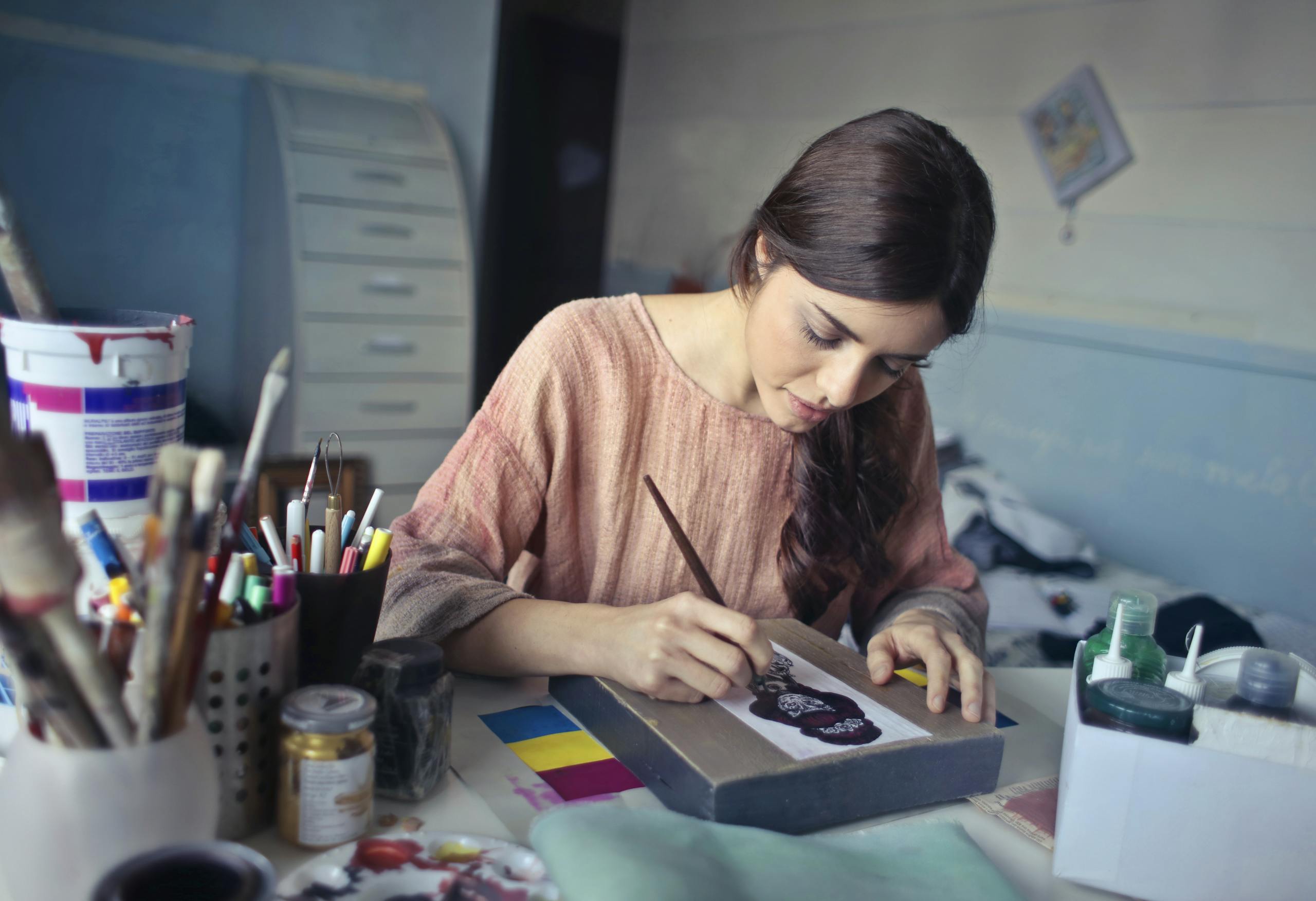
Color also plays a role. Artists depicting shyness often reach for cooler, quieter palettes. Soft blues, muted grays, pale greens. These choices reinforce the emotional register of the subject without a single word of explanation. There is a reason that bold, saturated reds and yellows rarely appear in paintings meant to evoke social reticence. The color temperature itself communicates something about the inner climate of the figure.
Spatial positioning within a composition matters enormously. Shy figures are frequently placed at the margins of group scenes, partially obscured by other elements, or shown in transition between spaces. They inhabit doorways, edges, corners. This positioning is not incidental. It reflects the lived experience of shyness: the feeling of being in a space without fully belonging to it, of watching the center of activity from a self-imposed remove.
How Does Art Separate Shyness From Introversion?
This is where things get genuinely interesting, and where I think art actually does something that psychology writing often struggles to do. A well-crafted image can show the difference between shyness and introversion in ways that paragraphs of explanation cannot quite capture.
Introversion, at its core, is about energy. An introverted person draws energy from solitude and inner reflection rather than from social interaction. There is no inherent fear or discomfort involved. Many introverts are entirely comfortable in social settings. They simply prefer depth over breadth, and they recharge by stepping away from the noise. Shyness, by contrast, involves anxiety. A shy person may desperately want social connection but feel held back by fear of judgment, embarrassment, or rejection. The desire is present. The fear is louder.
In art, you can sometimes see this distinction rendered visually. An introverted figure in a painting might be serene, absorbed, complete in their solitude. Think of the scholar in a candlelit study, surrounded by books, entirely at peace. A shy figure carries more tension. There is often a longing directed outward, a visible awareness of what they are not quite reaching toward. The body leans slightly toward the crowd even as it holds back. The eyes flicker toward the gathering before dropping away again.
As an INTJ, I recognize the solitary scholar in myself. There have been stretches of my career where I genuinely preferred working through a strategic problem alone at my desk over any amount of collaborative brainstorming. That preference was not anxiety. It was clarity about how my mind works best. Shyness would have looked different. It would have meant wanting to be in those brainstorming sessions but feeling too self-conscious to contribute. Those are meaningfully different internal states, even when they produce similar outward behavior.
If you are curious where you personally fall on this spectrum, the introvert extrovert ambivert omnivert test can help you get a clearer read on your own tendencies. Knowing whether your social hesitation comes from preference or from anxiety changes everything about how you approach it.
Which Artists Have Most Powerfully Depicted Shyness?
Several artists stand out for the particular honesty and depth they brought to portraying social reticence and the inner life of the withdrawn figure.
Mary Cassatt painted women and children in domestic spaces with an intimacy that frequently captured the quality of inner absorption. Her figures are often mid-thought, turned slightly away, caught in a private moment even when surrounded by others. There is warmth in her work, but also a consistent respect for the interior life that social performance tends to crowd out. Her paintings feel like permission to be quiet in a noisy room.
Edward Hopper is perhaps the artist most associated with solitude and social disconnection in American painting. His figures sit alone in diners, stand at windows, occupy hotel rooms with the particular stillness of people who have withdrawn from something. Whether that withdrawal is chosen or forced is often deliberately ambiguous. Hopper does not moralize about solitude. He simply renders it with unflinching clarity, and in doing so, he captures the experience that many shy and introverted people recognize immediately.

Contemporary illustrators and graphic novelists have taken this visual vocabulary in new directions. Artists like Roz Chast and Chris Ware have depicted social anxiety and shyness with a mixture of humor and painful accuracy that feels distinctly modern. Their work acknowledges the internal monologue, the catastrophizing, the gap between what a shy person wants to say and what actually comes out. This is territory that classical painting rarely entered, but that contemporary illustration explores with remarkable honesty.
Photography has added yet another dimension. Street photographers working in the tradition of Henri Cartier-Bresson have captured shy moments with a kind of accidental intimacy: a child pressing against a wall while other children play, an adult at a party looking toward the exit, a teenager at the edge of a group photograph. These images were not posed to depict shyness. They simply caught it in the act, which may be why they feel so true.
What Does Art Reveal About the Inner Experience of Shyness?
One of the things I find most valuable about art that depicts shyness is that it renders the experience from the inside rather than the outside. Most social commentary about shy people is external: they are quiet, they hold back, they avoid eye contact. Art, at its best, inverts this perspective and shows us what it feels like to be the person holding back.
That inner experience involves a kind of heightened perception. Shy people often notice an enormous amount about the social environments they are observing from a distance. They read body language, track emotional currents in a room, and absorb details that more socially engaged people miss entirely. This is not a consolation prize for social difficulty. It is a genuine perceptual skill, and it shows up in art. The shy figure in a painting is often the most observant presence in the scene, the one who sees what everyone else is too busy performing to notice.
There is a real parallel here to what Psychology Today has explored around introverts and deep perception: the tendency to process experiences more thoroughly, to notice subtleties, to prefer meaning over surface-level exchange. Shy people share some of this perceptual quality, even though the driver is different. Introversion produces depth through preference. Shyness sometimes produces depth through necessity, through the observations available to someone who is watching rather than performing.
I managed a copywriter early in my agency career who was genuinely shy in a way that I, as an introvert, initially confused for something else. She would sit through entire client meetings without saying a word. I worried she was disengaged. Then she would come to my office afterward and deliver the most precise, perceptive read on the client’s actual concerns that anyone on the team had produced. She had been listening at a level the rest of us were too busy talking to reach. Her shyness had made her an extraordinary observer.
Art captures this quality when it is done well. The shy figure is not simply absent from the scene. The shy figure is often the most present consciousness in it, processing everything while contributing nothing visible. That gap between inner richness and outward expression is one of the most honest things art can show us about this particular way of being in the world.
How Does Shyness Fit Into the Broader Personality Spectrum in Art?
Shyness does not exist in isolation in art or in life. It exists in relationship to a full range of personality orientations, and artists have always been interested in the contrast and interplay between them.
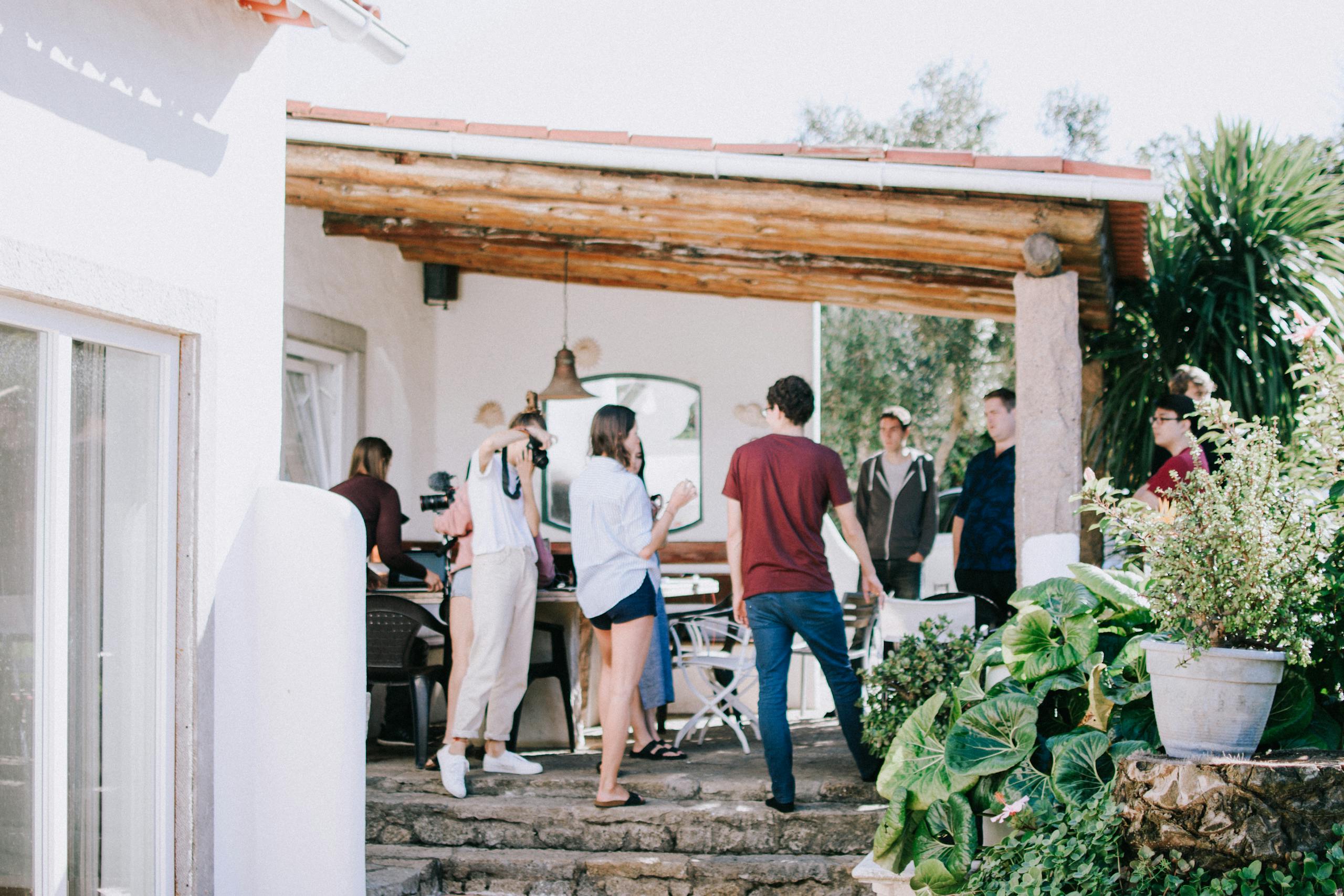
Group portraits and crowd scenes create natural opportunities to show the spectrum. Some figures press toward the center, arms open, faces animated. Others hang back, present but peripheral. Some figures seem equally comfortable moving between these positions depending on the moment. That last group is worth pausing on, because it points toward something that personality frameworks sometimes flatten: the reality that many people do not fit neatly at either end of any spectrum.
The distinction between omniverts and ambiverts is relevant here. An ambivert sits somewhere in the middle of the introvert-extrovert spectrum consistently. An omnivert swings between the poles depending on context, mood, or environment. In a crowd scene painting, the ambivert might be the figure comfortably engaged in conversation without dominating it. The omnivert might be the figure who was gregarious an hour ago and is now quietly retreating to the corner. Shyness cuts across these categories. A person can be an omnivert and also shy. An ambivert can experience shyness in specific contexts even while feeling socially comfortable in others.
If you want to get a clearer sense of where you fall on this spectrum personally, the introverted extrovert quiz is a useful starting point. It can help you identify whether your social patterns are consistent or whether they shift considerably depending on context, which matters for understanding how shyness interacts with your broader personality orientation.
Art also captures the difference between being fairly introverted versus extremely introverted. A moderately introverted figure in a painting might be engaged in quiet conversation with one or two people, comfortable but not expansive. A deeply introverted figure might be entirely alone, not seeking connection at all in that moment. Shyness can amplify either of these states, adding a layer of social fear on top of an already inward-facing orientation. When you see a figure in a painting who seems both deeply withdrawn and visibly tense, you may be looking at shyness layered over introversion rather than either trait alone.
Why Does Misreading These Images Matter Beyond Art?
The way we read visual depictions of shyness has real consequences for how we understand and treat shy people in everyday life. When we conflate shyness with introversion, we tend to assume that shy people simply prefer solitude, that they are fine on their own, that their withdrawal is chosen and comfortable. This misreading can make it harder for shy people to get the support they actually need.
Shyness, unlike introversion, often involves genuine distress. A shy person may feel profound loneliness while simultaneously feeling unable to bridge the distance between themselves and others. That combination of longing and fear is a specific kind of suffering that gets minimized when we treat shyness as merely a preference for quiet. Research published in PubMed Central has examined how social anxiety and shyness relate to broader mental health outcomes, finding that the distress involved is real and measurable rather than simply a personality style to be accommodated.
At the same time, art has often done shy people a disservice by romanticizing their withdrawal without acknowledging the cost. The beautiful solitary figure gazing out the window is a compelling image. It does not always show what happens after the party ends and the shy person lies awake replaying every moment of social awkwardness from the evening, wishing they had said something different or said anything at all. The romanticized version of shyness in art can inadvertently make it harder for people to seek help for something that is genuinely limiting their lives.
The flip side is that art has also, at its best, validated the experience of shyness in ways that social culture rarely does. Seeing your inner experience reflected in a painting, a photograph, or an illustration can be quietly powerful. It says: this is real, this is recognized, this has been seen. That kind of validation matters. Additional research available through PubMed Central on social behavior and personality suggests that feeling understood and represented can itself have meaningful psychological effects, particularly for people who spend significant energy feeling out of step with social norms.
What Can Shy and Introverted People Take From This Art?
There is something worth sitting with here, beyond the art history and the psychology. When you encounter an image that captures your experience of shyness or introversion with unusual accuracy, something shifts. You feel less alone in a way that is hard to articulate but easy to recognize.
I had this experience in my late thirties, walking through an exhibition of American realist painting. There was a Hopper piece I had seen reproduced many times but never encountered at actual scale. Standing in front of it, I felt something I had not expected: recognition. Not of the scene itself, but of the quality of attention in it. The figure in the painting was not sad. She was not broken. She was simply existing in her own interior space while the world moved around her. That felt true in a way I had not seen named before.
Part of what I have come to understand in my own process of embracing my introversion is that the traits we sometimes experience as deficits often contain genuine strengths that more extroverted frameworks fail to recognize. The observational capacity that shyness can produce. The depth of processing that introversion enables. The ability to be fully present in a conversation rather than scanning the room for the next one. These qualities show up in art as qualities worth depicting, worth preserving, worth understanding.
The concept that some people occupy a middle ground between introversion and extroversion is also worth holding onto here. The otrovert versus ambivert distinction points toward the reality that personality is rarely a clean binary. Many people who identify with art depicting shyness are not at the extreme end of any spectrum. They are somewhere in the complex middle, experiencing shyness in some contexts, social ease in others, and trying to make sense of the pattern. Art that captures this complexity honestly is art that serves a real human need.
What I hope people take from engaging with this art, whether they are shy, introverted, somewhere in between, or simply curious, is a more generous understanding of the range of human social experience. Not everyone who stands at the edge of the room is suffering. Not everyone who suffers shows it. Art at its most honest holds both of these truths simultaneously, and that is what makes it worth paying attention to.
A broader understanding of how shyness fits alongside introversion, extroversion, and the many variations in between is something our Introversion vs Other Traits hub continues to build out, with articles covering the full range of personality orientations and what they mean in real life.
About the Author
Keith Lacy is an introvert who’s learned to embrace his true self later in life. After 20 years in advertising and marketing leadership, including running agencies and managing Fortune 500 accounts, Keith now channels his experience into helping fellow introverts understand their strengths and build fulfilling careers. As an INTJ, he brings analytical depth and authentic perspective to every article, drawing from both professional expertise and personal growth.
Frequently Asked Questions
What is the difference between art depicting shyness and art depicting introversion?
Art depicting shyness typically shows figures in tension with social environments, carrying visible longing or anxiety alongside their withdrawal. Art depicting introversion more often shows figures in peaceful solitude, absorbed and self-sufficient rather than fearful. The shy figure in a painting often leans slightly toward the social scene while holding back. The introverted figure is frequently complete in their separateness, without the tension of wanting something they cannot quite reach.
Which famous artists are known for depicting shyness or social reticence in their work?
Edward Hopper is perhaps the most widely recognized for capturing solitude and social disconnection in American painting. Mary Cassatt depicted women and children in states of quiet inner absorption with particular warmth and intimacy. Contemporary illustrators like Chris Ware have brought the internal experience of social anxiety into graphic form with unusual honesty. Street photographers working in the tradition of Henri Cartier-Bresson have captured shyness in candid, unposed moments that feel especially true to life.
Can art help shy people feel less alone in their experience?
Yes, and this is one of the most meaningful functions art can serve for people who feel out of step with social norms. Seeing your inner experience rendered honestly in a painting, photograph, or illustration provides a form of validation that social culture often withholds. It communicates that your experience is real, recognized, and worth depicting. Many shy and introverted people describe encounters with specific works of art as genuinely clarifying moments in their understanding of themselves.
How do artists visually communicate shyness without words or labels?
Artists use a consistent visual vocabulary for shyness that includes averted eyes, self-contained body posture with arms held close, positioning at the margins or edges of a composition, cooler and quieter color palettes, and figures caught in transitional spaces like doorways or the periphery of group scenes. These choices communicate the inner state of the subject through visual cues that viewers recognize intuitively, often before they consciously identify what they are seeing.
Is shyness the same as social anxiety, and does art capture this distinction?
Shyness and social anxiety overlap but are not identical. Shyness is a personality trait involving discomfort and inhibition in social situations. Social anxiety is a clinical condition involving significant fear and avoidance that interferes with daily functioning. Art rarely makes this clinical distinction explicitly, but the most honest depictions of social fear do capture something of the spectrum: from mild social hesitation to the kind of paralyzing self-consciousness that social anxiety produces. The difference in intensity and in the degree of functional impairment is the meaningful line between the two.