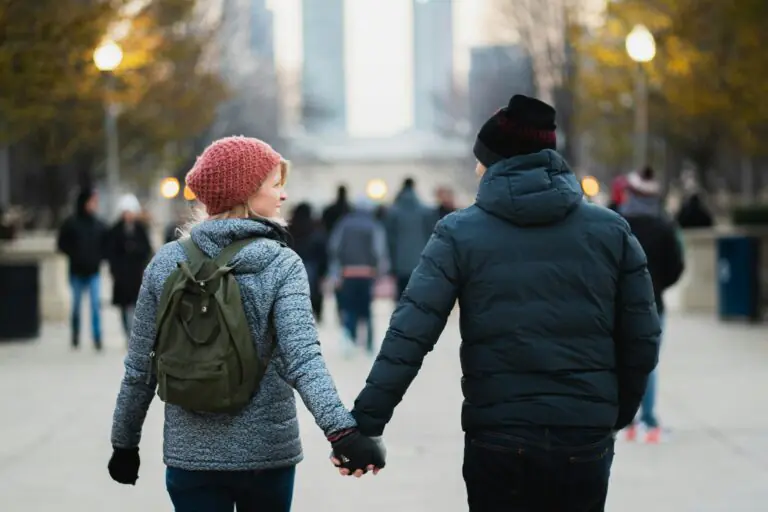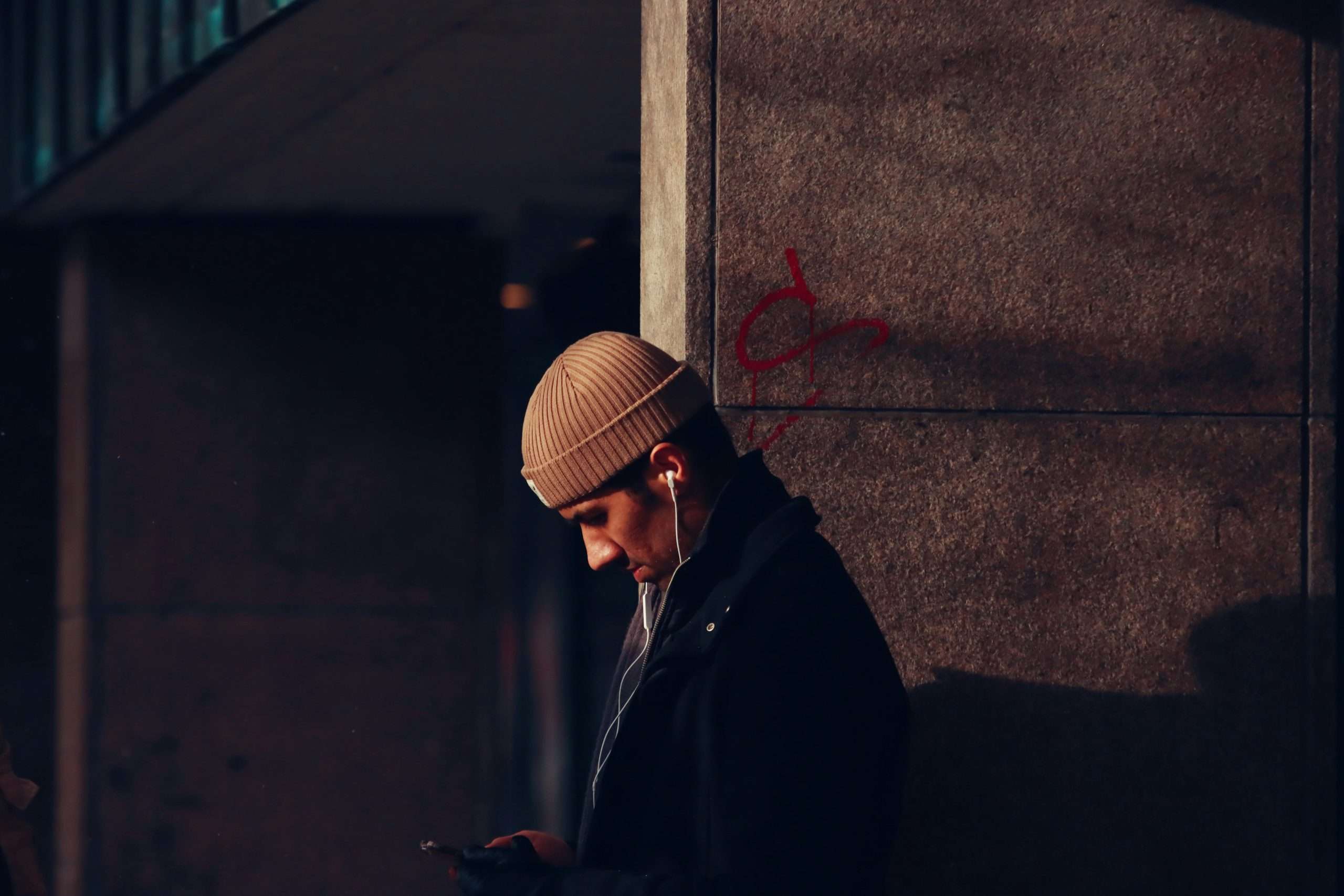

Shyness and introversion are not the same thing, even though people treat them as interchangeable almost constantly. Shyness is a fear of negative social judgment. Introversion is a preference for quieter, lower-stimulation environments and a tendency to recharge through solitude. One is driven by anxiety. The other is simply a wiring preference. Peeling back the layers of shyness reveals something more complex than most people expect, and far more personal than any personality label can capture.
Most introverts I know have spent years carrying shyness as a label that was never quite theirs to begin with. It gets assigned early, usually by someone who noticed you preferred books to birthday parties, or who misread your silence as social fear. And once that label sticks, it takes real effort to figure out what was actually going on underneath it.

There is a whole spectrum of personality orientations that shape how people relate to social energy, stimulation, and connection. If you want to see where you fall on that spectrum before we get into the deeper work of separating shyness from introversion, our Introversion vs. Other Traits hub is a solid place to start. It covers the full range of personality orientations, from deeply introverted to extroverted, and everything in between.
Why Do We Conflate Shyness and Introversion in the First Place?
The conflation happens because the surface behaviors can look identical. A shy person at a party stays quiet, hangs near the edges, leaves early. An introvert at the same party stays quiet, hangs near the edges, leaves early. From the outside, you cannot tell the difference. But the internal experience is completely different.
Career Coaching for Introverts
One-on-one career strategy sessions with Keith Lacy. 20 years of Fortune 500 leadership as an introvert, now helping others build careers that work with their wiring.
Learn More50-minute Zoom session · $175
The shy person is managing fear. There is a constant internal calculation running: what will they think of me if I say this, will I embarrass myself, is everyone noticing how awkward I feel? That mental overhead is exhausting in a way that has nothing to do with stimulation levels. It is anxiety doing its work.
The introvert, in that same room, may simply be conserving energy. They are not afraid of judgment, necessarily. They are just aware that this environment is pulling from a limited reserve, and they are making choices about how to spend it. That is a fundamentally different internal experience, even when the observable behavior looks the same.
I ran advertising agencies for over twenty years. Pitching to Fortune 500 clients, presenting creative work in rooms full of skeptical marketing directors, leading teams through high-stakes campaigns. None of that terrified me in the way shyness would. I was not afraid of judgment. I was just aware, sometimes acutely aware, that those environments were costly for me in a way they were not for some of my colleagues. My extroverted creative director could walk out of a four-hour pitch session buzzing with energy. I walked out needing three hours of quiet before I could think clearly again. That is introversion. Not shyness. The distinction matters enormously.
What Does Shyness Actually Feel Like From the Inside?
Shyness has a specific texture that introverts who have also experienced it will recognize immediately. It is not just quietness. It is a kind of social self-consciousness that activates before you have even opened your mouth. The anticipation of judgment arrives before any judgment has actually occurred.
People who experience shyness often describe a physical component: a tightening in the chest, a flush of heat, a sudden awareness of their own hands. The body responds to perceived social threat the same way it responds to physical threat. That is the anxiety system doing what it was designed to do, even when the danger is not real.
What makes shyness particularly layered is that it often coexists with a genuine desire for connection. Shy people are not typically indifferent to others. Many of them are deeply interested in people and long for meaningful relationships. The anxiety is not about wanting to be alone. It is about fearing that the attempt to connect will go badly. That tension, wanting closeness while fearing the approach, is one of the most quietly painful aspects of shyness that rarely gets named clearly.
One piece of published research on behavioral inhibition has helped clarify that shyness has genuine neurobiological roots, not just learned patterns. Some people are wired from early childhood to respond more cautiously to unfamiliar social situations. That is not a character flaw. It is a temperament trait that deserves understanding rather than correction.

Can You Be Both Shy and Introverted at the Same Time?
Absolutely. These traits are not mutually exclusive, and a significant number of people carry both. An introverted person who also experiences shyness faces a compounded challenge: they are managing both a preference for low stimulation and an anxiety response to social evaluation. The two can reinforce each other in ways that make social situations feel especially draining.
What gets complicated is that the coping strategies for each are different. Managing introversion is largely about energy: building in recovery time, choosing environments thoughtfully, protecting your capacity for deep work. Managing shyness is more about reframing: challenging the belief that others are judging you as harshly as you fear, building tolerance for social discomfort, and gradually expanding your comfort zone through repeated low-stakes exposure.
If you apply introvert strategies to a shyness problem, you might just become more isolated without actually addressing the fear. And if you push yourself into relentless social exposure to overcome shyness, while ignoring your genuine need for solitude, you will burn out. Knowing which layer you are working with at any given moment changes everything about how you approach it.
It is also worth noting that personality orientation exists on a spectrum. Some people are fairly introverted versus extremely introverted, and where you fall on that spectrum affects how much the shyness and introversion layers interact. A mildly introverted person with significant shyness might look and feel very different from a deeply introverted person with minimal shyness.
What Lies Beneath the Shyness Itself?
Here is where it gets genuinely interesting, and where I think most conversations about shyness stop too soon. Shyness is often a surface layer sitting on top of something else entirely. When you start examining what is actually underneath, you find a more nuanced picture.
For some people, what looks like shyness is actually high sensitivity. Highly sensitive people process sensory and emotional information more deeply than average. They notice subtleties in tone, body language, and atmosphere that others miss. In a crowded or emotionally charged environment, that depth of processing can become overwhelming, and the withdrawal that follows can look like shyness from the outside. But the driver is not fear of judgment. It is sensory and emotional saturation.
For others, what presents as shyness is a history of social experiences that went badly. Bullying, exclusion, humiliation in front of peers, these experiences teach the nervous system to treat social situations as threatening. The shyness is a learned protective response. It made sense once. It may no longer serve the person carrying it, but it originated as a reasonable adaptation to real circumstances.
And for some people, particularly those who identify as introverts, what feels like shyness is actually a preference for depth that makes small talk feel genuinely uncomfortable rather than anxiety-provoking. Psychology Today has written about this, noting that many introverts find shallow social exchanges unsatisfying in a way that has nothing to do with fear. The discomfort is not about being judged. It is about being bored, or about the mismatch between the depth of connection they want and the kind of interaction on offer.
I have experienced that particular flavor myself. Early in my agency career, I dreaded the obligatory industry cocktail parties. Not because I feared embarrassing myself, but because the conversations felt hollow and I could not figure out how to make them feel otherwise. What I eventually realized was that I was not shy in those rooms. I was just uninterested in the format. The moment I found a corner conversation about something substantive, I was completely engaged. That was not shyness lifting. That was introversion finding its preferred environment.
How Does This Play Out Differently for Ambiverts and Omniverts?
The introvert-extrovert binary does not capture everyone’s experience, and that matters when we are talking about shyness. People who sit in the middle of the spectrum, or who shift significantly depending on context, have a different relationship with these layers.
An ambivert, someone who draws energy from both social interaction and solitude depending on circumstances, might experience shyness as more situationally specific. They might be completely at ease in professional settings but experience real social anxiety in personal or romantic contexts. Or the reverse. The shyness is not a blanket trait but something that activates in particular conditions.
An omnivert, a person whose orientation swings more dramatically between introversion and extroversion depending on mood, stress levels, and environment, might find that shyness surfaces more during their introverted phases and recedes during extroverted ones. That variability can be confusing. It can make a person feel inconsistent or unpredictable to themselves, which sometimes adds its own layer of social anxiety. If you want to understand the difference between these two orientations more clearly, the comparison of omnivert vs ambivert breaks down the distinction in practical terms.
There is also a type sometimes called an otrovert, which sits in a different relationship to the ambivert category altogether. Understanding these distinctions matters because shyness interacts with each orientation differently. A one-size-fits-all approach to addressing social anxiety will miss the mark for people whose social energy is more fluid or context-dependent.
What Happens When Introverts Misidentify Their Own Shyness?
This is something I watched play out repeatedly in my agency work, and something I had to reckon with in myself. When introverts misread their own introversion as shyness, or when they accept the shyness label that others have placed on them, the consequences are real.
One consequence is that they spend enormous energy trying to fix something that is not broken. An introvert who believes they are shy will often push themselves into social situations not because they genuinely want to expand their comfort zone, but because they believe their preference for quiet is a problem to be corrected. That is a recipe for chronic exhaustion and a growing sense that something is fundamentally wrong with them.
Another consequence is that they miss the actual work that might help them. If someone does have genuine social anxiety layered beneath their introversion, calling it “just being introverted” lets them avoid addressing it. The anxiety stays in place, protected by the introvert identity. That is not healthy either.
I had a copywriter at my agency, a genuinely brilliant woman, who consistently undersold herself in client meetings. She would produce extraordinary strategic thinking in written briefs, then go nearly silent when the same ideas were being discussed in a room. For a long time, she called it introversion. And part of it was. But when we worked together on presentation skills, she eventually named what was really happening: she was terrified of being challenged in real time, in front of people whose opinion mattered to her professionally. That was not introversion. That was a specific, identifiable fear that had a name and could be worked with directly.
Understanding what is actually driving your social behavior requires honest self-examination. Taking something like the introvert extrovert ambivert omnivert test can be a useful starting point for understanding your baseline orientation, but it will not separate shyness from introversion for you. That requires sitting with the question: am I avoiding this because it drains me, or because I am afraid of what might happen?
Does Shyness Ever Serve a Useful Function?
There is a tendency in self-help culture to treat shyness as purely a problem to be solved, a limitation to push through, a weakness to overcome. That framing misses something important.
Shyness, at moderate levels, can function as a kind of social attentiveness. People who are more cautious in new social situations often observe more carefully before engaging. They read rooms well. They notice interpersonal dynamics that more socially confident people barrel right past. Some of the most perceptive people I have ever worked with had a shyness quality to them, a watchfulness that made them extraordinarily good at understanding what was really happening in a client relationship or a team dynamic.
There is also evidence that social caution has adaptive roots. Being careful about who you trust, taking time to assess new people and environments before committing, these are not inherently dysfunctional behaviors. They become problematic when the fear response is so strong that it prevents meaningful connection altogether, or when it causes significant distress. At that point, what might have been a useful temperament trait has tipped into something that genuinely limits a person’s life.
Work published in Frontiers in Psychology has explored how personality traits that are often framed as deficits can carry genuine functional advantages depending on context. The point is not that shyness is always fine and needs no attention. It is that the reflexive pathologizing of social caution does not serve the people who experience it.
How Do You Start Separating the Layers in Your Own Life?
Practical separation of these layers starts with asking better questions than “am I shy or introverted?” Because the honest answer for many people is some combination of both, plus possibly high sensitivity, plus possibly learned protective responses from past experiences. The more useful question is: what is actually happening in this specific moment?
When you find yourself pulling back from a social situation, try to name the driver. Is your body tired and signaling that you need quiet? That is an energy management signal, introversion doing its work. Are you replaying a scenario where you imagine saying something wrong and being judged? That is an anxiety signal, shyness or social anxiety at work. Are you simply uninterested in the kind of interaction on offer? That is a depth preference, neither shyness nor introversion exactly, just a specific preference for how you want to spend your social energy.
Naming the driver does not automatically resolve it. But it points you toward the right kind of response. Energy depletion calls for rest and recovery. Anxiety calls for gentle exposure and cognitive reframing. Depth preference calls for finding better-matched environments and conversations.
Some people find it helpful to take something like the introverted extrovert quiz to get a clearer read on their baseline orientation. That kind of self-knowledge is genuinely useful, not because a quiz tells you everything, but because it gives you a framework for noticing patterns in your own behavior over time.
And if you are someone who has spent years believing that your quietness was a problem, that your preference for depth was a deficiency, that your need for solitude was something to apologize for, some of that work is simply grief. Grieving the years spent trying to be someone you are not. Recognizing that the label you were given was never accurate. Giving yourself permission to be wired the way you actually are.
That is not small work. But it is the real work, and it is worth doing.
What Extroversion Can Teach Us About Shyness
One thing that helped me understand my own shyness layers was getting clearer on what extroversion actually means, not the cultural caricature of the loud, backslapping networker, but the genuine psychological orientation. Understanding what extroverted actually means as a personality trait helps clarify what introversion is not, and by extension, what shyness is not.
Extroversion is not the absence of shyness. Extroverts can be shy. They can be socially anxious. They can fear judgment just as acutely as anyone else. The difference is that they are still energized by social interaction even when that anxiety is present. An extrovert with shyness might feel nervous before a party and still come home feeling charged by the experience. An introvert without shyness might feel completely at ease in a social setting and still come home needing to decompress.
Some of the most socially fearless people I ever hired were extroverts who were, in certain specific contexts, quite shy. One of my account directors was magnetic in client presentations but genuinely anxious about one-on-one conflict conversations. He would do anything to avoid direct confrontation, even when it was professionally necessary. His shyness was not about social situations broadly. It was specifically about situations where he might be disliked. That is a very specific layer of shyness that had nothing to do with his extroversion.
Understanding that extroverts and introverts alike can carry shyness, and that shyness is its own distinct layer, is freeing. It means that working through social anxiety is not about becoming more extroverted. It is about addressing the specific fear that is present, regardless of your underlying orientation. Work on introvert-extrovert conflict resolution often surfaces this dynamic, where the fear of negative evaluation is present across the personality spectrum, not just in introverts.

The Long Work of Knowing Yourself Clearly
Peeling back the layers of shyness is not a single moment of clarity. It is an ongoing process of paying attention to yourself with curiosity rather than judgment. Some days what you feel is clearly introversion, a simple preference for quiet that needs no explanation or apology. Other days you might notice something sharper, a hesitation that has the texture of fear, a held breath before you speak, a relief that is too large when a social obligation gets cancelled.
Both of those experiences deserve honest attention. Neither one makes you broken. And the work of distinguishing them, of knowing which layer you are actually in at any given moment, is some of the most valuable self-knowledge you can develop.
I spent a significant portion of my professional life not knowing the difference. I thought my discomfort in certain social situations was all of a piece, just “being introverted,” and I either pushed through it indiscriminately or avoided it entirely. Learning to ask which layer was active changed how I managed my energy, how I built my teams, and honestly, how I understood myself. The relationship between personality traits and well-being is well documented, and a significant part of that relationship runs through self-knowledge, knowing not just what you are, but what you are experiencing in a given moment and why.
You are not just shy. You are not just introverted. You are a specific, layered person whose social experience is shaped by temperament, history, sensitivity, and context all at once. Giving yourself the full picture is not overcomplication. It is accuracy. And accuracy, as any INTJ will tell you, is where everything useful begins.
If this exploration of shyness, introversion, and where they diverge resonates with you, there is much more to examine across the full range of personality orientations. Our complete Introversion vs. Other Traits hub covers everything from the basics of introversion to the more nuanced territory of ambiverts, omniverts, and the many ways personality shapes how we move through the world.
About the Author
Keith Lacy is an introvert who’s learned to embrace his true self later in life. After 20 years in advertising and marketing leadership, including running agencies and managing Fortune 500 accounts, Keith now channels his experience into helping fellow introverts understand their strengths and build fulfilling careers. As an INTJ, he brings analytical depth and authentic perspective to every article, drawing from both professional expertise and personal growth.
Frequently Asked Questions
Is shyness the same thing as introversion?
No. Shyness is a fear of negative social evaluation, driven by anxiety about how others perceive you. Introversion is a preference for lower-stimulation environments and a tendency to recharge through solitude. The behaviors can look similar from the outside, but the internal experience is completely different. A shy person avoids social situations because they fear judgment. An introvert may simply prefer quiet because it is where they function best. Many people carry both traits, but they are distinct and call for different approaches.
Can an introvert be confident and not shy at all?
Absolutely. Introversion and confidence are completely independent of each other. Many introverts are highly confident in social situations, comfortable with public speaking, assertive in conflict, and at ease meeting new people. They simply prefer to do those things in measured doses and need recovery time afterward. Shyness involves social fear. Introversion involves energy management. An introvert without shyness may engage fully and confidently in social situations while still feeling drained by them afterward.
What are the layers beneath shyness that people often miss?
Several distinct experiences can present as shyness but have different roots. High sensitivity, where a person processes sensory and emotional information more deeply than average, can produce social withdrawal that looks like shyness but is actually sensory saturation. Learned protective responses from past social experiences like bullying or humiliation can create anxiety responses that mimic shyness but originate as reasonable adaptations. A preference for depth over small talk can produce discomfort in shallow social settings that feels like shyness but is actually a mismatch between preferred interaction style and available options. Identifying the actual driver changes how you work with it.
Do extroverts ever experience shyness?
Yes. Shyness is not exclusive to introverts. Extroverts can carry significant social anxiety in specific contexts, such as one-on-one conflict conversations, romantic settings, or situations where they fear being disliked. The difference is that extroverts still gain energy from social interaction even when anxiety is present. An extrovert with shyness might feel nervous before a social event and still come away feeling energized. Recognizing that shyness exists across the personality spectrum helps separate it from introversion and points toward addressing the actual fear rather than the orientation.
How do you start distinguishing shyness from introversion in your own experience?
The most useful question to ask in the moment is: am I pulling back because I am tired and need quiet, or because I am afraid of what might happen? An energy signal, feeling drained, overstimulated, or depleted, points toward introversion. An anxiety signal, replaying scenarios where things go wrong, fearing judgment, feeling relief that is disproportionately large when a social obligation is cancelled, points toward shyness or social anxiety. Both deserve attention, but they call for different responses. Energy depletion calls for rest. Anxiety calls for gradual exposure and reframing. Naming the driver accurately is where the useful work begins.