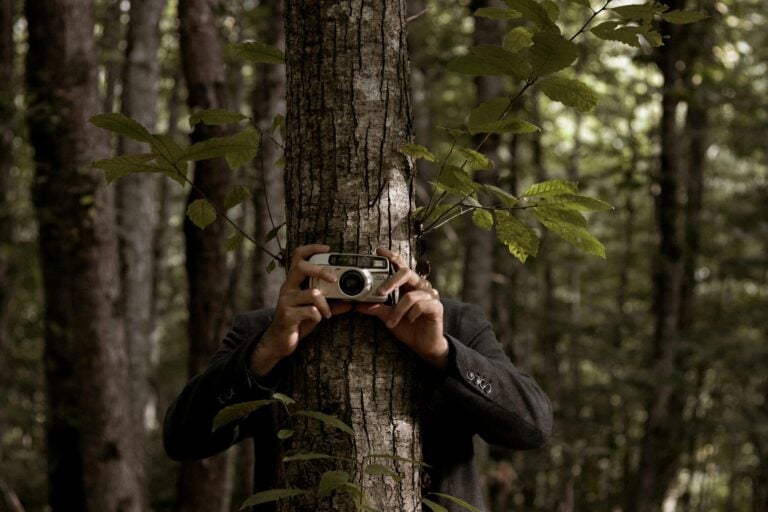

Yes, being pretentious can absolutely be a way to compensate for insecurity and shyness. When someone feels fundamentally inadequate or fears social rejection, projecting superiority becomes a defense mechanism, a way to control how others perceive them before vulnerability can be exposed. The armor of arrogance often hides a person who simply doesn’t know how to feel safe in the world.
What makes this pattern so fascinating, and so easy to misread, is that it shows up across personality types. Introverts, extroverts, and everyone in between can fall into pretentious behavior when insecurity goes unaddressed. And yet the experience of wearing that mask feels different depending on how you’re wired.
My own experience taught me something uncomfortable about this. During my agency years, I watched colleagues perform confidence they clearly didn’t feel. I also had to reckon with moments when I did the same thing, wrapping myself in expertise and intellectual distance because genuine connection felt risky. That’s a harder admission than it sounds.
Personality type shapes how insecurity gets expressed, and understanding that spectrum matters. Our Introversion vs Other Traits hub examines the full range of personality dimensions, from energy preferences to social behavior, and pretentious compensation is one of the more complex patterns that emerges when those traits intersect with unresolved fear.

What Does Pretentious Behavior Actually Look Like?
Pretentiousness gets thrown around as an insult, but it’s worth being precise about what it actually means. At its core, pretentious behavior is the act of claiming or projecting qualities, knowledge, or status that exceed what someone genuinely possesses or feels. It’s performance in place of presence.
Career Coaching for Introverts
One-on-one career strategy sessions with Keith Lacy. 20 years of Fortune 500 leadership as an introvert, now helping others build careers that work with their wiring.
Learn More50-minute Zoom session · $175
In practice, it shows up in recognizable ways. Name-dropping credentials in casual conversation. Dismissing popular things as beneath one’s taste. Speaking in jargon to establish expertise rather than communicate clearly. Correcting others in public when the correction serves ego more than accuracy. Treating intellectual or cultural knowledge as a social weapon.
At one agency I ran, we had a senior strategist who had a habit of referencing obscure academic frameworks in client meetings. The clients were often confused, and the work suffered for it. What struck me wasn’t his intelligence, which was genuine, but the way he deployed it. Every reference seemed designed to establish hierarchy rather than solve the problem on the table. Over time, I came to understand that he was terrified of being found out as someone who didn’t belong in the room. The performance was his protection.
Pretentious behavior is distinct from genuine confidence. Confidence doesn’t need an audience. It doesn’t require others to feel smaller. When someone is truly secure, they can acknowledge what they don’t know, laugh at themselves, and engage with ideas without needing to win.
How Does Insecurity Drive This Kind of Compensation?
Insecurity, at its psychological root, is a gap between how someone perceives themselves and how they believe they should be perceived. When that gap feels threatening, the mind looks for ways to close it, or at least hide it. Pretentiousness is one of those ways.
The logic, unconscious as it usually is, goes something like this: if I can establish that I’m sophisticated, knowledgeable, or discerning, then no one will look closely enough to find the parts of me I’m ashamed of. Superiority becomes a kind of smoke screen. The problem is that it rarely works. People can usually sense when performance is replacing authenticity, even if they can’t name what’s off.
Psychological frameworks around defense mechanisms help explain this. When direct acknowledgment of vulnerability feels intolerable, the mind displaces that anxiety outward, often by projecting inadequacy onto others or by overclaiming one’s own worth. Research published in PubMed Central on self-enhancement and social comparison sheds light on how people manage perceived status threats, and pretentious behavior fits squarely into that territory.
What I’ve noticed in my own reflections is that the pretentious moments in my career almost always came when I felt most exposed. Pitching to a Fortune 500 client whose internal team clearly knew more about their industry than I did. Walking into a room full of people who had MBAs when my path had been more unconventional. In those moments, I sometimes defaulted to a kind of intellectual armor, talking about strategy frameworks and industry trends in ways that were more about signaling than connecting. It wasn’t my best work, and deep down I knew it.

Where Does Shyness Fit Into This Pattern?
Shyness and pretentiousness might seem like opposites, and in many ways they are. Shyness involves anxiety about social evaluation, a fear of being judged negatively in social situations. Pretentiousness involves projecting superiority. Yet they can coexist in the same person, and often do.
A shy person who also carries deep insecurity faces a particular bind. They want connection but fear exposure. They want to be seen but dread being judged. One resolution to that bind is to control the terms of engagement entirely by positioning yourself as someone whose judgment matters more than others’. If I’m the one with superior taste or knowledge, then your opinion of me carries less weight. It’s a way of pre-emptively disarming the social threat that shyness makes feel so acute.
Shyness is also frequently confused with introversion, which matters here. Introverts prefer less stimulating social environments and recharge through solitude, but that preference doesn’t automatically come with social anxiety. Shy people, by contrast, experience genuine fear around social evaluation regardless of whether they’re introverted or extroverted. If you’ve ever wondered where you fall on that spectrum, the Introvert Extrovert Ambivert Omnivert Test can help you get a clearer picture of your own wiring.
The distinction matters because the path forward looks different depending on which issue you’re actually dealing with. An introvert who has learned to own their quietness doesn’t need the pretentious armor. A shy person who hasn’t yet worked through their social anxiety might reach for it constantly, not out of malice, but out of genuine fear.
Is Pretentious Behavior More Common in Introverts or Extroverts?
This is a question worth sitting with, because the honest answer is: it shows up in both, but in different forms.
Extroverts who use pretentiousness as compensation tend to do it loudly. They dominate conversations with status signals, drop names in group settings, and perform expertise in ways that are hard to miss. Their insecurity gets projected outward in real time, often in front of an audience. Part of what drives this is the extroverted need for external validation. When that validation feels uncertain, some extroverts overclaim to secure it.
To understand what extroversion actually involves at a deeper level, including how it shapes social behavior and the need for stimulation, it helps to start with the fundamentals. What does extroverted mean, really? The answer is more nuanced than most people assume, and it changes how you interpret behaviors like social performance and status signaling.
Introverts who fall into pretentiousness tend to do it more quietly, which makes it harder to spot and sometimes harder to admit. It might show up as intellectual dismissiveness in one-on-one conversations, or a habit of subtly correcting others’ cultural references, or a certain coolness toward anything popular or mainstream. The introvert’s version often involves curating an identity of depth and discernment rather than performing loudly for a crowd.
As an INTJ, I’m particularly susceptible to a specific flavor of this. INTJs are wired for systems thinking and long-range analysis. When that strength tips into insecurity, it can become a kind of intellectual gatekeeping, an unspoken belief that most people aren’t thinking carefully enough. I’ve caught myself in that mode more than once, and it’s not a flattering look. What it usually signals is that I’m feeling threatened in some way, not superior.
People who identify as somewhere between introvert and extrovert handle this differently. Omniverts and ambiverts experience social energy in more fluid ways, and their compensatory patterns tend to shift depending on context. An omnivert might perform extroverted confidence in one setting and retreat into quiet intellectual superiority in another, both as forms of managing the same underlying insecurity.

Why Do Some People Develop This Pattern While Others Don’t?
Not everyone who experiences insecurity or shyness becomes pretentious. So what tips the scale?
A few factors seem to matter. Early experiences of shame play a significant role. When someone grows up in an environment where vulnerability was punished or where worth was tied tightly to achievement and status, they learn early that the safest version of themselves is the most impressive version. Pretentiousness becomes a survival strategy before it becomes a personality trait.
Cultural context also shapes this. Certain environments, particular industries, academic circles, creative fields, corporate hierarchies, reward performative sophistication. When the culture around you prizes being seen as refined or intellectually elevated, the incentive to perform those qualities intensifies. I spent twenty years in advertising, a field with its own particular brand of this. The industry can attract people who are genuinely creative and also deeply insecure about whether their creativity is valued. That combination produces a lot of pretentious behavior, and I say that as someone who participated in it.
Attachment patterns matter too. People who didn’t develop secure attachment in early relationships often struggle with a fundamental uncertainty about their own worth. That uncertainty doesn’t disappear in adulthood; it just finds new expressions. Pretentiousness is one of them, a way of establishing worth through external markers when internal security isn’t available.
The degree of introversion also factors in. Someone who is fairly introverted versus extremely introverted may experience social situations very differently, and those differences shape how insecurity gets managed. A deeply introverted person who finds social environments genuinely draining has more reason to build protective barriers, and pretentiousness can become one of those barriers without the person even recognizing it as such.
Can You Be Pretentious Without Realizing It?
Yes, and this might be the most important point in the whole conversation.
Pretentious behavior that stems from insecurity is rarely conscious. People don’t usually wake up and decide to be condescending as a coping strategy. The pattern develops gradually, often starting as a reasonable response to real social threat and then calcifying into habit. By the time it becomes a default mode, it feels like personality rather than protection.
One of the clearest signals that pretentiousness is compensation rather than genuine confidence is the emotional charge behind it. Genuine confidence is relatively neutral. It doesn’t need to diminish others. When someone feels a spike of satisfaction at knowing something others don’t, or a flash of irritation when their cultural reference isn’t recognized, or a quiet contempt for people who enjoy things they consider lowbrow, those emotional reactions are worth examining. They’re pointing at something underneath the surface.
Another signal is inconsistency. Truly secure people behave similarly across contexts. Someone using pretentiousness as armor tends to deploy it most heavily when they feel most threatened, in rooms where they feel outranked, in conversations where their expertise might be challenged, in social situations where they’re not sure how they’ll be received. That context-dependence is a clue.
Some people who identify as introverted extroverts, people who don’t fit neatly into either category, find this pattern particularly worth examining. If you’re curious whether your social tendencies lean one way or the other, an introverted extrovert quiz can surface some useful self-awareness, particularly around how you manage social energy and what triggers your defensive behaviors.

What Happens When You Stop Needing the Armor?
Something genuinely shifts when a person stops relying on pretentiousness as protection. The conversations get better. The relationships get deeper. The work, if you’re in a creative or intellectual field, often gets stronger too, because you’re no longer spending energy on performance that could go into substance.
For me, the shift came gradually over the course of my agency career. Some of it was age and accumulated experience, the slow accumulation of evidence that I was capable of doing the work. Some of it was specific relationships with clients and colleagues who responded better to my genuine self than to my polished professional persona. And some of it was the deliberate work of understanding my own introversion and what it actually meant, rather than treating it as something to overcome.
When I stopped trying to perform extroverted confidence and started working with my natural wiring as an INTJ, something interesting happened. I became more effective in rooms, not less. Psychology Today’s work on why deeper conversations matter resonates with what I experienced firsthand: when you stop performing and start genuinely engaging, people respond to it. Depth is disarming in the best possible way.
The research on this is consistent with what psychology has long observed about authenticity and social connection. Work published in PubMed Central on personality and social behavior points to the ways that genuine self-expression tends to build stronger interpersonal bonds than strategic impression management. Pretentiousness, even when it temporarily establishes status, tends to erode trust over time.
What replaces the armor isn’t vulnerability for its own sake. It’s a different kind of confidence, one that doesn’t need to establish hierarchy to feel safe. That shift is available to anyone willing to look honestly at what their pretentious behavior is actually protecting.
How Do You Start Addressing the Insecurity Underneath?
Recognizing the pattern is step one, and it’s not trivial. Most people who use pretentiousness as compensation have been doing it long enough that it feels like a natural part of who they are. Separating the behavior from the identity takes honesty and some willingness to sit with discomfort.
A few practical starting points tend to help. First, notice the emotional triggers. When do you feel the pull toward intellectual superiority or dismissiveness? What situations activate it? Those situations are usually pointing directly at the insecurity underneath. For me, it was rooms where I felt my credentials were being silently questioned. Recognizing that specific trigger helped me respond differently when I felt it coming.
Second, practice tolerating not knowing. Pretentious behavior often involves overclaiming knowledge or expertise. Deliberately practicing saying “I don’t know” or “that’s a good point, I hadn’t considered that” in low-stakes situations builds the muscle for doing it when the stakes feel higher. It sounds simple, and it is, but it’s also genuinely uncomfortable for people who’ve been using expertise as protection.
Third, consider what you’re actually afraid of. Pretentiousness as compensation is always protecting against something specific, being found inadequate, being rejected, being seen as ordinary. Getting clear on the specific fear makes it easier to address directly rather than managing it through performance. Therapy can be genuinely useful here, and it’s worth noting that introverts often find the one-on-one depth of therapeutic work well-suited to their processing style. Pointloma’s resources on introverts in counseling contexts offer some useful perspective on how introverts engage with psychological work.
Understanding the full landscape of personality types, including where you genuinely fall on the introversion spectrum, can also be clarifying. The difference between how an otrovert and an ambivert process social situations, for instance, shapes what kinds of insecurities tend to emerge and which compensatory behaviors feel most available. Exploring the otrovert vs ambivert distinction can add useful nuance to how you understand your own patterns.
Finally, give yourself some credit for what the pretentiousness was trying to do. It was a strategy for surviving social situations that felt threatening. It served a purpose, even if it’s outlived its usefulness. Self-compassion isn’t about excusing the behavior; it’s about understanding it well enough to actually change it.

What This Means for How We See Pretentious People
There’s a practical implication here that extends beyond self-examination. When you encounter pretentious behavior in others, understanding it as potential compensation changes how you respond to it.
In my agency work, I managed a creative director who had a reputation for being dismissive and difficult. Junior team members found her intimidating, and a few had asked to be moved off her projects. When I sat with her one-on-one, what emerged was someone who had spent her entire career feeling like an outsider in rooms that didn’t initially take her seriously. The dismissiveness was a shield she’d built early and never put down.
Understanding that didn’t mean excusing behavior that was genuinely hard on the team. But it changed the conversation we had about it, and it changed what kind of support actually helped. Addressing the pretentiousness directly, without acknowledging the insecurity underneath, would have been like treating a symptom while ignoring the cause.
The same logic applies in personal relationships. Someone who consistently comes across as arrogant or superior might be the person most desperate for genuine connection. That doesn’t obligate you to absorb their behavior indefinitely, but it does suggest that a different kind of engagement, one that doesn’t trigger their defenses, might produce a very different person.
Conflict resolution between personality types benefits enormously from this kind of understanding. Psychology Today’s framework for introvert-extrovert conflict resolution touches on how different personality orientations create friction, and pretentious behavior is one of the more common friction points when insecurity goes unnamed.
There’s also a workplace dimension worth acknowledging. In professional settings, pretentious behavior that stems from insecurity can significantly undermine collaboration, particularly in environments that depend on trust and psychological safety. Frontiers in Psychology’s recent work on personality and workplace dynamics highlights how self-presentation strategies interact with team performance, and the pattern holds: performance for status tends to crowd out performance for results.
The most effective professionals I worked with over two decades weren’t the ones who performed most impressively in meetings. They were the ones who were most genuinely present, most willing to be wrong, most interested in the problem rather than in how they looked while solving it. That kind of presence is what pretentiousness, however understandably, gets in the way of.
If you want to keep exploring how personality traits intersect with behavior, confidence, and social dynamics, the full Introversion vs Other Traits hub covers the broader landscape in depth.
About the Author
Keith Lacy is an introvert who’s learned to embrace his true self later in life. After 20 years in advertising and marketing leadership, including running agencies and managing Fortune 500 accounts, Keith now channels his experience into helping fellow introverts understand their strengths and build fulfilling careers. As an INTJ, he brings analytical depth and authentic perspective to every article, drawing from both professional expertise and personal growth.
Frequently Asked Questions
Can being pretentious really be a defense mechanism for insecurity?
Yes. Pretentious behavior frequently functions as a defense mechanism, a way of projecting superiority to prevent others from perceiving inadequacy. When someone fears social rejection or feels fundamentally uncertain about their worth, establishing themselves as sophisticated or intellectually elevated can feel like a way to control how they’re perceived. The behavior is often unconscious and tends to intensify in situations where the person feels most threatened or exposed.
Is pretentious behavior more common in introverts than extroverts?
Neither type has a monopoly on pretentiousness, but the forms it takes tend to differ. Extroverts who use it as compensation often perform it loudly in group settings, using status signals and name-dropping to secure external validation. Introverts tend toward a quieter version, intellectual dismissiveness or cultural gatekeeping, deployed in smaller interactions. Both are driven by insecurity, just expressed through the lens of how each type naturally engages with social environments.
How is shyness different from introversion when it comes to pretentious behavior?
Shyness involves anxiety about social evaluation, a fear of being judged negatively. Introversion is about energy preference, specifically a preference for less stimulating social environments. A shy person may be introverted, extroverted, or somewhere in between. When shyness and insecurity combine, pretentious behavior can emerge as a way of pre-emptively controlling social judgment. An introvert who has genuinely embraced their quietness and doesn’t carry significant social anxiety is less likely to need that kind of armor.
Can someone be pretentious without knowing it?
Absolutely, and this is more common than most people realize. When pretentious behavior develops as a response to early shame or repeated social threat, it can become habitual and feel like a natural part of one’s personality. The clearest signals that it’s happening unconsciously include an emotional charge around being seen as knowledgeable or refined, inconsistency in how the behavior shows up depending on context, and a subtle satisfaction in knowing things others don’t. These reactions point to the insecurity underneath rather than to genuine confidence.
What’s the most effective way to address pretentious behavior rooted in insecurity?
Start by identifying the specific triggers. Pretentious behavior as compensation tends to appear most strongly when a particular fear is activated, often the fear of being found inadequate or rejected. Noticing which situations pull you toward intellectual superiority or dismissiveness points directly at the underlying insecurity. From there, practicing tolerance for not knowing, engaging with the specific fear directly, and building genuine competence in areas that matter to you all help reduce the need for the armor. Therapy can be particularly useful for working through the deeper patterns, especially for introverts who process well in one-on-one depth conversations.