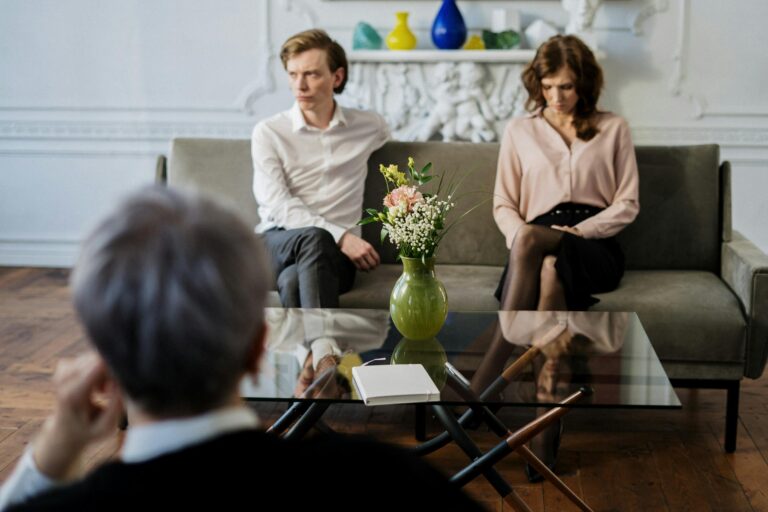

Yes, introverts and extroverts socialize differently, and the differences run deeper than most people realize. It’s not just about how much socializing each type prefers. It’s about the entire architecture of connection: what feels meaningful, what feels draining, how long conversations last, and what happens inside each person long after everyone goes home.
Those differences shaped my career more than any business strategy ever did. Running advertising agencies for over two decades, I watched social dynamics play out in client meetings, creative brainstorms, new business pitches, and team retreats. I was surrounded by extroverts who seemed to run on social fuel while I was quietly calculating how much energy I had left in the tank. Understanding what was actually happening, for me and for the people around me, changed everything.

If you’ve ever wondered why a conversation that energizes your extroverted colleague leaves you wanting two hours of quiet, or why your idea of a great Friday night looks nothing like your friend’s, this is worth exploring carefully. Our Introversion vs Other Traits hub covers the broader landscape of how introverts compare to and contrast with other personality orientations, and the social dimension is one of the most revealing places to start.
What Actually Drives the Difference in Social Behavior?
Most people reduce this to a simple formula: extroverts like people, introverts don’t. That framing is both inaccurate and a little insulting. The actual difference is rooted in how each type responds to social stimulation at a neurological and psychological level.
Career Coaching for Introverts
One-on-one career strategy sessions with Keith Lacy. 20 years of Fortune 500 leadership as an introvert, now helping others build careers that work with their wiring.
Learn More50-minute Zoom session · $175
Extroverts tend to experience social interaction as energizing. The stimulation of conversation, group activity, and external engagement activates reward pathways in ways that feel genuinely good. They often think out loud, processing ideas through dialogue rather than internal reflection. Solitude, for many extroverts, doesn’t restore them. It depletes them.
Introverts respond differently to that same stimulation. Social interaction isn’t unpleasant, but it draws on internal resources rather than replenishing them. The American Psychological Association defines introversion as a tendency toward inward orientation, characterized by a preference for solitary activities and a need for restoration through time alone. That need for restoration is the crux of the difference.
I spent years misreading this in myself. After a full day of client presentations and agency-wide meetings, I’d feel a particular kind of fatigue that wasn’t physical. My body was fine. My mind was exhausted in a specific, depleted way. I assumed something was wrong with me. It took a long time to understand that I wasn’t broken. I was just wired differently, and that wiring had direct consequences for how I socialized.
How Do Introverts Actually Prefer to Connect?
One of the most consistent patterns among introverts is a strong preference for depth over breadth in social connection. Where an extrovert might feel comfortable moving fluidly through a room of thirty people, touching base with everyone, an introvert often prefers settling into one or two conversations that actually go somewhere.
This isn’t shyness. It’s a different value system around what makes social time worthwhile. Many introverts find small talk genuinely uncomfortable, not because they lack social skill, but because it feels like a lot of energy spent on very little return. A conversation about someone’s actual life, their work, their struggles, their ideas, that’s where introverts tend to come alive.
Psychology Today has explored whether introverts make better friends than extroverts, and what emerges from that conversation is telling. Introverts often invest more deeply in fewer relationships, prioritizing quality and loyalty over social breadth. That’s not a consolation prize for being introverted. It’s a genuinely different and often powerful way of building connection.
At my agencies, I had a creative director named Marcus who was about as extroverted as anyone I’ve ever worked with. He could walk into a client meeting cold and have everyone laughing within four minutes. His client relationships were wide and warm. Mine were fewer and deeper. I knew certain clients’ business challenges in ways that surprised even them. Neither approach was wrong. They were just fundamentally different expressions of how we each connected with people.

Where Does Extroversion Actually Come From?
It’s worth pausing to define what we mean when we talk about extroversion, because the word gets used loosely. If you want a clear grounding, this breakdown of what extroverted actually means is a useful place to start. Extroversion isn’t just being outgoing or talkative. It’s a deeper orientation toward the external world as a source of stimulation and reward.
Extroverts tend to be more comfortable with ambiguity in social settings because they process through action and interaction rather than prior reflection. They’re often quicker to speak in group settings, more comfortable with interruption, and more likely to interpret silence as a problem to be solved. None of that is a character flaw. It’s simply how their processing works.
What gets complicated is when those tendencies become the default expectation in social and professional environments. When “good socializing” gets defined as extroverted socializing, introverts end up feeling like they’re doing it wrong. They’re not. They’re doing it differently.
The Healthline overview of introversion makes a point worth repeating: introversion and extroversion exist on a spectrum, and most people fall somewhere in the middle rather than at either extreme. That spectrum matters when we’re talking about social behavior, because the differences aren’t always dramatic. Sometimes they’re subtle and situational.
What About People Who Don’t Fit Neatly Into Either Category?
Not everyone reads as clearly introverted or extroverted, and that’s where things get more interesting. If you’ve ever felt like you shift between both orientations depending on context, you might want to look at the distinction between omniverts and ambiverts to see which description fits your experience more accurately.
Ambiverts tend to fall genuinely in the middle of the spectrum, comfortable with both social engagement and solitude, without strong preference either way. Omniverts are different. They can swing to both extremes, highly social in some contexts and deeply withdrawn in others, often depending on circumstances, stress levels, or environment. The social behavior of omniverts can look inconsistent from the outside, but there’s usually an internal logic to it.
If you’re not sure where you land, an introvert, extrovert, ambivert, and omnivert test can give you a clearer picture. Knowing your actual orientation makes it much easier to understand your own social patterns without judging them against someone else’s baseline.
I’ve had team members over the years who seemed to defy easy categorization. One account supervisor, Diane, was brilliant in small client meetings and completely checked out at agency parties. She wasn’t being antisocial. She was an omnivert who performed beautifully in high-stakes, purposeful social settings and had nothing left for casual ones. Once I understood that distinction, I stopped reading her party behavior as a morale problem and started seeing it as useful information about how she was wired.
How Does Social Energy Work Differently for Each Type?
Social energy is the clearest practical difference between how introverts and extroverts approach socializing. Extroverts generally gain energy from social interaction. The more engaged they are with others, the more alive they feel. An extrovert who spends a weekend alone often returns to work on Monday feeling flat, even if they were technically resting.
Introverts work in reverse. Social interaction draws on a finite internal resource, and that resource needs to be replenished through solitude and quiet. This isn’t a preference or a mood. It’s a functional reality of how introverts process experience. Ignoring it doesn’t make it go away. It just creates a deficit that compounds over time.
A study published on PubMed Central examining personality and social behavior points to meaningful differences in how introverts and extroverts process social stimulation, with extroverts showing stronger reward responses to social engagement. That neurological difference has real consequences for how each type manages their social calendar, recovers from high-contact days, and structures their ideal week.
My most draining weeks in the agency world weren’t the ones with the most work. They were the ones with the most people. Three days of consecutive client meetings, followed by a team offsite, followed by a new business pitch, would leave me in a state that no amount of sleep fully fixed. I needed solitude the way other people needed food. Once I started protecting that time deliberately, my performance in social and professional settings actually improved.
Do Introverts and Extroverts Want Different Things From Socializing?
Yes, and this is where a lot of friction between the two types originates. Extroverts often socialize for stimulation, connection, fun, and the pleasure of being around people. The activity itself is often the point. An extrovert might suggest getting a group together not because there’s something specific to discuss, but because being together feels good.
Introverts tend to socialize with more intentionality. They’re more likely to want a reason to gather, a shared purpose, a meaningful topic, a specific friend they’ve been wanting to catch up with. That doesn’t mean they’re less social. It means their social instincts are more selective and purpose-driven.
This difference can create real misunderstandings. An extrovert who invites an introvert to a casual group hangout might interpret the introvert’s hesitation as rejection or rudeness. The introvert might not be rejecting the person at all. They might just be calculating whether they have the energy, and whether that particular format is likely to feel worthwhile.
There’s also an interesting question about where someone falls on the introvert spectrum itself. Someone who is fairly introverted might manage group socializing reasonably well with the right preparation, while someone who is extremely introverted might find even small gatherings genuinely taxing. That distinction matters, and the difference between fairly introverted and extremely introverted is worth understanding if you’re trying to figure out your own social limits or those of someone you care about.
How Do Introverts Handle Group Socializing Versus One-on-One?
Group settings present specific challenges for introverts that one-on-one conversations typically don’t. In a group, the social dynamics are more complex, conversations move faster, there’s more pressure to perform in real time, and the depth of any single exchange is usually limited by the number of people involved.
Many introverts find that they show up very differently in one-on-one settings compared to groups. Put them across a table from one person they trust, and they can be warm, articulate, funny, and deeply engaged. Put them in a room of twelve people making noise and competing for airtime, and they often go quiet, not because they have nothing to say, but because the format doesn’t work with how they process and communicate.
This is something I watched play out repeatedly in agency creative meetings. My most introverted team members were often my deepest thinkers, but they rarely spoke up in large brainstorms. When I started pulling them aside after meetings for one-on-one conversations, the quality of what they contributed was remarkable. The group format was suppressing their best thinking. The individual format released it.
If you’ve ever wondered whether you might be more introverted than you appear in social settings, or whether your social behavior fits a pattern that doesn’t match the classic introvert description, the introverted extrovert quiz can help you sort through some of that complexity.

What Happens When Introverts Socialize Beyond Their Comfort Zone?
Most introverts have experience pushing past their social comfort zone, whether by choice or necessity. Professional settings, family obligations, and social expectations all create pressure to engage more than feels natural. The question is what that costs, and how to manage it.
When introverts consistently socialize beyond their natural capacity without adequate recovery time, the effects accumulate. Concentration suffers. Irritability increases. The quality of social engagement actually declines as the introvert becomes more depleted. Paradoxically, pushing harder socially often produces worse social outcomes for introverts, not better ones.
There’s also a masking phenomenon worth noting. Many introverts become skilled at performing extroversion in professional or social contexts, appearing engaged and energetic even when they’re running on empty. That performance is genuinely taxing. Research published in PubMed Central on personality and wellbeing suggests that acting against one’s natural personality orientation carries real psychological costs over time, even when the performance itself is convincing.
I did this for years. I ran agencies. I pitched Fortune 500 clients. I gave speeches. I ran all-hands meetings. From the outside, I looked like someone who thrived on all of it. From the inside, I was managing a careful energy budget that most of my colleagues never knew existed. The performance was real, but it came at a cost I wasn’t always willing to acknowledge.
Can Understanding These Differences Improve How We Connect With Each Other?
Absolutely, and this might be the most practical takeaway from all of it. When introverts and extroverts understand how each other is wired, the friction that comes from misread signals and mismatched expectations drops significantly.
An extrovert who understands that an introvert’s quietness in a group setting isn’t disengagement can stop interpreting it as a problem. An introvert who understands that an extrovert’s need to talk through ideas isn’t thoughtlessness can stop feeling steamrolled by it. The behavior is the same. The interpretation changes.
There’s also something to be said for introverts understanding the full range of their own social experience. Not every introverted person has the same relationship with socializing. Some find it mildly draining. Others find it profoundly exhausting. Some love parties in small doses. Others avoid them entirely. The introvert label covers a wide range of actual lived experience, and APA-published research on personality and social behavior reinforces that individual variation within personality types is substantial.
It’s also worth noting that the introvert-extrovert divide isn’t the only axis of social difference worth paying attention to. The distinction between an otrovert and an ambivert adds another layer to how people relate to social energy and interaction, and understanding where those categories overlap with introversion and extroversion gives a more complete picture of the personality landscape.
One of the most useful shifts I made as an agency leader was stopping the assumption that everyone socialized the way I did, or the way my most extroverted team members did. When I started treating social preferences as legitimate individual differences rather than character traits to be overcome, the culture of my teams improved in ways I hadn’t expected. People showed up more authentically. The introverts contributed more. The extroverts felt less like they were dragging everyone along. It worked better for everyone.
Adolescence is also worth mentioning here, because social differences between introverts and extroverts often become most visible and most painful during the teen years. Psychology Today’s exploration of introversion in adolescence captures how the social pressure of that developmental period can leave introverted teenagers feeling fundamentally out of step with their peers, a feeling many introverted adults still carry into their professional lives.

What Does Healthy Socializing Look Like for an Introvert?
Healthy socializing for an introvert isn’t about maximizing social contact. It’s about finding the formats, frequencies, and relationships that feel genuinely nourishing rather than merely obligatory.
That often means fewer commitments chosen more carefully. It means protecting recovery time without guilt. It means being honest with yourself about what kinds of social engagement you actually enjoy versus what you’re doing because you feel like you should. It means building relationships that can tolerate a slower pace of contact without interpreting silence as distance.
It also means recognizing that social skill and social energy are not the same thing. Many introverts are genuinely skilled in social situations. They’re good listeners, thoughtful conversationalists, and perceptive readers of the room. What they lack isn’t ability. It’s an inexhaustible supply of the energy that social engagement requires. Working with that reality, rather than against it, is what healthy socializing actually looks like.
For me, the shift happened gradually over many years in the agency world. I stopped trying to match the social output of my most extroverted colleagues and started designing my professional and personal social life around what actually worked for how I was built. Fewer events, more meaningful ones. Shorter social windows with clearer end times. More one-on-one conversations, fewer large group situations. The quality of my relationships improved. My professional effectiveness improved. And I stopped feeling like I was failing at something everyone else found easy.
If you’re still working through where you fall on the personality spectrum and how that shapes your social experience, the full range of resources in our Introversion vs Other Traits hub offers a broader context for all of these questions.
About the Author
Keith Lacy is an introvert who’s learned to embrace his true self later in life. After 20 years in advertising and marketing leadership, including running agencies and managing Fortune 500 accounts, Keith now channels his experience into helping fellow introverts understand their strengths and build fulfilling careers. As an INTJ, he brings analytical depth and authentic perspective to every article, drawing from both professional expertise and personal growth.
Frequently Asked Questions
Do introverts and extroverts socialize differently?
Yes, in meaningful ways. Extroverts typically gain energy from social interaction and tend to prefer broader, more frequent social contact. Introverts tend to find socializing energizing in smaller doses, prefer depth over breadth in their connections, and need solitude to restore their energy after social engagement. The difference isn’t about liking or disliking people. It’s about how each type processes and recovers from social stimulation.
Why do introverts prefer one-on-one conversations over group settings?
Group settings tend to be more stimulating, faster-paced, and harder to control, all of which can feel taxing for introverts. One-on-one conversations allow for the kind of depth, focus, and genuine exchange that introverts find most rewarding. In a group, conversation often stays surface-level by necessity. In a one-on-one setting, it can go somewhere real. Many introverts who seem quiet in groups are remarkably engaged and articulate in individual conversations.
Is it true that introverts dislike socializing?
No. Most introverts enjoy socializing in the right context and at the right frequency. What they dislike is socializing that feels obligatory, shallow, or excessive relative to their energy. Introverts often have rich social lives built around fewer, more meaningful relationships. The stereotype that introverts are antisocial or don’t enjoy people is a misreading of what introversion actually means.
How does social energy work differently for introverts and extroverts?
Extroverts tend to gain energy from social interaction, feeling more alive and engaged the more they connect with others. Introverts experience the opposite: social interaction draws on internal energy reserves that need to be replenished through solitude and quiet. This doesn’t mean introverts are weaker or less capable socially. It means they operate with a different energy economy, one that requires deliberate management rather than unlimited output.
Can introverts become more comfortable with extroverted-style socializing?
Introverts can develop social skills and become more comfortable in a wider range of social settings with practice and experience. What they can’t change is their fundamental wiring: the need for recovery time after social engagement is a consistent feature of introversion, not a habit to be broken. The most effective approach isn’t to become extroverted, but to build social strategies that work with introvert strengths, such as choosing smaller settings, preparing for conversations in advance, and protecting recovery time afterward.