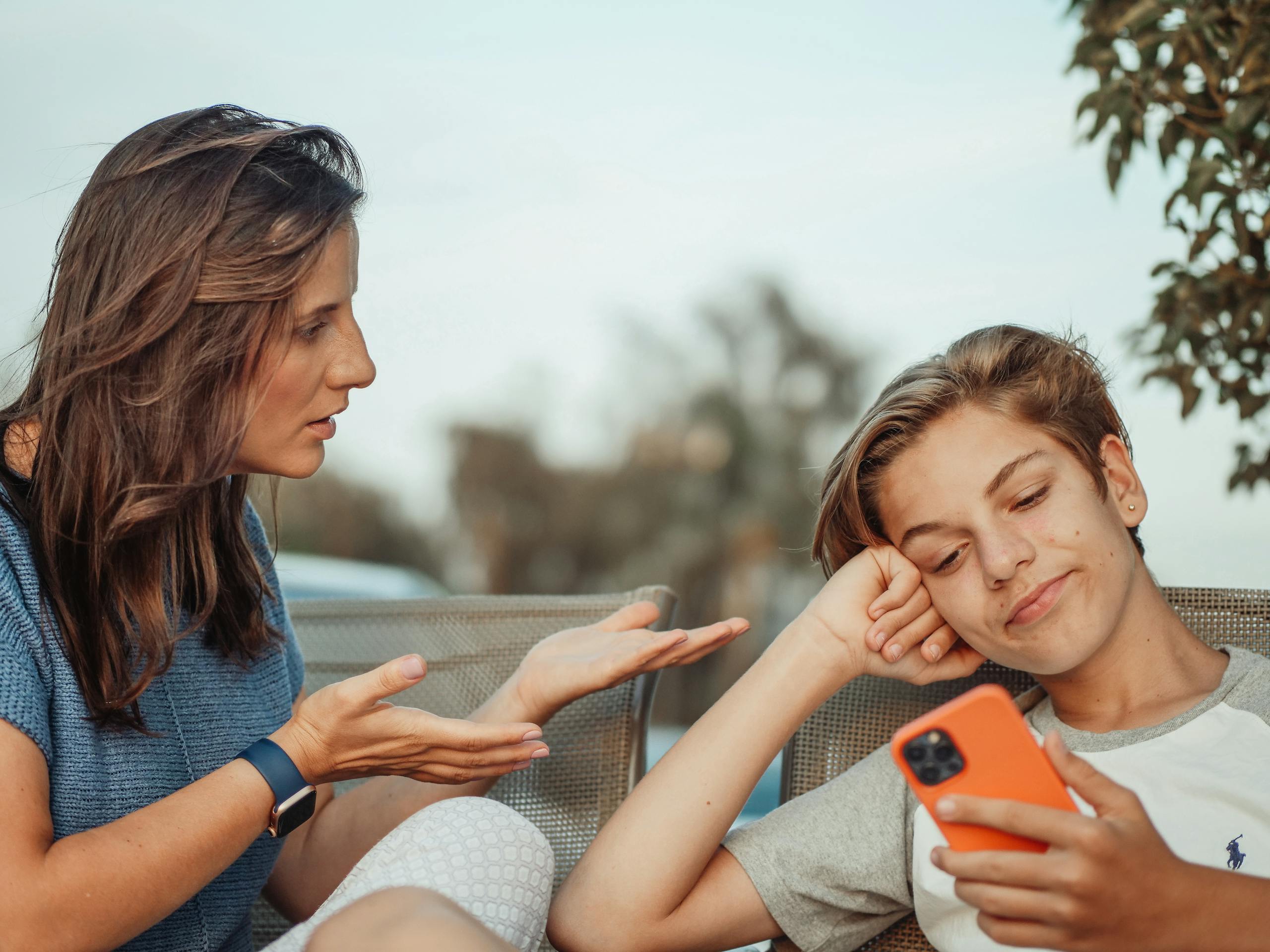

Extreme shyness in a 5-year-old looks like a child who clings to a parent’s leg at birthday parties, refuses to speak to adults they don’t know well, and cries before preschool drop-off for weeks on end. It’s real, it’s distressing for everyone involved, and it deserves a thoughtful answer rather than a dismissive “they’ll grow out of it.” The most important thing parents need to know is this: extreme shyness and introversion are not the same thing, and telling them apart early makes a meaningful difference in how you support your child.

Shyness involves fear and anxiety around social situations. Introversion is about where a person draws energy. A shy child dreads the birthday party and suffers through it. An introverted child might simply prefer a quieter afternoon with one close friend over a chaotic group gathering, without experiencing fear at all. Those two experiences can look identical from the outside, especially at age five, which is exactly why so many parents end up confused and worried.
Our Introversion vs Other Traits hub covers the full spectrum of personality-related distinctions that parents, educators, and adults trying to understand themselves often get tangled up in. Shyness versus introversion in young children is one of the most emotionally charged of those distinctions, and it’s worth taking seriously.
What Does Extreme Shyness Actually Look Like at Age Five?
Five-year-olds are still working out who they are in relation to the world. Some degree of social hesitation at this age is completely typical. Children this age are developmentally wired to check in with caregivers before engaging with new people or environments. That’s not pathology. That’s healthy attachment doing its job.
What’s your personality type?
Take our free 40-question assessment and get a detailed personality profile with dimension breakdowns, context analysis, and personalised insights.
Discover Your Type8-12 minutes · 40 questions · Free
Extreme shyness, though, looks different in both intensity and duration. A child experiencing it might refuse to speak at all in certain settings, a pattern sometimes called selective mutism. They might cry for extended periods before school, have physical symptoms like stomachaches before social events, or become so distressed at the idea of meeting new people that it disrupts daily family life. The distress is the signal. An introverted child might prefer to hang back and observe before joining in, but they’re generally not in pain about it.
I think about this distinction often because I recognize parts of my own childhood in it. I was a quiet kid who preferred reading to group play, and my parents occasionally worried I was too withdrawn. What I actually was, I understand now as an INTJ adult, was someone who needed time to process before engaging. There was no fear driving my quietness. There was preference. That difference matters enormously when you’re deciding how to respond to a child.
Extreme shyness at five tends to show up in specific, observable patterns. A child might be perfectly comfortable and expressive at home with family, then become almost frozen in unfamiliar social contexts. They might take months, not days, to warm up to a new teacher. They might avoid eye contact with strangers to the point that it becomes a source of social friction. When the hesitation is this consistent and this intense, it’s worth paying close attention.
Is Your Child Shy, Introverted, or Something Else Entirely?
One of the questions I get most often from parents who read Ordinary Introvert is some version of: “How do I know if my child is introverted or just shy?” And the honest answer is that you’re sometimes watching both things at once, because shyness and introversion can co-exist in the same person.
Think of it this way. Introversion sits on a spectrum. A child can be fairly introverted versus extremely introverted, and those two versions of introversion look quite different in daily life. A fairly introverted five-year-old might enjoy playdates with one or two children but get overwhelmed at large group events. An extremely introverted child might need significant alone time even after positive social interactions, processing the experience quietly before they’re ready to engage again.
Neither of those children is necessarily shy. Shyness adds a layer of anxiety and self-consciousness that introversion alone doesn’t include. A shy child worries about being judged, embarrassed, or rejected. An introverted child simply has a different energy economy. When you’re trying to figure out which you’re looking at, watch what happens after the social situation ends. Does your child seem relieved and depleted, the way an introvert feels after overstimulation? Or do they seem anxious and distressed, replaying what happened, worried about whether they said the wrong thing? That emotional texture is often the clearest indicator.
It’s also worth knowing that some children don’t fit neatly into introvert or extrovert categories at all. Understanding the difference between omniverts and ambiverts can be useful here, because some children genuinely shift between social and solitary modes depending on context, comfort level, and who’s in the room. That flexibility isn’t inconsistency. It’s its own personality style.

What Causes Extreme Shyness in Young Children?
Parents often ask whether they did something wrong. In my experience talking with introverts and their families, that guilt is almost always misplaced. Shyness in young children comes from a combination of temperament, early experiences, and the particular chemistry of how a child’s nervous system responds to novelty and perceived social threat.
Temperament is a significant factor. Some children are born with what developmental researchers call a “behaviorally inhibited” temperament, meaning their nervous systems respond more strongly to unfamiliar people and situations. This isn’t a flaw. It’s a variation in how the nervous system is calibrated. Research published in PubMed Central has examined how early behavioral inhibition relates to later social anxiety, and the relationship is real but not deterministic. A child with an inhibited temperament who receives warm, consistent support tends to develop much more flexibility over time than one whose anxiety is either dismissed or inadvertently reinforced.
Early experiences also shape how shyness develops. A child who has had a frightening social experience, being mocked by peers, feeling abandoned in an unfamiliar setting, or witnessing conflict in social situations, may develop heightened wariness that looks like extreme shyness even if their baseline temperament wasn’t especially inhibited. Context matters.
Parenting style plays a role too, though not in the way parents usually fear. The research points less to overprotection as a direct cause and more to the dynamic of how parents respond to their child’s fear. When a parent consistently rescues a child from mildly uncomfortable social situations, the child never gets the chance to discover that they can handle it. That pattern, however well-intentioned, can keep shyness entrenched longer than necessary.
I ran advertising agencies for over two decades, and I watched this exact dynamic play out with adult professionals. I had team members who were genuinely talented but had spent their entire careers being shielded from presentations, client calls, and conflict by well-meaning managers. By the time they reached senior roles, the avoidance had calcified into something that felt permanent. The earlier you gently expand a child’s comfort zone, the better, and the same principle applies at every age.
How Is Extreme Shyness Different From Social Anxiety Disorder?
This is a question worth taking seriously, because extreme shyness and social anxiety disorder overlap significantly in how they appear, but they’re not identical, and the distinction matters for how you respond.
Shyness is a personality trait. Social anxiety disorder is a clinical condition characterized by intense, persistent fear of social situations that significantly interferes with daily functioning. A five-year-old with extreme shyness might be hesitant and slow to warm up, but can generally participate in school, make at least one or two friends, and function reasonably well in familiar environments. A child with social anxiety disorder may be so distressed by social situations that school attendance becomes a serious problem, friendships feel impossible, and the anxiety is causing measurable harm to their development.
Evidence published in PubMed Central on childhood anxiety disorders underscores that early intervention, when anxiety is genuinely clinical, produces significantly better outcomes than a wait-and-see approach. So if your child’s shyness is severe enough to be interfering with their daily life in consistent, significant ways, a conversation with a pediatrician or child psychologist is worth having. Not because something is terribly wrong, but because support works better when it starts early.
Selective mutism, where a child speaks freely at home but becomes completely silent in certain social contexts like school, is one specific pattern that often warrants professional attention. It’s more common in children with anxious temperaments, and it’s distinct from simple shyness, even though it can look similar from the outside.
What Should Parents Actually Do When Their Child Is Extremely Shy?
Every parent I’ve talked with who has a shy child is trying to thread the same needle: how do you support your child without either dismissing their fear or reinforcing it? It’s a genuinely difficult balance, and getting it right matters.
Start by validating the feeling without validating the avoidance. There’s a meaningful difference between saying “I know this feels scary, and that’s okay” versus “I know this feels scary, so we don’t have to go.” The first acknowledges the emotion. The second teaches the child that fear is a reason to retreat. Acknowledging that something feels hard, while still gently moving toward it, builds a child’s confidence in their own capacity to cope.
Gradual exposure works. If your child is terrified of birthday parties, you don’t solve that by forcing them into the middle of a chaotic group event. You might start by arriving early when it’s quieter, staying nearby initially, and giving them a specific, manageable task that gives them a role in the social situation. Over time, as they accumulate small experiences of “I did that and it was okay,” the fear tends to lose some of its grip.
Avoid labeling your child as shy in front of them, especially to other adults. When a child hears “she’s just shy” repeated often enough, they start to wear it as an identity rather than a temporary state. That label can become a self-fulfilling prophecy. Instead, try “she likes to take her time getting comfortable,” which is both accurate and leaves room for growth.
One thing I’ve noticed in my own adult life as an INTJ is how much it mattered that the adults around me when I was young didn’t pathologize my quietness. They let me observe before joining in. They didn’t force me into the center of things. That patience gave me space to develop my own way of engaging with the world rather than spending energy fighting against my nature. That kind of acceptance is genuinely powerful, and it starts early.

Role-playing social situations at home can help enormously. Practice what to say when meeting someone new. Act out scenarios where your child has to ask for something, introduce themselves, or join a group already in play. The more familiar a situation feels in imagination, the less threatening it tends to be in reality. This is the same principle behind why public speaking coaches have clients rehearse in front of mirrors long before they stand in front of an audience.
If you’re uncertain whether your child’s shyness is within a typical range or something that warrants professional support, Psychology Today’s writing on the inner lives of quieter personalities offers useful context for understanding how introverted and shy children experience social connection differently from their more extroverted peers.
How Do Schools and Teachers Make Shyness Worse, and What Helps Instead?
Classrooms are designed, almost entirely, around extroverted norms. Participation grades reward speaking up in group discussions. Show-and-tell puts children on a social stage. Group projects assume that collaboration is always energizing. For a shy or introverted five-year-old, the school environment can feel like a constant performance they didn’t audition for.
Teachers who understand the difference between a child who is disengaged and a child who is processing quietly tend to get much better results with shy students. A child who hasn’t raised their hand might be thinking more carefully than the three who did. Calling on a shy child without warning in front of the class often produces exactly the opposite of what the teacher intends, it doesn’t build confidence, it confirms the child’s fear that social situations are unpredictable and threatening.
What actually helps is predictability and private preparation. A teacher who tells a shy child in advance, “Tomorrow I’m going to ask you to share one thing about your weekend,” gives that child time to prepare. That preparation transforms the experience from a threat into something manageable. Many shy children can participate confidently when they’ve had time to think through what they want to say.
I think about how often I’ve seen this play out in professional settings. In my agency years, I had clients who were brilliant strategists but would go almost silent in large group presentations. Give them a one-on-one conversation or a written brief, and the quality of their thinking was extraordinary. The problem was never their capability. It was the format. The same is true for shy five-year-olds. The format matters as much as the content.
If you’re curious about how your own personality style compares to your child’s, the introvert, extrovert, ambivert, and omnivert test on this site can help you understand your own baseline, which in turn helps you recognize whether you’re projecting your own social preferences onto your child or responding to what they actually need.
Can a Shy Child Become More Confident Without Losing Who They Are?
Yes. And this might be the most important thing I can say in this entire article.
Helping a shy child become more confident is not the same as trying to turn them into an extrovert. success doesn’t mean produce a child who loves birthday parties and thrives on group attention. The goal is to help them develop enough flexibility and coping capacity that their shyness doesn’t limit them from doing things they actually want to do.
There’s a meaningful difference between an extroverted personality and extroverted behavior. Understanding what extroverted actually means helps here, because many people conflate being outgoing with being socially functional. You don’t have to be naturally outgoing to be able to introduce yourself, ask for help, or participate in a group activity. Those are skills, not personality traits, and they can be learned and practiced by anyone, including the shyest child in the room.
What you’re building in a shy child is not a new personality. You’re building a toolkit. The capacity to tolerate mild discomfort. The knowledge that fear doesn’t have to be obeyed. The experience of having survived a hard social moment and come out the other side okay. Over time, those accumulated experiences reshape how a child relates to social situations, not by erasing their sensitivity, but by giving them more options for how to respond to it.
I spent years in advertising trying to perform a version of extroverted leadership that didn’t fit me. I got reasonably good at some of it, presenting to Fortune 500 clients, running large team meetings, working a room at industry events. But I was always more effective in the moments that played to my actual strengths: deep one-on-one conversations, written strategy, careful observation of what a client actually needed versus what they said they wanted. What I wish someone had told me earlier is that building capability in uncomfortable areas doesn’t require abandoning who you are. It just expands what you can do.

If you’re wondering whether your child might be showing signs of a personality style that’s more nuanced than simply “shy” or “not shy,” the introverted extrovert quiz offers a useful starting point for thinking about the full range of social personality styles. Some children, and adults, genuinely operate somewhere in the middle of that spectrum.
When Should Parents Seek Professional Support?
Most extreme shyness in five-year-olds does not require clinical intervention. With patient, consistent support from caregivers and teachers, many children naturally develop more social flexibility as they move through the early school years. That said, there are specific situations where getting professional input is the right call.
Seek support if your child’s shyness is significantly interfering with their ability to attend school, form any friendships, or participate in basic daily activities outside the home. Seek support if the shyness is accompanied by physical symptoms like frequent stomachaches or headaches before social events, if your child is completely silent in certain settings for extended periods, or if you’re noticing that the anxiety is getting more intense rather than gradually easing over time.
A child psychologist or licensed therapist with experience in childhood anxiety can be genuinely helpful. Cognitive behavioral approaches adapted for young children have a solid track record with anxiety-based shyness. Play therapy can also be effective for children who aren’t yet developmentally ready to talk directly about their fears. Point Loma University’s counseling resources offer useful context on how therapeutic support works for people with quieter, more inward-facing personalities, which applies to the kinds of children and families often seeking this kind of help.
Medication is rarely appropriate for shyness in young children and should only be considered in cases of severe, clinically diagnosed anxiety that hasn’t responded to behavioral approaches. Most children do not need medication, and most pediatricians would not recommend it as a first-line response to shyness.
The Frontiers in Psychology journal has published work on personality development and social behavior in early childhood that’s worth exploring if you want a more detailed picture of how temperament and environment interact during these formative years. The science is clear that early support, calibrated to the child’s actual needs rather than a generic template, produces meaningfully better outcomes.
How Personality Typing Can Help Parents Understand Their Quiet Child
Personality frameworks like the introvert-extrovert spectrum aren’t diagnostic tools, and they definitely shouldn’t be applied rigidly to five-year-olds whose personalities are still actively forming. But they can be genuinely useful as a lens for parents who are trying to understand why their child responds to the world the way they do.
When I first encountered the concept of introversion as a genuine personality orientation rather than a social deficit, something shifted for me. I stopped trying to explain away my preference for quiet and started understanding it as a feature of how I process information and energy. That reframe was significant. It changed how I managed myself, how I structured my workdays, and eventually how I led my teams.
Parents who understand the introvert-extrovert distinction often become much better advocates for their quiet children. They can explain to teachers why their child needs a moment to think before answering. They can make choices about extracurricular activities that play to their child’s strengths rather than constantly pushing against their grain. They can model for their child that quietness isn’t a flaw that needs fixing.
It’s also worth understanding that the introvert-extrovert spectrum isn’t binary. The distinction between otroverts and ambiverts adds another layer of nuance that helps explain why some children seem to shift between social and solitary modes in ways that don’t fit a simple introvert or extrovert label. Children who seem to defy easy categorization often fit somewhere in this more nuanced middle territory.
What personality typing offers parents isn’t a diagnosis or a prescription. It’s a vocabulary for talking about real differences in how people experience social situations, and that vocabulary can reduce the shame and confusion that often surrounds a shy child’s experience. When a child understands that their preference for quiet is a legitimate way of being in the world, not a problem to be corrected, something often loosens in them. The anxiety doesn’t disappear, but it stops being compounded by the feeling that they are fundamentally wrong.
As you think through where your child sits on this spectrum, exploring the broader conversation about personality types in our Introversion vs Other Traits hub can give you a richer foundation for understanding what you’re actually observing in your child and what it might mean for how you support them going forward.

If you’re an introverted parent raising a shy or introverted child, I’d also encourage you to think about what your own relationship with shyness and introversion has looked like. The patterns we carry from our own childhoods often show up in how we respond to our children’s struggles. That’s not a criticism. It’s an invitation to reflect. Psychology Today’s writing on introvert-extrovert dynamics touches on how personality differences shape the way we approach even the most personal interactions, including the ones we have with our own children.
And if you’re not sure where you fall on the spectrum yourself, the comparison between fairly introverted and extremely introverted experiences might help you understand your own baseline, which in turn helps you respond to your child from a clearer place rather than a reactive one.
About the Author
Keith Lacy is an introvert who’s learned to embrace his true self later in life. After 20 years in advertising and marketing leadership, including running agencies and managing Fortune 500 accounts, Keith now channels his experience into helping fellow introverts understand their strengths and build fulfilling careers. As an INTJ, he brings analytical depth and authentic perspective to every article, drawing from both professional expertise and personal growth.
Frequently Asked Questions
Is extreme shyness in a 5-year-old normal?
Some degree of shyness at age five is developmentally typical. Children this age are still learning to read social situations and often need time to warm up in unfamiliar settings. Extreme shyness becomes a concern when it consistently interferes with daily functioning, such as refusing to attend school, being unable to speak in certain settings for extended periods, or experiencing significant physical distress before social events. If shyness is causing measurable disruption to your child’s life over an extended period, consulting a pediatrician or child psychologist is a reasonable step.
How do I know if my child is shy or introverted?
Shyness involves fear and anxiety about social situations and what others might think. Introversion is about energy: introverted children feel drained by prolonged social interaction and recharged by time alone, but they don’t necessarily experience fear in social settings. A shy child dreads social situations. An introverted child may simply prefer quieter ones. The two can co-exist in the same child, and both are valid. Watch whether your child’s hesitation is driven by anxiety and self-consciousness or simply by a preference for less stimulation.
Will my extremely shy 5-year-old grow out of it?
Many children do become more socially flexible as they mature, particularly when they receive patient, consistent support rather than either pressure to perform or permission to avoid. Children with inhibited temperaments can develop significant social confidence over time without losing their sensitive, observant nature. That said, “growing out of it” isn’t guaranteed without some active support. Gradual, gentle exposure to social situations, combined with warm validation of the child’s feelings, tends to produce better outcomes than waiting passively for things to change on their own.
What is the difference between extreme shyness and social anxiety disorder in children?
Shyness is a personality trait characterized by hesitation and discomfort in social situations. Social anxiety disorder is a clinical condition in which fear of social situations is intense, persistent, and significantly interferes with daily functioning. A shy child may be slow to warm up but can generally participate in school and form friendships over time. A child with social anxiety disorder may be so distressed by social situations that school attendance, friendships, and basic daily activities outside the home become seriously impaired. If you’re concerned your child’s shyness may have crossed into clinical territory, a conversation with a mental health professional is worthwhile.
How can I help my shy 5-year-old without making things worse?
Validate your child’s feelings without validating avoidance. Acknowledge that something feels scary while still gently encouraging them to try it. Avoid labeling your child as “shy” in front of them, since that label can become part of their identity in ways that limit growth. Use gradual exposure, starting with smaller, more manageable versions of situations that feel overwhelming. Practice social scenarios at home through role-play. Communicate with teachers so they can offer preparation and predictability rather than unexpected public demands. And model calm confidence yourself in social situations, since children absorb a great deal from watching how the adults around them handle discomfort.