
Shyness and introversion are not the same thing, but they overlap often enough that the world treats them as one. A shy person fears judgment. An introvert simply prefers less stimulation. When someone is both, the cost can be something precious: a calling left unpursued because the wrong label got attached to the wrong trait.
Someone once said to me, about a woman we both knew, “It’s a shame about her shyness. She would have become a great teacher.” That sentence stayed with me for years. Not because it was cruel, but because it was so casually wrong, and so common. The assumption was that her quiet nature disqualified her. What nobody stopped to ask was whether she was shy, introverted, or simply someone who had never been given permission to lead from her own strengths.
That distinction matters more than most people realize, and it shapes entire lives.
If you’ve ever wondered where your own quiet nature fits on the spectrum, our Introversion vs Other Traits hub covers the full range of personality distinctions that help make sense of these questions. What follows is a closer look at one of the most misread combinations: shyness paired with genuine teaching ability, and why the world so often mistakes one for the absence of the other.
What Does It Actually Mean to Be Shy?
Shyness is rooted in anxiety. Specifically, it’s the fear of being evaluated negatively by others. A shy person may desperately want to connect, to speak, to be seen, but something in their nervous system pulls the brake before they can get there. It’s not a preference for solitude. It’s a fear of exposure.
What’s your personality type?
Take our free 40-question assessment and get a detailed personality profile with dimension breakdowns, context analysis, and personalised insights.
Discover Your Type8-12 minutes · 40 questions · Free
That’s worth sitting with for a moment, because it reframes everything. A shy person standing at the front of a classroom isn’t choosing distance. They’re managing fear while trying to show up anyway. And many of them do exactly that, brilliantly, once they understand what they’re actually working with.
Understanding what extroverted actually means helps clarify this further. Extroversion is about where someone draws energy: from external stimulation, social interaction, and active engagement with the world around them. Shyness has nothing to do with energy sources. A person can be extroverted and deeply shy, craving social connection while being paralyzed by the fear of it. A person can be introverted and completely confident, preferring smaller settings not because they’re afraid but because that’s where they think most clearly.
I managed a junior account executive early in my agency years who was one of the shyest people I’d ever worked with. She would go quiet in group meetings, rarely volunteered opinions, and once turned down a client presentation opportunity without explanation. I assumed at the time that she lacked confidence in her work. What I eventually realized, after a one-on-one conversation that took months to happen, was that she was terrified of being judged, not of the work itself. Her ideas were sharp. Her instincts were excellent. Shyness had built a wall around all of it.
Why Shy People Often Make Exceptional Teachers
There’s a particular kind of attentiveness that comes from a lifetime of watching rather than performing. Shy people often develop extraordinary observational skills because they spend so much time on the edges of social situations, reading the room, noticing what others miss. In a classroom, that quality is not a liability. It’s a gift.
A teacher who notices which student is struggling before that student says a word. A teacher who picks up on confusion in a facial expression three rows back. A teacher who calibrates the energy in a room and adjusts accordingly. These are not skills that come from being the loudest person in the space. They come from being the most perceptive one.
According to Point Loma Nazarene University’s counseling psychology resources, introverts bring meaningful strengths to helping professions, including deep listening, careful observation, and the ability to create space for others to think and speak. Many of those same qualities show up in people who are shy, because both groups have learned to process the world carefully before acting in it.

Depth of connection matters in teaching, too. Psychology Today’s research on deeper conversations highlights how meaningful one-on-one exchanges, the kind that shy and introverted people often prefer, build stronger understanding and trust than surface-level small talk. A teacher who gravitates toward those deeper moments with students creates a classroom culture where thinking out loud feels safe. That’s not a small thing. That’s the whole point of education.
The woman that comment was made about, the one who “would have become a great teacher,” went on to become exactly that. I learned this years later from a mutual friend. She taught middle school science for over a decade. Her students, apparently, adored her. Not despite her quiet nature. Because of it.
How the Wrong Label Becomes a Life Sentence
When someone is labeled “too shy” for a role, what’s really happening is that the observer is measuring them against an extroverted template. The assumption is that great teachers are charismatic performers, that leadership requires a big voice, that influence flows from presence rather than depth. None of those assumptions hold up when you examine them closely.
I spent the better part of my first decade in advertising trying to perform extroversion. I ran agencies, managed large teams, pitched Fortune 500 clients in rooms full of people who expected me to be “on.” And I was, to a point. But the performance was exhausting in a way I couldn’t explain to anyone around me, because everyone else seemed to find the energy energizing. I didn’t yet have language for what I was experiencing. I just knew something was off.
What I’ve come to understand since then is that I was never shy. I was introverted, and those are meaningfully different. My hesitation in certain social situations wasn’t fear of judgment. It was a preference for depth over breadth, for preparation over improvisation, for one solid idea over ten half-formed ones. Once I stopped trying to perform and started leading from my actual strengths, everything changed.
Shy people carry an additional layer: the fear itself. And when that fear gets misread as disinterest, incompetence, or unsuitability for a role, the person often internalizes the verdict. They stop applying. They redirect their ambitions. They find smaller stages because they’ve been told the bigger ones aren’t for them. That’s the real cost of the wrong label.
If you’re trying to figure out where you actually land on this spectrum, the Introvert Extrovert Ambivert Omnivert Test is a useful starting point. Knowing whether you’re dealing with introversion, shyness, or some combination of both changes what you do next.
Are You Shy, Introverted, or Both?
Most people who ask this question already suspect the answer is “both,” and they’re often right. Shyness and introversion frequently travel together, not because they’re the same thing, but because both can produce similar external behaviors. Staying quiet in a group. Declining social invitations. Preferring written communication over phone calls. The reasons behind those behaviors are different, but the surface looks the same.
Some people land in the middle of the introvert-extrovert spectrum entirely. If you’ve ever felt like you don’t fit neatly into either category, it’s worth reading about the difference between omniverts and ambiverts, because those distinctions matter when you’re trying to understand your own patterns. An ambivert draws energy from both social and solitary settings depending on context. An omnivert swings more dramatically between the two. Neither is the same as being shy.
There’s also a meaningful difference between being fairly introverted and being extremely introverted. Someone who is fairly introverted versus extremely introverted will experience the world quite differently, even if both prefer quieter environments. Shyness can sit on top of either degree of introversion, or neither.

What helps is separating the questions. Ask yourself: Do I avoid social situations because I find them draining, or because I’m afraid of how I’ll be perceived? Do I stay quiet because I’m processing, or because I’m protecting myself from judgment? Do I prefer solitude as a genuine recharge, or as a hiding place?
The answers point in different directions. Introversion responds well to structure, preparation, and environments designed for depth. Shyness often responds to gradual exposure, building evidence that the feared judgment doesn’t materialize, and sometimes to professional support. Treating one like the other doesn’t work.
What Shyness Does to Professional Ambition
The professional costs of misidentified shyness are real and underappreciated. A person who is genuinely well-suited for a role, who has the skills, the instincts, and the commitment, may never get there because shyness shaped how they presented themselves at critical moments. An interview. A performance review. A conversation with a mentor who could have opened a door.
I’ve watched this happen. One of my creative directors, an exceptionally talented woman, was passed over for a promotion twice. The feedback from senior leadership was vague, something about “executive presence” and “needing to assert herself more.” What I saw in those conversations was someone who was deeply shy in formal settings, even though she was confident and decisive in smaller groups. The evaluation was measuring the wrong thing in the wrong context.
After I restructured how we ran internal presentations, giving her time to prepare, fewer surprise questions, smaller audiences for initial feedback rounds, her performance in those settings transformed. She got the promotion on the third cycle. The shyness didn’t disappear. She just stopped being evaluated in the conditions that triggered it most.
That’s a management lesson I carry with me. Most organizations evaluate people in extrovert-optimized formats: open-floor meetings, impromptu presentations, networking events, rapid-fire brainstorms. Those formats systematically disadvantage shy and introverted people, not because those people lack ability, but because the format doesn’t match how they do their best thinking. As Harvard’s Program on Negotiation notes, introverts often bring significant strengths to high-stakes professional situations, but those strengths require the right conditions to show up.
Can Shyness Coexist With a Calling That Requires Presence?
Yes. And the evidence is everywhere once you start looking for it.
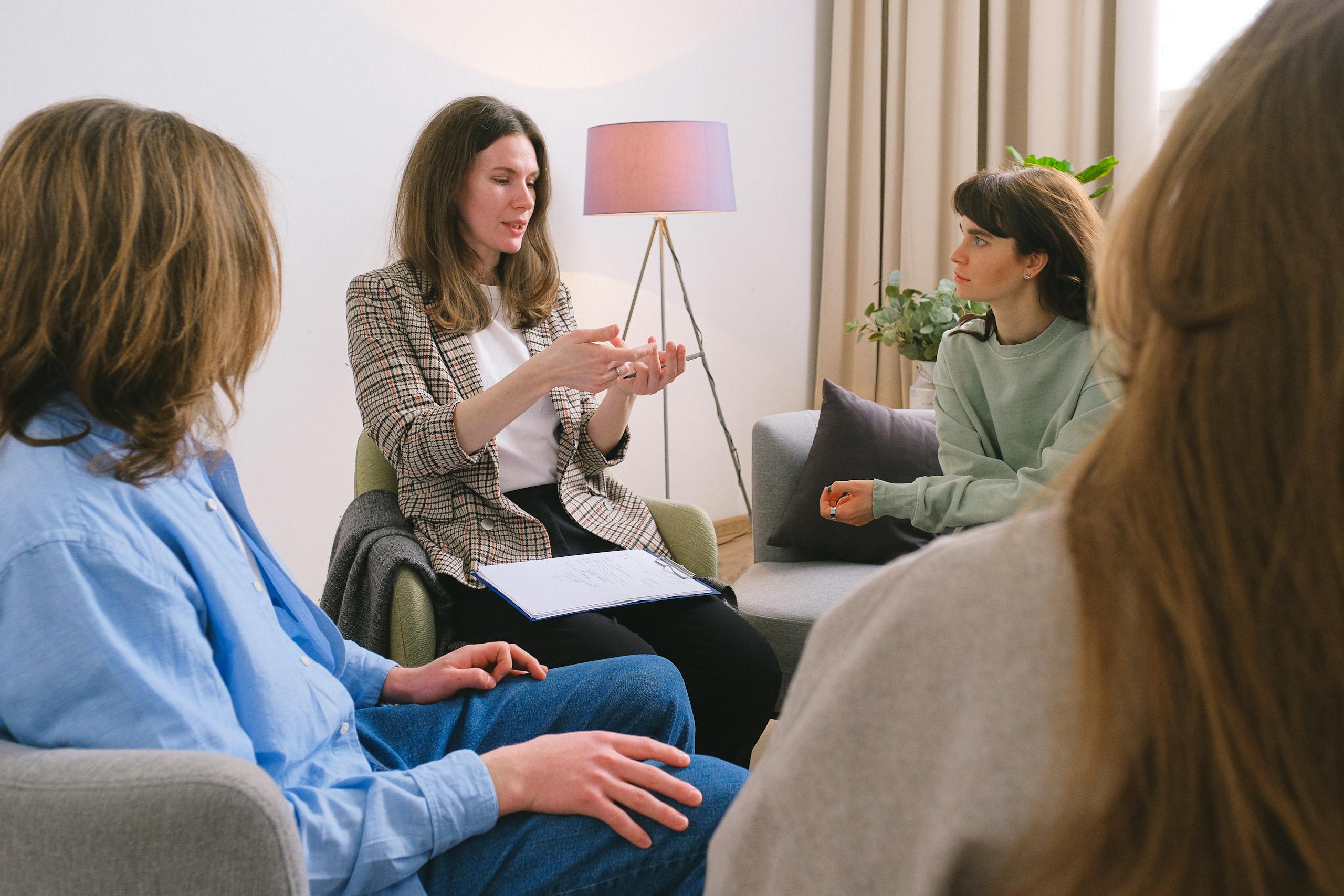
Teaching, counseling, public speaking, leadership, performance, all of these fields have been shaped by people who were, by their own account, deeply shy. What those people share is not the absence of shyness but the presence of something stronger: a commitment to the work that outweighed the fear of the spotlight. Over time, many of them found that the role itself became a kind of structure that made the shyness manageable. A teacher standing in front of their class isn’t performing as themselves. They’re performing as the teacher. That distinction gives shy people something to stand behind while they build confidence.
There’s also the matter of preparation. Shy people who know their material deeply, who have rehearsed, who have thought through every question that might come, can move through the fear because competence provides its own kind of armor. The anxiety doesn’t vanish, but it becomes something to act through rather than something that stops all action.
If you’ve ever wondered whether you might be somewhere between introverted and extroverted in ways that complicate this picture, the Introverted Extrovert Quiz can help clarify where you actually sit. Sometimes what feels like shyness is actually a more complex social wiring than any single label captures.
What Neuroscience Tells Us About Shy and Introverted Brains
The distinction between shyness and introversion has a neurological dimension that’s worth understanding. Both involve the way the brain processes stimulation and social information, but the mechanisms differ in important ways.
Introversion is associated with higher baseline cortical arousal, meaning introverted brains reach their optimal stimulation threshold more quickly than extroverted ones. That’s why a crowded, noisy environment feels draining rather than energizing. It’s not a social preference in the emotional sense. It’s a physiological one.
Shyness, by contrast, involves the brain’s threat-detection systems. When a shy person enters a social situation, the amygdala, the part of the brain that processes fear and threat, activates more readily. The body reads social evaluation as a kind of danger. Research published in PubMed Central on behavioral inhibition and social anxiety points to this distinction, showing that the anxious response in shy individuals involves different neurological pathways than the simple preference for lower stimulation seen in introverts.
What this means practically is that the two traits respond to different interventions. Introversion isn’t something to treat. It’s a trait to understand and work with. Shyness, when it’s causing genuine distress or limiting a person’s ability to pursue what matters to them, can be addressed through approaches that gradually reduce the threat response. Additional PubMed Central research on social anxiety suggests that exposure-based approaches, where the feared social situation is encountered in manageable doses, can meaningfully reduce the anxiety over time without requiring a personality change.
That’s an important point. Addressing shyness doesn’t mean becoming extroverted. It means reducing the fear enough that your actual personality, whatever it is, can come through.
Rethinking What “Presence” Looks Like in the Classroom
Part of what makes the “she would have been a great teacher” comment so frustrating is the assumption embedded in it: that teaching requires a particular kind of presence, a loud, charismatic, fill-the-room kind of energy. That model of teaching exists, and it works for some students. But it’s not the only model, and it’s not always the best one.
Some of the most powerful teachers I’ve encountered in my own life were quiet people. They didn’t perform. They thought out loud carefully. They asked questions that stayed with you for days. They created space in the room rather than filling it. That kind of presence is harder to see from the outside, especially if you’re watching for the extroverted version, but it lands differently in a student’s memory. It tends to stick.
There’s also a relational dimension here. Frontiers in Psychology research on personality and interpersonal dynamics highlights how quieter communicators often create stronger individual bonds with the people they work with, because their attention feels more focused and less diffuse. In a classroom, that translates to students feeling genuinely seen rather than managed.
There’s a related concept worth exploring here, the idea of the otrovert versus the ambivert. Some people who appear outwardly reserved in professional settings are actually drawing on a more complex social wiring than simple introversion. Understanding those distinctions can change how shy people see their own capacity for connection and leadership.

Giving Shy People Better Feedback
If you manage people, or mentor them, or simply care about someone who is shy, the most useful thing you can do is stop using shyness as a verdict. Saying “she’s too shy for that role” ends a conversation that should just be beginning. The better question is: what conditions would allow this person’s strengths to show up?
In my agency, I eventually stopped running all-hands brainstorms as the primary creative process. Too many of my best thinkers went quiet in those rooms, not because they had nothing to contribute but because the format rewarded speed and volume over depth and precision. When I shifted to a model where people submitted ideas in writing before we discussed them as a group, the quality of the conversation improved dramatically. The shy people in the room stopped being invisible.
That change cost nothing. It required only a willingness to question the assumption that the extroverted format was the neutral one.
For shy people themselves, the most important reframe is this: your shyness is not evidence of your unsuitability. It’s a fear response that developed for reasons that made sense at some point, and it can be worked with. It doesn’t define your ceiling. The woman who “would have become a great teacher” became one anyway. Not because her shyness disappeared, but because she found a way to teach that let her actual strengths lead.
Conflict and communication are areas where this plays out in particularly visible ways. Psychology Today’s four-step introvert-extrovert conflict resolution framework offers practical ways for quieter personalities to engage directly with tension rather than withdrawing from it, which is a skill that matters enormously in any teaching or leadership role.
Quiet people have always shaped the world from the inside out. The classrooms that changed students’ lives were often run by people the world had quietly written off as too reserved, too hesitant, too shy. The label was wrong. The person was exactly right for the work.
For more on how introversion, shyness, and other personality traits intersect and diverge, the full Introversion vs Other Traits hub is a good place to keep exploring these distinctions.
About the Author
Keith Lacy is an introvert who’s learned to embrace his true self later in life. After 20 years in advertising and marketing leadership, including running agencies and managing Fortune 500 accounts, Keith now channels his experience into helping fellow introverts understand their strengths and build fulfilling careers. As an INTJ, he brings analytical depth and authentic perspective to every article, drawing from both professional expertise and personal growth.
Frequently Asked Questions
Is shyness the same as introversion?
No. Shyness is a fear of negative social evaluation, while introversion is a preference for lower-stimulation environments. A shy person wants connection but fears judgment. An introverted person may be entirely confident socially but simply prefers depth over breadth and needs solitude to recharge. The two can overlap, but they have different roots and respond to different approaches.
Can a shy person become a good teacher?
Yes, and many do. Shyness often comes with strong observational skills, deep attentiveness, and a capacity for meaningful one-on-one connection, all of which are genuine assets in teaching. The fear that shyness creates can be worked with over time, and many shy teachers find that the structure of the classroom role itself provides a framework that makes the anxiety more manageable. Shyness is not a disqualifier for teaching or any other calling that requires presence.
How do I know if I’m shy, introverted, or both?
Ask yourself whether your hesitation in social situations comes from fear of judgment or from a genuine preference for quieter, less stimulating environments. If you avoid social situations because you’re afraid of how others will perceive you, shyness is likely part of the picture. If you avoid them because they drain your energy and you’d rather be alone or in a small group, introversion is the better description. Many people experience both, and separating them is the first step toward understanding which one is shaping your choices in any given moment.
Does shyness go away with experience?
For many people, shyness does decrease over time, particularly as they accumulate evidence that the feared negative judgment doesn’t materialize. Repeated positive experiences in situations that once felt threatening can gradually reduce the anxiety response. That said, shyness doesn’t automatically disappear with age or experience. Intentional gradual exposure, sometimes with professional support, tends to be more effective than simply waiting it out. success doesn’t mean eliminate the trait entirely but to reduce the fear enough that it stops limiting important choices.
What strengths do shy people bring to roles that require public engagement?
Shy people often bring exceptional observational skills, careful preparation, deep attentiveness to others, and a strong capacity for one-on-one connection. Because they’ve spent much of their lives watching social situations carefully, they tend to read rooms well and notice what others miss. In teaching, counseling, leadership, and other roles that require genuine engagement with people, those qualities can be more valuable than the louder, more visible traits that tend to get recognized first. The challenge is finding conditions that allow those strengths to surface.