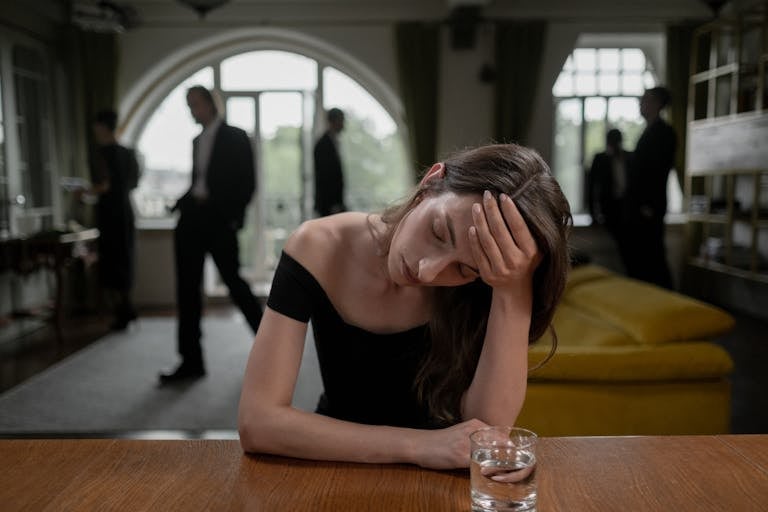

Extroverts and introverts don’t just experience social situations differently, they process the aftermath of negative ones in fundamentally distinct ways. When a social interaction goes wrong, an extrovert tends to seek more connection to recover, while an introvert typically withdraws inward to process, reflect, and rebuild. These aren’t character flaws on either side. They’re wired-in responses to social stress that shape how each personality type heals, adapts, and moves forward.
Understanding these differences matters more than most people realize. It affects how we communicate after conflict, how we lead teams through tension, and how we support the people in our lives who are wired differently than we are.

My own experience as an INTJ running advertising agencies gave me a front-row seat to these differences for over two decades. I watched extroverted colleagues handle rejection by immediately picking up the phone or calling an impromptu team meeting. Meanwhile, I’d retreat to my office, close the door, and spend an hour thinking through exactly what happened and why. Neither approach was wrong. They were just profoundly different, and for a long time, I didn’t fully understand why.
Our Introversion vs. Extroversion hub covers the full spectrum of how these two orientations differ in everyday life. This article goes a layer deeper, focusing specifically on what happens when social experiences go sideways and how each personality type responds to that stress.
What Does It Actually Mean to React to Negative Socialization?
Before comparing responses, it helps to define what we mean by negative socialization. This isn’t limited to dramatic falling-outs or public humiliation. Negative socialization includes any social experience that leaves a person feeling rejected, dismissed, misunderstood, or emotionally depleted. A meeting where your idea gets shot down. A party where you felt invisible. A conversation that turned cold without explanation. A group text that suddenly goes quiet after you weigh in.
What’s your personality type?
Take our free 40-question assessment and get a detailed personality profile with dimension breakdowns, context analysis, and personalised insights.
Discover Your Type8-12 minutes · 40 questions · Free
These experiences register differently depending on where you fall on the personality spectrum. To get a clearer sense of where you land, the Introvert Extrovert Ambivert Omnivert Test can offer useful self-knowledge before you read further. Knowing your baseline orientation helps you recognize your own patterns in what follows.
The American Psychological Association defines introversion as a tendency toward inward focus, preference for solitude, and sensitivity to external stimulation. Extroversion sits at the opposite pole: outward focus, preference for social engagement, and a tendency to gain energy from interaction. These orientations shape not just how we socialize, but how we recover when socializing wounds us.
How Do Extroverts Typically Respond When Social Situations Go Wrong?
Extroverts tend to process emotion externally. When a social experience stings, their instinct is often to talk about it, seek reassurance, or replace the bad interaction with a better one as quickly as possible. They move toward people rather than away from them.
I watched this play out repeatedly in my agencies. One of my senior account directors, a natural extrovert, lost a major pitch to a competitor. Within an hour, she had gathered three colleagues in the conference room, was processing it out loud, and had already started reframing the loss as a learning opportunity, all through conversation. By end of day, she’d scheduled drinks with the team. The social wound was real, but she healed it socially.
This pattern makes sense when you understand what extroversion actually is. If you’ve ever wondered what does extroverted mean beyond the casual definition, it comes down to where a person draws energy. Extroverts recharge through connection. So when connection goes wrong, their nervous system often pushes them back toward connection to restore equilibrium.
That said, extroverts aren’t immune to deeper wounds. When negative socialization is severe or repeated, the outward-seeking response can become compulsive rather than healing. Some extroverts will overextend socially after rejection, filling every moment with plans and people to avoid sitting with discomfort. The social instinct that usually serves them can, under stress, tip into avoidance of a different kind.

How Do Introverts Process the Same Social Pain?
Introverts move in the opposite direction. When a social experience goes badly, the internal world becomes the primary processing space. Reflection, analysis, and solitude aren’t signs of shutdown. They’re the actual recovery mechanism.
After a difficult client meeting early in my career, one where I’d been talked over repeatedly by a louder, more dominant personality, I didn’t want to debrief with anyone. I wanted to go home, sit with what happened, and think it through on my own terms. My extroverted business partner at the time interpreted this as brooding. What it actually was, was processing. By the next morning, I had a clear analysis of the dynamic, a plan for the next meeting, and my equilibrium back.
This internal orientation is one reason introverts are sometimes perceived as more sensitive to social criticism, even when they aren’t. Because they process quietly, the work happening inside isn’t visible to others. An extrovert who talks through rejection looks like they’re handling it. An introvert who processes silently can look like they’re struggling, even when they’re doing exactly what works for them.
It’s also worth noting that introverts vary significantly in how deeply they feel these social stings. There’s a meaningful difference between being fairly introverted and sitting at the more extreme end of the spectrum. The article on fairly introverted vs. extremely introverted breaks down how this spectrum shapes everyday experience, including how intensely social wounds tend to register.
A piece in Psychology Today’s Introvert’s Corner explores how introverts tend to invest deeply in fewer relationships, which means when those relationships experience friction, the emotional weight can feel more concentrated. It’s not fragility. It’s the natural consequence of depth over breadth.
Why Do These Differences Show Up So Clearly in the Workplace?
Professional environments are where these contrasting responses become most visible, and most misunderstood. Workplaces tend to reward extroverted recovery patterns: bouncing back quickly, staying visibly engaged, projecting resilience through social activity. Introverted recovery patterns, which are quieter and more internal, can get misread as disengagement or low morale.
I made this mistake as a manager before I understood it. When an introverted creative director on my team received tough feedback in a group review, she went quiet for the rest of the afternoon. I assumed she was struggling. She wasn’t. She was working through the feedback in exactly the way that worked for her, and the next morning she came in with a revised concept that addressed every point raised. The quiet wasn’t absence. It was work.
Extroverted team members in the same situation would often come find me immediately after, want to talk through the feedback, and sometimes push back in real time. That visible processing was easier for me to track, but it wasn’t necessarily more effective. It was just more legible to the social environment around it.
Good leadership means learning to read both patterns without defaulting to one as the standard. When I finally stopped equating visible social recovery with actual recovery, my team dynamics improved significantly. Introverts stopped feeling like they had to perform resilience they already possessed. Extroverts felt heard without having to dial back their natural instinct to process out loud.

What Happens When Ambiverts and Omniverts Face Social Rejection?
Not everyone falls cleanly on one side of this spectrum, and that complexity matters when understanding social recovery patterns. Ambiverts and omniverts occupy different middle-ground positions, and their responses to negative socialization can shift depending on context, energy levels, and the nature of the social wound itself.
The distinction between these two types is often misunderstood. The comparison of omnivert vs. ambivert explains it well: ambiverts tend to be consistently moderate in their social energy, while omniverts swing more dramatically between introverted and extroverted states. An omnivert might respond to rejection in a deeply introverted way one week and in a fully extroverted way the next, depending on where they are in their cycle.
This variability can be confusing for the people around them, and sometimes for the omniverts themselves. They might not understand why they wanted to be alone after a difficult dinner party last month but desperately needed company after a similar experience this month. Understanding their own patterns is often the first step toward more intentional recovery.
There’s also a category worth mentioning here: the introverted extrovert, someone who presents as socially confident but experiences the internal processing patterns more typical of introversion. If that sounds familiar, the introverted extrovert quiz can help clarify where you land. People in this category often find that negative social experiences hit harder than their outward presentation suggests, because their internal wiring is processing more deeply than others expect.
And for those who wonder whether they might sit in a different middle-ground category entirely, the otrovert vs. ambivert breakdown offers another useful lens for understanding how these personality orientations differ in practice.
Does Negative Socialization Affect Long-Term Personality Patterns?
One of the more interesting questions in this space is whether repeated negative social experiences can shift how introverts and extroverts behave over time. The answer, from what we understand about personality psychology, is nuanced.
Core personality traits tend to be relatively stable across a lifetime. An introvert who experiences repeated social rejection doesn’t typically become more extroverted as a result. What can shift is behavior, specifically the strategies people develop to protect themselves from repeated pain. An extrovert who faces consistent social rejection might develop more cautious social habits that look introverted from the outside. An introvert who has been criticized for their quietness might push themselves into more extroverted behaviors that feel exhausting and inauthentic.
A helpful overview from Healthline’s introvert resource notes that introversion is a stable trait, not a phase or a deficit, and that the behaviors associated with it shouldn’t be confused with social anxiety or avoidance. This distinction matters enormously when interpreting how introverts respond to negative social experiences. Choosing solitude to recover isn’t the same as being afraid of people.
What can accumulate over time is the weight of repeated misattribution. When an introvert’s recovery style is consistently read as a problem, they start to internalize that narrative. I saw this in myself during the early years of running my agency. Every time I retreated to process something difficult, someone on my team would ask if I was okay, or worse, assume I was unhappy with them. Over time, I started performing extroverted recovery patterns that didn’t fit me, which made me slower to actually recover, not faster.
The research on adolescent personality development points to this same risk. A Psychology Today piece on introversion and the teen years highlights how early social environments that punish introverted behavior can create lasting patterns of self-suppression. Adults carry versions of those patterns long after the original environment is gone.

What Can Introverts and Extroverts Learn From Each Other’s Recovery Styles?
There’s genuine value in understanding how the other side handles social wounds, not to copy their approach, but to expand your own toolkit when your default isn’t working.
Extroverts sometimes benefit from borrowing a page from the introvert’s approach. When the impulse to immediately seek social reassurance becomes a way of avoiding the actual discomfort, a period of quiet reflection can be genuinely useful. Sitting with the experience long enough to understand it, rather than immediately diluting it with more social input, can produce more durable insight.
Introverts, on the other hand, can sometimes get stuck in the processing loop. Internal reflection is powerful, but it can also become a closed circuit where the same thoughts cycle without resolution. In those moments, a carefully chosen conversation with someone trusted can break the loop in ways that solitary reflection can’t. Not every extroverted behavior is wrong for introverts. Some of it is just calibrated differently.
I’ve learned this gradually over the years. There are times when my instinct to go quiet after a difficult interaction has served me beautifully, and times when it kept me stuck in a narrative that a single honest conversation would have dissolved in minutes. Knowing which situation I’m in is something I’ve had to develop deliberately, and it’s still not always obvious in the moment.
A useful framework from PMC research on personality and emotional regulation suggests that the most adaptive responses to social stress tend to involve some flexibility across strategies, rather than rigid adherence to a single coping style. That doesn’t mean abandoning who you are. It means having more than one move available when the situation calls for it.
How Should You Support Someone Who Processes Social Wounds Differently Than You Do?
One of the most practical applications of understanding these differences is in how we show up for the people around us after difficult social experiences.
Extroverts supporting introverts need to resist the urge to interpret silence as suffering. Giving an introvert the space they’re asking for, without repeatedly checking in or pushing them to talk, is often the most supportive thing you can do. Respecting their recovery process is not abandonment. It’s attunement.
Introverts supporting extroverts need to recognize that the extrovert’s need to talk it out isn’t drama or neediness. It’s how they heal. Showing up to that conversation, even when your own instinct is to retreat, can be a meaningful act of care. You don’t have to match their energy. You just have to be present enough for them to process.
In my marriage, my wife and I had to learn this about each other over years of getting it wrong. She’s more extroverted in her processing style. After a difficult family event, she needed to talk about it immediately and at length. My instinct was to say “let me think about it” and come back the next day with a considered response. She experienced my delay as indifference. I experienced her immediate processing as pressure. Neither of us was wrong about what we needed. We were just wrong about what the other person’s behavior meant.
Understanding the neurological and psychological basis for these different responses, which PMC research on personality neuroscience has explored in depth, can help depersonalize what might otherwise feel like a relational failure. These aren’t character flaws. They’re personality architectures, and they respond to different kinds of support.
The APA’s published work on personality and social behavior reinforces that personality traits reliably predict how people respond across a range of social situations, including stressful ones. Knowing this makes it easier to extend grace to the people in your life whose recovery styles look nothing like yours.

If you want to go deeper on how introverts and extroverts differ across the full range of everyday situations, our complete Introversion vs. Extroversion resource hub is a good place to continue exploring.
About the Author
Keith Lacy is an introvert who’s learned to embrace his true self later in life. After 20 years in advertising and marketing leadership, including running agencies and managing Fortune 500 accounts, Keith now channels his experience into helping fellow introverts understand their strengths and build fulfilling careers. As an INTJ, he brings analytical depth and authentic perspective to every article, drawing from both professional expertise and personal growth.
Frequently Asked Questions
Do extroverts feel social rejection more intensely than introverts?
Not necessarily more intensely, but often more immediately and visibly. Extroverts tend to express their response to social rejection outwardly, seeking conversation and reassurance, which makes their distress more apparent to others. Introverts process the same pain internally, which can make it look less severe from the outside even when it registers just as deeply. The difference lies in expression and recovery style, not in how much the experience actually hurts.
Why do introverts withdraw after negative social experiences?
Withdrawal is the introvert’s primary recovery mechanism, not a sign of giving up or shutting down. Introverts process emotion and experience internally, and solitude gives them the mental space to work through what happened, understand it, and restore their equilibrium. Forcing social engagement during this period often slows the process rather than helping it. The quiet is productive, even when it doesn’t look that way from the outside.
Can repeated negative social experiences change whether someone is introverted or extroverted?
Core personality traits like introversion and extroversion are relatively stable across a lifetime and don’t fundamentally change in response to social experiences. What can shift is behavior. An extrovert who faces repeated rejection might develop more cautious social habits, and an introvert who’s been criticized for their quietness might push into extroverted behaviors that feel exhausting. These are adaptive strategies layered over a stable personality foundation, not changes to the underlying trait itself.
How can extroverts better support introverts after a difficult social experience?
The most effective support an extrovert can offer an introvert after a negative social experience is space without interpretation. Resist the urge to check in repeatedly or push for conversation before the introvert is ready. Let them know you’re available without making your availability feel like pressure. When the introvert does come to you, be present without redirecting toward your own processing needs. Matching your support style to their recovery style, rather than your own, makes a significant difference.
What is the difference between an introvert’s social withdrawal and social anxiety?
Introversion and social anxiety are distinct and shouldn’t be conflated. An introvert withdraws from social situations because they find them draining and prefer solitude to recharge, not because they fear social judgment. Social anxiety involves a fear-based response to social situations, often accompanied by worry about being evaluated negatively, physical symptoms of anxiety, and avoidance driven by distress. Many introverts have no social anxiety at all. Some extroverts do experience social anxiety. The two traits operate independently of each other.