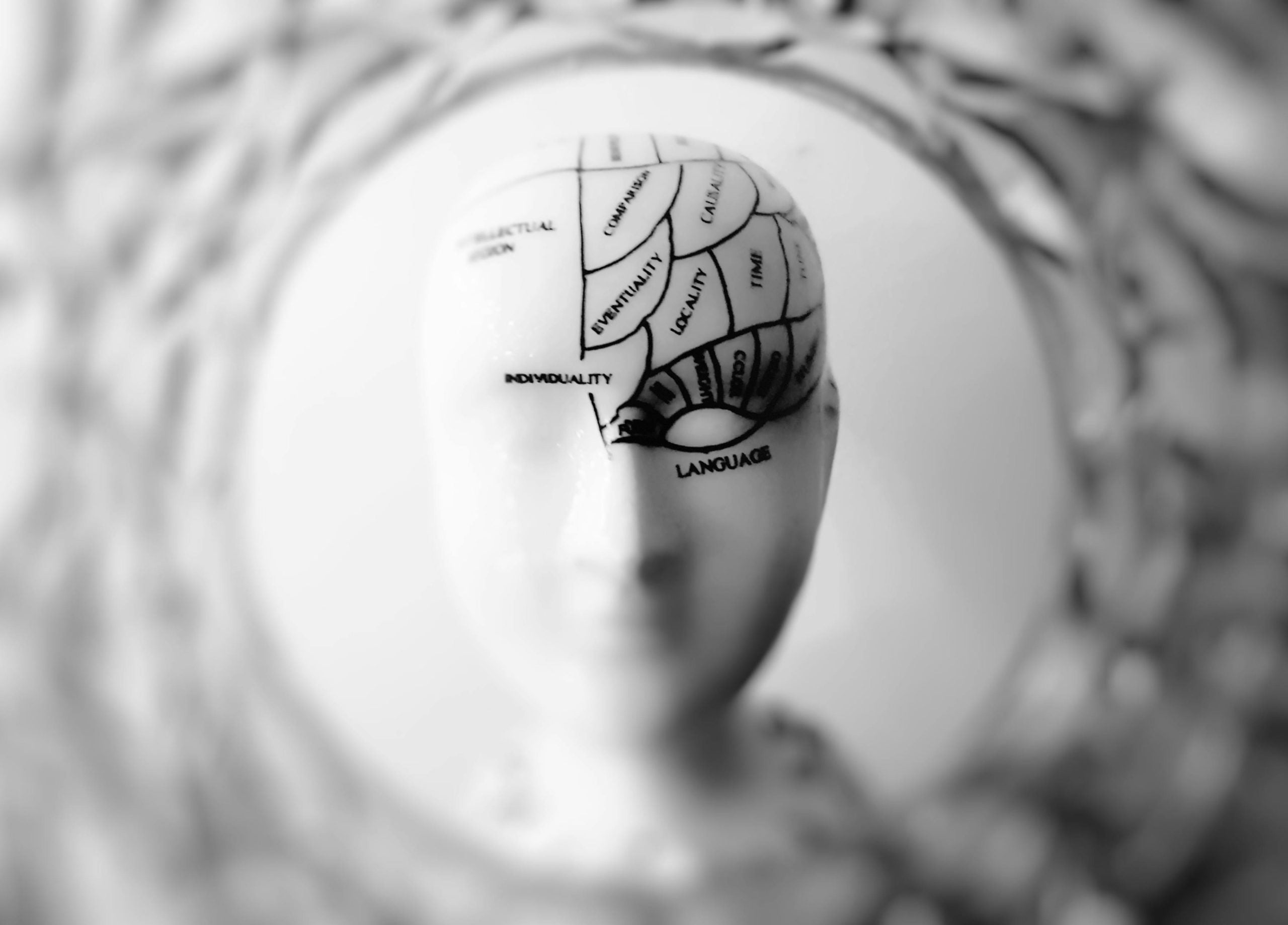

Introverts and extroverts don’t just prefer different things, they actually process the world through fundamentally different filters. From how they respond to a crowded room to how they handle conflict, unexpected praise, or a moment of silence, the reactions that feel natural to one personality type can feel genuinely foreign to the other. Understanding those differences isn’t about judging who’s right. It’s about recognizing why the same situation can land so differently depending on how you’re wired.
There was a period in my agency years when I genuinely believed something was wrong with me. A client would call to deliver glowing feedback on a campaign we’d just launched, and while my extroverted account directors would light up, talking faster, laughing louder, feeding off the energy, I’d feel something quieter. Satisfied, yes. But I needed to sit with it privately before I could fully feel it. I thought I was broken. Turns out, I was just wired differently.
That difference in reaction isn’t superficial. It runs through nearly every social, professional, and emotional situation we encounter. And once you understand it, a lot of confusing interpersonal dynamics start to make sense.
If you’re still getting your bearings on where you fall on the personality spectrum, our Introversion vs Extroversion hub covers the full landscape, from foundational differences to nuanced subtypes, and it’s a useful starting point before we get into the specific reactions that separate these two orientations.

How Do Introverts and Extroverts React to Social Situations?
Put an introvert and an extrovert in the same party, and you’ll often see two completely different biological responses playing out in real time. The extrovert scans the room and feels a pull toward it, a kind of social gravity. The introvert scans the same room and begins quietly calculating how long they need to stay, where the quieter corners are, and whether there’s a dog somewhere they can talk to instead of people.
What’s your personality type?
Take our free 40-question assessment and get a detailed personality profile with dimension breakdowns, context analysis, and personalised insights.
Discover Your Type8-12 minutes · 40 questions · Free
That’s not anxiety. That’s not rudeness. For many introverts, social stimulation above a certain threshold feels like sensory overload rather than energizing input. The brain processes social interaction as work, even enjoyable work, rather than as fuel. Extroverts tend to experience the opposite: social contact replenishes them, and too much solitude can feel draining or even unsettling.
I ran agency all-hands meetings for years, and I watched this dynamic play out every single time. My extroverted team members would arrive early, work the room, and leave energized. I’d arrive prepared, contribute meaningfully when I had something worth saying, and then need about forty-five minutes of quiet afterward to decompress. Same meeting. Completely different experience.
What’s worth noting is that introverts don’t dislike people. Many of us genuinely love connection. We just tend to prefer it in smaller doses, with more depth. Psychology Today’s work on deeper conversations captures something I’ve felt my whole career: introverts often find small talk exhausting not because they’re antisocial, but because it doesn’t satisfy the kind of connection they’re actually seeking.
How Do Introverts and Extroverts React to Conflict?
Conflict is where the introvert-extrovert gap becomes most visible, and most misunderstood.
Extroverts often want to address conflict immediately. They think out loud, process through dialogue, and feel better once things are said aloud. Silence during conflict can feel to them like stonewalling, like the other person isn’t engaged or doesn’t care.
Introverts typically need to process internally before they can respond productively. When conflict hits, the introvert’s instinct is often to go quiet, not because they’re shutting down, but because they’re doing the real work of figuring out what they actually think and feel before saying anything. Forcing a verbal response before that processing is complete usually leads to words that don’t reflect what they mean.
I had a business partner early in my career who was a natural extrovert. Brilliant, energetic, and someone who needed to talk through every disagreement in real time. I’m an INTJ, and my instinct in conflict is to retreat, think, and come back with something considered. He interpreted my silence as indifference. I interpreted his urgency as aggression. We were both wrong about each other, and it took a long time and a few near-blowups before we figured out how to meet in the middle.
A four-step conflict resolution framework from Psychology Today addresses exactly this dynamic, and it’s worth reading if you regularly find yourself in the pattern I just described. The short version: name your processing style early, and give the other person a timeline so silence doesn’t feel like abandonment.

How Do Introverts and Extroverts React to Praise and Recognition?
Public recognition is one of the most revealing tests of how differently these two orientations experience the world.
Many extroverts genuinely thrive on public praise. Being called out in a meeting, celebrated in front of a group, or spotlighted in a company-wide email feels good. It’s social fuel. It confirms their place in the group and energizes them.
Many introverts find the same experience uncomfortable, even when they’re proud of what they’ve accomplished. Being singled out in a crowded room can trigger something closer to self-consciousness than satisfaction. The introvert often prefers a quiet, genuine acknowledgment over a loud public moment.
I learned this firsthand when I started managing larger teams. I had a creative director on staff who was consistently our strongest performer, a quiet, deeply talented person. I once called her out in a full agency meeting, expecting the recognition to land well. She smiled, nodded, and then avoided me for three days. When we finally talked, she told me she’d found the moment mortifying rather than motivating. I’d been managing her through my extroverted team members’ preferences rather than her own. That was a turning point in how I thought about recognition as a leadership tool.
It’s also worth understanding that the intensity of these reactions can vary significantly based on where someone falls on the introversion spectrum. Someone who’s fairly introverted versus extremely introverted might handle public recognition very differently, and that variation matters when you’re trying to lead or connect with people effectively.
How Do Introverts and Extroverts React to Silence and Downtime?
Silence is perhaps the most telling difference between these two orientations, and the one that creates the most friction in relationships and workplaces.
Extroverts often experience extended silence as a void that needs filling. It can feel awkward, uncomfortable, or even like something is wrong. In a conversation, silence may read as disinterest. In a relationship, it can feel like distance.
Introverts often experience silence as a resource. It’s where ideas develop, where emotional processing happens, where creativity lives. For many introverts, a quiet afternoon alone isn’t a sign of loneliness or sadness. It’s genuinely restorative.
The neurological basis for this difference is real. Research published in PubMed Central points to differences in how introverted and extroverted brains respond to stimulation, with introverts typically operating closer to their optimal arousal threshold in quieter environments. That’s not a metaphor. It’s a measurable difference in how the nervous system responds to input.
In my agency years, I built my best strategic thinking into early mornings before the office filled up. Not because I was avoiding people, but because the quiet was where I did my clearest work. My extroverted colleagues often couldn’t understand why I’d come in at 6 AM when the real energy didn’t start until 9. The answer was simple: I needed the silence before I could handle the noise.

How Do Introverts and Extroverts React to New Environments?
Drop an extrovert into a new city, a new team, or a new social situation and they’ll often start talking. They build their understanding of a space by engaging with it immediately, asking questions, introducing themselves, filling the air with interaction.
Introverts tend to observe first. They’ll watch the room before entering it, listen before speaking, and map the social terrain before committing to a position within it. This isn’t hesitation born from fear. It’s a preference for informed engagement over immediate engagement.
When I took on a new Fortune 500 client, my approach was always to spend the first meeting mostly listening. I’d ask a few precise questions and take careful notes, but I wouldn’t offer big ideas in that first session. My extroverted account directors sometimes found this maddening. They wanted to impress in the room. I wanted to understand the room first so I could impress on paper, with something that actually fit the client’s real needs.
Neither approach is wrong. But they can look very different to the people around you, and they’re often misread. The extrovert’s immediate engagement can look like confidence or recklessness depending on who’s watching. The introvert’s careful observation can look like wisdom or aloofness, again depending on who’s watching.
Understanding where someone falls on the personality spectrum can help decode these reactions. If you’re not sure where you land, the introvert, extrovert, ambivert, and omnivert test is a practical starting point for understanding your own default orientation before trying to decode someone else’s.
How Do Introverts and Extroverts React to Decision-Making Pressure?
Ask an extrovert to make a fast decision in a room full of people and many will rise to it. The external pressure, the audience, the urgency, all of that can sharpen their thinking and energize their response. The social context becomes a catalyst.
Ask an introvert to do the same thing and you may get a very different result. The combination of external pressure and an audience can actually impair performance for someone who processes best in quiet. It’s not that introverts make worse decisions. It’s that they often make better decisions when given time and space to think, rather than being put on the spot in front of a crowd.
This has real implications in professional settings. Harvard’s Program on Negotiation has explored whether introverts are at a disadvantage in high-pressure negotiation contexts, and the findings are more nuanced than you might expect. Introverts often compensate for the pressure of the room with preparation depth that extroverts may not match.
I ran agency pitches for years, and I always over-prepared. While my extroverted colleagues trusted their ability to improvise in the room, I built detailed scenario maps before every major pitch so that no question could catch me off guard. My extroverted team members sometimes thought I was being obsessive. But when a client threw us a curveball, I was usually the one with an answer ready.

What About People Who Don’t Fit Neatly Into Either Category?
Not everyone experiences these reactions in a clean introvert-or-extrovert pattern. Some people genuinely shift based on context, feeling extroverted at work and introverted at home, or vice versa. Others find that their social energy fluctuates in ways that don’t track neatly with either orientation.
This is where the concepts of ambiversion and omniversion become relevant. An ambivert tends to fall somewhere in the middle of the introvert-extrovert spectrum, drawing on both orientations with relative consistency. An omnivert tends to swing more dramatically between the two, depending on mood, environment, or circumstance. If you’re curious about the distinction, the comparison of omnivert vs ambivert breaks down what separates these two experiences in practical terms.
There’s also a concept worth knowing called the “otrovert,” a term used to describe someone who appears extroverted in behavior but is internally oriented in how they process experience. If that sounds familiar, the otrovert vs ambivert comparison explores how these two types differ in ways that matter for self-understanding.
And if you’ve ever felt like you behave like an extrovert in some situations while feeling deeply introverted in others, you might find the introverted extrovert quiz surprisingly clarifying. It’s designed for people who don’t feel like either label fully fits.
I’ve managed people across this entire spectrum over the years. Some of my most effective team members were people who didn’t fit the standard categories. Understanding what being extroverted actually means at a behavioral and neurological level, rather than just socially, helped me stop making assumptions about who needed what from me as a leader.
How Do These Reactions Show Up in the Workplace?
The workplace is where introvert-extrovert reaction differences become most consequential, because they directly affect how people are perceived, evaluated, and rewarded.
Extroverts often receive more visibility in traditional workplace structures. They speak up in meetings, build networks quickly, and project confidence in ways that read as leadership to observers. Their reactions to challenges, opportunities, and social situations tend to match what many organizations have historically rewarded.
Introverts often do their best work in ways that are less visible. They think before they speak, which means their contributions in fast-moving group settings may be fewer but more considered. They build relationships slowly and deeply, which means their networks may be smaller but more trusted. Their reactions to the same workplace stimuli can look like disengagement to someone who doesn’t understand the underlying orientation.
A piece from Rasmussen University on marketing for introverts touches on something I’ve observed in agency settings for decades: introverts often excel in roles that require deep listening, strategic thinking, and sustained focus, but they may need to advocate more explicitly for their own contributions because those contributions aren’t always the loudest thing in the room.
There’s also compelling evidence from PubMed Central research on personality and occupational behavior that introversion and extroversion influence not just how people perform at work, but how they experience work stress, collaboration, and recovery from demanding periods. These aren’t trivial differences. They shape career trajectories in ways that most organizations haven’t fully accounted for.
One of the things I wish I’d understood earlier in my career is that my quieter reactions weren’t a professional liability. They were a different kind of asset. My INTJ tendency to observe before acting, to think before speaking, and to process internally before sharing externally made me a better strategic thinker, even when it made me a less immediately visible one.

Why Understanding These Reactions Changes Everything
The point of mapping these differences isn’t to create a hierarchy or to suggest that one orientation is more emotionally intelligent than the other. It’s to make sense of the friction that happens when two differently wired people share a space and misread each other’s reactions.
When an extrovert fills silence in a meeting, they’re not trying to dominate. They’re energized by the group and processing out loud. When an introvert goes quiet after receiving feedback, they’re not being passive-aggressive. They’re doing the work of actually integrating what they heard.
When an extrovert wants to celebrate a win loudly and publicly, it’s not performative. That’s genuinely how they experience joy in a group context. When an introvert wants to mark the same win privately, it’s not ingratitude. That’s genuinely how they process satisfaction.
The Frontiers in Psychology research on personality and social behavior reinforces something I’ve observed across decades of working with people: the differences between introverts and extroverts are consistent, measurable, and meaningful. They’re not stereotypes. They’re patterns that show up reliably enough to be worth understanding.
What changes when you understand them isn’t just self-awareness. It’s the way you interpret the people around you. My extroverted business partner wasn’t trying to steamroll me during conflict. He was trying to connect. And once I understood that, I stopped reading his urgency as aggression and started meeting him a little earlier in the process, before I’d fully processed everything, because I knew it mattered to him to feel heard in real time.
That kind of mutual understanding, built on knowing how the other person is actually wired rather than assuming they’re wired like you, is what makes introvert-extrovert relationships work. In teams, in partnerships, in families, and in friendships.
There’s a lot more to explore across the full range of personality comparisons. If you want to go deeper on how these orientations interact, the Introversion vs Extroversion hub is where I’ve gathered the most comprehensive set of resources on the topic.
About the Author
Keith Lacy is an introvert who’s learned to embrace his true self later in life. After 20 years in advertising and marketing leadership, including running agencies and managing Fortune 500 accounts, Keith now channels his experience into helping fellow introverts understand their strengths and build fulfilling careers. As an INTJ, he brings analytical depth and authentic perspective to every article, drawing from both professional expertise and personal growth.
Frequently Asked Questions
Do introverts and extroverts actually react differently to the same situations, or is it just personality preference?
The differences are more than preference. They reflect genuine variations in how the nervous system responds to stimulation. Introverts tend to reach their optimal arousal threshold at lower levels of external stimulation, which means the same crowded room, loud conversation, or high-pressure meeting that energizes an extrovert may feel draining or overwhelming to an introvert. These patterns show up consistently enough that they’re considered neurological in origin, not just attitudinal.
Why do introverts go quiet during conflict while extroverts want to talk it out immediately?
Introverts typically process experience internally before they can articulate it clearly. During conflict, that internal processing takes time, and speaking before it’s complete often produces words that don’t reflect what the introvert actually thinks or feels. Extroverts, by contrast, often process through dialogue itself. The talking is part of how they figure out what they think. Neither approach is more emotionally mature. They’re just different processing styles that can create friction when each person assumes the other is doing what they would do.
Is it true that introverts dislike being recognized for their work?
Many introverts genuinely appreciate recognition. What they often dislike is public recognition delivered in front of a large group. Being singled out in a meeting or spotlighted in a company-wide announcement can feel more uncomfortable than rewarding for someone who prefers depth over display. A quiet, sincere acknowledgment from someone they respect often lands far better than a loud public moment. This varies by individual and by how far along the introversion spectrum someone falls, but it’s a pattern worth knowing if you manage or work closely with introverts.
What if I don’t feel like a clear introvert or extrovert? Do these reaction patterns still apply to me?
Many people don’t fall cleanly into either category. Ambiverts tend to draw on both orientations depending on context, while omniverts swing more dramatically between them. If you feel like you react like an introvert in some situations and an extrovert in others, you may identify more with one of those middle-ground types. The reaction patterns described in this article still apply, but they may show up more selectively or situationally for you rather than as consistent defaults.
How can understanding introvert and extrovert reactions improve workplace relationships?
Most workplace friction between introverts and extroverts comes from misreading the other person’s reactions. An extrovert who fills silence isn’t trying to dominate. An introvert who goes quiet after feedback isn’t being passive. When you understand that these reactions are wired-in responses rather than deliberate choices, you stop taking them personally and start adapting. That shift, from judgment to understanding, tends to improve communication, reduce conflict, and make collaboration more productive across personality types.