
An introverted brain doesn’t just prefer quiet. It’s chemically wired to experience the world through a different lens than an extroverted one. The core difference comes down to how your brain responds to dopamine and acetylcholine, two neurotransmitters that shape how stimulating or draining any given situation feels to you.
Most people assume introversion is a personality preference, a choice to stay home instead of go out. What they miss is the biological foundation underneath that preference. Your brain’s reward circuitry, its sensitivity to stimulation, and even the pathways it uses to process information are all measurably different from those of your extroverted colleagues. That’s not a flaw. It’s a feature you may not have fully understood yet.
If you’ve ever wondered why a long day of meetings leaves you hollow while the same day seems to energize your extroverted coworkers, this is where the answer lives.
Before we go deeper into the neuroscience, it’s worth noting that introversion exists on a spectrum. Our Introversion vs Extroversion hub covers the full range of personality types and where the real differences lie, which gives useful context for everything we’re about to explore here.

What Does Dopamine Actually Do in an Extroverted Brain?
Dopamine is the brain’s reward chemical. When something exciting happens, whether it’s a new opportunity, social recognition, or a fast-paced environment, dopamine floods the reward centers of the brain and produces that rush of pleasure and motivation. Extroverts, broadly speaking, have a reward system that responds vigorously to dopamine hits. Their brains are primed to seek out external stimulation because doing so produces a reliable chemical payoff.
Career Coaching for Introverts
One-on-one career strategy sessions with Keith Lacy. 20 years of Fortune 500 leadership as an introvert, now helping others build careers that work with their wiring.
Learn More50-minute Zoom session · $175
I watched this play out constantly in agency life. My extroverted account directors would come alive in pitch meetings. The energy in the room, the back-and-forth with a skeptical client, the pressure of a big presentation, all of it seemed to fuel them. They’d walk out of a grueling four-hour pitch looking sharper than when they walked in. I’d walk out needing two hours alone to reconstruct myself.
That difference isn’t about confidence or competence. It’s about what the brain does with dopamine. An extroverted brain tends to have a higher threshold for stimulation before it feels rewarded, which means it needs more external input to reach that satisfying peak. A social gathering, a loud brainstorm, a packed schedule, these aren’t exhausting to an extrovert because they’re exactly the kind of stimulation the brain is calibrated to absorb and enjoy.
Neuroscientist Elaine Aron’s work on sensory processing sensitivity, along with broader personality neuroscience, points to differences in how dopamine pathways function across personality types. The extroverted brain’s dopamine system is, in simplified terms, less sensitive to the chemical itself, which means it takes more external stimulation to produce the same reward response. This is part of why extroverts seek novelty, crowds, and activity. Their brains are wired to want more input to feel satisfied.
Why Introverted Brains Run on a Different Chemical Altogether
Here’s where things get genuinely interesting. Introverted brains don’t just have a different relationship with dopamine. They tend to rely more heavily on a different neurotransmitter: acetylcholine.
Acetylcholine is associated with focused attention, long-term thinking, deep concentration, and the quiet pleasure of internal processing. Unlike dopamine’s loud, external reward signal, acetylcholine produces a more subtle, sustained sense of engagement. It’s the chemical that makes reading for three hours feel satisfying. It’s what fires when you’re working through a complex problem in your head, turning an idea over and over until it clicks into place.
As an INTJ, I’ve spent most of my life chasing that acetylcholine reward without knowing what to call it. The best moments of my agency career weren’t the big pitch wins or the award ceremonies. They were the late evenings when I’d sit alone with a strategic brief and let my mind work through it systematically, layer by layer, until I found the angle no one else had considered. That quiet, focused state was genuinely pleasurable to me in a way that a packed happy hour never was.
The acetylcholine pathway is also longer and more complex than the dopamine pathway. It runs through areas of the brain associated with planning, reflection, and nuanced emotional processing. This is one reason why introverts often seem to be “in their heads” during social situations. The brain is quite literally taking a longer route to process what’s happening, pulling in more context, more memory, more interpretation before forming a response. That’s not slowness. It’s depth.

Is the Introverted Brain More Sensitive to Stimulation?
One of the most well-supported ideas in introversion research is that introverted brains operate closer to their optimal arousal level even in quiet environments. The arousal theory, developed in part by Hans Eysenck, suggests that introverts have a naturally higher baseline level of cortical arousal. Because they’re already running at a higher internal level, additional external stimulation pushes them past their optimal zone more quickly than it does extroverts.
Think of it like a volume dial. An extrovert’s dial starts at a low setting, so they need to turn up the external volume to feel alert and engaged. An introvert’s dial starts higher, so the same volume increase that energizes an extrovert can feel overwhelming to them.
This has real implications for how introverts experience common workplace environments. Open-plan offices, back-to-back meetings, constant Slack notifications, these aren’t just annoying. They’re neurologically taxing in a way that’s disproportionate to what extroverts experience in the same environment. A study published in PubMed Central examining personality and arousal differences supports the idea that introverts show heightened physiological responses to stimulation, which aligns with what many introverts describe as overstimulation or sensory fatigue.
I ran a 40-person agency for years in an open-plan space because that’s what the industry expected. Creative energy, visible collaboration, the buzz of a busy floor. What I didn’t understand at the time was why I would sometimes close my office door mid-afternoon and just sit in silence for ten minutes before I could think clearly again. My extroverted creative director thought I was moody. I thought I was weak. Neither of us understood that my brain was simply managing its stimulation load in the only way it knew how.
It’s also worth noting that not everyone fits neatly into the introvert or extrovert category. If you’ve ever felt uncertain about where you fall, taking an introvert, extrovert, ambivert, and omnivert test can help you understand your actual position on the spectrum rather than relying on assumptions.
How Does Blood Flow Differ Between Introverted and Extroverted Brains?
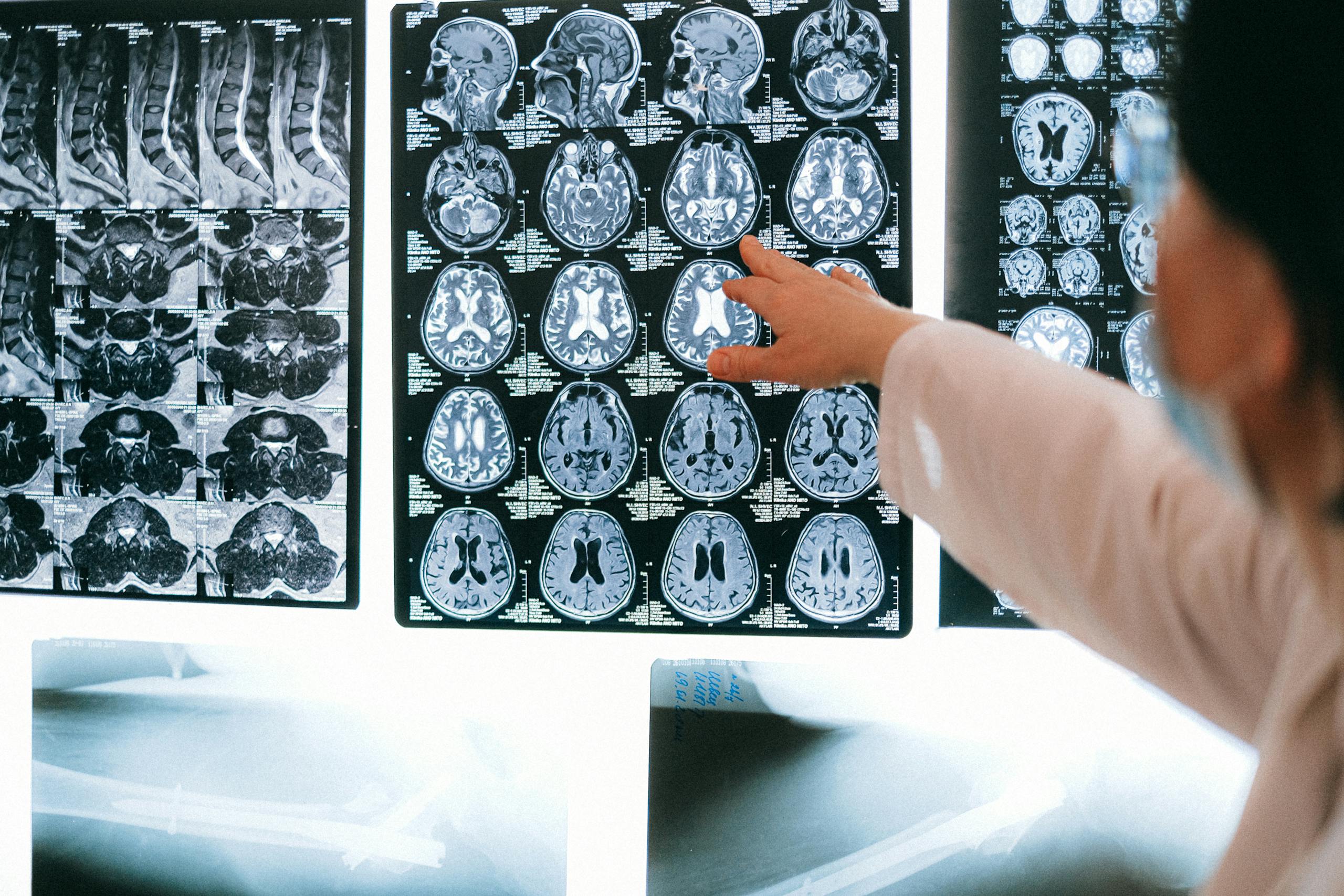
Beyond neurotransmitters, neuroimaging research has shown something fascinating about how introverted and extroverted brains differ in where they direct blood flow. In general, introverted brains show more activity in the frontal lobes, the regions responsible for planning, self-reflection, problem-solving, and impulse control. Extroverted brains show relatively more activity in areas associated with sensory processing and motor activity, the regions that respond to what’s happening right now in the external world.
This isn’t about intelligence. It’s about orientation. The introverted brain is, structurally and functionally, more oriented toward internal experience than external response. It processes incoming information through a longer chain of associations before producing an output. That’s why introverts often think of the perfect thing to say an hour after the conversation ended. The brain was still working through it.
A paper in PubMed Central on personality and neural correlates explores how individual differences in personality traits map onto measurable differences in brain structure and function, including the frontal lobe activity patterns associated with introversion. What emerges from this body of work is a picture of introversion not as a social preference but as a fundamentally different mode of neural processing.
For me, this reframing was genuinely freeing. I spent years thinking my tendency to go quiet in brainstorms was a professional liability. My extroverted colleagues could generate ideas out loud, building on each other in real time. I needed to sit with a problem privately before I had anything worth saying. What I eventually realized was that my frontal lobe was doing more work before my mouth opened. The ideas I brought to the table after that internal processing were often the ones that held up longest under scrutiny.

What Does This Mean for Social Energy and Recovery?
The neurochemical differences between introverted and extroverted brains explain something that introverts know intuitively but often struggle to articulate: social interaction costs energy rather than creates it. This isn’t about disliking people. It’s about what happens in the brain during and after social engagement.
When an introvert engages socially, the brain is working hard. It’s running information through longer processing pathways, monitoring multiple layers of meaning and subtext, managing the stimulation load, and producing responses that feel considered rather than reflexive. All of that requires significant cognitive resources. When the interaction ends, the brain needs time to restore those resources. That’s what solitude does for an introvert. It’s not withdrawal. It’s maintenance.
An extrovert experiences something closer to the opposite. Social interaction activates their dopamine reward system, producing energy and motivation. Solitude, for many extroverts, feels draining because it removes the external stimulation their brains are calibrated to seek. This is why understanding what extroverted actually means at a neurological level helps clarify why extroverts aren’t just “more social.” They’re wired to be energized by the very thing that depletes an introvert.
There’s a useful framework here for understanding where you fall on the spectrum. Someone who is fairly introverted versus extremely introverted will experience these neurochemical dynamics at different intensities. A fairly introverted person might need an hour of quiet after a busy day. A strongly introverted person might need the entire next day. Neither is broken. They’re just calibrated differently.
One of my most useful adjustments as an agency leader was blocking the first hour of my morning before anyone could schedule meetings. I didn’t explain it as introvert recovery time. I called it strategic planning time. But what I was really doing was giving my brain the quiet stimulation it needed to function at its best before the dopamine-driven chaos of the day began. My productivity in that hour was consistently higher than anything I produced in a group setting.
Are Ambiverts and Omniverts Wired Differently Too?
Not everyone’s neurochemistry sits cleanly at one end of the spectrum. Some people genuinely seem to shift between introverted and extroverted modes depending on context, which raises interesting questions about whether their brain chemistry is different from both ends of the spectrum or simply more flexible.
Ambiverts, people who fall in the middle of the introvert-extrovert continuum, may have dopamine systems that are more moderately calibrated. They get some reward from social stimulation without being overwhelmed by it, and they can tolerate solitude without the restlessness that some extroverts describe. Their brains may be more adaptable in switching between internal and external processing modes.
Omniverts are a slightly different case. The distinction between omniverts and ambiverts matters here because omniverts tend to swing more dramatically between full introversion and full extroversion depending on circumstances, rather than sitting comfortably in the middle. Their neurochemistry may be more context-dependent, with the dopamine reward system activating strongly in some social environments and going quiet in others. If you’re not sure which category describes you, exploring the otrovert vs ambivert distinction can add another layer of clarity to where your natural wiring sits.
What the neuroscience suggests is that these aren’t just personality labels. They reflect genuine variation in how individual brains are calibrated to seek, process, and recover from stimulation. The spectrum is real, and it’s biological.
How Does This Neurochemistry Shape the Way Introverts Think and Communicate?
The longer processing pathways in an introverted brain don’t just affect social energy. They shape the texture of how introverts think, communicate, and build relationships. Because information travels through more associative regions before becoming a response, introverts tend to think in connections. A single idea pulls in related ideas, historical context, potential implications, and emotional resonance before it surfaces as a sentence.
This is why introverts tend to prefer deeper conversations over small talk. Small talk requires rapid, shallow processing. It’s a dopamine-driven exchange of surface-level signals. An introverted brain isn’t built to find that rewarding. The acetylcholine pathway that produces genuine satisfaction for an introvert requires depth, meaning, and the kind of exchange where both people are actually thinking rather than just talking.
I noticed this acutely during client entertainment, which was a significant part of agency life. My extroverted colleagues could work a room at a client dinner with ease, moving from table to table, keeping conversations light and energetic. I was genuinely good in one-on-one conversations with clients, the kind where we’d end up talking about the real challenges in their business rather than the surface-level pleasantries. My clients often described those conversations as the most valuable part of our relationship. That wasn’t charm or social skill. It was my brain doing what it was wired to do: go deep.
There’s also a communication rhythm difference worth noting. Because the introverted brain processes before responding, introverts often pause before speaking. In a culture that interprets silence as uncertainty or disengagement, this creates friction. But that pause is the brain doing its best work. The response that comes after it is typically more precise, more considered, and more accurate than what would have come out immediately. That’s not a deficit. It’s a different kind of intelligence operating on a different clock.
A paper in Frontiers in Psychology examining personality and cognitive processing styles reinforces this picture, suggesting that differences in how people process social and emotional information are tied to measurable variations in neural architecture and neurotransmitter function, not just learned habits or cultural conditioning.
Can Understanding Your Neurochemistry Change How You Work?
Knowing the biology doesn’t change the biology. But it changes how you interpret your own experience, and that shift in interpretation has real practical consequences.
When I finally understood that my need for solitude after client meetings wasn’t weakness or antisocial behavior but a genuine neurochemical recovery process, I stopped apologizing for it and started designing around it. I scheduled decompression time after major presentations. I structured my most cognitively demanding work for mornings before the stimulation load of the day built up. I stopped trying to match the social output of my extroverted partners and started leveraging the depth of processing that my brain was actually good at.
The results were measurable. My strategic work got sharper. My client relationships deepened. My creative output improved. Not because I changed who I was, but because I stopped fighting my neurochemistry and started working with it.
If you’re uncertain whether you’re truly introverted or something closer to the middle of the spectrum, taking an introverted extrovert quiz can give you a clearer baseline for how your brain is likely calibrated. That self-knowledge is genuinely useful when you’re trying to structure your work, your relationships, and your environment in ways that support rather than drain you.
The neurochemical differences between introverted and extroverted brains also have implications for leadership, negotiation, and professional effectiveness. Harvard’s Program on Negotiation has explored whether introverts are at a disadvantage in negotiation settings, and the answer is more nuanced than the conventional wisdom suggests. The deeper processing, the ability to read subtext, the comfort with silence as a strategic tool, these are genuine advantages that introverts bring to high-stakes conversations, even if they don’t look like conventional negotiation strengths.

What Happens When Introverts Ignore Their Neurochemical Needs?
There’s a cost to chronically overriding your neurochemical wiring, and it’s not just fatigue. When introverts consistently operate in high-stimulation environments without adequate recovery, the effects compound. Concentration degrades. Emotional regulation becomes harder. The depth of processing that makes introverted thinking valuable starts to flatten out as the brain operates in a kind of perpetual triage mode, managing overstimulation rather than doing its best work.
I’ve seen this in myself during the most demanding periods of agency life, particularly during new business pitches where weeks of high-stimulation, high-pressure work stacked on top of each other. By the end of those stretches, I was making decisions that felt reactive rather than strategic. My writing got blunter. My patience with my team shortened. What looked like stress was partly that, but it was also my brain running on fumes because I’d depleted the resources it needed to do its actual job.
The brain science here connects to broader research on arousal regulation and cognitive performance. Operating consistently above your optimal arousal level doesn’t produce better performance. It produces degraded performance masked by the appearance of busyness. For introverts, that degradation happens faster and at lower stimulation thresholds than it does for extroverts, which is why the same work environment can produce burnout in an introvert while barely registering for an extrovert in the next office.
Recognizing this isn’t an excuse to avoid challenge. It’s a map for managing your resources intelligently. The introverted brain is capable of extraordinary output, but it needs the right conditions to produce it. Quiet focus, adequate recovery time, and environments that allow for depth rather than constant context-switching aren’t luxuries. They’re the operating conditions under which an introverted brain actually performs at its ceiling.
If you want to go deeper on the full landscape of introversion and how it compares to extroversion across different dimensions of personality and behavior, the Introversion vs Extroversion hub brings together the full range of these topics in one place.
About the Author
Keith Lacy is an introvert who’s learned to embrace his true self later in life. After 20 years in advertising and marketing leadership, including running agencies and managing Fortune 500 accounts, Keith now channels his experience into helping fellow introverts understand their strengths and build fulfilling careers. As an INTJ, he brings analytical depth and authentic perspective to every article, drawing from both professional expertise and personal growth.
Frequently Asked Questions
Do introverts actually have different brain chemistry than extroverts?
Yes, in meaningful ways. Introverted brains tend to rely more heavily on acetylcholine, a neurotransmitter associated with focused attention and internal processing, while extroverted brains are more responsive to dopamine, which drives reward-seeking and external stimulation. Introverts also show more baseline activity in the frontal lobes, the regions tied to planning, reflection, and deep thinking. These differences are not absolute, but they are consistent enough across personality research to represent a genuine neurological distinction rather than just a behavioral preference.
Why do introverts feel drained after social interaction when extroverts feel energized?
The difference comes down to how each brain type responds to external stimulation. Introverted brains operate at a naturally higher baseline arousal level, so additional social stimulation pushes them past their optimal zone more quickly. Social interaction also requires the introverted brain to run information through longer, more complex processing pathways, which consumes significant cognitive resources. Extroverted brains, by contrast, have reward systems calibrated to seek external stimulation, so social interaction activates their dopamine pathways and produces energy rather than depleting it. Neither response is wrong. They’re simply different neurochemical realities.
What is acetylcholine and why does it matter for introverts?
Acetylcholine is a neurotransmitter involved in focused attention, sustained concentration, and the kind of deep, deliberate thinking that introverts tend to find genuinely satisfying. Unlike dopamine’s fast, external reward signal, acetylcholine produces a quieter, more sustained sense of engagement. It’s what makes long stretches of focused solo work feel rewarding to an introvert rather than tedious. The acetylcholine pathway in the brain is longer and more complex than the dopamine pathway, which is part of why introverted processing tends to be deeper and more associative, pulling in more context and nuance before producing a response.
Can an introvert’s brain change over time or with practice?
The brain is plastic, meaning it can adapt and develop new patterns with consistent practice. An introvert can absolutely build skills in social settings, become more comfortable with external stimulation, and develop strategies that make high-stimulation environments more manageable. What doesn’t change is the underlying neurochemical calibration. An introvert who becomes skilled at networking is still an introvert whose brain needs recovery time after that networking. The wiring doesn’t rewire itself through willpower. What changes is your relationship to that wiring and your ability to work with it rather than against it.
Does introversion overlap with high sensitivity or are they different things?
They overlap but aren’t the same. Introversion describes a neurochemical orientation toward internal processing and a preference for lower stimulation environments. High sensitivity, sometimes called sensory processing sensitivity, describes a nervous system that processes sensory and emotional information more deeply and thoroughly than average. Many highly sensitive people are introverts, but not all introverts are highly sensitive, and some highly sensitive people are extroverts. The neurochemical picture is similar in some ways, particularly around heightened arousal responses, but the two traits have distinct origins and expressions. Understanding both can be useful if you find that you’re not just drained by social stimulation but also by sensory input like noise, light, or emotional intensity in your environment.