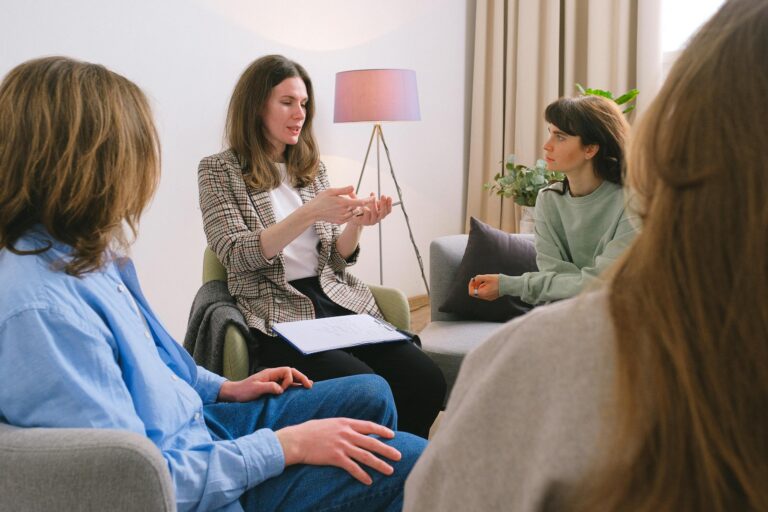

Shyness in a 10-year-old is not a flaw to correct or a phase to push through. It is a real emotional experience, one that shows up as hesitation in social situations, discomfort with new people, and a strong pull toward familiar, safe spaces. Addressing shyness at this age means understanding what is actually driving it, and responding with patience rather than pressure.
Shyness and introversion are not the same thing, and mixing them up can lead parents down the wrong path entirely. A shy child fears negative judgment from others. An introverted child simply processes the world internally and finds social interaction draining. Some kids are both. Some are neither. Getting this distinction right is the first and most important step.
Our Introversion vs Other Traits hub covers the full landscape of personality differences, from temperament to social energy to the traits that often get confused with each other. If you are trying to understand your child, that resource gives you a solid foundation before you go further.

What Does Shyness Actually Look Like at Age 10?
By age 10, most kids have developed enough self-awareness to know they feel different in social situations. They can articulate it, at least a little. They might say things like “I don’t know what to say” or “I hate when everyone looks at me.” What they often cannot explain is why the feeling is so strong, or why it does not go away even when they want it to.
Career Coaching for Introverts
One-on-one career strategy sessions with Keith Lacy. 20 years of Fortune 500 leadership as an introvert, now helping others build careers that work with their wiring.
Learn More50-minute Zoom session · $175
Shyness at this age tends to show up in predictable patterns. A child might be completely relaxed at home with family, then go quiet the moment an unfamiliar adult enters the room. They might dread being called on in class, even when they know the answer. Birthday parties, school presentations, joining a new activity, any situation where they feel observed or evaluated can trigger real physical discomfort. Flushed cheeks, a tight stomach, a sudden inability to find words.
What makes this age particularly important is that 10-year-olds are beginning to form a more stable sense of identity. They are watching how others respond to them, and they are drawing conclusions. A child who gets teased for being quiet, or who is repeatedly pushed into social situations before they are ready, can start to build a story about themselves: “I am bad at this. I am weird. Something is wrong with me.” That internal narrative, once established, takes real effort to undo.
I think about this often because I was that kid. Not that I had the vocabulary for it then. I just knew that certain situations made me want to disappear. Standing up to give a book report. Walking into a room where I did not know anyone. Being asked to perform or speak spontaneously. The discomfort was real and physical, and the adults around me mostly responded by encouraging me to push through it. That advice was not wrong exactly, but it was incomplete.
Is Your Child Shy, Introverted, or Something Else Entirely?
Parents often conflate these traits because they can look similar from the outside. A child who hangs back at a party might be shy, introverted, highly sensitive, or simply tired. Understanding the difference changes how you respond.
Shyness is rooted in fear of social judgment. It is an anxious response to the possibility of being evaluated negatively by others. An introverted child, by contrast, may be perfectly confident in social settings but prefers less stimulation and needs time alone to recharge. They might love their friends deeply and still want to go home after two hours. That is not shyness. That is just how their energy works.
Some children fall somewhere in the middle of the introvert-extrovert spectrum. You might take our introvert extrovert ambivert omnivert test yourself and then think about how your child would answer those same questions. It can be a useful lens. Children who shift between social enthusiasm and genuine withdrawal depending on the context might be ambiverts or omniverts, and understanding that distinction matters for how you support them.
The difference between an omnivert vs ambivert is subtle but worth understanding. An ambivert sits comfortably in the middle of the spectrum most of the time. An omnivert swings between fully introverted and fully extroverted depending on the situation. A 10-year-old who is the life of the party at a sleepover with close friends but shuts down completely at a school assembly might be an omnivert, not a shy introvert. The behavior looks similar from the outside. The internal experience is quite different.

Why Pressure Makes Shyness Worse, Not Better
The instinct to push a shy child into social situations is understandable. Parents want their kids to be okay in the world. They want them to make friends, speak up for themselves, feel comfortable. The problem is that pressure, even well-intentioned pressure, tends to confirm the shy child’s worst fear: that they are not capable of handling these situations.
When a child is forced to perform before they feel ready, the anxiety spikes. The body responds as if there is a real threat. Heart rate goes up. The mind goes blank. And then the child has to stand there, visibly struggling, while adults wait. That experience does not build confidence. It builds dread. The next time a similar situation arises, the anticipatory anxiety is even stronger because now there is evidence that things go badly.
I watched this dynamic play out in my agencies more times than I can count. I would hire someone who was clearly talented but visibly uncomfortable in presentations. Some managers would respond by putting that person on the spot more often, assuming exposure would fix it. It rarely did. What actually worked was giving them structure, preparation time, and genuine encouragement before the moment arrived. The confidence came from accumulated small wins, not from being thrown into the deep end.
With a 10-year-old, the same principle applies. Gradual, supported exposure works. Forced immersion tends to backfire. The goal is to help the child build a body of evidence that contradicts their fear, not to override the fear through sheer willpower.
A piece published in Psychology Today on the value of deeper connection touches on something relevant here: meaningful interaction, even for shy or introverted people, tends to feel more manageable than surface-level social performance. A shy 10-year-old who dreads small talk at a birthday party might be completely at ease in a one-on-one conversation about something they care about. That is not a contradiction. That is a clue about how to help them.
How Do You Actually Talk to a Shy Child About Their Shyness?
Most shy kids already know they are shy. What they do not always know is that it is okay, that it does not mean something is broken, and that they have more control over it than they think. The conversation you have with your child matters enormously.
Start by naming what you observe without attaching a verdict to it. “I noticed you got quiet when we walked into the party” is different from “You’re always so shy.” One is an observation. The other is an identity label that the child will internalize and carry. Labels stick, especially at this age when identity is still forming.
Ask open questions and actually listen to the answers. “What does it feel like in your body when you get nervous around new people?” A 10-year-old is old enough to reflect on this if you give them space. You might be surprised by how much self-awareness is already there. What they often lack is the language to describe it and the reassurance that the experience is normal.
It also helps to share your own experience, genuinely and specifically. Not in a way that minimizes theirs, but in a way that normalizes it. I have had this conversation with younger family members in my life, and I have been honest: there were rooms I dreaded walking into for most of my adult life. Board meetings where I felt like everyone could see that I was calculating my words before I spoke them. Client dinners where the small talk felt like a performance I had not rehearsed. Telling a 10-year-old that a grown-up they respect has felt exactly what they are feeling is powerful. It tells them the feeling does not have to define them.

What Strategies Actually Help a Shy 10-Year-Old Build Confidence?
Practical strategies matter, and the most effective ones share a common thread: they reduce the stakes while increasing the child’s sense of agency. Here is what tends to work.
Preparation Over Surprise
Shy children do much better when they know what to expect. Before a social event, walk through it with them. Who will be there? What will happen? What might someone ask them, and what could they say? This is not about scripting every interaction. It is about reducing the number of unknowns so the brain does not have to work as hard in the moment.
In my agency days, I always prepared more than anyone else in the room before a client presentation. Not because I lacked confidence in my thinking, but because preparation was how I managed my own social anxiety in high-stakes situations. Having a clear structure freed up mental bandwidth to actually be present. The same principle works for a 10-year-old walking into a new classroom.
Structured Social Opportunities
Unstructured social time is genuinely hard for shy kids. A birthday party where everyone is just milling around is far more anxiety-inducing than an activity where there is something to do. Sports, art classes, drama club, coding groups, any structured activity where the interaction happens around a shared task gives a shy child a natural entry point. They do not have to perform socially. They just have to show up and do the thing.
One-on-one playdates are also significantly easier than group situations. Starting small and building gradually is not coddling. It is smart scaffolding.
Building on Genuine Strengths
Shy children often have real strengths that get overlooked because they are not the loudest voice in the room. They tend to be thoughtful, observant, and genuinely interested in depth over breadth. When a child discovers something they are genuinely good at, and gets recognized for it in a context that feels safe, confidence starts to build from the inside out.
Some of the most effective people I ever hired were quiet, careful thinkers who had found their domain and owned it completely. Their confidence was not social bravado. It was the quiet certainty that comes from knowing what you know. That kind of confidence is available to shy kids too, and it often grows fastest when adults stop focusing on the shyness and start paying attention to the strengths.
Modeling Comfort With Discomfort
Children watch adults closely. When a parent says “I was nervous about that meeting but I went anyway and it was fine,” they are teaching something valuable: discomfort is survivable. You do not have to feel confident to act. You can feel nervous and still do the thing.
This is different from pretending social situations are easy when they are not. Authenticity matters here. A child who sees a parent genuinely manage their own social discomfort with grace learns more from that than from any amount of coaching.
When Should a Parent Be Concerned About Shyness?
Most shyness in 10-year-olds is well within the normal range of human temperament. It does not require intervention beyond thoughtful parenting. That said, there are situations where shyness crosses into something that warrants a closer look.
Social anxiety disorder is a clinical condition that goes beyond ordinary shyness. When a child’s fear of social situations is so intense that it prevents them from attending school, making any friends, or functioning in age-appropriate ways, that is worth discussing with a pediatrician or child psychologist. The fear is not just discomfort. It is genuinely impairing.
Selective mutism, where a child speaks freely at home but becomes completely silent in other settings, is another pattern that warrants professional attention. It is more common than many parents realize, and it responds well to early, specialized support.
A useful resource from PubMed Central on temperament and behavioral inhibition offers context on how early temperament patterns, including the tendency toward social withdrawal, develop over time and what factors influence their trajectory. Not every shy child needs clinical support, but understanding the research landscape helps parents make informed decisions.
If you are uncertain, err toward getting a professional opinion. A good child psychologist will not pathologize ordinary introversion or shyness. They will help you understand where your specific child falls on the spectrum and what, if anything, would genuinely help.

How Does School Make Shyness Harder, and What Can You Do About It?
School is, in many ways, designed for extroverts. Group work, class participation grades, presentations, open-plan classrooms, loud cafeterias. A shy or introverted 10-year-old spends much of their school day operating in conditions that actively work against them.
To understand why this matters, it helps to have a clear picture of what extroverted actually means. Extroverts genuinely gain energy from social interaction. They think out loud, process through conversation, and feel most alive in stimulating environments. School structures tend to reward and reflect these traits. A child who needs quiet to think, who processes internally before speaking, and who finds the cafeteria genuinely overwhelming is not failing to meet the standard. They are operating in an environment that was not designed with them in mind.
What can parents do? Communicate with teachers directly and specifically. Not “my child is shy” but “my child does much better when they have a moment to think before being called on” or “written responses tend to reflect her thinking more accurately than verbal ones.” Good teachers want this information. It helps them reach students they might otherwise misread as disengaged or unprepared.
It is also worth paying attention to how much social recovery time your child needs after school. A child who comes home and needs an hour of quiet before they can function is not being difficult. They are managing their energy. Building that decompression time into the afternoon routine can make a significant difference in overall wellbeing.
Additional insights from PubMed Central on social anxiety and academic performance suggest that the relationship between social anxiety and school outcomes is real and worth taking seriously. Shy children who feel chronically misunderstood or pressured in school settings can develop avoidance patterns that compound over time. Early, thoughtful intervention, at home and in the classroom, makes a meaningful difference.
Does Shyness Change as Kids Get Older?
For many children, shyness does shift with age. Social skills develop. Self-awareness grows. The child who barely spoke in group settings at 10 may find their voice at 14 or 15 as they find their people and their interests. This is not guaranteed, but it is common.
What tends to determine the trajectory is not the shyness itself but the environment around it. A child who receives consistent messages that their quieter way of being is acceptable and even valuable tends to develop confidence over time. A child who receives consistent messages that they need to change, be more outgoing, speak up more, stop being so shy, tends to internalize shame that makes the shyness harder to move through.
It is also worth recognizing that some children are simply wired toward a more introverted, cautious temperament, and that is not going to change fundamentally. They may become more skilled at managing social situations. They may develop genuine comfort in certain contexts. But their core preference for depth over breadth, for smaller groups over larger ones, for reflection before action, is part of who they are. The goal is not to turn a shy introvert into a gregarious extrovert. The goal is to help them function well and feel good about themselves as they actually are.
If you are curious about where your child might fall on the spectrum as they grow, our introverted extrovert quiz can be a useful starting point for conversation. Some kids genuinely enjoy exploring these frameworks. It gives them language for something they have been experiencing without being able to name.
There is also a meaningful difference between being fairly introverted vs extremely introverted, and that distinction shapes how much energy a child needs to invest in managing social situations. A child who is moderately introverted might find social skills relatively accessible once they have the right tools. A deeply introverted child may always need more recovery time and more deliberate preparation, and that is not a problem to solve. It is a reality to accommodate.
What Role Do Parents Play in Shaping a Shy Child’s Self-Perception?
Enormous. The way a parent frames a child’s shyness becomes part of the story that child tells about themselves. This is not about blame. It is about awareness.
Children absorb the emotional temperature of a room. They notice when a parent tenses up before a social event, or whispers to another adult “she’s just shy” in a way that sounds apologetic. They notice when they are praised for finally speaking up in a way that implies their silence was a failure. They notice everything.
What they need to hear, consistently and genuinely, is that who they are is okay. That being thoughtful and careful and slower to warm up is not a deficit. That the world has room for people who observe before they act, who listen before they speak, who prefer depth to performance.
I spent a long time in my career performing a version of myself that was more confident, more socially fluent, more extroverted than I actually was. I was good at it, in the way that anyone can get good at a role they practice long enough. But it was exhausting, and it was not sustainable. What shifted for me was finding language for who I actually was and discovering that the traits I had been compensating for were actually assets in the right context. My ability to prepare thoroughly, to listen carefully, to think before speaking, those were not weaknesses I had managed to work around. They were genuine strengths.
A shy 10-year-old is not too young to start building that same understanding. They are exactly the right age for it.
You might also find it useful to explore the difference between an otrovert vs ambivert as you try to understand your child’s social patterns. Some children who seem shy are actually otroverts, people who present as extroverted in comfortable settings and completely withdraw in unfamiliar ones. Knowing which dynamic is at play changes the support you offer.

What the Research Actually Tells Us About Helping Shy Children
The broader psychological literature on child temperament suggests that early behavioral inhibition, the tendency to withdraw from unfamiliar situations, is a genuine and measurable trait that shows up early in life. It is not a parenting failure. It is a real characteristic of how some nervous systems are wired.
What matters most for long-term outcomes is not whether a child is shy but whether they develop what researchers call “social competence,” the ability to function effectively in social situations even when those situations feel uncomfortable. Social competence can be built. It is a set of skills, not a fixed trait.
A framework worth exploring comes from Frontiers in Psychology research on personality and social behavior, which examines how individual differences in temperament interact with environmental factors over time. The takeaway for parents is that environment matters enormously. A supportive, low-pressure environment where a shy child is given genuine agency tends to produce better outcomes than one where the shyness is treated as a problem to be solved.
Cognitive behavioral approaches, which help children identify and gently challenge the anxious thoughts that drive social avoidance, have a solid track record with shy and socially anxious kids. These do not require formal therapy in every case. Many of the principles can be applied in everyday conversations at home. The core idea is simple: help the child notice when their fear is telling them a story (“everyone will laugh at me”) and gently test whether that story is actually true.
A thoughtful piece from Psychology Today on introvert-extrovert dynamics touches on something relevant for families where one child is shy and another is not: the importance of creating space for different communication styles within the same household. Shy children who grow up in families where their quieter style is respected, not just tolerated, develop significantly stronger self-concept over time.
If you want to go deeper into how introversion and extroversion interact across all the personality dimensions we cover here, our complete Introversion vs Other Traits hub is the best place to continue.
About the Author
Keith Lacy is an introvert who’s learned to embrace his true self later in life. After 20 years in advertising and marketing leadership, including running agencies and managing Fortune 500 accounts, Keith now channels his experience into helping fellow introverts understand their strengths and build fulfilling careers. As an INTJ, he brings analytical depth and authentic perspective to every article, drawing from both professional expertise and personal growth.
Frequently Asked Questions
Is shyness in a 10-year-old normal?
Yes, shyness is a normal and common trait in children of this age. Many 10-year-olds experience social hesitation, discomfort with new people, or anxiety about being evaluated by others. It becomes a concern only when it is so intense that it prevents normal functioning, such as attending school or forming any friendships. Most shy children benefit most from patient, low-pressure support rather than clinical intervention.
How do I know if my child is shy or introverted?
Shyness is driven by fear of negative social judgment. An introverted child is not necessarily afraid of social situations but finds them draining and prefers quieter, less stimulating environments. A shy child wants to connect but feels held back by anxiety. An introverted child may be perfectly comfortable socially but chooses smaller, deeper interactions over large group settings. Many children are both, and both are completely valid ways of being in the world.
Should I push my shy child to be more social?
Gentle, gradual encouragement works. Pressure does not. Forcing a shy child into overwhelming social situations before they are ready tends to increase anxiety rather than reduce it. A more effective approach is to create low-stakes opportunities for social interaction, prepare your child for what to expect, and celebrate small wins rather than demanding large behavioral leaps. The goal is building confidence through accumulated positive experience, not overriding fear through force.
What can I say to help my shy child feel better about themselves?
Start by naming what you observe without attaching a negative judgment to it. Avoid labels like “you’re so shy” in front of others. Instead, validate the feeling: “I know it feels hard to walk into a room where you don’t know anyone. That’s okay.” Share your own experiences with social discomfort honestly and specifically. Consistently reinforce that their thoughtful, observant way of engaging with the world is a genuine strength, not a deficit to overcome.
When should I consider professional help for a shy child?
Consider speaking with a pediatrician or child psychologist if your child’s shyness is preventing them from attending school, making any friends, or functioning in age-appropriate ways. Selective mutism, where a child speaks freely at home but goes completely silent in other settings, is also worth professional attention. A good child psychologist will not pathologize ordinary introversion or temperamental shyness. They will help you understand where your child falls and what, if anything, would genuinely support them.