
Shyness is learned, at least in part. While some people may have a biological tendency toward sensitivity or caution in new situations, the anxious self-consciousness that most of us recognize as shyness develops through experience, environment, and the stories we absorb about ourselves over time. It is not a fixed character flaw baked into your DNA.
That distinction matters more than it might seem at first glance. If shyness were purely genetic, there would be little point in examining it. But because experience shapes it, experience can also reshape it. Not erase it, necessarily, but change your relationship with it in ways that genuinely alter how you move through the world.
I spent years confusing my shyness with my introversion, treating them as one tangled thing I needed to either fix or hide. Separating them was one of the more clarifying moments of my adult life. And the question of where shyness actually comes from sits right at the center of that separation.

Before we get into the roots of shyness, it helps to understand where it fits in the broader landscape of personality. Our Introversion vs Other Traits hub covers the full range of ways introversion intersects with shyness, anxiety, sensitivity, and other traits that often get lumped together. Shyness is its own thread in that fabric, and tracing it back to its origins tells a very different story than most people expect.
What Does “Learned” Actually Mean When We Talk About Shyness?
When psychologists say a trait is learned, they mean it developed through interaction with the world rather than arriving fully formed at birth. Shyness fits this model in a nuanced way. There is evidence that some people are born with a nervous system that responds more intensely to unfamiliar stimuli. Jerome Kagan’s decades of research on behavioral inhibition in children showed that a subset of infants consistently pull back from novelty in ways that persist into early childhood. That temperamental tendency is real.
What’s your personality type?
Take our free 40-question assessment and get a detailed personality profile with dimension breakdowns, context analysis, and personalised insights.
Discover Your Type8-12 minutes · 40 questions · Free
Yet temperament is not destiny. A child born with high sensitivity to new environments does not automatically become a shy adult. What happens between that initial wiring and the adult personality depends enormously on what that child experiences, how caregivers respond to their hesitance, what messages they receive from teachers and peers, and whether their caution is treated as something reasonable or something shameful.
Shyness, in the way most adults experience it, is not simply that early sensitivity. It is sensitivity plus a layer of self-consciousness, a worry about being judged, an anticipatory dread of social evaluation. That evaluative layer is almost certainly learned. Children are not born fearing judgment. They learn to fear it by experiencing it.
Understanding what extroversion actually looks like can help clarify this. When you examine what it means to be extroverted, you see that extroverts are not simply fearless in social situations. They gain energy from interaction. Shyness, by contrast, is about fear, not energy. That is a crucial distinction that gets lost when we conflate personality type with social anxiety.
How Early Experiences Shape the Architecture of Shyness
My first real memory of shyness as a distinct feeling, separate from just being quiet, came from a moment in third grade. I gave a wrong answer in class and the room laughed. Not cruelly, just that reflexive kid laughter. But something shifted in me that day. I started calculating before I spoke. I started editing myself in real time. That is not temperament. That is learning.
Developmental psychologists point to several categories of experience that consistently shape shyness in children. Parenting style plays a significant role. Children whose caregivers are overprotective, frequently signaling that the world is dangerous and that the child is not equipped to handle it, often internalize that message. They learn to approach new situations with wariness because the adults they trust most have modeled wariness.
Peer experiences matter enormously too. Being excluded, mocked, or ignored by other children teaches specific lessons about social risk. The child who gets laughed at during show-and-tell learns that speaking up carries consequences. The child who is left out of games learns that initiating connection might end in rejection. These are not abstract fears. They are conclusions drawn from real data.
Cultural messaging adds another layer. In environments that prize boldness, volume, and constant social engagement, quieter children receive implicit signals that something is wrong with them. That message, repeated enough times, becomes a belief. And beliefs about the self are among the most powerful shapers of behavior.

Why Introverts Are More Likely to Develop Shyness, But Not Guaranteed To
There is a reason the confusion between introversion and shyness persists. Introverts, especially those on the more sensitive end of the spectrum, often have the temperamental raw material that early negative social experiences can sculpt into shyness. A child who processes deeply, who notices more and feels more, who needs time to warm up to new situations, is more likely to find those early social stumbles memorable and meaningful.
That said, plenty of introverts are not shy at all. And plenty of extroverts are genuinely shy, craving connection while simultaneously fearing judgment. The introvert-extrovert-ambivert-omnivert test can help people start sorting out where they actually fall on the energy spectrum, separate from the social anxiety question. Those are two different measurements, and treating them as one creates real confusion about what someone actually needs.
I ran advertising agencies for over two decades. In that world, I managed teams of people across the full personality range. Some of the most introverted people I worked with were completely at ease in client presentations. They were quiet and reflective in planning sessions, but they did not fear judgment. Some of the most extroverted people I knew, people who genuinely loved socializing, would freeze before a high-stakes pitch. They wanted connection but dreaded evaluation. Introversion and shyness were operating on entirely separate tracks in those people.
The spectrum gets even more complex when you factor in people who shift across contexts. The difference between an omnivert and an ambivert is worth understanding here, because some people who appear shy in certain contexts are actually highly context-dependent in their social energy. What looks like shyness may sometimes be a mismatch between the environment and the person’s natural operating mode.
The Role of Shame in Cementing Learned Shyness
Shyness becomes sticky when shame gets involved. A child who hesitates before joining a group and is simply allowed to observe for a moment before deciding to engage often grows into an adult who can manage social situations with reasonable confidence. A child who hesitates and is told “stop being so shy, what’s wrong with you” learns something different. They learn that their natural pacing is a defect.
Shame is not just an emotion. It is a belief system. When children absorb the message that their quietness or caution is a character flaw rather than a personality trait, they build their self-concept around that flaw. Every subsequent social stumble confirms the belief. Every moment of hesitation becomes evidence. That loop, experience confirming belief confirming behavior, is how learned shyness becomes entrenched.
I watched this play out in my own team dynamics at the agency. I once managed a junior copywriter who had extraordinary creative instincts but almost never spoke up in group brainstorms. When I worked with her one-on-one, her ideas were sharp and fully formed. In groups, she went silent. Over time, I learned that she had been repeatedly interrupted and talked over in her previous role, to the point where she had stopped offering ideas in group settings entirely. That was not her personality. That was a conditioned response to a specific kind of repeated harm.
Changing her environment, creating smaller brainstorm groups, asking for her input directly before opening the floor, giving her ideas visible credit, changed her behavior within months. She had not become a different person. The learned layer of her shyness had simply lost its justification.
Can Shyness Be Unlearned, or Does It Just Change Shape?
Calling shyness “learned” naturally raises the question of whether it can be unlearned. The honest answer is that it is complicated. The nervous system sensitivity that may underlie some shyness does not simply disappear. What changes is the relationship between that sensitivity and the self-evaluative layer that turns it into social fear.
Cognitive behavioral approaches have a strong track record with social anxiety, which overlaps significantly with chronic shyness. The mechanism is not erasure but recalibration. You do not stop noticing that you feel nervous before speaking in a group. You stop interpreting that nervousness as confirmation that something is wrong with you. That shift, from “I feel nervous, therefore I am defective” to “I feel nervous, and I can still speak,” is genuinely achievable for most people.
Accumulated positive experiences matter too. One of the most consistent findings across personality research is that repeated low-stakes social success gradually recalibrates the threat response. Every time someone speaks up and survives, every time they introduce themselves and are received warmly, every time they contribute in a meeting and their contribution lands, they are collecting evidence against the story that social risk leads to rejection.
This is part of why the distinction between fairly introverted and extremely introverted matters when thinking about shyness. Someone who is fairly introverted may find that their shyness softens considerably with the right environment and enough positive experience. Someone who is extremely introverted may always need more recovery time after social engagement, but that is a different thing from fearing it. The introversion does not go away. The shyness can genuinely shift.
In my own experience, my shyness did not disappear when I became an agency principal. What changed was that I accumulated enough evidence of my own competence, enough client relationships that went well, enough presentations that landed, that the self-doubt driving my shyness lost much of its fuel. I still feel the initial hesitation in certain social situations. What I no longer feel is the shame attached to it.
How Personality Type Interacts With What You’ve Learned
Where you fall on the introversion-extroversion spectrum creates the backdrop against which learned shyness plays out, but it does not determine the outcome. Two people with identical personality profiles can have very different relationships with shyness depending on what they experienced growing up.
Some people occupy genuinely ambiguous territory on the introversion-extroversion spectrum. If you have ever wondered whether you are an introverted extrovert, that in-between experience is real and worth examining. People who sit closer to the middle of the spectrum sometimes find that their shyness is more situational, appearing in high-stakes evaluative contexts while disappearing in comfortable social ones. That pattern often reflects learned shyness layered over a more flexible underlying temperament.
There is also a less-discussed category worth mentioning. Some people who identify as otroverts, a term that describes those who present as extroverted in behavior while processing internally like an introvert, experience shyness in a particularly confusing way. They appear socially confident to others while privately managing significant self-consciousness. Exploring the otrovert vs ambivert distinction can help people in this category understand why their internal experience does not match their external reputation.
As an INTJ, my particular flavor of shyness was almost entirely tied to the evaluative dimension. I was not afraid of people. I was afraid of being perceived as less intelligent, less capable, less strategically sharp than I needed to be. That specific fear has a clear origin in professional environments that rewarded a particular kind of confident extroverted performance and treated quiet deliberation as weakness. Once I understood that, I could trace the learning back to its source and start questioning whether the lesson had ever been accurate.

What Neuroscience Adds to the Picture
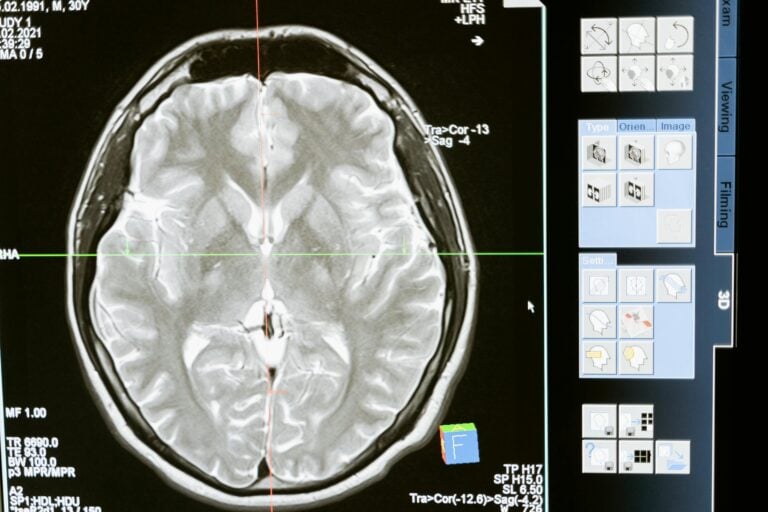
The brain science here is genuinely interesting, even without overstating what we know. The amygdala, the brain’s threat-detection center, plays a central role in social fear. People who experience chronic shyness often show heightened amygdala reactivity to social evaluation cues, things like faces showing disapproval or situations involving being watched. That heightened reactivity can have both genetic and experiential roots.
What makes this hopeful rather than deterministic is that the brain remains plastic throughout life. Neural pathways associated with threat responses can be recalibrated through new experience, therapeutic intervention, and even the gradual accumulation of evidence that contradicts old predictions. The relationship between early temperament and adult social functioning is real but not fixed. The learning that shaped shyness can be met with new learning.
One of the more counterintuitive findings in this area is that the same sensitivity that makes some people prone to shyness also makes them particularly responsive to positive social experiences. The nervous system that registers threat intensely also registers warmth, acceptance, and genuine connection intensely. That means the path out of learned shyness, for many people, runs directly through the experience of being genuinely seen and accepted in social contexts. Not performance coaching. Not forcing yourself into uncomfortable situations until you go numb. Actual belonging.
That realization changed how I thought about building teams. Creating environments where quieter people felt genuinely safe to contribute was not a soft management philosophy. It was a practical recognition that the shyness suppressing their contribution was learned and therefore responsive to environment. Some of the best strategic thinking I ever got from a team member came after I stopped running meetings in ways that rewarded whoever spoke fastest and started creating space for the people who needed a moment to formulate their thoughts. The quality of our work improved measurably.
Practical Implications for People Who Recognize Learned Shyness in Themselves
Recognizing that your shyness has a history, that it was shaped by specific experiences and messages, is genuinely useful information. It means you are not simply working against your nature. You are working through a layer of learning that was added on top of your nature, often without your consent, often when you were too young to evaluate whether the lesson was even true.
That framing matters because it changes the goal. The point is not to become someone who loves networking events and thrives on constant social stimulation. That would be asking you to change your personality, which is both impossible and unnecessary. The more achievable goal is separating the parts of your social hesitance that reflect genuine introversion, a real preference for depth over breadth, for quality over quantity in social connection, from the parts that reflect fear of judgment you picked up somewhere along the way.
Working with a therapist who understands the introversion-shyness distinction can be genuinely valuable here. Many therapists are introverts themselves, which often means they have personal familiarity with this terrain and can help you examine your social history without pathologizing your personality type.
Beyond formal support, small experiments in low-stakes social contexts build the kind of evidence base that gradually recalibrates the threat response. Not grand gestures. Not forcing yourself into overwhelming situations to prove something. Small, repeated, positive experiences that quietly accumulate into a different story about what happens when you show up.
One thing that helped me was finding professional contexts where my natural operating style was an asset rather than a liability. Certain client relationships, the ones built on trust and depth rather than performance and volume, felt genuinely natural to me. Building more of those relationships, and fewer of the transactional ones that drained me, gradually shifted my professional self-concept. I stopped experiencing my quietness as a problem I was managing and started experiencing it as a quality that served specific purposes well.

The Difference Between Accepting Shyness and Being Defined by It
There is a version of self-acceptance that becomes a ceiling. “I’m just shy” can be a compassionate acknowledgment of a real experience, or it can be a story that forecloses possibility. Knowing that shyness is at least partially learned creates a third option: neither fighting it as a flaw nor accepting it as a permanent identity, but holding it with curiosity.
What experiences shaped this? What beliefs did I form as a result? Are those beliefs still accurate? What would change if I tested them? Those questions are not about self-improvement in the hustle-culture sense. They are about genuine understanding, the kind that leads to choices made from clarity rather than fear.
Introversion is a core part of who I am. It shapes how I think, how I form relationships, how I do my best work, how I recover from demanding days. I have no interest in changing that, and I do not believe I could if I tried. But the shyness that used to sit on top of my introversion, the self-consciousness, the fear of judgment, the careful editing of myself before I spoke, that was something else. Tracing it back to where it came from gave me the distance to stop treating it as truth.
If any of this resonates, the broader conversation about how introversion intersects with other personality traits is worth exploring further. Our complete Introversion vs Other Traits hub covers the full range of distinctions, from shyness to sensitivity to the various points along the introversion-extroversion spectrum, with the goal of helping you understand your own wiring with more precision and less judgment.
About the Author
Keith Lacy is an introvert who’s learned to embrace his true self later in life. After 20 years in advertising and marketing leadership, including running agencies and managing Fortune 500 accounts, Keith now channels his experience into helping fellow introverts understand their strengths and build fulfilling careers. As an INTJ, he brings analytical depth and authentic perspective to every article, drawing from both professional expertise and personal growth.
Frequently Asked Questions
Is shyness something you are born with or something you develop?
Both elements are present. Some people are born with a temperament that is more sensitive to new or unfamiliar situations, which can create a foundation for shyness. But the self-conscious fear of judgment that most adults recognize as shyness develops through experience, including how caregivers responded to early hesitance, what messages peers and teachers sent, and what the broader culture communicated about quietness. The evaluative layer of shyness is almost certainly learned rather than innate.
What is the difference between being shy and being introverted?
Introversion is about energy. Introverts recharge through solitude and tend to prefer depth over breadth in social connection. Shyness is about fear, specifically the fear of being negatively evaluated by others. An introvert may be completely at ease in social situations while simply preferring fewer of them. A shy person, whether introverted or extroverted, experiences anxiety and self-consciousness around social evaluation. The two traits can coexist, but they are distinct in their origins and their effects.
Can shyness be overcome, or does it stay with you permanently?
Shyness can change significantly over time, though “overcome” may be the wrong frame. What typically happens for people who work through shyness is not that the initial nervous system sensitivity disappears, but that the self-evaluative layer softens as they accumulate evidence that social risk does not always lead to rejection. Cognitive behavioral therapy has a strong track record with the social anxiety that underlies chronic shyness. Positive social experiences, supportive environments, and a clearer understanding of the difference between introversion and fear also contribute meaningfully to that shift.
Do introverts experience shyness more than extroverts?
Introverts are not inherently shier than extroverts, though the two traits are often confused. Because introverts tend to be more internally focused and may have more sensitive nervous systems, they can be more susceptible to the kinds of early experiences that shape shyness. That said, many introverts are not shy at all, and many extroverts experience genuine shyness despite craving social connection. Shyness and introversion operate on separate dimensions of personality.
What kinds of experiences most commonly lead to learned shyness?
Several categories of experience consistently appear in the backgrounds of people with chronic shyness. Overprotective parenting that signals the world is dangerous and the child is ill-equipped to handle it tends to produce cautious, socially anxious children. Peer experiences like being excluded, mocked, or repeatedly interrupted teach specific lessons about the cost of social risk. Cultural environments that stigmatize quietness and reward extroverted performance send implicit messages that create shame around natural temperament. Any of these experiences, repeated consistently, can shape the self-evaluative fear that defines shyness.