
Society is largely built around extroverted ideals, from open-plan offices and group brainstorming sessions to the cultural assumption that speaking up equals having something valuable to say. If you’ve ever felt quietly out of step with the world around you, that feeling isn’t a personal failing. The systems, structures, and social scripts most of us move through every day were designed with a different kind of person in mind.
That doesn’t mean introverts are broken or disadvantaged beyond repair. It means we’re operating in environments that weren’t originally designed with our wiring in mind, and recognizing that distinction changes everything about how you see yourself.

Before we get into the specifics, it helps to understand where introversion sits on a broader personality spectrum. Our Introversion vs Extroversion hub covers the full range of personality orientations, including where ambiverts and omniverts fit in, and why these distinctions matter more than most people realize.
What Does It Actually Mean That Society Favors Extroverts?
When I ran advertising agencies, the culture I inherited was unmistakably extroverted. Success looked loud. The people who got promoted fastest were the ones who commanded rooms, who had a quick answer for everything in a meeting, who could work a client dinner like they’d been born for it. Nobody ever said, “We value quiet analysis here.” The message was always implied, and it was always the opposite.
What’s your personality type?
Take our free 40-question assessment and get a detailed personality profile with dimension breakdowns, context analysis, and personalised insights.
Discover Your Type8-12 minutes · 40 questions · Free
That’s what an extrovert-favoring society looks like up close. It’s not a conspiracy or a deliberate act of exclusion. It’s something more insidious: a set of defaults. Default assumptions about what good leadership looks like. Default assumptions about what confidence sounds like. Default assumptions about what makes someone “a people person,” as if being a people person is the highest possible compliment.
To understand why this matters, it helps to get clear on what extroversion actually is. If you want a grounded starting point, I’d suggest reading through what it actually means to be extroverted, because the popular definition is often oversimplified in ways that muddy the whole conversation.
Extroversion, at its core, is about where you draw your energy. Extroverts are energized by external stimulation, by social interaction, by being in the mix. That wiring shapes preferences, communication styles, and comfort zones. And when the people designing schools, workplaces, and social institutions share that wiring, they naturally build systems that reflect it.
How Did We Get Here? The Cultural Roots of the Extrovert Ideal
There’s a historical thread worth pulling on here. For much of the 20th century, Western culture shifted from valuing what you could produce quietly and independently to valuing what you could project socially. The rise of sales culture, self-help movements built around charisma and personal magnetism, and eventually the open-office movement all pointed in the same direction: visibility equals value.
Schools got swept up in this too. Group projects, class participation grades, and collaborative learning models became the dominant pedagogy. A student who did brilliant work alone, who needed quiet to think, who processed slowly and spoke carefully, was often marked down for “not participating” even when their written work was exceptional.
I remember sitting in client presentations early in my career, watching colleagues who had done almost no preparation walk into rooms and dazzle people with their delivery. Meanwhile, I’d spent the previous evening building out a detailed strategic framework that nobody asked to see. The work mattered less than the performance. That was a hard lesson for an INTJ to absorb.
What made it harder was that I wasn’t even sure where I fell on the spectrum at the time. Many people aren’t. If you’re somewhere in the middle, the distinctions between personality types can feel genuinely confusing. Taking an introvert, extrovert, ambivert, and omnivert test can be a useful first step toward understanding your own baseline before trying to make sense of the systems around you.

Where Does Society’s Extrovert Bias Show Up Most Clearly?
The bias isn’t evenly distributed. Some environments are far more tilted than others, and knowing where the friction points are helps you plan around them rather than just absorbing them.
The Workplace
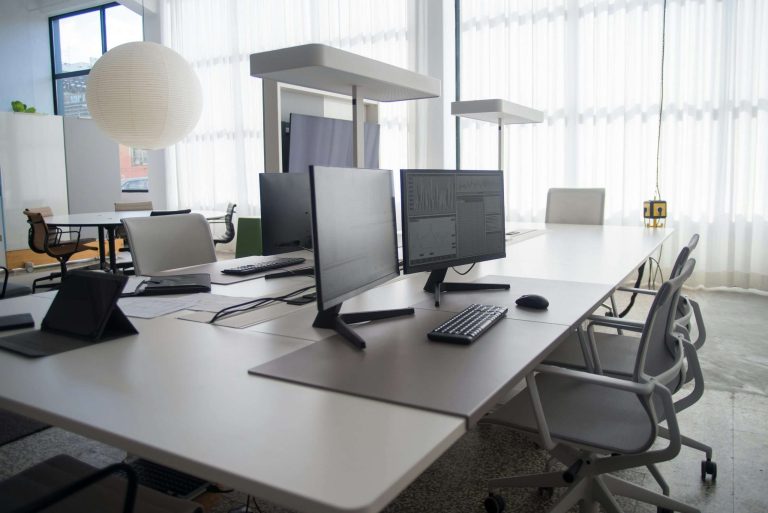
This is where the bias is most documented and most felt. Open-plan offices, designed to encourage spontaneous collaboration, consistently drain people who need quiet to do their best thinking. Brainstorming sessions that reward whoever speaks first disadvantage people who process internally before responding. Performance reviews that weight “executive presence” and “visibility” over output quality penalize those who do their best work without an audience.
One of the more eye-opening pieces of reading I’ve done on this topic was a Harvard Program on Negotiation piece examining whether introverts are at a disadvantage in negotiation. The answer is more nuanced than you’d expect, and it reframes the question in a useful way. The disadvantage isn’t inherent to introversion. It’s situational, and it’s often about format rather than capability.
In my own agencies, I watched talented introverts get passed over for accounts they were more than qualified to lead because they didn’t “seem” like client-facing people. The assumption was baked in before anyone looked at their actual track record.
Education
The classroom model hasn’t changed as much as people think. Participation grades still reward frequency over quality. Group projects still put introverted students in the position of either overextending socially or watching their grade suffer. Standardized testing is actually one of the few areas where introverts have historically performed well, precisely because it rewards the kind of deep, solitary preparation that comes naturally to many of us.
What gets lost is the depth of thinking that happens when someone isn’t performing their intelligence in real time. Some of the most rigorous analysis I’ve ever encountered came from people who barely spoke in meetings but handed in work that made everyone else look like they’d been coasting.
A piece worth reading on this topic comes from Psychology Today’s examination of why deeper conversations matter, which touches on how introverts often prefer substance over small talk, and how environments that don’t make room for that preference leave real value on the table.
Social and Cultural Norms
Beyond formal institutions, the everyday social script in most Western cultures is written for extroverts. Small talk is expected. Silence is uncomfortable. Declining a social invitation is treated as a slight rather than a preference. The person who “works the room” at a party is admired. The person who has one long, meaningful conversation in the corner is often invisible.
There’s also the language we use. “Don’t be shy.” “Come out of your shell.” “You should put yourself out there more.” These phrases are delivered with good intentions, but they carry an embedded assumption: that the way you naturally are is a problem to be solved. That the goal is to become more extroverted, not to find environments and strategies that work with your actual wiring.
Does the Bias Affect All Introverts the Same Way?
Not at all. One of the things I’ve come to appreciate is how much variation exists within introversion itself. Someone who is fairly introverted might find certain social environments manageable, even enjoyable in short bursts. Someone who is extremely introverted might find those same environments genuinely depleting in ways that affect their health and performance over time.
That distinction matters when you’re trying to assess how much the extrovert bias actually costs you personally. The comparison between being fairly introverted versus extremely introverted is worth exploring if you’ve ever wondered why some introverts seem to handle social demands with relative ease while others find them genuinely taxing.
There’s also the question of whether you’re a “pure” introvert or someone who shifts depending on context. Some people who identify as introverted actually display quite different behavior in different settings, which can make the whole concept feel confusing. If that resonates, the distinction between an omnivert and an ambivert might clarify things considerably. These aren’t just semantic differences. They describe genuinely different ways of relating to social energy.
Personality science backs up the idea that introversion exists on a continuum rather than as a binary. A study published in PubMed Central examining personality trait dimensions supports the view that these traits are distributed across a spectrum, which means the experience of handling an extrovert-biased world varies considerably from person to person.
What Happens When Introverts Try to Perform Extroversion?
This is the part I know most personally. For years, I ran my agencies the way I thought a leader was supposed to run them. I pushed myself to be the one who opened every all-hands meeting with energy. I took every client call even when I knew my team was better suited for it. I stayed late at industry events long past the point where I had anything left to give, because leaving early felt like a weakness.
What I didn’t understand then was that I was spending energy I didn’t have on performances that weren’t authentic. The cost wasn’t just fatigue. It was the quality of my actual thinking. The decisions I made when I was socially depleted were consistently worse than the ones I made after a morning of quiet, uninterrupted work. I was optimizing for appearance and paying for it in output.
This is what the extrovert bias costs introverts who try to conform to it. Not just comfort, but actual performance. When the environment demands constant social output, people who need solitude to recharge are essentially running on a deficit. Over time, that deficit accumulates.
A PubMed Central paper on personality and well-being explores how mismatches between personality traits and environmental demands affect psychological health, which speaks directly to what happens when introverts spend extended periods performing extroversion as a survival strategy.
There’s also a specific kind of confusion that comes from being an introvert who has learned to appear extroverted in certain settings. If you’ve ever felt like you don’t quite fit the introvert description but also don’t feel like an extrovert, the introverted extrovert quiz might help you get a clearer read on where you actually land.

Are There Places Where the Bias Is Shifting?
Slowly, yes. Remote work changed the conversation in ways that felt almost vindicating for many introverts. When the default shifted to written communication, asynchronous collaboration, and individual workspaces, a lot of introverts quietly thrived. The playing field leveled in ways that surprised many extroverted managers who had assumed their team’s best performance happened in the room together.
Marketing and creative industries have also started to recognize that introverted approaches to client relationships and brand strategy can be genuinely powerful. A Rasmussen University piece on marketing for introverts highlights how the depth of thinking and careful observation that introverts bring can be significant assets in fields that often seem to reward extroverted energy.
I saw this firsthand when I started leaning into my INTJ wiring rather than fighting it. My most effective client relationships weren’t built in loud agency pitches. They were built in one-on-one conversations where I could actually think out loud, ask real questions, and give answers I’d actually considered. The clients who valued that kind of engagement became our longest relationships.
There’s also growing recognition in fields like counseling and mental health that introverted practitioners bring distinct strengths. Point Loma Nazarene University’s counseling psychology resources address this directly, making the case that introversion can be an asset rather than a barrier in helping professions.
The conversation around conflict resolution has also evolved. Psychology Today’s four-step introvert-extrovert conflict resolution framework acknowledges that introverts and extroverts approach disagreement differently, and that designing conflict resolution processes that account for both styles produces better outcomes than defaulting to whoever is most comfortable speaking up in the moment.
What Can Introverts Actually Do With This Information?
Knowing the bias exists is useful. Feeling victimized by it isn’t. That’s a distinction I had to work out the hard way.
The most practical thing I ever did was stop trying to compete in formats that weren’t built for me and start creating formats that were. In my agencies, that meant shifting how we ran internal meetings. Instead of expecting real-time brainstorming to produce our best ideas, we started sending briefs in advance and asking people to come with written thoughts. The quality of conversation went up immediately, and not just for the introverts on the team.
It also meant being honest with clients about how I worked best. Not apologetic, just clear. “Send me the brief and give me 24 hours” is a completely reasonable professional request. Framing it as a preference rather than a limitation changed how it landed.
There’s a distinction worth drawing here between the otrovert versus ambivert experience, because people who fall closer to the middle of the spectrum may find they can adapt more fluidly to extroverted environments without the same cost. If you’re genuinely introverted, that kind of adaptation is more expensive, and building in recovery time isn’t optional. It’s structural.
A Frontiers in Psychology paper examining personality and social behavior offers some grounding here, exploring how individual differences in social processing affect both performance and well-being in ways that go beyond simple preference.
What I’d tell my younger self is this: success doesn’t mean become comfortable in every environment. The goal is to know which environments drain you, which ones energize you, and how to structure your professional and personal life so the balance works in your favor more often than not. That’s not a workaround. That’s self-knowledge applied strategically.

There’s more to explore on how introversion, extroversion, and the traits in between shape everyday experience. Our complete Introversion vs Extroversion resource hub covers the full spectrum of personality orientations with the depth this topic deserves.
About the Author
Keith Lacy is an introvert who’s learned to embrace his true self later in life. After 20 years in advertising and marketing leadership, including running agencies and managing Fortune 500 accounts, Keith now channels his experience into helping fellow introverts understand their strengths and build fulfilling careers. As an INTJ, he brings analytical depth and authentic perspective to every article, drawing from both professional expertise and personal growth.
Frequently Asked Questions
Is society actually biased toward extroverts, or does it just feel that way to introverts?
The bias is real, not just perceived. Many foundational institutions, including schools, workplaces, and social norms, were designed around assumptions that favor extroverted behavior: speaking up quickly, thriving in group settings, and drawing energy from social interaction. That said, the degree to which this affects any individual depends on how introverted they are, what field they work in, and how well they’ve been able to shape their environment to suit their wiring.
Can introverts succeed in extrovert-dominated environments?
Yes, and many do. The difference usually comes down to strategy rather than personality change. Introverts who succeed in high-social-demand environments tend to be deliberate about managing their energy, creating pockets of solitude within demanding schedules, and finding ways to demonstrate their strengths through formats that suit them, such as written communication, one-on-one meetings, or prepared presentations rather than spontaneous group discussions.
Why do schools seem to reward extroverted behavior?
Much of modern classroom pedagogy was built around collaborative and participatory models that reflect extroverted values. Class participation grades, group projects, and real-time discussion formats all tend to advantage students who process externally and speak comfortably in groups. Students who think deeply but quietly, who need time before responding, or who prefer written expression often find their abilities underrepresented in these formats even when their actual understanding is strong.
Did the shift to remote work help introverts?
For many introverts, yes. Remote and hybrid work models reduced the constant social stimulation of open offices, shifted more communication to writing, and gave people greater control over their environment and schedule. Many introverts reported feeling more productive and less drained during periods of remote work. That said, remote work also removed some of the informal relationship-building that introverts can excel at in one-on-one settings, so the picture is mixed depending on the individual and the role.
Is the extrovert ideal changing in modern culture?
There are signs of a gradual shift. Remote work, the growing mental health conversation, and increased awareness of neurodiversity have all contributed to a broader acceptance of different working and social styles. Fields like counseling, writing, research, and technology have long recognized introversion as an asset rather than a liability. Even in traditionally extrovert-heavy fields like sales and marketing, there’s growing appreciation for the depth of thinking and careful observation that introverts bring. Change is slow, but the conversation has moved meaningfully in recent years.