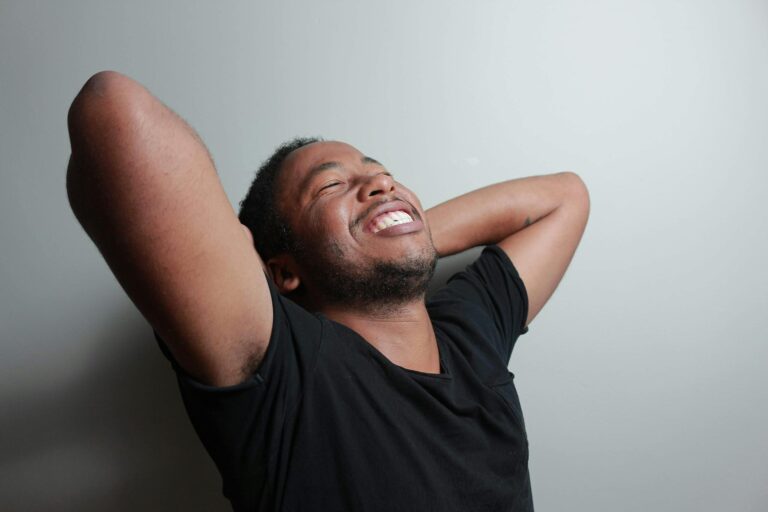

The Shyness Institute, founded by psychologist Philip Zimbardo in the 1970s, helped establish shyness as a legitimate area of psychological study, separate from introversion and distinct from social anxiety. Its core contribution was recognizing that shyness involves a fear of negative social evaluation, while introversion is simply a preference for quieter, less stimulating environments. Those are two very different things, and confusing them has caused real harm to real people.
Quiet people have spent decades being misread. A preference for solitude gets labeled as standoffishness. Careful listening gets mistaken for disengagement. The work of researchers who studied shyness seriously helped start untangling this mess, even if popular culture has been slow to catch up.
Before we get into what the research on shyness actually reveals, it helps to situate this conversation within a broader framework. My Introversion vs Other Traits hub covers the full spectrum of personality differences, from where introversion ends and shyness begins, to how ambiverts and omniverts fit into the picture. Shyness is one piece of a much larger puzzle, and understanding where it sits changes how you see yourself.
Why Does Everyone Keep Mixing Up Shyness and Introversion?
Somewhere around my third year running an agency, a client pulled me aside after a presentation and said, “You seem nervous up there.” I wasn’t nervous. I was bored by the format. Standing at a podium recapping slides felt like an inefficient use of everyone’s time, and I probably looked distracted because I was already thinking three steps ahead. She read my internal processing as social anxiety. It wasn’t.
What’s your personality type?
Take our free 40-question assessment and get a detailed personality profile with dimension breakdowns, context analysis, and personalised insights.
Discover Your Type8-12 minutes · 40 questions · Free
That moment stuck with me because it captures exactly why the shyness and introversion confusion matters. These two traits look similar from the outside but feel completely different from the inside. Shyness involves apprehension about social interaction, specifically the worry about how others will judge you. Introversion is about energy. Introverts aren’t afraid of people. They simply find extended social engagement draining in a way that extroverts don’t.
Philip Zimbardo’s work at the Shyness Institute made this distinction more visible in academic circles, though it took decades to filter into everyday conversation. His early surveys found that a surprisingly large portion of Americans identified as shy, which pushed researchers to ask harder questions about what shyness actually was and whether it was fixed or changeable.
Part of the confusion comes from the fact that some people genuinely are both shy and introverted. The traits can overlap. But plenty of introverts are perfectly comfortable in social situations. They just prefer not to spend all day in them. And some extroverts struggle enormously with shyness, feeling anxious in social settings even though they desperately want to be in them. If you’ve ever wondered whether your own personality sits somewhere between the poles, the Introvert Extrovert Ambivert Omnivert Test can help you get a clearer picture of where you actually land.
What Did the Shyness Institute Actually Study?
Zimbardo’s research team at Stanford, operating under what became known as the Shyness Institute, approached shyness as a social and psychological phenomenon worth taking seriously. Before this work, shyness was often dismissed as a personal failing or a phase people would outgrow. The research reframed it as something more complex: a pattern of thoughts, feelings, and behaviors that could significantly affect a person’s quality of life.
The Institute’s surveys consistently found that the majority of people reported experiencing shyness at some point in their lives, with a meaningful subset describing it as a chronic and debilitating pattern. This wasn’t a fringe experience. It was widespread, cutting across demographics and professions.
What the research identified as central to shyness was the self-consciousness loop: the tendency to become acutely aware of oneself in social situations, to anticipate negative judgment, and to either withdraw or perform in ways that feel inauthentic. Sound familiar? Many introverts have experienced this loop, especially in environments that treat quiet behavior as a problem to be solved.
A study published in PubMed Central examining the neurobiological underpinnings of social behavior found that individual differences in how people process social threat are rooted in measurable differences in brain activity and temperament. Shyness, in this framing, isn’t a character flaw. It’s a feature of how certain nervous systems respond to social uncertainty.

How Does Shyness Actually Feel From the Inside?
As an INTJ, I’ve always processed the world through a lens of analysis and pattern recognition. Social situations aren’t threatening to me in the way they are for someone dealing with shyness. But I’ve managed enough people over the years to understand what shyness looks like from the inside, because some of the most talented people on my teams carried it quietly.
One account director I worked with for years was brilliant at her job. Her client strategy documents were some of the sharpest I’d ever read. But put her in a room full of new people and something shifted. She’d go quiet in ways that read as disinterest to people who didn’t know her. She told me once that before every industry event, she’d spend hours dreading it, rehearsing conversations in her head, and then spend the drive home replaying everything she’d said and cataloging her perceived mistakes. That’s the shyness loop in action. It’s exhausting in a way that ordinary introversion simply isn’t.
Introversion, by contrast, is quieter in its discomfort. It’s not dread. It’s more like a slow drain. After a long day of meetings, I don’t replay the conversations with anxiety. I just feel depleted and need time alone to recharge. The distinction matters because the solutions are different. Introversion doesn’t need to be fixed. Shyness, when it causes real suffering, often benefits from targeted support.
Understanding what extroverted actually means helps clarify this further. Extroversion isn’t about confidence or social skill. It’s about where you draw energy. An extrovert can be shy. An introvert can be socially confident. These axes are genuinely independent of each other.
Where Does Social Anxiety Fit Into This Picture?
Shyness and social anxiety are related but not identical. Shyness sits on a spectrum of normal human variation. Social anxiety disorder, as defined in clinical psychology, involves a level of fear and avoidance that significantly impairs daily functioning. A person with social anxiety may avoid situations entirely, experience physical symptoms like racing heart and sweating, and find that the fear persists even in familiar settings.
One of the more useful contributions from researchers in the shyness tradition was establishing that most shy people are not experiencing a clinical disorder. They’re experiencing a trait that, while sometimes uncomfortable, doesn’t necessarily require clinical intervention. That distinction gave a lot of people permission to stop pathologizing themselves.
A paper in PubMed Central examining personality dimensions and social functioning found that shyness, introversion, and social anxiety each predict different patterns of social behavior and well-being outcomes. Lumping them together misses important differences in how people experience and cope with social situations.
For introverts trying to figure out their own experience, this matters. If you feel drained after socializing but don’t feel afraid of it, that’s introversion. If you feel genuine apprehension before social events but it doesn’t stop you from functioning, that’s likely shyness. If the fear is so intense that it’s limiting your life in significant ways, that’s worth talking to a professional about. Knowing which category fits your experience points you toward the right kind of support.
The Psychology Today piece on why introverts crave deeper conversations touches on something related: the discomfort introverts feel in shallow social settings often isn’t anxiety. It’s a mismatch between the kind of connection they want and the kind they’re being offered. Reframing that discomfort changes everything.

Can Shyness Change Over Time?
One of the more encouraging threads in the shyness research tradition is the finding that shyness is not fixed. Temperament influences it, but experience, environment, and deliberate effort all play a role in whether shyness stays constant or shifts over a lifetime.
My own experience with this is indirect but instructive. As an INTJ who spent years trying to perform extroversion in boardrooms and client meetings, I watched something interesting happen when I stopped fighting my natural style. The social anxiety I’d occasionally felt, that low-grade worry about whether I was reading the room correctly or saying the right things, mostly dissolved once I stopped pretending to be something I wasn’t. Authenticity turned out to be a better social strategy than performance.
For people who identify as shy, the research suggests that gradual exposure to feared situations, combined with shifting the internal narrative from “I will be judged” to “I am curious about this person,” can meaningfully reduce the grip of shyness over time. This isn’t about becoming an extrovert. It’s about reducing the fear response so that your natural personality, whatever it is, can actually show up.
It’s also worth noting that the degree of introversion matters here. Someone who is fairly introverted versus extremely introverted may experience social situations quite differently, and the overlap with shyness can look different across that spectrum. Extremely introverted people may need more recovery time after social events, which can sometimes be mistaken for shyness even when no fear is involved.
What Does the Ambivert and Omnivert Research Add to This Conversation?
The shyness research tradition mostly operated on a simple introvert/extrovert binary. More recent personality psychology has complicated that picture in useful ways. Ambiverts, people who sit in the middle of the introversion/extroversion spectrum, may experience shyness differently than those at either extreme. Omniverts, who swing between introverted and extroverted behavior depending on context, add another layer of complexity.
Understanding the difference between omniverts and ambiverts is worth the time if you find yourself identifying with both introverted and extroverted descriptions. The distinction isn’t just semantic. It reflects genuinely different patterns of social behavior and energy management, and it affects how shyness might show up in each type.
An ambivert who can move fluidly between social and solitary modes might find shyness shows up only in specific high-stakes contexts, like meeting authority figures or speaking in large groups, while feeling perfectly comfortable in smaller settings. An omnivert might experience periods of social confidence followed by periods of withdrawal, with shyness appearing more prominently during the introverted phases.
There’s also a term worth knowing: the otrovert compared to ambivert distinction, which captures some of the nuance in how people present differently across contexts. If your social behavior feels inconsistent, that inconsistency itself is meaningful data about your personality, not evidence that you’re broken or confused.
A Frontiers in Psychology paper from 2024 examining personality and social behavior found that the introversion/extroversion dimension interacts with other traits in complex ways that simple binary categories can’t capture. Shyness, in this framework, is best understood as its own dimension rather than a subset of introversion.

How Did Misunderstanding Shyness Shape Workplace Culture?
Running agencies for two decades gave me a front-row seat to how badly workplaces misread quiet people. The cultures I inherited when I took over agencies were almost always built around extroverted norms: open-plan offices, brainstorming sessions that rewarded the loudest voice, performance reviews that equated visibility with contribution. Shy employees, and introverted ones, got systematically underestimated.
One of the changes I made early on was creating more written input channels before meetings. Instead of expecting everyone to perform their best thinking out loud in real time, I’d send an agenda in advance and explicitly ask for written responses before we gathered. The quality of ideas that came in from the quieter team members was remarkable. They’d been thinking deeply all along. The format had just been wrong.
The shyness research tradition contributed something important here: it helped establish that quiet behavior in professional settings isn’t a sign of incompetence or disengagement. It’s often a sign of someone who processes carefully before speaking. That reframe has practical implications for how teams are structured and how performance is evaluated.
A piece from Rasmussen College on marketing for introverts makes a similar point: the traits that make introverts seem less visible in conventional workplace settings, deep focus, careful observation, preference for written communication, are often exactly what make them effective in roles that require precision and insight. Shyness, when it co-occurs with introversion, doesn’t cancel out those strengths. It just requires more intentional environmental design to let them show up.
What the Shyness Institute Missed, and Why It Still Matters
The Shyness Institute’s work was genuinely valuable, but it had blind spots. The research was conducted primarily with American college students, which limited how broadly its findings could be applied. Shyness is shaped by culture in ways the early research didn’t fully account for. In some cultures, quietness and restraint are valued social behaviors, not signs of anxiety. Applying a framework built on Western norms of assertiveness and verbal expressiveness to those contexts misses the point.
There’s also the question of what the research was trying to fix. Much of the early shyness work was oriented toward helping shy people become less shy, toward social skill training and exposure therapy and cognitive restructuring. Some of that is genuinely helpful for people whose shyness causes suffering. But the framing assumed that shyness was the problem and extroverted behavior was the solution. That assumption deserves scrutiny.
Not every quiet person needs to be more talkative. Not every introverted or shy person would be better off behaving like an extrovert. Some of the most effective leaders I’ve known in my career were deeply reserved. Their quietness wasn’t a limitation they overcame. It was part of how they led. They listened more carefully, made fewer impulsive decisions, and earned trust through consistency rather than charisma.
The Harvard Program on Negotiation’s take on introverts in negotiation makes a related point: the assumption that extroverts are naturally better negotiators doesn’t hold up under scrutiny. Introverts’ tendency to prepare thoroughly, listen carefully, and think before responding can be significant assets at the table. The same logic applies to shyness. success doesn’t mean eliminate quietness. It’s to reduce the fear that sometimes accompanies it, so people can show up as themselves.
If you’re trying to figure out where you personally fall on the introvert/extrovert spectrum before diving deeper into the shyness question, the introverted extrovert quiz is a good starting point. Knowing your baseline helps you separate what’s introversion, what’s shyness, and what’s something else entirely.

What Quiet People Actually Need
What the shyness research tradition got right, in the end, was taking quiet people seriously. Before this work, shyness was often dismissed or mocked. The research said: this is real, it’s widespread, and it deserves careful attention. That was a meaningful step forward.
What quiet people actually need, whether they’re introverted, shy, or some combination of both, is environments that don’t require them to perform extroversion to be taken seriously. They need feedback systems that reward depth over volume. They need enough time to process before responding. They need colleagues and managers who can read quietness as thoughtfulness rather than absence.
For shy people specifically, the most useful thing isn’t usually a social skills workshop. It’s a shift in the internal story. Moving from “people are evaluating me” to “I’m curious about them” changes the entire texture of a social interaction. It’s not a trick. It’s a genuine reorientation of attention, from inward self-monitoring to outward curiosity. That shift is harder than it sounds, but it’s learnable.
A Psychology Today piece on introvert-extrovert conflict resolution describes a similar reframe: understanding that different people process conflict differently, some needing time and space, others needing immediate conversation, reduces the friction that comes from assuming everyone operates the same way. Shyness adds another layer to that dynamic, but the underlying principle holds. Meet people where they are, not where you expect them to be.
The shyness research tradition started an important conversation. The work that’s happened since, in personality psychology, neuroscience, and organizational behavior, has added depth and nuance to that conversation. Quiet people aren’t a problem to be solved. They’re a feature of human diversity that, when properly understood, makes teams stronger, organizations wiser, and relationships more honest.
There’s more to explore on how introversion intersects with other personality traits, including shyness, social anxiety, and everything in between. The full Introversion vs Other Traits hub pulls these threads together if you want to keep going.
About the Author
Keith Lacy is an introvert who’s learned to embrace his true self later in life. After 20 years in advertising and marketing leadership, including running agencies and managing Fortune 500 accounts, Keith now channels his experience into helping fellow introverts understand their strengths and build fulfilling careers. As an INTJ, he brings analytical depth and authentic perspective to every article, drawing from both professional expertise and personal growth.
Frequently Asked Questions
What is the Shyness Institute and who founded it?
The Shyness Institute was founded by psychologist Philip Zimbardo at Stanford University in the 1970s. It was one of the first formal research efforts to study shyness as a distinct psychological trait, separate from introversion and social anxiety. The Institute’s surveys and research helped establish shyness as a widespread human experience deserving serious academic attention rather than dismissal.
Is shyness the same thing as introversion?
No. Shyness involves fear of negative social evaluation, a worry about how others will judge you in social situations. Introversion is about energy preference, specifically the tendency to feel drained by extended social interaction and recharged by solitude. A person can be introverted without being shy, and shy without being introverted. The two traits are independent, though they can overlap in the same individual.
Can shyness be reduced or changed over time?
Yes. Unlike introversion, which reflects a stable temperamental preference, shyness is more responsive to experience and deliberate effort. Gradual exposure to feared social situations, combined with shifting attention from self-monitoring to genuine curiosity about others, can meaningfully reduce shyness over time. Cognitive behavioral approaches have shown particular effectiveness for people whose shyness causes significant distress. success doesn’t mean become extroverted but to reduce the fear response so your natural personality can show up more freely.
How is shyness different from social anxiety disorder?
Shyness sits on a spectrum of normal human variation and doesn’t necessarily impair daily functioning. Social anxiety disorder involves a more intense and persistent fear of social situations, often accompanied by physical symptoms and significant avoidance behavior that interferes with work, relationships, and daily life. Most shy people do not have a clinical disorder. If social fear is significantly limiting your ability to function, speaking with a mental health professional is worth considering.
Why do workplaces so often misread shyness and introversion as disengagement?
Most workplace cultures were designed around extroverted norms: open-plan offices, real-time brainstorming, verbal performance as a proxy for competence. In these environments, quiet behavior gets read as a lack of ideas or investment, when it often reflects careful processing and deep thinking. Shy and introverted employees consistently underperform in environments that measure contribution by volume and visibility. Changing the input format, such as allowing written responses before meetings or providing advance agendas, often reveals the depth that was there all along.