

Shyness and introversion are not the same thing, yet the psychological community has spent decades treating them as close enough to blur together. Shyness is a fear response, a social anxiety rooted in the worry of being judged. Introversion is an energy preference, a wiring that finds depth and solitude genuinely restorative. Getting that distinction right changes everything about how we understand, research, and yes, treat people who struggle with social fear.
That confusion has real consequences. People who are simply introverted have been steered toward therapy they didn’t need. People with genuine social anxiety have been told to “just be more confident,” as if shyness were a personality quirk to push through rather than a psychological pattern worth addressing. And somewhere in the middle of all that, the actual science of shyness has struggled to find its footing.
If you’ve ever been handed a self-help book about “coming out of your shell” when what you really needed was either validation or clinical support, this article is for you.
Before we get into the research and treatment landscape, it’s worth grounding this conversation in the broader spectrum of personality. Our Introversion vs Other Traits hub covers the full range of how introversion, extroversion, shyness, and everything in between actually differ from each other. That context matters here, because the research on shyness has been complicated for decades by imprecise definitions of what we’re even measuring.
How Did Psychology Get Shyness So Wrong for So Long?
Early psychological frameworks didn’t sharply distinguish between introversion and shyness. Both were filed under a loose category of “social withdrawal,” and for a long time that was considered close enough. The problem is that withdrawal motivated by fear looks very different from withdrawal motivated by preference, and treating them identically produces poor outcomes for everyone involved.
What’s your personality type?
Take our free 40-question assessment and get a detailed personality profile with dimension breakdowns, context analysis, and personalised insights.
Discover Your Type8-12 minutes · 40 questions · Free
I saw this play out in my own career. When I was running my first agency, I had a senior account manager who rarely spoke up in group pitches. Her work was exceptional, her client relationships were warm and deep, and her strategic thinking was among the best on my team. One of our HR consultants flagged her as someone who might benefit from “communication coaching,” which was essentially a polite way of saying she seemed too quiet to advance. What nobody asked was whether she was anxious in those meetings or simply conserving energy. The distinction mattered enormously. She wasn’t struggling. She was choosing. Coaching her to perform extroversion would have been a waste of her time and an insult to her competence.
Shy people, by contrast, often desperately want to engage socially. The fear holds them back. That’s a fundamentally different experience, and it’s one that can genuinely benefit from psychological support. Conflating the two has led to a research literature that sometimes measures introversion when it thinks it’s measuring shyness, and vice versa.
Psychologist Philip Zimbardo did significant early work documenting how widespread shyness is across cultures, finding that a surprisingly large proportion of adults identify as shy or formerly shy. His work helped establish shyness as a legitimate area of psychological inquiry rather than a character flaw. Yet even that foundational research struggled with the definitional problem: people self-reporting as shy often included both those with genuine social anxiety and those who were simply introverted and had been told their whole lives that something was wrong with them.
What Does the Research Actually Distinguish Between?
More recent work has tried to carve cleaner lines. Social anxiety disorder, shyness as a temperament trait, and introversion are now generally treated as related but distinct constructs in serious psychological literature. Social anxiety disorder involves significant distress and functional impairment. Shyness as a trait involves discomfort and inhibition in social situations without necessarily meeting clinical thresholds. Introversion involves preference, not fear.
A study published in PubMed Central examining temperament and social behavior found that shyness and introversion, while correlated, predict meaningfully different outcomes. Shy individuals showed more physiological stress responses in social situations. Introverted individuals showed preference-based withdrawal without the same stress signature. That’s a crucial finding because it suggests the two groups may need entirely different kinds of support.
Where does someone fall on the spectrum between introversion and social anxiety? That’s not always easy to sort out, especially if you’ve spent years being told your quietness was a problem. If you’re curious about where your own tendencies land, the Introvert Extrovert Ambivert Omnivert Test can give you a useful starting point for understanding your baseline wiring before you start asking whether shyness is part of the picture.
Why Has Treatment for Shyness Been Such a Mixed Bag?
Cognitive behavioral therapy has the strongest evidence base for social anxiety, and when shyness crosses into clinical territory, CBT approaches adapted for social anxiety disorder tend to produce real results. The core idea is that anxious social thoughts create avoidance behaviors, which reinforce the anxiety, which deepens the avoidance. Breaking that cycle through graduated exposure and cognitive restructuring has helped many people.
Yet treatment outcomes for shyness have been inconsistent, and I think part of that inconsistency comes back to the same definitional problem. When therapists are working with someone who is genuinely shy and fearful, CBT-based approaches make sense. When they’re working with someone who is introverted and has simply internalized the message that their quietness is a disorder, the same approach can feel invalidating and even harmful. You can’t expose your way out of a preference.
A piece worth reading on the Frontiers in Psychology journal examines how social withdrawal patterns differ across individuals and what those differences mean for intervention. The research reinforces that one-size-fits-all approaches to social quietness consistently underperform compared to approaches tailored to the actual underlying mechanism.
There’s also a cultural dimension to treatment that the research has been slow to grapple with. In cultures that prize expressiveness and social performance, both introverts and shy people get pathologized at higher rates. The treatment literature has largely been developed in Western, often American contexts, where extroversion is culturally coded as health and quietness is coded as deficit. That framing shapes what gets treated, how it gets treated, and what counts as a successful outcome.
Understanding what extroverted actually means as a psychological construct, rather than a cultural ideal, helps clarify what shyness treatment is actually trying to accomplish. The goal of treating genuine social anxiety isn’t to manufacture extroversion. It’s to reduce fear so that people can engage with the world on their own terms, whether those terms are quiet or loud.
What Happens When Introverts Get Misdiagnosed as Shy?
This is where things get personal for me. As an INTJ who spent the better part of two decades running agencies, I was regularly read as either shy or cold. Neither was accurate. I was processing. I was observing. I was doing the internal work that I do before I speak, because I’d rather say one precise thing than ten approximate things.
Early in my career, a mentor suggested I see someone about my “reluctance to engage in group settings.” He meant well. But what he was observing wasn’t anxiety. It was my natural processing style. I did eventually work with a coach, not to fix my introversion, but to develop strategies for communicating my internal work to people who needed more visible signals of engagement. That’s a completely different intervention than treating shyness.
The misdiagnosis problem runs in both directions. Shy people sometimes get told they’re just introverted and should embrace their quietness, when what they actually need is support for real anxiety. Introverts sometimes get pushed into therapeutic frameworks designed for social anxiety, which can make them feel broken when they don’t respond the way the model predicts.
There’s a related complexity around people who don’t fall cleanly on either end of the introvert-extrovert spectrum. Someone who is fairly introverted but not extremely so might express their social discomfort very differently from someone who is deeply introverted. The article on fairly introverted vs. extremely introverted breaks down those differences in ways that matter when you’re trying to figure out whether what you’re experiencing is preference, shyness, or something else entirely.

Where Does Social Anxiety Disorder End and Shyness Begin?
Clinical diagnosis requires that social fear causes significant distress or functional impairment. Shyness as a trait can cause discomfort without meeting that clinical threshold. The line between them is real but not always clean, and the research reflects that messiness.
What seems clear from the literature is that shyness exists on a continuum. At the mild end, it’s a temperament trait that many people manage without any professional support. At the severe end, it shades into social anxiety disorder and benefits from clinical intervention. In the middle, there’s a large population of people who experience meaningful social discomfort but don’t meet diagnostic criteria, and that group has been somewhat underserved by both the research and the treatment landscape.
A PubMed Central paper on social behavior and anxiety examines how trait-level shyness relates to clinical social anxiety, finding that while the two share underlying mechanisms, they differ in intensity and in the degree to which they disrupt daily functioning. That distinction has treatment implications: people with subclinical shyness may benefit more from psychoeducation and skills-based approaches than from clinical CBT protocols designed for disorder-level anxiety.
Some people who identify as shy also identify as ambiverts or omniverts, people whose social energy fluctuates depending on context and circumstance. The concepts of omnivert vs ambivert are worth understanding here, because someone who swings between social engagement and withdrawal might be experiencing shyness in certain contexts rather than across the board. Context-specific shyness is a real phenomenon and tends to respond well to targeted strategies.
What Does Effective Treatment Actually Look Like?
For genuine shyness that causes distress, the most supported approaches involve gradually building positive social experiences, reducing the cognitive distortions that fuel social fear, and developing a more accurate read on how others are actually perceiving you. Most shy people massively overestimate how negatively others are judging them. That’s a thinking pattern, and thinking patterns can shift.
Group therapy has shown particular promise for shyness and social anxiety, somewhat counterintuitively. Being in a room with others who share the same fears normalizes the experience and provides a low-stakes environment for practicing social engagement. The Psychology Today piece on deeper conversations touches on why meaningful connection, rather than surface-level socializing, tends to be more satisfying and less anxiety-provoking for people who struggle with casual interaction.
Mindfulness-based approaches have also gained traction. Rather than trying to eliminate the anxious feeling, mindfulness-based interventions teach people to observe their social fear without being controlled by it. That shift from “I must stop feeling this” to “I can feel this and still act” is often more sustainable than trying to extinguish the anxiety entirely.
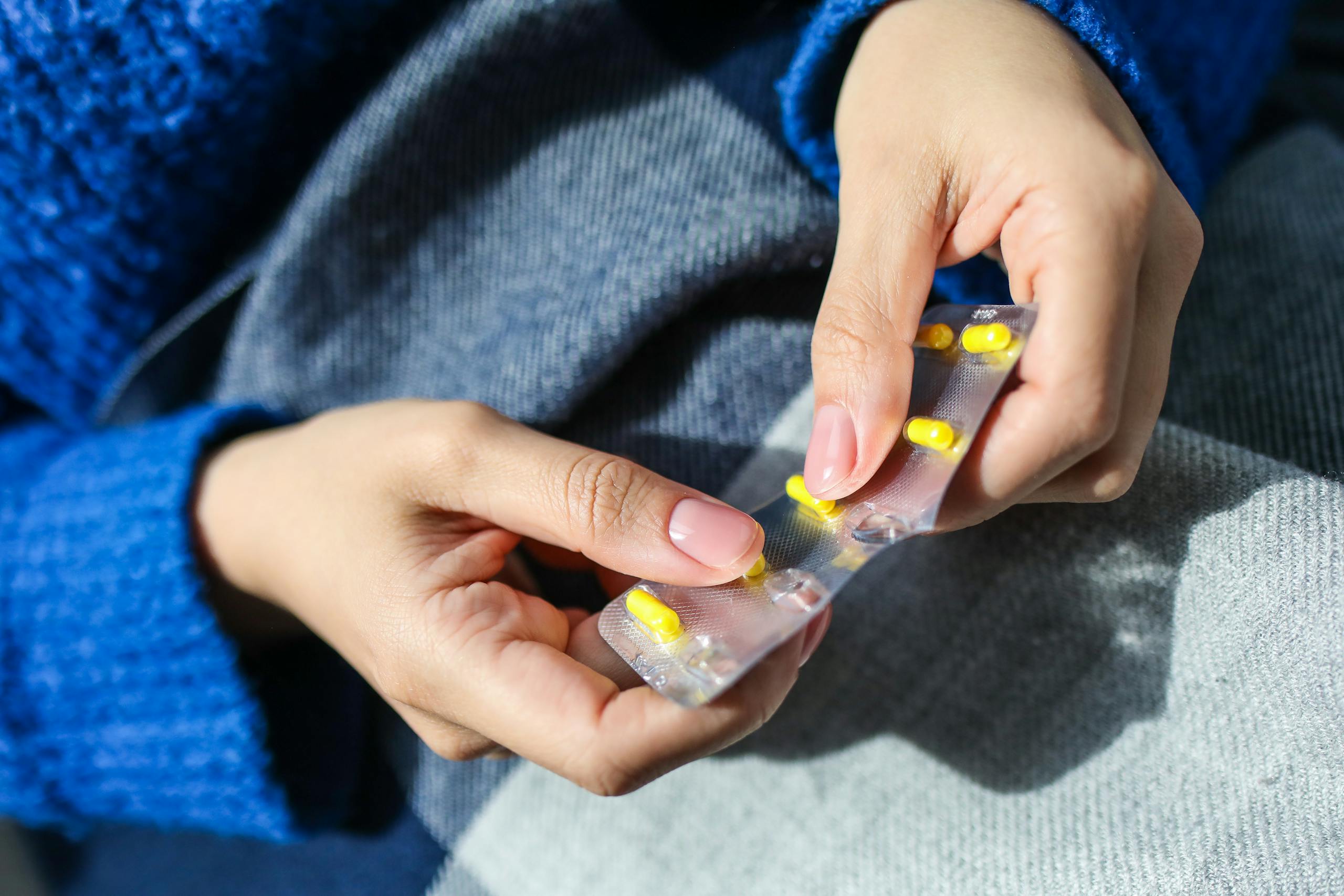
Medication has a role in some cases, particularly for people whose shyness is severe enough to qualify as social anxiety disorder. SSRIs and SNRIs have reasonable evidence behind them for social anxiety, though medication alone tends to produce less durable results than medication combined with therapy. The Psychology Today conflict resolution framework for introverts and extroverts is a useful reminder that a lot of what looks like social dysfunction in introverts is actually a mismatch in communication styles rather than a clinical problem requiring medication.
What effective treatment does not look like is pressuring someone to become more extroverted. That’s not a treatment goal. It’s a cultural preference masquerading as a clinical one.

Can You Be Both Introverted and Shy at the Same Time?
Yes. And this is where the conversation gets genuinely complicated. Introversion and shyness are independent dimensions, which means you can be introverted without being shy, shy without being introverted, or both simultaneously. The introverted-shy combination is probably the most commonly misunderstood because the two traits reinforce each other in ways that can look like severe social dysfunction from the outside.
An introverted person who is also shy faces a double layer of social complexity. They need more solitude to recharge (introversion) and they also feel anxious about social judgment (shyness). Supporting someone in that situation requires addressing both layers, not conflating them into a single problem.
Some people who identify as introverted-shy also describe themselves as “introverted extroverts,” a phrase that captures the experience of someone who genuinely enjoys connection but finds the process of initiating it exhausting or anxiety-provoking. The introverted extrovert quiz explores that middle ground in ways that can help people sort out which part of their social experience is about energy and which part is about fear.
I’ve managed people who fit this profile. One creative director I worked with was deeply introverted by nature but had developed real anxiety around presenting work to clients. His introversion meant he needed quiet time to develop his ideas fully. His shyness meant he dreaded the moment of exposure when those ideas had to be defended in a room. We worked out a system where he’d present to me one-on-one first, get his thinking organized, and then come into the client meeting already having rehearsed the key points. That wasn’t therapy. It was accommodation. And it made a significant difference in his confidence and his output.
What the Research Still Hasn’t Figured Out
Longitudinal data on shyness treatment outcomes is still relatively thin. Most studies follow participants for weeks or months, not years. We don’t have a strong picture of what happens to shy people over decades, whether the trait naturally attenuates with age and positive social experience, or whether untreated shyness tends to solidify into more entrenched social avoidance.
There’s also a gap in research on shyness across different social roles. Most studies focus on shyness in peer relationships or professional settings. Far less is known about how shyness operates in family systems, romantic relationships, or online environments, all of which have different social rules and different stakes.
The online dimension is particularly underexplored. Many shy people report that digital communication reduces their anxiety significantly, because the asynchronous nature of text-based interaction removes some of the real-time judgment pressure. Whether that’s a healthy adaptation or a form of avoidance that maintains the underlying anxiety is genuinely unclear, and the research hasn’t caught up with the reality of how much of social life now happens through screens.
One more area worth watching is how personality complexity interacts with shyness. People who identify as otroverts vs ambiverts often describe social experiences that don’t fit neatly into the existing research categories. As our understanding of personality becomes more nuanced, the shyness research literature will need to account for that complexity rather than flattening everyone into introvert or extrovert buckets.
The Harvard negotiation research on introverts is a useful reminder that social effectiveness isn’t the same as social comfort. Many introverts, and many shy people who have developed coping strategies, perform extremely well in high-stakes social situations not because they’ve eliminated discomfort but because they’ve learned to work with their natural tendencies rather than against them.

What This Means If You’ve Always Been Called Shy
Being labeled shy as a child, and carrying that label into adulthood, shapes how you understand yourself in ways that aren’t always accurate. Some people who were called shy were genuinely anxious and would have benefited from support they didn’t receive. Others were introverted in an extroverted environment and absorbed the message that their natural wiring was a problem.
Sorting out which category you’re in, or whether you’re in both, is worth the effort. Not because there’s anything wrong with either shyness or introversion, but because the strategies that help with each are genuinely different. If you’re shy, working on the cognitive patterns that fuel social fear can meaningfully improve your quality of life. If you’re introverted, the more useful work is often about designing environments and routines that honor your energy needs rather than trying to change your fundamental wiring.
The Pointloma University resource on introverts in helping professions makes a point that applies broadly: introversion is not a barrier to connection, depth, or effectiveness in social roles. Many of the most skilled therapists, counselors, and communicators are deeply introverted. What matters is whether the social discomfort you feel is rooted in fear or preference, and whether it’s getting in the way of the life you actually want.
My own experience has been that the more clearly I understood my introversion as a feature rather than a flaw, the less I mistook my natural quietness for anxiety. There were real moments of social discomfort in my career, particularly in the early years when I was trying to perform extroversion in rooms full of loud, fast-talking account executives. But most of what I felt wasn’t fear. It was fatigue. And fatigue responds to rest, not to therapy.
Getting that distinction right changed how I led, how I hired, and how I supported the quieter people on my teams. It’s a distinction worth getting right for yourself, too.
For a broader look at how shyness fits within the full spectrum of personality traits, including where introversion, extroversion, and everything in between actually differ, the Introversion vs Other Traits hub is a solid place to keep exploring.
About the Author
Keith Lacy is an introvert who’s learned to embrace his true self later in life. After 20 years in advertising and marketing leadership, including running agencies and managing Fortune 500 accounts, Keith now channels his experience into helping fellow introverts understand their strengths and build fulfilling careers. As an INTJ, he brings analytical depth and authentic perspective to every article, drawing from both professional expertise and personal growth.
Frequently Asked Questions
Is shyness the same as introversion?
No. Shyness is a fear-based response to social situations, rooted in worry about being judged or evaluated negatively. Introversion is an energy preference, a natural tendency to find solitude and depth more restorative than constant social stimulation. You can be introverted without being shy, shy without being introverted, or both at the same time. The distinction matters because the strategies that help with shyness (addressing anxious thought patterns, graduated exposure) are quite different from what helps introverts thrive (designing environments that honor their energy needs).
What treatments work best for shyness?
For shyness that causes real distress, cognitive behavioral approaches adapted for social anxiety have the strongest evidence base. These typically involve identifying and challenging the distorted thoughts that fuel social fear, combined with graduated exposure to social situations. Mindfulness-based approaches have also shown promise, teaching people to observe anxious feelings without being controlled by them. Group therapy can be particularly effective because it normalizes the experience of social fear and provides a supportive environment for practicing engagement. When shyness is severe enough to qualify as social anxiety disorder, medication combined with therapy tends to produce more lasting results than either approach alone.
Can shyness be confused with social anxiety disorder?
Yes, and this confusion is common in both clinical and everyday settings. Social anxiety disorder is a clinical diagnosis that requires significant distress or functional impairment in social situations. Shyness as a trait can involve real discomfort without meeting that clinical threshold. The line between them isn’t always clean, and shyness exists on a continuum from mild temperament trait to severe disorder-level anxiety. Getting an accurate assessment from a qualified mental health professional matters here, because the intensity of intervention should match the intensity of the problem.
Does shyness go away on its own as you get older?
For many people, shyness does attenuate with age and positive social experience. Accumulating evidence that social interactions can go well, and that others are not as harshly judgmental as feared, naturally reduces some of the anxiety over time. That said, shyness that is severe or goes unaddressed can solidify into more entrenched patterns of social avoidance. The research on long-term trajectories is still relatively limited, but the general picture suggests that mild-to-moderate shyness often improves with time and experience, while more severe shyness benefits from active support rather than a wait-and-see approach.
How can you tell if you’re shy, introverted, or both?
A useful starting question is: do you avoid social situations because they drain your energy, or because you’re afraid of being judged? If the answer is energy depletion, introversion is likely the primary factor. If the answer is fear of judgment or evaluation, shyness is more likely in play. If both are true, you may be dealing with both traits simultaneously. Paying attention to how you feel before, during, and after social situations can clarify the picture. Introverts often feel fine going in but tired coming out. Shy people often feel anxious going in, sometimes relieved coming out, and sometimes more anxious if the interaction felt like it went poorly. A good therapist or counselor can help sort out the distinction if you’re genuinely uncertain.