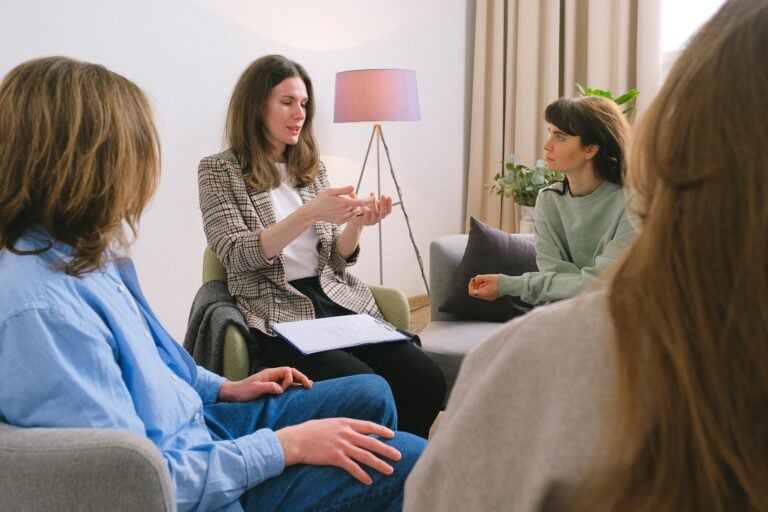

Shyness workshops in San Francisco offer structured, guided experiences designed to help people move past social anxiety, fear of judgment, and the kind of self-consciousness that makes ordinary interactions feel exhausting. They range from cognitive behavioral approaches to improv-based group sessions, and they attract a specific crowd: people who want to feel more comfortable in social situations but aren’t sure whether their discomfort is a problem to fix or simply a personality trait to understand.
That distinction matters more than most workshop descriptions let on.
Shyness and introversion are not the same thing. One is a fear response. The other is a wiring preference. And if you walk into a shyness workshop without knowing which one you’re actually dealing with, you might spend a weekend trying to rewire something that was never broken in the first place.

My broader writing on this site covers the full spectrum of personality traits, including how introversion compares with extroversion and everything in between. If you’re still sorting out where you land, the Introversion vs Other Traits hub is a good place to start before you sign up for anything.
Why San Francisco Became a Hub for This Kind of Work
San Francisco has a particular relationship with self-improvement culture. The city draws people who are ambitious, self-aware, and often working in fields that reward extroverted performance, tech pitches, networking events, open-plan offices, all-hands meetings where you’re expected to speak up. For quieter people who moved there chasing opportunity, the social demands can feel relentless.
What’s your personality type?
Take our free 40-question assessment and get a detailed personality profile with dimension breakdowns, context analysis, and personalised insights.
Discover Your Type8-12 minutes · 40 questions · Free
I know that tension well. My advertising career kept me in rooms that rewarded confidence, volume, and the ability to command attention on demand. New business pitches in particular were performances. I ran agencies in markets where the expectation was that leadership meant filling the room with energy. San Francisco has its own version of that pressure, amplified by a startup culture that treats extroversion as a baseline requirement for success.
So it makes sense that a city full of ambitious introverts and genuinely shy people would develop a market for workshops promising to ease that friction. The question is whether those workshops are solving the right problem.
Shyness workshops typically address anxiety. They use exposure techniques, social skills training, and sometimes performance-based exercises to reduce the fear that accompanies social interaction. That’s legitimate, evidence-based work. Shyness, particularly when it rises to the level of social anxiety, responds well to structured intervention. Cognitive behavioral approaches have a strong track record here, and published research on anxiety and personality supports the idea that these patterns can shift meaningfully with the right support.
Introversion, though, doesn’t respond to that kind of intervention because it’s not a fear response. It’s a preference for depth over breadth, for processing internally rather than externally, for fewer but more meaningful connections. You can’t workshop your way out of being an introvert, and more importantly, you shouldn’t want to.
What the Shyness vs. Introversion Confusion Actually Costs You
Misidentifying introversion as shyness has real consequences. It sends you looking for a fix to something that isn’t broken. It frames your natural processing style as a deficiency. And it can lead you to spend significant time and money in workshops designed for a different experience than the one you’re actually having.
I spent years doing a version of this without the workshop setting. I kept reading leadership books written by and for extroverts, attending seminars on executive presence that essentially told me to perform more, and trying to model myself after colleagues who seemed to thrive on the energy of a packed room. None of it worked, not because I was broken, but because I was trying to solve the wrong problem. My discomfort in those high-stimulation environments wasn’t anxiety. It was depletion. Those are different things entirely.
Shyness involves fear of negative evaluation. You want to engage but feel held back by worry about what others will think. Introversion involves a preference for less stimulation. You can engage perfectly well, but doing so at high volume and high frequency drains your energy in a way it doesn’t for extroverts. The experience can look similar from the outside, which is why the two get conflated constantly, but the internal mechanics are entirely different.
Before you commit to any workshop, it helps to have a clearer picture of your actual personality profile. Taking an introvert extrovert ambivert omnivert test can give you a starting point. Not a diagnosis, but a frame. Knowing whether you’re dealing with social fear or social depletion changes everything about what kind of support is actually useful.

What Good Shyness Workshops Actually Offer
For people who are genuinely shy, the right workshop can be genuinely useful. The best ones don’t promise to turn you into an extrovert. They work on reducing the fear that’s getting in the way of the connections you actually want. That’s a meaningful goal, and it’s worth pursuing if anxiety is what’s driving your social discomfort.
San Francisco has a range of options. Some are structured around cognitive behavioral principles, helping participants identify and challenge the thought patterns that fuel social anxiety. Others use improv theater as a vehicle for desensitization, getting people comfortable with spontaneity, with not knowing what comes next, with looking imperfect in front of others. A few are more conversation-based, creating small group environments where shy people can practice low-stakes interaction in a supportive setting.
The improv-based formats are interesting to me because they address something specific: the fear of being caught without a script. Many shy people, and many introverts, feel most anxious in unstructured social situations where the rules aren’t clear. Improv training builds tolerance for ambiguity, and that can be genuinely freeing regardless of whether shyness or introversion is the underlying trait.
What I’d caution against is any workshop that frames the goal as becoming more extroverted. Understanding what extroverted actually means as a personality orientation, not just a behavioral style, helps you see why that framing is misguided. Extroversion is a trait, not a skill. You can learn to manage social situations more comfortably. You can’t, and shouldn’t try to, become a fundamentally different kind of person.
The workshops worth attending are the ones that help you function more freely as yourself, not the ones that ask you to become someone else.
The Personality Spectrum Problem: You Might Not Be What You Think
One thing that complicates the shyness workshop conversation is that personality itself exists on a spectrum, and most people aren’t sitting at the extreme ends of it. You might be someone who feels genuinely anxious in social situations and also happens to be introverted. Or you might be an ambivert who feels shy in certain contexts but energized in others. Or you might be what’s sometimes called an omnivert, someone whose social energy fluctuates significantly depending on circumstances.
The difference between an omnivert and an ambivert is worth understanding before you try to categorize yourself. Ambiverts tend to sit in the middle of the introvert-extrovert spectrum consistently. Omniverts swing more dramatically between states, feeling deeply introverted in some situations and surprisingly extroverted in others. Both experiences are real, and both can be confused with shyness when someone doesn’t have the vocabulary to describe what they’re actually feeling.
I’ve managed people across this entire spectrum over the years. One of my account directors was a classic ambivert who could work a client dinner with genuine ease and then spend the next two days doing quiet, deep-focus work with equal satisfaction. Another team member swung dramatically depending on the project, almost extroverted during creative brainstorms and nearly unreachable during execution phases. Neither of them was shy. Both of them had been told at various points in their careers that they needed to work on their social skills, which was completely off base.
If you’re not sure where you fall, an introverted extrovert quiz can help you get a clearer read on your social energy patterns. It’s not about labeling yourself permanently. It’s about having enough self-knowledge to make good decisions about what kind of support you actually need.

How Introverts Can Get Real Value from Shyness Workshops
Even if you’re primarily introverted rather than shy, some shyness workshops offer tools that are genuinely useful. The overlap between shyness and introversion isn’t zero. Many introverts do experience anxiety in certain social situations, particularly in environments that feel misaligned with their natural processing style. A room full of people they don’t know, expected to make small talk for two hours, can produce something that feels a lot like anxiety even if the underlying driver is depletion rather than fear.
The techniques that help shy people manage their anxiety can also help introverts manage the specific situations where their introversion creates friction. Preparation strategies, conversation frameworks, and the kind of mindset work that helps you stay present rather than retreating into your head, all of these have practical value regardless of whether shyness is your primary challenge.
What introverts should be selective about is the framing. A workshop that teaches you skills is useful. A workshop that tells you your quietness is a problem to be eliminated is not. Introversion carries genuine strengths, including depth of focus, careful listening, and the ability to think before speaking, and any workshop worth attending should acknowledge that rather than treating quiet as a symptom.
During my agency years, I eventually stopped trying to fix my introversion and started working on the specific situations where my natural style created friction. Networking events were the hardest. I developed a very deliberate approach: arrive early when the room is smaller, identify one or two people for real conversation rather than trying to work the whole room, and give myself permission to leave before the energy becomes overwhelming. That’s not overcoming introversion. That’s working with it intelligently. A good workshop can help you build that kind of strategic awareness.
There’s also something worth noting about the difference between being fairly introverted versus extremely introverted. Someone who sits at the moderate end of the introversion spectrum might find that a shyness workshop addresses most of their friction points, since their social tolerance is higher and the gap between where they are and where they want to be is smaller. Someone at the more extreme end of the spectrum needs a different kind of support, one that’s built around working with a fundamentally different energy system rather than pushing through it.
What San Francisco’s Workshop Culture Gets Right (and Wrong)
San Francisco’s self-improvement ecosystem is genuinely impressive in its range. The city has a culture of taking personal development seriously, and that means there are high-quality options available if you know what to look for. The best facilitators in this space understand the shyness-introversion distinction and design their programs accordingly. They’re not trying to manufacture extroverts. They’re helping people reduce unnecessary friction so they can show up more fully as themselves.
Where the culture sometimes goes wrong is in its implicit assumption that more social comfort is always better, that the endpoint of any personal development work is someone who can work any room with ease. That’s a very extroverted definition of success, and it doesn’t serve introverts well. Social comfort is valuable. Social fluency is a useful skill. But neither of them requires abandoning your natural orientation toward depth, quiet, and internal processing.
Psychology Today has written thoughtfully about how introverts think and process, and the picture that emerges is of a cognitive style that’s genuinely different, not deficient. Introverts tend to process more slowly and more thoroughly. They draw on longer-term memory more heavily. They think before they speak rather than thinking through speaking. These aren’t bugs. They’re features of a particular kind of mind, and the goal of any good workshop should be to help that mind function more freely, not to replace it.
The other thing San Francisco’s workshop culture sometimes misses is the distinction between traits that cluster together without being the same thing. Shyness, introversion, high sensitivity, and social anxiety can all coexist in one person, but they can also exist independently. Someone who is highly sensitive but extroverted might feel overwhelmed in large groups for entirely different reasons than an introvert does. The distinction between an otrovert and an ambivert adds another layer to this, since people who identify with those categories often find that standard shyness workshop frameworks don’t quite fit their experience either.

Questions to Ask Before You Sign Up for Anything
If you’re considering a shyness workshop in San Francisco, or anywhere else, a few questions can help you evaluate whether it’s actually designed for what you’re experiencing.
First: does the workshop distinguish between shyness and introversion? If the facilitator treats them as the same thing, that’s a signal worth paying attention to. It suggests the framework is built on a conflation that will shape everything about how the program approaches your experience.
Second: what’s the stated goal? If the goal is to help you feel less afraid in social situations, that’s a shyness intervention and it may be exactly what you need. If the goal is to help you become more outgoing or more extroverted, be cautious. That framing assumes your quietness is the problem rather than your anxiety, and those require different approaches.
Third: what methods does the workshop use? Exposure-based approaches work well for anxiety. Cognitive restructuring works well for the thought patterns that fuel shyness. Skills training, particularly around conversation and social navigation, can be useful across the board. Methods that rely primarily on performance and volume, like workshops that push you to be louder, more assertive, or more dominant in conversation, are more likely to exhaust introverts than help them.
Fourth: what’s the group size? Introverts generally do better in smaller group settings where depth of interaction is possible. A workshop with forty participants doing high-energy exercises might be genuinely useful for someone working through social anxiety, but it’s likely to be depleting for someone whose primary challenge is introversion-related.
Some of the most useful professional development I ever did happened in small, focused groups where real conversation was possible. Not the big conference sessions where someone talked at five hundred people, but the roundtables, the working groups, the facilitated discussions where you could actually think out loud with a few people who were paying attention. That format works with introvert wiring rather than against it. Seek it out when you can.
It’s also worth considering what you actually want from social interaction. Many introverts don’t want more social contact. They want better social contact, fewer but more meaningful connections, conversations that go somewhere real rather than staying at the surface. A workshop that helps you find and deepen those connections is worth far more than one that trains you to make small talk more fluently. Introverts often bring particular strengths to interpersonal situations, including careful listening and thoughtful responses, and the right workshop will build on those rather than trying to override them.
Finding What Actually Fits
San Francisco has enough options in this space that you can afford to be selective. Look for facilitators who have a clear framework for understanding personality differences, not just social anxiety. Look for programs that treat quietness as a valid orientation rather than a problem. Look for group sizes and formats that allow for the kind of depth that actually energizes introverts rather than depleting them further.
And before you commit to anything, do the self-knowledge work. Take an honest look at what’s actually driving your social discomfort. Is it fear? Is it depletion? Is it a mismatch between your environment and your natural processing style? The answer shapes everything about what kind of support will actually help.
I spent too many years in the wrong rooms, doing the wrong work, trying to fix the wrong thing. What finally shifted wasn’t a workshop. It was understanding that my introversion wasn’t a liability to manage. It was a lens through which I processed the world with unusual depth, and once I stopped trying to correct for it, I became significantly better at my work and significantly more at ease in my own skin.
That’s the kind of outcome worth pursuing. Not more social volume, but more authentic presence. The right workshop, approached with the right self-knowledge, can contribute to that. The wrong one, pursued without that foundation, can set you back considerably.
San Francisco has the resources. What it requires from you is the clarity to know what you’re actually looking for.

If you’re still working out where you fall on the personality spectrum, and what that means for how you handle social situations, the Introversion vs Other Traits hub covers the full range of comparisons and distinctions that matter for this kind of self-understanding.
About the Author
Keith Lacy is an introvert who’s learned to embrace his true self later in life. After 20 years in advertising and marketing leadership, including running agencies and managing Fortune 500 accounts, Keith now channels his experience into helping fellow introverts understand their strengths and build fulfilling careers. As an INTJ, he brings analytical depth and authentic perspective to every article, drawing from both professional expertise and personal growth.
Frequently Asked Questions
Are shyness workshops in San Francisco designed for introverts?
Most shyness workshops are designed primarily for people dealing with social anxiety or fear of judgment, which is a different experience from introversion. Some workshops do address both, but many conflate the two. If you’re introverted rather than shy, look for programs that explicitly distinguish between the two and that treat quietness as a valid personality trait rather than a symptom to correct. The best workshops in San Francisco for introverts are those focused on social skills and confidence rather than on changing your fundamental orientation toward social interaction.
What is the difference between shyness and introversion?
Shyness is a fear-based response to social situations, specifically the fear of negative evaluation by others. Introverts may want to engage but feel held back by anxiety about how they’ll be perceived. Introversion, on the other hand, is a preference for less stimulation and a tendency to recharge through solitude rather than social interaction. An introvert can be completely comfortable in social situations but still find them draining over time. The two traits can coexist in one person, but they’re distinct, and they respond to different kinds of support.
Can workshops help introverts with social situations even if they’re not shy?
Yes, with the right framing. Introverts often benefit from workshops that teach specific social skills, conversation frameworks, and strategies for managing high-stimulation environments without burning out. What doesn’t help is any workshop that treats introversion itself as the problem. Useful tools include preparation strategies for networking events, techniques for finding depth in conversation rather than staying at the surface, and mindset approaches that help introverts stay present rather than retreating internally when they’re feeling depleted.
How do I know if my social discomfort is shyness or introversion?
Pay attention to what’s driving your discomfort. If you feel afraid of what others will think, worry about saying the wrong thing, or feel held back by anxiety before and during social interactions, shyness or social anxiety may be at play. If you feel comfortable enough in social situations but find them exhausting, need significant alone time to recover afterward, and prefer depth over breadth in your connections, introversion is likely the primary factor. Many people experience both, and a good personality assessment can help clarify the picture before you decide what kind of support to seek.
What should I look for in a shyness workshop if I think I’m also introverted?
Look for workshops that explicitly distinguish between shyness and introversion in their program description. Smaller group formats tend to work better for introverts than large, high-energy sessions. Facilitators who have a background in personality psychology rather than just performance coaching are more likely to understand the difference between reducing anxiety and trying to change someone’s fundamental orientation. Avoid programs that frame the goal as becoming more extroverted or more outgoing as a general personality change. The goal worth pursuing is more ease, more presence, and more authentic connection, not a different personality.