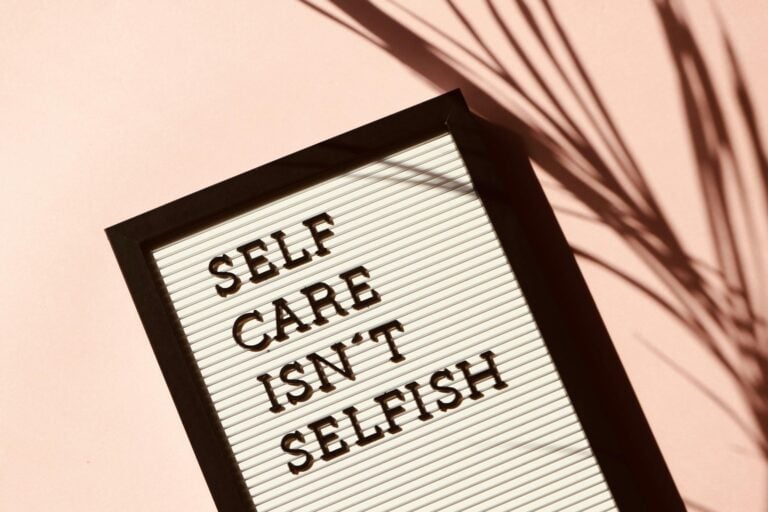

Shyness and introversion are not the same thing, yet they are treated as interchangeable so often that even people who experience one or both tend to conflate them. The Atlantic’s case for shyness, and the broader cultural conversation it sparked, pointed toward something worth sitting with: shyness is not a flaw to overcome, and the pressure to treat it as one says more about our culture’s discomfort with quietness than it does about the people who are quiet.
As someone who spent two decades running advertising agencies, I lived inside a professional world that celebrated boldness, volume, and visible confidence. Shyness was treated as a liability. Introversion was something you were supposed to manage around. What I’ve come to understand, much later than I’d like to admit, is that both of those assumptions were wrong in ways that cost people a great deal.

Personality sits on a wide spectrum, and shyness occupies a distinct place on it. If you’ve ever wondered where you fall across the full range of introversion, extroversion, and everything between, our Introversion vs Other Traits hub is a good place to start pulling those threads apart. Shyness is one of the most misunderstood threads of all.
What Does “The Case for Shyness” Actually Argue?
The Atlantic’s framing around shyness as something worth defending, rather than treating, struck a nerve because it pushed back against a deeply embedded cultural assumption: that social hesitation is a problem to be solved. The argument wasn’t that shyness is always comfortable or that it never creates friction. It was that shyness carries genuine value, and that the reflexive pressure to eliminate it does real harm.
What’s your personality type?
Take our free 40-question assessment and get a detailed personality profile with dimension breakdowns, context analysis, and personalised insights.
Discover Your Type8-12 minutes · 40 questions · Free
Shyness, at its core, is a form of heightened social sensitivity. People who experience it are often acutely aware of how they’re being perceived, careful about what they say, and genuinely attentive to the social dynamics around them. Those aren’t deficits. In many contexts, they’re exactly the qualities that make someone trustworthy, precise, and worth listening to when they do speak.
What the cultural conversation tends to miss is that shyness is not the same as social anxiety disorder, and it’s not the same as introversion either. All three can coexist in one person, but they don’t have to. Someone can be extroverted and shy. Someone can be introverted without being shy at all. Collapsing these distinctions does a disservice to everyone trying to understand themselves honestly.
If you want to get a clearer read on where you actually land, taking an introvert, extrovert, ambivert, and omnivert test can help you separate the layers. Shyness won’t show up as a category, because it’s a separate dimension entirely, but understanding your baseline social energy is a useful starting point.
Why We Conflate Shyness With Weakness
There’s a reason the conflation of shyness with weakness is so persistent. Western professional culture, particularly in industries like advertising, tech, and finance, has long equated visibility with competence. If you weren’t speaking up in meetings, you weren’t contributing. If you weren’t working the room at networking events, you weren’t serious about your career. The assumption was almost never examined out loud, but it shaped every room I walked into for twenty years.
I remember pitching a major consumer packaged goods account early in my agency career. Our team included a strategist who was genuinely shy. She prepared more thoroughly than anyone else in the room, asked sharper questions during the briefing, and wrote the most incisive brief I’d ever read from someone at her level. But in the pitch itself, she held back. She deferred to louder voices. The client never saw what she was capable of, and we almost didn’t win the account because the ideas she’d shaped weren’t articulated with the force they deserved.
What I got wrong at the time was assuming the problem was hers to fix. I coached her on speaking up. I gave her frameworks for assertiveness. What I should have done was build a pitch process that made space for her way of contributing. The failure of structure was mine, not hers.

The cultural pressure to perform confidence isn’t limited to boardrooms. It shows up in classrooms, at social gatherings, in job interviews, and in the quiet internal monologue of someone who’s spent years being told their natural instinct to pause before speaking is a problem. Psychology Today has written about the value of deeper, more deliberate conversation, the kind that shy and introverted people often naturally gravitate toward. That preference isn’t a social failure. It’s a different kind of social intelligence.
Shyness, Introversion, and the Spectrum Between Them
One of the most clarifying distinctions I’ve encountered is this: introversion is about energy, and shyness is about fear. An introvert recharges alone and finds extended social interaction draining, regardless of whether they enjoy it. A shy person experiences anxiety or apprehension in social situations, regardless of whether they’re energized by them afterward.
As an INTJ, my introversion has always been about energy management, not social fear. I can walk into a room of strangers and engage effectively. I just need significant quiet time afterward to recover. Shyness is a different experience entirely, though it can layer on top of introversion in ways that make both harder to untangle.
People also exist across a wide middle ground. Someone might be what’s sometimes called an omnivert, shifting between introverted and extroverted modes depending on context, while also carrying a thread of shyness in specific situations. The difference between an omnivert and an ambivert matters here: omniverts swing more dramatically between states, while ambiverts tend to sit comfortably in the middle. Shyness can show up differently across those modes.
Understanding where you sit on the energy spectrum doesn’t automatically explain your social anxiety, if you have any. But it does help you stop blaming the wrong thing. Many introverts have spent years assuming their discomfort in social situations was introversion, when it was actually shyness layered on top of it, or sometimes social anxiety that warranted its own attention.
There’s also a less commonly discussed variation worth naming. Some people identify as otroverts, a term that describes someone who presents as outgoing but processes internally. The experience of shyness in someone who reads as socially comfortable can be particularly isolating, because no one around them recognizes the internal friction they’re managing.
What Shyness Actually Looks Like in Professional Spaces
In twenty years of agency life, I worked with shy people in almost every role. What I noticed, once I started paying attention to it, was that shyness didn’t predict performance. It predicted the conditions under which someone would perform well or poorly.
A shy copywriter on one of my teams produced work that was consistently more precise and emotionally resonant than almost anyone else on staff. She hated brainstorms. She found large group critiques genuinely painful. But give her a clear brief, a quiet afternoon, and a one-on-one conversation to work through her thinking, and she delivered at a level that shaped some of our best campaigns for a major financial services client.
The mistake organizations make is designing all their processes around the assumption that the best ideas surface in rooms full of people talking loudly and quickly. That model selects for extroversion and against shyness, often without anyone noticing. The ideas that never make it into the room aren’t counted in any post-mortem.

There’s interesting work being done on how personality traits intersect with professional effectiveness. Frontiers in Psychology has explored how personality dimensions shape workplace behavior in ways that go well beyond the simple introvert-extrovert binary. Shyness, when examined on its own terms, shows up as a trait that influences communication style, risk tolerance, and collaborative preferences, not as a predictor of capability.
What understanding what extroverted actually means helps clarify is that extroversion is about where someone draws energy, not about confidence or competence. A shy extrovert is a real thing. So is a confident introvert. Mixing up these dimensions leads to bad management decisions and a lot of unnecessary self-criticism from people who don’t fit the expected mold.
The Pressure to Perform Extroversion and What It Costs
Spending years performing a version of extroversion I didn’t naturally possess had a cumulative cost I didn’t fully recognize until I was well into my forties. I got good at the performance. I could work a room. I could give a rousing agency presentation. I could hold court at a client dinner. But the energy required to sustain that performance, and the quiet depletion that followed, was something I managed privately and rarely talked about.
For shy people, that cost is often even steeper. The performance of ease in social situations, when ease isn’t what you’re feeling, is exhausting in a way that’s hard to explain to someone who doesn’t experience it. And the cultural message that this performance is simply what’s required, that you should push through it until it becomes natural, doesn’t account for the ongoing tax it places on people who never find it natural.
Some people are fairly introverted rather than extremely introverted, and for them, the performance of extroversion might be manageable in shorter doses. But for someone who is both deeply introverted and shy, the expectation that they simply adapt to extroverted norms can feel like being asked to perform in a language they’ve never spoken. The energy expenditure is real, and it comes at the cost of the work they could be doing instead.
What the Atlantic’s framing gets right is that shyness doesn’t need to be treated as a condition awaiting a cure. It can be accommodated, respected, and even valued. The shift isn’t about lowering standards. It’s about expanding the definition of what effective contribution looks like.
Shyness as Social Attentiveness, Not Social Failure
One reframe that changed how I thought about shy people on my teams was this: shyness is often a form of heightened social attentiveness. Shy people tend to read rooms carefully. They notice tension before it surfaces. They pick up on what isn’t being said. They’re often reluctant to speak because they’re still processing, not because they have nothing to say.
That attentiveness has real value in negotiation contexts. Harvard’s Program on Negotiation has examined whether introverts are at a disadvantage in negotiation, and the findings are more nuanced than the cultural assumption would suggest. Careful listening, precise communication, and the willingness to pause before responding can be significant assets in high-stakes conversations. Many of those qualities overlap with what shy people do naturally.

I’ve watched shy people handle conflict more thoughtfully than their louder counterparts, precisely because they were less reactive. Psychology Today’s work on introvert-extrovert conflict resolution points to how different communication styles require different approaches, and the careful, measured style that often accompanies shyness can be genuinely effective when it’s understood rather than dismissed.
The problem isn’t that shy people lack the capacity for effective communication. The problem is that most professional environments reward one specific style of communication, and that style happens to look nothing like what shyness produces naturally.
When Shyness and Introversion Intersect, and When They Don’t
Plenty of introverts will tell you they’re not shy. They’re right. Introversion is about energy, and some deeply introverted people are perfectly comfortable in social situations. They just don’t want to be in them for very long. Shyness adds a layer of social apprehension that introversion alone doesn’t explain.
If you’ve ever wondered whether you might be more introverted than you’ve been letting yourself believe, or whether what you’re calling shyness might actually be introversion, taking an introverted extrovert quiz can help you start separating those threads. The results won’t give you a clinical diagnosis, but they can help you understand your own baseline more clearly.
What I’ve found, both personally and in watching others, is that people who are both introverted and shy often carry an extra burden of self-criticism. They interpret their introversion as shyness, their shyness as weakness, and their need for recovery time as evidence of something wrong with them. None of those interpretations are accurate, but they’re remarkably common.
The research on shyness and social functioning, including work published through PubMed Central examining personality and social behavior, suggests that shyness is a stable trait with both neurological and environmental roots. It’s not simply a bad habit or a failure of confidence-building. It’s a genuine dimension of how some people are wired, and treating it as purely a behavioral problem to correct misses that entirely.
Making Space for Shyness Without Pathologizing It
There’s a meaningful difference between supporting someone who experiences shyness and trying to fix them. Support looks like creating meeting structures that allow for written input before verbal discussion. It looks like giving people time to prepare rather than expecting spontaneous brilliance. It looks like recognizing that someone who emails a thoughtful follow-up after a meeting is contributing, even if they didn’t speak up in the room.
Fixing looks like coaching shy people to “get out of their comfort zone” as though discomfort were the only path to growth. It looks like treating quietness as a performance problem. It looks like assuming that someone who doesn’t volunteer opinions in a group setting doesn’t have them.
I changed how I ran agency meetings in my later years, partly because I recognized that the loudest voices in the room weren’t always producing the best thinking. We started using pre-read documents. We built in written reflection time. We created space for people to contribute asynchronously. The quality of strategic thinking improved noticeably. Some of the most valuable input came from people who had been quiet for years, not because they had nothing to say, but because the format had never made room for how they said it best.
There’s also a useful distinction to draw around when shyness warrants professional support. Shyness that occasionally makes social situations uncomfortable is different from social anxiety disorder, which can significantly limit someone’s life and functioning. Research on anxiety and social functioning makes clear that clinical social anxiety is a distinct condition with effective treatments. Not every shy person needs therapy, but someone whose shyness is causing genuine distress or limiting their ability to function deserves access to support without shame.

The case for shyness isn’t a case against growth. It’s a case against the assumption that growth only moves in one direction, toward more volume, more visibility, more performance of ease. Some of the most meaningful professional growth I’ve witnessed in others, and experienced myself, moved in the opposite direction: toward more precision, more depth, more willingness to let silence do some of the work.
If you want to keep pulling apart the distinctions between introversion, shyness, extroversion, and the many variations in between, the full range of those conversations lives in our Introversion vs Other Traits hub. It’s worth the time if you’ve ever felt like the standard categories didn’t quite fit you.
About the Author
Keith Lacy is an introvert who’s learned to embrace his true self later in life. After 20 years in advertising and marketing leadership, including running agencies and managing Fortune 500 accounts, Keith now channels his experience into helping fellow introverts understand their strengths and build fulfilling careers. As an INTJ, he brings analytical depth and authentic perspective to every article, drawing from both professional expertise and personal growth.
Frequently Asked Questions
Is shyness the same as introversion?
No, shyness and introversion are distinct traits that can overlap but don’t have to. Introversion refers to how someone manages social energy, specifically the tendency to recharge through solitude rather than social interaction. Shyness refers to social apprehension or anxiety, a fear or discomfort around being observed or judged in social situations. Someone can be extroverted and shy, or introverted without any shyness at all. Understanding the difference helps people stop misattributing one experience to the other.
What is “The Atlantic’s case for shyness” about?
The Atlantic’s framing around shyness as something worth defending rather than treating challenged the cultural assumption that social hesitation is inherently a problem. The argument centers on the idea that shyness carries genuine value, including heightened social sensitivity, careful observation, and thoughtful communication, and that the reflexive pressure to eliminate it causes real harm. It’s a pushback against the cultural bias toward extroverted performance as the default standard for social competence.
Can shyness be an asset in professional settings?
Yes, in many professional contexts, shyness correlates with traits that are genuinely valuable. Shy people often listen more carefully, observe social dynamics more precisely, and communicate more deliberately than their less shy counterparts. In roles that require careful analysis, client attentiveness, or written communication, these tendencies can be significant strengths. The challenge is that most professional environments are structured around extroverted communication styles, which can make shyness look like underperformance when it’s actually a different style of contribution.
How do I know if I’m shy, introverted, or both?
A useful starting point is asking two separate questions. First, does social interaction drain your energy, even when you enjoy it? If yes, that points toward introversion. Second, do social situations make you feel anxious, self-conscious, or afraid of being judged? If yes, that points toward shyness. You can answer yes to both, either, or neither. Taking a personality assessment can help you understand your baseline social energy, and reflecting honestly on whether your discomfort in social situations is about depletion or apprehension can help clarify which trait, or combination of traits, you’re working with.
When does shyness become something that needs professional support?
Shyness exists on a spectrum. At one end, it’s a personality trait that occasionally creates friction in social situations but doesn’t significantly limit someone’s life. At the other end, it can shade into social anxiety disorder, a clinical condition that causes significant distress and interferes with daily functioning. If shyness is preventing you from pursuing opportunities you genuinely want, causing ongoing distress, or significantly limiting your ability to function in important areas of your life, talking to a mental health professional is a reasonable step. There’s no shame in seeking support, and effective treatments exist for social anxiety that go well beyond being told to push through discomfort.