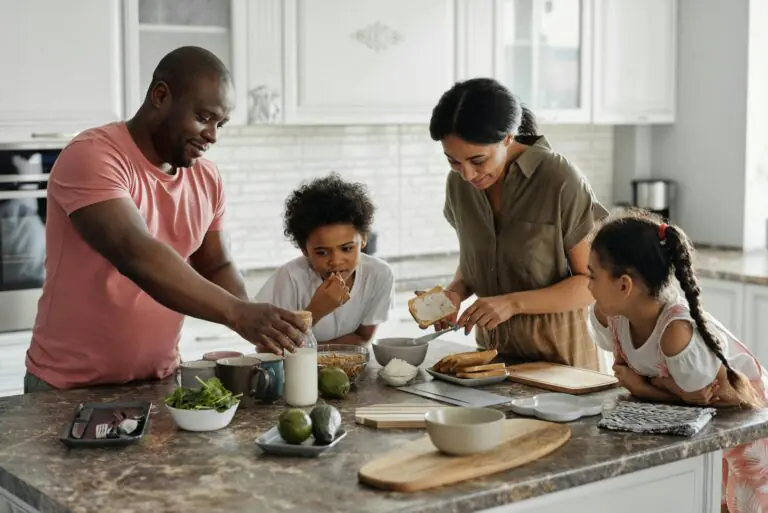

Three year old shyness around others is one of the most common concerns parents bring to pediatricians, and in most cases, it has a straightforward explanation: some children are simply wired to process the world more slowly and carefully than others. What looks like shyness on the surface is often something deeper, a temperament that favors observation over immediate engagement, caution over impulsivity, and depth over breadth in social connection.
That distinction matters more than most parents realize, because how you respond to a shy three-year-old can shape how they understand themselves for decades to come.
My parents didn’t have that framework when I was small. I was the kid who pressed into my mother’s side at birthday parties, watching the chaos from a safe distance before I’d take a single step toward the cake table. Nobody called it introversion back then. They called it shy. And somewhere along the way, I absorbed that label as a flaw rather than a feature.

Personality research has come a long way since then. We now understand that the introvert-extrovert spectrum is just one dimension of a much richer picture, and that shyness, while related, is its own separate thing entirely. If you’re trying to make sense of where your three-year-old fits, our Introversion vs Other Traits hub is a solid place to start pulling those threads apart.
Is Three-Year-Old Shyness Around Others Normal?
Yes, and emphatically so. Wariness around unfamiliar people is a developmentally expected response in toddlers and young children. The nervous system is still maturing. Social processing is still being built. A three-year-old who hangs back at a playdate or refuses to speak to a new adult isn’t broken. They’re being appropriately careful with a world that is still largely unfamiliar and unpredictable to them.
What’s your personality type?
Take our free 40-question assessment and get a detailed personality profile with dimension breakdowns, context analysis, and personalised insights.
Discover Your Type8-12 minutes · 40 questions · Free
That said, there’s a meaningful difference between a child who takes twenty minutes to warm up before joining the group and a child who remains distressed for hours, cries persistently when separated from a caregiver in age-appropriate situations, or shows signs of significant anxiety that interfere with daily life. The former is well within the range of typical development. The latter may warrant a conversation with a pediatrician or child psychologist.
Most three-year-olds who seem shy fall firmly in the first category. They’re observing. They’re processing. They’re deciding whether this situation is safe and worth engaging with. That’s not a social deficit. That’s a particular cognitive style, and it often belongs to children who will grow into some of the most perceptive, thoughtful adults in any room.
I managed teams for over two decades in advertising, and the people who consistently impressed me most weren’t the loudest voices in the room. They were the ones who listened carefully, asked precise questions, and spoke when they had something worth saying. Many of them told me they’d been labeled shy as children. That label had followed them, sometimes painfully, into adulthood.
What’s the Difference Between Shyness and Introversion in Young Children?
Shyness and introversion are frequently conflated, but they operate through different mechanisms. Understanding the distinction can change how you support your child.
Shyness is rooted in anxiety about social evaluation. A shy child wants to connect but fears judgment, rejection, or doing something wrong in front of others. The discomfort is emotional. It often involves self-consciousness, worry, and a desire to disappear from social scrutiny. Shyness can affect both introverts and extroverts. Yes, extroverts can be shy too, which surprises many people. If you want a clearer sense of what being extroverted actually means, it’s worth separating that from the social confidence we often incorrectly assume comes with it.
Introversion, by contrast, is about energy management and processing style. An introverted child isn’t necessarily afraid of social situations. They may simply find them draining in a way that extroverted children don’t, preferring quieter environments, one-on-one play over group chaos, and time alone to recharge after social activity. An introverted three-year-old might have a wonderful time at a birthday party but need a long quiet nap afterward to recover. That’s not shyness. That’s temperament.
The overlap is real, though. Some children are both introverted and shy, carrying both the energy preference and the social anxiety. Others are introverted without being shy at all, perfectly comfortable in social situations but simply preferring less of them. And some children are extroverted but shy, craving social connection while simultaneously fearing social evaluation.

Personality doesn’t always fit neatly into two boxes, which is worth keeping in mind. Some children show traits that blend across the spectrum in ways that don’t map cleanly onto “introvert” or “extrovert.” The difference between omniverts and ambiverts is worth understanding here, because some children (and adults) shift dramatically depending on context rather than sitting consistently at one end of the spectrum.
At three years old, you may not be able to tell definitively which category your child falls into. What you can do is observe without labeling, support without pressuring, and create conditions where their natural temperament has room to express itself safely.
Why Does My Three-Year-Old Seem Shy Around Some People But Not Others?
This is one of the questions parents ask most often, and it’s a genuinely interesting one. A child who seems painfully withdrawn at a family gathering might be completely at ease with their two best friends from preschool. A child who refuses to speak to new adults might chatter freely with their grandparents. The inconsistency can feel confusing, but it actually tells you something important.
Children, especially temperamentally cautious ones, are reading their environments with remarkable precision. They’re picking up on familiarity, predictability, noise levels, the emotional temperature of the adults around them, and how much control they feel over a situation. A loud extended family gathering with unpredictable dynamics and multiple unfamiliar faces is a very different sensory and social experience than a quiet afternoon with two known friends.
Context sensitivity isn’t a flaw. It’s actually a sign of sophisticated social processing. The child who seems shy in one setting and confident in another isn’t being inconsistent or manipulative. They’re accurately calibrating their behavior to their environment, which is a skill most adults wish they were better at.
As an INTJ, I recognize this pattern in myself clearly. Put me in a one-on-one meeting with a client I know well, and I’m articulate, direct, and comfortable. Put me in a loud agency party with a room full of people I barely know, and I become quieter, more peripheral, more selective about when I speak. That’s not shyness. That’s context-appropriate calibration. My three-year-old self was doing the same thing, just with less vocabulary to explain it.
Some children also show what developmental psychologists call “slow to warm up” temperament. They need more time than average to feel comfortable in new situations, but once they do, they engage fully and freely. Pushing them to engage before they’re ready typically backfires, extending the warming-up period rather than shortening it.
How Should Parents Respond to a Shy Three-Year-Old?
How you frame your child’s behavior to them, and to others in front of them, matters enormously. Children at three are beginning to build their self-concept, and they’re absorbing the language adults use to describe them with startling fidelity.
Saying “she’s just shy” in front of your child, repeatedly, teaches them that shyness is a fixed identity rather than a situational response. It can also become a self-fulfilling frame. If a child hears often enough that they’re shy, they may start performing shyness even in situations where they’d otherwise have warmed up naturally.
More useful language acknowledges the feeling without cementing the label. “She takes a little time to feel comfortable” is accurate and neutral. “He likes to watch before he joins in” describes a behavior rather than a character flaw. These framings give a child room to grow into different responses without feeling like they’re betraying their identity when they do.
A few practical approaches that tend to help:
Give advance notice before social situations. Temperamentally cautious children often do better when they know what to expect. Describing the setting, who will be there, and what will happen reduces the unpredictability that triggers withdrawal.
Don’t force engagement, but don’t rescue unnecessarily either. Hovering and removing every social discomfort can prevent a child from developing their own coping strategies. Allow them to experience mild social challenge while staying close enough to provide reassurance.
Validate the feeling without reinforcing avoidance. “It’s okay to feel a little nervous around new people” is supportive. “We can leave if it gets too hard” can inadvertently teach that avoidance is the solution to discomfort.
Create low-pressure social opportunities. One-on-one playdates with a single familiar child tend to work better than large group settings for cautious children. Building confidence in smaller settings creates a foundation for larger ones.

One thing I wish someone had told my parents: success doesn’t mean turn a cautious child into a bold one. The goal is to help them develop enough confidence in their own ability to handle new situations that the caution becomes a choice rather than a constraint. That’s a very different target, and it produces very different outcomes.
Could My Child’s Shyness Be a Sign of Something Else?
Most of the time, no. Shyness and social caution in three-year-olds are common, well-documented temperament traits with no underlying pathology. That said, there are a few situations where it’s worth paying closer attention.
Highly sensitive children, a concept developed by psychologist Elaine Aron, can present similarly to shy or introverted children but have some distinct characteristics. They tend to be overwhelmed by sensory input, emotionally reactive in ways that seem disproportionate to the situation, and deeply affected by subtle environmental cues. Sensitivity of this kind isn’t a disorder. It’s a trait. But it does require a somewhat different parenting approach, one that prioritizes sensory regulation and emotional co-regulation alongside social skill building.
Selective mutism, a condition where a child speaks freely in some settings (typically home) but is unable to speak in others (typically school or social settings), is sometimes mistaken for extreme shyness. It’s relatively rare, but if your child consistently cannot speak in certain settings rather than simply choosing not to, a conversation with a speech-language pathologist or child psychologist is appropriate.
Social anxiety disorder in young children is another possibility worth knowing about, though it’s less common than typical shyness and involves more persistent, intense distress that significantly interferes with daily functioning. Longitudinal work on childhood temperament has helped clarify what distinguishes typical social wariness from patterns that may benefit from professional support.
Autism spectrum conditions can also include social differences that might initially look like shyness, though they typically involve a broader pattern of social communication differences rather than shyness alone. If your child’s social hesitance is accompanied by limited eye contact, delayed language development, repetitive behaviors, or difficulty with back-and-forth interaction, those are signals worth discussing with your pediatrician.
For the vast majority of three-year-olds, though, the answer is simpler: they’re wired this way, and they’re fine.
Will a Shy Three-Year-Old Grow Out of It?
Some children do become noticeably more socially confident as they develop language skills, build a history of positive social experiences, and gain a stronger sense of their own identity. The shyness that looked significant at three can look quite different at six or ten.
Other children carry their cautious temperament forward into adulthood, not as a problem to be solved, but as a fundamental aspect of who they are. They become adults who prefer depth to breadth in relationships, who take time to trust, who observe carefully before engaging. Many of them build rich, meaningful lives and careers that make excellent use of exactly those traits.
What tends to shift isn’t the underlying temperament but the relationship to it. A child who grows up understanding their introversion or social caution as a legitimate way of being, rather than a defect to overcome, develops the confidence to work with their nature rather than against it. That’s the real variable. Not whether the shyness disappears, but whether the child learns to feel at home in their own skin.
I ran a 40-person advertising agency for years. I presented to Fortune 500 executives. I led new business pitches in front of rooms full of skeptical marketing directors. And I did all of that as someone who, at three years old, was pressing into my mother’s side at birthday parties. The temperament didn’t vanish. My relationship to it changed. That distinction is everything.
Some adults who were shy children find it useful to take a personality assessment as adults to better understand where they land on the spectrum. Our introvert-extrovert-ambivert-omnivert test is a good starting point if you’re curious about your own wiring and how it might connect to what you’re seeing in your child.
What Does Introversion Look Like in Early Childhood?
Introversion in a three-year-old doesn’t look like sadness or social failure. It looks like a child who plays contentedly alone for long stretches. A child who has one or two close friendships rather than a wide social circle. A child who asks careful questions before trying something new. A child who needs downtime after group activities. A child who seems to process experiences internally, often returning to them in play or conversation hours or days later.
These children are often highly observant. They notice things other children miss. They may have rich inner lives and imaginative play that doesn’t require an audience. They often form deep attachments to the few people they do let in.
Not every introverted child looks the same, either. Personality exists on a spectrum, and where a child falls can vary considerably. Understanding the difference between being fairly introverted versus extremely introverted can help you calibrate your expectations and your support accordingly. A mildly introverted child may need only modest accommodation. A strongly introverted child may need more deliberate structuring of their social environment.

One thing worth noting: introverted children can absolutely be socially skilled. Social skill is learned behavior. Introversion is an energy orientation. The two aren’t in conflict. An introverted child who is given good social modeling, low-pressure practice opportunities, and a secure attachment base can develop excellent social skills while remaining fundamentally introverted. They’ll just use those skills more selectively than an extroverted peer.
Some children also show a more nuanced blend of traits that can make them harder to categorize. The concept of an otrovert compared to an ambivert is worth exploring if your child seems to shift significantly between social and solitary modes depending on the day or context.
How Do You Help a Shy Three-Year-Old Build Social Confidence?
Building social confidence in a cautious child is less about pushing them into discomfort and more about expanding their sense of what they can handle. The goal is gradual, supported exposure to social situations in ways that end successfully, creating a growing library of positive social experiences they can draw on.
Play is the primary vehicle for this at age three. Children develop social skills through play, and the most effective play-based confidence building happens in low-stakes, child-directed settings where the child has some control over the pace and nature of interaction.
Parallel play, where children play near each other without directly interacting, is a completely normal and healthy stage that many cautious children spend more time in before moving to cooperative play. Allowing this without pushing toward interaction lets children build comfort through proximity before they’re ready for engagement.
Reading books together about characters who are shy or quiet can also be quietly powerful. Children at this age are building their understanding of identity through story, and seeing characters who share their experience, and who find their way through it, provides both validation and a mental model for how their own story might unfold.
Connection with other adults matters too. A child who has warm, positive relationships with a few trusted adults beyond their parents develops a broader sense of social safety. Teachers, relatives, family friends who are patient and don’t push for immediate warmth can become important bridges.
There’s also something to be said for modeling. Children watch their parents closely. If you’re an introvert yourself, letting your child see you handle social situations with calm competence, even when you find them draining, gives them a template. You don’t have to perform extroversion to model social confidence. You just have to show them that people like you, and like them, can engage with the world on their own terms and come out okay.
If you’re curious about your own personality style and how it might be influencing your child’s experience, our introverted extrovert quiz is a useful way to get a clearer read on where you fall. Sometimes understanding your own wiring helps you understand your child’s.
When Should You Talk to a Professional?
Most three-year-olds who are shy around others don’t need professional intervention. They need time, patience, positive social experiences, and caregivers who understand that their temperament is valid.
That said, a few indicators suggest a conversation with your child’s pediatrician or a child psychologist might be helpful. If your child’s distress in social situations is intense and persistent rather than mild and temporary, that’s worth noting. If social anxiety is preventing them from participating in preschool or other age-appropriate activities, that’s worth addressing. If you’re seeing regression in previously acquired skills alongside social withdrawal, or if your child seems generally anxious across multiple areas of life rather than specifically cautious in social situations, professional input can be valuable.
Early intervention for anxiety-related difficulties tends to be effective precisely because children’s nervous systems are still highly plastic at this age. A few sessions with a play therapist or child psychologist can give both the child and the parents tools that make a meaningful difference. There’s no shame in seeking that support, and doing so early is far better than waiting until the patterns are more entrenched.
Connecting with other parents of cautious children can also help. Psychology Today’s writing on introverts and depth of connection touches on something relevant here: the parents who tend to handle this most effectively are the ones who find community with people who genuinely understand what they’re dealing with, rather than those who offer well-meaning but unhelpful advice about “just getting them out there more.”
Developmental research consistently points to the importance of secure attachment as a foundation for social development. A child who feels securely attached to their caregivers has a more stable base from which to venture out socially. Investing in that attachment, rather than focusing exclusively on pushing social exposure, is often the most effective long-term strategy.

The Long View on Shy Children
consider this I’ve come to believe after years of reflection on my own experience and observation of the people I’ve worked with: the shy three-year-old pressing into their parent’s side at a birthday party is not a problem to be fixed. They’re a person in the early stages of becoming themselves.
Some of the most capable professionals I’ve worked with in advertising and brand strategy were children who were labeled shy. They became the colleagues who noticed what everyone else missed. The account managers who remembered details about clients that built loyalty over years. The strategists who sat quietly through brainstorms and then offered the one insight that changed the direction of a campaign. Their caution as children had become precision as adults.
That doesn’t mean shyness is always easy, or that it never causes genuine pain. Social anxiety, when it’s real, deserves real support. But temperamental caution, the kind that makes a three-year-old watch carefully before they step into a room, is not the enemy. It’s a way of being in the world that has genuine value, and children who grow up knowing that tend to do quite well with it.
The conversation about introversion, shyness, and personality type is broader than any single article can hold. Our complete Introversion vs Other Traits hub covers the full range of these distinctions, from the science of temperament to the practical questions of how personality shapes experience across a lifetime.
About the Author
Keith Lacy is an introvert who’s learned to embrace his true self later in life. After 20 years in advertising and marketing leadership, including running agencies and managing Fortune 500 accounts, Keith now channels his experience into helping fellow introverts understand their strengths and build fulfilling careers. As an INTJ, he brings analytical depth and authentic perspective to every article, drawing from both professional expertise and personal growth.
Frequently Asked Questions
Is it normal for a three-year-old to be shy around strangers?
Yes, it is completely normal. Social caution and wariness around unfamiliar people is developmentally expected in toddlers and young children. A three-year-old who takes time to warm up to new people, hangs back in group settings, or prefers familiar adults over strangers is displaying a very common temperament pattern. Most children in this category are simply cautious by nature, not anxious in a clinical sense, and they typically develop social confidence gradually with positive experiences and patient support.
What is the difference between shyness and introversion in a child?
Shyness is primarily about anxiety around social evaluation. A shy child wants to connect but fears judgment or rejection. Introversion is about energy and processing style. An introverted child may be perfectly comfortable socially but finds group interaction draining and needs quiet time to recharge afterward. The two traits can overlap, but they’re distinct. A child can be introverted without being shy, shy without being introverted, or both at once. Identifying which is at play helps parents respond more effectively.
How can I help my shy three-year-old feel more comfortable around other children?
Start with small, low-pressure social settings. One-on-one playdates with a single familiar child tend to work better than large group situations for cautious children. Give advance notice before social events so your child knows what to expect. Avoid labeling them as “shy” in front of them, as this can cement the identity. Instead, use neutral language like “she takes a little time to warm up.” Allow them to observe before joining in rather than pushing immediate engagement. Positive social experiences, even small ones, build confidence gradually over time.
When should I be concerned about my three-year-old’s shyness?
Most shyness in three-year-olds is within the normal range and doesn’t require professional intervention. You may want to consult your child’s pediatrician if the distress in social situations is intense and doesn’t ease over time, if social anxiety is preventing participation in preschool or other age-appropriate activities, if you notice regression in previously acquired skills alongside social withdrawal, or if your child seems broadly anxious across many areas of life rather than specifically cautious in social settings. Early support for anxiety-related patterns tends to be highly effective at this age.
Will my shy three-year-old grow out of it?
Some children become noticeably more socially confident as they develop language skills and accumulate positive social experiences. Others carry a cautious temperament forward into adulthood as a stable part of who they are. What matters most isn’t whether the shyness disappears but whether the child develops a healthy relationship with their own temperament. Children who grow up understanding their social caution as a legitimate way of being, rather than a flaw to overcome, tend to develop strong social skills while remaining true to their nature. The underlying wiring may persist, but the relationship to it can change significantly.