

Shyness can be worked through, and that distinction matters more than most people realize. Unlike introversion, which reflects how you process energy and information, shyness is rooted in fear of social judgment, and fear responds to practice, exposure, and honest self-examination in ways that personality wiring simply does not. What can be done about shyness starts with understanding exactly what it is, and what it isn’t.
Plenty of shy people are actually extroverts who crave connection but feel paralyzed reaching for it. Plenty of introverts are not shy at all. Collapsing these two things into one has caused a lot of unnecessary confusion, and a lot of people spending energy trying to fix something that was never broken in the first place.
If you’ve ever wondered whether your quietness is shyness, introversion, or something else entirely, our Introversion vs Other Traits hub pulls together everything you need to sort through those distinctions clearly. It’s a good place to start before you decide what, if anything, needs changing.

Is Shyness the Same as Introversion?
No, and mixing them up causes real harm. Introversion is about where you source your energy. Introverts recharge in solitude and prefer depth over breadth in conversation and connection. Shyness is about anxiety, specifically the fear that other people will evaluate you negatively. An introvert might prefer a quiet evening at home simply because it feels restorative. A shy person might stay home because stepping out feels genuinely threatening.
What’s your personality type?
Take our free 40-question assessment and get a detailed personality profile with dimension breakdowns, context analysis, and personalised insights.
Discover Your Type8-12 minutes · 40 questions · Free
I’ve lived this distinction personally. As an INTJ, I’m deeply introverted. My mind works best when I have space to think, plan, and process without constant external input. But I was never particularly shy. Running advertising agencies for over two decades meant pitching to boardrooms, presenting creative strategies to skeptical CMOs, and managing client relationships that demanded consistent, confident communication. None of that was easy, but the difficulty came from the energy cost of sustained social performance, not from fear of judgment.
Some of the people on my teams were genuinely shy, and watching them operate was instructive. One account executive I managed was brilliant at her job when she could communicate in writing or small groups. Put her in front of a large client presentation and something shifted. Her voice tightened. She’d over-apologize for ideas before anyone had a chance to respond to them. That wasn’t introversion. That was fear running the show.
Psychology has been fairly clear on this separation for a long time. Shyness involves behavioral inhibition in social situations, often accompanied by physiological arousal, things like a racing heart, flushed skin, and a strong impulse to withdraw. Introversion involves none of that. An introvert who prefers small gatherings isn’t inhibited. They’re calibrated.
Where Does Shyness Actually Come From?
Shyness has roots in both temperament and experience. Some people are born with a nervous system that responds more intensely to novelty and social uncertainty. Early childhood experiences, particularly those involving criticism, humiliation, or unpredictable social environments, can reinforce that baseline sensitivity into something more persistent.
What’s worth understanding is that shyness is not a character flaw. It’s a learned pattern of threat response in social contexts. The brain, doing its job of protecting you from perceived danger, generalizes from a few painful social experiences and starts treating most social situations as potentially hazardous. Over time, avoidance becomes the default strategy, which feels like relief in the short term but quietly shrinks your world.
There’s also a cultural layer worth acknowledging. In environments that reward assertiveness, volume, and constant self-promotion, quiet people get labeled shy even when they’re not. The label itself can become a self-fulfilling belief. Told often enough that you’re shy, you start to perform shyness even in situations where the original anxiety wasn’t that strong. I’ve seen this happen with young creative professionals in agency settings, people who were perfectly confident in their craft but had absorbed a story about themselves as “too quiet for this industry” and started acting accordingly.
Understanding what extroverted actually means can help here, because a lot of shy people have internalized an extroverted ideal and measure themselves against it constantly. When you stop treating extroversion as the default standard for social competence, the pressure around shyness tends to ease considerably.

What Actually Helps With Shyness?
Shyness responds to a specific kind of work, and that work is more nuanced than most advice suggests. “Just put yourself out there” is about as useful as telling someone with a fear of heights to stand on a roof. The exposure needs to be structured, gradual, and paired with a shift in how you interpret what’s happening inside you.
A few things that genuinely move the needle:
Separate the Feeling From the Story
Shyness produces a physical sensation, that tightening, that heat, that impulse to disappear. The sensation itself is neutral. What makes shyness debilitating is the story layered on top of it: “Everyone is watching me,” “I’m going to say something stupid,” “They already don’t like me.” Learning to notice the physical sensation without immediately accepting the catastrophic story is one of the most practical shifts you can make.
Cognitive behavioral approaches have documented this pattern extensively. The relationship between cognitive distortions and social anxiety is well established, and many of the same distortions drive shyness at lower intensity. You don’t need a clinical intervention to start catching yourself mid-story and asking whether the evidence actually supports it.
Start Smaller Than You Think You Need To
Gradual exposure works. Not because it’s comfortable, but because it gives your nervous system repeated evidence that the feared outcome doesn’t materialize. Saying hello to a barista. Asking a genuine question in a meeting you’d normally stay silent in. Making brief eye contact with someone in an elevator and not immediately looking away. These feel trivial, and that’s exactly why they work. Small wins accumulate into a revised sense of what’s possible.
I’ve watched this process work in professional settings. Early in my agency career, I had a junior copywriter who was talented but almost invisible in brainstorms. She’d write pages of brilliant ideas in her notebook and say almost nothing out loud. We started small: I asked her to share one idea per session, just one, and I made sure the room received it well. Over months, her participation expanded organically. She wasn’t “cured” of shyness, but she built enough evidence that speaking up didn’t lead to disaster, and that changed her trajectory.
Shift the Focus From Yourself to the Other Person
Most shyness is intensely self-focused in the moment. You’re monitoring your own face, your voice, your word choices, what the other person must be thinking about all of it. One of the most effective pattern interrupts is to genuinely redirect your attention outward. Ask a real question. Listen for the actual answer. Get curious about the person in front of you.
This connects to something I’ve always believed about depth in conversation. Meaningful exchanges tend to reduce social anxiety more effectively than small talk, because genuine engagement pulls you out of self-monitoring mode. Shy people often avoid depth because it feels riskier, but the opposite is frequently true. Depth creates real connection, and real connection is the antidote to the isolation shyness produces.

Does Personality Type Affect How Shyness Shows Up?
Yes, significantly. Shyness can look different depending on where someone falls on the introversion-extroversion spectrum, and understanding your own wiring helps you work with it more precisely.
Shy extroverts tend to experience the most internal conflict. They genuinely want connection and social stimulation, but fear holds them back from reaching for it. The gap between what they want and what they allow themselves to do creates a particular kind of frustration. If you’re unsure where you land, our introvert, extrovert, ambivert, and omnivert test can give you a clearer picture of your baseline orientation.
Shy introverts, on the other hand, sometimes find their introversion provides cover for the shyness. Preferring solitude is socially acceptable in a way that fear of judgment is not, so the introvert label can become a way of avoiding the harder work of addressing the fear directly. I’ve done this myself at various points, telling myself I was simply “not a people person” when the truth was that certain social situations made me genuinely anxious and I was relieved to have a convenient explanation.
People who sit somewhere in the middle of the spectrum have their own version of this. The difference between being an omnivert and an ambivert matters here, because omniverts can swing dramatically between social energy states, which can make shyness harder to track. On high-energy days they might feel socially confident; on low-energy days the same situations feel threatening. That inconsistency can make it difficult to know whether what you’re dealing with is situational anxiety or something more persistent.
It’s also worth considering whether you might identify as what some call an otrovert rather than an ambivert, a person whose social preferences are highly context-dependent in specific ways. Someone who feels completely at ease in professional settings but freezes in personal social situations, or vice versa, might find that framework more accurate than a simple introvert-extrovert binary.
When Shyness Becomes Something More
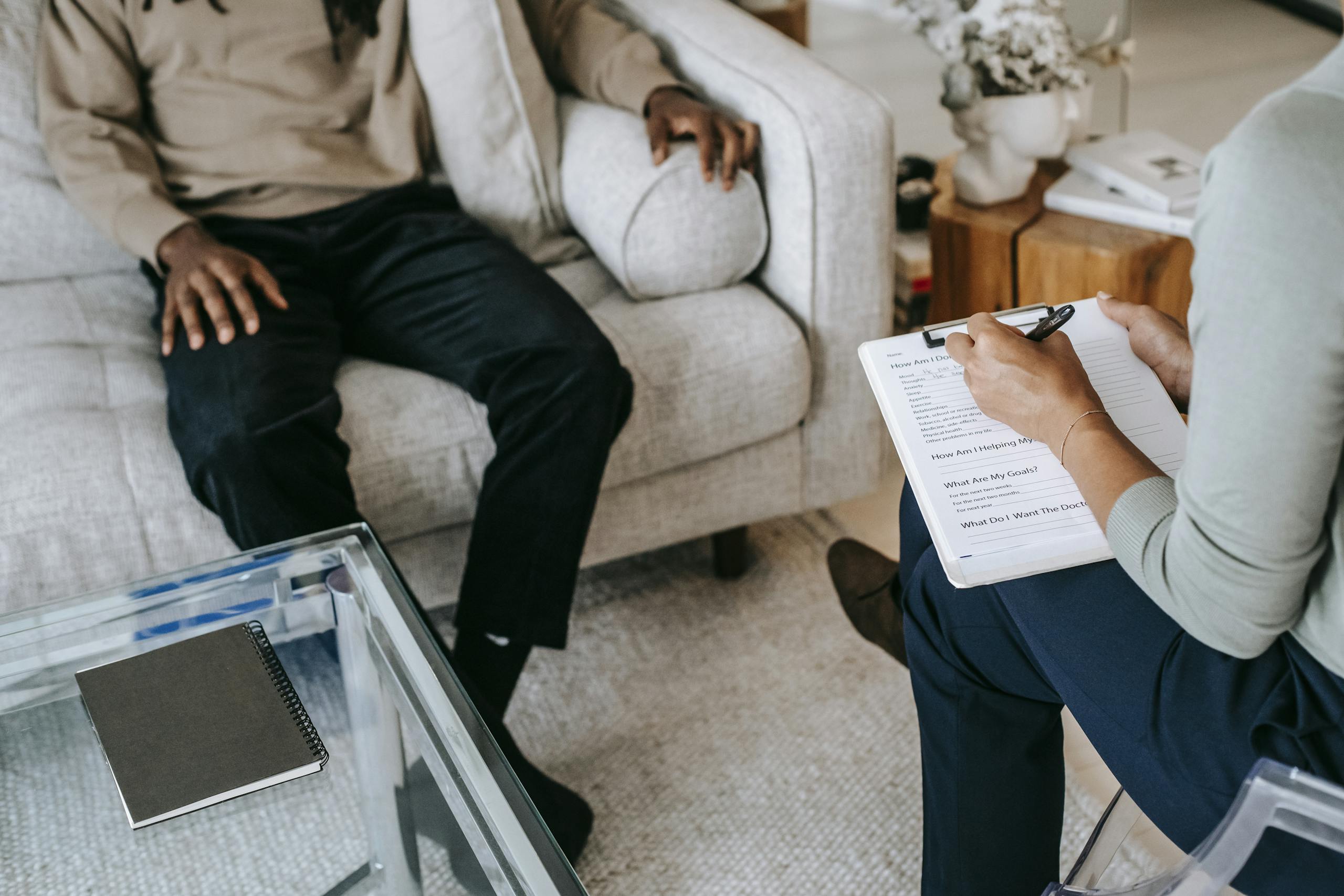
There’s a spectrum between ordinary shyness and clinical social anxiety disorder, and it’s worth knowing where you are on it. Shyness that’s mild and situational is something most people can address with self-directed practice and honest reflection. Shyness that significantly limits your functioning, causes you to avoid important opportunities, or produces intense physical symptoms in a wide range of social situations may warrant professional support.
Social anxiety disorder is a recognized condition with effective treatments, and there’s no virtue in white-knuckling through it alone when help exists. Evidence-based approaches to social anxiety, including cognitive behavioral therapy and, in some cases, medication, have strong track records. Seeking that support isn’t weakness. It’s the same strategic thinking you’d apply to any other obstacle.
One thing I’ve noticed in my own life and in the careers of people I’ve mentored: the line between “this is just who I am” and “this is something I could actually change” is often blurrier than we admit. I spent years framing certain avoidance behaviors as preferences when they were actually limitations. Recognizing that distinction, without judgment, is one of the more honest things you can do for yourself.
What About Shyness in Professional Settings?
Professional contexts add a particular layer of pressure because the stakes feel higher. Speaking up in a meeting, negotiating for a raise, presenting an idea to a skeptical room, these aren’t just social interactions. They carry real consequences, which amplifies the fear response in shy people considerably.
What I’ve found, both in my own career and watching others, is that preparation is the great equalizer. Shy people who prepare thoroughly for high-stakes interactions tend to perform far better than their anxiety predicts. Knowing your material cold reduces the cognitive load of the interaction, which frees up bandwidth that would otherwise go to self-monitoring. You can’t think clearly about what you’re saying when half your brain is busy cataloging what the other person’s expression might mean.
There’s also something to be said for reframing what professional interactions are actually about. Negotiation, for example, is often framed as confrontation, which makes shy people want to avoid it entirely. Approached differently, as collaborative problem-solving rather than adversarial combat, it becomes more manageable. Harvard’s Program on Negotiation has explored how introverts approach negotiation, and the findings suggest that the careful listening and preparation tendencies of quieter personalities can actually be assets in these situations.
Shy people often underestimate how much their written communication can do their social work for them. In agency life, I watched shy team members build strong professional reputations through email, proposals, and written strategy documents before they ever had to defend those ideas in person. By the time the in-person conversation happened, the groundwork was already laid. That’s not avoidance. That’s playing to your strengths while you build the others.
Does Shyness Change Over Time?
For many people, it does. Not because shyness magically dissolves with age, but because accumulated life experience provides repeated evidence that social situations are survivable, and often better than anticipated. Confidence builds through exposure, and most people accumulate a lot of exposure simply by living.
That said, shyness doesn’t change automatically. People who actively work on it, who seek out the situations that make them uncomfortable rather than consistently avoiding them, tend to see more meaningful shifts than those who simply wait for time to do the work. The nervous system learns from experience, and you have more influence over what experiences you give it than you might think.
Where you fall on the introversion spectrum also shapes how this plays out. Someone who is fairly introverted versus extremely introverted will have different baseline energy available for social situations, which affects how quickly they can build tolerance for the discomfort shyness creates. Extremely introverted people aren’t at a disadvantage here, they just need to be more deliberate about pacing and recovery.
And if you’re genuinely uncertain whether what you’re experiencing is shyness, introversion, or some combination of the two, our introverted extrovert quiz might help you get clearer on your actual orientation. Knowing what you’re working with is always the better starting point than guessing.
Practical Starting Points Worth Trying
None of what follows is revolutionary. What makes the difference is actually doing it, consistently, even when it feels uncomfortable, especially when it feels uncomfortable.
Write down the social situations that trigger your shyness, ranked from least to most anxiety-provoking. Start with the ones at the bottom of the list and work up. Give yourself genuine credit for each one you attempt, regardless of how it goes. The attempt is the point, not the performance.
Notice the stories you tell yourself before and during social situations. Ask whether those stories are facts or predictions. Most of them are predictions, and predictions are testable. Test them.
Build in recovery time without guilt. Shyness is exhausting in a way that ordinary social interaction isn’t, because you’re running two processes simultaneously: engaging with the situation and monitoring yourself engaging with the situation. That double load is tiring. Rest isn’t avoidance when it’s genuinely restorative.
Find contexts where you feel most comfortable and use them as training ground. For many people, one-on-one conversations are far less activating than group settings. Start there. Build your confidence in smaller arenas before expanding outward. There’s no rule that says you have to conquer the hardest version of something first.
Consider that success doesn’t mean become someone who loves every social situation. Plenty of confident, well-functioning people find large gatherings draining and prefer intimate conversation. The goal is to stop letting fear make your choices for you. That’s a much more achievable target, and a more honest one.
The broader context of introversion, extroversion, and where shyness fits within both is something we explore throughout our Introversion vs Other Traits hub. If you want to keep pulling on this thread, there’s plenty more there to work through.
About the Author
Keith Lacy is an introvert who’s learned to embrace his true self later in life. After 20 years in advertising and marketing leadership, including running agencies and managing Fortune 500 accounts, Keith now channels his experience into helping fellow introverts understand their strengths and build fulfilling careers. As an INTJ, he brings analytical depth and authentic perspective to every article, drawing from both professional expertise and personal growth.
Frequently Asked Questions
Can shyness be completely overcome?
For most people, shyness can be significantly reduced through consistent practice, gradual exposure, and honest examination of the beliefs driving it. Complete elimination isn’t always the right goal. Many people find that shyness becomes manageable rather than absent, meaning it no longer determines their choices even when it still shows up as a feeling. That’s a meaningful and realistic outcome for most people working on this.
Is shyness genetic or learned?
Both factors play a role. Some people are born with a nervous system that responds more intensely to social novelty and uncertainty, which creates a biological predisposition toward shyness. Experience then shapes how that predisposition develops. Early social environments, particularly those involving criticism or unpredictability, can reinforce shy tendencies. Positive social experiences and deliberate practice can work in the other direction. The interaction between temperament and environment is what determines how shyness manifests in any individual.
How is shyness different from social anxiety disorder?
Shyness is a personality trait involving discomfort and inhibition in social situations. Social anxiety disorder is a clinical condition in which that discomfort is severe enough to significantly impair daily functioning, cause intense physical symptoms, and lead to systematic avoidance of social situations. The difference is largely one of intensity and impact. Shyness that occasionally makes someone hesitant is not the same as anxiety that prevents them from attending work, maintaining relationships, or functioning in public settings. If shyness is significantly limiting your life, speaking with a mental health professional is a reasonable and worthwhile step.
Are introverts more likely to be shy?
Introverts are not inherently more likely to be shy, even though the two are frequently conflated. Introversion describes how you process energy and information. Shyness describes fear of social judgment. These are independent traits that can occur in any combination. Some introverts are confident and socially at ease, preferring solitude for restorative rather than avoidant reasons. Some extroverts are genuinely shy, craving connection but feeling inhibited from pursuing it. Knowing the difference matters because the strategies for addressing shyness are different from those for honoring introversion.
What’s the fastest way to reduce shyness in a specific situation?
Redirecting your attention outward is one of the most immediately effective strategies available. Shyness intensifies when you’re monitoring yourself. It eases when you get genuinely curious about someone else. Before a situation that triggers your shyness, prepare one or two real questions you want to ask the people you’ll encounter. Focus your energy on listening to the answers rather than managing your own presentation. This doesn’t eliminate the anxiety, but it interrupts the self-monitoring loop that makes shyness feel so consuming in the moment.