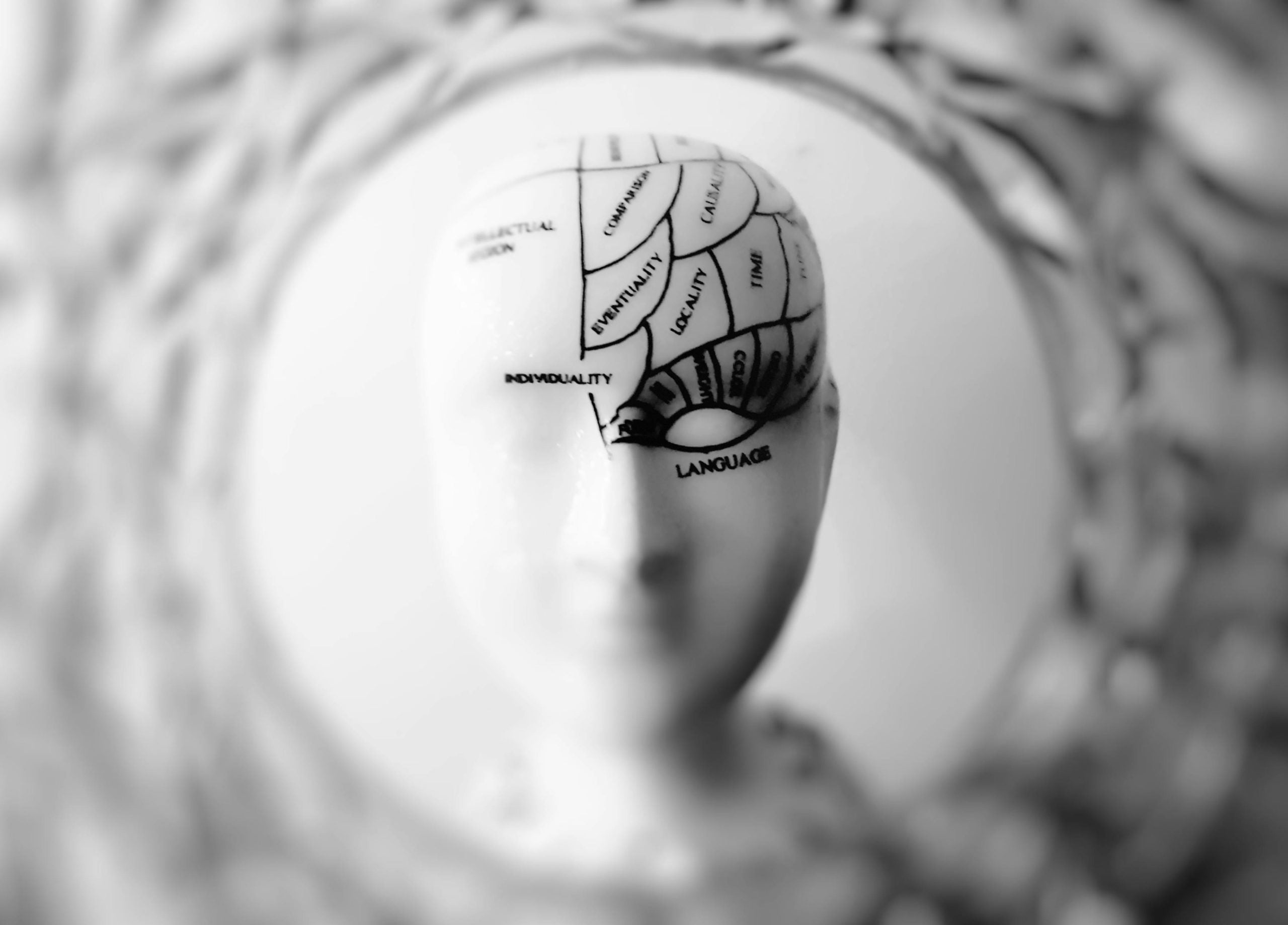

Extroverted intuition is a cognitive function in Jungian and MBTI psychology that describes a way of perceiving the world by scanning the external environment for patterns, possibilities, and connections. People who lead with this function tend to see multiple angles simultaneously, generate ideas rapidly, and feel energized by exploring what could be rather than what is.
As an INTJ, my dominant function is introverted intuition, which operates quite differently. Where extroverted intuition casts a wide net outward, introverted intuition pulls inward, synthesizing information into a singular deep vision. Watching people who lead with extroverted intuition has taught me more about my own wiring than almost anything else.

Personality psychology covers a broad and sometimes confusing landscape. If you want a wider view of where extroverted intuition fits among introversion, extroversion, and everything in between, our Introversion vs Other Traits hub pulls that full picture together in one place.
What Exactly Is Extroverted Intuition?
Cognitive functions are the mental processes that shape how people take in information and make decisions. Carl Jung identified eight of them, and MBTI theory built on that foundation. Extroverted intuition, often abbreviated as Ne, is one of the four perceiving functions. It operates by engaging with the external world and looking for patterns, meanings, and possibilities that exist across multiple ideas simultaneously.
What’s your personality type?
Take our free 40-question assessment and get a detailed personality profile with dimension breakdowns, context analysis, and personalised insights.
Discover Your Type8-12 minutes · 40 questions · Free
People who use extroverted intuition as their dominant or auxiliary function tend to think in webs rather than lines. One idea connects to another, which branches into three more, which circle back to the original in a way that feels exciting rather than overwhelming to them. They often speak in metaphors, make unexpected associations, and become visibly energized when brainstorming sessions open up rather than close down.
At my agency, I hired a creative director who was almost certainly an ENTP, one of the types that leads with extroverted intuition. Pitch meetings with him were genuinely exhilarating and occasionally maddening. He would walk in with five campaign concepts when the brief asked for two, and each one was legitimately interesting. The challenge was never generating ideas. It was choosing one and staying with it long enough to execute. That tension between expansive possibility and focused execution is one of the most visible signatures of extroverted intuition in a professional environment.
Understanding what extroverted means at a foundational level helps clarify why this function works the way it does. Extroversion in cognitive function theory refers to orientation toward the external world, not personality gregariousness. A function can be extroverted even in someone who is socially reserved.
Which MBTI Types Use Extroverted Intuition?
Extroverted intuition appears in four MBTI types as either the dominant or auxiliary function. ENFPs and ENTPs lead with it as their primary cognitive tool, meaning it shapes how they perceive everything around them. INFPs and INTPs use it as their auxiliary function, which means it supports and expresses the insights generated by their dominant introverted feeling or introverted thinking.
The experience of extroverted intuition differs depending on its position in the function stack. For an ENFP, the external world is a constant source of stimulation and inspiration. Ideas arrive fast, connections feel electric, and possibilities seem endless. For an INTP, extroverted intuition serves a different role. It helps them test and externalize the logical frameworks they build internally, exploring multiple angles to stress-test a theory.
As an INTJ, I sit on the opposite side of the intuition spectrum. My dominant introverted intuition converges, drawing information inward and distilling it into a single focused vision. Extroverted intuition diverges, radiating outward and multiplying options. Neither approach is superior. They solve different problems and create different blind spots.
I managed an INFP account planner at one of my agencies who was genuinely brilliant at reframing client problems. She would walk into a briefing, listen carefully, and then offer three or four completely different ways of seeing the challenge, each one valid. That was her extroverted intuition at work, exploring the external landscape of the problem before her dominant introverted feeling helped her settle on what felt most meaningful. Watching her work taught me that what I sometimes experienced as indecision was actually a different and legitimate form of thoroughness.

How Does Extroverted Intuition Feel From the Inside?
People who lead with extroverted intuition often describe their inner experience as something like a browser with too many tabs open, and they mean that with affection. The mental environment feels alive with possibility. A conversation about one topic suddenly illuminates something in a completely unrelated field. A pattern noticed in a film connects to a business problem they have been sitting with for weeks. The associations are not random. They feel meaningful and generative.
There is also a strong pull toward novelty. Where introverted intuition tends to settle into a vision and deepen it, extroverted intuition gets restless with the familiar. Once a problem is understood, it loses some of its appeal. The exciting part is the discovery phase, not the refinement phase. This can make sustained execution feel like friction for people who lead with this function.
The external orientation of this function also means that ideas often develop through conversation and engagement rather than solitary reflection. Someone with dominant extroverted intuition may not fully know what they think about something until they have talked it through with others. The act of speaking generates the insight rather than expressing a pre-formed one. This is almost the mirror image of how I experience my own thinking as an INTJ. My ideas need quiet incubation before they are ready to be spoken aloud.
Personality psychology has a way of making you realize that other people are not simply doing things wrong. They are doing things differently, according to a coherent internal logic you may not have access to. A helpful way to start mapping your own cognitive style is to take an introvert, extrovert, ambivert, and omnivert test to get a clearer baseline before exploring specific functions like extroverted intuition.
How Is Extroverted Intuition Different from Introverted Intuition?
This distinction matters enormously, and it is one of the most commonly misunderstood areas in MBTI discussion. Both functions deal with patterns and meaning, but they operate in fundamentally different directions.
Introverted intuition, my dominant function as an INTJ, works by pulling information inward and processing it beneath conscious awareness. Insights arrive as fully formed conclusions that feel certain even when the reasoning behind them is hard to articulate. There is a sense of depth and convergence. The mind settles on one vision and holds it with conviction.
Extroverted intuition works in the opposite direction. It scans the external environment and generates multiple possibilities simultaneously. Where introverted intuition says “I can see how this will unfold,” extroverted intuition says “I can see seven ways this could unfold, and all of them are interesting.” One function narrows. The other expands.
In practical terms, this difference showed up constantly in my agency work. When I was evaluating a new business opportunity, my process was to gather information, go quiet, and wait for clarity to emerge. I would often come back to a decision with a strong conviction and a clear recommendation. My ENTP colleagues, by contrast, would want to keep exploring. They were energized by the open question in a way that I found destabilizing. Neither approach was wrong. They were expressions of different cognitive orientations toward the same problem.
Psychology researchers have explored how different cognitive styles affect perception and decision-making in meaningful ways. Work published via PubMed Central on personality and cognitive processing offers useful context for understanding why these differences are real and not simply matters of preference or habit.

Can Introverts Have Extroverted Intuition?
Yes, and this is where the terminology gets genuinely interesting. Cognitive functions and personality orientation are not the same thing. An introvert can absolutely use extroverted intuition, and many do. INFPs and INTPs are both introverted types with extroverted intuition as their auxiliary function.
The distinction is that for these types, extroverted intuition serves the dominant function rather than leading it. An INTP’s dominant introverted thinking is the primary driver. Extroverted intuition helps them explore possibilities and gather external data to feed that internal logical analysis. The function is extroverted in its orientation, but it operates in service of an introverted core.
This is part of why personality typing can feel confusing when you first encounter it. Someone might be deeply introverted in their social preferences and energy patterns while still having a cognitive function that reaches outward for information. The social dimension of introversion and the directional orientation of a cognitive function are separate variables.
It is also worth noting that people exist on a spectrum. Some people identify as omniverts, shifting between introverted and extroverted behavior depending on context. The difference between omniverts and ambiverts is worth exploring if you find that your own patterns do not fit neatly into one category. Cognitive functions add another layer to that complexity.
My own experience with extroverted intuition is as a tertiary function, which means it shows up but with less natural fluency than my dominant introverted intuition or my auxiliary extroverted thinking. At its best, it gives me the ability to consider multiple strategic options before committing. At its worst, it creates a kind of restless second-guessing that disrupts the clarity I usually rely on.
What Are the Strengths of Extroverted Intuition in Professional Settings?
People who lead with extroverted intuition bring something genuinely valuable to organizations: the ability to see connections that others miss and to generate possibilities before a situation has fully defined itself. In advertising, that capacity was often the difference between a campaign that felt expected and one that felt genuinely surprising.
Some of the most effective brainstorming I ever witnessed came from people who led with extroverted intuition. They could take a creative brief and immediately see angles that the rest of the team had not considered. They were also remarkably good at reading the cultural moment, noticing emerging patterns in consumer behavior or media that had not yet crystallized into trends. That perceptual sensitivity is a real professional asset.
Extroverted intuition also tends to produce people who are genuinely curious about others. Because the function is oriented toward the external world and its possibilities, people who use it often find other people fascinating as sources of perspective and insight. Psychology Today has written about the value of depth in conversation, and people with strong extroverted intuition often gravitate toward exactly that kind of exchange, seeking out ideas and perspectives rather than surface-level social interaction.
In negotiation contexts, the ability to see multiple possible outcomes simultaneously is a significant advantage. Harvard’s Program on Negotiation has explored how different personality styles affect negotiation outcomes, and the pattern-recognition capacity of extroverted intuition maps well onto the kind of flexible, adaptive thinking that complex negotiations require.
What Are the Challenges That Come with Extroverted Intuition?
Every cognitive strength carries a corresponding challenge, and extroverted intuition is no exception. The same capacity that generates brilliant ideas rapidly can also make follow-through feel like a grind. Once a problem has been explored and understood, the pull toward the next interesting thing can undermine the sustained effort that execution requires.
People who lead with extroverted intuition can also struggle with decision-making in a specific way. Because they can always see another angle, another possibility, another way the situation could be framed, committing to one path can feel like closing off something valuable. This is not the same as indecisiveness in a general sense. It is a specific tension between the expansive perception of the function and the narrowing requirement of a decision.
At my agency, I watched this play out with a senior strategist who was an ENFP. She was extraordinary at the front end of any project, the discovery phase, the reframing, the generation of possibilities. Getting her to lock in a final recommendation was genuinely difficult, not because she lacked conviction but because she kept finding legitimate reasons to reconsider. We eventually built a process that gave her a defined exploration period followed by a firm decision point, and that structure helped her work with her natural strengths without letting them become a liability.
There is also a social dimension to consider. People with strong extroverted intuition can sometimes overwhelm those around them with the speed and volume of their idea generation. In team settings, this can read as dominating a conversation even when the intent is collaborative. Learning to pace that output and create space for others to contribute is a real developmental area for many people who lead with this function.

How Does Extroverted Intuition Relate to Introversion and Extroversion More Broadly?
One of the genuinely counterintuitive aspects of cognitive function theory is that extroverted and introverted functions do not map cleanly onto extroverted and introverted personalities. An INTP is a deeply introverted person who nonetheless uses extroverted intuition as a primary tool for engaging with the world. An ENTJ is an extroverted type whose dominant function, extroverted thinking, is extroverted, but whose auxiliary introverted sensing is turned inward.
This complexity is part of why personality typing rewards careful study rather than surface-level categorization. If you have been wondering whether your social preferences and your cognitive style are telling you different things about yourself, they might be. The spectrum between introversion and extroversion is more nuanced than a simple binary.
Some people find they do not fit cleanly into introvert or extrovert categories at all. If that resonates, exploring the distinction between an otrovert and an ambivert might offer a more precise framework for understanding your own patterns. Cognitive functions add yet another layer of specificity on top of that.
There is also meaningful variation within introversion itself. Someone who is fairly introverted experiences the world differently from someone who is extremely introverted, and understanding the difference between fairly introverted and extremely introverted can help clarify how much a cognitive function like extroverted intuition might feel energizing versus draining depending on where you fall on that spectrum.
My own position as a deeply introverted INTJ means that even my tertiary extroverted intuition requires energy to access. When I am in a creative brainstorm and genuinely exploring multiple possibilities, it feels productive but tiring in a way that my dominant introverted intuition does not. The function is real and useful, but it costs me something that it does not cost an ENFP or ENTP.
How Can You Tell If Someone Is Using Extroverted Intuition?
There are observable patterns that tend to signal extroverted intuition in action, whether in yourself or in the people around you. Watching for them changed how I managed creative teams and how I structured collaborative work.
People using extroverted intuition tend to think out loud. Their ideas develop in the act of speaking rather than before it. They may start a sentence without knowing exactly where it will end, following the thread as it unspools. This can look like rambling to someone who processes internally, but it is often a coherent cognitive process that benefits from verbal expression.
They also tend to make lateral connections that surprise others. A conversation about a client’s distribution challenge might suddenly connect to something they read about ant colony behavior or a film they saw last weekend. These connections are not random associations. They reflect a genuine pattern-recognition capacity that operates across domains rather than within them.
Enthusiasm is another marker. People with strong extroverted intuition tend to become visibly energized by new ideas and new possibilities. They may shift quickly between topics not because they lack depth but because each new angle feels genuinely exciting. That energy can be infectious in a creative environment and occasionally exhausting in a focused execution phase.
If you are trying to get a clearer read on your own cognitive style, an introverted extrovert quiz can be a useful starting point for understanding how your social orientation interacts with your cognitive preferences.
Personality research has explored how cognitive styles shape perception and behavior in measurable ways. Additional work available through PubMed Central examines the relationship between personality traits and information processing, offering scientific grounding for what MBTI theory describes in functional terms.
How Does Extroverted Intuition Show Up in Relationships and Communication?
Understanding extroverted intuition transformed some of my most important professional relationships. For years, I experienced certain colleagues as unfocused or scattered when they were actually operating from a coherent cognitive orientation that I simply did not share.
In communication, people with strong extroverted intuition tend to prefer open-ended conversations over structured ones. They find their way to a point through exploration rather than arriving with a pre-formed position. Giving them space to think out loud, even when it feels inefficient, often produces better outcomes than pushing for a premature conclusion.
They also tend to be genuinely interested in other people’s perspectives, not as a social nicety but as a source of new angles on a problem. A conversation that introduces an unexpected viewpoint can completely reframe their thinking, and they welcome that rather than finding it disorienting. This openness to input can make them highly collaborative partners when the relationship is structured to support it.
Conflict can be a particular challenge. When someone with extroverted intuition is in a tense situation, they may generate multiple interpretations of what is happening simultaneously, which can complicate their ability to respond clearly. Psychology Today’s framework for introvert-extrovert conflict resolution touches on how different cognitive orientations affect the way people process and respond to interpersonal tension.
One pattern I noticed consistently in agency life was that my extroverted intuition colleagues needed a different kind of feedback than my introverted intuition colleagues. Telling an INTJ that a strategic direction was wrong landed as useful information. Telling an ENFP the same thing without acknowledging the value of what they had generated first often shut down the creative process entirely. The function that generates ideas is deeply connected to motivation for people who lead with it.

What Does Extroverted Intuition Mean for Personal Development?
Whether extroverted intuition is your dominant function, your auxiliary, or something further down your stack, understanding it offers real leverage for personal growth. For those who lead with it, the developmental work often involves building tolerance for commitment and execution without losing the generative capacity that makes them valuable.
For types like INTPs and INFPs who use it as an auxiliary function, the work often involves learning to trust the external exploration that extroverted intuition enables rather than retreating too quickly into the internal world of their dominant function. The ideas that emerge from genuine engagement with the external environment can enrich the internal processing that follows.
For types like me, where extroverted intuition sits lower in the function stack, developing it means practicing the willingness to stay in a state of open possibility longer than feels natural. My default is to converge quickly. Deliberately holding space for more options before deciding is a skill I have had to build consciously, and it has made me a better strategic thinker even though it does not come naturally.
The research on personality and professional development suggests that growth often comes not from abandoning your natural cognitive orientation but from developing enough fluency with less dominant functions to access them when the situation calls for it. Frontiers in Psychology has published work on personality and adaptive behavior that supports this view of development as expansion rather than replacement.
For introverts specifically, understanding extroverted intuition can also help explain why some environments feel more energizing than others. A brainstorming session that invites wide-open exploration might feel surprisingly engaging for an INFP or INTP, even if the social dimension is draining. The cognitive function and the social energy are separate variables, and honoring both leads to better self-understanding than treating them as a single package.
If you want to keep building that self-understanding, our complete Introversion vs Other Traits resource hub covers the full range of personality dimensions that intersect with introversion, from cognitive functions to social orientation to the many ways people fall somewhere in between.
About the Author
Keith Lacy is an introvert who’s learned to embrace his true self later in life. After 20 years in advertising and marketing leadership, including running agencies and managing Fortune 500 accounts, Keith now channels his experience into helping fellow introverts understand their strengths and build fulfilling careers. As an INTJ, he brings analytical depth and authentic perspective to every article, drawing from both professional expertise and personal growth.
Frequently Asked Questions
What is extroverted intuition in simple terms?
Extroverted intuition is a cognitive function that describes how certain people perceive the world by scanning their external environment for patterns, possibilities, and connections between ideas. People who use it strongly tend to generate multiple options simultaneously, think out loud, and feel energized by open-ended exploration. It is one of eight cognitive functions identified in Jungian psychology and used in MBTI theory.
Which MBTI types have extroverted intuition as their dominant function?
ENFPs and ENTPs have extroverted intuition as their dominant function, meaning it is their primary way of perceiving and engaging with the world. INFPs and INTPs use it as their auxiliary function, where it supports their dominant introverted feeling or introverted thinking respectively.
Can an introvert have extroverted intuition?
Yes. Cognitive functions and social orientation are separate dimensions of personality. INFPs and INTPs are both introverted types who use extroverted intuition as their auxiliary function. The function reaches outward for information and possibilities, but it operates in service of an introverted dominant function. Being introverted in social preference does not prevent someone from having a cognitively extroverted perceiving function.
How is extroverted intuition different from extroverted sensing?
Both are extroverted perceiving functions, but they attend to different aspects of external reality. Extroverted sensing focuses on immediate, concrete sensory experience, what is present and real right now. Extroverted intuition focuses on patterns, possibilities, and meanings that lie beneath or beyond the surface of what is directly observable. Extroverted sensing is grounded in the present moment, while extroverted intuition is oriented toward potential futures and conceptual connections.
What are the biggest challenges for people with dominant extroverted intuition?
The most common challenges involve follow-through and decision-making. Because extroverted intuition generates multiple possibilities simultaneously, committing to one path can feel like losing something valuable. Sustained execution on a single project can feel less engaging than the exploration phase. People who lead with this function often benefit from external structures that define a clear discovery period followed by a firm decision point, giving the function room to work without letting it delay action indefinitely.