

Avoidant attachment style and physical boundaries are deeply connected. People with dismissive-avoidant attachment patterns often use physical space, including whether or not they invite someone into their home, as an unconscious way to regulate emotional closeness and protect themselves from vulnerability.
That instinct to keep the door closed, literally and figuratively, is not about being cold or uncaring. It is a deeply wired defense system, one that many introverts and avoidantly attached people share without ever fully understanding why their apartment feels like sacred, untouchable ground.
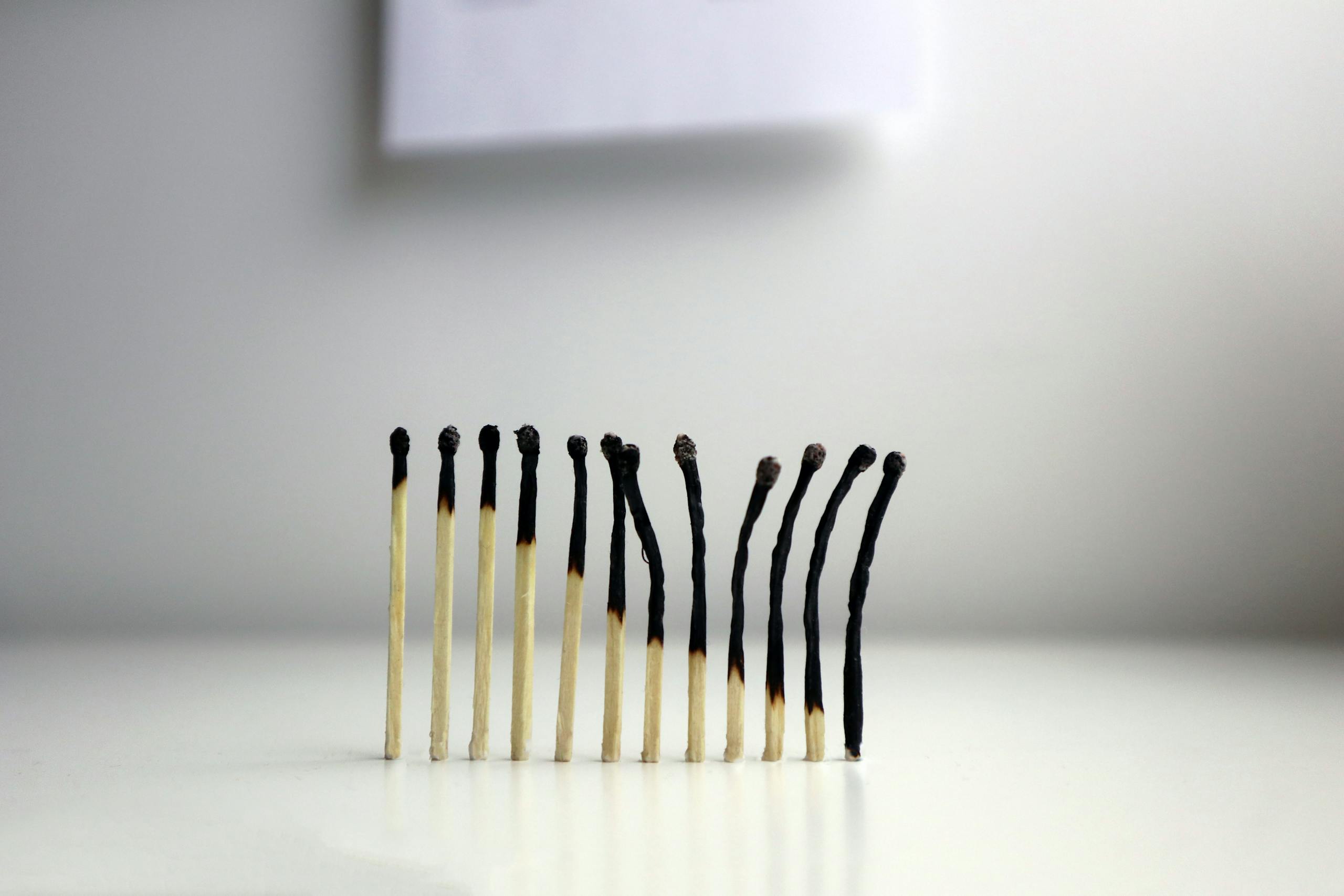
Much of what I explore on this site connects to how introverts manage their energy in relationships and social environments. If you want a broader look at how social energy shapes the way introverts move through the world, our Energy Management and Social Battery hub is a good place to start. What I want to dig into here is something more specific: the way avoidant attachment shapes physical boundaries, and how to recognize whether your relationship with personal space is a healthy preference or something worth examining more closely.
What Is Avoidant Attachment Style, Really?
Attachment theory, developed by John Bowlby and later expanded by Mary Ainsworth, describes the emotional bonds we form with caregivers early in life and how those patterns shape the way we connect with others as adults. Dismissive-avoidant attachment develops when a child learns, often through repeated experience, that expressing emotional needs leads to rejection, dismissal, or emotional unavailability from caregivers. The child adapts by suppressing those needs and becoming self-reliant to a fault.
What’s your personality type?
Take our free 40-question assessment and get a detailed personality profile with dimension breakdowns, context analysis, and personalised insights.
Discover Your Type8-12 minutes · 40 questions · Free
As adults, dismissive-avoidant people tend to place high value on independence, feel uncomfortable with emotional intimacy, and often pull back when relationships start to deepen. Critically, a common misconception is that avoidant people simply do not have feelings. That is not accurate. Physiological evidence suggests that avoidantly attached people do experience internal emotional arousal in close relationship situations. They appear calm on the surface because their nervous system has learned to suppress and deactivate those feelings as a defense strategy. The emotions exist. They are just walled off.
It is also worth distinguishing this from fearful-avoidant attachment, sometimes called disorganized attachment. Where dismissive-avoidants have low anxiety and high avoidance, fearful-avoidants experience both high anxiety and high avoidance. They want closeness and fear it simultaneously. Both patterns involve physical boundary behaviors, but the emotional texture underneath is different.
One more thing worth naming clearly: introversion and avoidant attachment are not the same thing. An introvert can be securely attached, deeply comfortable with closeness, and still need significant time alone to recharge. Avoidance is about emotional defense. Introversion is about energy. Conflating the two does a disservice to both.
Why Does the Apartment Become Such Charged Territory?
Your home is probably the most honest place you have. No performance required. No social mask to maintain. For someone with avoidant attachment patterns, the apartment or home is not just a physical space. It is the last line of emotional defense.
Inviting someone into your home is, symbolically and practically, an act of vulnerability. You are showing them your real life, not the curated version you present in restaurants or at work events. For avoidantly attached people, that exposure triggers the same deactivating response that emotional intimacy does. The nervous system reads it as threat, not warmth.
I remember a creative director I managed at one of my agencies, a genuinely warm and talented person, who never once had a colleague over to her place in four years. She would organize every team gathering at bars or restaurants, always on neutral ground. At the time I thought she was just private. Looking back with what I understand now about attachment patterns, I recognize the structure she had built around her personal space. The apartment was the one place where no one could get close enough to leave.
That dynamic shows up in relationships too. Avoidantly attached partners often keep their living space off-limits for far longer than feels proportionate to the relationship stage. Or they allow a partner in but maintain rigid rules about what areas are shared, what stays off-limits, and how much time together is too much. These are not arbitrary preferences. They are the architecture of self-protection.

20 Signs of Avoidant Attachment in Physical Boundaries
These signs are not a clinical checklist, and no list of behaviors alone can diagnose an attachment style. The Adult Attachment Interview and the Experiences in Close Relationships scale are the formal tools researchers use. What follows is a set of patterns worth noticing, in yourself or in a relationship, as starting points for honest reflection.
Around Your Home and Personal Space
1. You delay inviting partners to your home significantly longer than the relationship stage would suggest. A relationship that has been exclusive for months but your partner has never seen your apartment is worth examining. The delay is often less about logistics and more about what crossing that threshold would mean.
2. You feel genuine relief when plans to have someone over fall through. Not mild convenience, but actual relief. The cancellation feels like pressure releasing rather than disappointment.
3. You have clear, unspoken rules about which parts of your home are off-limits. A partner can be in the living room but not the bedroom. Or in the bedroom but not looking through your bookshelf. Physical space becomes zoned by emotional risk level.
4. Having someone stay overnight in your space feels suffocating even when you care about them. The morning after feels like a recovery task rather than a natural continuation of closeness.
5. You find it difficult to sleep comfortably when someone shares your bed. This goes beyond practical sleep preferences. The physical proximity triggers a low-level alertness that does not settle.
6. You prefer meeting people on neutral territory and resist hosting. Restaurants, coffee shops, their place. Anywhere but yours. The asymmetry feels manageable. Hosting feels like too much exposure.
7. After someone visits, you feel a strong urge to reset your space. Rearranging, cleaning, restoring the exact order that existed before they arrived. Not just tidying, but reclaiming.
In Physical Closeness and Touch
8. You pull back from physical affection when it feels like it is escalating toward emotional intimacy. A hug that shifts into something more tender triggers a subtle withdrawal. The body moves before the mind has processed why.
9. You are more comfortable with casual, low-stakes physical contact than with sustained tenderness. A quick handshake or shoulder pat feels fine. A long embrace or being held feels like too much.
10. You find yourself creating physical distance during emotionally charged conversations. Moving to another chair, standing up, walking to the kitchen. The body tries to regulate what the mind cannot.
For people who also experience heightened sensory sensitivity, physical touch can carry an additional layer of complexity. HSP touch sensitivity explores how tactile responses work for highly sensitive people, and some of what reads as avoidant behavior around physical contact can be entangled with genuine sensory experience rather than emotional defense alone.
11. You feel irritable or overwhelmed when someone is physically close for extended periods, even someone you love. This is not about disliking the person. It is about the nervous system reaching a threshold.
In Relationship Patterns
12. You keep significant parts of your daily life separate from your partner. Routines, spaces, friendships, hobbies. The compartmentalization feels essential rather than optional.
13. Requests to spend more time together feel like pressure rather than affection. Even when the request is gentle and reasonable, something in you reads it as encroachment.
14. You find yourself more attracted to people who are unavailable or emotionally distant. Someone who matches your level of detachment feels safe. Someone who is openly affectionate and available feels threatening.
15. When a relationship deepens, you feel the urge to create distance rather than lean in. The closer someone gets, the more the deactivating system kicks in. You might pick fights, become suddenly busy, or emotionally withdraw without fully understanding why.

In Emotional Expression and Communication
16. You struggle to say “I need you” or “I missed you,” even when it is true. The words feel like handing someone a lever that could be used against you. Vulnerability in language feels as risky as vulnerability in space.
17. You prefer text or email to phone or in-person conversations for anything emotionally significant. The buffer of asynchronous communication feels manageable. Real-time emotional exchange does not.
18. When someone expresses strong positive feelings toward you, your first internal response is discomfort rather than warmth. Being told “I love you” for the first time should feel good. For avoidantly attached people, it often triggers an immediate urge to create distance.
Around Energy and Sensory Space
19. Your alone time at home is not just preferred but feels necessary for basic functioning. This overlaps with introversion but goes further. The aloneness is not just recharging. It is also the only context where you feel fully safe. Many introverts find that social interaction depletes energy faster than most people realize, and for avoidantly attached introverts, that depletion is compounded by the emotional guarding that social closeness requires.
20. Environmental factors in shared spaces, like noise, light, or clutter, feel more intolerable when you are already emotionally activated. When someone else’s presence has already pushed your nervous system toward its limit, sensory inputs that would normally be manageable become genuinely overwhelming. Managing noise sensitivity and light sensitivity becomes harder when your emotional reserves are already depleted by the effort of closeness.
Is This Introversion, Avoidant Attachment, or Both?
This is the question I find myself returning to most often, both in my own life and in conversations with readers. The overlap is real and the distinction matters.
An introvert who is securely attached will still want time alone. They will still find social interaction draining and need space to recharge. But they can invite someone into their home without the walls going up. They can feel genuinely happy to see a partner after time apart. They can be physically close without the nervous system reading it as threat. The alone time is about energy restoration, not emotional protection.
An avoidantly attached person, introvert or not, uses space and distance as emotional regulation. The alone time is not just recharging. It is also the only environment where they do not have to manage the threat of vulnerability. The apartment is not just a quiet refuge. It is a fortress.
As an INTJ, I have spent a lot of time examining where my own need for solitude ends and where something more protective begins. Running agencies meant I was constantly surrounded by people, managing teams, pitching clients, holding the emotional weight of a business. I got very good at compartmentalizing. My office, my thinking time, my process were non-negotiable. I told myself it was just how I worked best. And some of it genuinely was. But some of it was also a learned pattern of keeping people at a distance that felt safer than it was healthy.
The neurological basis for introvert energy drain is real and well-documented. Introverts genuinely process social stimulation differently. That is not the same as avoidant attachment. But the two can coexist, and when they do, they reinforce each other in ways that are worth understanding rather than simply accepting.

How Sensory Sensitivity Complicates the Picture
For highly sensitive people, the physical environment carries an emotional charge that others may not feel as acutely. Sound, light, texture, and proximity all register more intensely. This means that the home is not just an emotional space but a sensory one, and managing who enters it is partly about managing sensory load.
Someone else’s cologne, the sound of their voice filling a previously quiet room, the way they leave cabinet doors open or move things around: these are not trivial irritants for a highly sensitive person. They are genuine sensory events that require processing. Good HSP energy management often includes protecting the home environment as a low-stimulation sanctuary.
Where it gets complicated is when sensory protection and emotional avoidance become indistinguishable. “I can’t have people over because the noise is too much” can be genuine. It can also be a socially acceptable explanation for something that is really about emotional self-protection. Both can be true at the same time, which is what makes this territory so worth examining carefully.
Finding the right level of stimulation is something highly sensitive people work at constantly. The challenge with avoidant attachment layered on top of HSP sensitivity is that managing stimulation can become a rationalization for avoiding closeness rather than a genuine self-care practice. The difference is in what you feel when you imagine lowering that barrier, not just managing the sensory experience but allowing the emotional one.
Can Avoidant Attachment Patterns Change?
Yes. This is one of the most important things to understand about attachment, and one of the most commonly misrepresented. Attachment styles are not fixed personality traits. They are learned patterns of emotional regulation, and learned patterns can be unlearned, or more accurately, new patterns can be built alongside them.
The concept of “earned secure” attachment is well-established in the psychological literature. People who grew up with insecure attachment can develop secure functioning through corrective relationship experiences, where a partner consistently shows up safely over time, through therapy approaches like Emotionally Focused Therapy, schema therapy, or EMDR, and through sustained self-awareness work.
What does not work is simply deciding to be different. The deactivating response in dismissive-avoidant attachment is not a choice. It happens below the level of conscious decision-making. What can change is the relationship to that response: noticing it, naming it, and gradually building the capacity to stay present rather than withdraw.
A study published in PubMed Central examining adult attachment found meaningful associations between attachment patterns and relationship outcomes, reinforcing that these are not just abstract categories but patterns with real behavioral and emotional consequences. That same body of work points toward the possibility of change through relational and therapeutic experience.
In my own experience, the shift did not come from a single insight. It came from years of noticing the gap between what I wanted in relationships and what I actually allowed. I wanted depth. I wanted to be known. And I kept building structures that made both nearly impossible. Understanding attachment theory gave me a framework for what I was doing and, more importantly, why. That understanding did not fix anything overnight. But it made the patterns visible, and visible patterns are ones you can work with.
What to Do If You Recognize These Signs
Recognition is the starting point. What comes after it matters more.
The first thing worth doing is sitting with the distinction between preference and defense. Some of your physical boundaries are genuinely about knowing yourself well: you need quiet mornings, you recharge alone, you do not want to share a bathroom with someone until a relationship is serious. Those are healthy self-knowledge. Others might be walls you built so long ago that you stopped noticing them. The question is not whether you have boundaries, but whether your boundaries are serving your actual life or protecting you from one.
Therapy is genuinely useful here, particularly approaches that work with the nervous system rather than just cognition. Talking about avoidant attachment can be intellectually satisfying without changing the underlying patterns. Body-based work, EFT, and relational therapy that creates real corrective experiences tend to be more effective than insight alone.
In relationships, communication about your patterns, done from a place of honesty rather than self-protection, can be significant. Telling a partner “I know I pull back when things get close, and it is not about you” is very different from simply pulling back. The first builds something. The second erodes it.
It is also worth reading the broader research on how attachment patterns intersect with health and wellbeing. Research from PubMed Central on attachment and physiological stress responses offers useful context for understanding why the body responds the way it does in close relationships. And a 2024 Nature study on personality and social behavior adds nuance to how individual differences shape relational patterns across contexts.
For introverts specifically, protecting your energy is not the same as protecting yourself from intimacy. Learning that distinction, really feeling it rather than just understanding it intellectually, is some of the most meaningful work I know. Our full collection of resources on Energy Management and Social Battery explores the many ways introverts can build sustainable relationships without depleting themselves in the process.

Avoidant attachment and physical boundaries are not character flaws. They are adaptations. They made sense once. The question worth asking, with honesty and without judgment, is whether they still serve the life you actually want to be living.
About the Author
Keith Lacy is an introvert who’s learned to embrace his true self later in life. After 20 years in advertising and marketing leadership, including running agencies and managing Fortune 500 accounts, Keith now channels his experience into helping fellow introverts understand their strengths and build fulfilling careers. As an INTJ, he brings analytical depth and authentic perspective to every article, drawing from both professional expertise and personal growth.
Frequently Asked Questions
Is avoidant attachment the same as being introverted?
No. Introversion and avoidant attachment are independent of each other. Introversion describes how a person’s energy system works: introverts recharge through solitude and find extended social interaction draining. Avoidant attachment describes an emotional defense pattern rooted in early relational experience. An introvert can be securely attached, deeply comfortable with closeness, and still need significant alone time. Avoidance is about emotional self-protection, not energy preference. The two can coexist, but they are not the same thing.
Why do avoidantly attached people struggle to invite partners into their home?
The home represents a level of exposure and vulnerability that the avoidant attachment system reads as threat. Inviting someone into your personal space means showing them your real life, unfiltered, and for avoidantly attached people, that kind of visibility triggers the same deactivating response as emotional intimacy. The delay in inviting a partner over is rarely about logistics. It is about what crossing that threshold symbolically means: allowing someone close enough to see you, and potentially to leave.
Can avoidant attachment style change over time?
Yes. Attachment styles are not fixed personality traits. They are learned emotional patterns, and they can shift through therapy (particularly Emotionally Focused Therapy, schema therapy, and EMDR), through corrective relationship experiences where a partner consistently shows up safely over time, and through sustained self-awareness work. The concept of “earned secure” attachment is well-established: people who grew up with insecure attachment can develop secure functioning as adults. Change is real, but it typically requires more than intellectual understanding. The nervous system needs new experiences, not just new ideas.
How do I know if my need for personal space is healthy or avoidant?
The distinction often lies in what you feel when you imagine lowering the barrier. Healthy space preference feels like self-knowledge: you know you need quiet mornings, or time to decompress after social events, and honoring that makes you a better partner. Avoidant space use tends to feel more like relief when someone is gone, or anxiety when someone gets too close, or a persistent sense that your home must stay yours alone regardless of how much you care about someone. If your boundaries are consistently preventing the closeness you actually want, that is worth examining with curiosity rather than judgment.
Do avoidantly attached people actually have feelings for their partners?
Yes. A common misconception is that avoidant people are simply cold or do not care. Physiological evidence suggests that dismissive-avoidant people do experience internal emotional arousal in close relationship situations. They appear calm and detached because their nervous system has learned to suppress and deactivate those feelings as a defense strategy. The emotions exist but are unconsciously blocked. Avoidantly attached people often care deeply. The challenge is that their attachment system has learned that expressing or acting on those feelings is unsafe, so the feelings get walled off rather than expressed.