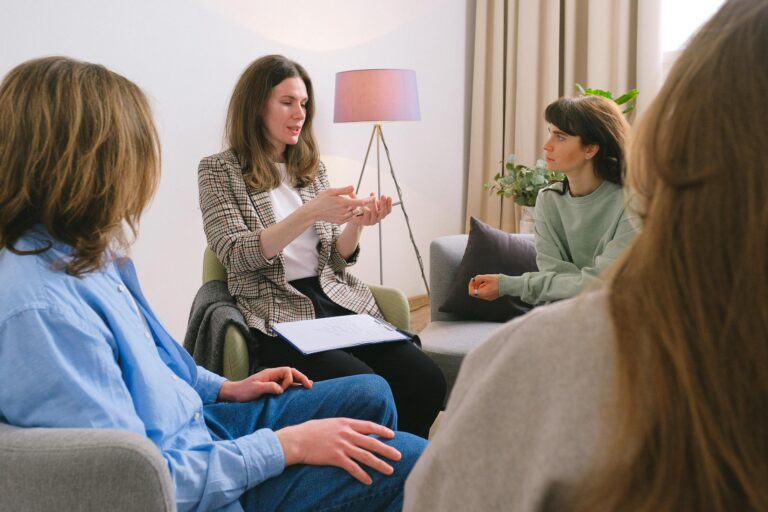

Funny images of parents setting boundaries have become a cultural shorthand for something real: the moment a caregiver stops performing endless availability and starts protecting their own inner quiet. These images resonate because they capture a truth most parents feel but rarely say out loud, that loving your children fiercely and needing space from them are not contradictions.
If you laugh at a meme showing a parent hiding in the bathroom with a glass of wine and a “Do Not Disturb” sign, you’re not laughing at bad parenting. You’re recognizing yourself. And if you’re an introverted parent, that recognition runs even deeper than the joke.

Parenting as an introvert means managing a social battery that gets depleted not just by strangers at parties, but by the people you love most in the world. That’s a complicated thing to sit with. The humor in boundary-setting memes gives us permission to acknowledge the exhaustion without guilt, and that permission matters more than most people realize. If you want to understand the full picture of how introverts and highly sensitive people manage energy at home and beyond, our Energy Management and Social Battery hub is a good place to start.
Why Do Boundary Memes Hit So Hard for Introverted Parents?
There’s a specific flavor of exhaustion that comes from being a parent who processes the world internally. My kids are grown now, but I remember the season of young children with startling clarity. Running an agency during the day meant I was “on” for hours, managing client calls, creative reviews, account teams, and the general noise of an open-plan office. By the time I walked through my front door, I had almost nothing left.
What’s your personality type?
Take our free 40-question assessment and get a detailed personality profile with dimension breakdowns, context analysis, and personalised insights.
Discover Your Type8-12 minutes · 40 questions · Free
My children didn’t know that, of course. They saw Dad arriving home and wanted to show me things, talk over each other, ask questions, and be near me. Which was wonderful. And also, genuinely hard. I wasn’t being a bad father in those moments when I needed ten minutes alone before dinner. I was being a depleted human being who happened to be wired in a way that made noise and social input accumulating all day feel physically heavy by evening.
That’s why the funny images land. They’re not really about parenting failure. They’re about the gap between what we feel we should be able to give and what we actually have in reserve. Psychology Today has explored why socializing drains introverts more than extroverts, and the core of it comes down to how our nervous systems process stimulation. For introverts, even joyful, loving interaction draws on a finite resource.
A meme of a parent hiding behind a locked door with a caption about “me time” isn’t dark humor. It’s an honest snapshot of someone whose tank is running low, and who has finally decided that’s okay to admit.
What Makes Parenting Boundaries Different From Other Boundaries?
Setting limits with a colleague or a difficult client is one thing. I got reasonably good at that over the years. When a Fortune 500 client wanted to schedule a fourth revision call in a single week, I learned to push back professionally, to protect my team’s capacity and my own ability to think clearly. That kind of limit-setting felt legitimate because the business case was obvious.
Parenting limits feel different because the emotional stakes are entirely personal. When you tell a child “I need quiet time right now,” there’s no business case to hide behind. You’re just a parent saying: I love you and I need a moment away from you. That sentence can feel almost impossible to say without guilt flooding in immediately afterward.
Highly sensitive parents carry an added layer here. Many introverts also identify as highly sensitive people, and the overlap between those two experiences creates a particular kind of overwhelm. Introverts get drained very easily, and when you add sensory sensitivity to that equation, the daily texture of parenting, the noise, the physical contact, the constant need for response, can become genuinely taxing in ways that are hard to explain to someone who doesn’t experience it.
The funny images of parents setting limits work because they externalize something internal. They say: this is real, other people feel it, and it’s okay to laugh at how hard it is to protect your own quiet when small people are determined to prevent exactly that.
Are These Memes Actually Teaching Kids Something Useful?
Here’s something I didn’t fully appreciate when my children were young: the moments when I communicated that I needed quiet time were actually modeling something valuable. Children who watch a parent say “I need thirty minutes to myself and then I’ll be ready to play” are watching someone demonstrate emotional self-awareness. They’re seeing that adults have needs, that those needs are worth honoring, and that asking for space isn’t the same as withdrawing love.
The funny images circulating online often show parents in exaggerated scenarios, barricaded behind laundry piles, wearing noise-canceling headphones while chaos swirls around them, holding signs that say “Out of Office” while sitting in their own kitchen. The humor is in the extremity. But underneath the joke is a real behavior: a parent communicating their limits, even imperfectly, even with a laugh.
For introverted parents who struggle with the guilt of needing solitude, framing these moments as modeling rather than failing can genuinely shift how the behavior feels. You’re not hiding from your children. You’re showing them that self-awareness and self-care are adult skills worth developing.
Highly sensitive parents often find the sensory dimensions of parenting particularly challenging. Managing HSP noise sensitivity becomes a daily practice when you have a household that generates constant sound, and the strategies that work aren’t always visible to the outside world. Sometimes the “funny” behavior in those memes, the parent retreating to a quiet room, the headphones, the closed door, is actually a sophisticated coping mechanism dressed up in humor.
What Does the Science Say About Parental Limits and Child Wellbeing?
There’s a meaningful body of work suggesting that children benefit from having parents who model healthy self-regulation rather than endless self-sacrifice. Research published through PubMed Central has examined how parental wellbeing connects to child outcomes, and the picture is fairly consistent: parents who protect their own mental and emotional health tend to be more present and responsive when they are available, compared to parents who run themselves into the ground and show up depleted.
This isn’t a license for neglect. It’s a recognition that the math of parenting isn’t simply “more hours equals more love.” Quality of presence matters, and you cannot manufacture quality presence when your internal resources are exhausted.
For introverted and highly sensitive parents, this is worth sitting with. The guilt that comes from needing solitude is often rooted in a false equation: that good parenting means constant availability. That equation doesn’t hold up. Truity’s exploration of why introverts need downtime gets at something fundamental here. Solitude isn’t self-indulgence for introverts. It’s maintenance.
The funny images of parents setting limits are funny precisely because they show people in the act of doing something their guilt tells them they shouldn’t be doing. But the joke has a serious undercurrent: these parents are right to protect their reserves, even when it looks ridiculous from the outside.
How Do Highly Sensitive Parents Experience the Physical Side of Parenting?
One dimension of parenting that doesn’t get enough honest attention is the physical sensory load. Young children want to be held, touched, climbed on, and physically present with you in a way that can feel overwhelming to someone who processes tactile input intensely. I’ve spoken with many parents over the years, particularly mothers, who described feeling “touched out” by the end of the day, not because they didn’t love their children, but because their nervous systems had simply reached capacity.
Understanding HSP touch sensitivity and tactile responses puts language to something many parents experience but can’t quite name. When a toddler has been in your lap for three hours and your skin feels like it needs a break from being touched, that’s not a character flaw. That’s a sensory system doing exactly what it’s wired to do.
The visual environment of a family home adds another layer. Toys on every surface, bright colors, screens, and the general visual density of a household with children can contribute to sensory overload in ways that are easy to overlook. HSP light sensitivity is a real factor for many parents who find themselves seeking dimmer, quieter spaces as the day progresses, not because they’re antisocial, but because their visual processing system needs relief.
The memes that show parents retreating to a dark, quiet bathroom are funnier when you understand the sensory reality behind them. That bathroom isn’t just a hiding spot. For a highly sensitive parent, it might be the only low-stimulation environment in the entire house.
What Are the Most Relatable Funny Images of Parents Setting Boundaries?
The most widely shared images in this category tend to fall into a few recognizable archetypes. Each one captures a specific flavor of the experience.
The “Locked Door” image is perhaps the most universal. A parent on the other side of a closed door, often with a beverage, while small hands appear underneath the gap. The caption usually involves some version of “five minutes of peace.” The humor is in the futility: the door doesn’t actually work, the hands always find a way in, but the parent tried. The trying matters.
The “Out of Office” variation shows a parent who has mentally clocked out while physically still present. Maybe they’re staring into the middle distance while a child talks. Maybe they’ve put on a movie for the third time that day without apology. The caption acknowledges the checked-out state without shame. Many introverted parents recognize this as the moment after the social battery has simply run dry.
The “Hiding Spot” image is a classic: a parent physically concealed somewhere in the house, behind the couch, in a closet, in the car in the driveway, carving out a few minutes of genuine solitude. The absurdity of hiding in your own home is the joke. But the impulse behind it is completely understandable to anyone who has ever needed silence badly enough to seek it creatively.
Then there’s the “Negotiation” image, where a parent has posted an actual written sign or rule, something like “Quiet Hours: 8-9 PM” or “Knock Before Entering” with a hand-drawn chart. These images are funny because they show a parent applying workplace logic to domestic chaos. As someone who spent decades in agency environments creating systems and processes, I find these particularly endearing. The impulse to systematize your own recovery time is deeply familiar.
Managing the stimulation load of a full household requires real strategy. Finding the right balance with HSP stimulation is something parents rarely discuss openly, but the parents in these images are doing it in real time, imperfectly, humorously, and honestly.

How Can Introverted Parents Build Boundaries That Actually Hold?
The funny images are a release valve, but they’re also a symptom. When parents are consistently reduced to hiding in bathrooms for five minutes of peace, something structural needs to shift. The humor is real, and so is the underlying depletion.
One thing that helped me during the years when my children were young was treating my recovery time as non-negotiable rather than aspirational. In the agency world, I learned that if I didn’t block time for strategic thinking, that time would always get consumed by something else. The same principle applies at home. If solitude isn’t scheduled, it won’t happen. It will be perpetually deferred in favor of one more request, one more need, one more moment of availability.
Communicating those needs clearly to a partner, if you have one, changes the dynamic significantly. I wasn’t always good at this early on. I would reach a point of depletion and then become irritable, which was less effective than simply saying “I need an hour on Saturday morning that’s mine.” The irritability was a symptom of unspoken needs. The direct request was a limit. One of those approaches worked.
For parents without partners, or those parenting solo, the challenge is steeper. Building recovery into the structure of the day rather than hoping for it to appear spontaneously becomes even more important. Quiet time for children, even when they’re past napping age, can be framed as a family practice rather than a punishment. Many families establish a daily quiet hour where everyone, including parents, has independent time. This normalizes solitude as a household value rather than something a parent has to steal.
Protecting your energy reserves as an HSP requires this kind of structural thinking. Reactive recovery, grabbing five minutes when you can, is better than nothing. Proactive recovery, building space into the day before you reach empty, is genuinely sustainable.
The National Institute of Mental Health consistently emphasizes the connection between self-care practices and mental health outcomes. For introverted parents, this isn’t abstract wellness advice. It’s a practical matter of having enough internal resource to show up for the people who need you most.
What Happens When Guilt Undermines the Boundary?
The funny images work partly because they acknowledge the guilt. The parent isn’t depicted as serene and confident in their solitude. They’re hiding, slightly frantic, hoping not to be found. The guilt is baked into the humor. And for many introverted parents, that guilt is the actual obstacle, not the logistics of finding time alone.
Guilt about needing space from your children often comes from a cultural script that equates good parenting with self-erasure. The most devoted parent is the one who gives everything, holds nothing back, and is always available. That script doesn’t account for introversion. It doesn’t account for sensory sensitivity. It doesn’t account for the reality that neurological differences in how people process stimulation are real and meaningful, not excuses.
When I managed creative teams at the agency, I had several team members who were visibly introverted. One account director in particular was exceptional at her work but would become noticeably less effective after back-to-back client meetings. I learned to build buffer time into her schedule, not as an accommodation but as a performance strategy. She did better work when she had space to process. Everyone benefited.
The same logic applies at home. A parent who has protected enough internal quiet to feel genuinely present is more valuable to their children than a parent who has given everything and is running on fumes. The guilt that says otherwise is not wisdom. It’s a script worth questioning.
Psychology Today’s overview of introversion frames it clearly: introversion is a stable personality trait, not a mood or a phase. Building a life, including a parenting life, that works with your wiring rather than against it isn’t selfishness. It’s good design.
Can Humor Actually Help Introverted Parents Set Better Limits?
There’s something genuinely useful about the humor in these images beyond the laugh itself. Humor creates permission. When you see a meme that captures your exact experience and you laugh, something loosens. The shame around needing solitude softens a little. The sense that you’re the only one who feels this way dissolves.
That softening can be the first step toward actually asking for what you need. Many introverted parents I’ve spoken with describe a progression: first they find the meme funny, then they share it with their partner as a way of communicating something they couldn’t say directly, then they start having actual conversations about what recovery looks like for them. The image does the opening work.
Humor also makes the limit-setting itself more palatable for children. A parent who announces “I’m going into the Quiet Cave for twenty minutes and then I’ll be back” with a theatrical flourish is communicating the same need as a parent who retreats silently and looks stressed. But the first version lands differently. Children can work with playful. They can understand a game. The limit is the same; the delivery changes how it’s received.
I used versions of this at work too. When I needed uninterrupted time to think through a strategy, I’d tell my team “I’m going dark for an hour” with enough lightness that it didn’t feel like a rebuke. The limit was real. The tone made it workable. The same principle scales down to parenting a six-year-old remarkably well.
The funny images of parents setting limits are, at their core, images of people learning to be honest about what they need. The humor is the wrapper. The content is something more important: the recognition that you are allowed to have a self, even when you are also someone’s parent.
There’s much more to explore about how introverts and highly sensitive people manage their energy across all areas of life. Our Energy Management and Social Battery hub covers the full range of strategies and insights for protecting what you have and recovering what you’ve spent.
About the Author
Keith Lacy is an introvert who’s learned to embrace his true self later in life. After 20 years in advertising and marketing leadership, including running agencies and managing Fortune 500 accounts, Keith now channels his experience into helping fellow introverts understand their strengths and build fulfilling careers. As an INTJ, he brings analytical depth and authentic perspective to every article, drawing from both professional expertise and personal growth.
Frequently Asked Questions
Why do funny images of parents setting boundaries resonate so strongly with introverted parents?
They capture something introverted parents rarely feel permission to say directly: that loving your children and needing space from them are not contradictions. The humor creates a shared acknowledgment of the depletion that comes from constant availability, and that acknowledgment can reduce the guilt that prevents introverted parents from actually protecting their recovery time.
Is it harmful to children when parents set limits around alone time?
No. Children benefit from parents who model healthy self-regulation and emotional self-awareness. A parent who communicates “I need quiet time and then I’ll be present with you” is demonstrating that adults have needs worth honoring, that space and love are not opposites, and that asking for what you need is a skill rather than a failure. Quality of presence matters more than quantity of availability.
How do highly sensitive parents experience the physical demands of parenting differently?
Highly sensitive parents often process tactile input, sound, and visual stimulation more intensely than average. The physical closeness that young children require, being held, touched, and climbed on throughout the day, can lead to sensory overload that feels genuinely exhausting rather than simply tiring. This isn’t a character flaw or a sign of inadequate love. It’s a neurological reality that benefits from being named and planned around rather than pushed through.
What’s a practical way for introverted parents to build recovery time into their day?
Treat solitude as scheduled rather than aspirational. If quiet time isn’t built into the structure of the day, it will consistently be displaced by other needs. Establishing a daily quiet hour for the whole household, communicating recovery needs clearly to a partner, and using playful framing with children (“I’m recharging for twenty minutes”) all help make the limit sustainable rather than something you have to steal when no one is looking.
Can sharing these funny parent memes actually improve communication about limits in a household?
Yes, and many parents find this a useful first step. Sharing a meme that captures your experience with a partner can open a conversation that direct language makes harder. The humor reduces defensiveness and creates a shared frame of reference. From there, more direct conversations about what recovery looks like, what each parent needs, and how to structure the household to support those needs become easier to have.