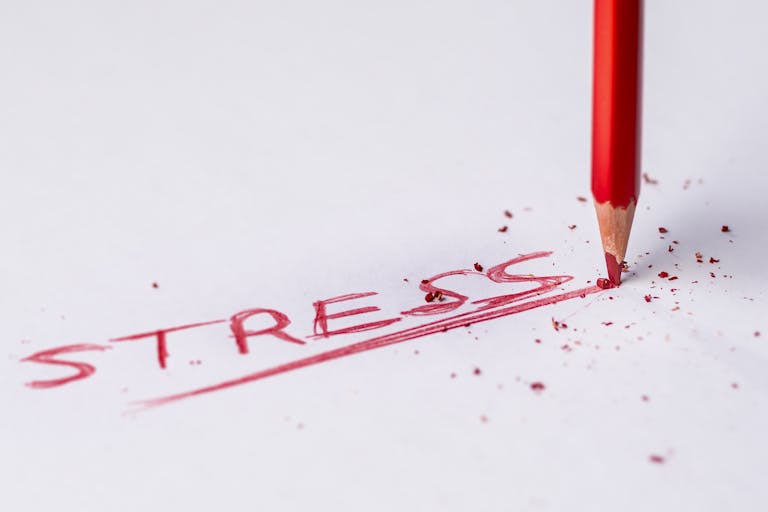

Setting boundaries is one of the most quietly radical acts an introvert can practice. These “it’s ok to set boundaries” quotes aren’t just reassuring words to pin on a vision board. They carry a specific kind of permission that many of us never received growing up, the permission to protect your energy, your time, and your sense of self without owing anyone an explanation.
Boundaries aren’t walls. They’re the honest communication of where you end and where someone else begins. And for those of us who feel everything a little more deeply, that distinction can be the difference between thriving and running on empty.

Much of what I write here connects to a broader framework I think about constantly: how introverts manage the energy they have, and what happens when they stop protecting it. Our Energy Management and Social Battery hub digs into that territory from multiple angles, and the concept of boundaries sits right at the center of it. You can’t manage your social battery if you haven’t first decided what’s allowed to drain it.
Why Do Quotes About Boundaries Hit Differently for Introverts?
There’s something about finding the right words for an experience you’ve been living wordlessly for years. A well-chosen quote doesn’t just describe a feeling. It validates it. And for introverts, who often process emotion internally and quietly before they ever speak it aloud, that validation can arrive with surprising force.
What’s your personality type?
Take our free 40-question assessment and get a detailed personality profile with dimension breakdowns, context analysis, and personalised insights.
Discover Your Type8-12 minutes · 40 questions · Free
I remember sitting in a client debrief years ago, probably my twelfth meeting of the week, listening to a brand director explain why the campaign we’d spent three months developing needed to be “reimagined” by Friday. My team looked at me. I smiled, nodded, and said we’d make it work. On the inside, something went very quiet in a way that wasn’t peaceful. It was depletion. I had no boundary around my capacity, no language for it, and no framework that told me protecting that capacity was acceptable.
What I needed wasn’t a strategy. What I needed was someone to tell me it was okay to say no. Quotes do that. They hand you language for something you already know but haven’t been able to say out loud.
There’s also a neurological dimension worth acknowledging. Psychology Today has explored why introverts experience social interaction as more energetically costly than their extroverted counterparts. When your nervous system processes stimulation more thoroughly, boundaries aren’t a preference. They’re a physiological necessity.
Quotes That Reframe Boundaries as Strength, Not Selfishness
The guilt around setting limits is real. Most of us were raised in environments that rewarded availability and penalized withdrawal. So before we get into specific quotes, let’s name what these words are actually doing: they’re dismantling a story you were told about yourself that was never true.
“Daring to set boundaries is about having the courage to love ourselves, even when we risk disappointing others.” Brené Brown wrote that, and it lands because it reframes the whole conversation. Setting a boundary isn’t an act of rejection. It’s an act of self-respect.
“You get what you tolerate.” That one came from Henry Cloud, and I’ve thought about it often in the context of agency life. Every time I tolerated a client who called at 11 PM, I was setting a standard, just not the one I wanted. The boundary I failed to set was the one that got enforced anyway, just by someone else’s preferences instead of my own.
“No is a complete sentence.” That phrase, often attributed to Anne Lamott, is deceptively simple. For introverts who tend toward over-explanation and over-justification, it’s practically revolutionary. You don’t owe a paragraph. You don’t owe a reason. The word itself is sufficient.
“Givers need to set limits because takers rarely do.” That one is from Rachel Wolchin, and it speaks directly to a pattern I watched play out in every agency I ran. The people most likely to be exploited were the ones most likely to keep giving. The takers weren’t always malicious. Often they simply occupied the space that was offered to them.

It’s worth noting that many introverts who also identify as highly sensitive people carry an additional layer of complexity here. The experience of how easily an introvert gets drained becomes even more acute when your nervous system is wired to process stimulation at a deeper level. Quotes about boundaries aren’t just motivational for this group. They’re survival tools.
What Do These Quotes Actually Give You Permission to Do?
Permission is the operative word. Many introverts intellectually understand that boundaries are healthy. They’ve read the books, listened to the podcasts, nodded along in therapy. And then someone asks them to stay late, or attend one more event, or be available on a weekend, and the intellectual understanding evaporates.
Quotes work differently than arguments. They bypass the analytical mind and land somewhere more visceral. They give you something to hold onto in the moment when your reasoning gets overridden by guilt or social pressure.
“Boundaries are a part of self-care. They are healthy, normal, and necessary.” Doreen Virtue wrote that. What strikes me about it is the word “normal.” So much of what introverts experience gets pathologized or treated as a deficiency. Framing boundaries as normal and necessary is a quiet correction to a very loud cultural message.
“When we fail to set boundaries and hold people accountable, we feel used and mistreated.” Brené Brown again. And she’s right. The resentment that builds when you don’t protect your limits isn’t just unpleasant. It’s information. It’s your nervous system telling you something was taken that you didn’t freely give.
For those who are highly sensitive, this resentment compounds quickly. Managing energy as an HSP requires a level of intentionality that goes beyond what most people think of as self-care. Boundaries aren’t optional additions to the routine. They’re the foundation the whole structure rests on.
“Compassionate people ask for what they need. They say no when they need to, and when they say yes, they mean it.” That’s another Brené Brown observation, and it reframes something important: boundaries aren’t the opposite of compassion. They make genuine compassion possible. When you say yes from a place of actual willingness rather than fear or obligation, that yes means something.
Quotes That Speak to the Specific Cost of Not Having Them
There’s a version of this conversation that stays inspirational and motivational. And then there’s the version that gets honest about what happens when boundaries are absent. Both matter. But the second one is often more useful.
“If you don’t set healthy boundaries, people will take as much as you give.” That one circulates without a clear attribution, but its truth is verifiable from lived experience. Availability without limits doesn’t generate gratitude. It generates expectation.
I watched this play out in an account I managed for a major retail brand. We were responsive to the point of absurdity, answering emails at midnight, revising decks over holidays. When we finally had a week where we weren’t immediately available, the client complained we’d become “difficult to work with.” We hadn’t changed. The baseline had shifted because we’d set it too low.
“The most important distinction anyone can ever make in their life is between who they are as an individual and their connection with others.” That comes from Anne Katherine’s work on boundaries, and it points to something that introverts often understand intuitively but struggle to act on: you are a distinct person with distinct needs, separate from the relationships and roles you inhabit.
For those with sensory sensitivities, this distinction becomes even more concrete. Noise sensitivity and light sensitivity are physical experiences that require physical boundaries, not just emotional ones. Saying “I need a quieter environment to do my best work” is a boundary. Saying “I can’t attend that event because the venue will be overwhelming” is a boundary. Both are legitimate. Both are acts of self-knowledge.
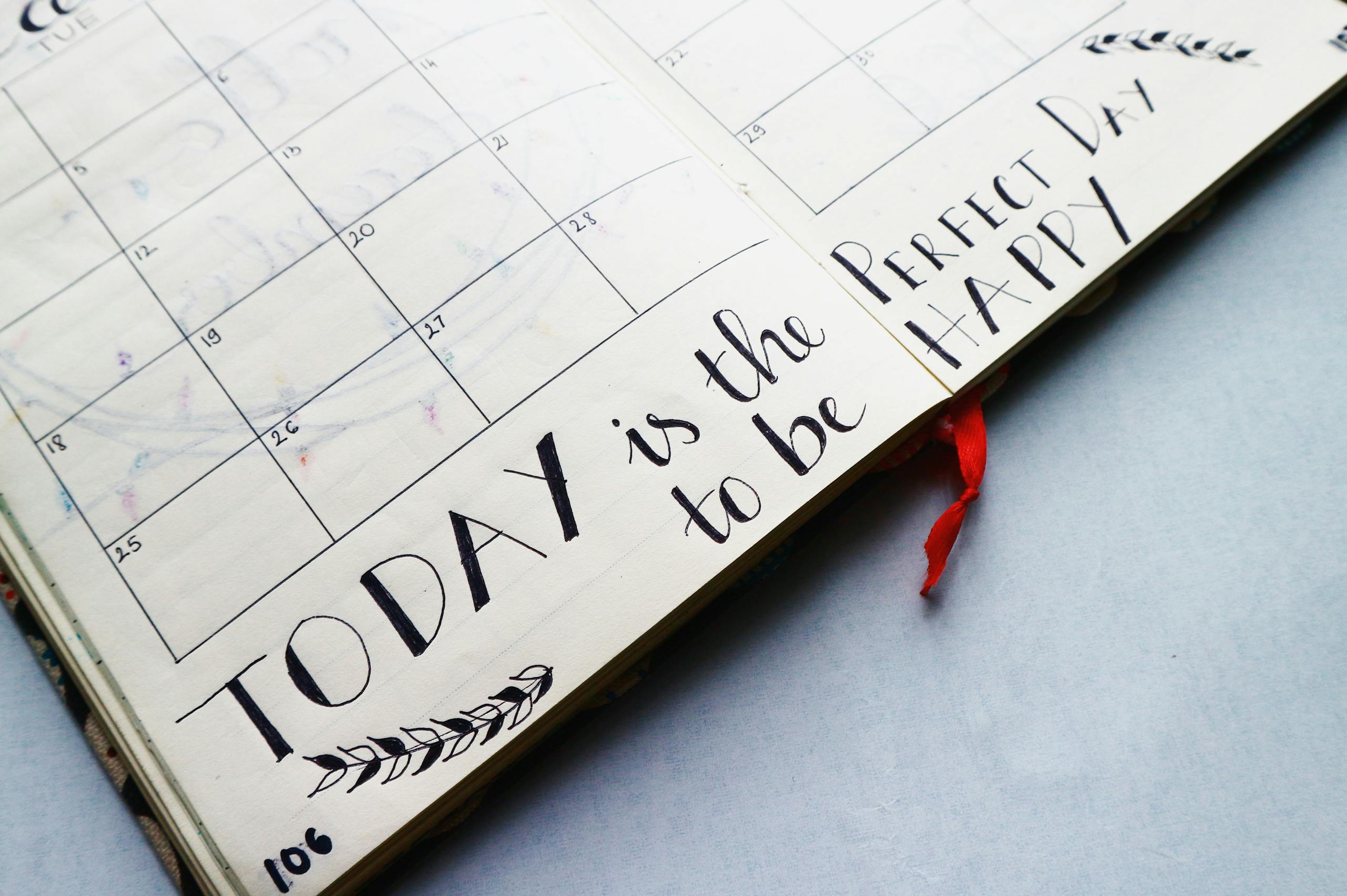
“Love yourself enough to set boundaries. Your time and energy are precious. You get to choose how you use it.” Oprah Winfrey said that, and while it sounds simple, the phrase “you get to choose” carries enormous weight for people who’ve spent years operating as though their time belonged to everyone else first.
Quotes for the Moment When Someone Pushes Back
Setting a boundary is one thing. Holding it when someone challenges it is another. This is where most introverts, in my experience, struggle most. The initial “no” comes out. Then comes the disappointment, the negotiation, the guilt-inducing silence. And the boundary quietly dissolves.
Having words ready for that moment matters. Not scripts, but anchors. Phrases that remind you why you drew the line in the first place.
“People who violate your boundaries are telling you what they think of your limits.” That observation from unknown origins is bracing but clarifying. When someone pushes back against a boundary you’ve set, their reaction is data about them, not evidence that your boundary was wrong.
“You are not responsible for other people’s reactions to your boundaries.” This one circulates widely in therapeutic communities, and for good reason. The guilt that follows boundary-setting often comes from absorbing someone else’s emotional response as your problem to solve. It isn’t. Their reaction belongs to them.
There’s a physiological reality underlying why pushback feels so destabilizing. Research published in PubMed Central has examined how social rejection activates similar neural pathways as physical pain. When someone expresses displeasure at your boundary, your nervous system registers it as a genuine threat. That’s not weakness. That’s biology. Knowing that can make the discomfort easier to sit with.
“A boundary is not something you do to someone. It’s something you do for yourself.” That reframe is essential. Boundaries aren’t punishments or power moves. They’re maintenance. They’re the equivalent of saying “I need to sleep” or “I need to eat.” The person who objects to you sleeping isn’t someone whose objection you should accommodate.
For those who experience tactile sensitivity, this becomes almost literal. Saying “I’d prefer not to hug” or “I need some physical space” is a boundary that some people take personally. The quote above is a useful internal anchor in those moments: this is something you’re doing for yourself, not something you’re doing to them.
Quotes That Redefine What Saying Yes Actually Means
One of the less-discussed effects of consistent boundary-setting is what it does to your yes. When you stop saying yes out of obligation, your yes becomes meaningful again. People around you begin to understand that when you agree to something, you actually mean it.
“Every time you say yes to something you don’t want, you’re saying no to something you do.” That’s a paraphrase of a concept Paul Coelho has touched on, and it reframes the opportunity cost of boundaryless living in concrete terms. Every overextended evening is an evening you didn’t spend recovering. Every meeting you attended out of guilt is a meeting that displaced something that mattered to you.
In my agency years, I watched this pattern destroy genuinely talented people. Not dramatically. Gradually. They said yes to everything because they wanted to be seen as team players, as dependable, as easy to work with. And slowly, the things that made them exceptional, their creativity, their depth, their capacity for original thought, got crowded out by the accumulated weight of obligations they’d never actually chosen.
The science of why this happens is worth understanding. Truity’s exploration of why introverts need downtime points to how the introvert brain processes experience differently, requiring genuine restoration time rather than simply switching activities. When that restoration gets consistently displaced by obligations, the deficit compounds.

“Saying no is an act of love, both toward yourself and toward the person you’re saying it to.” That one requires sitting with. Saying no to something you can’t genuinely give is more honest than saying yes and delivering something diminished. The person receiving your reluctant yes often senses the reluctance. Your honest no respects them more than your resentful yes.
Quotes for When You’re Still Learning to Believe You Deserve Them
Some people read quotes about boundaries and feel immediately affirmed. Others read the same words and feel a quiet, persistent voice saying “that applies to everyone except me.” If you’re in the second group, this section is for you.
The belief that you don’t deserve limits, that your needs are less legitimate than other people’s, often has deep roots. It’s not a character flaw. It’s usually a learned response to environments that rewarded self-erasure.
“You deserve to be in relationships where you don’t have to shrink yourself.” That’s a sentiment shared widely in therapeutic and self-help spaces, and it speaks to something introverts encounter constantly: the pressure to perform extroversion, to be more available, more enthusiastic, more present than their energy actually allows. Shrinking yourself to fit someone else’s comfort is not a relationship. It’s a performance.
There’s a meaningful connection here to how highly sensitive people experience stimulation. Finding the right balance of stimulation isn’t about avoiding life. It’s about understanding your actual threshold and respecting it, which is itself a form of boundary-setting. You’re not broken for needing less. You’re honest about what you need.
“You are allowed to be both a masterpiece and a work in progress simultaneously.” Sophia Bush said that, and while it’s not specifically about boundaries, it speaks to the perfectionism that often underlies boundary resistance. You don’t have to have this completely figured out to begin. You can be imperfect at setting limits and still be worth protecting.
“Boundaries are the distance at which I can love you and me simultaneously.” Prentis Hemphill’s words on this are among the most elegant I’ve encountered on the topic. They reframe the entire premise: a boundary isn’t a rejection of connection. It’s the condition that makes genuine connection sustainable.
That framing changed something for me personally. As an INTJ, I’d always thought of boundaries in fairly transactional terms: protect your energy, maintain your effectiveness, stay functional. Hemphill’s framing added something I hadn’t considered. Boundaries protect the relationship itself. They make it possible to stay present without resentment.
There’s real evidence that the relationship between social connection and personal wellbeing is more nuanced than simple availability. A study published in PubMed Central examined how the quality of social connections, rather than quantity or frequency, correlates with psychological wellbeing. Boundaries protect quality. They make depth possible by preventing the kind of depletion that turns connection into obligation.
How to Actually Use These Quotes (Not Just Read Them)
A quote you read once and forget is just entertainment. A quote that changes your behavior is a tool. The difference lies in how you engage with it.
Write one down somewhere you’ll encounter it when you’re under pressure. Not on a Pinterest board you never open. On a sticky note near your desk. In a note on your phone you can pull up before a difficult conversation. The goal is retrieval at the moment of need, not passive inspiration.
Connect the quote to a specific situation. “No is a complete sentence” is useful in the abstract. It’s more useful when you’ve already identified the specific person or context where you tend to over-explain and over-justify. Pair the quote with the situation and you’ve created a personal anchor.
Say the quote out loud. This sounds odd, but it matters. Many introverts process language deeply and internally. Speaking words aloud, even privately, engages a different kind of processing. The words become more real, more owned, more available when you need them.
Notice your resistance to specific quotes. If a particular quote makes you feel defensive or dismissive, that’s worth examining. The resistance often points to exactly where your boundary work needs to happen. “You are not responsible for other people’s reactions to your boundaries” is a quote that makes a lot of people uncomfortable, precisely because they’ve organized their lives around managing other people’s reactions.
There’s also a broader context worth considering. Research published in Springer’s public health journal has examined how social boundary practices relate to mental health outcomes. The data points in a consistent direction: people who maintain clearer personal limits tend to report better psychological wellbeing over time. The quotes aren’t just comforting. They’re pointing toward something with real consequences.

Finally, give yourself permission to evolve. The quote that resonates most right now may not be the one that serves you in two years. Boundaries aren’t a destination. They’re a practice. The language you need shifts as you do.
There’s a reason this topic sits at the intersection of introvert identity and mental health. Protecting your energy isn’t vanity or selfishness. It’s the prerequisite for everything else you want to do, create, and give. Harvard Health’s guidance on socializing for introverts reinforces what many of us already sense: sustainable social engagement requires intentional energy management, and that management begins with limits.
Spend more time with the full range of what energy management looks like in practice by exploring our Energy Management and Social Battery hub, where boundaries are just one piece of a much larger picture.
About the Author
Keith Lacy is an introvert who’s learned to embrace his true self later in life. After 20 years in advertising and marketing leadership, including running agencies and managing Fortune 500 accounts, Keith now channels his experience into helping fellow introverts understand their strengths and build fulfilling careers. As an INTJ, he brings analytical depth and authentic perspective to every article, drawing from both professional expertise and personal growth.
Frequently Asked Questions
Why do introverts find it harder to set boundaries than extroverts?
Introverts often process social experiences more deeply and are more attuned to the emotional impact their words have on others. This sensitivity can make the prospect of disappointing someone feel disproportionately costly. Combined with a cultural tendency to reward availability and penalize withdrawal, many introverts develop a pattern of prioritizing others’ comfort over their own limits. It’s not a character flaw. It’s a learned response to an environment that didn’t validate their needs.
Can quotes about boundaries actually change behavior, or are they just motivational?
Quotes work best as anchors rather than instructions. They give you language for an experience you already have but may struggle to articulate or defend in the moment. When you connect a specific quote to a specific situation where you tend to lose your limits, it becomes a retrieval tool rather than passive inspiration. Writing quotes down, speaking them aloud, and returning to them before difficult conversations all increase their practical usefulness.
Is it selfish to set limits on how much time and energy you give to others?
No. Protecting your energy is the prerequisite for genuine generosity. When you consistently give beyond your actual capacity, what you’re offering isn’t freely given. It’s extracted. The people receiving your depleted yes often sense the depletion. Setting honest limits means that when you do say yes, it carries real weight. Boundaries make authentic generosity possible by preventing the resentment that builds when you give without choosing to.
What do you do when someone gets angry or upset at your boundary?
Someone’s reaction to your boundary is information about them, not evidence that your boundary was wrong. The discomfort of holding a limit while someone expresses displeasure is real and often feels destabilizing, partly because social disapproval activates genuine stress responses in the nervous system. Returning to a specific quote, reminding yourself that you are not responsible for other people’s reactions to your limits, and waiting out the discomfort without rescinding the boundary are all practical strategies. The pushback usually subsides faster than you expect.
How do boundaries connect to energy management for introverts and highly sensitive people?
Boundaries are the structural foundation of energy management. You cannot reliably protect your social battery if you haven’t first decided what you’re willing to let drain it. For highly sensitive people, this connection is even more direct: sensory and emotional stimulation depletes energy at a faster rate, which means the cost of a missing boundary is higher and the recovery time longer. Limits around noise, social duration, physical contact, and emotional availability aren’t preferences. For many sensitive introverts, they’re functional necessities.