

Setting personal boundaries, as Brené Brown frames it, is not about building walls. It is about knowing what you stand for and having the courage to say it out loud. For introverts, that framing changes everything, because the struggle is rarely about knowing where the line is. We feel our limits with uncomfortable precision. The harder part is believing we are allowed to name them.
Brown’s core insight is that boundaries are actually an act of love, a way of protecting the relationship by protecting yourself. That idea landed differently for me than most boundary advice I had encountered. It reframed something I had spent years treating as selfishness into something that looked a lot more like integrity.

Much of what makes boundary-setting so complicated for introverts connects directly to how we manage energy. Our Energy Management and Social Battery hub covers the full terrain of that experience, from the science of why we deplete faster to the practical strategies that actually help. This article focuses on something the hub explores only briefly: what happens when you bring Brené Brown’s framework into contact with the specific emotional architecture of an introverted mind.
Why Does Brown’s Definition of Boundaries Feel So Personal to Introverts?
Brown defines a boundary as simply what is okay and what is not okay. No elaborate script. No confrontation framework. Just clarity about your own values, communicated honestly. For someone who has spent decades in high-output, high-contact professional environments, that simplicity was almost disorienting.
What’s your personality type?
Take our free 40-question assessment and get a detailed personality profile with dimension breakdowns, context analysis, and personalised insights.
Discover Your Type8-12 minutes · 40 questions · Free
Running advertising agencies for over twenty years meant I lived inside a culture that treated availability as a virtue. The expectation was that a good leader was always on, always accessible, always ready to pivot. I absorbed that expectation deeply. So when a client called at 7 PM on a Friday with a “quick thought” that would require the whole team’s weekend, I answered. Every time. Not because I wanted to. Because I had never clearly decided that I didn’t have to.
What Brown helped me see is that I didn’t have a boundary problem. I had a values clarity problem. I hadn’t consciously decided what I stood for, so I defaulted to what the loudest voice in the room expected. For introverts, this is an especially common trap. We process deeply and quietly, which means we often sense that something feels wrong long before we can articulate what or why. That gap between feeling and articulation is where our limits get crossed, repeatedly, while we are still figuring out how to put words to the discomfort.
There is also something in Brown’s framework about the relationship between boundaries and self-worth that resonates at a different frequency for introverts. She argues that people who have difficulty with boundaries often struggle with self-worth, and that the two are deeply connected. Many introverts, particularly those who spent years being told they were too quiet, too serious, or not a team player, carry a subtle but persistent belief that their needs matter less. Saying yes when you mean no becomes a way of earning your place in the room.
What Does It Actually Mean to Set a Boundary From a Place of Self-Respect?
Brown makes a distinction that took me a long time to fully absorb: boundaries are not punishments. They are not withdrawal, cold shoulders, or passive resistance. They are clear, direct statements about what you will and won’t engage with, offered without apology and without cruelty.
That distinction matters enormously for introverts, because our default response to overwhelm often looks like quiet withdrawal. We stop answering emails as quickly. We go a little more internal in meetings. We create distance without explaining why, partly because explaining feels like one more social demand we don’t have the energy to meet. From the outside, that can look like a boundary. From the inside, it is usually just exhaustion.

A genuine boundary, in Brown’s framing, requires two things that introverts often find genuinely difficult: knowing your values well enough to name them, and being willing to say them out loud even when the other person might not like it. That second part is where the vulnerability lives. And Brown is unambiguous about this: you cannot have boundaries without vulnerability. They are the same act.
I remember the first time I told a Fortune 500 client that I wouldn’t be available over a holiday weekend unless there was a genuine emergency. My stomach was in knots. I had rehearsed the sentence probably a dozen times. What I hadn’t expected was how little pushback there actually was. The client said fine and moved on. The catastrophe I had been bracing for didn’t arrive. What arrived instead was a quiet, unfamiliar sense of having told the truth about something that mattered to me. That feeling was worth more than I expected.
Brown’s point is that boundaries are in the end about integrity, about living in alignment with what you actually believe. For introverts who tend to hold strong internal value systems, that framing is clarifying. A boundary isn’t a preference. It’s a principle. And principles are easier to defend than preferences, at least for a mind wired the way mine is.
How Does the Introvert’s Energy System Make Boundary-Setting More Urgent?
There is a physiological dimension to this conversation that Brown doesn’t address directly but that introverts cannot afford to ignore. Our nervous systems process social and sensory input differently. Psychology Today has explored why social interaction drains introverts more than extroverts, pointing to differences in how our brains process dopamine and stimulation. The short version is that what energizes an extrovert genuinely costs an introvert something.
That cost compounds without boundaries. Every meeting that runs long, every after-hours call you take out of guilt, every social obligation you agree to while already depleted, these aren’t just inconveniences. They are withdrawals from a reserve that takes real time to replenish. Introverts get drained very easily, and the pace at which that happens can catch people off guard, including the introverts themselves.
For highly sensitive people, this dynamic is even more pronounced. The sensory and emotional load of a typical workday can be significant before a single difficult conversation has happened. Protecting your energy reserves as an HSP requires a level of intentionality that most workplace cultures don’t naturally support. Boundaries are not optional in that context. They are infrastructure.
What Brown adds to this picture is the emotional cost of not setting boundaries. She argues, and I think she is right, that resentment is what grows in the space where a boundary should have been. I have felt that resentment. It is a slow, quiet thing in the beginning. You tell yourself you’re being flexible, being a team player, being generous. But underneath, something is keeping score. By the time the resentment surfaces, it has usually been building for months.
The agency world gave me a front-row seat to what that buildup looks like in other people. I managed a creative director once, an exceptionally talented woman who never said no to anything. She was the first one in and the last one out. She took every revision, absorbed every client mood, and delivered extraordinary work under conditions that would have broken most people. And then, about three years in, she was gone. Not fired. Just done. She had nothing left. No resentment by that point, just absence. I wish I had known then what I know now about what was actually happening to her energy system.
What Role Does Shame Play in Why Introverts Avoid Setting Boundaries?
Brown’s work on shame is inseparable from her work on boundaries, and this is where her framework becomes particularly relevant for introverts. She defines shame as the fear of disconnection, the belief that if people see who you really are, they won’t want to be around you. Boundaries, because they involve saying no and revealing a limit, can feel like exactly the kind of exposure that triggers that fear.
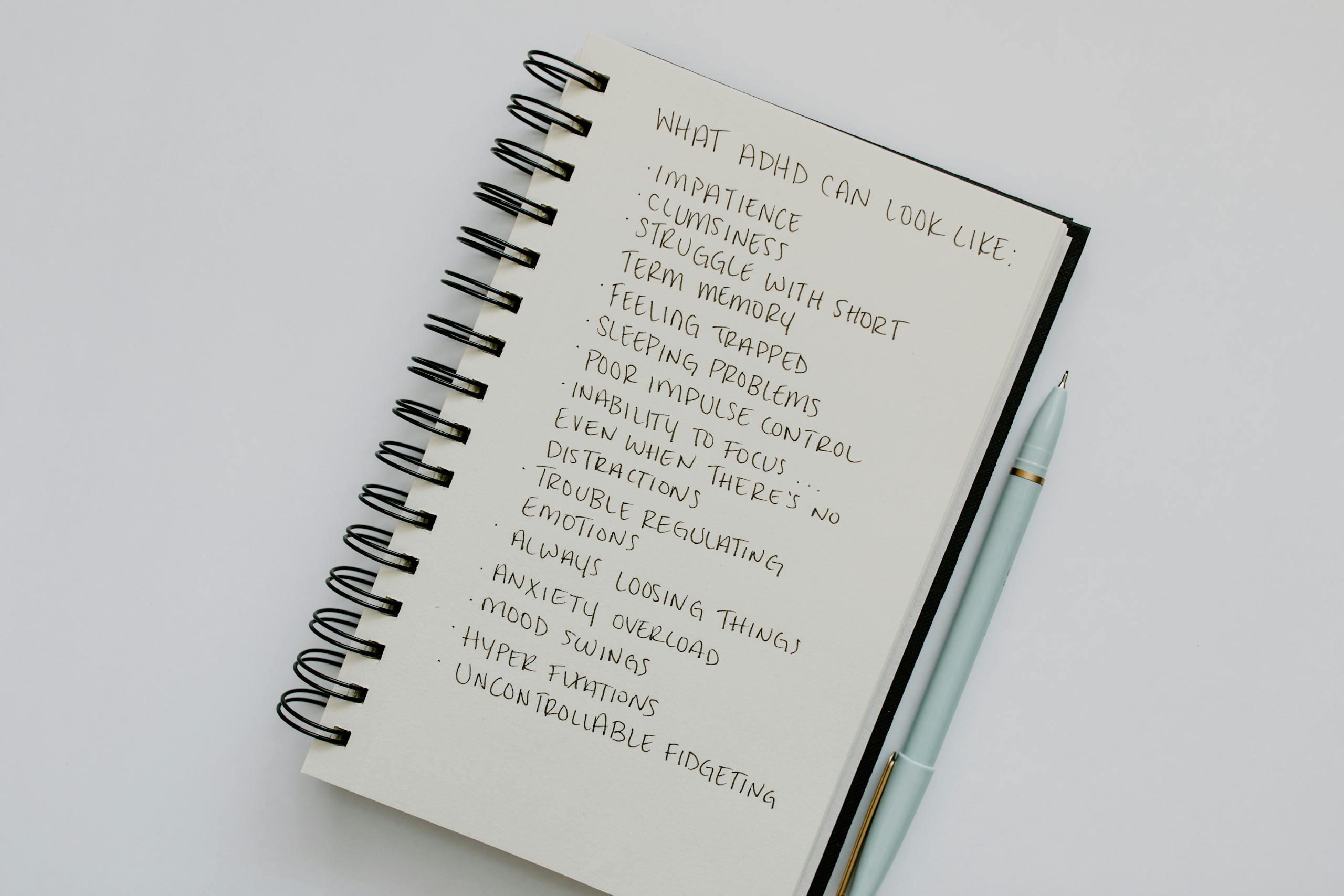
Introverts often carry a specific version of this shame. We have been told, in ways both direct and subtle, that our natural way of being is a problem. Too quiet. Too reserved. Not enough of a presence. Doesn’t speak up in meetings. Needs too much alone time. Those messages accumulate. And when you have internalized the idea that your natural state is already a little too much to ask people to accept, adding a boundary on top of it can feel like pushing your luck.
Brown’s antidote to shame is empathy, specifically self-empathy. She argues that shame cannot survive being spoken and met with understanding. That has practical implications for how introverts approach boundary-setting. Naming the fear, even just to yourself, changes its power. Saying “I’m afraid they’ll think I’m being difficult” is different from just feeling the fear as a formless dread that keeps you from speaking.
Some of the most useful work I’ve done on this has been offline, in the quiet processing time that introverts do naturally. Writing out what I was afraid of, what I actually needed, and what I believed about myself in relation to a specific situation. That kind of internal clarity is something introverts are genuinely good at, when we trust the process. The challenge is that we sometimes use that reflective capacity to talk ourselves out of the boundary rather than into it.
Environmental sensitivity can intensify this dynamic. When you are already managing noise sensitivity in a demanding environment or handling light sensitivity in a workplace that wasn’t designed with you in mind, the baseline cognitive and emotional load is already high. Adding the emotional labor of a difficult boundary conversation to that load requires real energy. Which is exactly why boundaries need to be set before you’re running on empty, not after.
How Do You Know When a Limit Is a Genuine Boundary and Not Just Avoidance?
This is a question I have sat with for a long time, and I think it is one of the more honest things an introvert can ask themselves. There is a real difference between a boundary and avoidance, and the distinction matters because avoidance tends to grow over time while boundaries tend to create clarity.
Brown offers a useful test: a boundary is connected to a value. Avoidance is connected to fear. If you can articulate what you stand for in relation to the limit you’re drawing, it’s probably a boundary. If you’re mostly trying to escape discomfort without knowing what you’re protecting, it may be avoidance dressed up as self-care.
In practice, the line can be blurry. Introverts who are overstimulated often genuinely need to withdraw, and that withdrawal is legitimate. Finding the right balance with stimulation is a real skill, not a character flaw. The question is whether the withdrawal is a conscious, temporary reset or a permanent strategy for avoiding a conversation that needs to happen.
One thing that helped me distinguish between the two was noticing what happened after the withdrawal. After genuine recovery time, I would come back with more clarity and more capacity. After avoidance, I would come back with the same anxiety, plus the added weight of knowing I still hadn’t addressed the thing I was avoiding. That difference in how I felt afterward became a reliable signal.
There is also something worth examining about physical sensitivity in this context. Tactile sensitivity, for instance, is a real and valid experience that many highly sensitive introverts handle daily. When someone’s physical presence or uninvited touch creates genuine discomfort, naming that is a boundary, not avoidance. Brown’s framework supports this: your body’s signals are data. Honoring them is not weakness.

What Does Brown Mean When She Says Boundaries Are the Most Compassionate Thing You Can Do?
This is the piece of Brown’s framework that I find most counterintuitive and most useful. She argues that the most generous people she has studied are also the most boundaried. Not the most accommodating. The most boundaried. Her reasoning is that when you give from a place of genuine choice, the giving is clean. When you give from a place of obligation or fear, resentment builds underneath the generosity and eventually poisons it.
That insight reframed a lot of my agency experience for me. I had always thought of my willingness to absorb client demands as a form of service. And in some ways it was. But it was also a form of self-abandonment that I dressed up as professional dedication. The clients who got my best work weren’t the ones I said yes to most often. They were the ones I was most honest with, including about what I could and couldn’t do.
One client relationship stands out. We had been working together for about four years, and the relationship had gradually become one where their team treated ours as a resource with no off switch. Deadlines were invented to create urgency. Feedback loops were endless. My team was exhausted, and the work was suffering for it. I finally had a direct conversation with the client’s CMO about what a sustainable working relationship needed to look like. I expected friction. What I got was respect. She said she hadn’t realized how the dynamic had shifted and that she appreciated me naming it.
Brown would say that conversation was an act of generosity, not confrontation. By being honest about the limit, I gave the relationship a chance to survive. Saying nothing would have been the unkinder choice, for both of us.
This is especially relevant for introverts who tend to process conflict as something to be avoided at almost any cost. Truity’s exploration of why introverts need downtime touches on how our brains are wired to process deeply, which means conflict doesn’t just happen and pass for us the way it might for someone with a more extroverted processing style. It lingers. It replays. So the instinct to avoid it makes sense. But Brown’s point is that the discomfort of a clear, honest boundary conversation is almost always smaller than the cumulative cost of avoiding it.
How Do You Build the Habit of Boundaries When You’ve Spent Years Without Them?
Brown is clear that boundaries are not a personality trait. They are a practice. That framing matters because it means you are not trying to become a different kind of person. You are building a skill, and skills improve with repetition.
For introverts, the entry point is often internal rather than external. Before you can say a boundary out loud, you need to know what it is. That means spending time with your own values, not in a vague aspirational way, but in a specific, situational way. What does it feel like when a limit gets crossed? Where in your body do you notice it? What story do you tell yourself immediately afterward? Those questions, answered honestly, start to build a map of where your actual limits live.
The next step is practice in low-stakes situations. Not the difficult client conversation or the complicated family dynamic, but the smaller moments. Saying you’d prefer a different meeting time. Asking for a day before responding to a major request. Leaving a social event when you said you would, without inventing an excuse. These small acts of alignment between what you feel and what you say are where the habit gets built.
There is also something to be said for the physical dimension of boundary-setting. Research from PubMed Central on emotion regulation suggests that our ability to make clear decisions is significantly affected by our physiological state. When you are depleted, overstimulated, or running on poor sleep, your capacity for the kind of clear, values-based communication that boundaries require is genuinely reduced. This is not an excuse to avoid difficult conversations indefinitely. It is a reason to take your energy management seriously as a precondition for boundary-setting, not an afterthought.
Some of the neuroscience here is worth understanding. Cornell’s research on brain chemistry and extroversion points to real differences in how introverted and extroverted brains respond to stimulation. Those differences aren’t excuses. They are context. Knowing your own wiring helps you make smarter decisions about when and how to have the conversations that matter.
Brown also emphasizes the importance of what she calls a “boundaries inventory,” a regular practice of checking in with yourself about where you’re feeling resentment, where you’re feeling exhausted, and where you’ve been saying yes when you meant no. For introverts who already tend toward introspection, this kind of self-audit is a natural strength. The challenge is acting on what you find rather than just analyzing it.

What Happens to Relationships When You Start Setting Boundaries?
Brown is honest about this: some relationships don’t survive boundaries. That is a painful truth, but she frames it as information. A relationship that can only exist when you are boundaryless is not a relationship built on mutual respect. It is a relationship built on your compliance.
For introverts, who often invest deeply in a small number of relationships and feel losses acutely, this can feel like a significant risk. The fear is real. But so is the alternative: spending years in relationships that quietly drain you because you’ve never told the truth about what you need.
In my experience, most relationships don’t end when you set a boundary. They shift. Sometimes they get better, because the other person finally understands something about you that they couldn’t see before. Sometimes they get more distant for a while and then find a new equilibrium. The relationships that end were often already in trouble, and the boundary just made visible what was already true.
What tends to improve consistently is your relationship with yourself. There is something that happens when you stop betraying your own limits repeatedly. A kind of internal coherence that is hard to describe but easy to feel. Brown calls it wholeheartedness. I’d call it something closer to peace.
Research on social connection and wellbeing consistently points to the quality of relationships as a stronger predictor of wellbeing than the quantity. Introverts already tend to understand this intuitively. Boundaries are one of the primary ways you protect the quality of the connections you have, by showing up in them honestly rather than strategically.
There is also a modeling effect worth considering, particularly for those in leadership. When I started being more honest about my limits, something shifted in my teams. People who had been quietly burning out started having their own conversations. Not because I told them to, but because they saw that it was possible to be direct about what you needed without the world ending. That ripple effect was something I hadn’t anticipated, and it was one of the more meaningful things I observed in my last years running agencies.
Harvard Health’s guide on socializing for introverts touches on the importance of intentional connection, choosing depth over breadth and protecting the energy required for genuine engagement. Boundaries make that possible. Without them, you end up spreading yourself too thin to be fully present anywhere.
If you want to go deeper on the energy dynamics that make all of this work, the Energy Management and Social Battery hub is a good place to spend some time. It covers the full picture of how introverts can manage their reserves more intentionally, which is the foundation everything else builds on.
About the Author
Keith Lacy is an introvert who’s learned to embrace his true self later in life. After 20 years in advertising and marketing leadership, including running agencies and managing Fortune 500 accounts, Keith now channels his experience into helping fellow introverts understand their strengths and build fulfilling careers. As an INTJ, he brings analytical depth and authentic perspective to every article, drawing from both professional expertise and personal growth.
Frequently Asked Questions
What is Brené Brown’s definition of personal boundaries?
Brown defines a boundary as simply knowing what is okay and what is not okay, and being willing to say so. She frames boundaries not as walls or punishments but as honest expressions of your values. Her core argument is that you cannot be genuinely generous or compassionate without them, because giving without boundaries eventually produces resentment rather than connection.
Why do introverts find it harder to set boundaries than extroverts?
Introverts often sense their limits clearly but struggle to articulate them in the moment, particularly in high-pressure social or professional contexts. Many introverts have also internalized messages that their natural preferences are already too much to ask others to accommodate, which makes adding a boundary feel like an additional imposition. The gap between feeling a limit and finding the words to name it is where most boundary failures happen for introverts.
How does Brown connect boundaries to shame and vulnerability?
Brown argues that setting a boundary is inherently vulnerable because it involves revealing something true about yourself that the other person might not welcome. Shame, which she defines as the fear of disconnection, can make that vulnerability feel dangerous. Her antidote is self-empathy: naming the fear honestly, even just to yourself, reduces its power and makes it easier to speak the boundary clearly and without cruelty.
How can introverts tell the difference between a genuine boundary and avoidance?
Brown’s test is whether the limit connects to a value or to a fear. A genuine boundary protects something you stand for. Avoidance protects you from discomfort without addressing what’s underneath it. A practical signal is how you feel after the withdrawal or the limit: genuine recovery tends to bring clarity and renewed capacity, while avoidance tends to leave the original anxiety intact, plus the added weight of knowing the issue remains unresolved.
What is the connection between energy management and boundary-setting for introverts?
Introverts deplete their social and cognitive energy faster than extroverts in high-stimulation environments, and that depletion directly affects their capacity for clear, values-based communication. Setting boundaries before you are running on empty is significantly easier than trying to set them from a place of exhaustion. This means treating energy management as a precondition for effective boundary-setting, not a separate concern. The two practices reinforce each other: better boundaries protect your energy, and protected energy makes boundaries easier to hold.