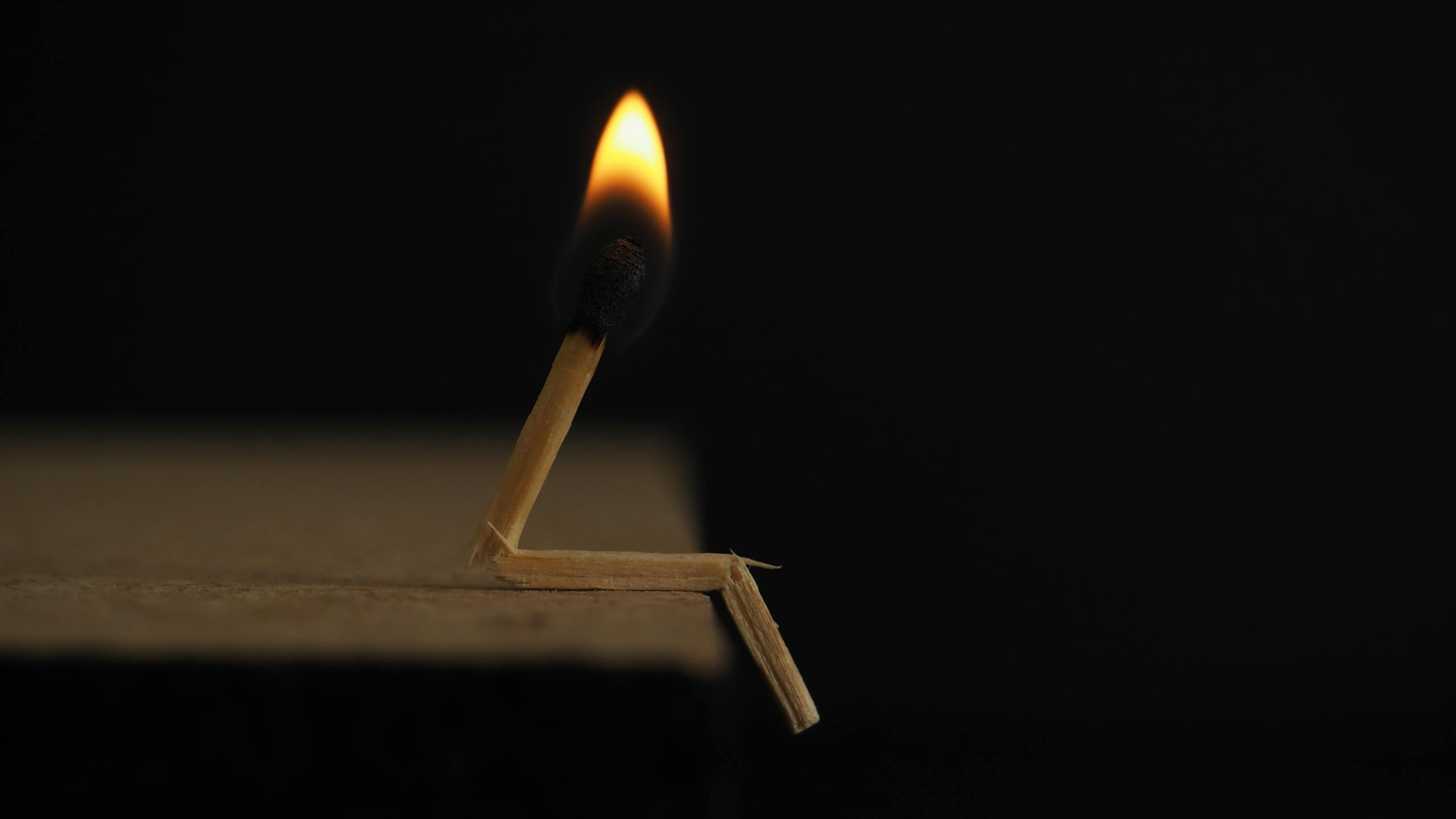

Being socially exhausted is more than feeling tired after a long day. It’s a specific kind of depletion that settles into your bones when you’ve spent too much time in social situations without adequate recovery, leaving you emotionally flat, cognitively foggy, and craving silence the way you’d crave water after a long run in summer heat.
For introverts, social exhaustion isn’t a character flaw or a sign that something is wrong with you. It’s a predictable physiological and psychological response to how your nervous system processes social interaction. Recognizing it, understanding what drives it, and building a recovery plan around your actual wiring, not someone else’s, changes everything about how you function in the world.

Social exhaustion sits at the center of something I’ve spent years thinking about, both from personal experience and from watching it play out in the people around me. Our Energy Management and Social Battery hub covers the full landscape of how introverts manage their reserves, and social exhaustion is one of the most misunderstood pieces of that picture. Because it doesn’t always look dramatic. Sometimes it just looks like going quiet.
What Does Social Exhaustion Actually Feel Like From the Inside?
Most descriptions of social exhaustion focus on what it looks like from the outside. The person who leaves the party early. The employee who goes quiet in the afternoon after a morning packed with meetings. The manager who stops returning calls after a particularly heavy client week.
What’s your personality type?
Take our free 40-question assessment and get a detailed personality profile with dimension breakdowns, context analysis, and personalised insights.
Discover Your Type8-12 minutes · 40 questions · Free
What those descriptions miss is the internal texture of it. And as someone who spent two decades running advertising agencies, where the social demands were relentless and the expectation was that you performed energy you didn’t always have, I got very familiar with that internal texture.
There’s a particular feeling that would set in around day three of a major pitch cycle. We’d have been in client meetings, internal reviews, creative presentations, and team check-ins back to back. By Thursday afternoon, something in my processing would start to slow down. Not my thinking, exactly, but my ability to care about the output of my thinking. I could still generate ideas. I just couldn’t find any reason to be excited about them. That emotional flatness is one of the clearest signs of social depletion that I know.
Other signals show up differently for different people, but a few are remarkably consistent. Conversations start feeling effortful in a way they normally don’t. You find yourself watching people talk rather than actually listening. Small sensory irritations become disproportionately aggravating. The overhead lights feel too bright. The ambient noise in the office becomes almost physically uncomfortable. If any of that resonates, the piece on HSP noise sensitivity and effective coping strategies addresses that specific dimension in more depth, because for many introverts, sensory overload and social exhaustion arrive together.
What’s worth naming clearly is that social exhaustion doesn’t require a bad experience to happen. You can have a genuinely wonderful day full of people you love and conversations that mattered, and still end it completely depleted. The depletion isn’t about quality. It’s about volume and the cumulative cost of sustained social engagement on a nervous system that processes interaction more deeply than average.
Why Does Social Interaction Cost Introverts More Energy Than It Should?
There’s a neurological basis for why social interaction hits introverts differently. The introvert brain tends to use longer, more complex neural pathways when processing external stimuli, running information through areas associated with memory, planning, and internal reflection before generating a response. Research from Cornell University found that dopamine sensitivity plays a significant role here, with extroverts responding more strongly to external reward signals, which means social stimulation genuinely energizes them in ways it doesn’t for introverts.
That deeper processing isn’t a weakness. It’s actually the source of a lot of introvert strengths: the ability to notice what others miss, to hold complexity without rushing to simplify it, to read a room with precision. But it comes with a cost. More processing requires more energy. And when you’re doing that processing continuously across a full day of social engagement, the deficit accumulates faster than most people around you realize.

Psychology Today’s coverage of why socializing drains introverts more than extroverts puts it plainly: it’s not that introverts dislike people. It’s that the neurological work of social engagement draws on reserves that need time and solitude to replenish. That distinction matters enormously, both for how introverts understand themselves and for how the people around them interpret their behavior.
I watched this play out in my own agencies over and over. The introverts on my team weren’t less committed or less capable than their extroverted colleagues. They were often more thorough, more observant, and more reliable in their output. But they needed recovery time that the extroverts didn’t seem to require, and in an environment that measured presence and energy as proxies for engagement, that difference was constantly misread. I’ve written more about this dynamic in the piece on why an introvert gets drained very easily, because understanding the mechanism matters before you can address it effectively.
How Do You Know When You’ve Crossed From Tired Into Genuinely Depleted?
Regular tiredness responds to rest. You sleep, you feel better. Social exhaustion is more stubborn than that. It has a quality of persistence that ordinary fatigue doesn’t, and it often comes with a particular kind of emotional withdrawal that can be easy to mistake for depression if you don’t know what you’re looking at.
A few markers tend to distinguish deep social depletion from ordinary end-of-day tiredness. One is the loss of interest in things that normally bring you genuine pleasure. Not just socializing, but the quiet things too. Reading, creative work, thinking through a problem you care about. When depletion is real, even solitary activities that usually restore you start feeling effortful. That’s a sign the deficit has gone past the point where a single night’s sleep will fix it.
Another marker is physical. Social exhaustion often manifests in the body in ways that feel surprisingly concrete. Tension in the shoulders and jaw. A kind of heaviness in the chest. Heightened sensitivity to light and touch that makes ordinary environments feel abrasive. This is one of the reasons that managing light sensitivity and understanding tactile responses become relevant conversations for people experiencing chronic social exhaustion. The nervous system doesn’t compartmentalize neatly. When it’s overloaded socially, the sensory thresholds drop across the board.
There’s also a cognitive dimension that I find particularly recognizable. Deep depletion produces a specific kind of mental flatness where complex thinking feels possible in theory but impossible in practice. You can see the shape of a problem clearly enough. You just can’t find the internal resources to engage with it. In agency work, I learned to treat that state as a hard stop signal. Pushing through it didn’t produce better work. It produced work that looked complete but was missing the depth that made it actually good.
What Makes Some Social Situations More Draining Than Others?
Not all social interaction costs the same amount. Once you start paying attention to your own patterns, the differences become surprisingly clear and surprisingly consistent.
Situations that require sustained performance tend to be the most expensive. By performance, I mean any context where you’re not just present but actively managing how you’re perceived, adjusting your presentation in real time, monitoring the room’s response to you, and modulating your behavior accordingly. Client presentations were like this for me. New business pitches especially. Even when they went well, even when I was genuinely engaged with the material, the performance layer added a cost that a good conversation with a trusted colleague never did.

Unstructured social time is another significant drain for many introverts, and this surprises people who assume that casual settings would be easier than formal ones. The reality is that unstructured social time, cocktail hours, open networking events, team lunches without an agenda, requires a constant stream of small decisions about what to say, how to enter conversations, when to move, and how to manage the ambient noise and stimulation. There’s no script and no clear endpoint. For an introvert’s nervous system, that ambiguity is genuinely exhausting in a way that a structured meeting with a clear purpose often isn’t.
Conflict and emotional intensity add a multiplier effect. A difficult conversation, even a brief one, can cost more energy than three hours of ordinary social interaction. I’ve noticed this in myself consistently. One tense conversation with a client about budget overruns would leave me more depleted than a full day of productive meetings. The emotional processing required doesn’t stop when the conversation ends. It continues running in the background, drawing on reserves long after the room has cleared.
Stimulation levels matter enormously too. Loud environments, crowded spaces, and visual complexity all compound the social drain. Finding the right balance of stimulation, as explored in the piece on HSP stimulation and balance, is directly relevant here because the sensory and social inputs arrive together and deplete the same underlying reserves.
What Happens to Your Work and Relationships When Social Exhaustion Becomes Chronic?
Occasional social exhaustion is a normal part of introvert life. Chronic social exhaustion, the kind that never fully resolves because the demands never let up long enough for real recovery, is a different situation entirely. And it has consequences that extend well beyond feeling tired.
Cognitively, chronic depletion narrows the range of thinking available to you. The kind of broad, associative, creative thinking that introverts often excel at requires a certain level of mental spaciousness. When you’re perpetually running on empty, that spaciousness collapses. You can still execute on familiar tasks. You can still follow established processes. What becomes difficult is the generative, original work that requires genuine mental freedom. For me, this showed up as a creeping conservatism in my creative judgment. I’d find myself defaulting to approaches I knew worked rather than pushing for something genuinely new, not because I’d lost faith in new ideas, but because generating them required energy I didn’t have.
Relationally, chronic social exhaustion creates a painful paradox. The people who matter most to you, the ones you’d choose to spend time with even when you’re depleted, start getting the worst version of you because they’re the ones you feel safe enough to drop the performance with. Your capacity for genuine connection, for the kind of depth that introverts genuinely value in relationships, gets crowded out by the sheer volume of obligatory social engagement elsewhere. You end up present but not really there, and the people who love you notice even if they can’t name what they’re noticing.
There’s also a longer-term health dimension worth taking seriously. Published research in PMC has examined the relationship between chronic stress and physical health outcomes, and the sustained activation of stress responses that chronic social overwhelm produces doesn’t stay neatly contained in the psychological domain. It affects sleep quality, immune function, and the body’s baseline inflammatory state. Protecting your energy isn’t self-indulgence. It’s maintenance.
How Do You Actually Recover From Social Exhaustion, Not Just Rest?
Rest and recovery aren’t the same thing, and conflating them is one of the most common mistakes I see introverts make when they’re trying to manage their energy. Rest is passive. You stop doing things. Recovery is active. You do specific things that replenish the particular reserves that social engagement depleted.
Solitude is the foundation, but the quality of solitude matters more than the quantity. An hour of genuinely undisturbed quiet, where you’re not available to anyone and not managing any social obligations, tends to restore more than three hours of nominally alone time where you’re still fielding messages and staying alert to potential interruptions. I became almost militantly protective of certain hours after I understood this. Early mornings before the agency day started. The first thirty minutes after getting home. Those pockets weren’t negotiable, not because I was antisocial, but because they were what made me functional for everything else.

Meaningful solitary activities accelerate recovery faster than passive consumption. Reading a book you’re genuinely absorbed in, working on a creative project, spending time in nature without a destination or a timeline, these tend to restore more effectively than watching television or scrolling, which occupy attention without providing the kind of deep internal engagement that actually refills the tank. Truity’s examination of why introverts need downtime addresses this distinction well, noting that the restorative quality of alone time depends significantly on what you’re doing with it.
Physical movement helps in ways that surprised me when I first started paying attention. Not intense exercise necessarily, though that works for some people, but any form of movement that gets you out of your head and into your body. Walking, particularly in environments with natural elements, seems to have a specific calming effect on the nervous system that goes beyond general exercise benefits. A study published in Springer’s BMC Public Health explored how nature exposure affects stress and wellbeing, and the findings align with what many introverts report anecdotally: something about natural environments reduces the kind of overstimulation that drives social exhaustion.
Sleep deserves its own mention because social exhaustion disrupts sleep quality in a way that creates a vicious cycle. When you’re depleted, your mind tends to keep processing the day’s social interactions long after you’ve gone to bed, replaying conversations, analyzing interactions, preparing for tomorrow’s demands. The result is sleep that doesn’t fully restore you, which means you start the next day with a deficit already in place. Addressing this often requires deliberate wind-down practices that give your mind something to do other than process social data, reading, journaling, or even simple breathing exercises that redirect attention inward rather than backward.
The broader framework for managing this systematically is something I’d point you toward in our guide on HSP energy management and protecting your reserves, because the principles apply directly to introverts dealing with chronic social depletion. Protecting your reserves isn’t about withdrawal. It’s about sustainability.
Can You Build a Life That Prevents Social Exhaustion Rather Than Just Recovering From It?
Prevention is a more interesting question than recovery, and it’s one that took me years to take seriously. For a long time, I operated on a model where I’d push through the social demands of agency life and then try to recover on weekends. It worked, after a fashion. But it was fundamentally reactive, and it meant I was always slightly behind, always recovering from the last thing rather than genuinely prepared for the next one.
The shift that made the biggest difference was treating my social energy as a genuine resource to be managed strategically, not a problem to be solved after the fact. That meant getting honest about what was actually costing me the most and asking whether all of it was necessary. Some of it was. Client relationships require face time. Team leadership requires presence. Creative collaboration requires real-time interaction. But a surprising amount of what I was spending energy on was social theater, meetings that could have been emails, networking events I attended out of obligation rather than genuine purpose, check-ins that served anxiety more than actual communication.
Cutting the theater and protecting the substance changed the math considerably. When I stopped spending energy on social interactions that weren’t actually serving anything, I had more available for the ones that mattered. And the ones that mattered, I could show up for more fully.
Harvard Health’s guidance on socializing as an introvert touches on this principle, noting that introverts often do better with fewer, more meaningful social interactions than with high volumes of lighter contact. That’s not a consolation prize. It’s actually a more sustainable and often more satisfying way to build relationships, professionally and personally.
Structure is another prevention tool that gets underused. Introverts tend to do better in social situations that have a clear purpose, a defined timeframe, and a natural endpoint. Building that structure into your life where you can, scheduling calls rather than leaving them open-ended, setting agendas for meetings rather than letting them drift, giving yourself a specific time to leave social events rather than staying until the energy is gone, reduces the cognitive load of social engagement significantly. You’re not managing the situation in real time. You’ve already managed it in advance.

There’s also something to be said for the longer arc of career and life design. The environments we choose, the roles we take, the relationships we invest in, all of these either support or undermine our capacity to manage social energy sustainably. Research published in PMC examining personality and wellbeing has consistently found that the fit between a person’s dispositional tendencies and their environment is a significant predictor of long-term wellbeing. For introverts, that fit includes the social demands of daily life. Choosing environments that don’t require you to run a permanent deficit isn’t avoidance. It’s wisdom.
I made some significant career decisions in my forties based on this understanding. Stepping back from certain client relationships that were genuinely draining with no corresponding return. Restructuring how I ran agency meetings so they had more purpose and less performance. Building in protected thinking time that wasn’t negotiable regardless of what else was happening. None of those decisions made me less effective. Most of them made me considerably more so, because I was finally operating within a sustainable range rather than constantly in deficit recovery mode.
The broader picture of energy management for introverts, including how social exhaustion connects to other dimensions of how we process the world, is something worth exploring in depth. Our complete Energy Management and Social Battery hub brings together the full range of these topics in one place, because managing your social battery well is one of the highest-leverage things an introvert can do for their quality of life.
About the Author
Keith Lacy is an introvert who’s learned to embrace his true self later in life. After 20 years in advertising and marketing leadership, including running agencies and managing Fortune 500 accounts, Keith now channels his experience into helping fellow introverts understand their strengths and build fulfilling careers. As an INTJ, he brings analytical depth and authentic perspective to every article, drawing from both professional expertise and personal growth.
Frequently Asked Questions
Is social exhaustion the same thing as introversion?
Social exhaustion is an experience, and introversion is a personality orientation. They’re closely related but not identical. Introverts are more prone to social exhaustion because their nervous systems process social interaction more deeply and require more recovery time afterward. That said, even extroverts can experience social exhaustion under sustained high-demand conditions. For introverts, it’s simply more predictable and tends to arrive sooner and more consistently. Understanding the difference matters because it shifts the framing from “something is wrong with me” to “my system has specific needs that deserve to be respected.”
How long does it take to recover from social exhaustion?
Recovery time varies considerably depending on the depth of the depletion, the quality of the recovery conditions, and the individual’s baseline. Mild social exhaustion after a single demanding day often resolves with one night of good sleep and a few hours of genuine solitude. Deeper depletion from sustained social overload, the kind that builds up over weeks of insufficient recovery, can take several days or even a full week of intentional restoration to genuinely clear. The quality of recovery time matters more than the quantity. Active recovery, solitude with meaningful engagement, tends to work faster than passive rest alone.
Can social exhaustion cause physical symptoms?
Yes, and this surprises many people who think of social exhaustion as purely psychological. The nervous system doesn’t draw clean lines between emotional, cognitive, and physical experience. Deep social depletion commonly produces physical symptoms including tension headaches, muscle tightness in the shoulders and neck, disrupted sleep, heightened sensitivity to light and sound, and a general heaviness or fatigue that feels different from ordinary tiredness. These physical manifestations are the body’s way of signaling that the nervous system’s resources are genuinely strained, not just that you’re in a bad mood. Taking them seriously as real signals rather than dismissing them is an important part of managing your energy sustainably.
Does social exhaustion mean I should avoid people more?
Not exactly. Social exhaustion doesn’t call for wholesale withdrawal from social life. It calls for more intentional curation of social engagement. Many introverts find that the problem isn’t too much social interaction in absolute terms, it’s too much low-quality, obligatory, or high-performance social interaction without enough recovery time or meaningful connection to balance it. Reducing the volume of draining social commitments while protecting space for genuinely nourishing ones, deep conversations, time with people you trust, interactions that have purpose and meaning, tends to produce better outcomes than simple avoidance. The goal is sustainability, not isolation.
How do I explain social exhaustion to people who don’t experience it the same way?
Analogies tend to work better than explanations here. One that resonates with many people is describing social interaction as running on a battery that recharges differently for different people. Extroverts charge their battery through social engagement. Introverts discharge it. Both systems are valid, but they have different maintenance needs. Another approach is to be concrete rather than abstract: “After a full day of meetings, I need about an hour of quiet before I can be genuinely present for anything else. It’s not about you, it’s about how my system works.” Most people respond better to specific, practical descriptions than to psychological frameworks, especially when the description makes clear that the need is real and not a judgment of them.