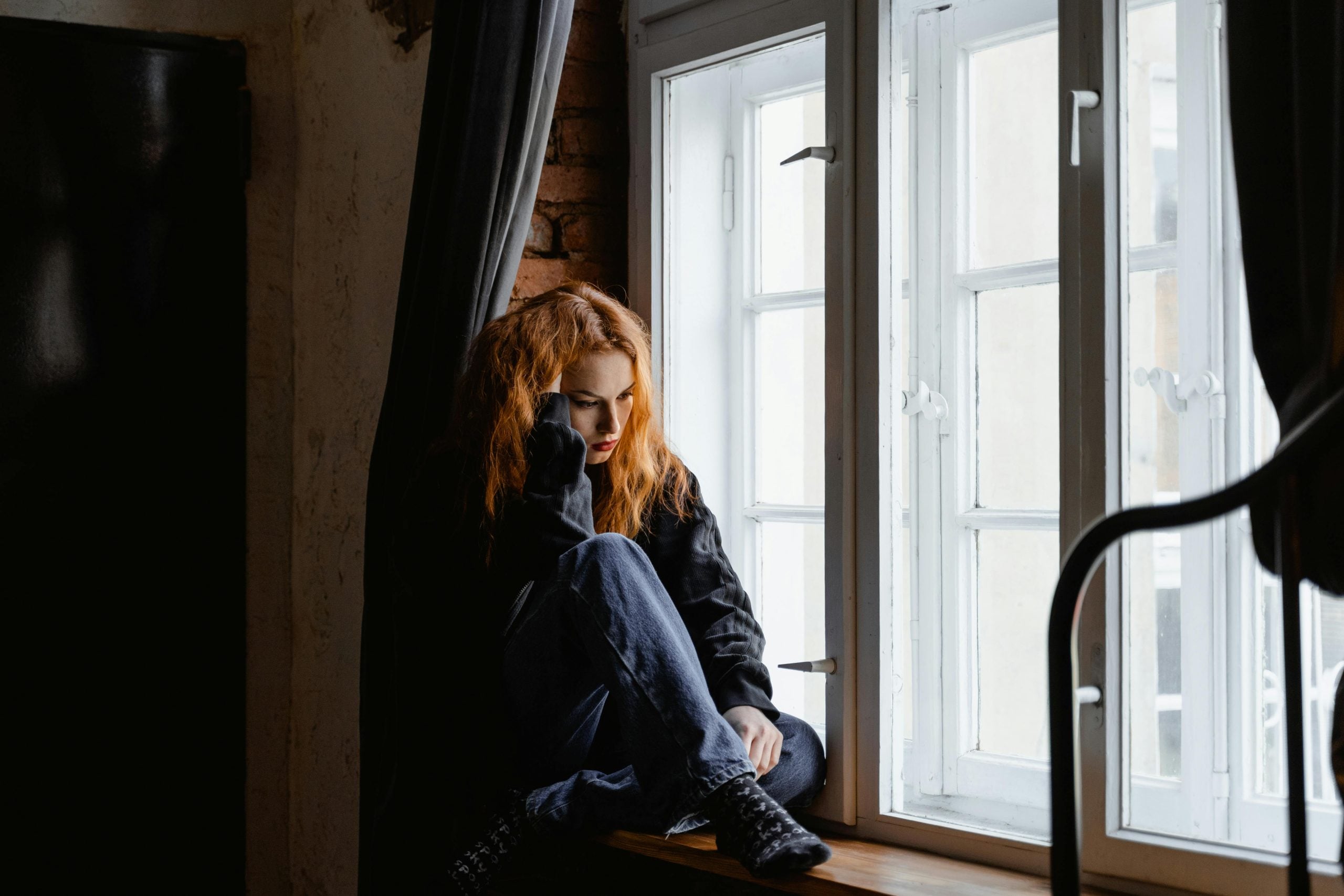

Taking time to be alone is one of the most powerful ways introverts restore their energy, but it rarely gets the credit it deserves. Solitude is not a retreat from life. It is where many of us do our clearest thinking, our deepest processing, and our most honest self-examination. The quotes collected here capture something most introverts already feel but rarely hear said out loud.
Across my two decades running advertising agencies, I kept a habit that my extroverted colleagues found baffling. Before any major presentation, any high-stakes client call, any decision that mattered, I would find thirty minutes completely alone. Not to prepare slides. Not to rehearse talking points. Just to sit quietly and let my mind settle. I did not have language for why that worked until I started understanding how introvert energy actually functions. Alone time was not avoidance. It was fuel.
If you have ever felt guilty for needing to step away from people, or wondered whether your preference for solitude is somehow a flaw, the voices gathered in this article might reframe that entirely. Some of the most perceptive thinkers in history understood what you understand. They just happened to write it down.
Managing your energy as an introvert involves much more than just carving out quiet time. Our full Energy Management and Social Battery hub explores the broader picture of how introverts charge, drain, and protect their reserves across every area of life.

Why Do Quotes About Solitude Hit Differently for Introverts?
There is something particular that happens when an introvert reads a quote about solitude and feels recognized rather than pathologized. Most of the cultural messaging we absorb tells us that wanting to be alone is a symptom of something. Loneliness. Social anxiety. Avoidance. So when a philosopher or a poet or a novelist articulates the specific quality of being alone as a source of power rather than a problem, it lands with unusual force.
What’s your personality type?
Take our free 40-question assessment and get a detailed personality profile with dimension breakdowns, context analysis, and personalised insights.
Discover Your Type8-12 minutes · 40 questions · Free
Psychology Today describes introversion as a personality orientation characterized by a preference for less stimulating environments and a tendency to direct attention inward. That is a clinical description. What the quotes in this article offer is something different: the felt sense of what that actually means in a life. They name the texture of it.
I spent the first decade of my agency career convinced that my need for alone time was a professional liability. I watched extroverted colleagues energize in the open-plan office, feed off brainstorms, and seem to grow more capable with every hour of social contact. My experience was the opposite. After a full day of client meetings, pitches, and team reviews, I was not just tired. I was depleted in a way that sleep alone could not fix. What I needed was genuine solitude, and I kept apologizing for that need instead of honoring it.
That pattern, of draining faster than others and needing recovery time that looks like withdrawal, is something many introverts share. It is worth understanding that an introvert gets drained very easily not because of weakness but because of how our nervous systems are wired. The quotes below are not just inspirational decoration. They are evidence that this experience has been understood and articulated by thoughtful people for a very long time.
What Did the Great Thinkers Actually Say About Being Alone?
Some of the most enduring observations about solitude came from people who lived and worked in ways that prioritized inner life over social performance. Their words carry weight because they were not written as self-help. They emerged from genuine reflection on what it means to be human.
Blaise Pascal wrote that all of humanity’s problems stem from the inability to sit quietly in a room alone. That line has been quoted so often it risks becoming wallpaper, but sit with it for a moment. He was not praising introversion specifically. He was observing that the discomfort with solitude drives people toward distraction, conflict, and noise. For introverts, who often find sitting quietly in a room to be genuinely restorative rather than threatening, that observation feels like an accidental compliment.
Carl Jung, whose work gave us the introvert and extrovert framework, wrote that who looks outside dreams, and who looks inside awakens. Jung was himself introverted, and his entire body of work reflects a deep conviction that the inner world is not a lesser world. It is where meaning actually lives.
Ralph Waldo Emerson wrote that in the minds of geniuses we find our own neglected thoughts. That quote applies directly to why solitude quotes resonate so powerfully. When someone articulates what we have felt but never said, they do not give us a new idea. They return something we already knew but had been talked out of valuing.
Nikola Tesla, who by most accounts was profoundly introverted, wrote that the mind is sharper and keener in seclusion and uninterrupted solitude. He was describing his own creative process. The breakthroughs came in quiet, not in collaboration. That does not make collaboration worthless. It makes solitude essential for certain kinds of minds.
How Does Solitude Actually Restore Introvert Energy?
The question of why solitude restores introverts while social contact depletes them has a neurological dimension worth understanding. Cornell University research on brain chemistry has pointed toward differences in how introverts and extroverts process dopamine, suggesting that introverts require less external stimulation to feel rewarded. The social environments that energize extroverts can genuinely overwhelm introvert nervous systems.
This matters because it means the need for alone time is not a preference in the casual sense of preferring one flavor of ice cream over another. It is closer to a biological requirement. Denying it consistently has real consequences for mental clarity, emotional regulation, and overall wellbeing.
For those who are also highly sensitive, the stakes are even higher. HSP energy management requires a more deliberate approach to protecting reserves because highly sensitive people process sensory and emotional information more deeply than average. Solitude is not just pleasant for them. It is often medically necessary for recovery.
Seneca wrote that you must linger among a limited number of master thinkers and digest their works, if you would derive ideas which shall win firm hold in your mind. He was talking about intellectual focus, but the principle maps onto energy management perfectly. Spreading yourself across too many social inputs fragments your capacity to process any of them deeply. Solitude is what allows the integration to happen.
One of my clearest memories from agency life involves a campaign we were developing for a major automotive client. The creative team had been in three consecutive days of brainstorming sessions, and the work was getting worse, not better. Ideas were being generated and immediately overridden by louder voices in the room. I made a call that surprised everyone: I sent the team home for a full day with no meetings and no group chats. Just individual thinking time. What came back the following morning was genuinely better than anything we had produced in those three days of collective noise. Solitude had done what the brainstorm could not.
Which Quotes Speak Most Directly to the Introvert Experience?
Not every quote about solitude was written with introverts in mind. Some of the most resonant ones come from people who were simply observing the human condition honestly. But certain lines feel as though they were written from inside the introvert experience, even when they were not.
Susan Cain, whose work brought introversion into mainstream conversation, wrote that there is zero correlation between being the best talker and having the best ideas. That quote matters because it directly challenges the performance culture that exhausts introverts. In so many environments, the person who speaks most confidently and most often is assumed to be the most capable. Introverts often have the best ideas and the least appetite for performing them loudly.
Virginia Woolf wrote that you cannot find peace by avoiding life. That might seem to argue against solitude, but read it more carefully. She was not saying that withdrawal is cowardice. She was saying that peace comes from engaging honestly with your own inner life, not from numbing yourself to it. For introverts, solitude is how that honest engagement happens.
Albert Einstein reportedly said that the monotony and solitude of a quiet life stimulates the creative mind. Whether or not that attribution is perfectly accurate, the sentiment reflects what many introverts experience as a simple truth. Noise is not the enemy of creativity. Constant noise is.
Anne Morrow Lindbergh wrote in Gift from the Sea that one must be empty of busyness to be truly present. That line captures something I have observed repeatedly in my own work. The periods when I produced my best strategic thinking were never the ones filled with back-to-back meetings and constant availability. They were the ones where I had protected enough quiet time to actually think, rather than just react.
What Does Alone Time Look Like When You Are Highly Sensitive?
For introverts who are also highly sensitive people, solitude carries an additional layer of importance. The sensory environment during alone time matters as much as the social environment. Being physically alone in a loud, bright, or texturally overwhelming space does not provide the same restoration as being alone in a calm, low-stimulation environment.
Psychology Today’s overview of highly sensitive people describes HSPs as individuals who process sensory data more deeply and thoroughly than others. That depth of processing is a genuine strength in many contexts. It also means that recovery requires more intentional conditions.
Sound is one of the most common barriers to genuine restoration. Many highly sensitive introverts find that ambient noise, even at levels others barely register, keeps their nervous system in a state of low-level alertness that prevents real rest. Understanding and addressing HSP noise sensitivity is often a prerequisite for making alone time actually restorative rather than just physically separate from other people.
Light is another factor. Harsh fluorescent lighting or intense screens during supposed rest time can undermine the restoration that solitude is meant to provide. Practical strategies for HSP light sensitivity can make a meaningful difference in how effective your alone time actually feels.
Even physical sensation plays a role. Clothing that feels restrictive, furniture that creates discomfort, or environments with textures that register as irritating can keep a highly sensitive person from fully settling into the quiet they need. What we understand about HSP touch sensitivity suggests that the physical conditions of solitude are not trivial. They shape whether the time alone actually restores or simply passes.
Rainer Maria Rilke wrote that the only experience is the one within. That line is beautiful in its simplicity, but for highly sensitive introverts, that inward movement requires the right external conditions to happen at all. The environment is not separate from the experience of solitude. It is part of it.
How Do You Protect Alone Time Without Feeling Guilty About It?
One of the most persistent challenges introverts face is not finding alone time but allowing themselves to value it without guilt. The cultural narrative around productivity, availability, and social engagement is strong enough that many of us have internalized the idea that wanting to be alone is somehow selfish or antisocial.
Research published in PubMed Central examining solitude and wellbeing has found that chosen solitude, time alone that is intentionally sought rather than imposed, is associated with positive outcomes including improved mood and greater sense of autonomy. The distinction between chosen and unchosen solitude matters. What introverts pursue is the former. What they are often accused of is the latter.
Finding the right balance between social engagement and genuine restoration is something that takes practice and self-knowledge. The principles explored in articles about HSP stimulation and finding the right balance apply broadly to introverts who are learning to calibrate their own needs without apologizing for them.
Mahatma Gandhi wrote that in the attitude of silence the soul finds the path in a clearer light, and what is elusive and deceptive resolves itself into crystal clearness. That is not a description of avoidance. It is a description of a cognitive and spiritual process that requires solitude as its condition.
Late in my agency years, I had a mentor, an older creative director who had built and sold two agencies before I had even started mine, who told me something I have carried ever since. He said that the most important meetings he ever had were the ones he had with himself, alone, before anyone else arrived. He was not an introvert. He was a gregarious, expansive personality who happened to understand that solitude was not the opposite of leadership. It was part of it. Hearing that from someone with his profile gave me permission to stop treating my need for quiet as a weakness I was managing and start treating it as a practice I was developing.

What Are the Most Powerful Quotes to Return to When You Feel Drained?
Some quotes are best read when you are already at ease. Others are most useful precisely when you are depleted, when the social world has taken more than you had to give and you need something to remind you that returning to yourself is not a failure. These are the ones worth keeping close.
Franz Kafka wrote that you need not leave your room. Remain sitting at your table and listen. Do not even listen, simply wait. Do not even wait, be quite still and solitary. The world will freely offer itself to you to be unmasked, it has no choice, it will roll in ecstasy at your feet. That passage has a quality that goes beyond inspiration. It is almost permission. It says that stillness is not passivity. It is a form of openness that the world responds to.
Edith Sitwell wrote that I am patient with stupidity but not with those who are proud of it. That is a different kind of quote, one that speaks to the introvert’s particular exhaustion with environments that reward volume over substance. The depletion many introverts feel in certain social settings is not just about stimulation. It is about the specific drain of being in rooms where depth is not valued. Naming that honestly is its own form of self-care.
Paul Tillich, the theologian, wrote that language has created the word loneliness to express the pain of being alone, and the word solitude to express the glory of being alone. That distinction is one of the most useful frames introverts can carry. Loneliness is an absence. Solitude is a presence. What introverts seek is the latter, and conflating the two does real harm to how we understand our own needs.
Additional research on solitude and psychological functioning supports the idea that voluntary aloneness serves different psychological functions than social isolation, and that the two should not be treated as equivalent. The science is catching up to what introverts have always known from the inside.
Henry David Thoreau, who famously spent two years living deliberately alone at Walden Pond, wrote that I never found the companion that was so companionable as solitude. He was not describing loneliness. He was describing the experience of being fully present with his own mind and finding it genuinely satisfying. Many introverts know exactly what he meant, even if they have never lived beside a pond.
How Can You Use These Quotes as a Practical Energy Management Tool?
Quotes are not a substitute for actual solitude. But they can serve a practical function in the energy management toolkit of an introvert who is still learning to advocate for their own needs. When you are in an environment that does not understand or respect your need for alone time, having language that articulates that need with authority can change the internal experience of asking for it.
There is something different about saying “I need some quiet time” and thinking of it as a personal quirk versus saying it while holding the knowledge that Thoreau, Tesla, and Jung all understood exactly what you mean. The need does not change. But the shame around the need can dissolve when you realize you are in good company.
Practically, I have found it useful to keep a small collection of quotes that speak to my specific experience of introversion and return to them at particular moments. Not as affirmations in the hollow sense, but as genuine reminders of a truth I already know but sometimes forget under social pressure. On the days when a full calendar and a loud office made me feel like my need for quiet was a personal failing, reading Tillich’s distinction between loneliness and solitude was enough to reset my internal framing.
Harvard Business Review has written extensively about the value of reflective practices in leadership, including the role of deliberate solitude in strategic thinking. The case for alone time is not just psychological. It is professional. The leaders who protect space for genuine reflection tend to make better decisions than those who are perpetually available and perpetually reactive.
Marcus Aurelius wrote in his Meditations, a book that is itself a record of private reflection, that nowhere can man find a quieter or more untroubled retreat than in his own soul. He was a Roman emperor, one of the most socially demanding roles imaginable, and he still understood that the inner retreat was essential. If he could find and protect it, so can you.
What Happens When You Stop Apologizing for Needing Solitude?
Something shifts when an introvert stops treating their need for alone time as a problem to manage and starts treating it as a legitimate part of how they function. The energy that was going toward apology and self-justification becomes available for actual work, actual connection, and actual creativity.
I noticed this shift in myself around year fifteen of running agencies. I had spent the previous decade being intermittently apologetic about my working style: the closed door, the preference for written communication over impromptu conversations, the need to process decisions alone before discussing them with the team. At some point, I stopped explaining it as a quirk and started presenting it as a method. The change in how others responded was immediate. What had read as aloofness started reading as deliberateness. What had seemed like avoidance started seeming like focus. The behavior had not changed. The framing had.
Poet Marianne Moore wrote that the cure for loneliness is solitude. That paradox is worth sitting with. The loneliness that comes from performing an extroverted self you are not actually is far more isolating than the solitude you choose. When you stop pretending that you want constant social engagement and start honoring what you actually need, the quality of the connections you do make tends to improve significantly.
WebMD’s overview of personality types notes that introverts often have fewer but deeper relationships, which reflects a genuine preference for quality of connection over quantity of contact. Protecting alone time is not antisocial. It is what makes the social time you do invest genuinely meaningful rather than exhausted and obligatory.
Wendell Berry wrote that it may be that when we no longer know what to do, we have come to our real work, and when we no longer know which way to go, we have begun our real experience. That line resonates with me in a specific way. The moments in my career when I felt most lost were almost always the moments when I had been most relentlessly social and least alone. The clarity I needed was never in another meeting. It was in the quiet I had been too busy to protect.
The quotes in this article are not a substitute for the work of actually building a life that honors your need for solitude. But they are evidence that the need is real, that it has been understood across centuries and cultures, and that you are not unusual for feeling it. You are, in fact, in exceptionally good company.
If you want to go deeper on the mechanics of how introverts manage their energy, the full Energy Management and Social Battery hub covers everything from social battery depletion to recovery strategies and the specific dynamics that drain introverts faster than others.
About the Author
Keith Lacy is an introvert who’s learned to embrace his true self later in life. After 20 years in advertising and marketing leadership, including running agencies and managing Fortune 500 accounts, Keith now channels his experience into helping fellow introverts understand their strengths and build fulfilling careers. As an INTJ, he brings analytical depth and authentic perspective to every article, drawing from both professional expertise and personal growth.
Frequently Asked Questions
Why do introverts need alone time to restore their energy?
Introverts process social and sensory information more deeply than extroverts, which means that social interaction consumes more energy for them. Alone time allows the nervous system to settle, the mind to integrate what it has processed, and the emotional reserves to replenish. This is not a choice in the way a preference is a choice. It is closer to a biological requirement for sustained functioning. Without adequate solitude, many introverts experience declining focus, emotional flatness, and a diminished capacity for genuine connection with others.
What is the difference between solitude and loneliness for introverts?
Solitude is chosen aloneness, time spent with oneself that is intentional and restorative. Loneliness is the painful experience of unwanted disconnection from others. Introverts typically seek solitude and find it genuinely satisfying, which is the opposite of loneliness. The confusion between the two often comes from observers who assume that being alone must feel like absence. For introverts, chosen solitude tends to feel like presence, specifically, the presence of one’s own thoughts, creativity, and inner life without external noise competing for attention.
How can quotes about solitude help introverts manage their energy?
Quotes about solitude serve a practical function beyond inspiration. They provide language and authority for a need that introverts often struggle to articulate without apologizing for it. When you can connect your experience to the observations of thinkers like Carl Jung, Marcus Aurelius, or Thoreau, the need feels less like a personal quirk and more like a recognized aspect of human experience. That shift in framing reduces the internal guilt that drains energy and makes it easier to advocate for the alone time you genuinely need.
Do highly sensitive introverts need more alone time than other introverts?
Many highly sensitive people find that they require more deliberate and carefully structured alone time than introverts who are not highly sensitive. Because HSPs process sensory and emotional information more deeply, they accumulate more to integrate and more to recover from after social or stimulating environments. The quality of the solitude also matters more for HSPs. Alone time in a noisy, brightly lit, or physically uncomfortable environment may not provide genuine restoration. Highly sensitive introverts often benefit from paying close attention to the sensory conditions of their recovery time, not just the social ones.
Is needing alone time a sign of social anxiety or introversion?
Needing alone time is a characteristic of introversion, not necessarily social anxiety. The distinction matters. Introverts seek solitude because they find it genuinely restorative and because social engagement genuinely costs them energy. Social anxiety involves fear or distress around social situations, which is a different experience entirely. An introvert can enjoy social interaction and still need significant alone time afterward. Someone with social anxiety may avoid social situations due to fear rather than a preference for solitude. Many introverts have no social anxiety at all. They simply have a different energy economy than extroverts.