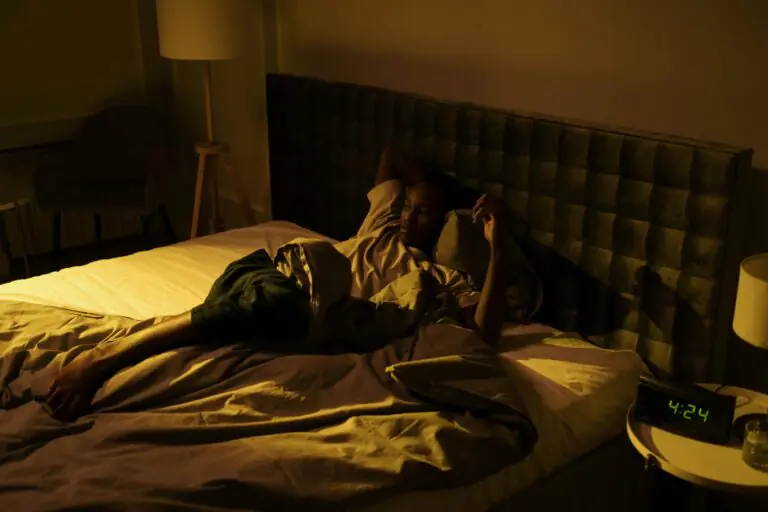

Feeling genuinely recharged after spending time alone in introspective activities isn’t a quirk or a flaw. It’s one of the clearest signals that your nervous system is working exactly as it was built to work. For introverts, solitude isn’t empty space between obligations. It’s the primary source of mental and emotional fuel.
Most people who identify as introverted describe a specific quality of restoration that comes only from time spent inward, whether through reading, writing, quiet reflection, or simply sitting with their own thoughts. That restoration is real, measurable in how you feel before and after, and it says something important about how your brain processes the world.
My own relationship with solitude took years to understand, and even longer to stop apologizing for. Running advertising agencies meant I was surrounded by people, noise, and constant input for most of my working life. The moments I craved most were the ones no one else seemed to notice: early mornings alone in my office before the phones started, long drives between client meetings where I could finally think. Those weren’t wasted hours. They were the hours that made everything else possible.

Energy management sits at the center of how introverts experience their lives, and the full picture is worth exploring. Our Energy Management and Social Battery hub maps out the many dimensions of how introverts gain, spend, and protect their mental reserves. This article focuses on one of the most foundational pieces of that picture: what actually happens when solitude restores you, and why that restoration matters more than most people realize.
Why Does Solitude Feel So Restorative to Introverts?
There’s a neurological explanation worth understanding here. Cornell University research into brain chemistry has pointed to differences in how introverts and extroverts process dopamine, the neurotransmitter associated with reward and stimulation. Extroverts tend to respond more strongly to external stimulation, which is why social environments feel energizing to them. Introverts are wired with a more sensitive internal processing system, which means the same level of external input that excites an extrovert can feel exhausting to someone wired differently.
What’s your personality type?
Take our free 40-question assessment and get a detailed personality profile with dimension breakdowns, context analysis, and personalised insights.
Discover Your Type8-12 minutes · 40 questions · Free
Solitude reduces that input load. When you’re alone, your brain isn’t tracking social cues, managing impressions, monitoring group dynamics, or processing the ambient noise of other people’s needs. That reduction in demand doesn’t just feel like relief. It creates the conditions where deeper thinking becomes possible.
I noticed this pattern clearly during a particularly demanding pitch season at my agency. We were competing for a major financial services account, and the weeks leading up to the presentation were relentless: strategy sessions, creative reviews, client calls, internal debates. By Friday evenings I was functionally useless. Not tired in the way that sleep fixes. Something deeper was depleted. The weekends where I protected even a few hours of genuine solitude, no agenda, no screens, just space to think, were the ones where I arrived Monday with something real to offer. The weekends I didn’t protect that time, I showed up Monday already running on empty.
Psychology Today’s overview of introversion describes the introvert’s inner world as rich and active, a place where meaning-making happens through reflection rather than through external conversation. That framing resonates with me. My best thinking has never happened in a meeting room. It’s happened in the quiet spaces between them.
What Introspective Activities Actually Do for the Introvert Brain
Recharging through solitude isn’t passive. The activities that restore introverts most deeply tend to involve active internal engagement: journaling, reading, creative work, long walks with no destination, meditation, or simply sitting with a problem until it clarifies. These aren’t ways of avoiding the world. They’re how introverts process the world they’ve already taken in.
Think of it this way. Social interaction, for an introvert, is a form of intake. You’re absorbing information, emotion, expectation, and energy from other people throughout every interaction. Introspective activities are where you process that intake, find what’s worth keeping, and release what isn’t. Without that processing time, the intake just accumulates.

I managed a creative director at one of my agencies who was an exceptional writer and a deeply thoughtful person. She also had a reputation for being slow to respond in brainstorms, which some of the more extroverted team members read as disengagement. What I came to understand, watching her work over several years, was that she was processing. Give her a brief on Monday and space to think through Wednesday, and what she brought to Thursday’s meeting was consistently the most fully developed thinking in the room. Her introspective time wasn’t a delay. It was where the real work happened.
That pattern holds across most of the introverts I’ve worked with and observed. The introspective activities aren’t separate from productivity. They are the productivity, just happening in a form that isn’t visible to anyone else.
It’s worth noting that for some introverts who also identify as highly sensitive people, the need for this processing time runs even deeper. Psychology Today’s overview of the highly sensitive person describes a trait involving deeper processing of sensory and emotional information, which amplifies both the intake and the need for recovery. If you’ve ever wondered why you seem to need even more alone time than other introverts you know, that dimension of sensitivity may be part of the explanation.
How Do You Know the Difference Between Healthy Solitude and Avoidance?
This is a question worth sitting with honestly, because not all time alone serves the same function. Healthy solitude leaves you more capable, clearer, and more ready to engage with the world when you return to it. Avoidance, by contrast, tends to leave you more anxious, more isolated, and less equipped to handle what you’ve been avoiding.
The distinction usually shows up in how you feel after the solitary time, not during it. Restorative solitude has a quality of arrival. You feel like you’ve returned to yourself. Avoidance tends to have a quality of deferral. The thing you were avoiding is still there, and now you’ve added guilt about avoiding it.
There’s also a difference in what you’re doing during that alone time. Introspective activities, even restful ones, tend to involve some form of engagement: with ideas, with your own thoughts, with creative work, with the natural world. Avoidance tends to involve numbing, scrolling, or simply waiting for discomfort to pass.
Early in my career, before I understood any of this, I confused the two regularly. I’d come home from a brutal day of client presentations and spend the evening on autopilot, not actually resting, just not working. I’d wake up the next morning still depleted. It took me a long time to realize that what I actually needed wasn’t the absence of work. It was the presence of something that fed my inner life. A book that challenged me. Time to write in my notebook. A walk that had no purpose. Those things restored me in a way that passive disengagement never did.
One resource I’ve found genuinely useful for thinking about this distinction comes from the work around why introverts get drained so easily. Understanding what depletes you is inseparable from understanding what restores you. The two sides of the equation belong together.
What Happens When You Don’t Get Enough Restorative Alone Time?
The short answer is: everything gets harder. Your thinking becomes less clear. Your patience shortens. Small irritations that you’d normally process without much trouble start to feel significant. Social interactions that you’d normally handle with ease begin to feel like obligations you’re just enduring.
This isn’t weakness. It’s what happens when any system is asked to operate without the inputs it needs. An introvert running on insufficient alone time is like a phone running at 4% battery. Technically still functioning, but not reliably, and not for long.

There’s solid grounding for this in what we understand about the nervous system. Published research in PMC has examined how sustained social and sensory demands affect cognitive function and emotional regulation, pointing to the real physiological costs of operating without adequate recovery. For introverts, those costs accumulate faster than most people around them realize.
I went through a stretch of about eight months at my agency where I essentially stopped protecting any solitary time. We were in a growth phase, which meant more clients, more staff, more meetings, more everything. I told myself I’d reclaim the quiet time once things settled down. Things didn’t settle down. By the end of that stretch I was making decisions I wouldn’t have made with a clearer head, snapping at people I respected, and feeling a kind of flatness that I couldn’t quite name. A trusted colleague finally said to me, with genuine concern, “You seem like you’ve been gone for a while.” She was right. I had been.
That experience taught me something I’ve carried since: protecting solitary time isn’t a luxury you earn after the work is done. It’s a condition of doing the work well in the first place.
For those who are also highly sensitive, the depletion can be even more acute. Managing sensory inputs carefully, including things like noise and light exposure, becomes part of the recovery equation. Our article on HSP noise sensitivity and coping strategies addresses one dimension of this that many introverts find unexpectedly relevant to their own experience, even if they don’t formally identify as highly sensitive.
How Do You Build Restorative Alone Time Into a Life That Doesn’t Stop?
This is where most of the practical work lives. Understanding that you need solitude is one thing. Carving it out consistently in a world that doesn’t naturally accommodate that need is another challenge entirely.
A few things have worked for me and for many introverts I’ve spoken with over the years.
Treat solitary time as a non-negotiable appointment, not as leftover time. Most introverts I know, myself included for too many years, approach alone time as something they’ll get to when everything else is handled. Everything else is never fully handled. So the alone time never comes. Blocking it in your calendar with the same seriousness as a client meeting changes the equation.
Identify which introspective activities actually restore you, and be specific. Not all quiet activities are equally restorative for every introvert. Some people restore through reading. Others through physical movement that allows internal reflection, like running or hiking. Others through creative work, journaling, or music. Knowing your specific restorative activities matters because it keeps you from spending solitary time on things that feel like rest but don’t actually recharge you.
Pay attention to the environment. Restorative solitude is harder to access in environments that are overstimulating, even when you’re technically alone. A quiet room is different from a loud apartment where you can hear your neighbors through the walls. Natural light affects mood and recovery differently than harsh artificial lighting. These details matter more than most people acknowledge. The work around HSP light sensitivity and management offers practical guidance that applies broadly to anyone whose environment affects their ability to restore.
Communicate your needs without over-explaining them. One of the patterns I see repeatedly in introverts, especially those in leadership or partnership roles, is the tendency to over-justify the need for alone time. You don’t owe anyone a detailed explanation for needing to recharge in the way your nervous system requires. A simple, honest statement, “I need a couple of hours to decompress and think,” is complete on its own.

What Does Recharging Through Solitude Look Like Across Different Introvert Experiences?
One thing worth naming is that “introvert” covers a wide range of experiences. WebMD’s overview of personality types notes that most people exist somewhere on a spectrum between introversion and extroversion, with ambiverts in the middle ground. Even among clear introverts, the specific activities that restore energy vary considerably.
Some introverts restore through intellectual engagement: reading dense books, working through complex problems, writing. Others restore through creative expression: painting, music, photography, cooking. Still others restore through physical solitude in nature, where the absence of social demand combined with sensory richness creates a particular kind of restoration.
What these activities share isn’t their form. It’s their function. They all allow the introvert’s internal processing system to work without the additional load of social performance. That’s the common thread.
For introverts who are also highly sensitive, the texture of restorative activities often needs more careful calibration. Physical comfort matters. Sensory input, even pleasant input, can tip from restorative to overwhelming if it’s too intense. Understanding your own thresholds is part of the work. Our piece on finding the right balance with HSP stimulation addresses this calibration process in depth, and it’s worth reading even if you’re not sure whether the HSP label fits you.
I’ve also noticed, in my own experience, that the quality of restorative solitude changes across different life stages and circumstances. During high-stress periods at the agency, I needed more of it and needed it more frequently. During quieter stretches, a shorter window could accomplish the same restoration. Paying attention to those fluctuations, rather than applying a fixed formula, makes the practice more effective.
Why Embracing This About Yourself Changes Everything
There’s a version of this topic that stays purely practical: consider this recharges you, here’s how to get more of it. But something deeper is worth naming.
Many introverts spend years treating their need for solitude as a problem to manage rather than a truth to honor. They apologize for needing to leave parties early. They feel guilty for not wanting to socialize after work. They push through exhaustion rather than admit they need time alone, because admitting it feels like confessing some kind of social inadequacy.
That relationship with your own nature is costly. Not just in terms of energy, but in terms of identity. When you spend years treating a core aspect of how you’re wired as something to overcome, you end up slightly at war with yourself. And that low-level conflict is itself exhausting.
The shift I experienced, and it was gradual, not sudden, came from simply accepting that this is how I work. Not as a limitation. As a fact. My thinking is better after solitude. My leadership is better after solitude. My relationships are better after solitude. That’s not a weakness in my design. It’s a feature of it.
Research published in PMC has examined the relationship between self-understanding and psychological wellbeing, pointing to the value of accepting rather than resisting one’s own dispositional traits. For introverts, that acceptance often centers precisely on the need for solitude and the recognition that this need is legitimate, not something to be fixed.
There’s also a relational dimension worth considering. When you’re genuinely restored, you show up differently for other people. The version of me that arrived to meetings after protecting my solitary time was more patient, more creative, more present, and frankly more useful to the people around me. The version that hadn’t protected that time was technically present but not really there.
Protecting your solitude isn’t selfish. It’s how you show up fully for the people and work that matter to you.
Some introverts, particularly those with heightened sensitivity to physical sensation, find that their restorative time also needs to account for tactile comfort in ways they may not have previously considered. Our piece on understanding HSP touch sensitivity explores how physical environment affects the quality of rest and restoration, which connects directly to how effective your alone time actually is.
And for those who want a comprehensive framework for managing the full range of energy inputs and outputs, our resource on HSP energy management and protecting your reserves offers a structured way to think about the whole system, not just the solitude piece in isolation.

The National Institutes of Health has long supported research into how individual differences in nervous system sensitivity shape mental health outcomes. What that body of work points toward, consistently, is that the gap between how a person is wired and how they’re living is itself a source of chronic stress. For introverts who haven’t yet given themselves permission to prioritize solitude, closing that gap is one of the most meaningful things they can do for their own wellbeing.
You feel recharged after spending time alone in introspective activities because that’s how your mind was built to recover. Honoring that isn’t indulgence. It’s accuracy. And accuracy about your own nature is where everything else begins.
If you want to explore more about how introverts manage energy across every dimension of daily life, the complete Energy Management and Social Battery hub brings together the full range of resources on this topic, from social battery depletion to sensory sensitivity to recovery strategies that actually work.
About the Author
Keith Lacy is an introvert who’s learned to embrace his true self later in life. After 20 years in advertising and marketing leadership, including running agencies and managing Fortune 500 accounts, Keith now channels his experience into helping fellow introverts understand their strengths and build fulfilling careers. As an INTJ, he brings analytical depth and authentic perspective to every article, drawing from both professional expertise and personal growth.
Frequently Asked Questions
Is it normal to feel recharged after spending time alone in introspective activities?
Yes, and it’s one of the most consistent markers of introversion. Introverts process the world internally, which means social and sensory input accumulates throughout the day in a way that requires quiet, reflective time to process and release. Feeling genuinely restored after solitude isn’t unusual or antisocial. It’s how an introvert’s nervous system is designed to recover. The activities that tend to be most restorative, reading, writing, walking, creative work, all share a common quality: they allow internal processing without the added demand of social performance.
How much alone time do introverts actually need to feel recharged?
There’s no universal answer, because the amount varies based on how socially and sensorially demanding your day has been, your baseline sensitivity, and the quality of the alone time itself. Some introverts find that an hour of genuine solitude each day is sufficient. Others need more, particularly after high-demand periods. What matters more than a fixed number is learning to read your own signals. When your thinking feels foggy, your patience shortens, and small things start to feel disproportionately difficult, those are often signs that your solitary recharge time has been insufficient.
Can introverts recharge around other people, or does it have to be complete solitude?
Most introverts find that genuine restoration requires being alone, not just being quiet. The presence of other people, even quiet, undemanding ones, keeps a portion of your attention engaged in social monitoring. That said, some introverts can restore partially in low-demand social settings, particularly with people they know very well and feel completely comfortable around. The distinction is whether you’re tracking the social dynamic or not. Complete solitude removes that tracking entirely, which is why it tends to be more thoroughly restorative for most introverts.
What’s the difference between introvert recharging and depression or social withdrawal?
Healthy introvert recharging leaves you feeling more capable, clearer, and more ready to engage when you return to the world. Depression and unhealthy withdrawal tend to have the opposite effect: time alone doesn’t restore you, and the desire to avoid people grows rather than resolving into readiness to reconnect. Another meaningful difference is whether the solitude feels chosen and purposeful or compelled by dread. If you’re avoiding people because you genuinely need to restore your energy, that’s a different experience from avoiding people because the thought of interacting with them feels threatening or hopeless. If you’re unsure which pattern applies to you, speaking with a mental health professional is a worthwhile step.
How do you explain your need for alone time to people who don’t understand introversion?
Analogy tends to work better than explanation. Most people understand the concept of a phone battery: it runs down with use and needs to be charged to function properly. Framing your need for solitude in those terms, “I need some time to recharge so I can show up fully,” gives people a concrete mental model without requiring them to understand the neurological specifics of introversion. What you don’t need to do is over-justify or apologize. A simple, confident statement of what you need, without excessive elaboration, communicates that this is a legitimate need rather than an excuse, and most people respond to that clarity better than to lengthy explanation.