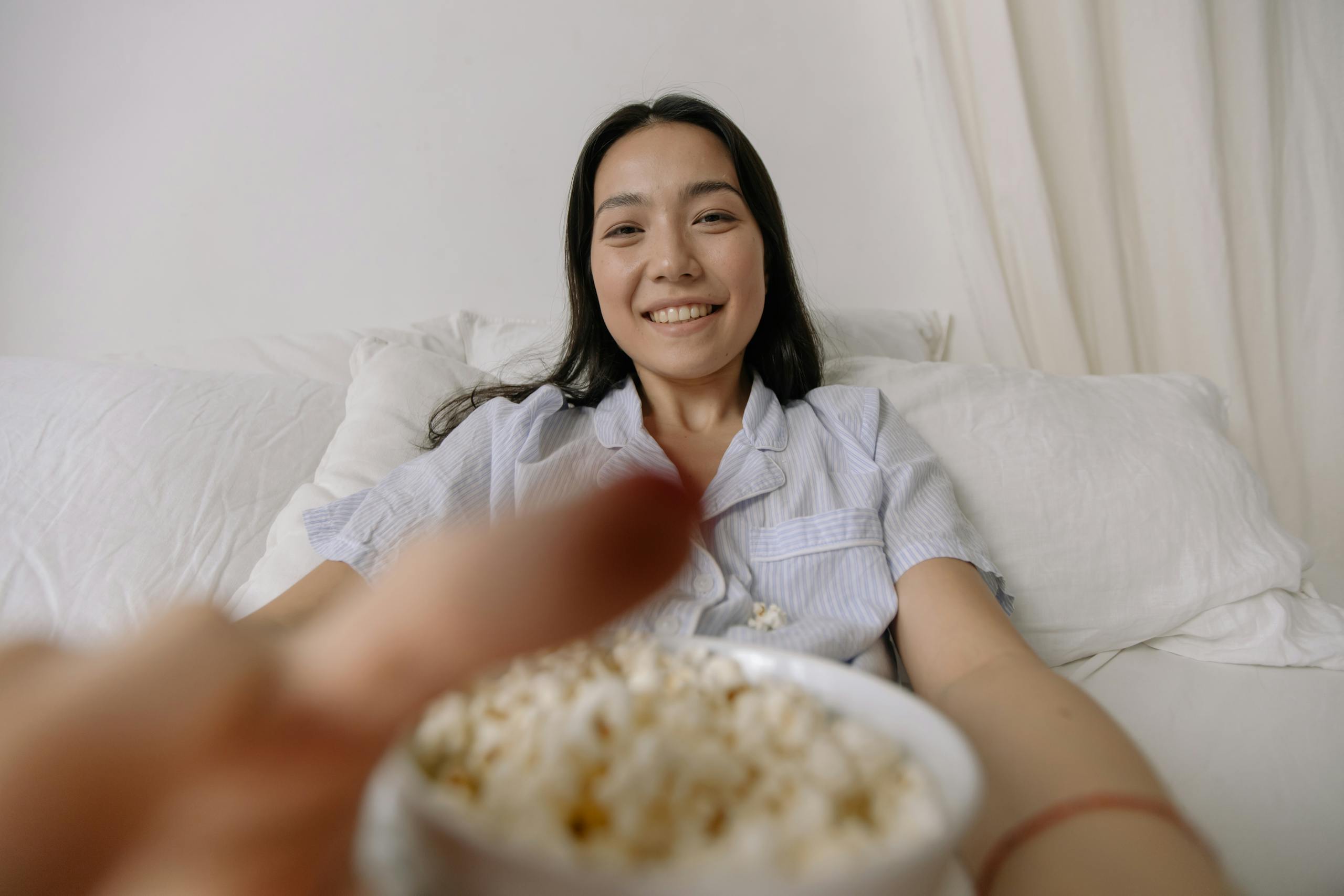

Alone time doesn’t have to mean rest, recovery, or hiding from the world. Sometimes it’s just genuinely, unabashedly fun. For introverts, the freedom of a solo afternoon, a quiet Sunday, or an empty house isn’t something to apologize for or explain away. It’s something to celebrate.
Most of the conversation around introvert alone time focuses on what we’re recovering from. Draining social events. Overstimulating workdays. The exhaustion of performing extroversion in spaces that weren’t built for us. And yes, all of that is real. But there’s another side of solitude that doesn’t get nearly enough attention: the side that’s playful, indulgent, creative, and deeply satisfying on its own terms.
Alone time can also be fun. Full stop. No asterisk, no qualifier, no “but make sure you’re also connecting with people.” Just fun, for its own sake, because you wanted it.
If you want to explore everything that solitude, self-care, and recharging can look like for introverts, our Solitude, Self-Care & Recharging hub covers the full landscape. But this particular corner of it, the joyful corner, deserves its own spotlight.
Why Do We Keep Framing Alone Time as Recovery?
Somewhere along the way, the conversation about introversion got narrowed into a single story: introverts need alone time because social interaction drains them. And that story, while true and worth telling, accidentally made solitude sound like medicine. Something you take when you’re sick. Something you need, not something you want.
What’s your personality type?
Take our free 40-question assessment and get a detailed personality profile with dimension breakdowns, context analysis, and personalised insights.
Discover Your Type8-12 minutes · 40 questions · Free
I spent years in advertising agencies where the cultural default was constant togetherness. Open floor plans, brainstorming sessions that never ended, after-work drinks that were somehow mandatory even when they were technically optional. My alone time during those years was almost entirely about survival. I’d close my office door for twenty minutes between client calls and just sit in silence, not doing anything meaningful, just trying to feel like myself again before the next meeting.
That version of alone time is real and necessary. When you haven’t had it, the consequences are serious. The piece on what happens when introverts don’t get alone time captures exactly how quickly things unravel when solitude gets treated as optional. I’ve lived that version. It’s not pretty.
But the framing of alone time as purely restorative, as something you do because you’re depleted, misses something important. It positions solitude as reactive. Something you reach for after the damage is done. And it subtly implies that the “real” living happens out there, in the social world, while alone time is just maintenance.
That framing doesn’t match my actual experience. And I’d guess it doesn’t match yours either.
Some of my best hours, the ones I’d genuinely call fun, have happened when I was completely alone. Not recovering. Not recharging. Just fully absorbed in something I loved, with no one else’s energy or expectations in the room.
What Does “Fun Alone Time” Actually Look Like?
Fun alone time looks wildly different depending on who you are. That’s part of what makes it so satisfying. When you’re alone, you get to define what enjoyment means without negotiating it with anyone else.
For me, it’s often something that engages my mind without requiring me to perform or produce. A long walk with a good podcast. Getting genuinely lost in a design problem I don’t have to solve by deadline. Cooking something complicated on a Saturday afternoon just because the process interests me. Reading a book I’ve been saving for a slow day and actually having the slow day arrive.
There’s a particular quality to those hours. A kind of absorption that’s hard to describe but immediately recognizable. Time moves differently. My thinking gets clearer and more playful at the same time. I’m not monitoring myself or calibrating my reactions to anyone else. I’m just present with whatever I’m doing.
Psychologists sometimes call this state “flow,” that deep engagement where skill and challenge meet and self-consciousness drops away. What’s interesting is that solitude often creates the conditions for it more reliably than social settings do. When there’s no one else to respond to, the mind can settle into its own rhythm.
The Greater Good Science Center at Berkeley has explored how solitude can fuel creativity precisely because it frees the mind from social performance and opens space for original thought. That tracks with my experience. Some of my best campaign concepts over two decades came from thinking alone, not from group brainstorms where everyone was performing ideas at each other.
Is There a Difference Between Enjoyable Solitude and Isolation?
Yes, and the distinction matters more than people realize.
Enjoyable solitude is chosen. It’s something you move toward because you want it, not something you retreat into because the world has become too much. It feels expansive. You’re free to think, create, explore, rest, or play on your own terms. You could reach out if you wanted to. You just don’t want to right now.
Isolation is different. It’s solitude that’s become involuntary or that’s started to feel like a wall rather than a room of your own. The CDC has documented the genuine health risks associated with chronic social isolation, noting that prolonged disconnection from others carries serious consequences for both mental and physical wellbeing. You can read more about those risk factors around social connectedness if you want the full picture.
The difference isn’t always obvious from the outside, and sometimes it’s not obvious from the inside either. I’ve had periods in my life where I told myself I was “just being an introvert” when the truth was I was avoiding things that scared me. Those two things can look identical on the surface. Same empty calendar. Same quiet house. Very different internal experience.
A useful check I’ve developed over the years: does my alone time make me feel more like myself, or less? Does it leave me feeling replenished and curious, or does it leave me feeling smaller and more anxious about re-entering the world? The first is solitude doing its job. The second is a signal worth paying attention to.
Harvard Health has written thoughtfully about the distinction between loneliness and isolation, and their framing is useful here. You can be alone without being lonely. You can also be surrounded by people and feel profoundly isolated. The quality of the solitude matters more than the fact of it.
How Does Sensory Sensitivity Shape the Way Introverts Experience Fun?
Many introverts, and especially those who also identify as highly sensitive people, experience the world with an intensity that most environments simply can’t accommodate. Noise, crowds, competing stimuli, the constant low-level hum of other people’s moods and needs. All of it registers, all of it takes processing power.
When that’s your baseline experience of the world, fun that happens in the presence of others often comes with a tax. You’re enjoying the dinner, and also tracking the conversation at the next table. You’re laughing at the party, and also monitoring how tired you’re getting. You’re present, but you’re also managing a lot of inputs that other people aren’t even noticing.
Alone, that tax disappears. The sensory environment is yours to control. The emotional temperature in the room is yours. You can turn the music up or off. You can sit in complete silence. You can follow a thought wherever it leads without someone interrupting it. For people who process deeply, that kind of environmental control isn’t a luxury. It’s what makes genuine enjoyment possible.
The piece on HSP solitude and the essential need for alone time gets into this with real depth. What I’d add from my own experience is that this isn’t about being fragile or needing special conditions. It’s about knowing how your mind works and giving it what it needs to actually show up fully, whether that’s for work, for creativity, or for genuine enjoyment.
I managed a creative team for years that included several people who were clearly highly sensitive, though we didn’t use that language at the time. The ones who did their best work were almost always the ones who had carved out some version of protected alone time in their days. Not because they were antisocial, but because they needed that quiet to do the deep processing that made their work good. The ones who got swallowed by the open-plan, always-on culture struggled. Not from lack of talent, but from lack of space.

What Makes a Sunday Alone Feel Like a Gift Instead of a Gap?
There’s a specific version of alone time that I think deserves its own recognition: the open, unscheduled day. No obligations. No plans that fell through. Just a day that belongs entirely to you.
For a lot of introverts, a free Sunday is genuinely one of the best things that can happen. Not because something was cancelled (though that has its own particular joy), and not because you’re exhausted and need to recover. Just because an unstructured day is an invitation to follow your own interests at your own pace, which is something that rarely happens in ordinary life.
What I’ve noticed is that the quality of those days depends a lot on how I enter them. If I wake up on a free Sunday with a vague sense of guilt about not being productive or not seeing people, the whole day gets colored by that. I spend it half-present, half-justifying myself to some imaginary audience.
But if I wake up and genuinely give myself permission to enjoy it, the day opens up completely. I might spend three hours on a single book. I might cook something elaborate for no reason. I might take a long walk and let my mind wander in ways it never gets to during a workweek. I might sit with my dog and do absolutely nothing in particular.
My dog Mac, actually, taught me something about this. He has an extraordinary relationship with doing nothing. He can spend an entire afternoon in a patch of sunlight and appear completely satisfied. There’s a piece on Mac’s approach to alone time that captures this better than I can here, but the short version is that watching him be unabashedly content in his own company made me reconsider how much I was complicating something that could be simple.
Spending time in nature is another dimension of this. The healing connection between HSPs and the natural world resonates with me personally. There’s something about being outside, especially alone, that quiets the part of my brain that’s always analyzing and optimizing. A trail through the woods doesn’t ask anything of me. It just exists, and I can exist in it.
Can Solo Activities Be as Meaningful as Shared Ones?
Our culture has a strong bias toward shared experience. The assumption is that things are more meaningful when they’re witnessed, celebrated, or at least reported to someone else afterward. A meal is better with company. A trip is better with a companion. An achievement matters more when someone else knows about it.
I’ve tested this assumption against my own experience, and I don’t think it holds up consistently. Some of my most meaningful experiences have been entirely private. A solo trip I took after a particularly difficult stretch at the agency. A long afternoon in a museum with no one to coordinate with or explain my choices to. An evening where I cooked a good meal, opened a good bottle of wine, and read a book I’d been putting off for months. No audience. No documentation. Just the thing itself.
Psychology Today has explored the rise of solo travel as a deliberate choice, not just a default for people who couldn’t find a companion. The framing there is useful: solo experiences aren’t lesser versions of shared ones. They’re a different kind of thing entirely, with their own particular quality of presence and attention.
When you’re alone, you’re not managing anyone else’s experience. You’re not negotiating pace, preferences, or energy levels. You’re free to be completely absorbed in your own response to whatever you’re doing. That absorption is its own form of richness.
There’s also something worth noting about memory. Experiences we have alone often stick differently. Because we weren’t performing them or narrating them in real time, we tend to have processed them more fully. The memory isn’t filtered through how we described it to someone else. It’s just ours.

How Do You Build a Life That Includes Genuine Fun Alone Time?
The practical question is how to actually make space for this, especially if your life is structured around other people’s schedules, expectations, or needs.
The first thing I’d say is that it requires treating your alone time as a real commitment rather than something that happens when everything else is done. For most of my agency years, I treated solitude as leftover time. What remained after the meetings, the client calls, the team check-ins, the social obligations. Leftover time, by definition, is whatever scraps are left. It’s not enough, and it doesn’t feel like yours.
Scheduling sounds counterintuitive for something that’s supposed to feel free and unstructured. But what you’re actually scheduling is protection, not a specific activity. You’re saying: this block of time belongs to me, and I’m not going to fill it with anything else. What happens inside it can be entirely spontaneous.
The essential daily practices for HSP self-care offer a useful framework here, even if you don’t identify as highly sensitive. The principle of building regular, intentional space into your day rather than hoping it appears on its own is sound for any introvert who tends to give away more time than they realize.
Sleep is also part of this picture in ways that often get overlooked. The quality of your alone time during waking hours is significantly affected by how well you’ve slept. When I’m running on inadequate rest, my free time tends to get consumed by low-grade recovery rather than genuine enjoyment. The strategies around HSP sleep and recovery are worth reading if you find that your “off” time never quite feels off.
Beyond scheduling, there’s a permission question. A lot of introverts I’ve talked to over the years have internalized the message that enjoying time alone is somehow selfish, antisocial, or evidence of something being wrong with them. That message is worth examining. Choosing to spend time with yourself, and actually enjoying it, isn’t a character flaw. It’s a sign that you know yourself well enough to know what you need.
A piece in Psychology Today on embracing solitude for your health makes the case that choosing solitude intentionally, rather than simply tolerating it, is associated with better wellbeing outcomes. The framing matters. Going into alone time with resentment or guilt produces a different experience than going into it with genuine anticipation.
And there’s solid evidence behind that. Research published in PubMed Central has examined how voluntary solitude, solitude that’s chosen rather than imposed, relates to positive emotional states and personal restoration. The distinction between chosen and unchosen solitude shows up consistently in the literature, and it matches what most introverts already know intuitively.
Another angle worth considering is what you’re actually doing with the time. Not every form of alone time is equally nourishing. Scrolling through your phone for two hours technically counts as being alone, but it rarely produces the same quality of experience as something that engages your attention more actively or more deeply. That doesn’t mean you need to be productive. It means there’s a difference between passive consumption and genuine absorption.
Frontiers in Psychology has published work on how different types of solitary activities affect psychological wellbeing in distinct ways. The short version is that active engagement, whether creative, physical, or intellectual, tends to produce more lasting satisfaction than passive consumption. That tracks with my experience. The Sundays I remember most fondly are the ones where I was absorbed in something, not just present in the absence of other people.
There’s also the question of how you end your alone time. One thing I’ve noticed is that the transition back into social or professional life after a genuinely good solo stretch can be jarring if it’s abrupt. Building in a small buffer, a short walk, a few minutes of quiet before picking up the phone, helps preserve whatever you’ve built in that time rather than immediately dissolving it.

What Happens When You Stop Apologizing for Enjoying Your Own Company?
Something shifts when you stop treating your preference for alone time as a problem to manage and start treating it as a genuine part of who you are.
For me, that shift happened gradually over the years after I left the agency world. Without the constant pressure to perform extroversion in a culture that rewarded it, I started to notice what I actually enjoyed. Not what I was supposed to enjoy, not what made me look like a good leader or a sociable colleague. What I actually, genuinely looked forward to.
A lot of it involved being alone. Long thinking walks. Mornings with coffee and no agenda. Evenings spent reading or writing or just sitting with my thoughts. None of it was glamorous. None of it made for good stories at parties. But it was mine, and it was genuinely satisfying in a way that a lot of my more socially legible activities never quite were.
The broader research on solitude and wellbeing suggests that the ability to be alone without distress, to find genuine value in one’s own company, is associated with stronger self-knowledge and more stable wellbeing over time. That’s not a coincidence. When you know how to be alone and enjoy it, you’re not dependent on external stimulation or social validation to feel okay. That’s a kind of freedom that’s hard to put a price on.
Happy Sunday isn’t a consolation prize for the introvert who didn’t get invited anywhere. It’s a real thing, a full thing, a thing worth choosing and protecting and enjoying without apology.
There’s a whole world of resources on what solitude can look like when it’s working for you rather than just keeping you afloat. The Solitude, Self-Care & Recharging hub is a good place to keep exploring if this resonates.
About the Author
Keith Lacy is an introvert who’s learned to embrace his true self later in life. After 20 years in advertising and marketing leadership, including running agencies and managing Fortune 500 accounts, Keith now channels his experience into helping fellow introverts understand their strengths and build fulfilling careers. As an INTJ, he brings analytical depth and authentic perspective to every article, drawing from both professional expertise and personal growth.
Frequently Asked Questions
Is it normal for introverts to genuinely enjoy being alone, not just need it?
Yes, completely. While much of the conversation around introversion focuses on alone time as recovery from social drain, many introverts actively look forward to solitude because it’s genuinely enjoyable. Being alone allows for deeper focus, creative absorption, and a kind of presence that’s hard to access in social settings. Enjoying your own company isn’t a symptom of anything. It’s a personality trait worth embracing.
How do you tell the difference between healthy solitude and unhealthy isolation?
The clearest signal is whether the solitude feels chosen or imposed, and whether it leaves you feeling more or less like yourself. Healthy solitude is something you move toward because you want it. It tends to feel expansive, replenishing, and satisfying. Isolation tends to feel like withdrawal, and it often comes with anxiety about re-entering the world or a growing sense of disconnection. If your alone time consistently leaves you feeling smaller or more fearful rather than more grounded, that’s worth paying attention to.
What kinds of solo activities are most satisfying for introverts?
This varies by person, but activities that involve genuine absorption tend to be more satisfying than passive consumption. Reading, cooking, creative projects, walking, writing, playing music, spending time in nature, and working on problems that genuinely interest you all tend to produce a richer quality of alone time than scrolling or background television. The common thread is active engagement with something that holds your attention and doesn’t require you to perform for anyone else.
How can introverts protect their alone time without feeling guilty?
Treating alone time as a genuine commitment rather than leftover time is a good starting point. That means protecting it on your calendar the same way you’d protect an important meeting, and reframing it internally from something you’re taking away from others to something you’re giving to yourself. The guilt often comes from internalized messages that solitude is selfish or antisocial. Recognizing that your best work, your clearest thinking, and your most genuine connections with others all depend on you having adequate time to yourself can help shift that framing.
Can introverts who are also highly sensitive people find alone time especially important?
Yes. Highly sensitive people tend to process sensory and emotional information more deeply than others, which means that social and stimulating environments carry a higher cognitive and emotional load. Alone time for HSPs isn’t just about personality preference. It’s often about giving an overloaded nervous system the quiet it needs to process, integrate, and reset. Many HSPs find that without adequate solitude, their capacity to engage meaningfully with the world, and to enjoy it, diminishes significantly.