
Some places in America feel designed for people like us. Not the loud, crowded, always-on versions of city life, but the quieter corners where open land stretches in every direction, neighbors are few, and the pace of a day can finally match the pace of your inner world. The best places in America to live in solitude aren’t just geographically remote. They offer something harder to find: an environment that stops pulling you outward and finally lets you settle inward.
Whether you’re an introvert who’s been quietly fantasizing about a different kind of life, or someone actively weighing a move away from the noise, this list is built for you. These are real places, with real tradeoffs, seen through the lens of someone who spent over two decades in high-stimulus agency environments before finally asking what kind of life actually fit.
If solitude, self-care, and recharging are themes that resonate with you, our Solitude, Self-Care and Recharging hub covers the full range of how introverts can build lives that genuinely restore them, from daily practices to deeper lifestyle shifts.
Why Do Introverts Crave Solitude in the First Place?
Before we get into specific towns and regions, it’s worth pausing on the “why.” Because this isn’t just about preference. It runs deeper than wanting a quiet Saturday morning.
What’s your personality type?
Take our free 40-question assessment and get a detailed personality profile with dimension breakdowns, context analysis, and personalised insights.
Discover Your Type8-12 minutes · 40 questions · Free
I spent my career running advertising agencies in environments that were deliberately engineered for stimulation. Open floor plans, impromptu brainstorms, client calls stacked back to back, team lunches that were really just extended meetings. The whole culture assumed that energy came from external interaction. For a long time, I tried to match that assumption. I pushed myself to be the visible, loud, always-available version of a leader that the industry seemed to expect.
What I didn’t fully understand until much later was that I was running a constant energy deficit. Every interaction that should have been neutral was costing me something. And the cost compounded over years.
What happens when introverts don’t get adequate alone time isn’t subtle. You can read more about the real consequences in this piece on what happens when introverts don’t get alone time, but from personal experience, I can tell you it looks like irritability, creative flatness, a kind of low-grade exhaustion that sleep doesn’t fix, and a growing disconnection from yourself. You start performing your life instead of living it.
Solitude isn’t a luxury for introverts. It’s a biological and psychological need. Research published in PubMed Central has found that voluntary solitude, chosen rather than imposed, is associated with meaningful benefits for emotional regulation and psychological wellbeing. The word “voluntary” matters here. Solitude chosen on your own terms feels completely different from isolation that’s thrust upon you.
That distinction shapes everything about this list. These aren’t places where you’re trapped alone. They’re places where aloneness is available, accessible, and culturally unremarkable.
What Makes a Place Genuinely Good for Solitude-Seeking Introverts?
Not all “quiet” places are equal. I’ve visited towns that looked peaceful on a map and felt claustrophobic in person, where everyone knew everyone’s business and newcomers were regarded with a particular kind of sideways scrutiny. That’s not solitude. That’s a different kind of social pressure.
The places that actually work for introverts tend to share a few characteristics. Low population density matters, obviously. But so does access to natural spaces where you can spend hours without encountering another person. A culture that doesn’t treat introversion as a personality flaw helps enormously. So does a reasonable cost of living, because financial stress is its own form of constant noise.
There’s also something about the relationship between solitude and creativity that I’ve come to appreciate. The Greater Good Science Center at Berkeley has explored how solitude can enhance creative thinking, giving the mind room to make connections that crowded, distracted environments prevent. For introverts who do their best thinking alone, this isn’t a surprise. But it’s worth naming, because it reframes the choice to seek a quieter life as a productive one, not a retreat from the world.
With that framing in mind, here are the places worth seriously considering.
Which Regions of America Offer the Most Natural Solitude?
The Pacific Northwest: Oregon and Washington’s Interior
Few regions in America carry the particular energy of the Pacific Northwest interior. Places like Ashland, Oregon, or the small towns tucked along the eastern slopes of the Cascades offer something rare: genuine wilderness access paired with enough cultural infrastructure to sustain a meaningful life.
Bend, Oregon gets mentioned often in these conversations, and for good reason. It sits at the edge of high desert, with the Cascade Range as a backdrop and miles of trail systems that can absorb a person entirely. The population has grown in recent years, which has softened some of its solitude credentials, but the surrounding landscape remains vast enough that you can disappear into it on any given afternoon.
For those who want something even quieter, the smaller towns along Highway 97 or in the Wallowa Mountains region of eastern Oregon offer lower density and a more pronounced sense of space. The tradeoff is reduced access to services, but for an introvert who’s already comfortable with self-sufficiency, that tradeoff often feels like a fair one.
The connection between nature and psychological restoration is something I’ve written about in other contexts, and it’s particularly pronounced in regions like this. There’s strong evidence that time in natural settings genuinely restores depleted attention and reduces physiological stress markers. If you’re someone who finds the outdoors restorative, as many introverts do, the Pacific Northwest interior offers that in abundance. Our piece on HSP nature connection and the healing power of the outdoors explores why this kind of environment matters so deeply for sensitive, inward-oriented people.
The Mountain West: Montana, Wyoming, and Colorado’s Quieter Corners
Montana is almost unfair in what it offers. The state has roughly a million people spread across an area larger than Germany. Towns like Missoula carry a genuine intellectual and artistic culture despite their small size, and the surrounding landscape is staggering in its scale. You can drive for an hour in any direction and encounter almost no one.
Livingston, Montana deserves a mention here. It sits in the Paradise Valley, with the Absaroka Range to the east and the Yellowstone River running through it. The town has attracted writers and artists for decades, partly because of that combination of natural grandeur and genuine quiet. It’s the kind of place where spending an entire day alone feels not just acceptable but normal.
Wyoming’s less-trafficked areas offer similar qualities. Cody, Sheridan, and the smaller communities in the Big Horn Basin have a working-Western character that doesn’t perform itself for tourists the way Jackson Hole does. The solitude there is matter-of-fact. Nobody’s going to ask you why you prefer evenings at home.
Colorado’s Front Range gets crowded, but move east onto the plains or into the San Luis Valley and the equation changes entirely. Alamosa, Salida, and the smaller towns in the San Juan Mountains offer access to extraordinary wilderness without the social density of Boulder or Denver.
The Upper Midwest: Minnesota’s Boundary Waters Region
There’s a particular kind of quiet that belongs to the north woods of Minnesota, and it’s unlike anything else in the country. The Boundary Waters Canoe Area Wilderness is one of the most visited wilderness areas in America, yet its sheer size means you can paddle for days without seeing another soul.
Towns like Ely, Grand Marais, and Two Harbors along the North Shore of Lake Superior offer the kind of small-town culture that doesn’t demand much social performance. The winters are genuinely harsh, which self-selects for people who are comfortable with their own company. That’s not a bug. For an introvert, it’s a feature.
What I find compelling about this region is how the landscape itself reinforces the introvert’s natural orientation. There’s nothing here that’s asking you to be louder or more visible. The lake, the forest, the long winter evenings, all of it points inward. A friend of mine, an INFJ who left Chicago after fifteen years in marketing, moved to Grand Marais and told me within a year that she’d written more, thought more clearly, and slept better than at any point in her adult life. I believed her completely.

The Southwest Desert: New Mexico and Arizona’s High Desert Communities
The high desert has a quality that’s hard to describe until you’ve experienced it. The silence there isn’t empty. It has texture and weight. Towns like Taos, Silver City, and Truth or Consequences in New Mexico sit in landscapes that seem to actively discourage noise.
Taos in particular has been drawing artists, writers, and contemplatives for over a century. Georgia O’Keeffe famously found in the New Mexico landscape something that matched her inner life in a way that New York never had. That’s a recognizable introvert story, even if the word “introvert” wasn’t in common use at the time.
Arizona’s Verde Valley, the area around Cottonwood and Jerome, offers a different version of the same quality. The landscape is dramatic without being aggressive. Sedona gets mentioned often, but its tourist economy can overwhelm the solitude. The smaller communities nearby preserve more of what makes the region special.
One thing worth noting about desert living: the climate demands a certain kind of self-sufficiency and attentiveness. You have to pay attention to heat, to water, to the rhythms of the season. For an introvert who’s already attuned to subtle environmental signals, that attentiveness often feels natural rather than burdensome. It’s a different kind of presence than what city life demands.
New England’s Quiet Corners: Vermont and Maine
Vermont and Maine have long served as destinations for people seeking a slower, more interior life. Vermont’s Northeast Kingdom, the stretch of three counties in the state’s upper right corner, is one of the least populated regions east of the Mississippi. The towns there, Craftsbury, Island Pond, Burke, feel genuinely unhurried in a way that’s increasingly rare.
Maine’s midcoast and western mountains offer similar qualities. Towns like Rangeley, Bethel, and the communities along the western lakes region provide access to extraordinary wilderness with a cultural character that values independence and quiet competence over social performance. The winters are long, which, again, tends to attract people who are comfortable with solitude as a baseline rather than an occasional indulgence.
What I appreciate about New England’s quieter corners is the particular kind of community that forms there. People tend to leave each other alone in the best sense of the phrase. Neighborliness doesn’t require constant visibility. You can be known and respected without being socially exhausted.
How Do You Actually Build a Life in These Places as an Introvert?
Moving somewhere quieter doesn’t automatically solve the challenges of introvert life. I’ve seen people make dramatic geographic moves and bring all their old patterns with them. The location changed, but the internal orientation didn’t.
What actually works is pairing a quieter environment with intentional practices that support your specific needs. That means thinking carefully about how you structure your days, how you protect your energy, and how you build the kind of selective, meaningful connection that introverts genuinely thrive on.
Sleep is one of the places where this becomes concrete. Many introverts, particularly those who are also highly sensitive, find that their sleep quality is directly tied to their environment. Noise, light, and social overstimulation from the day all affect how deeply they rest. Moving to a quieter place often improves sleep as a first-order effect. Our guide on HSP sleep and rest and recovery strategies goes into the specifics of how sensitive introverts can optimize their rest, which matters enormously when you’re in the process of rebuilding a life.
Daily self-care practices also take on a different character in quieter environments. Without the constant low-level noise of city life, you have more space to notice what you actually need. The practices that felt aspirational in a busy urban environment become genuinely accessible. Our piece on HSP self-care and essential daily practices covers this in depth, and many of those practices translate directly to introvert life in general, not just for those who identify as highly sensitive.
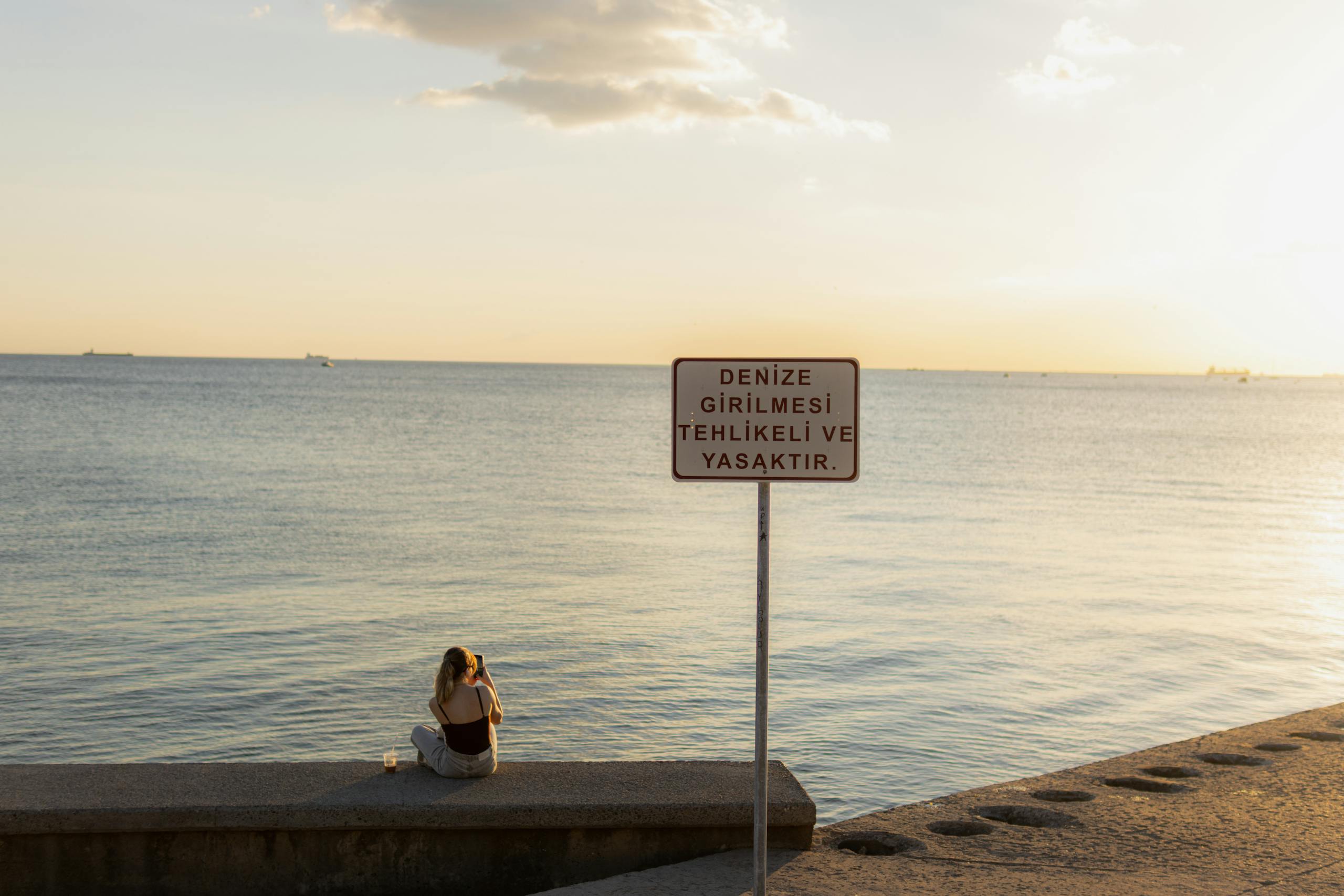
One pattern I’ve noticed in my own life and in conversations with introverts who’ve made similar moves: the quality of alone time matters as much as the quantity. Having eight hours of unstructured time isn’t automatically restorative. What restores is intentional solitude, time that you’ve chosen and structured around your genuine interests and needs.
I think about the years I spent in the agency world, where even my “downtime” was often reactive. I’d collapse at the end of a long day with a phone in my hand, scrolling, half-present. That wasn’t solitude. That was exhaustion wearing solitude’s clothes. Real solitude, the kind that actually refills the tank, requires a bit more intention. It might look like a long walk with no destination, an afternoon with a book you’ve been meaning to read for a year, or the particular pleasure of cooking a meal slowly with no one waiting on it.
That last one is something I’ve been thinking about lately, actually. There’s a quiet piece on this site about Mac alone time that captures something true about how introverts experience solitude with their animals. If you’ve ever spent a long afternoon alone with a dog or a cat and felt genuinely restored by it, you know exactly what that piece is about.
What Are the Real Tradeoffs of Choosing a Life in Solitude?
Being honest here matters. Choosing a quieter, more solitude-oriented life comes with genuine tradeoffs, and I’d be doing you a disservice to gloss over them.
Career access is one. Many of the places on this list are not hubs for the kinds of professional opportunities that urban centers offer. Remote work has changed this calculation significantly, but not completely. If your field requires physical presence in a major market, a move to rural Montana or the Northeast Kingdom of Vermont will require either a career shift or a willingness to travel.
Healthcare access is another real consideration. Smaller communities often have limited medical infrastructure. For most healthy adults, this is manageable. For those with chronic conditions or families with young children, it deserves careful thought.
Social connection, paradoxically, can also become a challenge. Introverts don’t want constant social interaction, but most of us do want some depth of connection. Harvard Health makes an important distinction between loneliness and isolation, and it’s one worth sitting with. Moving somewhere remote doesn’t automatically produce loneliness, but it does require more intentionality about building the selective, meaningful connections that introverts thrive on.
The CDC’s work on social connectedness notes that social isolation carries genuine health risks. This isn’t an argument against solitude. It’s a reminder that what introverts are seeking is chosen aloneness, not the absence of all human connection. The distinction matters. The best solitude-oriented communities tend to be ones where you can have genuine, unhurried connection with a small number of people, on your own terms and timeline.
The need for solitude is something that introverts who are also highly sensitive feel with particular intensity. The piece on HSP solitude and the essential need for alone time addresses this directly, and the framing there, that solitude is a need rather than a preference, is one I find genuinely clarifying. It changes the moral weight of the choice. You’re not being antisocial. You’re meeting a legitimate need.
Is Living in Solitude the Same as Being Lonely?
This is the question that comes up most often when I talk about this topic, and it’s worth answering directly. No. They are not the same thing, and conflating them does real harm to introverts who are trying to understand their own needs.
Loneliness is the painful experience of unwanted disconnection. It’s wanting connection and not having it. Solitude is the experience of being alone by choice, and finding that aloneness generative, restorative, or simply comfortable. Most introverts are deeply familiar with the difference, even if they haven’t always had language for it.
What I’ve noticed in myself is that loneliness was most acute during the years when I was surrounded by people all day but not genuinely connecting with any of them. A conference room full of people I was performing for felt lonelier than an empty Saturday morning with a cup of coffee and a long book. The social quantity was high. The genuine connection was low.
Moving toward a life with more solitude, whether that means a geographic move or simply restructuring how you spend your time, tends to reduce loneliness for introverts rather than increase it. When you’re not depleted from constant social performance, you have more genuine capacity for the connections that actually matter.
Psychology Today’s coverage of solitude and health explores how embracing aloneness, on your own terms, can support mental and emotional wellbeing in ways that constant social engagement often doesn’t. That framing resonates with my experience and with what I hear from introverts who’ve made meaningful changes in how they structure their lives.
There’s also something worth saying about the particular kind of self-knowledge that sustained solitude produces. When you’re not constantly reacting to external stimulation, you start to hear yourself more clearly. You notice what you actually think, what you actually value, what actually brings you satisfaction. For an INTJ like me, that internal clarity is close to the definition of a good life.
How Do You Know If This Kind of Life Is Right for You?
There’s no universal answer here, but there are some questions worth sitting with honestly.
Do you find that your best thinking, your clearest sense of yourself, happens when you’re alone? Do you return from time in nature feeling genuinely restored rather than just distracted? When you imagine a week with no social obligations, does that feel like relief or anxiety? Do you have a sense that your current environment is asking you to be someone you’re not?
If your answers lean toward the first option in each of those pairs, a life oriented more deliberately around solitude probably isn’t a retreat. It’s an alignment.
I spent a long time believing that wanting more solitude was a weakness I needed to compensate for. The advertising world I worked in had no framework for it except as a deficiency. What I’ve come to understand, slowly and with some resistance, is that the desire for solitude is information about who I am and what I need. Treating it as a problem to be solved was always going to produce the wrong answer.
A study published in Frontiers in Psychology examined how people experience solitude across different contexts and found that the quality of the solitude, specifically whether it was freely chosen, shaped its psychological effects far more than the amount of time spent alone. That finding maps onto what I’ve observed in my own life and in the lives of introverts I know. The goal isn’t maximum aloneness. It’s aloneness that’s genuinely yours.
There’s also something to be said for the courage it takes to make this kind of choice. Moving toward a quieter life often means swimming against a cultural current that equates busyness with value and social visibility with success. Psychology Today’s exploration of solo living as a genuine lifestyle preference rather than a default or a failure is worth reading for anyone who’s been told, explicitly or implicitly, that wanting to be alone is something to grow out of.
It isn’t. For many of us, it’s something to grow into.
If this piece has you thinking more broadly about how solitude fits into your self-care and recharging practices, our Solitude, Self-Care and Recharging hub has a full collection of resources built around these themes, from daily practices to deeper reflections on what it means to build a life that genuinely restores you.
About the Author
Keith Lacy is an introvert who’s learned to embrace his true self later in life. After 20 years in advertising and marketing leadership, including running agencies and managing Fortune 500 accounts, Keith now channels his experience into helping fellow introverts understand their strengths and build fulfilling careers. As an INTJ, he brings analytical depth and authentic perspective to every article, drawing from both professional expertise and personal growth.
Frequently Asked Questions
What are the best states in America for introverts who want to live in solitude?
Montana, Oregon, Vermont, Maine, and New Mexico consistently offer the combination of low population density, access to natural spaces, and cultural environments that suit introverts seeking a quieter life. Within each state, smaller communities away from tourist centers tend to preserve the most genuine solitude while still offering enough infrastructure for a sustainable daily life.
Is living in solitude healthy for introverts, or does it increase loneliness?
Chosen solitude and loneliness are fundamentally different experiences. For introverts, voluntary aloneness tends to reduce loneliness rather than increase it, because it removes the social performance that depletes them and creates space for the selective, meaningful connections they actually value. The distinction that matters is whether the solitude is freely chosen or imposed. Freely chosen solitude is associated with genuine psychological benefits, while unwanted isolation carries different risks.
Can introverts build meaningful social lives in rural or remote communities?
Yes, and many find it easier than in urban environments. Smaller communities often support a different kind of social culture, one built on genuine familiarity and mutual respect rather than constant visibility. Introverts tend to prefer depth over breadth in their relationships, and rural communities often provide the conditions for that kind of connection to develop naturally over time. what matters is approaching community with intentionality rather than assuming connection will happen automatically.
What practical factors should introverts consider before moving somewhere remote?
Career access or remote work viability, healthcare infrastructure, proximity to an airport or larger city for periodic needs, climate tolerance, and cost of living are all worth careful consideration. Beyond logistics, it’s worth honestly assessing whether the solitude you’re seeking is about the environment or about internal patterns that a geographic move alone won’t resolve. The most successful transitions tend to pair a new environment with intentional practices that support genuine restoration.
How does living closer to nature specifically benefit introverts?
Natural environments tend to reduce the kind of directed attention and social monitoring that depletes introverts in urban settings. Time in nature offers what psychologists sometimes call restorative experience, a quality of effortless attention that allows the mind to recover from the fatigue of constant social and informational demands. For introverts who are also highly sensitive, natural settings provide sensory input that tends to be complex and interesting without being overwhelming in the way that crowded, loud human environments often are.