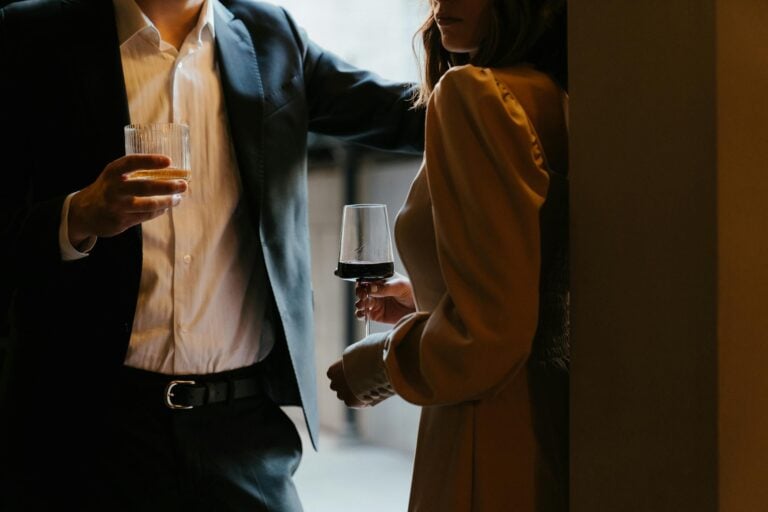

Going to bars alone as an introvert is something far more people do than talk about openly. Many introverts genuinely enjoy sitting at a bar by themselves, nursing a drink, observing the room, and existing in the middle of life without the pressure of performing for anyone. It’s not loneliness. It’s a specific kind of freedom that many of us quietly crave.
So do introverts like going to bars alone? A lot of us do, yes. Not because we’re antisocial or sad about it, but because the solo bar experience offers something rare: public solitude. You’re surrounded by life, but you’re not obligated to it.
This topic fits naturally into the broader conversation about how introverts recharge and care for themselves. Our Solitude, Self-Care & Recharging Hub explores the full range of ways introverts restore their energy, and the solo bar experience adds a surprisingly nuanced layer to that picture. It’s one of those practices that looks counterintuitive from the outside but makes complete sense from the inside.
Why Would an Introvert Want to Go to a Bar Alone?
I remember the first time I sat alone at a bar on purpose. Not because I was waiting for someone, not because a meeting had fallen through. I just walked in, took a stool at the far end of the counter, ordered a whiskey, and settled in. It was a Tuesday evening in Chicago, somewhere between a client dinner and a flight home. The agency had been running hard that quarter, and I was depleted in the way that only a week of back-to-back presentations and forced enthusiasm can deplete you.
What’s your personality type?
Take our free 40-question assessment and get a detailed personality profile with dimension breakdowns, context analysis, and personalised insights.
Discover Your Type8-12 minutes · 40 questions · Free
Nobody talked to me. I watched the bartender work. I listened to two guys argue about baseball at the other end. I had exactly one conversation, a brief exchange about whether the kitchen was still open. And I left forty-five minutes later feeling genuinely restored in a way that no amount of hotel room silence had managed that week.
That experience taught me something I’ve come back to many times since. Introverts don’t always need complete isolation to recharge. Sometimes what we need is the option of connection without the obligation of it. A bar, when you’re there alone, gives you exactly that. You can engage or not. You can observe or retreat into your own thoughts. The social pressure is minimal because nobody expects anything from a solo diner or drinker beyond basic courtesy.
There’s also something to be said for the way a good bar holds a room. The ambient noise, the low lighting, the rhythm of people coming and going. For an introvert who processes the world deeply and quietly, that sensory texture can actually be grounding rather than draining. It depends enormously on the bar, the time of day, and what you’re carrying when you walk in.
Is Going to a Bar Alone Weird? What the Stigma Gets Wrong
There’s a cultural script that says going to a bar alone signals sadness, social failure, or at minimum, a transitional state between “normal” social activities. You’re either waiting for someone or you’ve been stood up or you’ve just been through something difficult. The idea that someone might choose to be there alone, as a first preference rather than a fallback, doesn’t fit neatly into that script.
That script is wrong, and I think introverts feel its wrongness more acutely than most because we’ve spent our whole lives having our preferences misread. The same way people assumed I needed more team bonding activities when I ran my agency, or that my preference for written communication over phone calls meant something was off, the assumption that solo bar visits signal distress misses the actual experience entirely.
A piece in Psychology Today on solo travel and preferred solitude touches on how what looks like avoidance from the outside is often a deeply intentional choice. The person sitting alone at the bar may be doing exactly what they want to be doing. The observer projects discomfort onto a situation the subject finds entirely comfortable.
Introverts who struggle with this stigma often benefit from reading about why solitude is an essential need rather than a symptom of something missing. Reframing the solo experience as a legitimate and healthy preference, rather than a consolation prize, changes how you carry yourself when you’re in it.
What Makes the Solo Bar Experience Work for Introverts
Not every bar works for this. I’ve learned that through trial and error across a lot of cities and a lot of client trips. The wrong bar, at the wrong time, is just overstimulating noise with nowhere to hide. The right bar, at the right time, is something close to meditative.
A few things that tend to make the difference:
Timing Matters More Than Anything
Early evening, before the crowd builds, is often the sweet spot. The bar is alive enough to have energy but quiet enough that you can actually think. Late nights tend to tip into sensory overload for most introverts, especially highly sensitive ones. If you’re someone who notices everything, a packed Friday night bar is a lot to process.
The Physical Layout Changes the Experience
Corner seats. End stools. Spots with a wall at your back. Introverts often gravitate toward positions that offer a clear view of the room without putting them in the center of it. This isn’t paranoia. It’s a preference for observation over exposure, which is a completely natural orientation for people who process their environment deeply.
There’s an interesting parallel here to what meaningful alone time looks like in practice. It’s rarely about complete isolation. It’s about finding the right conditions where you can be present without being overwhelmed.
The Bartender Relationship Is Its Own Thing
Solo bar visits often involve a particular kind of low-stakes conversation with a bartender that many introverts find genuinely enjoyable. It’s bounded. It has natural pauses built in. There’s no expectation of depth or continuity. You can be friendly and present without committing to a full social performance. For someone who finds extended group conversation exhausting, this kind of contained exchange can actually feel replenishing.
I’ve had some of the most interesting five-minute conversations of my life at bar counters. A bartender in New Orleans who had a whole theory about why advertising had lost its nerve. A woman in Portland who was three months into writing a novel and just needed someone to tell about it. These moments happen precisely because you’re alone and therefore approachable in a different way than you’d be with a group around you.
The Psychology Behind Introverts and Public Solitude
There’s a distinction worth making between loneliness and chosen solitude, and it matters enormously when we’re talking about introverts at bars. Harvard Health’s analysis of loneliness versus isolation makes clear that the subjective experience of aloneness is what determines whether it’s harmful or healthy, not the objective fact of being alone. An introvert who chooses to sit alone at a bar is having a fundamentally different experience than someone who is there because they have nowhere else to go and no one to call.
Public solitude, which is what the solo bar visit really is, sits in a specific psychological space. You’re not isolated. You’re surrounded by human activity, which satisfies some baseline need for connection and ambient life. But you’re also not socially engaged in a way that requires energy output. It’s a bit like being near a fireplace without having to tend it.
For introverts who also identify as highly sensitive, this distinction is especially meaningful. The research on sensory processing sensitivity suggests that people who process environmental stimuli more deeply can find both too much isolation and too much stimulation draining. The middle ground, present but not performing, is often where they function best.
Understanding what happens in your nervous system when you don’t get enough of this kind of space is worth paying attention to. The article on what happens when introverts don’t get alone time lays out the cascade of effects, irritability, mental fog, emotional flatness, that builds when introverts go too long without genuine restoration. A solo bar visit, done right, can interrupt that cascade before it fully sets in.
Solitude and Creativity: What Sitting Alone Actually Does for Your Brain
One of the things I noticed during my agency years was that my best thinking rarely happened in meetings. It happened in the spaces between them. On walks. On planes. At bars, occasionally, when I had a quiet hour before a dinner or after a long day of client presentations.
There’s something about the unstructured nature of sitting alone in a public place that allows the mind to wander in productive ways. You’re not on task. You’re not responsible for anything. Your attention drifts from the room to your own thoughts and back, and in that drift, connections form that wouldn’t form in a structured environment.
Berkeley’s Greater Good Science Center has written about solitude’s relationship to creativity, noting that time alone, free from social demands, allows the kind of unfocused mental wandering that tends to generate original thinking. A bar, counterintuitively, can provide this if you’re there alone and not feeling pressured to engage.
Some of the campaign concepts I’m most proud of from my agency years were sketched on bar napkins. Not because bars are magical, but because those quiet solo hours were when my mind had room to play. The ambient noise actually helped, in a way that complete silence sometimes doesn’t. It gave my brain something to filter, which kept the analytical part occupied while the creative part roamed.
When Going to a Bar Alone Feels Hard (And What That’s Really About)
Not every introvert finds this easy, at least not at first. There’s a self-consciousness that can come with walking into a social space alone, especially in cultures where it reads as unusual. I felt it myself, early on. That sense of being observed and judged, of needing to look purposeful rather than just present.
A lot of that discomfort comes from internalizing other people’s assumptions about what your presence alone means. Once you separate your own experience from the projected narrative, it tends to ease considerably. You’re not there to signal anything to anyone. You’re there because you want to be.
For introverts who are also highly sensitive, the self-care infrastructure around solo time matters a lot. Having solid daily self-care practices in place makes it easier to show up for yourself in public spaces without anxiety overwhelming the experience. When you’re already depleted and dysregulated, even a quiet bar can feel like too much. When you’re reasonably resourced, the same space feels like relief.
Sleep is part of this equation too. An introvert who is chronically under-slept is going to find any social-adjacent environment more taxing than it needs to be. The strategies in HSP sleep and recovery apply broadly to introverts who notice that their social tolerance fluctuates significantly with their rest levels. It’s not a personality flaw. It’s physiology.
Does Going to Bars Alone Mean You’re Antisocial?
No. And I want to be direct about this because the conflation of introversion with antisocial behavior is one of the most persistent and damaging misconceptions about how we’re wired.
Antisocial behavior involves hostility toward or disregard for others. Introversion is a preference for quieter, lower-stimulation social environments and a need for solitude to recharge. These are not the same thing, and the distinction matters for how introverts understand themselves.
An introvert at a bar alone is often paying close attention to the people around them. Noticing the dynamics at tables, picking up on emotional undercurrents, filing away observations that will surface later in conversation or writing or creative work. The observation isn’t absence. It’s a different kind of presence.
I managed large creative teams for most of my career. Some of the most perceptive readers of a room I ever worked with were introverts who said almost nothing in group settings but could give you a precise account of every interpersonal dynamic afterward. The social intelligence was there. It was just operating differently.
The Frontiers in Psychology research on introversion and social behavior supports this distinction, noting that introverts’ reduced engagement in group settings reflects processing style and energy management rather than indifference to others.

How to Make the Most of Going to a Bar Alone as an Introvert
If you want to try this, or you already do it and want to get more out of it, a few things tend to make the experience richer.
Go Without an Agenda
The solo bar visit works best when you’re not trying to accomplish something specific. You’re not there to network, to work through a problem, to write the next chapter of anything. You’re there to be. Let your mind do what it wants. Observe. Think loosely. Enjoy the drink. The insights and the restoration tend to come when you stop trying to extract them.
Leave Your Phone in Your Pocket (At Least Some of the Time)
The phone is a way of signaling to others that you’re occupied and not available, which can feel protective when you’re alone in public. But it also cuts you off from the actual experience. The ambient observation, the mental wandering, the occasional organic conversation, all of that disappears when you’re scrolling. Give yourself at least a portion of the time without it.
Find Your Bar
Not all bars serve this purpose equally. A sports bar on game night is a very different environment than a quiet neighborhood place on a Wednesday. A hotel bar often works particularly well because the clientele is transient, nobody knows each other, and there’s an unspoken understanding that people are there for their own reasons. Explore until you find the kind of place that feels right for your nervous system.
Bring Something If You Need It
A book, a notebook, a sketchpad. Having something to return to if the ambient experience gets too much, or if you simply want to go deeper into your own thoughts, gives you a comfortable anchor. It also signals to others that you’re content, which tends to reduce the number of well-meaning people who feel compelled to check on you.
Pair It With Nature When You Can
Some of the best solo bar experiences I’ve had have been bookended by time outside. A walk before, a walk after. The transition from natural quiet to ambient social noise and back again creates a kind of rhythm that feels genuinely restorative. The connection between nature and nervous system recovery is real, and pairing outdoor time with a solo bar visit can amplify the recharging effect of both.
The Broader Truth About Introverts and Unconventional Recharging
One of the things I’ve come to appreciate about introversion is how personal and sometimes counterintuitive the recharging process is. The general principle, that introverts need solitude and low stimulation to restore energy, is true. But the specific forms that restoration takes vary enormously from person to person.
Some introverts recharge in complete silence. Others need background noise. Some find crowded cities energizing in small doses and depleting in large ones. Some, like me, have discovered that a quiet bar on a Tuesday evening is one of the most effective forms of self-care in their repertoire.
What the broader literature on social connection and wellbeing consistently shows is that the quality and intentionality of social engagement matters far more than the quantity. An hour of genuine, self-chosen presence in a social space, even a bar, done on your own terms, likely does more for your wellbeing than three hours of obligatory socializing that leaves you hollow.
The case for embracing solitude as a health practice isn’t about withdrawing from life. It’s about being intentional about how you engage with it. Choosing to go to a bar alone is an act of self-knowledge. You know what you need, and you’re willing to do it even when it looks unusual from the outside.
The CDC’s work on social connectedness makes clear that meaningful connection, even in small doses, protects against the health risks of isolation. A solo bar visit, paradoxically, can be a form of connection. You’re in the world. You’re among people. You’re just there on your own terms.

If you want to explore more about how introverts find restoration in unexpected places, the full Solitude, Self-Care & Recharging Hub covers everything from daily practices to the science of why alone time works the way it does for people wired like us.
About the Author
Keith Lacy is an introvert who’s learned to embrace his true self later in life. After 20 years in advertising and marketing leadership, including running agencies and managing Fortune 500 accounts, Keith now channels his experience into helping fellow introverts understand their strengths and build fulfilling careers. As an INTJ, he brings analytical depth and authentic perspective to every article, drawing from both professional expertise and personal growth.
Frequently Asked Questions
Is it normal for introverts to go to bars alone?
Yes, and more common than most people realize. Many introverts genuinely enjoy the solo bar experience because it offers public solitude, being surrounded by ambient life without the social obligation to perform or engage. It’s a form of chosen aloneness that feels restorative rather than isolating, and it reflects a healthy self-awareness about what kind of environment supports your energy rather than drains it.
What do introverts do when they go to a bar alone?
Most introverts in this situation spend time observing the room, thinking, reading, journaling, or having brief and bounded conversations with bartenders or nearby patrons. The experience tends to be internally rich even when it looks quiet from the outside. Many find that unstructured time in a low-pressure public setting is exactly when their best ideas surface, because the mind is free to wander without social demands pulling it back.
Does going to a bar alone mean you’re lonely?
Not at all. Loneliness is a subjective experience of unwanted disconnection. Going to a bar alone by choice is the opposite of that. The distinction between chosen solitude and loneliness is significant, and introverts who go to bars alone are typically doing so because they want to, not because they have no other options. The experience can actually be a form of self-care and social connection on your own terms.
What kind of bars work best for introverts going alone?
Quieter neighborhood bars, hotel bars, and wine bars during off-peak hours tend to work well for introverts. Early evenings on weeknights are often ideal because the space has energy without being overwhelming. Corner seats and end stools at the bar counter give you a view of the room without placing you at the center of it. Avoiding high-stimulation environments like sports bars on game nights or packed weekend venues helps keep the experience restorative rather than depleting.
How is going to a bar alone different from being antisocial?
Antisocial behavior involves hostility toward or indifference to others. Going to a bar alone is typically the opposite of indifferent. Introverts in solo bar settings are often deeply observant of the people around them, noticing dynamics and details that more socially occupied people miss entirely. The solo visit is a choice about the form and intensity of social engagement, not a rejection of human connection. It’s social engagement calibrated to your actual capacity rather than to external expectations.