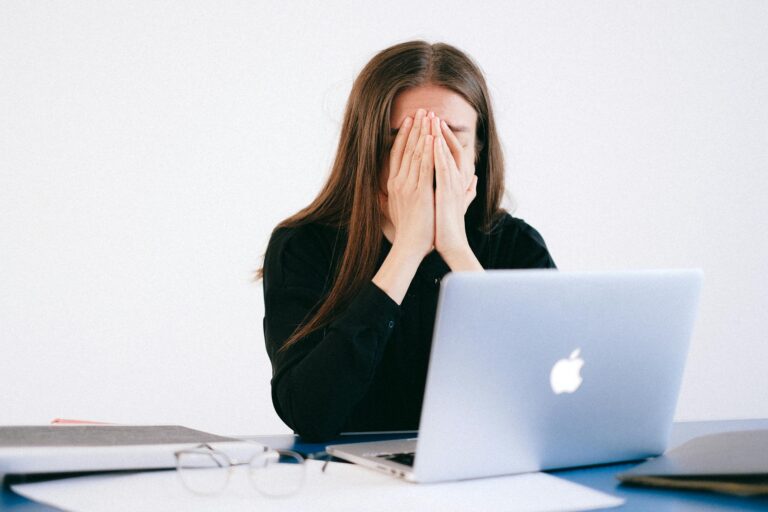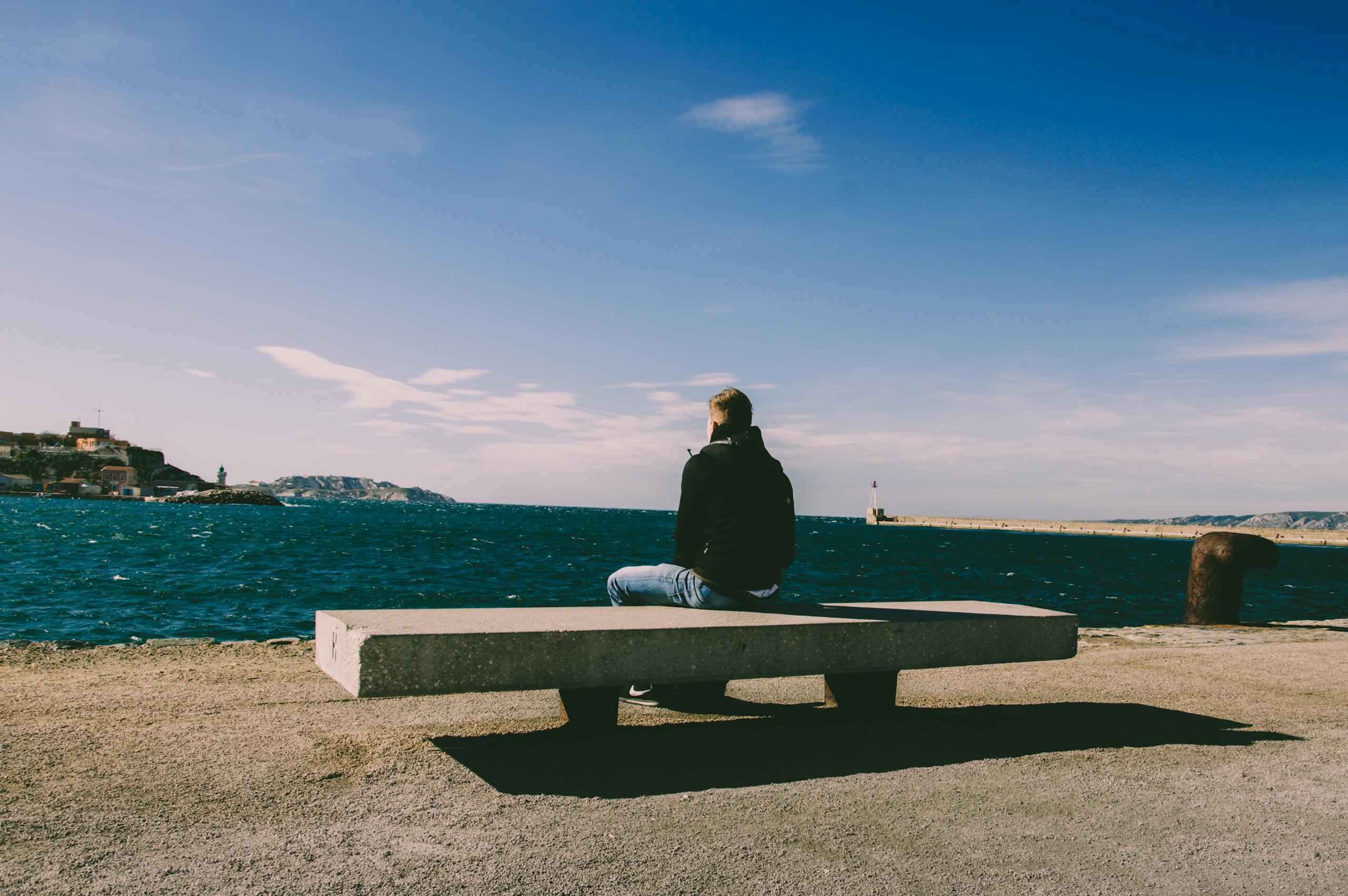

Everybody needs some time all alone. That sentence sounds simple, almost obvious, yet most of us spend enormous energy resisting it. For introverts especially, solitude isn’t a preference to apologize for. It’s a biological need, a creative wellspring, and the foundation of everything that makes us effective in the world.
What I’ve found, after two decades running advertising agencies and managing teams across every personality type imaginable, is that the people who resist alone time the most are often the ones who need it most urgently. And the people who’ve made peace with it, who’ve built it deliberately into their lives, tend to be the clearest thinkers, the most grounded leaders, and the most genuinely present when they do show up for others.
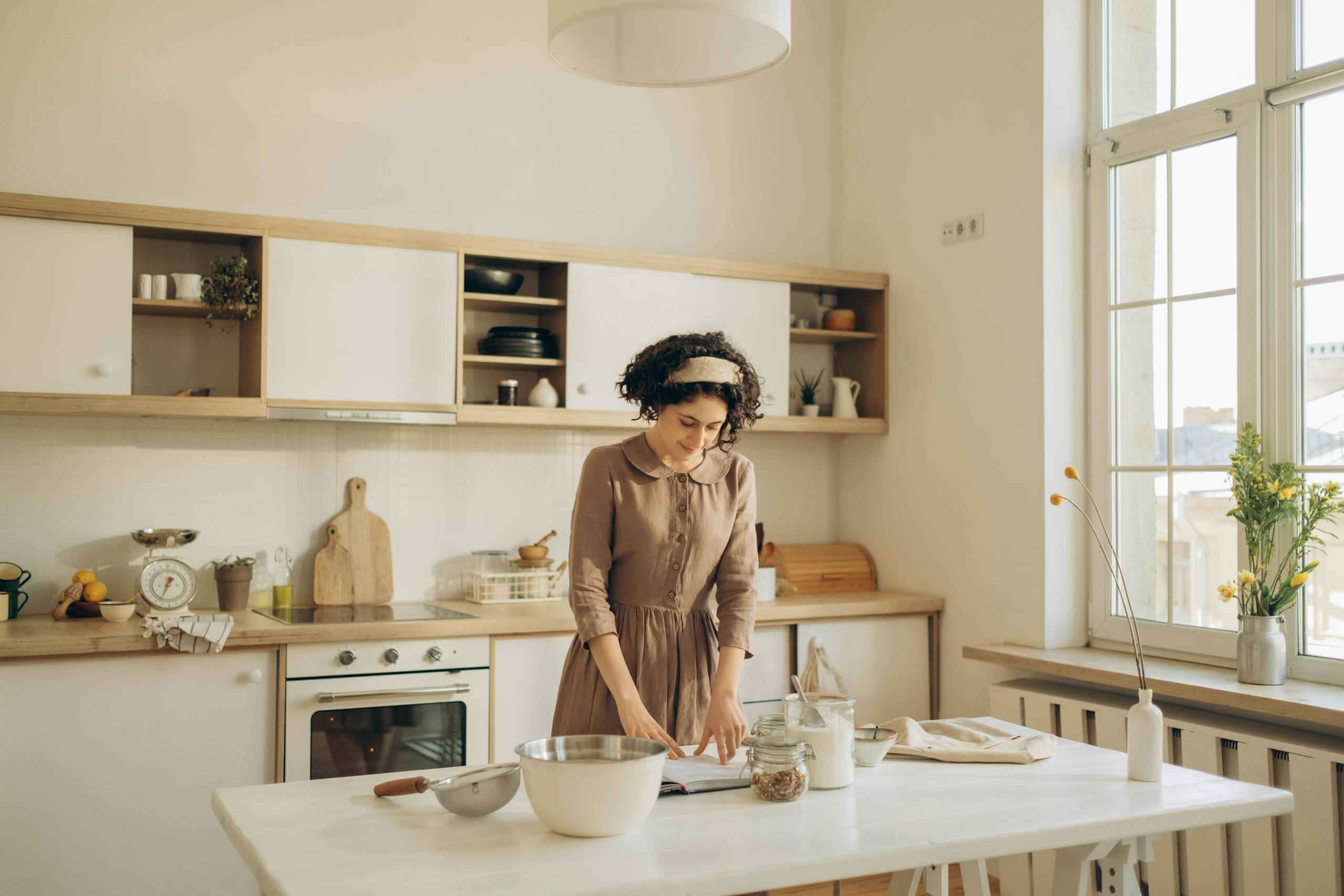
If you’ve ever felt guilty for wanting to disappear for a few hours, or wondered whether your need for solitude is a flaw rather than a feature, you’re in the right place. Our Solitude, Self-Care and Recharging hub covers this territory from every angle, and this article adds something I think gets overlooked: the cultural story we’ve been told about aloneness, why it’s wrong, and what it actually means to claim that time without shame.
Why Does Solitude Feel Like a Confession?
There’s a particular brand of social pressure I encountered constantly in agency life. Someone would ask what I did over the weekend, and if my honest answer involved reading alone, walking without headphones, or simply sitting with my own thoughts for a few hours, I’d watch their expression shift. Not hostility exactly. More like mild concern, the way people look when they think you might be sad and don’t know how to say so.
What’s your personality type?
Take our free 40-question assessment and get a detailed personality profile with dimension breakdowns, context analysis, and personalised insights.
Discover Your Type8-12 minutes · 40 questions · Free
So I learned to dress it up. “I was working on a project.” “I had a quiet one.” Anything that didn’t require explaining that I genuinely wanted to be alone, that it wasn’t a symptom of something broken but rather the thing that kept me functional the rest of the week.
Our culture has a complicated relationship with aloneness. We’ve conflated it with loneliness, with social failure, with introversion as a disorder to be treated rather than a trait to be respected. Harvard Health has written about the distinction between loneliness and isolation, noting that they aren’t the same thing and don’t carry the same risks. Chosen solitude, solitude you seek out intentionally, sits in an entirely different category from the involuntary disconnection that harms wellbeing.
That distinction matters enormously. And yet most of us were never taught it. We absorbed the message that wanting to be alone was something to explain away rather than something to honor.
What Actually Happens in the Quiet?
My mind doesn’t idle. When I’m in a meeting, on a call, or even in a casual conversation, there’s a layer of processing happening beneath the surface. I’m tracking tone, noticing what’s unsaid, filing information for later synthesis. It’s how I’m wired as an INTJ, and it’s genuinely useful in my work. But it’s also exhausting in a way that’s hard to explain to people who don’t experience it.
Alone time isn’t when my brain shuts off. It’s when it finally gets to do what it does best without interruption. The ideas that couldn’t fully form in a brainstorm session crystallize on a solo walk. The tension I couldn’t name during a difficult client conversation resolves itself while I’m making coffee in an empty kitchen. The connections between seemingly unrelated problems surface when no one is asking me to respond in real time.
I’ve seen this pattern documented in the psychology of creativity. The Greater Good Science Center at Berkeley has explored whether solitude makes people more creative, and the answer isn’t a simple yes or no. What emerges is more nuanced: solitude creates the conditions for a particular kind of thinking that group environments actively suppress. The pressure to respond, to perform, to be socially coherent pulls cognitive resources away from the deeper processing that generates original thought.
For those of us who already do much of our best thinking internally, that’s not a small thing. It’s the whole game.
Is the Need for Alone Time Really Universal, or Just an Introvert Thing?
Here’s where I want to push back gently on a framing I see a lot in introvert spaces. We sometimes talk about the need for solitude as though it’s exclusively ours, as though extroverts are perfectly fine without it and we’re the only ones who suffer when it’s taken away. That’s not quite right, and I think it actually weakens our case when we make it.
The need for some time alone is human. What differs is the threshold, the frequency, and the intensity of that need. Extroverts generally recharge through social interaction and find extended solitude draining. Introverts recharge through solitude and find extended social interaction draining. But neither group can sustain themselves entirely without some version of withdrawal, reflection, and quiet.
I watched this play out in my agencies over and over. The most extroverted people on my teams, the account executives who seemed to genuinely feed on client energy, would still hit a wall after weeks of back-to-back travel. They’d become irritable, scattered, less effective. They needed recovery too. They just didn’t always name it the same way.
What the research emerging from places like PubMed Central suggests is that solitude has measurable benefits for psychological wellbeing across personality types, though the optimal dose varies considerably from person to person. The introvert’s advantage isn’t that we’re the only ones who need this. It’s that we’ve often been forced to think more carefully about it, to advocate for it, and to build it intentionally into lives that weren’t designed with us in mind.
That advocacy, that intentionality, is something the broader culture is slowly catching up to. And for those of us who’ve spent years feeling like our need for solitude was a character flaw, that shift is genuinely meaningful.
What Happens When You Don’t Get Enough?
There was a period in my career, probably three or four years into running my first agency, when I stopped protecting my alone time entirely. The business was growing, the demands were relentless, and somewhere along the way I absorbed the idea that needing space was a luxury I couldn’t afford. I was wrong, and the cost was significant.
My thinking became reactive rather than strategic. I was responding to whatever landed in front of me rather than seeing the larger patterns I’d always been good at identifying. My patience shortened. My creativity dried up. I’d sit in front of a blank document and feel nothing, which had never happened to me before. At the time I thought I was burning out from overwork. In hindsight, I was burning out from under-recovery.
The experience of what happens when introverts are chronically deprived of solitude is something I’ve written about in more depth elsewhere. The short version is that it’s not just fatigue. It’s a kind of cognitive and emotional erosion that compounds over time. If you want to understand the full picture, this piece on what happens when introverts don’t get alone time lays it out clearly.
The CDC has documented how chronic social overstimulation and lack of restorative time can contribute to broader health risks. Their work on social connectedness and risk factors makes clear that the relationship between social engagement and wellbeing isn’t linear. More isn’t always better. Balance matters, and for introverts, the balance point sits in a different place than the cultural default assumes.

How Do Highly Sensitive People Experience the Need for Solitude Differently?
Not every introvert is a highly sensitive person, and not every HSP is an introvert, but there’s significant overlap. And for those who sit at that intersection, the need for alone time carries additional weight.
I’ve managed people over the years who I’d now recognize as HSPs, though we didn’t have that language in the early days of my career. One creative director I worked with closely for several years was extraordinarily gifted, producing work that consistently outperformed anything our competitors brought to the table. She also needed more recovery time than anyone else on the team, and she carried visible guilt about it.
She’d process client feedback at a depth that was both her greatest professional asset and her most significant personal burden. A dismissive comment from a client that rolled off everyone else’s back would occupy her for days. She wasn’t being dramatic. She was processing at a level of depth that most people simply don’t experience. And without adequate alone time to work through that processing, she’d become overwhelmed in ways that affected her work and her health.
For HSPs, the need for solitude is particularly essential, not as a mood preference but as a genuine physiological requirement. The nervous system needs time away from stimulation to regulate itself. Without it, the sensitivity that makes HSPs so perceptive and empathetic becomes a liability rather than a strength.
That same principle extends to sleep. HSP sleep and recovery strategies deserve their own careful attention, because the quality of rest matters as much as the quantity for people whose systems process at this depth. And daily self-care practices, the small consistent rituals that create a buffer between a sensitive person and an overstimulating world, are explored in detail in this piece on HSP self-care and essential daily practices.
Can Solitude Actually Be a Practice, Not Just a Preference?
This is where I think the conversation gets genuinely interesting. Most of us treat alone time as something we fall into when circumstances allow, a gap in the schedule, a cancelled meeting, a quiet Sunday morning. We receive it gratefully when it appears and mourn it when it doesn’t. What we rarely do is treat it as a practice we build and protect with the same intentionality we bring to exercise, nutrition, or professional development.
That shift in framing changed everything for me. When I stopped thinking of alone time as a luxury and started treating it as infrastructure, the quality of everything else in my life improved. I became more decisive in client meetings because I’d had time to think before I arrived. I became more patient with my team because I wasn’t running on empty. I became more creative because my mind had space to do what it does naturally when it’s not constantly in response mode.
Building a solitude practice doesn’t require dramatic life changes. It starts with small, consistent commitments. A morning hour before the rest of the house wakes up. A walk at midday without a podcast filling the silence. An evening without screens. The specific form matters less than the consistency and the intention behind it.
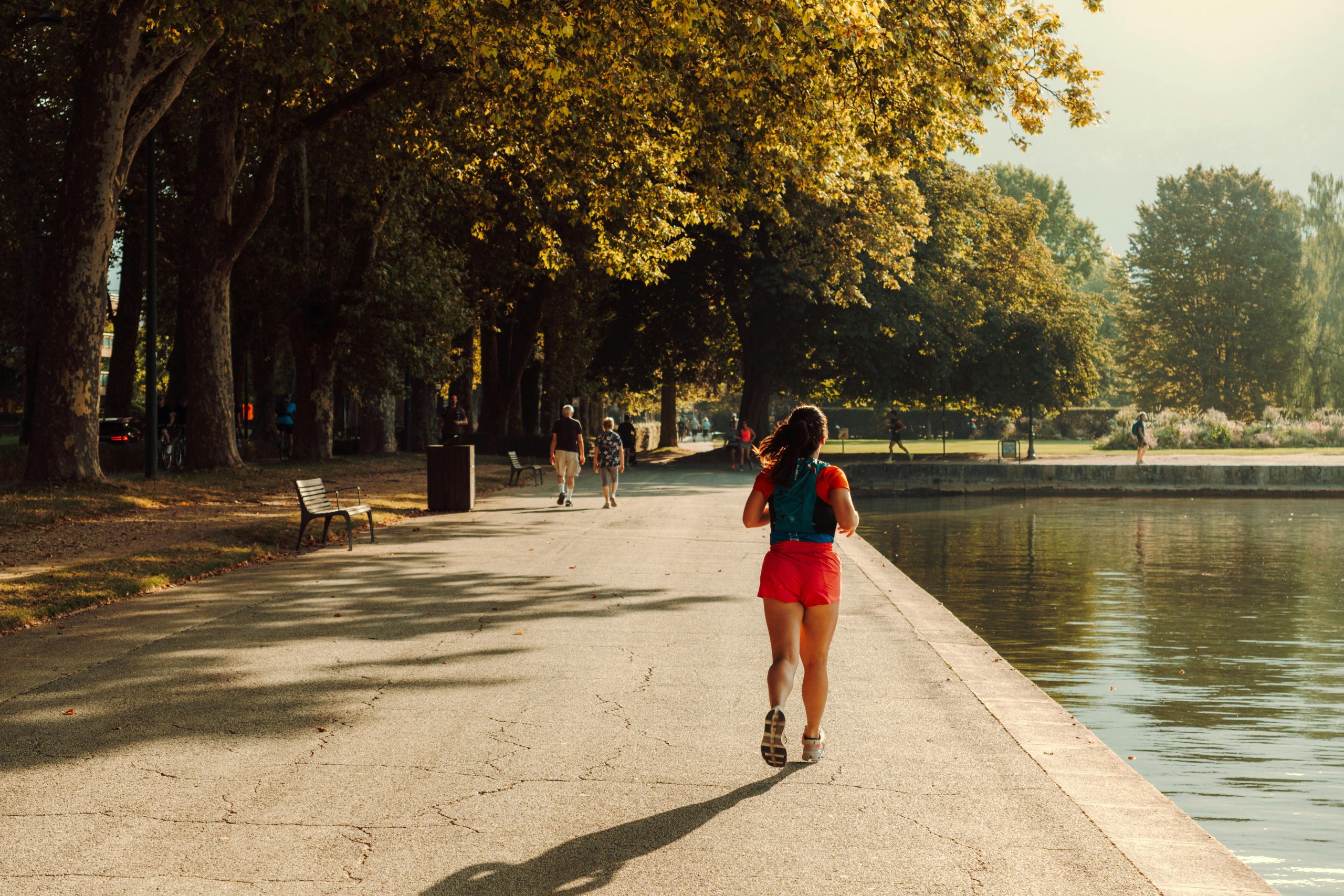
Nature amplifies this considerably. There’s something about being outside, away from built environments and their constant low-grade demands, that accelerates the recovery process for many introverts. The healing power of nature for sensitive people is well worth exploring if you haven’t already made outdoor solitude part of your regular practice. What I’ve found in my own experience is that an hour in a park or on a trail does more restorative work than three hours alone in my apartment. The environment matters.

What Does Solo Time Look Like When It’s Done Well?
There’s a difference between being alone and being in solitude. Scrolling a phone in an empty room is being alone. Sitting with your thoughts, walking without a destination, writing without an audience, reading something that genuinely interests you, these are forms of solitude. The distinction is about presence and intentionality.
I’ve become somewhat evangelical about what I’d call unstructured alone time, periods where there’s no task to complete, no content to consume, no productivity to demonstrate. Just space. It feels uncomfortable at first, especially for people who’ve spent years equating stillness with laziness. But that discomfort is usually a sign that something real is starting to happen.
Solo travel is one of the more interesting expressions of this. Psychology Today has examined solo travel as both a behavior and a preferred approach for many people, noting that traveling alone creates a particular quality of self-awareness and presence that group travel rarely matches. I’ve taken several solo trips over the years, usually framed to colleagues as “working remotely,” and the clarity I’ve returned with has been worth more than any conference I’ve attended.
There’s also something to be said for the kind of alone time that’s specifically about enjoyment rather than recovery or productivity. Mac alone time captures something of this, the simple pleasure of being alone with something you love, whether that’s music, a film, a book, or a creative project. Not every moment of solitude needs to be meditative or strategic. Sometimes it’s just about being with yourself in a way that feels good.
How Do You Protect Alone Time Without Isolating Yourself?
This is the tension I hear about most often from introverts who are trying to build more solitude into their lives. They’re afraid that claiming time alone will read as rejection, that the people around them will feel pushed away, that protecting their own needs will come at the cost of their relationships.
My experience, both personal and professional, is that the opposite is usually true. When I was running on empty, showing up depleted to every interaction, I wasn’t actually present for the people around me. I was physically there and emotionally absent. The version of me that showed up after genuine solitude was more engaged, more patient, more capable of actual connection.
The framing matters when you communicate this to people who are wired differently. “I need time alone to recharge” lands differently than “I don’t want to be around people.” The first is honest and specific. The second sounds like rejection even when it isn’t. Most people, once they understand that your solitude makes you better company rather than less of it, become more willing to support it.
What the emerging psychological literature suggests is encouraging. Recent work published in PubMed Central points toward solitude as a positive psychological state when it’s self-chosen, one that contributes to autonomy, self-knowledge, and emotional regulation rather than detracting from social functioning. The person who knows how to be alone well is often better at being with others, not worse.
And the benefits extend beyond mood and energy. Frontiers in Psychology has published work exploring the relationship between solitude and psychological wellbeing, finding that the quality of alone time, specifically whether it’s chosen and purposeful, predicts outcomes more reliably than the quantity. Ten minutes of genuine solitude can do more than two hours of distracted aloneness.
At the same time, it’s worth acknowledging what Psychology Today has noted about embracing solitude for health: success doesn’t mean withdraw from life but to return to it more fully. Solitude serves connection. It doesn’t replace it.
Making Peace With the Person You Are When You’re Alone
There’s a version of this conversation that stays practical, tips and strategies and frameworks. And those things have their place. But underneath all of it is something more fundamental: the question of whether you actually like being with yourself.
For years, I didn’t. Not in a dramatic, self-loathing way. More in the sense that I’d never really sat with myself long enough to find out. I’d filled every quiet moment with work, with content, with noise, with the performance of productivity. When I finally started creating real space, I had to get comfortable with what was there. The unresolved questions. The things I’d been avoiding. The parts of my thinking that were genuinely interesting when I gave them room to develop.
What I found, eventually, was that I was better company than I’d given myself credit for. And that the person who showed up in solitude, curious, reflective, a little strange in his enthusiasms, was someone I actually wanted to be. Not the performance of leadership I’d been running for years. Just myself, thinking clearly, without an audience.
That’s what solitude offers, at its deepest level. Not just rest or creativity or productivity, though it delivers all of those. It offers the chance to know yourself well enough to stop pretending to be someone else.
Everybody needs some time all alone. And for introverts, that time isn’t a retreat from life. It’s where life actually makes sense.
There’s much more to explore on this topic. Our complete Solitude, Self-Care and Recharging hub brings together everything we’ve written about reclaiming quiet, building restorative practices, and making peace with the introvert you actually are.
About the Author
Keith Lacy is an introvert who’s learned to embrace his true self later in life. After 20 years in advertising and marketing leadership, including running agencies and managing Fortune 500 accounts, Keith now channels his experience into helping fellow introverts understand their strengths and build fulfilling careers. As an INTJ, he brings analytical depth and authentic perspective to every article, drawing from both professional expertise and personal growth.
Frequently Asked Questions
Is wanting to be alone a sign that something is wrong?
No. Wanting time alone is a normal human need, and for introverts it’s a particularly important one. The distinction that matters is between chosen solitude, which you seek out intentionally because it restores you, and involuntary isolation, which is imposed by circumstances and tends to feel very different. Chosen solitude is associated with better self-knowledge, improved creativity, and stronger emotional regulation. It’s a sign of self-awareness, not dysfunction.
How much alone time do introverts actually need?
There’s no universal answer, because the need varies significantly from person to person and from week to week. What most introverts find is that the amount of social engagement in a given period determines how much recovery time they need afterward. A week of heavy client work or travel might require a full quiet weekend to restore equilibrium. A lighter week might need only an hour or two of daily solitude. Paying attention to your own signals, fatigue, irritability, difficulty concentrating, is more reliable than any fixed prescription.
Can solitude be harmful?
Solitude that’s chosen and purposeful is generally beneficial. Solitude that’s prolonged, involuntary, or accompanied by persistent loneliness is a different matter entirely. The research distinguishes clearly between these two states. If alone time leaves you feeling restored and clear, it’s working for you. If it consistently deepens feelings of disconnection or sadness, it may be worth examining what’s driving it and whether additional support would help.
How do you explain your need for alone time to people who don’t understand it?
Framing matters considerably. Explaining that solitude is how you recharge, similar to how some people need exercise or sleep to function well, tends to land better than language that sounds like withdrawal or avoidance. Most people respond well to understanding that your alone time makes you more present and engaged when you are with them, not less. Specificity helps too: “I need a quiet morning before a big week” is easier for people to support than a vague sense that you need space.
What’s the difference between solitude and loneliness?
Solitude is chosen and feels restorative. Loneliness is an emotional state characterized by a painful sense of disconnection, regardless of whether you’re physically alone or surrounded by people. You can feel lonely in a crowded room and completely at peace in an empty one. The determining factor isn’t the presence or absence of other people but whether your need for connection, on your own terms and at your own pace, is being met. Introverts often find that a small number of meaningful connections satisfies that need far more effectively than frequent but shallow social contact.