
Having a hard time doing school alone is something many introverts understand deeply, even though it seems like it shouldn’t be a problem. Introverts often prefer solitude, yet studying in complete isolation can feel surprisingly draining, disorienting, and even lonely in ways that are hard to name. The tension isn’t about needing other people constantly. It’s about finding the right kind of solitude, the kind that actually restores you instead of hollowing you out.
There’s a real difference between chosen solitude and imposed isolation, and school has a way of blurring that line completely. Whether you’re a student working through online coursework, an adult returning to education, or someone managing independent study programs, the structure of modern learning can leave you feeling untethered in ways that have nothing to do with your intelligence or discipline.

If you’ve been exploring what solitude actually means for introverts, and how it connects to recharging rather than retreating, our Solitude, Self-Care and Recharging hub covers this terrain from multiple angles. What I want to do here is something more specific: look honestly at why school alone feels hard even for people who genuinely love being alone, and what that tension is actually telling you.
Why Does School Alone Feel Different From Other Kinds of Solitude?
Most of my adult life, I’ve done my best thinking alone. Running advertising agencies, I learned quickly that my clearest strategic insights came not in brainstorming sessions but in the quiet hours before anyone else arrived at the office. I’d sit with a client brief, a cup of coffee, and no interruptions, and something would click that never clicked in a crowded conference room. That kind of solitude felt generative. It felt chosen.
What’s your personality type?
Take our free 40-question assessment and get a detailed personality profile with dimension breakdowns, context analysis, and personalised insights.
Discover Your Type8-12 minutes · 40 questions · Free
School solitude often feels different, and I think I understand why now. When you’re studying alone, especially in long stretches, you’re not just processing information in quiet. You’re also carrying the weight of accountability without any ambient social signal that you’re on track. In an office or classroom, even when you’re working independently, there’s a background hum of shared purpose. People around you are also working. That hum provides something introverts don’t always realize they’re using until it’s gone.
Psychologists sometimes call this “co-regulation,” the way human nervous systems subtly calibrate against each other even without direct interaction. You don’t have to talk to someone to feel less alone in your effort. But remove that ambient presence entirely, and a particular kind of anxiety can creep in. Not social anxiety. Something quieter and more disorienting: a sense that your effort is happening in a vacuum.
This is why online school, independent study programs, and self-paced learning can feel so much harder than the content itself warrants. It’s not that the material is beyond you. It’s that the container for learning has disappeared, and you’re being asked to generate your own structure from scratch while also absorbing complex information. That’s a significant cognitive load that has nothing to do with your ability.
Is the Problem Loneliness, or Something Else Entirely?
One of the most confusing parts of struggling with school alone is the guilt that comes with it. You’re an introvert. You’re supposed to love this. And yet here you are, restless, distracted, unable to focus, maybe even dreading the next study session. It can feel like a betrayal of your own identity.
Harvard Health has written about the distinction between loneliness and isolation, noting that the two aren’t the same thing, and that each carries its own risks. Loneliness is a felt sense of disconnection, regardless of how many people are physically present. Isolation is a structural condition, a reduction in actual social contact. What many students experience when studying alone is a specific blend of both: they’re structurally isolated by their learning format, and they feel the emotional weight of that disconnection even if they wouldn’t describe themselves as “lonely people.”
For introverts, this is particularly confusing because we often assume that our preference for solitude inoculates us against loneliness. It doesn’t. What it does is raise our threshold for how much social contact we need before we feel drained. That threshold is real and meaningful. But it doesn’t mean we need zero connection. It means we need the right kind, in the right doses, at the right times.
The CDC has noted that social disconnection carries real health consequences, including effects on mood, cognition, and motivation. These aren’t abstract risks. They show up in very practical ways for students working in isolation: difficulty concentrating, procrastination that feels almost physical, a strange flatness that makes even interesting material feel dull.

If you’ve noticed that your energy crashes in ways that feel disproportionate to your actual workload, it’s worth reading about what happens when introverts don’t get enough alone time. The flip side of that coin, spending too much time alone without intentional structure, creates its own kind of depletion that’s easy to misread as laziness or lack of motivation.
What Role Does Structure Play When You’re Studying Without External Accountability?
One of the things I noticed managing large creative teams was that my most introverted employees, the ones who did their best work in quiet, with headphones on and doors closed, still needed structure. Not micromanagement. Structure. Clear deadlines, explicit expectations, a defined scope. Without those guardrails, even the most self-directed introvert on my team would sometimes drift, not from lack of motivation but from lack of a container to hold their effort.
School alone strips away the external structure that most educational environments provide automatically. No professor watching the clock. No classmates whose presence signals that now is the time to be working. No physical space designated specifically for learning. You’re left to generate all of that internally, which is genuinely hard, even for people who are excellent at self-direction in other areas of life.
What tends to help is creating what I’d call a “structure of intention,” a set of deliberate choices about time, space, and sequence that replaces the external scaffolding your learning environment used to provide. This isn’t about rigid scheduling. It’s about giving your brain a reliable signal that now is the time to focus.
Some practical versions of this look like: always starting a study session with the same five-minute ritual, working only in one specific physical location, setting a timer for focused blocks with built-in breaks, or even having a specific playlist that your brain associates with studying. These aren’t tricks. They’re ways of telling your nervous system what mode it’s in, which is something traditional school environments do automatically through architecture, schedules, and social cues.
How Does Overstimulation and Understimulation Both Derail Introverted Students?
Here’s something that took me years to understand about my own wiring: I can be overstimulated and understimulated at the same time. In my agency days, I’d sometimes come home from a day of back-to-back client calls feeling simultaneously exhausted from too much input and starved for the kind of deep, quiet thinking I hadn’t been able to do all day. Both things were true at once.
Students doing school alone face a similar paradox, though often in the opposite direction. The external environment is quiet, maybe too quiet. But internally, the mind is churning through material, self-monitoring for comprehension, managing anxiety about deadlines, and trying to generate motivation without any external fuel. That internal noise can be just as depleting as a crowded classroom.
Highly sensitive people, who overlap significantly with introverts though they’re not the same group, often experience this particularly acutely. The essential daily practices for HSP self-care point toward something useful here: the importance of intentional sensory regulation throughout the day, not just at the end of it. For students, this might mean building short sensory breaks into study sessions rather than powering through until collapse.
A body of work on attention and cognitive load suggests that sustained focused effort depletes specific mental resources, and that recovery requires genuine disengagement, not just switching tasks. Scrolling your phone between study blocks doesn’t actually restore your focus capacity the way a short walk or a few minutes of quiet breathing does. The brain needs a different kind of input to reset, not just a different stream of the same kind.
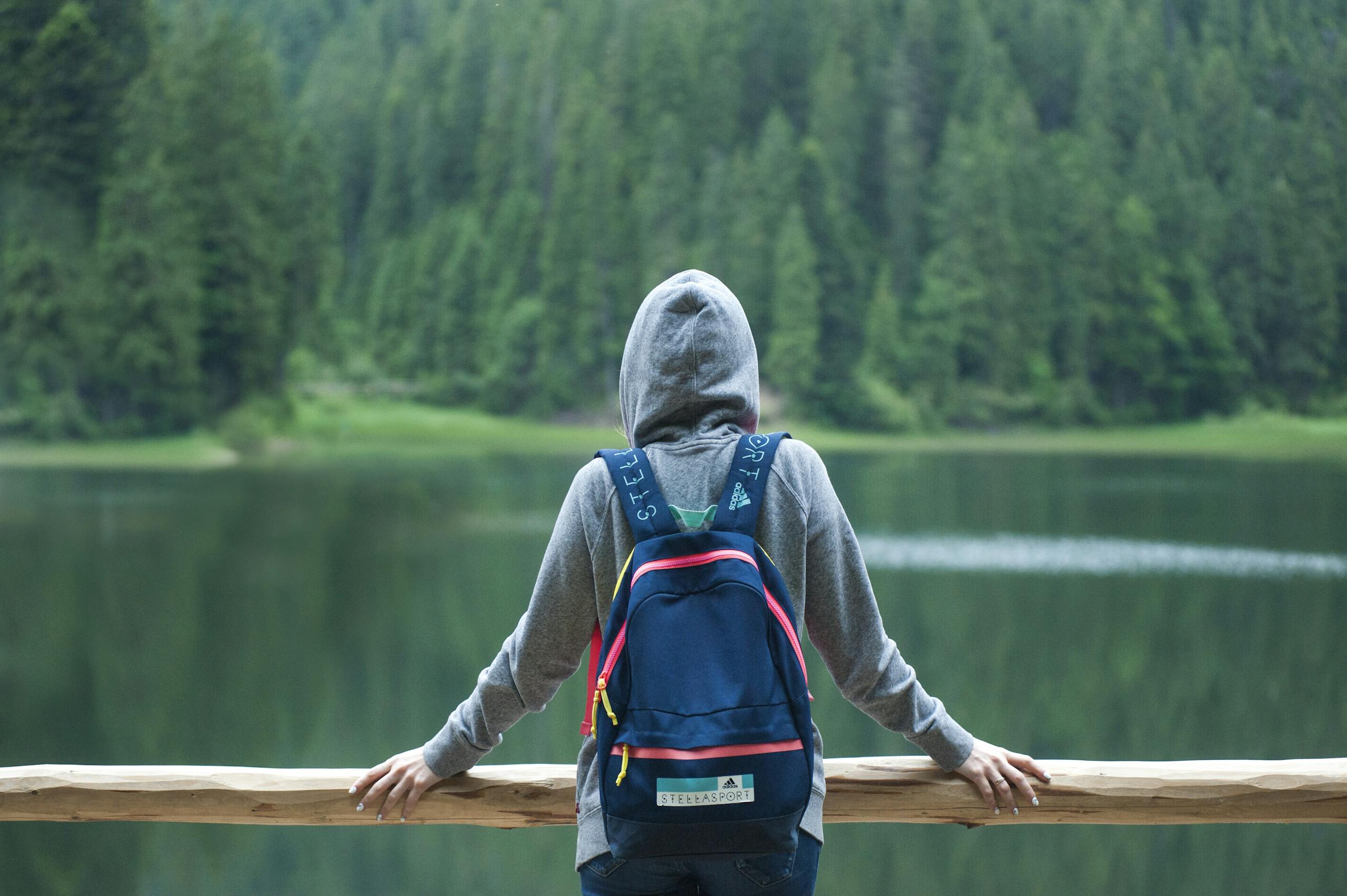
This is one reason I’ve come to believe that time in nature isn’t a luxury for introverted students. It’s a functional necessity. The research on the healing power of nature for sensitive people aligns with what many introverts report anecdotally: even twenty minutes outside can shift something fundamental about how the mind feels. Not because nature is magical, but because it offers a specific kind of low-demand, restorative attention that indoor environments rarely provide.
What Does Solitude Actually Require to Be Restorative Rather Than Depleting?
My favorite question to sit with lately is this one: what makes solitude feel good versus feel bad? Because the same amount of alone time can feel like a gift on one day and a punishment on another, and the difference isn’t always obvious.
After a lot of reflection, I’ve landed on a few conditions that seem to matter. First, chosen solitude feels different from imposed solitude. When I decided to work from home on Fridays during my agency years, that quiet felt like a reward. When I was stuck in the office alone because everyone else had left for a client event I hadn’t been invited to, the same silence felt loaded with something uncomfortable. The external conditions were nearly identical. The internal experience was completely different.
Second, productive solitude usually has a clear purpose. When I’m alone to think through a specific problem, write something specific, or read something I’ve chosen, the time has a shape. Unstructured solitude, especially when it’s extended, can start to feel like floating without an anchor. Students doing school alone often experience the worst of both: they’re technically supposed to be doing something specific, but without external accountability, the structure dissolves and the solitude starts to feel shapeless.
There’s interesting work on this at the intersection of psychology and creativity. A piece from Berkeley’s Greater Good Science Center explores how solitude can enhance creativity, but the conditions matter significantly. Solitude that’s chosen, purposeful, and balanced with some degree of social connection tends to be generative. Solitude that’s imposed, ambiguous, and prolonged tends to work against the very focus and creativity it’s supposed to support.
The piece from HSP Solitude: The Essential Need for Alone Time captures something I think applies broadly to introverted students: alone time works best when it’s intentional, when you enter it with some sense of what you need from it and how long you plan to stay. Wandering into solitude without intention is very different from choosing it deliberately.
How Does Sleep Factor Into the Struggle With Independent Study?
Something I’ve noticed in my own life, and heard echoed by many introverts I’ve connected with through this site, is that sleep quality tends to deteriorate when alone time isn’t working well. The mind that can’t find satisfying solitude during the day often tries to manufacture it at night, staying up later and later in search of that quiet, chosen space that never quite arrived during study hours.
For students doing school alone, this can become a genuine cycle. Poor sleep degrades concentration and emotional regulation. Degraded concentration makes studying harder and more anxiety-producing. That anxiety interferes with sleep. And around it goes.
The strategies outlined in HSP sleep and recovery strategies are worth taking seriously even if you don’t identify as highly sensitive. The emphasis on winding down deliberately, protecting the transition between work and rest, and treating sleep as a skill rather than a passive event, all of this applies directly to students who are struggling to find the off switch after long days of solitary study.
One thing that helped me during an intensive period of independent learning a few years ago was treating the end of my study day with the same intentionality I gave the beginning. A specific closing ritual, shutting the laptop, writing three things I’d accomplished, stepping outside briefly, signaled to my brain that the cognitive work was done for the day. Without that signal, I’d find myself mentally reviewing material at midnight, which helped neither my learning nor my sleep.

What Can Introverted Students Actually Do When Solitude Stops Working?
There’s a concept I’ve thought about a lot since leaving full-time agency life: the difference between alone and isolated. My dog Mac taught me something about this, actually. He’s content to be in a separate room for hours, doing his own thing, as long as he knows I’m nearby. The moment I leave the house entirely, something shifts for him. He’s not a social animal in the way some dogs are, but he needs to know the connection is available even when he’s not using it. I wrote about this a bit in my piece on Mac’s relationship with alone time, and I think there’s something genuinely useful in that observation for introverted students.
You don’t need constant social interaction to study well. But you might need the knowledge that connection is available. This is why some introverts find that studying in a coffee shop, even without talking to anyone, works better than studying at home. The ambient presence of other humans provides that background signal of connection without requiring you to actually engage with anyone. You get the solitude of your own focus and the subtle reassurance of shared space.
Another approach that many introverted students find helpful is what’s sometimes called “body doubling,” working in parallel with another person, either in person or via video, without necessarily talking or collaborating. The presence of another person engaged in their own focused work provides that ambient co-regulation I mentioned earlier. You’re alone in your task but not alone in your effort. For many introverts, that distinction makes a significant difference.
A third approach is building in what I think of as “social bookends.” Rather than trying to socialize throughout the day, which depletes introverted energy, you schedule a brief, meaningful connection at the start of the day and at the end. A short call with a friend, a check-in message with a study partner, even a few minutes of genuine conversation at a coffee shop. These brief connections can sustain you through long stretches of solitary work in a way that random, unplanned social contact often can’t.
Frontiers in Psychology has published work on how solitude functions differently depending on whether it’s voluntary or involuntary, with voluntary solitude associated with positive outcomes and involuntary isolation associated with negative ones. The practical implication for students is worth taking seriously: finding ways to make your solitary study feel chosen, even within a structured program that requires it, can shift the psychological experience significantly.
When Does Struggling Alone Become a Signal Worth Listening To?
I want to be honest about something. Not every struggle with school alone is a structural problem that better habits can fix. Sometimes the difficulty is a signal worth taking seriously, a sign that the learning format itself isn’t working for you, or that something deeper needs attention.
During my agency years, I had a brilliant strategist on my team who was trying to complete an online MBA while working full time. She was an INTJ like me, deeply self-directed and intellectually capable. But she was also going through a significant personal loss during that period, and the isolation of online study was amplifying her grief in ways she hadn’t anticipated. She came to me not because she needed career advice but because she didn’t know why she couldn’t focus. We talked for a long time that afternoon, and what became clear was that she needed to pause the program, not optimize her study habits.
There’s real value in distinguishing between “I need better strategies for studying alone” and “I need something different from what this situation is offering.” Both are legitimate responses. Only one of them is served by productivity tips.
Research published in PubMed Central on social isolation and mental health points to the cumulative nature of isolation’s effects. They don’t always announce themselves dramatically. They accumulate quietly, in small ways, until what started as mild difficulty concentrating has become something that feels much heavier. If you’ve been struggling for a while and the practical adjustments aren’t moving the needle, that’s worth paying attention to, possibly with professional support rather than another productivity system.
A separate PubMed Central review on solitude and wellbeing found that the relationship between alone time and psychological health is genuinely complex, shaped by individual differences, context, and the quality of the solitude rather than simply its quantity. More solitude isn’t always better, even for people who are naturally introverted. What matters is whether the solitude you’re experiencing is the kind that restores you or the kind that depletes you.
Finding Your Way Back to Yourself While Doing School Alone
What I’ve come to believe, after years of working through my own relationship with solitude and watching others work through theirs, is that success doesn’t mean become someone who can endure any amount of isolation with perfect equanimity. The goal is to understand your own specific needs well enough to meet them, even within conditions that weren’t designed with you in mind.
School alone is hard for many introverts not because introverts are fragile or poorly suited to independent learning, but because the conditions of isolated study often remove the very elements that make solitude work: choice, purpose, structure, and the quiet assurance that connection is available when you need it. Recognizing that is the first step toward doing something about it.
Psychology Today has explored how embracing solitude intentionally differs from simply being alone, and the distinction maps directly onto what many students experience. Intentional solitude is something you shape. Accidental isolation is something that shapes you, often in ways you don’t notice until you’re already depleted.
There’s also something worth saying about identity. Struggling with school alone doesn’t mean you’ve been wrong about yourself all these years. It doesn’t mean you’re not really an introvert, or that your preference for quiet and independent thinking was somehow mistaken. It means you’re human, and humans, even deeply introverted ones, are wired for connection in ways that don’t disappear just because we prefer smaller doses of it.
The work of understanding your own solitude needs is ongoing. It shifts with life circumstances, with stress levels, with what else is happening in your world. What worked when you were twenty-two may not work at thirty-five. What worked before a major loss may not work during one. Staying curious about what your solitude actually needs, rather than assuming you already know, is part of what makes this an interesting thing to pay attention to rather than a problem to solve once and file away.
Psychology Today also has a thoughtful piece on how solo experiences, whether travel or study, require a different kind of intentionality than shared ones. That framing resonates with me. Doing things alone isn’t a default mode that requires no thought. It’s a practice that benefits from as much attention as any other way of moving through the world.
If you’re in the middle of a difficult stretch of school alone right now, I want to say something directly: the difficulty doesn’t mean you’re doing it wrong. It might mean you’re doing it in conditions that weren’t built for how you’re wired, and that recognizing that is actually useful information, not a failure. Start there. Build from there. And be patient with yourself in the meantime.
There’s a lot more to explore on this topic across our Solitude, Self-Care and Recharging hub, where we look at the full picture of how introverts can build lives that actually restore them rather than slowly drain them.
About the Author
Keith Lacy is an introvert who’s learned to embrace his true self later in life. After 20 years in advertising and marketing leadership, including running agencies and managing Fortune 500 accounts, Keith now channels his experience into helping fellow introverts understand their strengths and build fulfilling careers. As an INTJ, he brings analytical depth and authentic perspective to every article, drawing from both professional expertise and personal growth.
Frequently Asked Questions
Why do introverts sometimes struggle with studying alone even though they prefer solitude?
Introverts prefer solitude for recharging, but that doesn’t mean all forms of alone time feel the same. Studying alone removes the ambient social cues, external structure, and shared purpose that traditional learning environments provide automatically. Without those elements, even naturally solitary people can feel unmoored. The issue isn’t too much quiet. It’s the absence of the conditions that make solitude feel chosen and purposeful rather than imposed and shapeless.
Is it normal to feel lonely while doing school alone as an introvert?
Yes, and it’s more common than many introverts expect. Loneliness is a felt sense of disconnection that can occur regardless of how much social contact you actually want. Introverts have a higher threshold for social stimulation, but that doesn’t mean they need zero connection. Extended isolation during independent study can trigger a specific kind of loneliness that has nothing to do with being unsociable. Recognizing this as a normal human response rather than a personality contradiction is genuinely helpful.
What practical strategies help introverts study alone more effectively?
Several approaches tend to help. Creating a consistent study ritual signals to your brain that it’s time to focus. Working in a public space like a library or coffee shop provides ambient human presence without requiring interaction. Body doubling, working in parallel with someone else via video or in person, offers co-regulation without conversation. Building brief, intentional social connections at the start and end of the day can sustain you through long solitary stretches. And treating the end of your study day as deliberately as the beginning helps prevent cognitive spillover into rest time.
How do I know if my struggle with school alone needs more than productivity strategies?
Pay attention to how long the difficulty has been present and whether it’s getting worse despite adjustments. If practical changes to your study environment and habits aren’t making a meaningful difference after a few weeks, that’s worth noting. Extended isolation can have cumulative effects on mood, motivation, and cognitive function that go beyond what better scheduling can address. If you’re experiencing persistent low mood, significant anxiety, or a sense of numbness that extends beyond your study sessions, speaking with a mental health professional is a reasonable and worthwhile step.
What’s the difference between restorative solitude and depleting isolation for students?
Restorative solitude tends to be chosen, purposeful, and balanced with some degree of available connection. You enter it knowing what you’re there to do and with a sense that other people are accessible when you need them. Depleting isolation tends to be imposed, ambiguous, and prolonged without relief. For students, the distinction often comes down to how much agency you feel over your alone time and whether the solitude has a clear shape. Building intentionality into your study solitude, through rituals, structure, and deliberate breaks, can shift it from the depleting category toward the restorative one.