
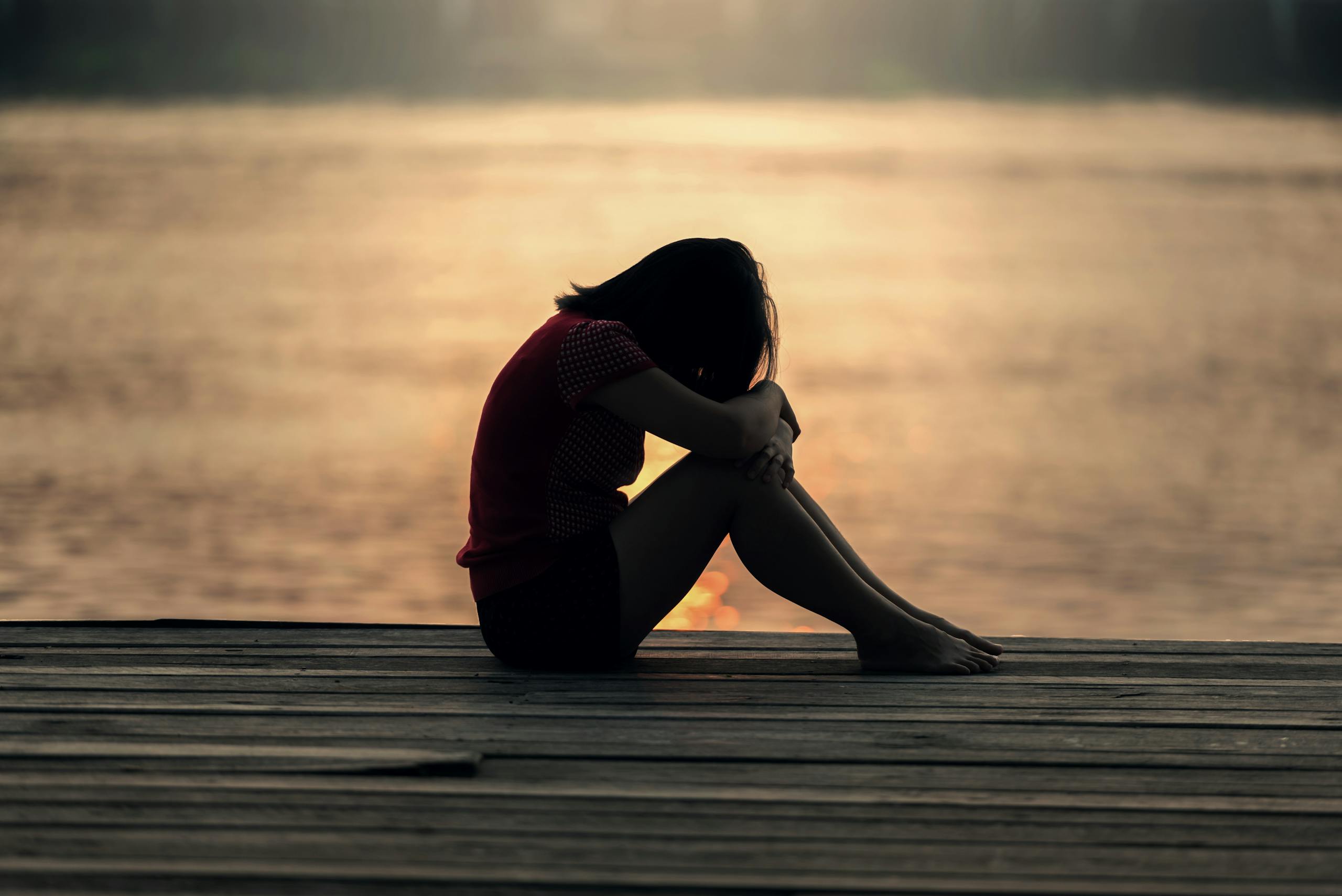
Going a long stretch without alone time isn’t just inconvenient for an introvert. It’s quietly destabilizing. Without those pockets of solitude, the internal processing that makes you who you are starts to stall, and a low-grade sense of depletion sets in that’s hard to name but impossible to ignore.
You might not even realize how long it’s been until something small breaks through, a quiet Sunday morning, an empty parking lot, five minutes alone in your car before walking into the house, and you feel the relief so sharply it almost hurts. That contrast is the signal. Your system has been running on empty, and you’ve been so busy managing everything else that you stopped noticing.
If that sounds familiar, you’re in good company. A lot of introverts go through extended periods where solitude disappears entirely, not because they chose it, but because life fills every gap before they can. This article is about what that does to you, why it matters, and how to start reclaiming the time your mind genuinely needs.
There’s a lot more to explore on this topic across the Solitude, Self-Care and Recharging Hub, where I’ve gathered everything I’ve written about what introverts actually need to function well. But this piece gets into something specific: the experience of going without alone time for so long that you’ve almost forgotten what it felt like to have it.
Why Does the Absence of Alone Time Feel So Physical?
There was a stretch in my mid-forties when I was running a mid-sized advertising agency, managing a team of about thirty people, fielding client calls from early morning through dinner, and coming home to a house full of noise and activity. I told myself I was handling it. I was sleeping, eating, showing up. But somewhere around month four of that pace, I noticed I had stopped forming full thoughts. I’d start a sentence in my head and lose it before it finished. I’d sit in a meeting and realize I had retained almost nothing from the previous twenty minutes.
What’s your personality type?
Take our free 40-question assessment and get a detailed personality profile with dimension breakdowns, context analysis, and personalised insights.
Discover Your Type8-12 minutes · 40 questions · Free
At the time, I chalked it up to stress or overwork. It took me a while to understand what was actually happening. My brain, which processes everything through a dense internal filter, had simply run out of processing space. There was no quiet time in which to complete the work my mind naturally does. Everything was half-finished, pending, stacked up.
This is why the absence of alone time feels physical for many introverts. It’s not metaphorical fatigue. The cognitive and emotional processing that introverts do internally requires time and quiet to actually complete. Without that space, the backlog builds. And a backlog of unprocessed experience is exhausting in a way that’s hard to explain to someone who doesn’t feel it.
A piece on what happens when introverts don’t get alone time gets into this in detail. The short version: it’s not just moodiness or preference. Extended deprivation of solitude can affect concentration, emotional regulation, and your sense of self. It’s a legitimate need, not a personality quirk to push through.
How Does Life Steal Alone Time Without You Noticing?
Most people don’t make a conscious decision to stop having alone time. It gets crowded out gradually, and the process is so incremental that you don’t see it happening until you’re deep in the deficit.
In my agency years, the erosion was slow. A client project expanded and suddenly I was on calls every morning before I’d had a chance to think. A team member needed more support and I started coming in earlier. My commute, once a thirty-minute buffer I protected fiercely, got replaced by a phone call I told myself was necessary. One by one, the small pockets of quiet I’d built into my days disappeared, and I replaced them with productivity because that felt more justifiable than sitting quietly with my own thoughts.
That last part is worth sitting with. Many introverts, especially those who’ve spent years in high-performance environments, have internalized the idea that rest and solitude are indulgences. Something you earn after the work is done. So when life gets busy, solitude is the first thing to go, because it’s the easiest thing to frame as optional.
But the costs accumulate. Irritability that seems disproportionate. A flattening of enthusiasm for things you normally enjoy. A kind of emotional numbness that settles in when you’ve been in constant social contact for too long. These aren’t signs of ingratitude or weakness. They’re the predictable result of running an introvert’s system without the maintenance it requires.

The psychology here connects to something broader about how introverts are wired. Psychology Today’s work on solitude and health points to the genuine restorative value of time spent alone, not as social avoidance, but as active recovery. The problem is that a culture oriented around constant connection rarely validates that need until someone burns out visibly enough to force a pause.
What Does Prolonged Social Saturation Actually Do to an Introvert?
There’s a version of this that shows up quietly and a version that shows up loudly. I’ve experienced both.
The quiet version looks like competence from the outside. You keep functioning. You meet your obligations. You show up to things and say the right words. But internally, there’s a kind of dimming. Your thinking gets shallower. You stop having the interesting internal conversations that usually fuel your best work. The ideas slow down. You start operating on routine rather than genuine engagement, going through the motions of a life that used to feel more alive.
The loud version is harder to ignore. Snapping at someone you care about over something trivial. Feeling a surge of almost irrational resentment when someone asks you for one more thing. Crying in your car and not entirely knowing why. These aren’t personality failures. They’re what happens when the pressure valve has been sealed for too long.
I’ve seen this play out in people I managed, too. One of my senior account directors, a deeply introverted woman who was exceptionally good at client relationships, started becoming short-tempered and erratic during a particularly intense campaign season. I initially read it as stress about the project. But when I checked in with her one afternoon, what she said was that she hadn’t had a single hour to herself in three weeks. Every evening had been client dinners or team events. Every morning had started with calls. She wasn’t struggling with the work. She was struggling without any time away from it.
We restructured her schedule for the following two weeks to build in recovery time. The change in her work was immediate and significant. That experience taught me something I’ve carried since: for some people, protecting alone time isn’t a perk. It’s a performance requirement.
There’s also a distinction worth making here between loneliness and isolation. Harvard’s research on loneliness versus isolation clarifies that these are not the same experience. An introvert who hasn’t had alone time isn’t lonely. They may be surrounded by people they love and still feel a profound absence of something essential. That something is the private interior space where they actually live.
Is There a Connection Between Alone Time and Creativity?
Yes, and this one matters a great deal to me professionally.
Some of my best strategic thinking over two decades in advertising happened in transit. On planes, on long drives between client offices, on early morning walks before the day started. Not because those environments were special, but because they were uninterrupted. My mind could actually finish a thought, follow a thread, make a connection between two things that seemed unrelated until they weren’t.
When I lost those pockets of quiet, the quality of my thinking changed. I became more reactive and less original. I was solving problems that were in front of me rather than anticipating problems that were coming. The difference between those two modes of thinking is enormous in a creative industry, and the difference was almost entirely about whether I’d had time to think without interruption.
The Greater Good Science Center at Berkeley has written about the relationship between solitude and creativity, and what they describe aligns closely with my lived experience. Time alone allows the kind of diffuse, wandering mental activity that generates genuine insight. Constant social engagement keeps the brain in a reactive, responsive mode that’s useful for execution but not for the deeper generative thinking that produces something new.
For introverts who do creative work, or any work that requires original thought, the absence of alone time isn’t just uncomfortable. It’s professionally costly in ways that are real but hard to quantify.
What About Highly Sensitive Introverts Who Haven’t Had Alone Time?
If you identify as a highly sensitive person as well as an introvert, the stakes around alone time are even higher. HSPs process sensory and emotional input more deeply than most people, which means the accumulation of stimulation over a long stretch without recovery time can become genuinely overwhelming.
I’ve worked with and alongside people who fit this profile throughout my career. One creative director I managed for several years was both deeply introverted and highly sensitive. She was extraordinarily perceptive, one of the best readers of client psychology I’ve ever seen. But she also needed significant recovery time after intense client interactions, and when she didn’t get it, her work and her wellbeing both suffered noticeably.
The connection between HSP traits and solitude needs is something I’ve written about in depth. The piece on HSP solitude and the essential need for alone time goes into why this isn’t about being fragile. It’s about understanding a nervous system that processes the world at a different depth than average and requires corresponding recovery.
Sleep is also part of this picture. When highly sensitive introverts go extended periods without adequate alone time, sleep quality often deteriorates as well, because the mind hasn’t had the quiet processing time it needs during waking hours. The article on HSP sleep and recovery strategies addresses this directly, and it’s worth reading if you’ve noticed your sleep getting worse during periods of social overload.
There’s also a body of work connecting sensory sensitivity with the need for nature as a specific form of recovery. Being outside, away from the density of human interaction and artificial stimulation, does something distinct for people wired this way. The piece on HSP nature connection and the healing power of the outdoors explores that specifically. I can vouch for it personally. Some of my most effective recharging has happened on long solo walks in places where I couldn’t hear traffic.
How Do You Start Reclaiming Alone Time When Life Has Filled Every Gap?
This is where I want to be honest about something: reclaiming alone time when you’ve been without it for a long time is not as simple as blocking an hour on your calendar. There are practical obstacles and there are internal ones, and in my experience, the internal ones are harder.
The practical obstacles are real. Caregiving responsibilities, demanding jobs, shared living spaces, family dynamics that don’t naturally accommodate one person’s need to disappear for a while. These aren’t imaginary. They require actual problem-solving and sometimes negotiation with the people in your life.
But the internal obstacles are what I want to focus on, because I’ve watched them stop a lot of introverts, including myself, from protecting time that we genuinely needed.
The first internal obstacle is guilt. Many introverts have absorbed the message, from family, from workplace culture, from the general social environment, that wanting to be alone is a form of rejection or selfishness. So even when the opportunity for solitude appears, they fill it with something productive or social because that feels more justifiable. I did this for years. I would have a free evening and immediately find something useful to do with it rather than simply rest in my own company.
The second obstacle is rustiness. If you haven’t had genuine alone time in months, sitting with yourself can feel strange and uncomfortable at first. Your mind has been in reactive mode for so long that it doesn’t know what to do when nothing is demanding its attention. This discomfort is temporary, but it can be enough to make people reach for their phones or manufacture social plans rather than sit through the initial strangeness.
Start smaller than you think you need to. Not a weekend retreat. Not even an evening. Fifteen minutes in the morning before anyone else is awake. A lunch break where you eat alone without looking at your phone. A short walk after dinner with no audio input. These micro-doses of solitude begin to rebuild the internal quiet that extended social saturation erodes.
The broader framework of HSP self-care and essential daily practices offers a useful structure here, even if you don’t identify as highly sensitive. The principle of building recovery into your daily rhythm rather than waiting until you’ve hit a wall applies to all introverts.

What Does Healthy Alone Time Actually Look Like in Practice?
One of the things I’ve noticed over years of paying attention to this is that not all alone time is equally restorative. Sitting alone while scrolling social media or watching television is not the same as sitting alone in actual quiet. The first keeps your brain in a reactive, input-processing state. The second allows something different to happen.
Genuine solitude involves some degree of mental freedom, time where you’re not consuming someone else’s content or responding to external demands. It can look like a lot of different things: reading something you chose for pleasure, writing in a journal, sitting outside without an agenda, cooking a meal slowly and deliberately, working on a project that’s entirely your own.
What it doesn’t require is silence in the literal sense, or physical isolation. Some of my most restorative alone time has happened in coffee shops, on public transit, in airport terminals. The quality isn’t about the environment. It’s about whether you’re in charge of your own attention. Whether you’re choosing where your mind goes rather than having it directed by someone else’s needs or your screen.
There’s an article I wrote about Mac’s approach to alone time that gets at this distinction in a way that I found genuinely clarifying. Sometimes seeing the concept through a different lens makes it easier to understand what you’re actually looking for when you say you need to be alone.
Spending time in nature is one of the most effective forms of restorative solitude I’ve found, and the evidence behind this is solid. A study published in PubMed Central examining attention restoration and natural environments supports what a lot of introverts already know intuitively: time in natural settings reduces the cognitive fatigue that accumulates from sustained directed attention. You don’t have to hike a mountain. A park bench works. The point is the absence of the usual demands.
What If You Live With Others and Alone Time Feels Impossible?
This is the question I hear most often, and it’s the one I have the most complicated feelings about, because I’ve been on both sides of it.
There were years when I lived with a partner and two children in a house that was almost never quiet. I loved my family deeply and I also felt, on many evenings, like I was slowly disappearing. Not because anyone was doing anything wrong, but because the structure of family life didn’t naturally include space for an introvert to be genuinely alone.
What helped was being honest about what I needed in a way I hadn’t been before. Not framing it as wanting to get away from my family, but explaining that I needed time to think without input, that it made me a better person to be around, that it wasn’t personal. That conversation was uncomfortable. I had to overcome the internalized guilt I mentioned earlier. But it changed things.
My partner started protecting Saturday mornings for me. I started getting up an hour before everyone else. We found a rhythm. It required communicating something that felt vulnerable, and it required the people in my life being willing to understand a need they didn’t personally share. Neither of those things is easy. But both are possible.
The alternative, which is continuing to white-knuckle through indefinite social saturation, eventually costs more than the discomfort of asking for what you need. The CDC’s work on social connectedness and health risk factors emphasizes the importance of balance in social engagement, and that balance looks different for different people. Advocating for your own version of that balance is not selfish. It’s necessary.
What Happens When You Finally Get Alone Time After a Long Absence?
The first thing that often happens is that it doesn’t feel the way you expected. You’ve been fantasizing about solitude for weeks, and then when it arrives, you feel restless, a little lost, maybe even anxious. Your nervous system has been calibrated for constant input, and the absence of it takes some adjustment.
I’ve experienced this after particularly intense project cycles. The first day of genuine downtime would often feel worse than the busy period. My mind would keep generating tasks, anticipating the next demand, scanning for what I was forgetting. It took a full day or sometimes two before the real decompression began.
This is normal. Give it time. The restlessness passes, and what comes after it is something that’s hard to describe to someone who hasn’t felt it, a kind of settling, a return to yourself. Your own thoughts start to feel interesting again. You notice things. You have opinions about things that aren’t work. You remember what you actually enjoy.
Findings published in Frontiers in Psychology on the psychological benefits of solitude suggest that the quality of alone time improves significantly when it’s approached with intention rather than simply as an absence of activity. Knowing what you’re doing with your solitude, even loosely, helps your nervous system settle into it more quickly.
The other thing that happens, and this one surprised me the first time I noticed it, is that you become better at being with other people afterward. Not in a performative way, but genuinely. When I’d had enough time alone to feel like myself again, I was warmer, more present, more interested in the people around me. The introvert’s need for solitude isn’t opposed to connection. It’s what makes genuine connection possible.

There’s also something worth naming about the longer arc of this. Introverts who consistently protect their alone time tend to develop a more stable and grounded sense of identity over time. The internal work that happens in solitude, processing experience, clarifying values, understanding your own reactions, is the work of becoming more fully yourself. When that work goes undone for long enough, there’s a kind of drift. You start to lose the thread of who you are outside of your roles and obligations.
A recent study in PubMed Central examining solitude and psychological wellbeing points to this connection between intentional alone time and self-concept clarity. For introverts especially, solitude isn’t just rest. It’s identity maintenance.
If you’re in a season where alone time has been scarce, the most important thing is to stop waiting for circumstances to create it for you. They won’t. You have to protect it, advocate for it, and treat it with the same seriousness you’d give any other genuine need. Not because you’re high-maintenance. Because you know how you work, and you’ve seen what happens when you ignore it.
More resources on building sustainable solitude and self-care into your life as an introvert are collected in the Solitude, Self-Care and Recharging Hub, and I’d encourage you to spend some time there if this piece resonated.
About the Author
Keith Lacy is an introvert who’s learned to embrace his true self later in life. After 20 years in advertising and marketing leadership, including running agencies and managing Fortune 500 accounts, Keith now channels his experience into helping fellow introverts understand their strengths and build fulfilling careers. As an INTJ, he brings analytical depth and authentic perspective to every article, drawing from both professional expertise and personal growth.
Frequently Asked Questions
How long is too long for an introvert to go without alone time?
There’s no universal threshold, but most introverts begin to notice real effects within a few days of continuous social saturation. Cognitive fog, emotional flatness, irritability, and difficulty concentrating are common early signs. Extended periods of weeks or months without genuine solitude can affect your sense of identity and your ability to do creative or deep work. The signal to pay attention to is the quality of your internal life, not a specific number of days.
Is wanting alone time a sign that something is wrong in my relationships?
Not at all. An introvert’s need for solitude is a feature of their wiring, not a reflection of how they feel about the people in their lives. Many introverts deeply love their partners, families, and friends and still need regular time away from social interaction to function well. The need for alone time is about internal processing requirements, not about the quality of your connections. In fact, introverts who protect their solitude often find they’re more genuinely present and engaged when they are with others.
What’s the difference between being alone and being lonely?
Loneliness is the painful experience of feeling disconnected from others, regardless of whether people are physically present. Being alone is simply the state of not being in social interaction. For introverts, time alone is typically restorative and chosen, while loneliness is an absence they didn’t want. An introvert can feel lonely in a crowded room and completely content in an empty one. The emotional quality of the experience is what distinguishes them, not the physical circumstance.
How do I explain my need for alone time to people who don’t understand it?
Framing it in terms of function rather than preference tends to land better. Instead of saying you want to be alone, explain that alone time is how you recharge, and that without it you become less effective and less pleasant to be around. Most people respond well to the idea that you’re managing your own wellbeing rather than avoiding them. Being specific about what you need, an hour in the morning, a quiet evening once a week, helps too. Vague requests are easier to dismiss than concrete ones.
Can you recover from a long stretch without alone time, or does the damage accumulate?
Recovery is absolutely possible, though it takes longer than most people expect. After an extended period of social saturation, the first days of solitude often feel restless and uncomfortable rather than immediately restorative. Your system needs time to downshift. With consistent, protected alone time built back into your routine, most introverts find that cognitive clarity, emotional stability, and creative energy return within a few weeks. what matters is consistency. Sporadic large doses of solitude are less effective than smaller amounts woven regularly into your daily life.