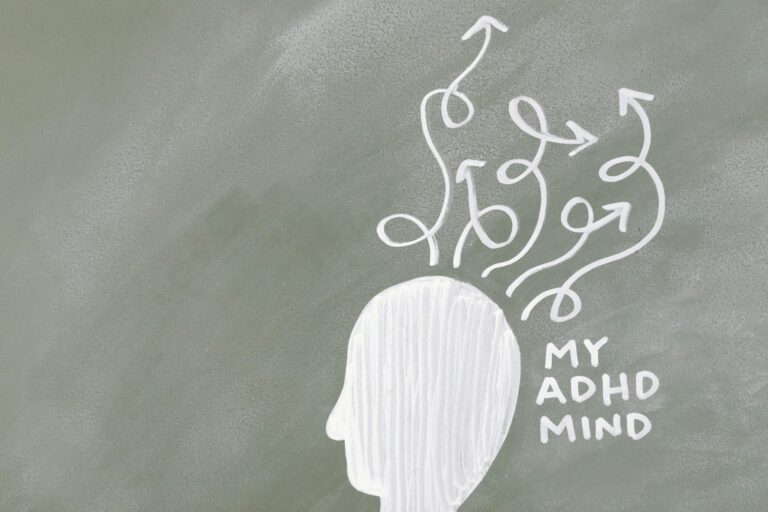

Spending time alone with your own thoughts isn’t a sign of withdrawal or antisocial behavior. For many introverts, it’s the single most important thing they can do to stay clear-headed, emotionally grounded, and genuinely themselves. Solitude isn’t emptiness. It’s where the real thinking happens.
Most people in my life assumed I was always “on.” Running an advertising agency means client calls, creative reviews, pitch presentations, and the constant hum of a team that needs direction. From the outside, it probably looked like I thrived on that energy. Inside, I was counting the hours until I could close my office door and just think.
That need, that quiet pull toward my own inner world, took me years to stop apologizing for. And once I stopped apologizing, everything got better.

If you’re someone who needs time alone with your own thoughts to feel like yourself, you’re in the right place. Our Solitude, Self-Care and Recharging hub covers the full landscape of how introverts restore themselves, and this article goes into one of the most personal corners of that territory: what it actually means to need your own mental space, and why honoring that need isn’t optional.
Why Do Introverts Need Time Alone with Their Thoughts?
There’s a difference between being lonely and needing solitude. Loneliness is an ache. Solitude, for an introvert, is a form of oxygen. The distinction matters because so many of us spend years conflating the two, or allowing others to conflate them for us.
What’s your personality type?
Take our free 40-question assessment and get a detailed personality profile with dimension breakdowns, context analysis, and personalised insights.
Discover Your Type8-12 minutes · 40 questions · Free
Introversion isn’t shyness and it isn’t social anxiety. At its core, it’s about where your energy comes from and where it goes. Extroverts tend to gain energy through interaction. Introverts tend to spend it. That’s not a flaw in the wiring. It’s just a different kind of wiring. And when you’ve been spending energy all day, you eventually need to recharge. For introverts, that recharge happens inside, not outside.
As an INTJ, my internal processing runs deep and almost constantly. I’m not just replaying conversations or making to-do lists in my head. I’m analyzing patterns, connecting ideas, questioning assumptions, and building mental frameworks that help me make sense of what’s happening around me. That work can’t happen in a crowded room. It can’t happen on a Zoom call. It happens in the quiet.
A piece published by Psychology Today on the health benefits of solitude makes the case that time alone isn’t just pleasant for certain personality types. It’s genuinely restorative in ways that social interaction simply cannot replicate. For introverts, this rings especially true.
I remember a specific stretch during a major agency pitch, maybe fifteen years ago now. We were competing for a Fortune 500 retail account, and the pressure was relentless. My team needed direction constantly, the client wanted daily updates, and my business partner at the time thrived on all of it. He was energized by every meeting. I was grinding down. By day four, I started waking up at five in the morning just to have two hours before anyone else arrived at the office. That time alone saved the pitch. My clearest strategic thinking for that presentation happened in those early mornings, not in the conference room.
What Actually Happens When You Don’t Get That Time?
Ignoring the need for solitude has real consequences. Not dramatic, movie-style consequences, but the slow, grinding kind that wear you down over months or years without you fully noticing.
I’ve seen this in myself and in people I’ve managed. There was a senior copywriter on my team years ago, an introvert who was brilliant under the right conditions. We went through a stretch where the agency was understaffed and everyone was doubling up on responsibilities. She was in back-to-back client calls, team brainstorms, and feedback sessions for weeks. Her work started slipping. Not because she lacked talent, but because she had no mental space left. She was running on empty and had nowhere to refill.
When I finally noticed what was happening and restructured her schedule to give her protected solo work time, the quality came back almost immediately. That experience taught me more about introvert energy management than any book I’d read on the subject.
The broader picture of what happens when introverts are chronically deprived of alone time is worth understanding in detail. I’ve written more about this in what happens when introverts don’t get alone time, and if you recognize yourself in this section, that piece is worth reading. The short version: irritability, decision fatigue, emotional flatness, and a creeping sense of disconnection from yourself. None of those are sustainable.
What’s worth noting is that the need for solitude isn’t a weakness to be managed or a preference to be indulged when convenient. It’s a genuine psychological requirement. The CDC’s research on social connectedness and mental health acknowledges the complex relationship between social engagement and wellbeing, and that relationship looks different depending on how a person is wired. Not everyone restores through connection. Some of us restore through quiet.
Is Wanting to Be Alone with Your Thoughts the Same as Loneliness?
This is a question I’ve thought about a lot, partly because I’ve had to explain the difference to people who love me and couldn’t quite understand why I needed to disappear after a dinner party or a long workday.
Loneliness and solitude are not the same thing, even though they can look identical from the outside. Harvard Health has explored this distinction carefully, noting that loneliness and isolation carry different risks and different emotional signatures. Loneliness is an unwanted state. It’s the absence of connection that you want but don’t have. Solitude, chosen solitude, is something else entirely. It’s the presence of yourself, fully and without interruption.
When I close my office door on a Saturday morning with a cup of coffee and no agenda, I’m not lonely. I’m exactly where I want to be. My mind spreads out. I follow thoughts wherever they lead. I make connections I couldn’t make in a meeting. I come back to myself in a way that feels, honestly, like coming home.
The challenge is that our culture doesn’t have great language for this. We have words for loneliness and words for socializing, but “chosen solitude as a form of self-restoration” tends to get flattened into “being antisocial” by people who don’t experience the world this way. Part of what I try to do at Ordinary Introvert is give introverts better language for what they actually experience, so they can explain it to themselves and to others without shame.
Highly sensitive people often feel this distinction even more acutely. The overlap between introversion and high sensitivity is significant, and for HSPs especially, solitude isn’t a luxury, it’s a core need that shapes how they function in every other area of life.
How Does Solitude Actually Help You Think More Clearly?
There’s something that happens in genuine solitude that doesn’t happen anywhere else. It’s not just the absence of noise. It’s the presence of a particular kind of mental clarity that only emerges when you’re not performing, not responding, not managing anyone else’s expectations.
Greater Good Science Center at Berkeley has explored the relationship between solitude and creativity, and their perspective on how solitude can make you more creative aligns with what I’ve observed in my own work over decades. When the external input stops, the internal processing deepens. Ideas that were circling at the edges of your awareness start coming into focus. Connections form. Problems that seemed stuck suddenly have angles you hadn’t considered.
I noticed this pattern most clearly during a rebranding project for a national healthcare client. We’d been stuck on the brand positioning for weeks. Multiple team brainstorms, outside consultants, whiteboards full of language that never quite landed. One Sunday afternoon, I sat alone at my kitchen table with nothing but a legal pad and let my mind wander through everything I’d absorbed about that client. Within an hour, I had the positioning framework that won the project. No collaboration required. Just space.
This isn’t a coincidence or a personality quirk. There’s meaningful support in psychological literature for the idea that reduced external stimulation allows for deeper internal processing. A paper published in Frontiers in Psychology examining solitude and psychological functioning points to the value of time alone for self-reflection, identity consolidation, and emotional regulation. For introverts, these aren’t abstract benefits. They’re the difference between feeling like yourself and feeling like you’re running someone else’s script.
What Does Healthy Alone Time Actually Look Like in Practice?
One of the things I’ve learned, sometimes the hard way, is that not all alone time is created equal. Scrolling your phone in a quiet room isn’t solitude. Watching television with the sound low isn’t solitude. Those things might feel like rest, and sometimes that’s what you need, but they’re not the same as genuine mental quiet.
Real solitude, the kind that actually restores an introvert’s energy and clarity, tends to involve some degree of unstructured internal space. That might look like a long walk without podcasts. It might look like sitting with a journal and writing without a destination. It might look like reading something absorbing, or tending a garden, or cooking a meal slowly and without distraction. The common thread is that your mind is present and relatively free from external demands.
For many introverts who also identify as highly sensitive, the quality of that environment matters enormously. Sensory overload doesn’t disappear just because the people do. HSP self-care practices often include specific attention to the sensory environment during alone time, because the nervous system needs more than just social quiet. It needs genuine calm.
I’ve also found that the time of day matters. My best alone time happens in the early morning, before the world starts making demands. I’ve structured my schedule around this for years. Even during the busiest agency periods, I protected that morning window. It was non-negotiable, not because I was being precious about it, but because I genuinely functioned better in every meeting, every client interaction, and every leadership decision when I’d had that space first.
Sleep is part of this picture too, in ways that don’t always get acknowledged. For introverts who’ve been overstimulated, poor sleep compounds everything. The mind that needed quiet during the day doesn’t suddenly stop needing it at night. Rest and recovery strategies for highly sensitive people address this directly, and many of those principles apply broadly to introverts who find that their minds won’t settle after a high-stimulation day.
Can Nature Provide the Kind of Solitude Introverts Need?
Something shifts when I’m outside and alone. It’s different from indoor solitude in a way I’ve never been entirely able to articulate, but I’ve felt it consistently enough to trust it.
There’s a particular quality to being in a natural environment without other people around. The stimulation is present but it’s not demanding. Trees don’t need anything from you. A trail doesn’t expect a response. The sensory input is rich but it’s also, paradoxically, quieting in a way that most indoor environments aren’t.
I started taking solo walks as a deliberate practice during a particularly difficult stretch of agency life, a period when we were managing a client relationship that had gone sideways and the internal team pressure was intense. Those walks became the most productive thinking time I had. Not productive in the sense of generating action items, but productive in the deeper sense of helping me see clearly what was actually happening and what actually mattered.

The connection between nature and introvert restoration is something worth exploring more deliberately. The healing power of the outdoors for highly sensitive people gets into this in depth, and while the focus is on HSPs, the core insight applies to introverts broadly: natural environments offer a kind of stimulation that restores rather than depletes. That’s a meaningful distinction when you’re already running low.
There’s also something about solo time in nature that removes the social performance layer entirely. You’re not being observed. You’re not managing impressions. You can think in whatever direction your mind wants to go without worrying about how it looks. For an INTJ like me, that freedom is genuinely rare in daily life, and it’s worth seeking out deliberately.
How Do You Protect Your Alone Time Without Damaging Your Relationships?
This is where things get genuinely complicated, and I want to be honest about that rather than offer a tidy answer.
Needing time alone isn’t a problem to solve. It’s a reality to communicate. And communicating it well, to partners, to family members, to colleagues, requires a certain amount of self-knowledge and a willingness to be vulnerable about what you need and why.
My spouse learned over time that my need for solitude isn’t a commentary on our relationship. It took real conversation to get there. I had to be able to say clearly: “When I go quiet, I’m not withdrawing from you. I’m refilling something that gets depleted when I’m engaged with the world.” That’s not the easiest thing to explain to someone who recharges through connection, but it’s an honest explanation, and honesty tends to land better than avoidance.
At the agency, I learned to be explicit about my working style with my leadership team. I told them I did my best strategic thinking alone, and that I needed uninterrupted time to develop ideas before bringing them to the group. Most people respected that once I named it. What they couldn’t respect was the unexplained closed door or the sudden unavailability. Context changes everything.
There’s also something worth saying about the difference between protecting your solitude and hoarding it. Introverts sometimes overcorrect, building such rigid walls around their alone time that they become unavailable in ways that genuinely hurt the people around them. The goal isn’t maximum isolation. It’s sustainable balance, enough solitude to function well, enough presence to maintain the relationships that matter.
A piece in PubMed Central examining solitude and social functioning touches on this balance, noting that voluntary solitude tends to support wellbeing while involuntary or excessive isolation can undermine it. The quality and intentionality of your alone time matters as much as the quantity.
What About Being Alone with Your Thoughts When You Have Pets?
This might seem like an odd angle, but it’s one that comes up more than you’d expect among introverts who’ve found a particular kind of solitude in the company of animals.
Animals don’t make social demands in the way people do. They’re present without being intrusive. A dog lying at your feet while you read isn’t interrupting your solitude. In many ways, that kind of quiet companionship enhances it. There’s something grounding about a living presence that doesn’t require you to perform or respond.
I’ve written about this through the lens of a specific experience that changed how I understood my own need for solitude, and you can find that reflection in the piece about Mac and alone time. It’s a personal one, and it gets at something that’s hard to explain in purely analytical terms: sometimes the most restorative solitude isn’t total emptiness. It’s quiet presence without obligation.
That distinction matters because introverts often feel guilty about their alone time, as if wanting it means wanting to escape everyone and everything. That’s rarely the full picture. Most introverts I know, myself included, don’t want to be completely alone in the world. They want space that isn’t socially demanding. A pet, a quiet walk in a park with strangers at a distance, an afternoon reading in a coffee shop where no one knows you: these are all forms of solitude that work because they offer presence without pressure.
How Do You Stop Feeling Guilty About Needing This Time?
Guilt about solitude is one of the most common things I hear from introverts, and it’s one of the things I feel most strongly about addressing directly.
The guilt usually comes from a story we’ve absorbed about what a “good” person looks like. Good people are available. Good people show up. Good people don’t disappear into their own heads when there are things to do and people who want their company. That story is pervasive, and it’s genuinely harmful for introverts who internalize it.
Spending years in a leadership role meant I absorbed a version of that story about what a good leader looks like. Good leaders are visible, accessible, energizing. They walk the floor. They have open-door policies. They’re always on. I tried to perform that version of leadership for longer than I should have, and it cost me. Not just energy, but authenticity. I was less effective as a leader when I was performing extroversion than when I was operating from my actual strengths.
The moment I stopped treating my need for solitude as a deficit to compensate for and started treating it as a feature of how I work best, my leadership improved. My decisions got cleaner. My communication got more deliberate. My team trusted me more, not less, because I was showing up as someone coherent rather than someone performing.
There’s a meaningful body of thinking on solitude’s role in identity and self-understanding. A paper published in PubMed Central on solitude and psychological wellbeing explores how time alone contributes to a stable sense of self, something introverts often feel intuitively but rarely see validated in the culture around them.
You don’t need to earn your alone time. You don’t need to justify it or schedule it as a reward for being sufficiently social. It’s a genuine need, and meeting genuine needs isn’t selfish. It’s how you stay capable of showing up for everything else.
Solo time, in whatever form it takes, is also worth pursuing beyond your immediate environment. Some introverts find that traveling alone offers a particular quality of solitude that home life rarely provides. A Psychology Today exploration of solo travel notes how many people find that being alone in an unfamiliar place creates a distinct kind of mental freedom. That tracks with my own experience of solo travel for work: some of my clearest thinking happened in hotel rooms in cities where no one knew me.
If you want to go deeper on any of these themes, the full Solitude, Self-Care and Recharging hub pulls together everything I’ve written on this topic, from daily practices to the science of why introverts are wired the way they are.
About the Author
Keith Lacy is an introvert who’s learned to embrace his true self later in life. After 20 years in advertising and marketing leadership, including running agencies and managing Fortune 500 accounts, Keith now channels his experience into helping fellow introverts understand their strengths and build fulfilling careers. As an INTJ, he brings analytical depth and authentic perspective to every article, drawing from both professional expertise and personal growth.
Frequently Asked Questions
Is needing time alone with your thoughts a sign of depression or anxiety?
Not inherently. Introverts are naturally oriented toward internal processing, and needing solitude to recharge is a healthy expression of that orientation. That said, if your desire for alone time is accompanied by persistent sadness, loss of interest in things you normally care about, or significant changes in sleep or appetite, it’s worth talking to a mental health professional. Solitude as restoration feels different from withdrawal as avoidance. The former leaves you feeling clearer and more like yourself. The latter tends to leave you feeling worse over time.
How much alone time do introverts actually need?
There’s no universal answer, because it varies significantly based on personality, life circumstances, and the intensity of your social and professional demands. Some introverts need an hour of quiet each day to function well. Others need several hours. What’s consistent is that the need is real and ongoing, not something you can satisfy once and then ignore. Pay attention to your own signals: irritability, difficulty concentrating, emotional flatness, and a sense of being disconnected from yourself are all signs that you’ve gone too long without adequate solitude.
Can introverts get too much alone time?
Yes, and it’s worth being honest about this. Solitude that’s chosen and restorative supports wellbeing. Isolation that’s habitual or avoidant can undermine it. Introverts still need meaningful connection, even if they need less of it than extroverts do. If your alone time has gradually expanded to the point where you’re avoiding relationships, missing things that matter to you, or feeling increasingly disconnected from the world, that’s a signal worth paying attention to. Balance looks different for every introvert, but balance is still the goal.
How do you explain your need for alone time to an extroverted partner or family member?
Be specific and honest rather than vague or defensive. Instead of “I just need space,” try something like: “When I’ve been around people all day, I need quiet time to process and recharge. It’s not about you. It’s how I restore my energy.” Framing it as a need rather than a preference tends to land better, and making clear that your solitude isn’t a rejection of the relationship removes a lot of the friction. It also helps to be consistent. When your partner can predict that you’ll need an hour after a big social event, it stops feeling like a mystery and starts feeling like a known part of who you are.
What’s the difference between productive solitude and just zoning out?
Zoning out has its place, and sometimes that’s genuinely what a depleted mind needs. Productive solitude, though, tends to involve a quality of present awareness even when you’re not actively directing your thoughts. You’re available to your own mind rather than numbing it. The test is usually how you feel afterward. Genuine solitude leaves you feeling more restored, clearer, and more connected to yourself. Passive numbing through screens or distraction might feel restful in the moment but often leaves a subtle flatness behind. Both have value, but they’re not the same thing.