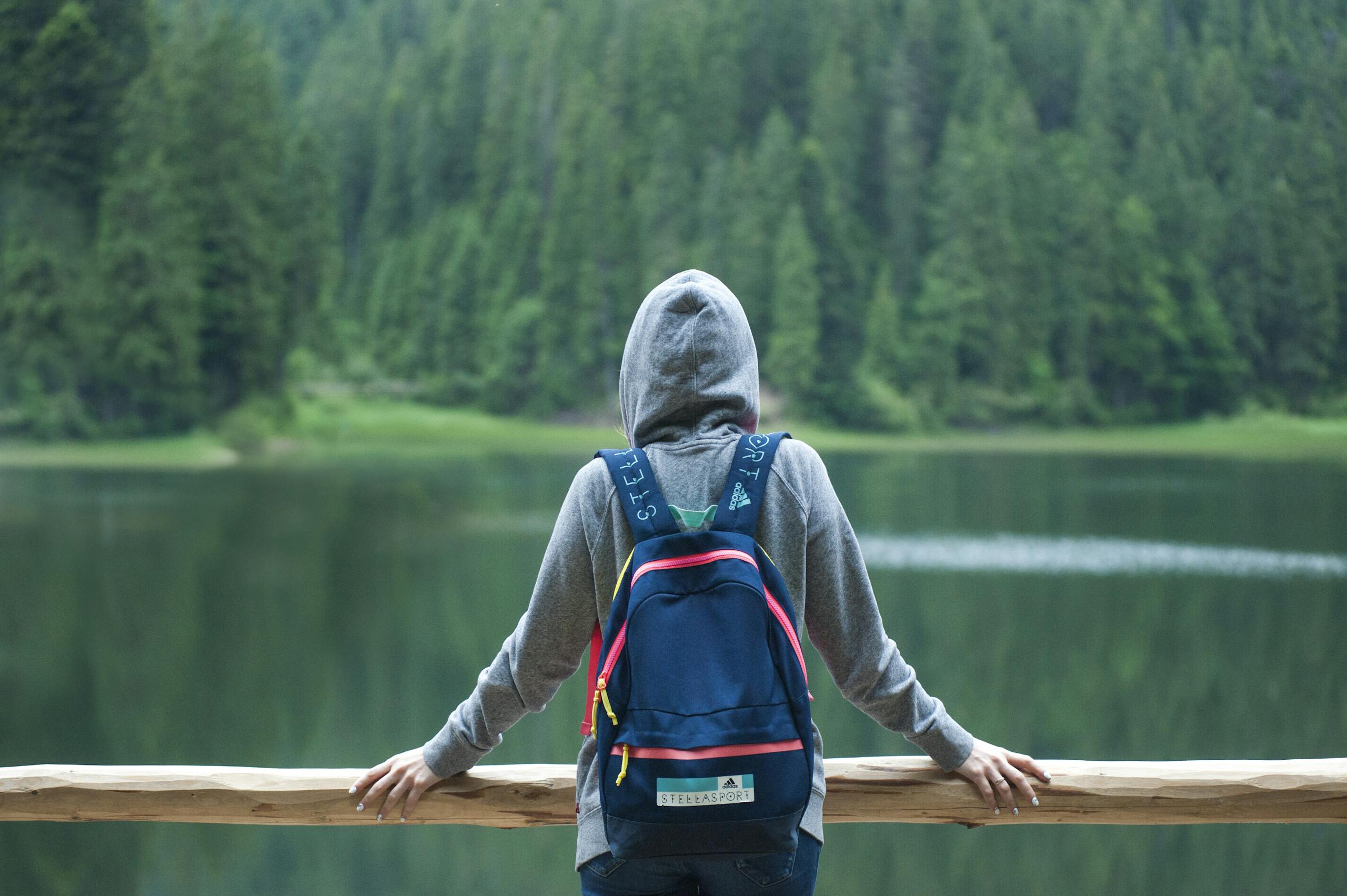

Spending extended time alone means something different depending on who you are and what you bring to that solitude. For many people, prolonged time alone signals emotional growth, deepened self-awareness, and a natural need for restoration. For others, it can slide into isolation, disconnection, and a quiet kind of pain that’s easy to miss until it compounds.
The difference between those two experiences isn’t always obvious from the outside. And honestly, it’s not always obvious from the inside either.
I’ve spent a lot of years sitting with this question, both professionally and personally. Running advertising agencies meant I was surrounded by people constantly. Clients, creative teams, account managers, vendors. The noise was relentless. And yet I often felt most alone in the middle of all of it. It took me a long time to understand what that meant, and what to do about it.

Solitude touches nearly every dimension of introvert life, from how we recharge to how we build identity to how we protect our mental health. Our Solitude, Self-Care and Recharging hub explores this terrain in depth, and this article adds a layer that often gets overlooked: what prolonged time alone is actually communicating, and how to read those signals honestly.
What Does It Mean When You Spend a Lot of Time Alone?
Spending a lot of time alone doesn’t carry a single meaning. It’s not automatically healthy, and it’s not automatically a problem. What matters is the quality of that solitude and the intention behind it.
What’s your personality type?
Take our free 40-question assessment and get a detailed personality profile with dimension breakdowns, context analysis, and personalised insights.
Discover Your Type8-12 minutes · 40 questions · Free
There’s a version of being alone that feels like exhaling. You’ve been in meetings all day, managing other people’s energy, translating your internal world into external language, and finally you get to just be. That kind of solitude is restorative. It’s purposeful. You emerge from it more yourself than when you went in.
Then there’s a version that feels like shrinking. You’re not recharging. You’re withdrawing. The alone time isn’t chosen so much as defaulted into, and the longer it stretches, the harder it becomes to reach back out. That version deserves closer attention.
As an INTJ, I’ve experienced both. In my agency years, I’d carve out solitude intentionally, early mornings before the office filled up, long drives between client meetings, lunch breaks I’d spend alone with my thoughts rather than at the team table. That was fuel. But there were also stretches, particularly during high-stress campaign cycles or after difficult client losses, where I’d pull back from everything and call it introversion when it was actually avoidance. The distinction matters.
Researchers who study wellbeing have noted that voluntary solitude, time alone that a person actively chooses, tends to produce positive outcomes like clarity, creativity, and emotional regulation. Involuntary isolation, time alone driven by circumstance, social anxiety, or withdrawal, tends to work in the opposite direction. Harvard Health has written about the distinction between loneliness and isolation, pointing out that the two often overlap but aren’t the same, and that isolation carries particular risks for long-term wellbeing.
Is Extended Solitude a Sign of Emotional Strength or Emotional Avoidance?
This is the question I wish someone had asked me earlier. Because for a long time, I used my introversion as a clean explanation for behaviors that were actually more complicated.
Emotional strength and emotional avoidance can look nearly identical from the outside. Both involve spending time alone. Both involve a preference for internal processing. Both can feel, in the moment, like the right thing to do. The difference shows up in what comes after.
When solitude is emotionally healthy, you come out of it with more capacity. You’ve processed something. You’ve thought something through. You feel ready to engage again, even if you don’t particularly want to. When solitude is avoidance, you come out of it with less. The thing you were avoiding is still there, maybe larger now, and you’ve added a layer of disconnection on top of it.
I had a creative director on one of my teams, a deeply introverted person, who disappeared into her work whenever interpersonal conflict arose. She’d produce brilliant things during those periods. But the conflict never got resolved, and eventually it would surface in ways that were much harder to manage. Her solitude was real, but it was also serving as a buffer against conversations she needed to have. I recognized it because I’d done the same thing myself, just with strategy documents instead of design work.
Understanding what happens when introverts don’t get enough alone time helps clarify this picture. Genuine deprivation of solitude produces real symptoms: irritability, difficulty concentrating, emotional flatness, a kind of internal noise that won’t quiet. If you’re spending a lot of time alone and still experiencing those symptoms, that’s worth paying attention to. It may mean the solitude you’re getting isn’t actually restorative.

What Does Long-Term Solitude Do to Your Sense of Identity?
Solitude and identity are deeply connected, more so than most people realize until they’ve spent significant time with both.
When you spend extended time alone, you strip away a lot of the social scaffolding that normally tells you who you are. The roles fall away. You’re not someone’s colleague or client or parent or friend in those moments. You’re just yourself. For people who’ve built their identity primarily through external validation and social roles, that can feel destabilizing. For introverts who’ve done the internal work, it can feel clarifying.
I noticed this most clearly during a period when I was between agency projects and had genuinely unstructured time for the first time in years. My first instinct was to fill it. Schedule calls. Start something new. Keep moving. It took about two weeks before I could actually sit with the quiet without reaching for my phone every four minutes. But once I could, something useful happened. I started noticing what I actually thought about things, separate from what I’d been performing for clients or teams. My opinions felt more like mine. My preferences became clearer. I came back to work with a stronger sense of what I wanted to build and why.
That kind of identity clarity is one of the less-discussed gifts of genuine solitude. The Greater Good Science Center at Berkeley has explored how solitude supports creativity, and part of that connection runs through identity: when you know yourself more clearly, you create more authentically.
That said, identity can also calcify in extended solitude. Without the friction of other people, without the gentle challenge of having your assumptions questioned, some beliefs and self-perceptions go unexamined for too long. success doesn’t mean eliminate social contact. It’s to use solitude as a place to develop a self that can then be brought back into relationship with the world.
How Do You Know If Your Alone Time Is Healthy or Harmful?
There are some honest questions worth sitting with if you’ve been spending a lot of time alone and want to understand what it means.
Are you choosing this time, or are you defaulting into it? Choice matters enormously here. Solitude you’ve actively selected, because you need to think, create, recover, or simply be, tends to serve you. Solitude you’ve fallen into because reaching out feels too hard, or because you’ve told yourself no one really wants to hear from you anyway, is a different thing entirely.
Are you emerging from alone time with more energy or less? This is the clearest diagnostic I know. Genuine recharging leaves you with more capacity afterward. If you’re spending hours alone and coming out of it feeling emptier or more anxious, the solitude isn’t doing what you think it’s doing.
Are you maintaining some form of connection, even minimal? Complete disconnection from other people over extended periods carries real risks. The CDC has documented the health risks associated with social disconnection, and those risks don’t disappear just because you’re an introvert who prefers solitude. The dosage matters. Most introverts need less social contact than extroverts, but “less” and “none” are very different things.
Are you using solitude productively, even loosely? Productive doesn’t have to mean output-oriented. Reading, thinking, creating, resting intentionally, spending time in nature, all of these count. Time in natural environments in particular has a way of making solitude feel purposeful rather than empty, something I’ve found personally true on long walks that started as attempts to clear my head and ended with actual clarity.
Are you sleeping well? This one surprised me when I first connected it. Extended periods of unhealthy solitude often disrupt sleep, and disrupted sleep makes everything harder to evaluate clearly. Rest and recovery strategies matter more than most people account for when assessing whether their alone time is working for or against them.

What Does Science Say About the Long-Term Effects of Solitude?
The research picture here is genuinely nuanced, which is worth acknowledging rather than flattening into a simple narrative.
Voluntary solitude, chosen and structured, has been associated with benefits including improved emotional regulation, greater self-awareness, creative output, and a stronger sense of personal values. These aren’t small things. They’re the building blocks of a life that feels coherent and meaningful.
Involuntary isolation, on the other hand, correlates with outcomes that move in the opposite direction. Published research in PubMed Central has examined the psychological mechanisms connecting social isolation to negative mental health outcomes, finding that the absence of social connection activates stress responses that compound over time. The body doesn’t always distinguish between chosen and unchosen aloneness as cleanly as we’d like.
There’s also interesting work on the relationship between solitude and emotional processing. Additional PubMed Central research has explored how solitude functions as a context for emotional regulation, suggesting that the quality of attention you bring to alone time shapes its effect on your wellbeing. Passive, distracted solitude, scrolling, half-watching something, mentally rehearsing anxieties, tends to produce different outcomes than active, present solitude.
What this means practically: the amount of time you spend alone matters less than what you do with that time and why you’re spending it that way. An introvert who spends two intentional hours alone each evening, reading, thinking, or simply resting, is in a very different position than someone who spends twelve hours alone because they can’t find the energy to reach out.
Does Being Alone a Lot Mean You’re an Introvert or Something Else?
This question comes up often, and it’s worth addressing directly because the conflation causes real confusion.
Introversion is a personality orientation, not a behavior. It describes where you get your energy from, internal sources rather than external ones, and how you prefer to process information and experience, inwardly rather than outwardly. Spending time alone is a common expression of introversion, but it’s not the same thing as introversion itself.
You can be an introvert who’s very socially active. You can be an extrovert who spends a lot of time alone due to circumstance, anxiety, or life stage. The behavior and the personality trait don’t map onto each other cleanly.
Social anxiety, depression, grief, burnout, and major life transitions can all produce extended periods of solitude that have nothing to do with introversion. Recognizing the difference matters because the response is different. An introvert who needs more alone time needs permission and structure to get it. Someone in the grip of social anxiety or depression needs something different, and conflating those needs can delay getting the right support.
I’ve watched people in my professional circles, including some genuinely extroverted people, retreat into isolation during difficult periods and describe it as “finally discovering I’m an introvert.” Sometimes that’s true. More often, they were exhausted or hurting and needed rest and support, not a new identity category.
Highly sensitive people, in particular, often find themselves spending more time alone simply because the world is a lot. For HSPs, solitude isn’t a preference so much as a genuine necessity, and understanding that need as legitimate rather than antisocial is part of building a sustainable life. The daily self-care practices that work for HSPs tend to center solitude as a non-negotiable rather than a luxury.
What Can Extended Time Alone Teach You About Yourself?
Assuming the solitude is voluntary and reasonably healthy, extended time alone is one of the most honest mirrors available to you.
Without the constant input of other people’s opinions, preferences, and expectations, you start to hear your own more clearly. What you actually want to think about. What problems genuinely interest you. What relationships feel sustaining versus draining when you’re not in the middle of them. What your body needs. What you’ve been tolerating that you don’t have to.
One of the more surprising things I learned during extended solitude was how many of my professional preferences had been shaped by what I thought was expected of a CEO rather than what I actually valued. I’d built a certain kind of agency, loud, fast, client-facing, because that’s what the industry rewarded. In the quiet, I started to see that I’d have built something different if I’d been listening to myself more carefully from the beginning. That wasn’t a comfortable realization, but it was a useful one.
Solitude also teaches you about your relationship with discomfort. Can you sit with uncertainty without immediately reaching for distraction? Can you let an emotion move through you without managing it into something more acceptable? These are skills, and they develop through practice, which means extended time alone gives you more practice than most people get.
There’s even a case for solo experiences extending beyond your home. Psychology Today has explored how solo travel functions as a particular kind of self-discovery, one that combines solitude with novelty in ways that accelerate self-knowledge. I’ve found this true personally. Some of my clearest thinking has happened in unfamiliar places, away from the usual cues that keep me operating on autopilot.

How Do You Make Sure Long Periods of Solitude Stay Healthy?
Structure helps more than most people expect. Not rigid scheduling, but some loose framework that gives your solitude shape and intention.
Maintaining at least minimal social contact, even when you don’t feel like it, matters. A brief check-in with a friend, a short conversation with a neighbor, even a meaningful exchange in an online community, keeps the social muscle from atrophying. Introverts often underestimate how much easier it becomes to reach out when they’ve been doing it consistently, and how much harder it gets when they’ve gone weeks without it.
Physical movement in outdoor environments helps in ways that are hard to replicate indoors. There’s something about natural settings that makes solitude feel less like absence and more like presence. The research on this is consistent enough that I’d consider it settled for practical purposes, and my own experience confirms it. The walks I’ve taken through parks or along water have a different quality than the hours I’ve spent alone inside, even when both were voluntary and intentional.
Monitoring your own emotional state with some regularity is worth doing. Not obsessively, but honestly. Am I looking forward to things? Am I sleeping reasonably well? Do I feel like myself? If those answers start trending negative over several weeks, that’s information worth taking seriously rather than explaining away.
Psychology Today’s writing on solitude and health emphasizes that the benefits of alone time are real and well-supported, but they depend on the quality of that time and the broader context of a person’s life. Solitude as one element of a full life looks very different from solitude as a substitute for one.
There’s also something to be said for the concept that alone time has its own rhythms and textures, that not all solitude is the same, and learning to distinguish between the kinds that restore you and the kinds that deplete you is a skill worth developing deliberately.
When Should You Be Concerned About How Much Time You’re Spending Alone?
There are some clear signals that solitude has shifted from healthy to harmful, and they’re worth naming plainly.
If the idea of social contact has started to feel not just tiring but frightening, that’s worth paying attention to. Social anxiety and introversion are different things, and the former tends to worsen with avoidance rather than improve.
If you’ve lost interest in things that used to matter to you, not just temporarily but consistently over weeks or months, that’s a signal that goes beyond introversion.
If you’ve been telling yourself you’ll reach out “when things settle down” or “when you feel more like yourself” for a long time, it’s worth questioning whether that condition will ever arrive on its own. Sometimes the reaching out is what creates the feeling better, not the other way around.
If your physical health has been declining, sleep disrupted, appetite off, energy chronically low, that’s the body registering something that the mind may be working to explain away.
None of this means something is catastrophically wrong. It means you’re a person, and people need attention and support sometimes. Getting that support isn’t a failure of introversion or self-sufficiency. It’s just accurate self-assessment, which is something introverts are generally quite good at when we’re willing to apply it honestly to ourselves.
The Frontiers in Psychology research on solitude and wellbeing makes clear that the relationship between aloneness and mental health is shaped by individual factors, personality, life circumstances, quality of existing relationships, and the meaning a person makes of their time alone. There’s no universal threshold at which solitude becomes too much. But there are personal thresholds, and learning to recognize yours is part of the work.

If you want to go deeper on how solitude, self-care, and recharging connect across the introvert experience, the full range of these topics lives in our Solitude, Self-Care and Recharging hub.
About the Author
Keith Lacy is an introvert who’s learned to embrace his true self later in life. After 20 years in advertising and marketing leadership, including running agencies and managing Fortune 500 accounts, Keith now channels his experience into helping fellow introverts understand their strengths and build fulfilling careers. As an INTJ, he brings analytical depth and authentic perspective to every article, drawing from both professional expertise and personal growth.
Frequently Asked Questions
Does spending a lot of time alone mean you’re an introvert?
Not necessarily. Introversion is a personality orientation describing where you draw energy from, not simply a preference for being alone. Many factors can lead someone to spend extended time alone, including social anxiety, depression, burnout, grief, or life circumstances, and these are distinct from introversion. An introvert prefers solitude as a way to restore energy, but someone who spends a lot of time alone isn’t automatically an introvert. Examining why you’re alone and how you feel during and after that time tells you more than the amount of time itself.
How do you tell the difference between healthy solitude and unhealthy isolation?
The clearest indicator is how you feel coming out of alone time. Healthy solitude leaves you with more energy, clarity, or calm than you had going in. Unhealthy isolation tends to leave you feeling emptier, more anxious, or more disconnected. Other signals include whether the alone time is chosen or defaulted into, whether you’re maintaining at least minimal social contact with people who matter to you, and whether your sleep, appetite, and general engagement with life remain reasonably stable. A prolonged pattern of declining mood, lost interest in things that used to matter, or increasing difficulty imagining reaching out to others suggests the solitude has shifted into something that deserves attention.
Can too much alone time affect your mental health?
Yes, particularly when that alone time is involuntary or driven by avoidance rather than genuine preference. Extended social disconnection is associated with real health risks, including elevated stress, disrupted sleep, and increased vulnerability to depression and anxiety. The key distinction is between voluntary solitude, which tends to support wellbeing, and involuntary isolation, which tends to work against it. Even introverts who genuinely thrive with significant alone time benefit from maintaining some level of meaningful social connection. The dosage varies by person, but complete disconnection over long periods carries risks that don’t disappear because someone identifies as an introvert.
What can extended time alone teach you about yourself?
Genuine solitude, the kind that’s voluntary and reasonably structured, offers access to self-knowledge that’s difficult to develop in the middle of constant social input. Without the ongoing influence of other people’s expectations and opinions, your own preferences, values, and ways of thinking become clearer. You may notice what you actually want versus what you’ve been performing. You may discover which relationships feel sustaining versus draining when you’re not in the middle of them. You also develop a more honest relationship with discomfort, learning whether you can sit with uncertainty or difficult emotions without immediately reaching for distraction. These are durable insights that tend to carry forward into how you engage with work, relationships, and your sense of purpose.
Is it normal for introverts to prefer being alone for long stretches?
Yes, and it’s a legitimate need rather than a character flaw or social deficit. Introverts genuinely require more alone time than extroverts to function at their best, and that need doesn’t diminish with age or social practice. What varies is how that need is met and whether it’s balanced with enough connection to keep relationships and perspective healthy. Long stretches of solitude are normal and even necessary for many introverts, particularly after periods of intensive social engagement. The concern arises not from the duration of alone time but from the quality of it and whether it’s serving the person or substituting for things they actually need.