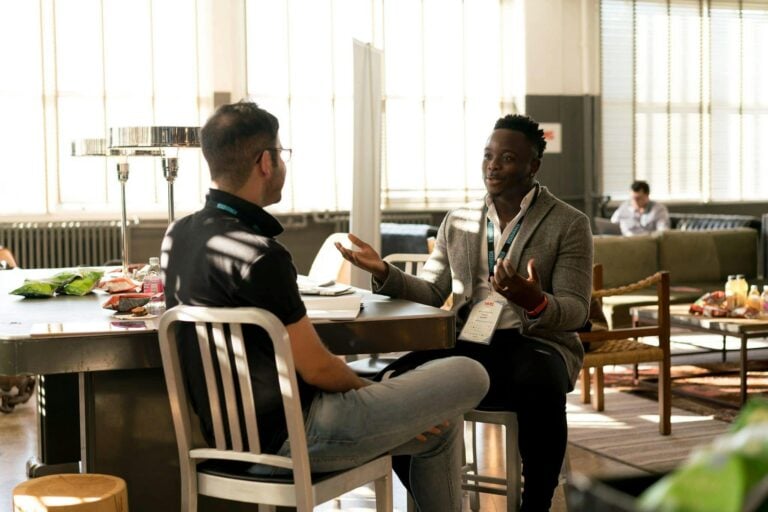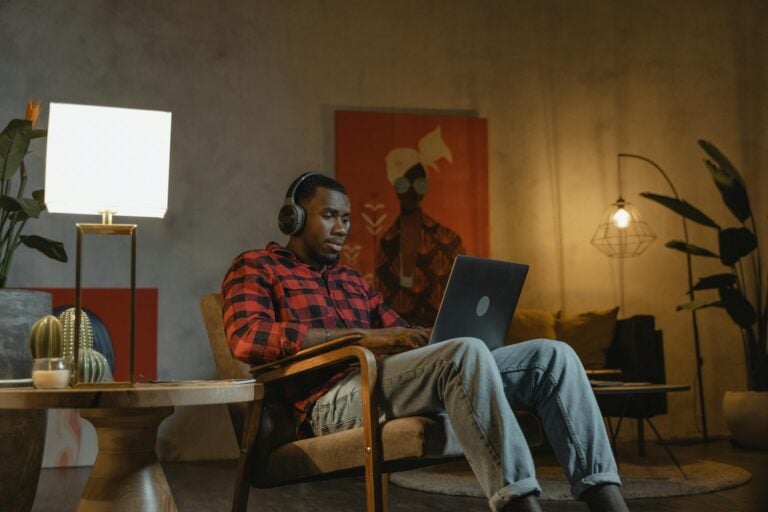

Smart people alone time isn’t a quirk or a coping mechanism. It’s a cognitive necessity. People who think deeply, process information in layers, and generate original ideas consistently report that unstructured solitude is where their best thinking actually happens, not in meetings, not in brainstorming sessions, and not during the constant connectivity that modern work culture celebrates.
There’s a reason some of the most intellectually productive people in history were famously protective of their time alone. Solitude gives the thinking mind room to breathe, connect disparate ideas, and arrive at insights that group environments rarely produce. For introverts especially, this isn’t preference. It’s how the brain does its best work.
I spent over two decades running advertising agencies, managing creative teams, and sitting across conference tables from Fortune 500 executives. The culture rewarded presence, noise, and constant collaboration. I performed well in that environment, but I performed my best thinking somewhere else entirely: alone, usually early in the morning, before anyone else arrived at the office. That pattern wasn’t accidental. It was survival, and eventually I understood it as something more.
If you’ve ever felt most alive, most clear, most genuinely yourself in the quiet, you’ll find a lot to explore in our Solitude, Self-Care and Recharging hub, which covers the full range of how introverts restore, reflect, and build lives that actually fit who they are.
Why Do Intelligent People Seek Out Solitude?
There’s a pattern worth paying attention to. Across creative fields, scientific disciplines, philosophical traditions, and entrepreneurial circles, the people who produce original, complex, lasting work tend to guard their alone time fiercely. This isn’t coincidence.
What’s your personality type?
Take our free 40-question assessment and get a detailed personality profile with dimension breakdowns, context analysis, and personalised insights.
Discover Your Type8-12 minutes · 40 questions · Free
Solitude creates the conditions for a specific kind of thinking that social environments disrupt. When you’re around other people, your brain is doing a lot of relational processing: reading tone, managing impressions, tracking the conversation’s direction, anticipating responses. That’s not shallow work, but it competes with the slower, more associative thinking that produces genuine insight.
Researchers at the Greater Good Science Center at Berkeley have explored the connection between solitude and creativity, noting that time alone allows the mind to make connections it can’t easily make under social pressure. The brain in solitude isn’t idle. It’s integrating, synthesizing, and generating in ways that collaborative environments often interrupt before they can complete.
As an INTJ, my natural cognitive style runs on internal frameworks. I build mental models, test them against what I observe, and refine them over time. That process doesn’t happen in real time during a client presentation. It happens afterward, in the quiet, when I can actually think about what I noticed and what it means. The meetings were inputs. The solitude was where the processing occurred.
One of my former creative directors, an INFP with a genuinely brilliant design instinct, used to disappear for an hour after every major client brief. The account managers hated it. I protected it. Because I’d watched what happened to her work when she didn’t get that time: the ideas came out half-formed, technically competent but missing the spark that made her exceptional. The alone time wasn’t avoidance. It was incubation.
Is There a Link Between Introversion and the Need for Deep Solitude?
Not every introvert is highly intelligent, and not every highly intelligent person is an introvert. But the overlap is significant enough to be worth examining honestly.
Introversion, as a trait, is associated with a preference for internally generated stimulation over external stimulation. Introverts tend to process more deeply, reflect before responding, and find sustained social interaction draining in a way that extroverts typically don’t. That processing depth has real cognitive implications.
Published research in Frontiers in Psychology via PubMed Central has examined how solitude functions differently for different personality types, finding that people with higher trait introversion often report solitude as genuinely restorative rather than merely tolerable. That distinction matters. For introverts, alone time isn’t what’s left over after social obligations. It’s often the primary experience, and social time is what requires recovery.
Highly Sensitive People, a group that overlaps substantially with introverts, experience this even more acutely. The depth of processing that defines high sensitivity means that alone time isn’t optional, it’s biological. If you’re exploring what that looks like in practice, HSP Solitude: The Essential Need for Alone Time goes into the specific ways that need shows up and how to honor it without guilt.
What I’ve noticed in myself, and in the introverted people I’ve managed and worked alongside over the years, is that the intelligence and the introversion often feed each other. The deeper processing that introversion enables produces richer internal worlds. Those richer internal worlds make solitude more rewarding. And the more rewarding solitude becomes, the more you seek it out and the more you get from it. It becomes a productive cycle rather than a limitation.
What Actually Happens in the Brain During Productive Alone Time?
Solitude isn’t the absence of mental activity. For people who use it well, it’s often the most mentally active part of the day.
Neuroscientists have identified what’s called the default mode network, a set of brain regions that become more active when we’re not focused on external tasks. This network is involved in self-reflection, imagining future scenarios, making sense of social situations, and generating creative connections. It’s essentially the brain’s background processing system, and it runs most freely during unstructured, unstimulated time.
When you’re constantly consuming input, whether that’s email, conversation, social media, or even music, you’re interrupting that background processing before it can complete. The insights that feel like they “just came to you” in the shower or on a quiet walk didn’t materialize from nowhere. They were the output of processing that finally got enough uninterrupted time to finish.
A study published in Frontiers in Psychology explored how solitude affects emotional regulation and self-concept clarity, finding that people who spent intentional time alone reported clearer sense of identity and better emotional processing than those who consistently filled their time with social activity or passive consumption. That clarity isn’t abstract. It shows up in decision-making, in creative output, in the quality of your relationships.
My most valuable strategic thinking as an agency CEO never happened in a conference room. It happened on early morning walks before the office opened, or on flights when I’d put away the laptop and just let my mind work. I’d arrive at a client meeting with something I hadn’t had the day before: a clear position, a reframing of the problem, a connection between two things that hadn’t seemed related. That was the alone time doing its work.
How Does Alone Time Differ From Loneliness?
This distinction is worth being precise about, because conflating the two creates real harm. Loneliness is a painful experience of social disconnection, a gap between the social connection you want and the connection you have. Solitude is chosen aloneness, and it carries none of that pain when it’s genuinely chosen.
Harvard Medical School has written about the distinction between loneliness and isolation, noting that the psychological impact depends heavily on whether aloneness is experienced as chosen or imposed. Solitude chosen freely tends to be restorative. Isolation experienced as involuntary tends to be harmful.
The CDC has documented the health risks associated with social disconnection, and those risks are real. But they apply to loneliness and involuntary isolation, not to the deliberate, self-directed alone time that introverts and deep thinkers seek out. Knowing that difference matters, especially for introverts who’ve been told their preference for solitude is something to fix.
There were periods in my agency years when I was surrounded by people constantly and still felt profoundly lonely. And there were long solo weekends, especially after high-stakes pitches, when I was completely alone and felt deeply restored. The variable wasn’t the number of people present. It was whether the time was mine to use as I needed.
Understanding what happens to your internal world when that alone time gets stripped away is worth examining honestly. What Happens When Introverts Don’t Get Alone Time covers the specific ways that deprivation shows up, and why it’s not just moodiness or preference but something more fundamental.

What Does High-Quality Alone Time Actually Look Like?
Not all solitude is created equal. Scrolling your phone alone in a room is technically solitude. So is staring at a wall in anxious rumination. Neither of those produces the cognitive and emotional benefits that genuine restorative alone time provides.
High-quality alone time tends to share a few characteristics. It’s intentional, meaning you’ve chosen it rather than fallen into it. It’s relatively low-stimulation, meaning you’re not flooding your senses with content that requires constant processing. And it allows for some form of reflection, whether that’s active journaling, quiet thinking, reading something substantive, or simply being present without an agenda.
Nature plays a particular role here that’s worth highlighting. There’s something about outdoor environments specifically that supports the kind of diffuse, open attention that restorative solitude requires. The research on this is consistent enough that it’s worth taking seriously. If you’ve ever noticed that a walk outside clears your head in a way that sitting inside doesn’t, that’s not placebo. HSP Nature Connection: The Healing Power of Outdoors explores why natural environments work so well for sensitive, deeply processing minds.
Sleep also belongs in this conversation. The brain consolidates learning, processes emotional experience, and clears metabolic waste during sleep in ways that nothing else replicates. For introverts who already process deeply during waking hours, poor sleep compounds the cognitive and emotional load significantly. HSP Sleep: Rest and Recovery Strategies addresses the specific challenges that sensitive, high-processing people face around sleep and what actually helps.
My own high-quality alone time evolved over the years. Early in my career, I didn’t understand what I was doing when I stayed late after everyone left, or arrived early before anyone arrived. I thought I was just getting work done without interruption. Eventually I recognized that the work I did in those quiet hours was categorically different from what I produced during the busy day: more original, more strategic, more genuinely mine. That recognition changed how I structured my entire professional life.
Can Too Much Alone Time Become Counterproductive?
Yes, and it’s worth being honest about this.
Solitude is powerful, but it can tip into avoidance, rumination, or disconnection if it’s not balanced with enough genuine human contact. The difference usually lies in what you’re doing with the alone time and whether you’re choosing it or hiding in it.
Productive solitude moves you forward. You emerge from it with clarity, energy, or creative output you didn’t have before. Avoidant solitude keeps you stuck. You use it to escape discomfort rather than process it, and you emerge more anxious or more isolated than when you went in.
Research published via PubMed Central has examined how solitude motivation affects outcomes, finding that people who sought solitude for self-reflection and restoration showed different psychological outcomes than those who sought it primarily to avoid social situations. The behavior looks the same from the outside. The internal experience and the results are quite different.
I’ve had periods where my preference for solitude crossed into something less healthy. After a particularly brutal agency merger in my early forties, I pulled back from almost everyone for several months. It felt like recharging. Looking back, some of it was genuine recovery and some of it was avoidance of conversations I didn’t want to have. The honest work was learning to tell the difference.
Building a sustainable relationship with solitude means having enough self-awareness to recognize which kind you’re in. That’s not always easy, but it’s worth the effort. A broader framework for building that kind of self-aware daily practice is laid out in HSP Self-Care: Essential Daily Practices, which approaches self-care not as indulgence but as the infrastructure that makes everything else possible.

How Do Smart Introverts Protect Their Alone Time in a Noisy World?
Protecting alone time in a culture that treats busyness as virtue and availability as professionalism requires some deliberate strategy. It’s not enough to want solitude. You have to build structures that make it possible.
What I’ve seen work, both in my own life and in the lives of introverted professionals I’ve mentored, tends to fall into a few consistent patterns.
Anchor Your Solitude to Existing Rhythms
The most sustainable alone time isn’t carved out of thin air. It’s attached to transitions that already exist in your day: the early morning before anyone else wakes up, the lunch hour you’re not using for networking, the commute you could reclaim from podcasts and calls. Anchoring your solitude to existing rhythms makes it easier to protect because it doesn’t require negotiating new time, just using existing time differently.
For years, my anchor was the forty-five minutes between when I arrived at the office and when the first meeting started. I didn’t check email. I didn’t take calls. I sat with coffee and thought. My team learned quickly that those forty-five minutes weren’t available. That boundary, once established, became almost self-enforcing.
Reframe Solitude as Professional Infrastructure
One of the most useful shifts I made was stopping treating my alone time as a personal preference I had to apologize for and starting treating it as a professional requirement I had to protect. When I framed a closed-door morning as “strategic planning time,” no one questioned it. When I framed it as “I need some quiet,” people assumed I was struggling.
The reframe wasn’t dishonest. The alone time genuinely was where my strategic thinking happened. Naming it accurately changed how others related to it and how I related to it myself.
Use Physical Environment as a Signal
Physical environment does a lot of the work that willpower can’t sustain. A specific chair, a particular room, a regular walking route, all of these can become conditioned cues for the mental state you’re trying to access. When you sit in that chair or take that walk, your brain knows what mode it’s entering.
There’s an entire subculture around this, and while some of it gets precious, the underlying principle is sound. Mac Alone Time explores a specific, grounded version of this idea, using familiar environments and simple rituals to create the conditions for genuine restoration. Worth reading if you’re building your own practice.
Solo Travel as Extended Solitude
Some of the most cognitively productive periods of my adult life have been solo trips. Not vacations in the traditional sense, more like extended thinking retreats that happened to involve a different city or a different landscape. The removal from ordinary context, from the familiar demands and familiar faces, creates a kind of mental space that’s hard to replicate at home.
Psychology Today has written about solo travel as a deliberate choice rather than a default, noting that many people who travel alone report heightened self-awareness and creative clarity during those periods. For introverts, solo travel often feels less like a compromise and more like a gift: full days shaped entirely by internal rhythm, without the negotiation that comes with group travel.
What Does Science Say About Solitude and Wellbeing?
The research on solitude and wellbeing has become more nuanced over the past decade, moving away from treating all aloneness as a risk factor and toward understanding solitude as a distinct psychological state with its own benefits and conditions.
Psychology Today has covered solitude’s health benefits in depth, noting that voluntary solitude is associated with reduced stress, improved emotional regulation, greater self-knowledge, and enhanced creativity. The operative word is voluntary. Solitude chosen freely and used actively tends to produce positive outcomes. Isolation experienced as unwanted tends to produce the opposite.
What this means practically is that the introverts who thrive aren’t necessarily the ones who spend the most time alone. They’re the ones who spend their alone time well, with some intention, some self-awareness, and some understanding of what they’re actually trying to accomplish in that quiet.
The people I’ve watched struggle most with solitude, both among my agency staff and in my own experience, weren’t struggling because they had too much of it. They were struggling because they didn’t know what to do with it. Alone time without a relationship to your own inner life can feel empty or anxious. Alone time with that relationship feels like coming home.

How Do You Build a Life That Honors Your Need for Solitude?
This is the practical question underneath all the others, and it doesn’t have a single answer. What it has is a direction.
Building a life that genuinely honors your need for solitude means getting honest about what that need actually is, not what you think you should need, not what your extroverted colleagues or family members seem to need, but what you specifically require to think clearly, feel stable, and do your best work.
For me, that honesty took most of my thirties to arrive at. I spent years trying to match the energy levels and social appetites of the most successful extroverts around me, assuming that was what leadership required. It wasn’t. What leadership required was clear thinking, good judgment, and the ability to communicate well. Solitude made me better at all three. The social performance I’d been maintaining was actually getting in the way.
Once I stopped treating my need for alone time as a deficit and started treating it as a design feature, everything got easier. I stopped scheduling back-to-back meetings and built in processing time between them. I stopped apologizing for leaving events early and started being honest about my capacity. I stopped filling every quiet moment with input and started letting the quiet do what it was designed to do.
That shift didn’t make me less effective as a leader. It made me considerably more effective, because I was finally operating from my actual strengths rather than an imitation of someone else’s.
The broader conversation about how introverts restore, reflect, and build sustainable lives is one we return to constantly at Ordinary Introvert. You’ll find more of it in our Solitude, Self-Care and Recharging hub, where we cover everything from daily practices to deeper questions about what rest and restoration actually mean for people wired the way we are.
About the Author
Keith Lacy is an introvert who’s learned to embrace his true self later in life. After 20 years in advertising and marketing leadership, including running agencies and managing Fortune 500 accounts, Keith now channels his experience into helping fellow introverts understand their strengths and build fulfilling careers. As an INTJ, he brings analytical depth and authentic perspective to every article, drawing from both professional expertise and personal growth.
Frequently Asked Questions
Is needing a lot of alone time a sign of intelligence?
Not exclusively, but there is a meaningful relationship between deep thinking and the need for solitude. People who process information in layers, who think through problems thoroughly before reaching conclusions, and who generate original ideas through internal reflection tend to require more uninterrupted alone time than those who process more quickly or externally. The need for solitude isn’t a reliable intelligence marker on its own, but it often accompanies the cognitive styles associated with deep, original thinking.
How much alone time do introverts actually need?
There’s no universal answer, and anyone who gives you a specific number is guessing. The right amount varies significantly by individual, by what the rest of your day looks like, and by the intensity of the social demands you’re managing. A useful rule of thumb is to pay attention to how you feel. If you’re consistently irritable, foggy, or emotionally depleted, you’re probably not getting enough. If you’re feeling clear, grounded, and capable of genuine connection when you want it, your balance is likely working. Most introverts need at least some daily solitude, with longer restorative periods after especially demanding social situations.
What’s the difference between productive solitude and unhealthy isolation?
Productive solitude moves you forward. You choose it, you use it actively (even if that activity is simply quiet reflection), and you emerge from it with more clarity, energy, or creative output than you had before. Unhealthy isolation tends to be reactive rather than chosen, and it often involves avoidance of something uncomfortable rather than genuine restoration. The clearest signal is what you bring back with you. Productive solitude leaves you more capable of connection when you want it. Isolation tends to make connection feel more threatening over time.
How do you protect alone time when work and family life leave little room for it?
The most reliable approach is to anchor solitude to existing transitions in your day rather than trying to carve out entirely new time. Early mornings before others wake, lunch breaks used for quiet rather than socializing, the first few minutes of a commute before turning on any audio, these are all existing windows that can be reclaimed. Beyond timing, framing matters. Treating your alone time as a professional and personal necessity rather than an indulgence makes it easier to protect and easier for others to respect. Small, consistent pockets of genuine solitude are more sustainable than waiting for large blocks that rarely materialize.
Can introverts get the benefits of alone time even in social or family-heavy environments?
Yes, though it requires more intentionality. Micro-solitude, brief periods of genuine quiet attention within otherwise busy days, can provide meaningful restoration even when extended alone time isn’t available. This might look like a short walk without headphones, five minutes of quiet before getting out of the car after a commute, or a brief morning journaling practice before the household wakes up. These smaller windows don’t fully replace longer restorative periods, but they meaningfully reduce the accumulation of social depletion that makes introverts feel chronically overwhelmed. Consistency matters more than duration.