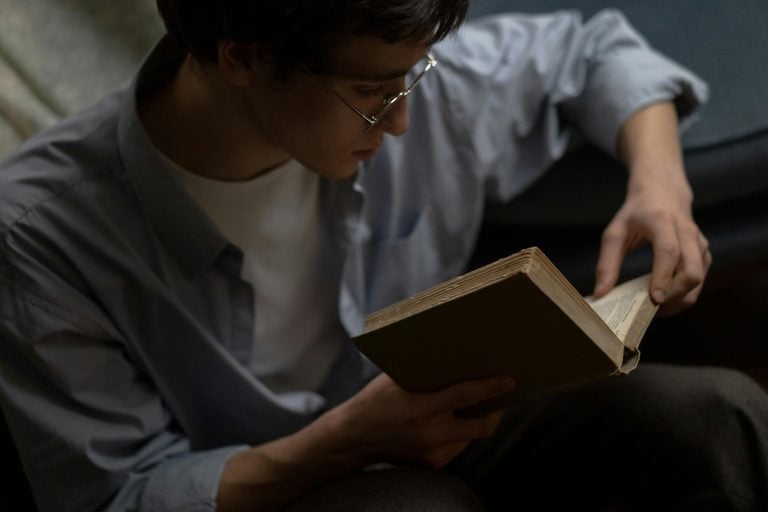

Solitude statements for an ambivert are affirmations and self-awareness cues that help people who sit between introversion and extroversion recognize when they genuinely need alone time, rather than pushing through social fatigue or second-guessing a need that feels inconsistent with their outgoing side. Ambiverts often struggle to name what they need because their energy patterns shift, making solitude feel like a personal failing rather than a legitimate requirement. These statements create language for an experience that is real, even when it is not constant.
That ambiguity is something I understand from a different angle. As an INTJ, my need for solitude has always been consistent and non-negotiable. But over two decades running advertising agencies, I managed and worked alongside plenty of ambiverts who genuinely could not read their own signals. They would throw themselves into client meetings and team brainstorms with apparent enthusiasm, then quietly fall apart by Thursday. They were not burned out in the way introverts burn out. They were confused, because they had enjoyed parts of the week. Learning to hold both truths at once, that you can love people and still desperately need space from them, is at the center of what solitude statements are designed to do for ambiverts.

Solitude, self-care, and the art of recharging are topics I return to constantly on this site, because they matter across the whole personality spectrum, not just for people who identify as introverts. If you want to explore the broader landscape of what that looks like, the Solitude, Self-Care and Recharging hub is a good place to start. But this article is specifically for the person who cannot always predict when they will need quiet, and who needs words to help them recognize that moment when it arrives.
What Makes Solitude Different for Ambiverts Than for Introverts?
An introvert, at least in my experience, generally knows when the tank is empty. The signal is fairly clear: too much noise, too many people, too little space to think. The recovery path is equally clear. Alone time restores energy. That is the basic introvert equation, and while the details vary by person, the direction rarely does.
What’s your personality type?
Take our free 40-question assessment and get a detailed personality profile with dimension breakdowns, context analysis, and personalised insights.
Discover Your Type8-12 minutes · 40 questions · Free
Ambiverts do not have that clean equation. Their energy can genuinely rise in social settings, and they can feel the pull toward connection even when they are depleted. The problem is that the depletion is still happening underneath the engagement. They might finish a long client dinner feeling animated and sharp, then wake up the next morning feeling scraped hollow. The lag between cause and effect makes it harder to connect the dots.
I watched this play out repeatedly with account managers at my agencies. The best ones tended to be ambiverts, people who could hold a room with a client and then disappear into focused solo work for hours without complaint. But the ones who struggled were almost always the ones who had no framework for knowing when they needed to step back. They read their own social ease as a sign that they were fine, right up until they were not. One senior account director I worked with in the mid-2000s would push through every signal her body gave her, because she associated needing space with weakness. She was one of the most capable people I have ever managed, and she burned through her reserves completely before she ever asked for help.
What she needed, and what many ambiverts need, is a set of statements that normalize the need for solitude without requiring a consistent introvert identity to justify it. You do not have to be an introvert to need alone time. You just have to be human. The article on what happens when introverts do not get alone time captures the consequences clearly, and while ambiverts may not hit those walls as predictably, the underlying physiology of stress and overstimulation does not care about personality labels.
Why Do Ambiverts Resist Claiming Solitude as a Need?
Part of the resistance is identity-based. If you have always been the person who is comfortable in groups and can also work independently, you may have internalized that flexibility as a kind of self-sufficiency. Needing solitude can feel like admitting you are not as adaptable as you thought. That is a story worth questioning.
Another part of the resistance is social. Ambiverts often occupy a middle position in their social circles, seen as the bridge between the outgoing and the quiet. Stepping back from that role, even temporarily, can feel like a betrayal of the identity others have assigned to them. There is real social pressure in being the person who is always available, always willing to show up, always able to pivot between modes.
Setting limits around alone time is genuinely hard when you have never been taught that it is acceptable. The work from Greater Good Science Center at Berkeley on setting limits when you have no model for doing so speaks to exactly this pattern. The absence of language is part of the problem. When you do not have words for what you need, you cannot ask for it, and you cannot protect it.

Solitude statements are, in part, a language-building exercise. They give ambiverts permission slips written in their own handwriting, so to speak. They are not prescriptions from someone else’s personality type. They are personal declarations that acknowledge a shifting, sometimes unpredictable need for quiet without requiring that need to be permanent or consistent to be valid.
What Does a Solitude Statement Actually Look Like for an Ambivert?
A solitude statement is not a mantra you repeat to feel better. It is a declarative sentence that names your current state and your current need with enough specificity to make both real. Vague affirmations like “I deserve rest” tend to slide off the mind. Specific statements create traction.
For an ambivert, the most useful solitude statements tend to do three things. They acknowledge the dual nature of your energy. They name the present moment without judgment. And they give you permission to act on what you are noticing without requiring you to justify it against some fixed personality type.
Some examples that I have seen work well, drawn from conversations with people in my own network and from the broader introvert community I engage with through this site:
“I enjoyed today, and I still need quiet tonight. Both of those things are true.”
“My energy has shifted. What I needed this morning is not what I need right now.”
“Choosing solitude right now is not pulling away from people. It is keeping myself whole enough to come back.”
“I do not need to explain why I need space. I just need to take it.”
“The part of me that thrives around people is real. So is the part of me that needs silence. Neither one cancels the other out.”
Notice what these statements are not doing. They are not apologizing. They are not framing solitude as a problem to be managed. They are not comparing the ambivert to an introvert or an extrovert. They are simply naming what is true in the present moment and treating that truth as sufficient reason to act.
How Does the Body Signal That an Ambivert Needs Solitude?
One of the most useful things an ambivert can do is learn their own physical vocabulary for depletion. The mind may not register fatigue clearly, especially if social energy is still running in the background, but the body often knows first.
Common signals include a subtle flattening of interest in conversations that would normally engage you. A mild but persistent irritability that has no obvious source. A sense of going through motions in interactions that feel effortful rather than energizing. Difficulty tracking what people are saying even when you are genuinely trying to listen. A pull toward screens or distraction that feels compulsive rather than chosen.
These signals can be easy to dismiss because they are not dramatic. An ambivert who is used to functioning well socially may interpret them as mood fluctuations rather than depletion signals. That is where solitude statements become diagnostic tools as much as affirmations. When you notice one of those physical cues and say to yourself, “My energy has shifted, I need quiet,” you are training yourself to trust the signal rather than override it.
Highly sensitive people tend to have a particularly acute version of this experience, where overstimulation accumulates faster and the body registers it more intensely. The practices outlined in HSP self-care and essential daily practices are worth reading even if you do not identify as highly sensitive, because the underlying principle applies broadly: the body gives information, and the work is learning to receive it without judgment.

Can Solitude Statements Help Ambiverts at Work?
Yes, and this is where I have the most direct experience to draw from, even as an INTJ rather than an ambivert myself.
Running agencies means living inside a constant current of interaction. Clients, creative teams, account staff, media partners, new business pitches, internal reviews. The pressure to be present and engaged is relentless, and it does not discriminate by personality type. What I noticed over the years is that the people who managed their energy most effectively were the ones who had clear internal language for what they needed, even if they never said it out loud to anyone else.
An ambivert on a creative team who can say to themselves, “I have been in collaborative mode for six hours, I need two hours of solo work before I can contribute well again,” is going to produce better work than one who just keeps pushing and wonders why their output has gone flat. The statement does not have to be spoken to anyone. It just has to be made, internally, clearly, without apology.
One creative director I worked with for several years had an almost ritualistic approach to this. She would block the last hour of her day as unmarked time, no meetings, no Slack, no expectations. She was not introverted by any measure I could observe. She was genuinely energized by collaboration. But she had figured out that she needed that daily reset to sustain the engagement she brought to everything else. She had, without ever using the term, developed her own solitude statements and built them into her schedule. Her output was consistently among the best I saw across fifteen years of running creative departments.
Engagement with hobbies and personal time outside of work also plays a meaningful role in sustaining that kind of energy. Harvard Health has noted the connection between having hobbies and overall wellbeing, and for ambiverts who spend significant energy handling complex social environments at work, the restorative value of solo pursuits outside the office is not a luxury. It is maintenance.
What Role Does Sleep Play in an Ambivert’s Need for Solitude?
Sleep is solitude’s most fundamental form, and ambiverts who are running on social fumes often compromise it first. The wind-down that deep, restorative sleep requires is harder to achieve when the nervous system is still processing the day’s interactions. Ambiverts who have been highly engaged socially may find themselves lying awake with replaying conversations, unresolved social dynamics, or a restless sense of unfinished business with other people.
A solitude statement used before sleep can serve as a transition ritual. Something as simple as, “The day is complete. What other people need from me can wait until tomorrow,” creates a cognitive boundary between the social self and the resting self. It is not avoidance. It is permission to stop processing until the body has had a chance to recover.
The strategies covered in HSP sleep and rest recovery strategies address this transition problem directly, including how to create conditions that allow the mind to genuinely disengage from social processing at the end of the day. Even if you are not highly sensitive, the challenge of transitioning from high-engagement social time to genuine rest is one that many ambiverts share.
The relationship between sleep quality and emotional regulation is well-documented, and for ambiverts who rely on their emotional attunement to function well in social settings, poor sleep does not just make them tired. It makes their primary strength less available. A solitude statement that protects sleep is, indirectly, a statement that protects everything else.
Does Nature Offer a Specific Kind of Solitude for Ambiverts?
There is something about natural environments that makes solitude feel less like withdrawal and more like belonging to something larger. For ambiverts who struggle with the social guilt of stepping back from people, nature offers a version of solitude that does not feel like rejection. You are not leaving people. You are going somewhere.
That distinction matters more than it might seem. Ambiverts who feel guilty about needing alone time often find it easier to claim when the solitude has a destination, a trail, a park, a garden, a stretch of shoreline. The movement involved in being outdoors also helps discharge the residual social energy that can make sitting still feel impossible when you are overstimulated but not obviously depleted.

The restorative effects of time in natural settings go beyond simple relaxation. The healing power of outdoor connection explores this in depth, including how natural environments reduce the cognitive load of social processing in ways that indoor solitude sometimes cannot. For an ambivert who has been managing multiple relationship dynamics all day, the absence of social cues in a natural setting is itself a form of relief.
A solitude statement paired with a walk outdoors might sound like: “I am stepping outside to let my mind go quiet. This is not escape. This is how I come back whole.” That framing matters because it positions the solitude as purposeful rather than avoidant, which tends to reduce the guilt that ambiverts often carry when they pull back from social engagement.
How Do Ambiverts Build a Sustainable Solitude Practice Without Losing Their Social Self?
The fear underneath most ambivert resistance to solitude is that if they start protecting alone time, they will lose the social ease that defines them. That fear is worth naming directly, because it is not entirely irrational. Any new practice requires some adjustment, and building solitude into a life that has been largely social does require some renegotiation.
What the fear misses is that solitude does not diminish social capacity. It sustains it. The ambiverts I have known who built genuine solitude practices into their lives did not become less engaging or less connected. They became more present in the social time they did have, because they were not running on empty when they showed up.
Sustainability comes from treating solitude as a practice rather than a retreat. A practice has rhythm and intention. A retreat implies crisis. Ambiverts who only seek solitude when they are already depleted are always playing catch-up. Those who build small, regular pockets of alone time into their week, even fifteen minutes of genuine quiet in the morning, a solo lunch once a week, an evening walk without a podcast, are maintaining their reserves rather than draining and refilling them in cycles.
The essential need for alone time explored through an HSP lens makes a compelling case for treating solitude as structural rather than remedial. The same logic applies to ambiverts. Alone time is not what you do when things go wrong. It is part of what keeps things going right.
One of the more unexpected places I found this principle illustrated was in a piece about a dog named Mac and what his quiet companionship taught about the value of undemanding presence. Mac’s alone time is a gentler exploration of the same truth: solitude does not have to be dramatic or deliberate to be restorative. Sometimes it is just the absence of performance, the relief of being somewhere that asks nothing of you.
For ambiverts building a sustainable practice, solitude statements can evolve over time. Early on, they might be primarily permission-giving: “I am allowed to step back even when I have been enjoying myself.” As the practice matures, they might become more specific: “Wednesday evenings are mine. I protect them because they make everything else possible.” The language grows with the practice, and the practice grows with the language.
There is also something worth saying about the social dimension of this. Ambiverts do not have to make their solitude invisible to the people around them. Naming it, not as a complaint but as a fact, can actually strengthen relationships. “I need some quiet time tonight, not because anything is wrong, but because I work better when I have had space to reset,” is a statement that most people, including extroverts, can understand and respect. It is honest, it is specific, and it models the kind of self-awareness that makes someone easier to be in relationship with over time.
Mental health professionals and researchers studying emotion regulation and self-awareness have consistently found that the capacity to name internal states accurately is associated with better coping and stronger interpersonal functioning. For ambiverts, solitude statements are one practical way to build that capacity, not as a therapeutic exercise, but as a daily habit of honest self-observation.
The broader psychological literature on wellbeing also supports the idea that positive self-perception and internal clarity contribute meaningfully to resilience. An ambivert who can say clearly, “I know what I need and I know how to get it,” is not just more comfortable in their own skin. They are more stable under pressure, more consistent in their output, and more generous in their relationships because they are not constantly running on borrowed energy.
Even psychologists who study the return to high-social environments after periods of quiet, like this Psychology Today piece on why some people struggle when life becomes more social again, note that the challenge is not just about introversion. It is about any person who has recalibrated their social threshold and then faces pressure to perform at a previous level. Ambiverts who have learned to protect their solitude may find re-entry into high-demand social environments genuinely disorienting, not because they have become introverted, but because they have become honest about what they need.

That honesty is worth protecting. An ambivert who has found their solitude statements, who has built them into their days and their self-understanding, has something genuinely valuable: a relationship with their own inner life that does not depend on external validation or a fixed personality label. They know when they need quiet. They know how to claim it. And they know how to come back from it with more to offer than they had before they stepped away.
If you are still building that relationship with yourself, be patient with the process. The language comes before the habit, and the habit comes before the ease. Start with one statement that feels true right now, even if it feels a little uncomfortable to say. That discomfort is usually a sign that you are naming something real.
There is more to explore on this topic across the full range of articles in the Solitude, Self-Care and Recharging hub, from specific recovery strategies to the deeper psychology of why alone time matters for people across the personality spectrum.
About the Author
Keith Lacy is an introvert who’s learned to embrace his true self later in life. After 20 years in advertising and marketing leadership, including running agencies and managing Fortune 500 accounts, Keith now channels his experience into helping fellow introverts understand their strengths and build fulfilling careers. As an INTJ, he brings analytical depth and authentic perspective to every article, drawing from both professional expertise and personal growth.
Frequently Asked Questions
What is a solitude statement for an ambivert?
A solitude statement for an ambivert is a personal, declarative sentence that names your current need for alone time without requiring you to justify it against a fixed personality type. Unlike general affirmations, these statements are specific to the present moment and acknowledge that ambiverts can genuinely enjoy social engagement while still needing regular quiet time to sustain their wellbeing. They function as both self-permission and self-awareness tools, helping ambiverts recognize and act on depletion signals before they reach a crisis point.
Why do ambiverts struggle to recognize when they need solitude?
Ambiverts often struggle because their energy patterns are genuinely variable. Unlike introverts, who typically have a consistent and clear signal that social engagement is draining them, ambiverts can feel energized by the same interactions that are simultaneously depleting them at a deeper level. The lag between cause and effect makes it hard to connect the dots. Additionally, ambiverts often occupy a social bridge role in their groups and workplaces, which creates external pressure to remain available and adaptable, making it harder to claim space for solitude without feeling like they are failing at something.
Can solitude statements help ambiverts at work?
Yes, and they are particularly useful in high-engagement work environments where social demands are continuous. An ambivert who can clearly articulate to themselves, even silently, that they need a period of solo focus before they can contribute well again is better equipped to manage their energy across a full workday. Solitude statements do not need to be spoken aloud to colleagues. They function as internal signals that help ambiverts make smarter decisions about when to engage and when to step back, which in the end improves both the quality of their work and the sustainability of their engagement over time.
How is solitude different for ambiverts than for introverts?
For introverts, solitude is typically a consistent and predictable need, a reliable way to restore energy after social engagement. For ambiverts, the need is more variable and context-dependent. An ambivert might genuinely thrive in social settings one day and feel overstimulated by minimal interaction the next, depending on cumulative stress, sleep quality, emotional load, and other factors. This variability is not inconsistency or weakness. It is simply how ambivert energy works. Solitude statements help ambiverts respond to their actual state in the moment rather than trying to fit their needs into a fixed introvert or extrovert framework.
How do you build a sustainable solitude practice as an ambivert?
Sustainability comes from treating solitude as a regular practice rather than a crisis response. Small, consistent pockets of alone time, a quiet morning routine, a solo walk during the week, an evening without social obligations, are more effective than large blocks of solitude taken only when depletion has already set in. Pairing solitude statements with specific rituals, like a walk outdoors or a quiet morning with no devices, helps anchor the practice in the body rather than keeping it purely conceptual. Over time, the statements evolve from permission-giving to structural, becoming part of how an ambivert organizes their week rather than something they reach for only in moments of overwhelm.