
Yes, Cancers are widely considered homebodies, and there’s real substance behind that reputation. Born under a water sign ruled by the moon, Cancer personalities tend to draw their deepest energy from private spaces, close relationships, and the quiet comfort of a well-loved home. Whether or not you put stock in astrology, the traits associated with Cancer, including emotional depth, sensitivity to environment, and a preference for intimate connection over crowded socializing, map remarkably well onto what many introverts experience every day.
What makes this worth exploring isn’t whether the zodiac is scientifically precise. It’s that millions of people identify strongly with Cancer traits and find them validating. And for those of us who’ve spent years wondering why we’d rather be home than anywhere else, that validation matters.
My own path toward understanding why I craved home so deeply took longer than I’d like to admit. I spent two decades running advertising agencies, managing teams, pitching Fortune 500 clients, and performing extroversion like it was a job requirement. Nobody handed me a framework for understanding why the conference room drained me and my home office restored me. I had to piece that together myself. If you’re a Cancer, or someone who simply resonates with the homebody label, this is for you.

If you want to explore the broader connection between introversion and home as a sanctuary, our Introvert Home Environment hub covers everything from how to design your space to why being home feels so essential for people wired this way.
What Does Astrology Actually Say About Cancer and Home?
Cancer is the fourth sign of the zodiac, covering birthdays roughly from June 21 through July 22. Its ruling planet is the moon, which in astrological tradition governs emotion, instinct, memory, and the cycles of inner life. Cancer is also a cardinal water sign, meaning it initiates and moves through the world primarily through feeling rather than logic or action.
What’s your personality type?
Take our free 40-question assessment and get a detailed personality profile with dimension breakdowns, context analysis, and personalised insights.
Discover Your Type8-12 minutes · 40 questions · Free
The symbol for Cancer is the crab, which is telling. Crabs carry their homes on their backs. They retreat into their shells when threatened. They move sideways, indirectly, reading the environment before committing. In astrological interpretation, this translates to a personality that is deeply attached to home as a concept, not just a physical location but an emotional anchor.
Traditional Cancer traits include strong nurturing instincts, heightened emotional sensitivity, loyalty to close relationships, a tendency toward nostalgia, and a genuine preference for private, familiar environments over chaotic or overstimulating ones. These aren’t weaknesses in the astrological framework. They’re presented as core strengths, the things that make Cancers reliable, deeply caring, and emotionally intelligent.
What strikes me about this list is how much of it overlaps with introvert psychology. The preference for depth over breadth in relationships. The need to retreat and recharge. The sensitivity to atmosphere and emotional undercurrents. Whether someone arrives at these traits through astrology or personality typing, the lived experience often sounds remarkably similar.
Where Does the Homebody Label Come From, and Is It Fair?
Calling someone a homebody can carry an unfair connotation, as if staying home represents a failure of ambition or social courage. I’ve felt that sting personally. In my agency years, there was an unspoken expectation that real leaders were always out, always networking, always visible at industry events. Choosing to spend a Friday evening at home rather than at a client dinner felt like a career liability, not a legitimate preference.
That framing is worth pushing back against. Being a homebody isn’t about fear or limitation. For many people, including most Cancers and most introverts, home is where genuine restoration happens. It’s where you can think without interruption, feel without performance, and exist without the constant low-level effort of social calibration.
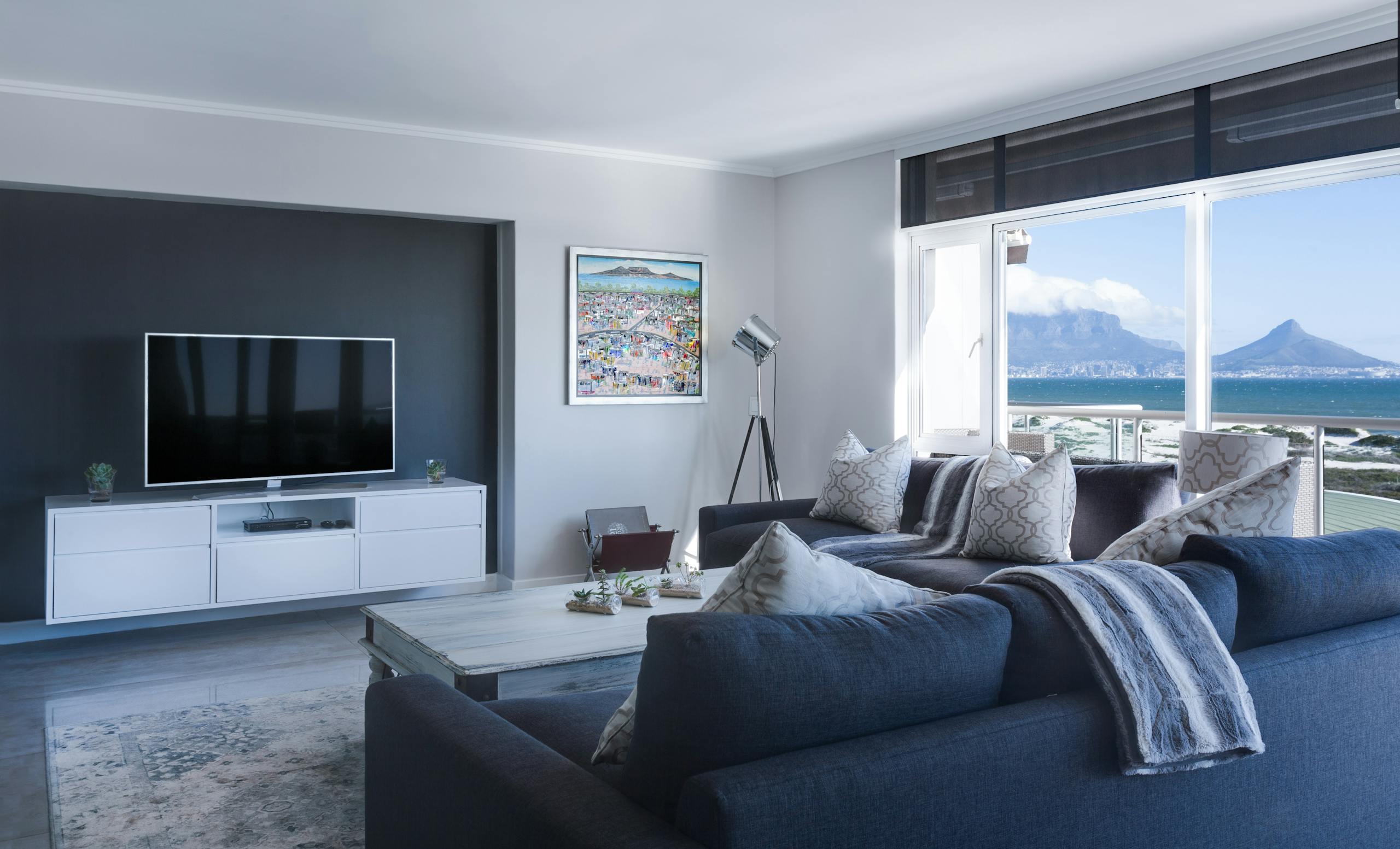
There’s a reason the homebody couch has become something of a cultural symbol. It represents permission, the right to stop performing and simply be. For people with Cancer traits, that permission isn’t laziness. It’s a fundamental psychological need.
The astrological tradition supports this interpretation. Cancer is associated with the fourth house in astrology, which governs home, family, roots, and private life. This isn’t incidental. It’s considered one of the most defining features of the sign. Home isn’t just where Cancers happen to live. It’s where they feel most authentically themselves.

How Do Cancer Traits Overlap With Introvert Psychology?
I want to be careful here, because astrology and psychology aren’t the same thing. But the overlap between Cancer traits and introvert characteristics is striking enough to be worth examining honestly.
Introversion, as defined in personality psychology, is primarily about where you draw energy. Introverts recharge through solitude and quiet. Extroverts recharge through social engagement. That’s the core distinction, not shyness, not antisocial behavior, just a fundamental difference in how the nervous system responds to stimulation.
Cancer traits align with introvert tendencies in several specific ways. First, the sensitivity to emotional atmosphere. Cancers are described as highly attuned to the feelings of others, sometimes to the point of absorbing those emotions involuntarily. This mirrors what researchers who study sensory processing sensitivity have documented: some people’s nervous systems process environmental and emotional information more deeply than average, which can be both a gift and an exhausting experience.
Second, the preference for meaningful connection over casual socializing. Cancers are described as deeply loyal to a small circle rather than broadly social. Many introverts share this preference. A Psychology Today piece on introvert conversation preferences captures this well: introverts tend to find shallow small talk draining and genuinely satisfying conversation energizing. Cancers, astrologically, feel the same way.
Third, and most relevant to the homebody question, both Cancers and introverts tend to experience home as something more than shelter. It’s a psychological container for the self. When the outside world demands constant performance and social calibration, home is the place where that performance can stop.
I managed a creative director at one of my agencies who identified strongly as a Cancer and was also one of the most introverted people on my team. She was brilliant in small meetings and devastating in one-on-one client sessions, but large group presentations cost her enormously. She’d spend the hour after a big pitch sitting quietly in her office, door closed, not because something went wrong but because she needed to process and recover. Once I understood that, I stopped scheduling back-to-back demands on her. Her output improved dramatically.
What Does the Cancer Homebody Experience Actually Look Like?
People often romanticize the homebody life as cozy and effortless. The reality is more nuanced. Being a Cancer homebody isn’t just about preferring Netflix to nightclubs. It’s a whole orientation toward how you inhabit your environment and relationships.
For many Cancers, home is an active creative and emotional space. They invest in it. They curate it. They make it feel like an extension of their inner world. This is why thoughtfully chosen gifts for homebodies often resonate so deeply with Cancer personalities. A beautiful candle, a weighted blanket, a plant for the windowsill, these aren’t trivial indulgences. They’re ways of honoring the home as a sacred space.
The Cancer homebody also tends to be deeply relational within that home environment. This isn’t the lone-wolf introvert stereotype. Cancers typically want their closest people present, just in a low-key, intimate way. A dinner at home with two friends feels more nourishing than a party with twenty acquaintances. A long conversation on the couch beats a loud bar every time.
There’s also a strong nostalgic current in Cancer’s relationship with home. Old photographs, meaningful objects, family recipes, the particular way afternoon light falls through a specific window. Cancers tend to be emotionally connected to the history of their spaces in a way that makes home feel layered and alive rather than just functional.
When I finally let myself stop performing extroversion and started designing my own home environment around my actual needs, something shifted in how I worked. My home office became a genuine sanctuary rather than just a room with a desk. I stopped apologizing for wanting to be there.

Can Cancers Be Highly Sensitive People?
The overlap between Cancer traits and the Highly Sensitive Person (HSP) framework is worth addressing directly. Elaine Aron’s research on sensory processing sensitivity identified a trait present in a meaningful portion of the population: a tendency to process sensory and emotional information more deeply, to be more affected by subtleties in the environment, and to need more downtime to process experiences.
HSPs often find that environmental factors matter enormously to their wellbeing. Cluttered spaces feel chaotic. Harsh lighting is genuinely uncomfortable. Noise pollution isn’t just annoying, it’s depleting. This is why the principles behind HSP minimalism resonate with so many people who also identify with Cancer traits. Simplifying the home environment isn’t an aesthetic preference for highly sensitive people. It’s a genuine wellbeing strategy.
Astrologically, Cancer’s heightened emotional sensitivity maps closely onto what Aron describes. The tendency to be moved by art and music. The deep empathy for others. The need for quiet recovery time after intense social or emotional experiences. The strong attachment to home as a regulated, predictable environment.
None of this means every Cancer is an HSP, or that every HSP is an introvert, or that astrology and psychology are interchangeable. But for someone trying to understand why they experience the world with such intensity and why home feels so essential, these frameworks can work together. They’re different languages pointing at some of the same underlying experiences.
A broader look at how personality traits relate to environmental sensitivity suggests that people who process deeply tend to be more affected by both positive and negative environments. That’s a compelling reason to invest in making your home environment genuinely supportive rather than just neutral.
How Do Cancers Connect With Others While Still Honoring Their Homebody Nature?
One of the persistent myths about homebodies is that they’re antisocial. Cancers in particular are deeply relational. They crave connection. They just prefer it in forms that don’t require them to sacrifice their sense of safety and comfort to access it.
This is where the modern landscape has genuinely opened things up. Digital connection, done thoughtfully, can be a legitimate and meaningful way for Cancer personalities to maintain relationships without the overstimulation of large social environments. Many introverts and homebodies have found that chat rooms designed for introverts offer something genuinely different from the noise of mainstream social media: slower, more deliberate conversation with people who share their values and communication style.
For Cancers, the quality of connection matters far more than the quantity. A two-hour voice call with a close friend is more nourishing than a week of surface-level social media interaction. A small dinner party at home beats a networking event every time, not because Cancers are antisocial but because they’re wired for depth.
In my agency years, I watched extroverted colleagues build wide networks through constant socializing. My own network was smaller but considerably deeper. When I needed something, I had relationships where I could ask directly and honestly. When clients needed someone they could trust, they came back to me. Depth has its own kind of professional power, even if it doesn’t look impressive on a contact list.
The research on social connection and wellbeing consistently suggests that the quality of relationships matters more than the number. Cancers seem to intuitively understand this. Their homebody nature isn’t a barrier to connection. It’s a filter that keeps connection meaningful.

What Are the Genuine Strengths of the Cancer Homebody Orientation?
Spend enough time in a culture that prizes busyness and extroversion, and you start to see your own homebodiness as a deficit. It took me years to recognize that my preference for home and depth was actually generating some of my best work and most durable relationships. The same is true for Cancers.
The first strength is sustained focus. When you’re not constantly seeking external stimulation, you develop a capacity for deep, uninterrupted work. Some of the most creative and intellectually rigorous people I’ve known were the ones who spent the most time at home, thinking, reading, making things. The homebody orientation creates conditions for that kind of output.
The second strength is emotional intelligence. Cancers’ sensitivity to emotional atmosphere, which can feel like a burden in overstimulating environments, becomes a genuine asset in close relationships and in any work that involves understanding people. I’ve seen this repeatedly in agency work. The team members who could read a room, who sensed what a client actually needed rather than what they said they wanted, were almost always the quieter, more internally focused people.
The third strength is the ability to create environments that support others. Cancers are natural nesters, and that extends beyond their own homes. They tend to make the spaces and relationships around them feel safer and more welcoming. In professional settings, this often shows up as the person who remembers everyone’s preferences, who makes new team members feel genuinely included, who creates psychological safety without making a performance of it.
There’s a reason people with strong homebody tendencies often become the emotional center of their families and friend groups. Their investment in creating warmth and safety for others is a form of leadership, even if it doesn’t look like the extroverted version the culture tends to celebrate.
How Can Cancers Build a Home Environment That Actually Supports Them?
Given how central home is to the Cancer experience, it’s worth thinking intentionally about what makes a home environment genuinely restorative rather than just comfortable by default.
Sensory environment matters enormously. Lighting, sound, scent, texture, these aren’t decorating concerns for people with Cancer’s sensitivity. They’re functional elements that affect mood, focus, and energy levels throughout the day. Soft lighting in the evening. Natural light during working hours. Quiet zones where you can actually hear yourself think. These are investments in your capacity to function well.
Clutter is worth addressing directly, because Cancers’ attachment to meaningful objects can sometimes tip into accumulation that actually increases anxiety rather than reducing it. The goal isn’t minimalism for its own sake but intentionality. Every object in your home can either support your sense of safety and identity or create low-level friction. Periodic honest assessment of what’s serving you is worthwhile.
Books deserve a special mention. For many Cancer homebodies, a well-curated home library is one of the most important features of their space. A good homebody book collection isn’t just entertainment. It’s a resource for the inner life, a way of keeping the mind engaged and nourished without requiring external social energy.
When thinking about what to add to your home environment, whether for yourself or for a Cancer in your life, a thoughtful homebody gift guide can point you toward things that genuinely enhance the experience of being home rather than just filling space. The best gifts for this personality type tend to be sensory, meaningful, and quietly luxurious.
One shift that made a real difference in my own home setup was separating my work space from my recovery space as clearly as possible. When you work from home, the lines blur easily, and for someone who needs genuine downtime to function well, that blurring is costly. Creating physical and psychological boundaries within the home itself is a practical strategy, not a luxury.

Does Being a Cancer Homebody Create Any Real Challenges?
Honest answer: yes, sometimes. And it’s worth naming them clearly rather than pretending the homebody orientation is frictionless.
The first challenge is the cultural pressure to be more outgoing than you naturally are. This is real and persistent. Professional environments, social expectations, even well-meaning family members can send the message that your preference for home is something to overcome rather than honor. Developing a clear internal sense of what you actually need, versus what others expect of you, takes time and deliberate self-awareness.
The second challenge is the risk of isolation. There’s a meaningful difference between chosen solitude and gradual withdrawal from connection. Cancers’ love of home can sometimes become a pattern of avoidance, particularly during difficult emotional periods when the outside world feels especially threatening. Staying aware of that line, and being honest with yourself about which side you’re on, matters for long-term wellbeing.
The third challenge is professional visibility. In many careers, being seen matters. Networking, presence at industry events, casual relationship-building with colleagues, these things have real professional consequences. Cancers and introverts who prefer to let their work speak for itself sometimes find that excellent work isn’t enough if no one knows about it. Figuring out how to be visible in ways that feel authentic rather than performative is a genuine skill worth developing. A guide to marketing yourself as an introvert can offer practical approaches that don’t require abandoning your nature.
In my own career, I eventually found that the solution wasn’t forcing myself to network like an extrovert. It was being strategic about which relationships I invested in deeply and making sure those relationships were with people who could speak to my work when I wasn’t in the room. Quality over quantity, applied to professional visibility.
Conflict is another area worth mentioning. Cancers’ emotional sensitivity, combined with their preference for safe, harmonious environments, can make direct conflict genuinely uncomfortable. A structured approach to conflict resolution for introverts can help here, offering a framework for handling disagreement in ways that don’t require either suppressing your feelings or being overwhelmed by them.
What Does Embracing Your Cancer Homebody Nature Actually Look Like in Practice?
Embracing your homebody nature isn’t a passive thing. It’s not just giving yourself permission to stay home more often, though that’s part of it. It’s building a life that’s structured around your actual needs rather than an idealized version of who you think you should be.
That means being honest with the people in your life about what you need. Not apologetic, just honest. “I need a quiet evening before that big presentation” isn’t a weakness. It’s self-knowledge. “I’d rather have you over for dinner than meet at a bar” isn’t antisocial. It’s a preference for the kind of connection that actually nourishes you.
It also means building professional structures that work with your nature rather than against it. Many introverts and homebodies have found that remote work, flexible schedules, and careers that allow for deep independent work are genuinely better fits than environments requiring constant social performance. That’s not settling. That’s alignment.
The relationship between personality traits and environmental fit is well-documented in psychological literature. People who work in environments that match their natural orientation tend to perform better, experience less stress, and report higher satisfaction. For Cancer homebodies, that alignment often involves more control over their environment and schedule than traditional office culture allows.
What I’ve found, both in my own experience and in watching others work through similar questions, is that the shift from shame to acceptance is the real work. The practical changes follow naturally once you stop fighting your own nature. Once you accept that home isn’t where you hide but where you genuinely thrive, you start making choices that reflect that understanding.
For anyone still working through these questions about home, introversion, and what it means to honor your own wiring, there’s a lot more to explore in our Introvert Home Environment hub, which covers everything from practical space design to the psychology of why home matters so much for people like us.
About the Author
Keith Lacy is an introvert who’s learned to embrace his true self later in life. After 20 years in advertising and marketing leadership, including running agencies and managing Fortune 500 accounts, Keith now channels his experience into helping fellow introverts understand their strengths and build fulfilling careers. As an INTJ, he brings analytical depth and authentic perspective to every article, drawing from both professional expertise and personal growth.
Frequently Asked Questions
Are Cancers always introverts?
Not necessarily. Astrology and personality psychology are different frameworks, and there’s no direct one-to-one correspondence between sun signs and introversion or extroversion. That said, many Cancer traits, including emotional sensitivity, preference for intimate connection over large social gatherings, and a strong attachment to home, overlap significantly with introvert characteristics. A Cancer can absolutely be extroverted in temperament while still valuing home and deep relationships. The homebody tendency is strong in Cancer’s astrological profile, but it doesn’t automatically make every Cancer an introvert in the psychological sense.
Why do Cancers feel so attached to their homes?
In astrological tradition, Cancer is ruled by the moon and associated with the fourth house, which governs home, roots, family, and private life. This makes home a core part of Cancer’s psychological identity rather than just a practical living arrangement. Beyond astrology, people with Cancer traits tend to be emotionally sensitive and deeply affected by their environment. Home represents safety, predictability, and the freedom to exist without constant social performance. For someone who processes the world as deeply as a Cancer typically does, that kind of sanctuary isn’t optional. It’s essential.
Is being a homebody a negative trait for Cancers?
No, though the culture sometimes frames it that way. Being a homebody reflects a genuine orientation toward depth, restoration, and meaningful connection rather than constant external stimulation. For Cancers, home is where their best thinking, most authentic relationships, and deepest creativity tend to happen. The challenges that come with being a homebody, including professional visibility and the pressure to socialize more than feels natural, are real. But they’re navigable. The homebody orientation itself is a strength when you understand it clearly and build your life around it intentionally.
How can a Cancer homebody maintain strong relationships?
Cancers tend to maintain relationships through depth rather than frequency. Investing genuinely in a small circle of close relationships, hosting people at home rather than always meeting in external venues, and using digital communication thoughtfully for maintaining connection between in-person time are all approaches that work well with Cancer’s natural orientation. success doesn’t mean force yourself to socialize more broadly than feels authentic. It’s to make sure the relationships you do invest in receive real attention and care. Cancers are naturally gifted at this when they stop apologizing for their preference for intimacy over breadth.
What careers suit Cancer homebodies best?
Careers that allow for deep independent work, meaningful one-on-one interaction, and some degree of environmental control tend to suit Cancer homebodies well. Remote work options, creative fields, counseling and therapeutic roles, writing, research, and work that involves nurturing or supporting others are common fits. The key factor is usually less about the specific industry and more about the working conditions: how much control you have over your environment and schedule, how much of your day involves large group performance versus focused independent work, and whether the culture values depth and quality over constant visibility and social output.