

Making better use of leisure time as a homebody isn’t about filling every quiet hour with productive activities. It’s about being intentional with the time you already have, so that your home hours leave you genuinely restored rather than vaguely restless.
Most homebodies already know how to be home. What trips us up is the gap between being present in our space and actually feeling good about how we spent the day. That gap is worth examining honestly.
If you’ve been circling questions about how to structure your time at home more meaningfully, the Introvert Home Environment hub covers the full range of ways introverts and homebodies can build a life that genuinely works for them, from physical space design to how you spend your quieter hours.

Why Does Leisure Time Feel Wasted Even When You’re Home?
Sometime around my third year running my first agency, I started noticing something odd. I’d get home after a long week of client presentations and strategy sessions, and I’d sit on the couch feeling completely at a loss. Not tired, exactly. More like I’d forgotten how to be off. The work brain didn’t have an off switch, and the rest of me didn’t know what it actually wanted.
What’s your personality type?
Take our free 40-question assessment and get a detailed personality profile with dimension breakdowns, context analysis, and personalised insights.
Discover Your Type8-12 minutes · 40 questions · Free
That experience is more common among introverts than most people admit. We spend so much energy managing external demands that by the time we’re finally home and free, we’ve lost touch with what genuinely recharges us. We default to whatever is easiest, usually passive screen time, and then feel faintly guilty about it later.
The guilt is the real problem. Not the couch time itself. Plenty of evenings on the homebody couch are exactly what an overstimulated introvert needs. The issue is when every evening looks the same and you’re not choosing it consciously. You’re just drifting into it because nothing else has been set up to compete.
There’s a meaningful difference between rest you chose and rest you fell into. One leaves you feeling replenished. The other leaves you wondering where the weekend went.
What Actually Drains a Homebody’s Leisure Time Without Them Noticing?
Before you can use your home time better, it helps to understand what’s quietly consuming it. In my experience, three patterns show up most consistently.
The first is decision fatigue bleed-over. After a day of making calls, managing client expectations, and holding space for a team’s anxieties, many introverts arrive home with their decision-making capacity genuinely depleted. Research published in PubMed Central has explored how self-regulatory resources can be exhausted through sustained mental effort, which maps directly onto what many of us feel by evening. When choosing what to do feels like one more decision in a long chain of decisions, we stop choosing. We just react to whatever’s in front of us.
The second is ambient stimulation we don’t account for. Introverts, and especially those who identify as highly sensitive, often process environmental input more intensely than they realize. A television running in the background, a phone buzzing with notifications, even a cluttered counter in your peripheral vision, all of these register somewhere in the nervous system. They don’t feel like stimulation because they’re familiar, but they’re still costing something. Approaches like HSP minimalism address exactly this, recognizing that simplifying your physical environment can meaningfully reduce the low-grade sensory load that makes genuine rest harder.
The third pattern is social obligation creep. Even at home, many introverts carry a background hum of social debt, texts to return, group chats to acknowledge, family check-ins to schedule. This isn’t real socializing. It’s the administrative overhead of relationships, and it takes up mental bandwidth that could go toward something genuinely restorative.

How Do You Figure Out What Leisure Actually Means for You Specifically?
One of the more useful things I did in my forties was sit down and honestly categorize what left me feeling better after doing it versus what left me feeling the same or worse. Not what I thought should make me feel better. What actually did.
The list surprised me. Long solo walks made the cut. Reading anything with real density to it, whether a biography or a well-argued business book, made the cut. Cooking something from scratch that required actual attention made the cut. Watching television rarely did, unless it was something I’d genuinely chosen rather than defaulted to.
What I was mapping, without knowing it at the time, was the difference between passive consumption and engaged absorption. Both can happen at home. Both can look like leisure from the outside. But they produce completely different internal states.
Passive consumption is what happens when you’re not really directing your attention anywhere. You’re just receiving whatever the algorithm or the streaming service or the social feed sends your way. Engaged absorption is what happens when some part of your mind is genuinely active, even if the activity is quiet. Reading a homebody book that makes you think. Working on a puzzle that requires your full focus. Writing in a journal. Playing an instrument badly but with real attention.
Neither category is inherently superior. There are evenings when pure passive rest is exactly right. The point is knowing the difference and being able to choose deliberately between them.
A practical way to start is to keep a loose log for two weeks. Not a detailed time audit, just a quick note at the end of each evening: what you did with your free time and how you felt afterward. Patterns emerge quickly. Most people discover that a handful of activities consistently produce a sense of having spent the time well, and a handful consistently leave them feeling flat. That information is genuinely useful.
What Does Intentional Leisure Look Like in Practice for a Homebody?
Intentional doesn’t mean scheduled to the minute. For most introverts, that kind of rigidity would make leisure feel like work. What it means is having a loose architecture for your home time that gives your better instincts something to grab onto.
One approach that worked well for me was what I privately called a “leisure menu.” Rather than trying to decide in the moment what to do with a free evening, I kept a short list of activities I already knew I found restorative. Five or six options at most, ranging from high engagement to genuinely low effort. When evening arrived and my brain was too tired to choose from an infinite field of possibilities, I could glance at the menu and pick something that matched my actual energy level.
This sounds almost embarrassingly simple. But decision fatigue is real, and having pre-made good choices available removes the friction that usually leads to defaulting to whatever’s easiest rather than whatever’s best.
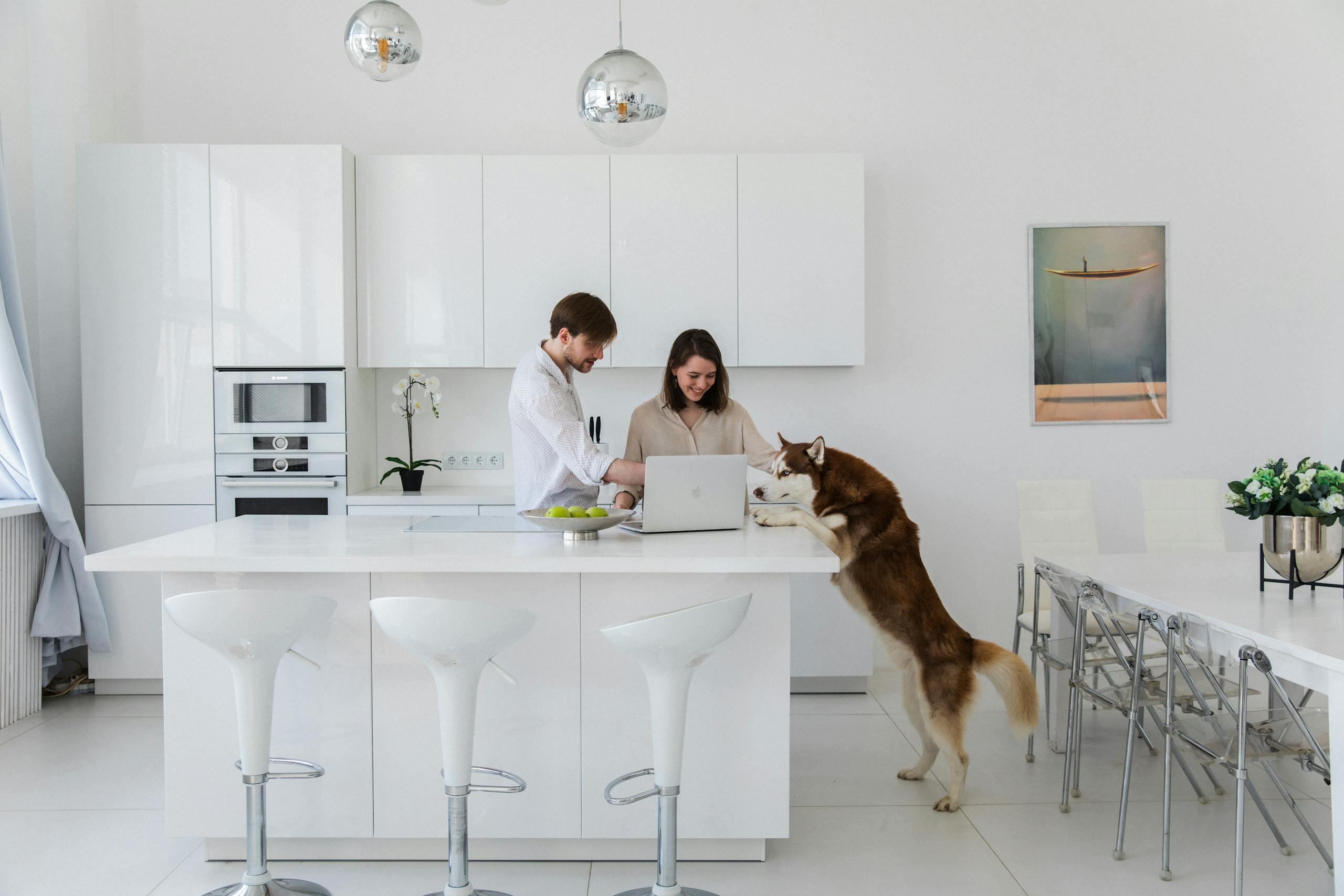
Another element worth considering is your physical setup. The spaces in your home either support or undermine the activities you want to do. If you want to read more, having a comfortable chair with good lighting in a spot that doesn’t feel like an afterthought matters. If you want to cook more intentionally, having your kitchen organized so that it’s pleasant to be in matters. Environment shapes behavior more than most of us account for. The right tools and setup can make a real difference, which is part of why thoughtful gifts for homebodies tend to be things that improve the quality of time spent at home rather than things that add novelty.
How Do You Balance Solitary Leisure With Staying Connected?
This is the tension most homebodies actually live with. We genuinely prefer being home and alone, and we also recognize that some degree of connection is important for wellbeing. The question isn’t whether to connect but how to do it in ways that don’t consume the restorative time we’ve carved out.
What helped me most was separating connection into two categories: obligatory and chosen. Obligatory connection is the stuff you have to manage, family logistics, professional check-ins, responding to people who need something from you. Chosen connection is the stuff that actually feeds you, a long conversation with someone you find genuinely interesting, a creative exchange with a friend who thinks differently than you do.
One thing Psychology Today has noted is that introverts often find shallow social interaction draining precisely because it doesn’t satisfy the deeper need for genuine exchange. That observation resonates with me. I can spend two hours at a networking event and feel more depleted than I started, or I can spend an hour in a real conversation with one person and feel genuinely energized.
For homebodies who want some social connection without the overhead of in-person socializing, the options have expanded considerably. Chat rooms for introverts and online communities built around specific interests can provide real connection in a format that suits the homebody temperament, text-based, asynchronous, low-stimulation, and easy to step away from when you’ve had enough.
The broader principle is protecting your chosen leisure time from being colonized by obligatory connection. Batch your social obligations where possible. Handle the administrative overhead of relationships in designated windows rather than letting it bleed into every evening. What remains is genuinely yours.
Can Leisure Time at Home Also Support Personal Growth?
Yes, and this is where homebodies have a genuine structural advantage that often goes unrecognized.
Growth doesn’t require novelty or external challenge. It requires attention and reflection, and those are things that home environments, when set up well, support exceptionally well. The introvert who spends a Saturday afternoon reading deeply about a subject that genuinely interests them, or working through a creative problem, or writing honestly in a journal, is doing something that compounds over time in ways that are hard to see in the short term but become unmistakable over years.
During the years I was running agencies, I did most of my actual strategic thinking at home, not in the office. The office was where I executed and communicated. Home was where I processed, synthesized, and formed the views I’d later bring to the table. That wasn’t accidental. It was a function of having quiet time to let ideas settle and connect. Findings published in PubMed Central on the relationship between restorative environments and cognitive function suggest that settings which allow mental disengagement from demands can support higher-order thinking, which matches what I experienced in practice.
The growth angle matters because it reframes leisure from something you consume to something you participate in. You’re not just recovering from the week. You’re building something, a richer inner life, a deeper skill set, a clearer sense of what you think and value.
That reframe also helps with the guilt some homebodies carry about spending so much time at home. The question isn’t whether you should be out doing more. It’s whether you’re using your home time in ways that genuinely serve you.

What Are the Most Overlooked Forms of Homebody Leisure?
Some of the most restorative activities available to homebodies don’t register as leisure because they don’t look like what leisure is supposed to look like in the cultural imagination. They’re quiet, they’re solitary, and they don’t produce anything shareable.
Slow cooking is one. Not meal prepping for efficiency, but actually cooking something that takes time and attention. Following a recipe you’ve never tried. Learning a technique. There’s something about the sensory engagement of cooking, the smell, the texture, the gradual transformation of ingredients, that produces a kind of present-moment absorption that’s genuinely restorative for many introverts.
Deep listening is another. Putting on an album you love and actually listening to it, without doing anything else, is a form of leisure that almost no one practices anymore. It sounds almost absurd to describe it as an activity. But the focused attention it requires, and the quality of presence it produces, is meaningfully different from having music on in the background.
Correspondence, in the old-fashioned sense, is worth revisiting. Writing a real letter or a substantive email to someone you care about, with actual thought behind it, satisfies the introvert’s preference for depth over breadth in communication. It’s social connection on your own terms and your own timeline.
Rearranging and curating your physical space is underrated as leisure. Not cleaning as a chore, but deliberately considering how your home is organized and what it contains. A good homebody gift guide will often point toward items that improve the quality of your environment rather than add to its volume, because experienced homebodies understand that a thoughtfully arranged space contributes directly to how you feel in it.
Finally, there’s thinking. Actual, undirected thinking. Sitting somewhere comfortable without a phone or a screen and letting your mind move where it wants to. This is so countercultural that it almost needs defending. But the capacity to sit with your own thoughts without immediately reaching for stimulation is something that can be cultivated, and the introverts who have cultivated it tend to report that it’s among the most genuinely restorative things they do.
How Do You Build Momentum When Your Leisure Time Keeps Getting Hijacked?
There’s a version of this problem that’s about external interruption, other people making demands on your time. And there’s a version that’s about internal interruption, your own anxiety, restlessness, or guilt pulling you away from rest before you’ve actually rested.
Both are real. Both require different responses.
For external interruption, the answer is mostly about communication and boundary-setting. This isn’t a comfortable area for many introverts, who tend to avoid the friction of saying no. But there’s a version of this that doesn’t require confrontation. It just requires consistency. People learn your patterns. If you’re reliably unavailable on Sunday mornings, eventually they stop expecting you to be available then. The boundary doesn’t have to be announced. It just has to be held.
For internal interruption, the answer is usually about reducing the cognitive overhead that follows you home. One thing that helped me was developing what I’d call a decompression ritual, a short, consistent sequence I did when I finished work for the day that signaled to my brain that the work mode was actually over. For me it was a walk, then making tea, then sitting for ten minutes without doing anything. It sounds small. Over time it became genuinely effective at separating work brain from home brain.
The Frontiers in Psychology journal has explored how psychological detachment from work during off-hours is associated with better wellbeing and recovery. What that means practically is that the transition ritual isn’t just a nice idea. It’s doing real work in terms of how completely you actually rest.
Momentum in leisure, the feeling that your home time is genuinely yours and genuinely restorative, tends to build once you’ve established a few reliable anchors. Not a full schedule, just two or three things you do consistently that signal to yourself that this time matters and you’re using it on purpose.

What Mindset Shift Makes the Biggest Difference for Homebodies?
After years of working through this myself, and talking with other introverts about how they experience their home time, the single most useful shift I’ve seen is moving from a scarcity frame to a sufficiency frame.
The scarcity frame says your leisure time is always being eaten into. There’s never enough of it. Whatever you do with it, you’re probably not doing it right. You should be more productive, or more social, or more something. This frame produces the low-grade anxiety that makes even genuinely good leisure feel unsatisfying.
The sufficiency frame says you have what you have, and your job is to use it well. Not perfectly. Not in ways that look impressive from the outside. Just well, meaning in ways that actually serve the person you are and the life you’re building.
For introverts specifically, this shift matters because so much of the cultural messaging around leisure is built for extroverts. It assumes that good leisure is social, active, and visible. It treats quiet home time as a consolation prize rather than a genuine preference. Homebodies absorb this messaging and then feel like something is wrong with them for preferring exactly what they prefer.
Nothing is wrong with you. Your preferences are valid data about who you are. The work is building a leisure life that honors those preferences rather than apologizing for them.
There’s more to explore across all of these dimensions in the Introvert Home Environment hub, which pulls together resources on everything from physical space to how introverts and homebodies can structure their lives around what actually works for them.
About the Author
Keith Lacy is an introvert who’s learned to embrace his true self later in life. After 20 years in advertising and marketing leadership, including running agencies and managing Fortune 500 accounts, Keith now channels his experience into helping fellow introverts understand their strengths and build fulfilling careers. As an INTJ, he brings analytical depth and authentic perspective to every article, drawing from both professional expertise and personal growth.
Frequently Asked Questions
Is it okay to spend most of my leisure time at home?
Yes, and for introverts and homebodies, it’s often genuinely preferable. The cultural assumption that good leisure requires going out is built around extroverted preferences. Many introverts find that home-based leisure is more restorative, more sustainable, and more aligned with who they are. The question worth asking isn’t whether you’re home too much, but whether you’re using your home time in ways that actually serve you.
How do I stop feeling guilty about relaxing at home?
Guilt about home leisure usually comes from internalizing the idea that rest has to be earned through visible productivity or social activity. Shifting toward a sufficiency frame, recognizing that rest is a legitimate and necessary use of time, helps considerably. It also helps to distinguish between passive drift and chosen rest. When you’ve consciously decided to spend an evening quietly at home, that decision is valid. The guilt tends to ease when you’re choosing deliberately rather than defaulting.
What’s the difference between restful leisure and wasted time?
The clearest marker is how you feel afterward. Restful leisure, even if it was entirely passive, leaves you feeling recovered, settled, or satisfied. Wasted time leaves you feeling flat, restless, or vaguely regretful. Paying attention to that distinction over a few weeks will tell you more about your personal leisure patterns than any general framework. The goal is to increase the proportion of time that produces the first feeling and reduce the proportion that produces the second.
How do I make my home environment better support leisure?
Start with what you already know you enjoy doing at home and ask whether your space actually supports that activity. If you want to read more, is there a comfortable, well-lit spot designated for it? If you want to cook more intentionally, is your kitchen pleasant to be in? Small environmental changes, reducing clutter, improving lighting, removing ambient stimulation, can meaningfully shift how your home time feels. The principle is that your environment should make your preferred activities easier to start and more enjoyable to sustain.
How can homebodies stay socially connected without draining their leisure time?
Separating obligatory connection from chosen connection is the most practical starting point. Handle the administrative overhead of relationships, logistics, check-ins, responses, in designated windows rather than letting it bleed through the whole evening. Reserve your genuinely free time for connection that actually feeds you, whether that’s a real conversation with someone you find interesting, a text exchange that goes somewhere meaningful, or an online community built around something you care about. Quality of connection matters far more than quantity, and homebodies tend to do best with social interaction that has some depth to it.