
Skipping weeknight get-togethers is not a sign that something is wrong with you. For many homebodies, especially introverts, the pull toward a quiet evening at home over a social obligation is not avoidance. It is a genuine, considered preference rooted in how they restore energy and find meaning.
Saying no to Tuesday night happy hours or Wednesday dinner invitations does not make you antisocial. It makes you someone who knows what you need, and has the self-awareness to honor it.
There is a whole ecosystem of thought around how introverts relate to their home environments, and this particular tension, the weeknight invitation versus the quiet evening in, sits at the center of it. Our Introvert Home Environment hub explores how the spaces we inhabit and the choices we make around them shape our wellbeing in ways that are often underestimated. This article focuses on one specific, recurring moment: the group text that arrives on a Wednesday afternoon, and the completely valid decision to decline it.
Why Does the Weeknight Feel So Different From the Weekend?
Ask most homebodies why they avoid weeknight plans specifically, and they will tell you it comes down to timing. There is something about a Tuesday or Thursday evening that feels fundamentally different from a Saturday afternoon. The week is still in motion. Work has taken something from you. The mental transition required to shift from professional mode into social mode, all in the span of a commute, is genuinely costly.
What’s your personality type?
Take our free 40-question assessment and get a detailed personality profile with dimension breakdowns, context analysis, and personalised insights.
Discover Your Type8-12 minutes · 40 questions · Free
For me, this was never more apparent than during my agency years. I ran a mid-sized advertising agency handling accounts for several Fortune 500 brands, and the culture of the industry practically mandated after-work socializing. Client dinners on Mondays. Team drinks on Thursdays. Networking events scattered throughout. Everyone seemed to treat these as natural extensions of the workday, even enjoyable ones. I found them exhausting in a way I could not fully articulate at the time.
What I understand now, decades later, is that I had already spent eight to ten hours processing information, managing relationships, and performing extroversion at a level my personality never actually required. By 6 PM, I had nothing left to give a cocktail party. The drive home was not avoidance. It was survival.
The weeknight carries a particular cognitive weight that weekends simply do not. Even for people who genuinely enjoy socializing, the mental residue of a full workday changes the calculus. For introverts, that residue is heavier, and the cost of ignoring it is real. Research published in PMC has examined how social interaction taxes attentional resources differently depending on individual temperament, offering a physiological basis for what many introverts already know intuitively: not all social time is created equal, and the timing matters enormously.
What Does a Quiet Evening Actually Give You?
People who have never needed solitude to recharge sometimes struggle to understand what a homebody actually does with a free evening. They imagine boredom, or loneliness, or some kind of passive waiting for life to happen. What they miss is that a quiet evening at home is often the most productive, restorative, and genuinely pleasurable part of the day.
There is a version of this that looks like reading. A good homebody book picked up after dinner, the house quiet, no obligation to perform or respond, is not a consolation prize for missing out on social plans. It is a chosen pleasure that many homebodies actively look forward to throughout the day.
There is another version that looks like nothing in particular. Sitting on the couch, thinking through the day, letting the mind decompress without filling every moment with input or interaction. I have spent many evenings doing exactly this, and I would not trade them. The homebody couch gets a bad reputation as a symbol of laziness, but for someone who has spent eight hours managing people, clients, and competing priorities, that couch is a recovery room.

What solitude gives introverts is not emptiness. It is the space to process what happened during the day, to think through problems at their own pace, to reconnect with their own thoughts rather than constantly responding to someone else’s. That internal processing is not optional for many of us. It is how we make sense of the world.
Highly sensitive introverts often feel this need even more acutely. If you find that the sensory and emotional input of a full workday leaves you genuinely depleted in ways that go beyond ordinary tiredness, the principles explored in HSP minimalism may resonate. Simplifying your environment and your commitments is not about withdrawing from life. It is about creating the conditions under which you can actually show up fully for the things that matter.
How Do You Handle the Social Pressure Without Damaging Relationships?
This is the part that most homebodies actually wrestle with. Saying no to weeknight plans is easy enough in theory. The harder part is doing it repeatedly, across months and years, without being labeled as difficult, unfriendly, or someone who simply does not care about the people in their life.
The pressure is real. Group texts have a social physics of their own. When everyone else responds with enthusiasm and you are the one who quietly declines, there is always a moment of wondering what people think. Whether they are annoyed. Whether you are slowly drifting out of a social circle you actually value.
What I found, both in my personal life and in managing large teams at the agency, is that consistency and warmth together solve most of this problem. If you are reliably warm, genuinely interested in the people around you, and occasionally present on your own terms, most people stop reading your absence as rejection. They simply learn that you are someone who prefers a different rhythm.
The relationships that cannot survive your honest self-knowledge were probably not as solid as they appeared. That is not a comfortable thing to say, but it is true. The people who matter will adjust. The ones who insist you perform extroversion as a condition of their affection are asking for something you cannot sustainably provide.
One thing that helped me enormously during my agency years was being proactive rather than reactive. Instead of waiting for an invitation I would have to decline, I would occasionally suggest something that worked for me: a one-on-one lunch, a short coffee, a specific event I actually wanted to attend. This gave people evidence that I valued connection, even if my version of it looked different from the default. Psychology Today has written thoughtfully about why introverts tend to prefer fewer, deeper interactions over frequent, shallow ones, and understanding this about yourself makes it much easier to advocate for the kind of connection that actually works for you.
Is There a Way to Stay Connected Without Draining Yourself?
One of the more interesting developments of the past decade or so is how many introverts have found genuine community through digital channels. Not as a replacement for in-person connection, but as a supplement that fits their natural rhythms far better than a crowded bar on a Wednesday night.
Text-based communication gives introverts something that real-time social situations rarely do: time to think before responding. The ability to be thoughtful, to say exactly what you mean, to engage at your own pace. Chat rooms for introverts and similar online spaces have become genuinely meaningful places for people who would rather have a real conversation about something that matters than make small talk in a loud restaurant.

This is not a lesser form of connection. For many introverts, it is a more authentic one. The absence of performance pressure, the ability to engage with ideas rather than just vibes, the freedom to disappear without social penalty when you have said what you wanted to say: these are features, not limitations.
What matters is that you are actually connecting, on your terms, with people who share your interests and sensibilities. Staying home on a Wednesday does not have to mean isolation. It can mean choosing a different kind of presence, one that leaves you feeling replenished rather than hollowed out.
Some of the most meaningful professional relationships I built during my agency career happened not at industry events but through follow-up emails and one-on-one calls where I could actually think and speak carefully. The extroverts in my world worked the room. I worked the follow-up. Both approaches built real relationships. Mine just looked different from the outside.
What Does It Actually Look Like to Build a Life Around This Preference?
At some point, the happy homebody stops apologizing for their preferences and starts building a life that reflects them. This is not about becoming a recluse. It is about designing your days and evenings with the same intentionality you bring to anything else you care about.
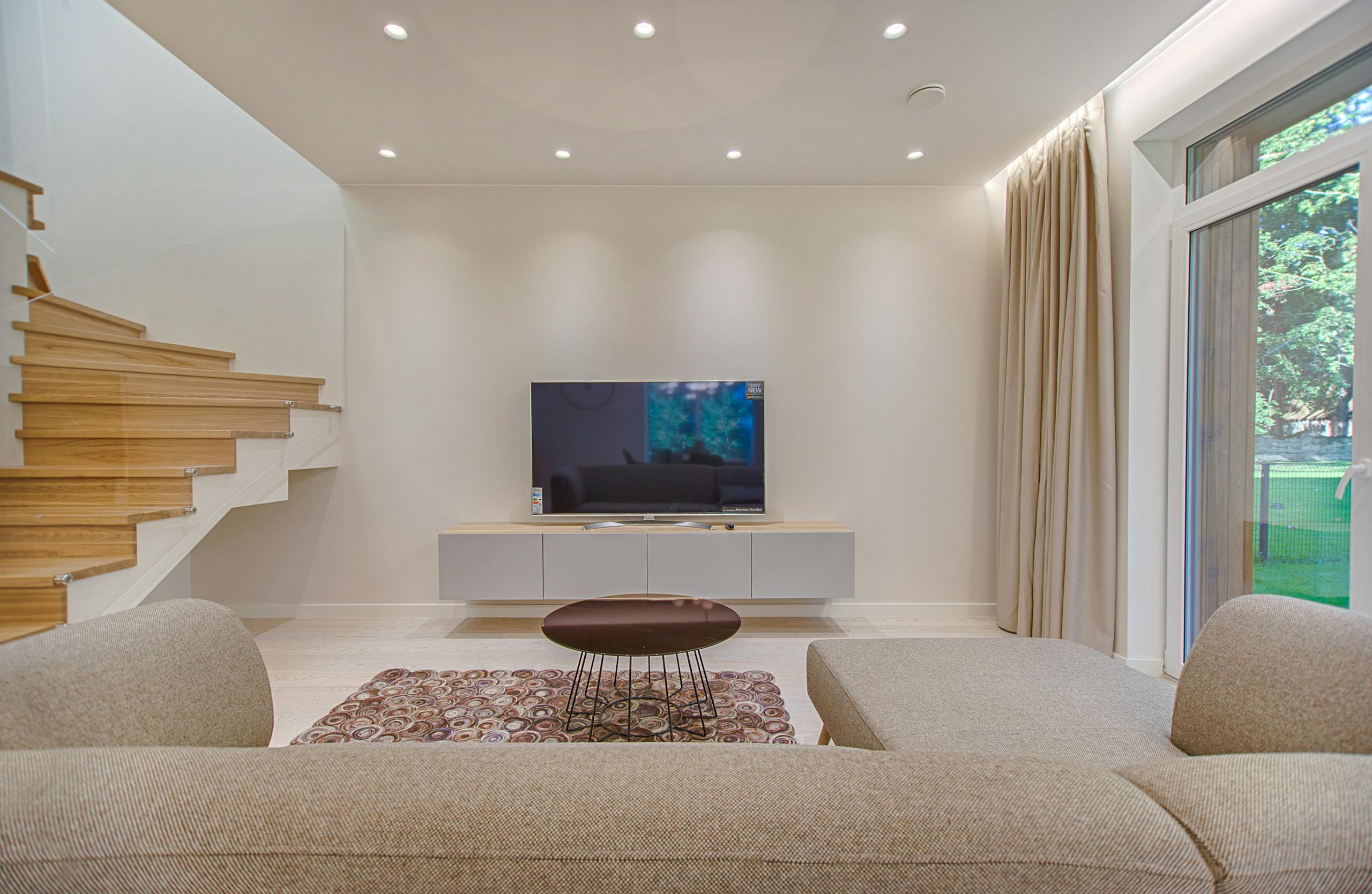
Part of this is physical. Your home environment becomes genuinely important when you spend meaningful time in it. The quality of your lighting, the comfort of your furniture, the presence of things that bring you quiet pleasure: these are not trivial concerns. They are the infrastructure of your wellbeing. The people in your life who understand this will give you gifts for homebodies that reflect genuine thoughtfulness, things that enhance the home experience rather than push you out of it.
If you are building that kind of environment intentionally, or looking for ideas to help someone else do the same, a good homebody gift guide can point you toward the kinds of things that actually matter: quality over novelty, comfort over spectacle, things that make staying in feel like a genuine choice rather than a default.
Part of building this life is also social. It means being honest with the people you care about regarding what you need. Not apologetic, not defensive, just honest. Most people respond well to directness delivered with warmth. “I am genuinely more myself after a quiet evening at home” is not a rejection of the people around you. It is an explanation that most decent people can respect.
There is also something to be said for finding your people, the ones who share this orientation toward home and solitude and depth. When I finally stopped trying to fit into the extroverted social culture of the advertising world and started being honest about my preferences, I found that several of my most respected colleagues felt exactly the same way. We had all been performing a version of sociability that none of us particularly enjoyed. Once that was out in the open, we built something much better: a small, genuine circle that met on terms we all actually wanted.

When Should You Push Yourself to Go?
Honest reflection requires acknowledging that not every impulse to stay home is wise. There is a version of homebody life that is genuinely restorative and self-aware, and there is a version that slides into avoidance of things that actually matter. Knowing the difference is important.
The question worth asking is not “do I want to go?” Almost never will an introvert want to go to a weeknight gathering. The better question is “will I regret not going?” That reframe shifts the analysis from energy management to relationship maintenance and genuine opportunity cost.
A colleague’s farewell dinner. A friend going through something difficult who needs people around them. An event that genuinely connects to something you care about. These are worth the energy expenditure, and most homebodies know it. The discipline is not in always saying no. It is in being honest with yourself about which invitations carry real weight and which ones are simply social habit dressed up as obligation.
There is good evidence that social connection matters deeply for long-term wellbeing. PMC research on social connection and health makes clear that isolation carries genuine costs. The goal is not to avoid all social engagement. It is to be selective in a way that honors both your needs and the relationships that matter to you.
What I eventually built, after years of either overcommitting to social obligations or withdrawing entirely, was something closer to a personal policy. Weeknight gatherings that were purely social and low-stakes: almost always no. Events tied to people I genuinely care about, or professional situations with real stakes: I showed up, and I was glad I did. That framework removed most of the guilt and most of the second-guessing.
Introverts are not uniquely prone to conflict avoidance, but the social pressure around weeknight plans can create a kind of low-level friction that accumulates over time. Psychology Today’s framework for introvert-extrovert conflict resolution offers useful tools for those moments when your preference for staying in becomes a point of tension with someone who takes it personally.
Why Does This Choice Feel Political When It Should Feel Personal?
There is something worth naming about the broader cultural context. In many social environments, especially professional ones, the willingness to show up for after-work plans is treated as a proxy for commitment, warmth, or team spirit. Opting out carries an implicit social cost that has nothing to do with the actual quality of your work or your relationships.
This is a design flaw in how many organizations and social groups structure belonging. When presence at optional social events becomes a measure of character, the people most likely to be penalized are those whose temperament makes those events genuinely costly. That is not a personal failing. It is a structural bias toward extroverted norms.
I saw this play out many times in agency culture. The people who stayed late for drinks, who attended every industry event, who were always visible at the right parties, accumulated a kind of social capital that had real professional consequences. Promotions, referrals, introductions. The introverts on my teams who did excellent work but declined to participate in that culture were often overlooked in ways that had nothing to do with their actual contributions.
Understanding that dynamic does not mean you have to capitulate to it. It means you go in with clear eyes, make strategic choices about where your energy is most valuable, and stop measuring your worth by a metric that was never designed with your temperament in mind. Frontiers in Psychology has published work on how personality traits interact with social norms in professional settings, and the picture that emerges is one where introverts consistently underestimate the value of their own contributions while overestimating the cost of their social style.

The happy homebody who skips the Wednesday night plans is not making a statement about their values or their affection for the people in their life. They are simply living in alignment with what they know about themselves. That is not a compromise. It is a form of integrity.
If you are still working out what that looks like in practice, or building the home environment that makes staying in feel like a genuine sanctuary rather than a retreat, the full range of resources in our Introvert Home Environment hub covers everything from sensory design to the social dynamics of homebody life.
About the Author
Keith Lacy is an introvert who’s learned to embrace his true self later in life. After 20 years in advertising and marketing leadership, including running agencies and managing Fortune 500 accounts, Keith now channels his experience into helping fellow introverts understand their strengths and build fulfilling careers. As an INTJ, he brings analytical depth and authentic perspective to every article, drawing from both professional expertise and personal growth.
Frequently Asked Questions
Is it unhealthy to regularly skip weeknight social events?
Not inherently. Consistently choosing rest and solitude over low-stakes social obligations is a reasonable, self-aware decision for introverts and homebodies. What matters is that you maintain meaningful connections overall, show up for the people and events that genuinely matter to you, and are honest with yourself about the difference between healthy self-care and avoidance of things that would actually benefit you.
How do I decline weeknight invitations without damaging friendships?
Warmth and consistency together do most of the work. Decline with genuine appreciation, suggest an alternative that works for you, and follow through on those alternatives. When people see that your no to a Wednesday happy hour is not a no to them as people, most will adjust their expectations without resentment. Being proactive about connection on your own terms signals that you care, even when you are not physically present.
What is the difference between being a homebody and being socially anxious?
A homebody prefers home because it is genuinely pleasurable and restorative, not because social situations feel threatening. Social anxiety involves fear or distress around social interaction, often accompanied by avoidance driven by worry rather than preference. Many homebodies are perfectly comfortable in social settings when they choose to be there. They simply prefer not to be there most of the time, especially on weeknights after a full day.
How can homebodies stay connected without overextending themselves?
Selective engagement is more sustainable than either constant availability or complete withdrawal. Choose the gatherings that carry real weight, the ones tied to people you genuinely care about or events with meaningful stakes. Supplement with the kinds of connection that fit your natural rhythms: one-on-one conversations, text-based communities, or occasional planned events you actually look forward to. Quality of connection matters far more than frequency.
Does preferring to stay home on weeknights affect professional relationships?
In some workplace cultures, yes, there is a social cost to opting out of after-work socializing. The practical response is to be strategic rather than wholesale absent: attend the events with real professional stakes, build relationships through one-on-one interactions where you can be more fully yourself, and make sure your actual work and genuine warmth speak louder than your absence at happy hour. Many successful professionals, including introverted leaders, have built strong reputations without ever becoming the life of the office party.