

Homebodies get cheated on meaning. Not because staying home is meaningless, but because the cultural story we tell about meaning leaves them out entirely. The dominant narrative says meaning comes from doing more, going further, and filling your calendar until there’s nothing left to protect. Homebodies who find their richest experiences inside a quiet house are often told, in subtle and not-so-subtle ways, that they’re missing the point of life.
That’s the cheat. And it’s worth calling out directly.

My years running advertising agencies taught me a lot about how meaning gets packaged and sold. We built campaigns around aspirational living, around the idea that the good life looked a certain way and required constant movement. I believed it for a long time, because I was surrounded by people who seemed to thrive on that version. What I didn’t realize until much later was that I had been quietly building my own meaning in the margins. In the early mornings before the office filled up. In the long drives home when I could finally think. In the weekends I spent reading instead of networking. I was a homebody pretending to be something else, and I was losing meaning in the process, not finding it.
If that resonates with you, this article is for you. Not to validate your lifestyle choices (you don’t need my permission), but to examine something more specific: the way our culture systematically misdefines meaning in ways that exclude the homebody experience, and what it costs people who live quietly and deeply.
This piece is part of a broader collection of thinking I’ve been doing about how introverts relate to their home environments. You can explore the full range of that conversation in the Introvert Home Environment Hub, where we look at everything from sensory sensitivity to the psychology of domestic space. But this particular angle, about meaning specifically, felt urgent enough to examine on its own.
What Does “Meaning” Actually Require?
Ask most people where they find meaning and you’ll hear a familiar list. Career accomplishments. Travel experiences. Social relationships. Community involvement. Adventure. Growth. All of these are genuinely meaningful for the people who experience them. But notice what’s missing from the standard catalog: stillness. Depth. Repetition. Quiet observation. Domestic ritual. The kind of meaning that doesn’t make for a good Instagram caption.
What’s your personality type?
Take our free 40-question assessment and get a detailed personality profile with dimension breakdowns, context analysis, and personalised insights.
Discover Your Type8-12 minutes · 40 questions · Free
Psychology has been catching up to what many introverts have always known intuitively. Meaning isn’t a product of stimulation. It’s a product of engagement, and engagement can happen at a kitchen table just as powerfully as it can happen at a summit base camp. Psychology Today has written thoughtfully about why depth of conversation matters more than breadth of social contact for many people, and that same principle extends to experience itself. Depth over breadth. Presence over novelty.
Homebodies understand this instinctively. The meaning they find at home isn’t a consolation prize for not going out. It’s a different category of meaning entirely, one built on sustained attention, personal ritual, and the kind of slow knowing that only comes from spending real time in a place you love.
What gets cheated isn’t the homebody’s actual experience of meaning. It’s their cultural recognition. The world doesn’t count it. And when the world doesn’t count something, people start to wonder if it counts at all.
Why the Cultural Story Gets This So Wrong

We live in a culture that has confused activity with aliveness. Busyness became a status symbol somewhere in the last few decades, and we’ve been paying for it ever since. If you’re not exhausted, you’re not trying hard enough. If you’re not constantly expanding your social circle, you’re stagnating. If you’re not traveling somewhere new every few months, you’re wasting your limited time on earth.
I watched this play out in my agencies constantly. The people who got celebrated were the ones who were always on. Always available, always generating, always in the room. As an INTJ, I found that culture genuinely exhausting, not because I lacked ambition, but because my ambition ran on a different fuel. I needed to think before I spoke. I needed quiet to produce my best work. I needed, frankly, to go home and decompress before I could show up the next day with anything worth offering. But that need was invisible in the culture we’d built. What was visible was presence, and presence was measured in hours and energy expenditure.
The same cultural bias that penalizes introverted leadership styles penalizes homebodies. Both are operating on an internal economy that the external world can’t easily read or reward. The extroverted person who goes to five events this week is visibly accumulating experience. The homebody who spends the same week going deep on a single book, a long conversation with one close friend, and an evening cooking something new is accumulating something too, but it doesn’t show up on any ledger anyone else can see.
That invisibility is where the cheat happens. Not in a malicious conspiracy against quiet people, but in a structural failure to recognize that meaning has more than one valid shape.
The Specific Meaning Homebodies Build (That Nobody Talks About)
Let me get specific, because vague defenses of the homebody lifestyle don’t actually help anyone. There are particular kinds of meaning that homebodies build with unusual depth, and these deserve to be named.
The first is relational depth. Homebodies tend to invest in fewer relationships but with considerably more attention. When you’re not spreading yourself across a wide social landscape, you have more to give to the people you do let in. The conversations get longer, more honest, and more reciprocal. Some of my most meaningful professional relationships were built not in conference rooms or networking events, but in quieter one-on-one settings where both people could actually think. I’ve seen the same dynamic play out in the online spaces where introverts connect. Chat rooms for introverts have become genuine places of connection for people who find large social settings overwhelming, and the quality of those exchanges often surpasses what happens in noisier environments.
The second kind of meaning is environmental intimacy. Homebodies know their spaces. They know where the light falls in the afternoon, which chair is best for reading versus thinking, how the house sounds in the rain. That kind of intimate knowledge of a place isn’t trivial. It’s the foundation of genuine comfort, and comfort is not the opposite of meaning. A home that you understand deeply becomes a kind of extended self, a place that holds your history and supports your thinking. The homebody couch is a running joke in popular culture, but there’s something real underneath the joke. A space you’ve claimed, made comfortable, and returned to consistently becomes a place where your best thinking happens.
The third is creative and intellectual depth. Homebodies read more. They think longer thoughts. They develop expertise in things that interest them without any external pressure to make those interests socially legible or productive. Many of the most interesting people I’ve hired over the years had this quality. They’d spent years going deep on something, not because it would look good on a resume, but because they genuinely cared. That depth showed up in everything they did.
The fourth is sensory attunement. People who spend significant time at home develop a finer sensitivity to their immediate environment. This connects to something I’ve noticed in highly sensitive people, who often find that simplifying their environment actually amplifies their experience of it rather than diminishing it. The principles behind HSP minimalism point to something real: when you remove excess stimulation, what remains becomes richer. Homebodies live this naturally.
How the Meaning Deficit Gets Internalized
Here’s where it gets harder to talk about. The cultural message that homebodies are missing out on meaning doesn’t just stay external. It gets absorbed. And once it’s inside, it starts doing damage that has nothing to do with the actual quality of the homebody’s life.
I spent a significant portion of my adult life carrying a low-grade sense that I was doing something wrong by wanting to be home. I’d go to the industry events, the client dinners, the after-parties, and I’d perform engagement while some part of me was already calculating when I could reasonably leave. And then I’d feel guilty about wanting to leave, because wasn’t this the stuff that mattered? Wasn’t this where relationships were built and opportunities were created?
What I’ve come to understand is that the guilt wasn’t evidence of a character flaw. It was evidence of a mismatch between my actual wiring and the story I’d been handed about what a successful, meaningful life looked like. The story was wrong for me. But I didn’t have a competing story to hold onto, so the default one filled the space and made me feel inadequate for not fitting it.
Many homebodies carry this same internalized deficit. They’ve accepted, at some level, that their preference for home is a limitation rather than a legitimate orientation. And that acceptance costs them something real: the ability to be fully present in the life they’re actually living, because part of them is always watching that life through the lens of what they’re supposedly missing.
There’s relevant work in the psychological literature on how well-being connects to self-concordance, the degree to which your actual choices align with your genuine values and preferences. When that alignment is strong, people report higher satisfaction and a stronger sense of purpose. When it’s weak, when you’re living someone else’s version of a good life, the opposite tends to be true. Research published through PubMed Central has examined how authenticity in daily life connects to psychological well-being in ways that go beyond simple happiness measures. Homebodies who have made peace with their orientation tend to show up more fully in their actual lives. Those who haven’t are often caught between two worlds, not quite present in either.

The Role That Rituals Play in Homebody Meaning-Making
One of the most underappreciated sources of meaning in the homebody life is ritual. Not in any grand spiritual sense, though that dimension is real for some people, but in the ordinary sense of repeated, intentional practices that structure time and create continuity.
Morning coffee made the same way. Sunday cooking. A particular reading spot at a particular time of day. The weekly call with a sibling. The garden checked every evening before dark. These rituals don’t produce Instagram content. They don’t generate stories you’d tell at a party. But they create the texture of a life, the felt sense of continuity and care that makes a home feel inhabited rather than merely occupied.
Anthropologists have long noted that ritual is one of the primary mechanisms through which human communities create meaning. What’s interesting is that this function doesn’t require a community. Individual rituals, the private ceremonies of a homebody’s daily life, serve the same purpose at a personal scale. They mark time. They create expectation and satisfaction. They build a relationship between a person and their environment that deepens over years.
Gifts that support these rituals are, in a real sense, gifts that support meaning-making. A good reading lamp. A coffee setup that makes the morning feel intentional. A journal. These aren’t indulgences; they’re infrastructure. The things people put on homebody gift lists often reflect this instinctively. They’re not asking for entertainment; they’re asking for tools that make their particular way of building meaning more possible.
I think about this when I consider what changed for me when I finally stopped fighting my homebody instincts. It wasn’t that I became less ambitious or less engaged with the world. It was that I started investing in the rituals that actually fed me, and as a result, I had more to bring to everything else. The early morning writing practice I developed in my fifties has done more for my thinking than any conference I attended in my forties. The quiet evenings reading have given me more to say than the networking dinners ever did.
Books as a Particular Kind of Homebody Meaning
It feels worth spending a moment on reading specifically, because books occupy a special place in the homebody’s relationship with meaning. A book is one of the few objects that can deliver genuine depth, genuine encounter with another consciousness, without requiring you to go anywhere or be anyone other than who you are.
I’ve had conversations with books that changed how I think more profoundly than most conversations with people. That’s not a knock on people; it’s an acknowledgment that the sustained, private encounter that reading enables is genuinely rare and genuinely valuable. The homebody who spends an evening with a demanding book isn’t avoiding life. They’re living it in a particular register.
There’s a growing genre of writing that speaks directly to this experience. If you haven’t encountered writing that takes the homebody life seriously as a subject, a good homebody book can do something important: it can give you language for an experience you’ve been living but couldn’t quite articulate. That kind of recognition, seeing your own life reflected in writing, is itself a form of meaning. It tells you that your experience is real and worth examining.
What I’ve found in the best writing about introversion and home life is a quality of attention that mirrors the homebody’s own orientation. It notices small things. It takes seriously what might seem trivial. It finds significance in the domestic and the quiet. That quality of attention is something homebodies practice naturally, and finding it in writing feels like finding your people.
What Happens When You Stop Defending and Start Inhabiting

There’s a particular kind of exhaustion that comes from spending energy defending your choices instead of living them. Homebodies often know this exhaustion well. It’s not the tiredness of a full day. It’s the tiredness of constantly translating yourself for an audience that doesn’t share your reference points.
Something shifts when you stop defending and start inhabiting. When you accept, at a real level, that your way of finding meaning is legitimate, not better than other ways but genuinely valid, you free up a significant amount of cognitive and emotional energy. That energy can go back into the actual business of living well.
I watched this shift happen in real time with a creative director I managed years ago. She was extraordinarily talented, an INFP whose best work came from long periods of solitary focus, but she’d internalized the message that her preference for working alone meant something was wrong with her. She’d apologize for needing quiet. She’d force herself into collaborative sessions that produced nothing and left her depleted. When she finally gave herself permission to work the way she actually worked, the output was remarkable. The apology energy became creative energy. The same thing happens for homebodies who stop apologizing for being home.
Curating your home environment to support the life you’re actually living rather than the life you think you should be living is a practical expression of this shift. The homebody gift guide framing matters here: the idea that your domestic life is worth investing in, that the objects and arrangements of your home deserve the same care you might give to any other significant part of your life. That investment is a statement about what you value. It’s meaning made tangible.
Psychological research on autonomy and well-being supports this intuitively. Work published through PubMed Central on self-determination theory suggests that people who act in alignment with their genuine preferences, rather than external pressure, report significantly stronger well-being across multiple dimensions. The homebody who has genuinely chosen their life, rather than settled for it or apologized for it, is operating from a fundamentally different psychological position than the one who is still fighting the cultural story.
The Meaning That Only Comes From Staying
There’s a specific kind of meaning that requires staying in one place long enough to see things change. Homebodies have access to this meaning in ways that more nomadic lifestyles don’t easily allow.
Watching a garden through multiple seasons. Knowing your neighborhood well enough to notice what’s different. Building a friendship over years of regular contact rather than periodic intense reunions. These are slow-accumulation forms of meaning, and they require a kind of commitment to place and routine that the culture often reads as stagnation.
What the culture misses is that staying is itself a form of depth. The person who has lived in the same neighborhood for fifteen years knows something that the person who has visited fifteen different countries doesn’t know, not because one is better than the other, but because they’re genuinely different kinds of knowledge. One is wide; the other is deep. A life built on depth has its own texture and its own rewards.
I’ve been thinking about this in terms of what I know about my own creative process. My best thinking doesn’t happen when I’m stimulated. It happens when I’m still. The ideas that have actually been useful, in my agency work and in this writing, came from long periods of quiet attention, not from conferences or workshops or retreats. The staying made the thinking possible.
Frontiers in Psychology has published work examining how different personality orientations relate to well-being and life satisfaction in ways that challenge the assumption that extraversion is the optimal baseline. That research points toward a more nuanced picture, one where the match between a person’s genuine orientation and their daily life matters more than where they fall on any particular personality dimension. Homebodies who have found that match are, by that measure, doing something right.
Reclaiming the Narrative
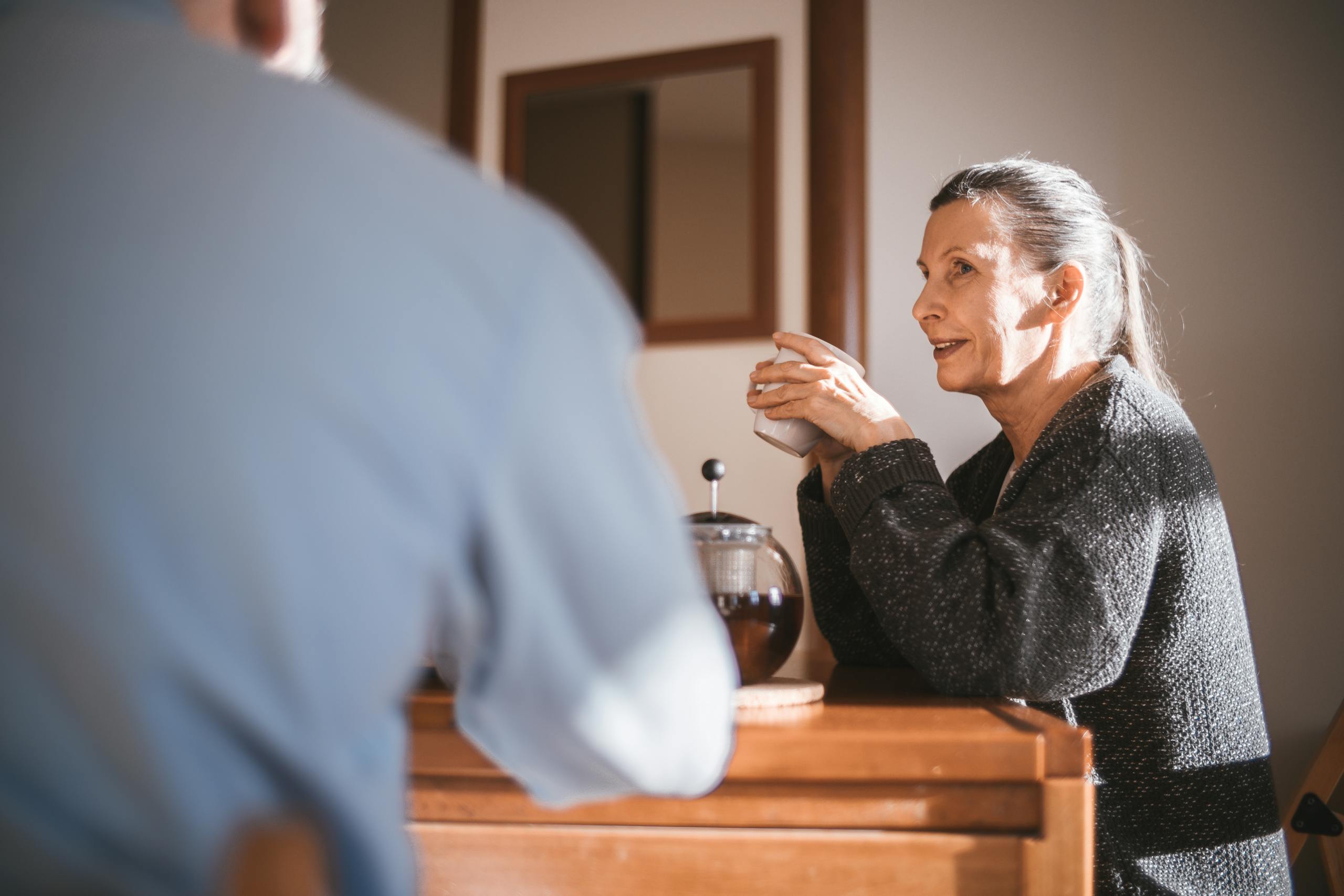
The cheat I described at the beginning of this article is real, but it’s not permanent. Narratives can be revised. The cultural story about what constitutes a meaningful life is not a law of nature; it’s a set of assumptions that got normalized, and assumptions can be questioned.
Questioning them doesn’t require a grand public gesture. It starts with something quieter: deciding, privately and seriously, that your experience of meaning counts. That the depth you find at home is genuine depth. That the relationships you’ve invested in are genuinely rich. That the rituals you’ve built are genuinely sustaining. That you are not missing the point of life by living it the way you actually live it.
From that starting point, something becomes possible that wasn’t before: genuine presence. Not the performed engagement of someone who is secretly wishing they were somewhere else, but actual presence in the life you’re living. That presence is where meaning lives, not in the number of experiences you accumulate or the size of the social circle you maintain, but in the quality of attention you bring to what’s actually in front of you.
Homebodies have always known this, even when they couldn’t say it clearly. The challenge has been holding onto that knowledge in the face of a culture that keeps trying to convince them otherwise. My hope is that naming it this directly makes it a little easier to hold.
There’s more to explore on this topic across the full Introvert Home Environment Hub, where we examine how introverts can build domestic spaces and routines that genuinely support the way they’re wired.
About the Author
Keith Lacy is an introvert who’s learned to embrace his true self later in life. After 20 years in advertising and marketing leadership, including running agencies and managing Fortune 500 accounts, Keith now channels his experience into helping fellow introverts understand their strengths and build fulfilling careers. As an INTJ, he brings analytical depth and authentic perspective to every article, drawing from both professional expertise and personal growth.
Frequently Asked Questions
Do homebodies really find less meaning in life than people who are more socially active?
No. The assumption that social activity and external experience are prerequisites for meaning is a cultural bias, not a psychological fact. Homebodies build meaning through depth of relationship, environmental intimacy, creative and intellectual engagement, and personal ritual. These are genuine sources of meaning, even when the broader culture fails to recognize them as such. The mismatch between cultural expectation and personal experience can create a sense of deficit, but that deficit is in the narrative, not in the homebody’s actual life.
Why do homebodies sometimes feel like their life lacks meaning even when it doesn’t?
Because the cultural story about what constitutes a meaningful life is pervasive and internalized early. When the dominant narrative celebrates busyness, travel, and broad social engagement as markers of a life well-lived, people who don’t share those preferences can absorb the message that they’re doing something wrong. That internalized deficit is the real problem, not the homebody lifestyle itself. When homebodies develop a competing narrative that accurately reflects their genuine experience of meaning, the felt sense of deficit tends to diminish significantly.
What are the most meaningful activities for homebodies?
This varies by person, but common sources of deep meaning for homebodies include sustained reading and intellectual engagement, deep one-on-one relationships, creative practice of any kind, domestic ritual and care, gardening and connection to natural cycles, and the slow accumulation of knowledge about a particular place or subject. What these share is a quality of sustained attention over time, which is something homebodies are often exceptionally well-positioned to offer.
Is being a homebody the same as being introverted?
Not exactly, though there’s significant overlap. Introversion is a personality orientation related to how people process energy and stimulation. Being a homebody is more of a lifestyle preference, a genuine enjoyment of and preference for home-based living. Many introverts are homebodies, but not all homebodies identify as introverts, and not all introverts are homebodies in the strict sense. That said, the cultural pressures that pathologize introversion and the pressures that pathologize the homebody lifestyle come from the same source: a bias toward extroverted, high-stimulation ways of living.
How can homebodies build a stronger sense of meaning in their daily lives?
Start by taking your own experience seriously rather than measuring it against an external standard that wasn’t built for you. Invest in the rituals and environments that genuinely sustain you. Develop language for what you value, because being able to articulate your own sources of meaning makes them more real and more defensible, both to yourself and to others. Seek out writing, communities, and conversations that reflect your experience back to you accurately. And practice genuine presence in the life you’re actually living, rather than the performed engagement of someone who’s half-watching themselves through someone else’s eyes.