
A homebody likes familiar surroundings for a reason that goes deeper than comfort or habit. Familiar environments reduce the cognitive load of simply being in a space, freeing up mental and emotional energy for the things that actually matter: thinking, creating, connecting, resting. For introverts especially, the familiar isn’t boring. It’s the foundation that makes everything else possible.
My name is Keith Lacy, and I spent two decades running advertising agencies where novelty was practically a job requirement. New clients, new campaigns, new offices, new cities. From the outside, it looked like an exciting life. From the inside, I was constantly managing the drain of perpetual unfamiliarity while trying to do good work. It took me years to understand that my preference for familiar surroundings wasn’t a weakness to overcome. It was a signal worth listening to.

There’s a whole conversation worth having about what it means to build a space that genuinely supports how you’re wired. Our Introvert Home Environment hub covers that broader territory, from sensory design to the psychology of personal space, but this particular piece is about something more specific: why the familiar itself holds such power, and what that preference actually tells you about the way you process the world.
Why Does Familiarity Feel So Different to Introverts Than to Everyone Else?
Not everyone experiences unfamiliar environments the same way. Some people feel energized walking into a new space, drawn to the stimulation of the unknown. Others feel a quiet relief when they step back into a place they know. Neither response is a character flaw. They’re just different ways of being wired.
What’s your personality type?
Take our free 40-question assessment and get a detailed personality profile with dimension breakdowns, context analysis, and personalised insights.
Discover Your Type8-12 minutes · 40 questions · Free
For introverts, and particularly for those of us who score high on sensitivity to environmental input, familiar surroundings function almost like a nervous system reset. When you already know where the light falls in the afternoon, which chair supports your back, which corner of the room stays quiet when the rest of the house gets loud, you’re not spending energy figuring those things out. That freed-up energy goes somewhere useful.
I noticed this clearly in my agency years. When we moved offices, which happened twice during my tenure, my productivity dropped for weeks. Not because the new space was worse on paper. In fact, one of those moves put us in a genuinely nicer building. But I had to re-learn everything: the acoustics, the light, the flow of foot traffic past my door, the ambient noise from the street. My brain was busy mapping the environment instead of doing the work I actually needed it to do.
What I eventually came to understand is that this isn’t quirky or high-maintenance. It’s a legitimate feature of how certain minds process space. Published research on environmental psychology has documented the ways that physical surroundings affect cognitive performance, emotional regulation, and stress response. The familiar reduces threat-scanning. And when your nervous system isn’t scanning for threats, it can do something more interesting.
What Is Actually Happening in Your Brain When You’re in a Familiar Space?
There’s a useful way to think about what familiarity does cognitively. When you enter a new environment, your brain is doing a kind of continuous audit. What are the exits? Where is the noise coming from? Who is in the room? What are the social expectations here? For someone with a more reactive nervous system, that audit never fully quiets down until the environment becomes known.
Familiar surroundings essentially pre-answer all those questions. Your brain already ran the audit. It filed the results. Now it can do other things.
This is one reason many homebodies find that their best thinking happens at home, not at the trendy co-working space or the coffee shop someone recommended. It’s not about being antisocial. It’s about cognitive efficiency. The familiar environment is already processed. The unfamiliar one is still running in the background, consuming resources.
Highly sensitive people tend to feel this even more acutely. The overlap between introversion and high sensitivity is significant, though they’re not the same thing. If you’ve ever explored the world of HSP minimalism and simplifying for sensitive souls, you’ll recognize this dynamic: reducing environmental complexity isn’t about being precious. It’s about preserving the mental bandwidth to actually function at your best.

Is the Preference for Familiar Surroundings the Same as Being Afraid of New Things?
This is the question I used to ask myself, usually at the prompting of extroverted colleagues who couldn’t understand why I didn’t share their enthusiasm for spontaneous travel or constantly rotating work environments. “Don’t you get bored?” they’d ask, genuinely puzzled.
No. And that’s a meaningful distinction worth sitting with.
Preferring familiar surroundings is not the same as fearing novelty. It’s not agoraphobia, it’s not anxiety disorder, and it’s not a sign of a stunted life. Many people who deeply value their home environments are also widely traveled, intellectually curious, and professionally adventurous. The preference for familiarity is about where you do your best living and thinking, not about what you’re capable of.
I’ve flown to New York for a client pitch, stayed two nights, and come home feeling like I’d run a marathon. Not because New York was bad. It’s genuinely exhilarating in its way. But the sustained unfamiliarity of hotel rooms, different beds, different sounds, different routines cost something. Coming home to my own space, my own chair, my own coffee ritual, that wasn’t retreat. That was recovery and restoration.
There’s also something worth noting about where introverts find intellectual stimulation. We tend to go inward for it. A familiar physical environment actually supports that inward exploration because it doesn’t compete for attention. Sitting in a well-known corner of your home with a good book is cognitively rich even when it looks quiet from the outside. The homebody book genre has grown for exactly this reason: there’s a whole culture of people who understand that depth doesn’t require distance.
How Does a Familiar Environment Actually Support Introvert Strengths?
One of the things I’ve come to appreciate about my own wiring is that my best work has almost always happened in conditions I controlled. Not because I’m a control freak, though I’ve had that accusation leveled at me more than once, but because consistency in the environment frees up the mental space where real thinking happens.
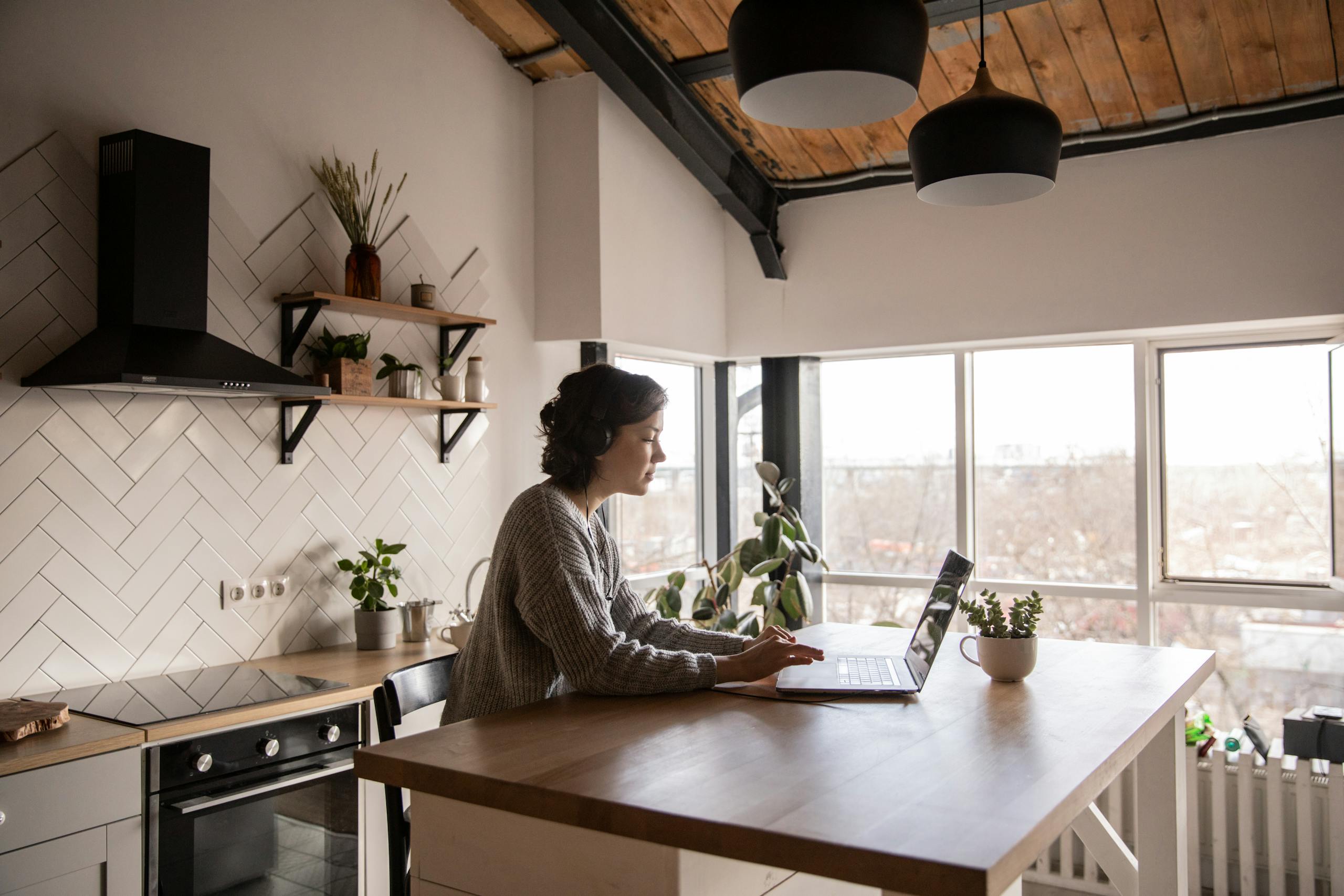
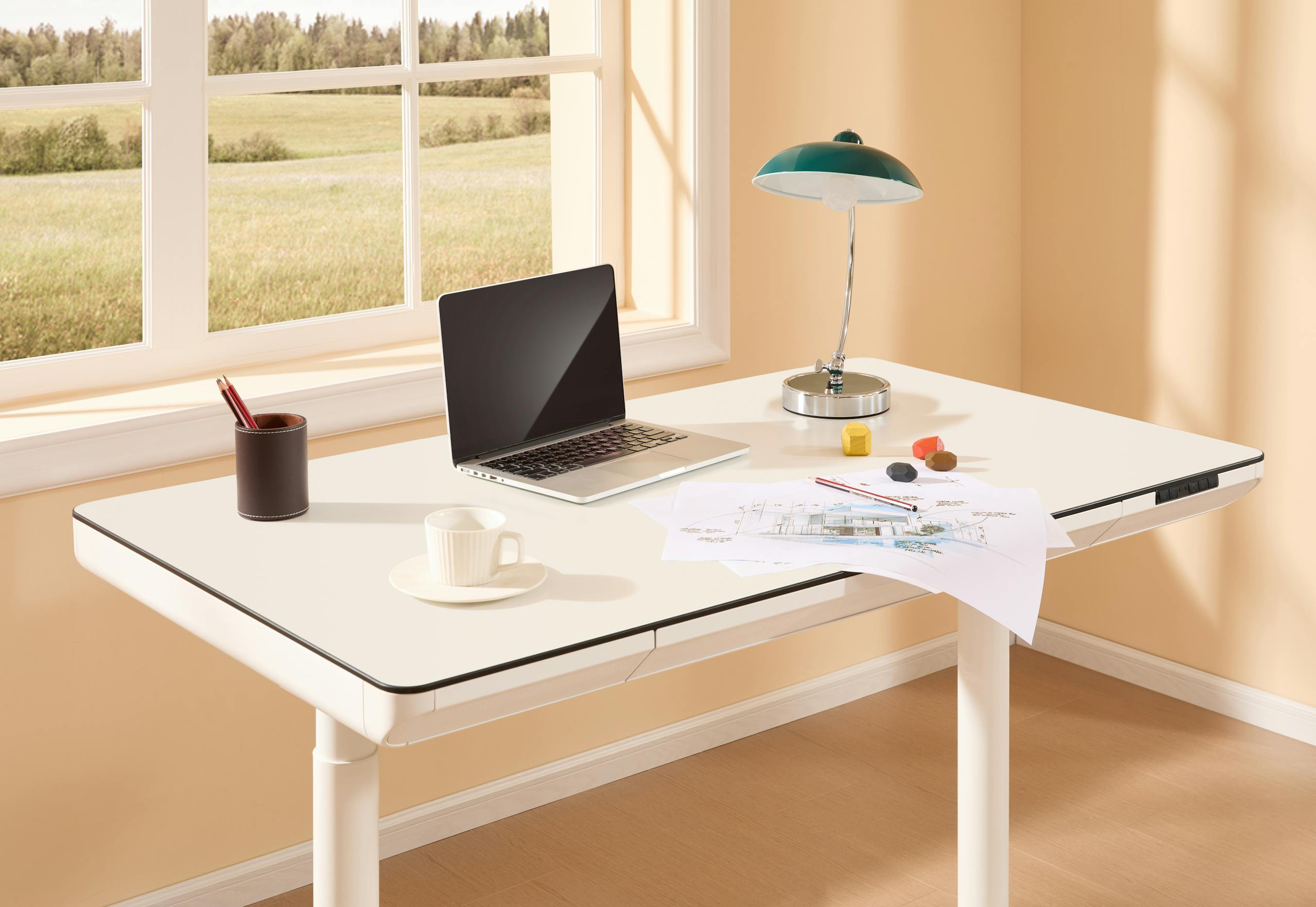
As an INTJ, I process strategically. I build mental models, look for patterns, run scenarios forward in time. That kind of thinking requires sustained focus. Sustained focus requires an environment that isn’t constantly demanding attention. My home office, set up exactly the way I need it, with the right light and the right level of quiet and the right tools in the right places, is the physical infrastructure for that kind of cognition.
Introverts broadly tend to be stronger at deep work, sustained concentration, and complex analysis precisely because we’re oriented toward internal processing. Familiar surroundings amplify those strengths. They create the conditions where the introvert’s natural mode of engagement can actually operate at full capacity.
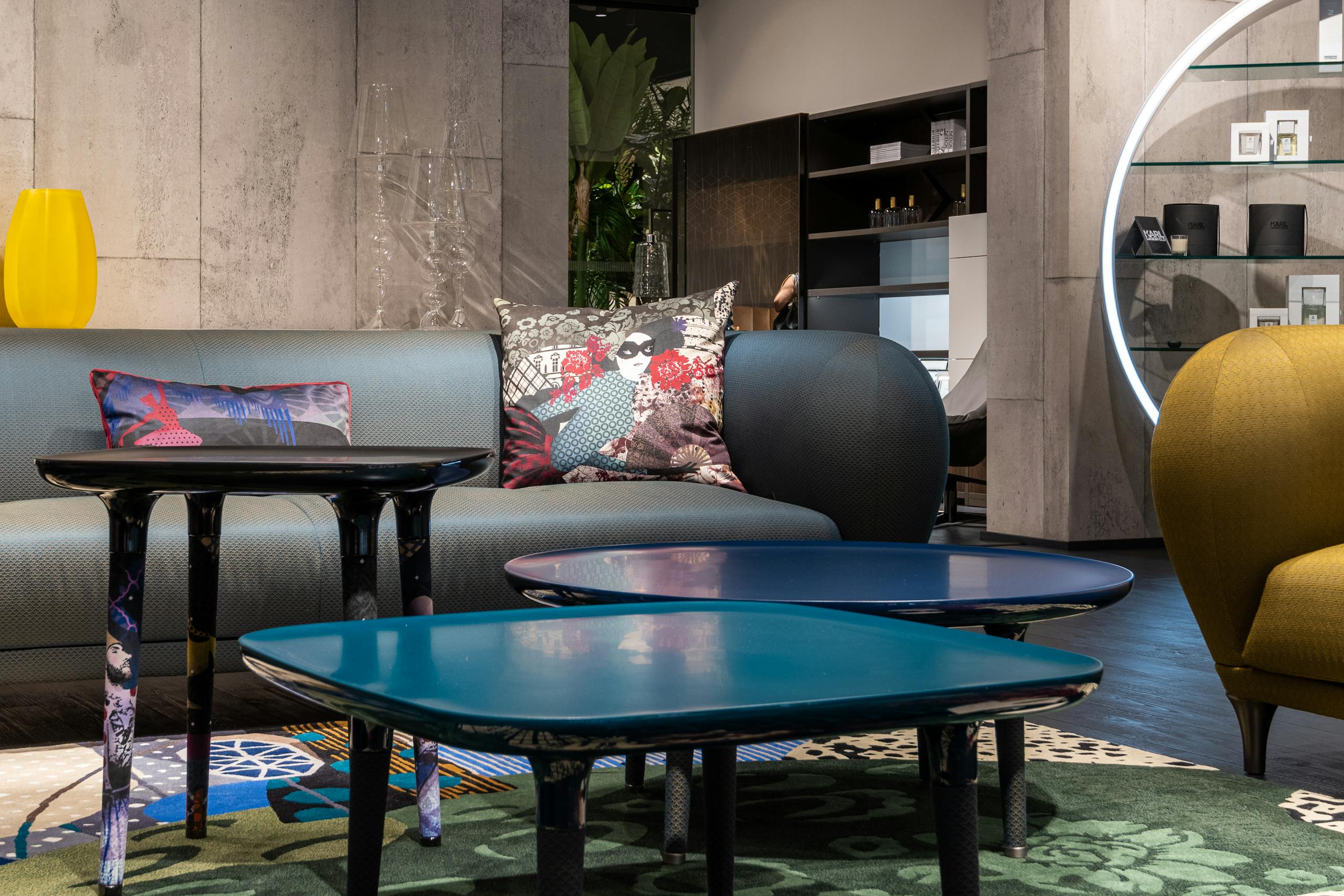
There’s also something to be said for the role of comfort objects and familiar physical anchors. The specific couch, the specific lamp, the specific mug. These aren’t trivial. They’re environmental cues that signal to your nervous system: you’re safe, you’re known, you can relax. Anyone who’s spent time thinking about the homebody couch as a concept understands this intuitively. It’s not about the furniture. It’s about what the furniture represents in the context of your daily life.
Does Loving Familiar Surroundings Mean You’re Missing Out on Connection?
This is probably the question that carries the most emotional weight for homebodies, especially those who’ve internalized the message that staying home means staying isolated. It doesn’t.
Connection and location are not the same thing. Some of the most meaningful conversations I’ve had in my adult life happened from my home office, not at industry events or networking dinners. The shift to remote and digital communication over the past several years has made this even more apparent. You can build genuine relationships without leaving your familiar space.
Introverts have always been drawn to communication formats that allow for reflection and depth. Written conversation, one-on-one dialogue, asynchronous exchange. Psychology Today has written thoughtfully about why deeper conversations matter, and that need for depth doesn’t disappear just because you’re having those conversations from your couch rather than a conference room.
For many introverts, digital spaces have become a genuine part of their social world. Chat rooms for introverts and online communities offer something that crowded physical spaces often can’t: the ability to engage thoughtfully, at your own pace, from an environment you’ve already calibrated to your needs. That’s not a lesser form of connection. For many of us, it’s actually a better one.
I managed teams for twenty years. Some of my most effective one-on-ones happened over the phone or, later, over video, with people working from their own familiar spaces. There was often a quality of openness in those conversations that I didn’t always find in the conference room. People were more themselves when they weren’t performing for a room.
What Does It Look Like to Actually Build a Life Around Familiar Surroundings?
Living well as someone who values familiar surroundings isn’t about never leaving home. It’s about being intentional with your environment and honest about what you need to function at your best.
For me, that intentionality has looked like a few specific things. I stopped apologizing for preferring to work from home when I had the option. I started being selective about which in-person commitments genuinely required my physical presence and which ones were just habit or expectation. I invested in making my home environment actually good, not just functional.
That last point matters more than people often acknowledge. Homebodies who value familiar surroundings deserve spaces that are genuinely worth being in. That means thoughtful design, good light, the right tools, and objects that carry meaning. It also means thinking about what you give yourself and what you receive from others who understand this about you. Thoughtful gifts for homebodies reflect an understanding that the home environment is a serious investment, not a consolation prize for people who don’t go out enough.
Building a life around familiar surroundings also means getting comfortable with the fact that this preference will occasionally require explanation. Not justification, but explanation. There’s a difference. You’re not defending a flaw. You’re describing a reality about how you work best.
When I finally stopped framing my preference for familiar environments as something to manage or overcome, something shifted in how I worked. I stopped booking unnecessary travel. I stopped agreeing to off-site meetings when a phone call would do just as well. I created a home office environment that I genuinely looked forward to being in each morning. My output improved. My stress levels dropped. The correlation wasn’t subtle.
How Do You Communicate This Preference Without Sounding Like You’re Making Excuses?
One of the more practical challenges for homebodies who value familiar surroundings is learning to communicate that preference clearly and without apology, particularly in professional contexts where there can be pressure to perform enthusiasm for novelty and change.
The framing that worked best for me was shifting from personal preference language to performance language. Not “I prefer working from home because I find new environments draining” but rather “I do my best strategic work in a controlled environment, and I’ve structured my setup to optimize for that.” Both statements are true. One invites debate about whether your preference is valid. The other describes a professional reality.
There’s also a useful distinction between explaining your needs to people who matter and justifying yourself to everyone who raises an eyebrow. You don’t owe a detailed psychological explanation to a coworker who finds your preference for working from a consistent location mildly puzzling. A brief, confident statement is enough. “I work best from my home setup” is a complete sentence.
For the people in your life who genuinely want to understand you, the deeper conversation is worth having. Research on environmental preference and wellbeing has shown that person-environment fit, the degree to which your surroundings match your psychological needs, has real effects on stress, satisfaction, and performance. This isn’t a personality quirk. It’s a documented aspect of human psychology.
And for the people in your life who want to honor that preference, whether they’re choosing a birthday gift, planning a gathering, or simply trying to be thoughtful, a good homebody gift guide can help them understand what actually resonates. The best gifts for someone who loves their familiar space are the ones that make that space even better.
What Happens When You Stop Fighting What You Actually Need?
There’s a version of this conversation that gets stuck in defense mode, arguing that homebodies are valid, that familiar surroundings are fine, that staying home isn’t a problem. All of that is true. But I want to push past defense into something more interesting: what actually becomes possible when you stop spending energy fighting your own nature?
For me, accepting that I genuinely function better in familiar surroundings wasn’t just a lifestyle adjustment. It changed the quality of my thinking. I stopped arriving at important decisions depleted from unnecessary environmental strain. I started doing my best creative and strategic work in conditions that actually supported it. My relationships improved because I wasn’t perpetually managing the low-grade exhaustion of constant novelty.
There’s a broader principle here that applies beyond just the home environment. When introverts stop trying to perform extroversion, they often find that their natural strengths become more accessible. Frontiers in Psychology has examined how personality traits interact with environmental factors to shape wellbeing and performance. The takeaway isn’t that introverts should avoid all challenge or novelty. It’s that sustainable performance requires alignment between your nature and your conditions.
The homebody who loves familiar surroundings isn’t retreating from life. In many cases, they’re building the conditions that make a full life possible. The familiar space isn’t where you hide. It’s where you recharge, think, create, and return to yourself after the world has had its turn with you.
I spent too many years treating my home as a place I returned to between the real things. Meetings, travel, client dinners, industry events. At some point I realized that the most real things in my professional life, the ideas that held up, the decisions I didn’t regret, the work I was actually proud of, happened in quiet, familiar spaces. Not in spite of my preference for them, but because of it.

If you’re building out a home environment that genuinely supports your introvert nature, the full range of resources in our Introvert Home Environment hub is worth exploring, from sensory design principles to the psychology of personal space and everything in between.
About the Author
Keith Lacy is an introvert who’s learned to embrace his true self later in life. After 20 years in advertising and marketing leadership, including running agencies and managing Fortune 500 accounts, Keith now channels his experience into helping fellow introverts understand their strengths and build fulfilling careers. As an INTJ, he brings analytical depth and authentic perspective to every article, drawing from both professional expertise and personal growth.
Frequently Asked Questions
Why does a homebody like familiar surroundings so much?
Familiar surroundings reduce the cognitive and emotional energy required to simply exist in a space. When your environment is already known, your brain isn’t running background processes to map it, assess it, or adapt to it. That freed-up energy becomes available for thinking, creating, and connecting. For introverts and highly sensitive people especially, this isn’t a preference for boredom. It’s a preference for efficiency and depth.
Is preferring familiar surroundings a sign of anxiety or avoidance?
Not inherently. Preferring familiar environments is a well-documented aspect of introvert and highly sensitive personality wiring. It becomes a concern only when it significantly limits your ability to meet your own needs or engage with the world in ways that matter to you. For most homebodies, the preference is a feature of their psychology, not a symptom of a problem. If the preference feels compulsive or distressing, speaking with a mental health professional is always worthwhile, but loving your home environment on its own is not a red flag.
Can you have meaningful social connections while preferring familiar surroundings?
Absolutely. Connection and physical location are separate variables. Many introverts build deep, lasting relationships through written communication, phone conversations, video calls, and online communities, all from the comfort of familiar spaces. The quality of connection depends on authenticity, attention, and depth, not on whether you’re in a novel environment. Homebodies who invest in meaningful communication often find that their relationships are more substantive, not less, because they’re not depleted by the environmental overhead of constant social venues.
How do you explain your preference for familiar surroundings to people who don’t share it?
Performance language tends to work better than preference language in professional contexts. Framing it as “I do my best work in a consistent environment” is both accurate and harder to dismiss than “I find new places draining.” For personal relationships, the fuller explanation is worth offering: familiar environments reduce cognitive load, support deeper thinking, and allow you to show up more fully in the ways that matter. Most people, once they understand the mechanism, find it genuinely makes sense even if they don’t share the experience.
What are some practical ways to build a better familiar environment as a homebody?
Start with the spaces where you spend the most time and ask what would make them genuinely supportive rather than just functional. Good lighting, reduced clutter, comfortable furniture positioned for your actual use patterns, and meaningful personal objects all contribute to an environment that signals safety and ease to your nervous system. Investing in quality items for your most-used spaces, whether that’s a better desk chair, thoughtful decor, or the right tools for your work, pays dividends in daily wellbeing. The goal is a space that actively supports how you’re wired, not one you merely tolerate.