

A homebody, as defined in popular culture and captured on platforms like Urban Dictionary, is someone who genuinely prefers being at home over going out. Not because they’re afraid of the world, but because home is where they feel most like themselves. It’s a preference, not a problem, and the distinction matters more than most people realize.
What Urban Dictionary gets right, buried beneath the jokes and the snark, is that homebodies aren’t hiding. They’re choosing. And that quiet act of choosing comfort, depth, and intentional space over noise and obligation is something I’ve come to understand more clearly with every passing year.
There’s a fuller picture of what it means to build a life around home, and our Introvert Home Environment hub explores that picture from multiple angles, from how sensitive people design their spaces to how homebodies create meaning within their four walls. This article focuses on something a little different: what the word “homebody” actually communicates, where it came from culturally, and why reclaiming its definition feels like a quiet act of self-respect.

What Does Urban Dictionary Actually Say About Homebodies?
Urban Dictionary is a fascinating mirror. It reflects how ordinary people, not academics or psychologists, actually talk about personality and lifestyle. Search “homebody” there and you’ll find a range of entries: some affectionate, some dismissive, a few that capture something genuinely true. The most upvoted definitions tend to describe a homebody as someone who finds genuine happiness at home, who prefers a quiet evening over a crowded bar, who recharges in their own space rather than draining themselves in someone else’s.
What’s your personality type?
Take our free 40-question assessment and get a detailed personality profile with dimension breakdowns, context analysis, and personalised insights.
Discover Your Type8-12 minutes · 40 questions · Free
What strikes me about those definitions is how rarely they’re framed as criticism from the inside. When homebodies define themselves, the tone is almost always warm. When outsiders define them, the tone shifts. Suddenly the word carries implications of laziness, social failure, or fear. Same word, completely different emotional weight depending on who’s holding it.
That gap between self-definition and external definition is where a lot of the tension lives. And I’ve felt that tension personally, running advertising agencies for over two decades, where the expectation was always that you’d be “on,” that you’d be out, that you’d be seen. The idea that someone could be genuinely content staying home on a Friday night was treated like a confession that needed explaining.
What Urban Dictionary captures, imperfectly but honestly, is that the word “homebody” has always been contested territory. Reclaiming it starts with understanding what it actually means to the people who live it.
Where Did the Word “Homebody” Come From?
The word “homebody” has been in English usage since at least the mid-1800s. Its earliest appearances weren’t particularly negative. A homebody was simply someone whose primary sphere of activity was the home. In an era when home was the center of economic and social life for many people, that wasn’t a slight. It was a description.
The cultural shift happened gradually, as public life expanded and mobility became equated with ambition. By the twentieth century, especially in American culture, the person who stayed home began to carry a faint whiff of missed opportunity. Extroversion became the cultural default. Going out became synonymous with living fully. Staying in became something you did when you couldn’t do better.
That framing has never sat right with me. Partly because I’ve seen what “going out” actually costs introverts who do it on other people’s terms. I watched talented people on my agency teams spend every ounce of their social energy at client dinners and industry events, then show up Monday morning running on empty, their best thinking already spent. The ones who protected their home time, who drew clear lines around their evenings and weekends, often did sharper, more original work. They weren’t hiding. They were maintaining the conditions that made their best thinking possible.
The word “homebody” deserves to be understood in that light. Not as a retreat from life, but as a deliberate orientation toward a particular kind of life, one built around depth, restoration, and chosen connection rather than constant presence.

Is Being a Homebody the Same as Being an Introvert?
Not exactly, though the overlap is significant. Introversion is about how you process energy: introverts recharge in solitude and find sustained social interaction draining. Being a homebody is about where you prefer to spend your time. Many introverts are homebodies, but not all homebodies are introverts in the clinical sense, and not all introverts are homebodies in practice.
What the two share is a preference for internal over external stimulation. Introverts tend to find rich mental environments more satisfying than rich social ones. Homebodies tend to find rich physical environments, their own carefully arranged spaces, more satisfying than the unpredictable stimulation of public life. When those two tendencies combine, you get someone who has genuinely built a full life within a relatively small radius, and who doesn’t experience that as a limitation.
Elaine Aron’s work on highly sensitive people adds another layer here. HSPs, who may be introverted or extroverted, often find that home environments become particularly important because they offer control over sensory input. The ability to manage light, sound, temperature, and social demand isn’t a luxury for sensitive people. It’s a genuine need. If you’re interested in how sensitive people approach their living spaces, the principles behind HSP minimalism offer a thoughtful framework for creating environments that actually support rather than drain you.
So while introversion and the homebody identity aren’t identical, they often reinforce each other. And both are better understood as orientations toward what genuinely works, rather than avoidance of what doesn’t.
What Does Modern Culture Get Wrong About Homebodies?
The most persistent misconception is that homebodies are passive. That staying home means nothing is happening, that a life lived largely indoors is somehow smaller or less rich than one lived in constant motion. I find that assumption almost comically wrong when I examine my own experience.
Some of the most productive thinking I’ve ever done happened in quiet rooms. When I was running agency pitches for Fortune 500 clients, the ideas that won weren’t born in brainstorming sessions or at networking events. They came from hours of solitary processing, reading, connecting threads that weren’t obvious until I’d had enough quiet to actually hear them. The extroverted performance happened later, in the presentation room. But the substance came from the kind of focused, home-based thinking that looks, from the outside, like nothing much at all.
Modern culture has also conflated social activity with social health in ways that don’t hold up under scrutiny. Being out constantly doesn’t mean you’re connecting meaningfully. Depth of connection matters more than frequency of contact, and many homebodies invest in fewer, more intentional relationships precisely because they’re not spreading themselves thin across a hundred surface-level interactions.
There’s also a class dimension to the homebody conversation that rarely gets acknowledged. The pressure to “go out” assumes disposable income, physical mobility, and a social calendar that many people simply don’t have. Homebodies often build rich lives from what’s available to them, which turns out to be quite a lot. A well-chosen homebody book, a comfortable homebody couch, a few trusted online communities, and the freedom to structure your own time can add up to something genuinely satisfying. That’s not deprivation. That’s curation.

How Has the Internet Changed What It Means to Be a Homebody?
Significantly. And in ways that I think are genuinely worth celebrating, even if they’re not always framed that way.
For most of human history, being a homebody meant a degree of social isolation that was real and sometimes painful. Your community was geographically bounded. If you didn’t go out, you genuinely missed things, conversations, connections, opportunities. The cost of staying home was higher because the alternative was simply absent.
The internet changed that calculus completely. Homebodies now have access to communities, conversations, and connections that would have been impossible to find within walking distance. The rise of chat rooms and online spaces for introverts is one small piece of a much larger shift: the recognition that meaningful connection doesn’t require physical proximity.
Remote work has accelerated this further. Many people who always suspected they’d thrive working from home have now had the chance to test that hypothesis, and a significant number found they were right. The pandemic years were genuinely difficult in many ways, but they did produce one unexpected data point: a lot of people discovered they were homebodies who’d simply never had permission to act like it.
What the internet hasn’t fully resolved is the social perception problem. Urban Dictionary still contains entries that treat homebodies as sad cases. Social media still rewards the visible, the traveled, the socially active. The algorithm doesn’t know what to do with someone who had a genuinely excellent Tuesday because they finished a book and cooked a good meal and went to bed early. That life doesn’t photograph well, but it’s a life many people are quietly living and quietly loving.
Why Do Some People Feel Ashamed of Being a Homebody?
Because they’ve absorbed a story that wasn’t theirs to begin with.
The shame tends to arrive through comparison. Someone else is always doing more, going further, filling their calendar with experiences that look, from the outside, like evidence of a fuller life. Social media amplifies this relentlessly. The person who stayed home Saturday night sees the highlight reel of everyone who didn’t, and the gap between those images and their own quiet evening can feel like evidence of something missing.
What that comparison misses is that the highlight reel is curated. The person at the party may have spent the whole evening wishing they were home. The person who went on the trip may have been exhausted before they landed. External activity and internal satisfaction are not the same thing, and confusing them is how a lot of people end up performing a life they don’t actually want.
I spent a meaningful portion of my advertising career performing extroversion I didn’t feel. Client events, industry parties, networking dinners that stretched past ten o’clock on weeknights. I showed up because I believed I was supposed to, because the story I’d absorbed was that visible, social, outgoing leaders were the ones who succeeded. It took years to recognize that the performance was costing me more than it was earning me, and that the work I was proudest of had nothing to do with how many events I attended.
The relationship between personality traits and wellbeing is more complex than the extrovert ideal suggests. What genuinely matters is alignment between your temperament and your daily life, not how closely your life resembles someone else’s idea of a good one.
Shame about being a homebody is almost always borrowed shame. Someone else’s discomfort with your choices, internalized until it feels like your own. Returning it to its rightful owner is one of the quieter forms of self-respect available to us.
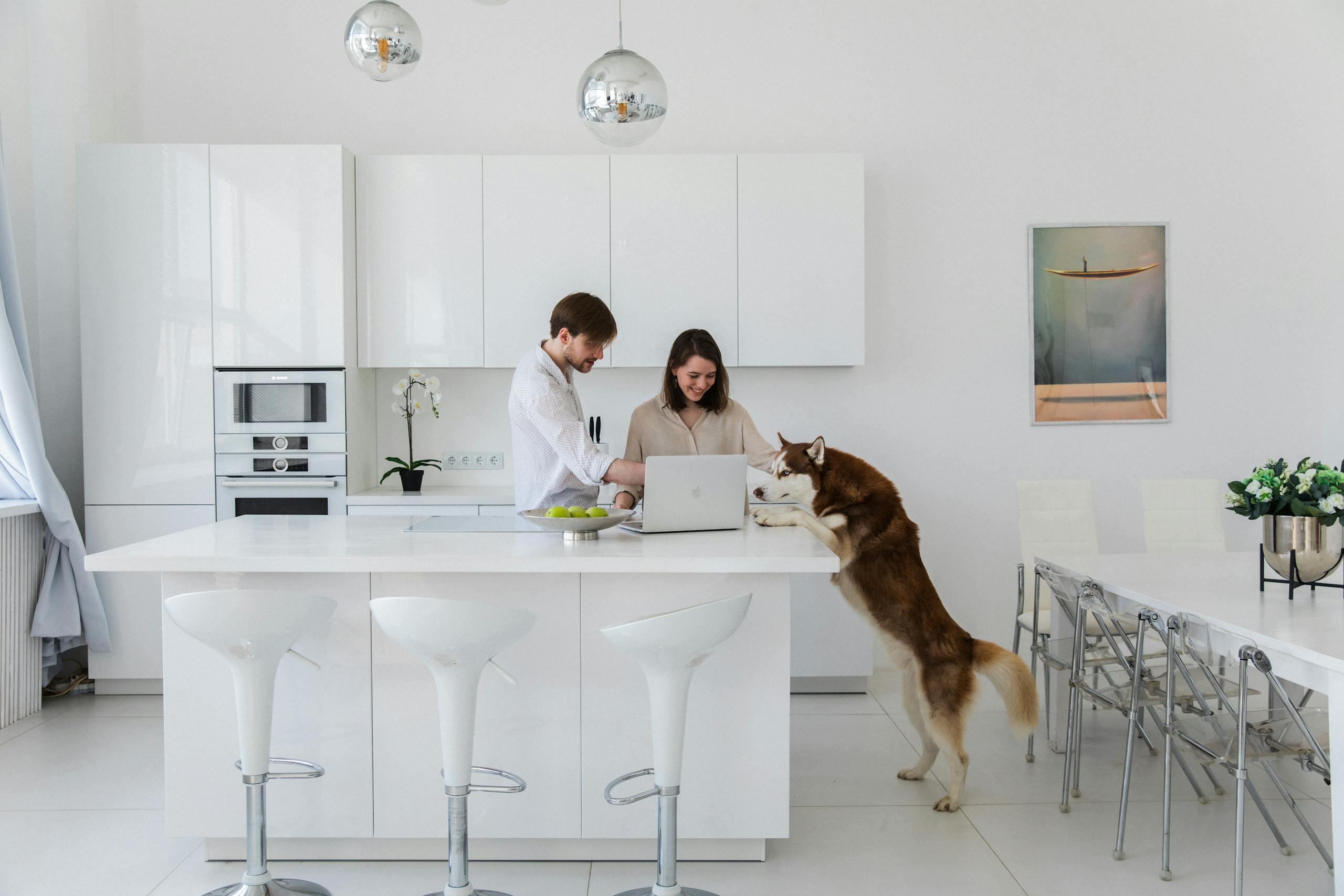
What Are the Genuine Strengths of a Homebody Orientation?
Homebodies tend to develop a particular kind of depth that’s hard to cultivate when you’re always in motion. When your environment is stable and familiar, your attention can go somewhere other than orientation and social calibration. It can go inward, into ideas, into craft, into the kind of sustained thinking that produces original work.
There’s also something to be said for the quality of rest that homebodies tend to prioritize. Not passive collapse, but genuine restoration. The ability to read without guilt, to cook slowly, to sit with a project until it’s actually finished, to sleep well because you’re not chronically overstimulated. These aren’t small things. They’re the conditions under which good thinking and good work become possible.
Homebodies also tend to be thoughtful curators of their physical environments. When home is your primary space, you pay attention to it differently. You notice what works and what doesn’t. You invest in the things that genuinely improve your daily experience. If you’ve ever wondered what those investments might look like, there’s a thoughtful collection of gifts for homebodies that captures the kinds of things people who love their home lives actually appreciate. And if you’re shopping for someone with this orientation, a well-chosen homebody gift guide can help you find something that genuinely resonates rather than something that pushes them toward a lifestyle that isn’t theirs.
There’s a broader professional case to be made here too. Some of the most effective strategic thinkers I’ve encountered across my career were people who protected their home time fiercely. They weren’t antisocial. They were strategic about where their energy went, and they showed up to the work that mattered with more of themselves intact than colleagues who were always out, always on, always available. Personality and work style research increasingly supports the idea that matching your environment to your temperament produces better outcomes than forcing yourself into someone else’s preferred mode of operating.
How Do You Know If You’re a Homebody or Just Going Through a Difficult Season?
This is a question worth sitting with honestly, because the distinction matters.
A homebody preference is stable. It persists across circumstances, across seasons, across life phases. You prefer home when things are good. You prefer home when things are hard. The preference isn’t a response to difficulty. It’s a baseline orientation toward a particular kind of life.
Withdrawal driven by depression, anxiety, grief, or burnout can look similar from the outside but feels different from the inside. It tends to be accompanied by a sense of loss, a feeling that you want to engage but can’t, that the world has become too heavy rather than simply too loud. There’s often a quality of flatness, of things that used to interest you no longer doing so, that’s distinct from the genuine contentment a homebody feels in their own space.
If staying home feels like relief, like returning to yourself, like the natural condition of a life you’ve chosen, that’s a homebody orientation. If it feels like hiding, like something is keeping you in rather than something drawing you there, that’s worth paying attention to differently. Talking to a counselor or therapist isn’t a sign that your preference for home is wrong. It’s a way of making sure you understand what’s actually driving it. Many introverts find that even therapists who understand introversion well can help distinguish between personality and pain.
The honest version of this question also includes asking whether your home life is actually full. A homebody who reads, creates, connects intentionally, rests well, and engages deeply with a few meaningful relationships is living a rich life. A person who is simply not going out but also not doing anything they find meaningful is in a different situation, and deserves support rather than a label.

What Does Reclaiming the Word “Homebody” Actually Look Like?
It looks like saying it without apology. It looks like answering “what did you do this weekend?” with “I stayed home and it was exactly what I needed” without adding a disclaimer or a self-deprecating joke. It looks like building a life that’s organized around what actually restores you rather than what you think you’re supposed to want.
Reclaiming a word doesn’t require announcing it. It’s mostly an internal shift, a decision to stop treating your preferences as evidence of a deficiency and start treating them as information about who you are. That shift is quieter than it sounds, but its effects tend to ripple outward in ways that are hard to predict.
When I stopped apologizing for needing quiet, for wanting to be home, for finding large social gatherings genuinely exhausting rather than invigorating, something changed in how I showed up at work. Not because I became more extroverted, but because I stopped wasting energy on the performance of extroversion. What was left went into the actual work. The ideas got sharper. The decisions got clearer. The leadership got more authentic, which turned out to be more effective than the performed version had ever been.
Urban Dictionary will keep evolving its definition of “homebody” the way it evolves everything, messily, collaboratively, imperfectly. What matters more is the definition you hold for yourself. And if that definition includes genuine contentment, intentional living, and a home that feels like the best version of your own life, then the word is doing exactly what it should.
There’s much more to explore about building a home life that genuinely supports who you are. The full Introvert Home Environment hub covers everything from designing restorative spaces to understanding why homebodies thrive when they stop apologizing for their preferences.
About the Author
Keith Lacy is an introvert who’s learned to embrace his true self later in life. After 20 years in advertising and marketing leadership, including running agencies and managing Fortune 500 accounts, Keith now channels his experience into helping fellow introverts understand their strengths and build fulfilling careers. As an INTJ, he brings analytical depth and authentic perspective to every article, drawing from both professional expertise and personal growth.
Frequently Asked Questions
What is the Urban Dictionary definition of a homebody?
Urban Dictionary defines a homebody as someone who genuinely prefers spending time at home over going out socially. The most upvoted entries tend to describe this as a positive preference rather than a limitation, framing homebodies as people who find authentic happiness and comfort in their own space. The definitions vary in tone depending on who wrote them, but the core meaning is consistent: a homebody chooses home not because they can’t access the outside world, but because home is where they feel most like themselves.
Is being a homebody a personality trait or just a phase?
For most people who identify as homebodies, it’s a stable personality orientation rather than a temporary phase. A genuine homebody preference persists across different life circumstances and seasons. That said, it’s worth distinguishing between a true homebody orientation, which feels like returning to yourself, and social withdrawal driven by depression, burnout, or anxiety, which tends to feel more like hiding than choosing. If staying home consistently brings you contentment and your life at home feels full and meaningful, that’s a personality orientation worth embracing rather than explaining away.
Are all introverts homebodies?
Not all introverts are homebodies, and not all homebodies are introverts. Introversion describes how you process energy, specifically that you recharge through solitude rather than social interaction. Being a homebody describes where you prefer to spend your time. The two orientations overlap significantly because both involve a preference for lower-stimulation environments and more intentional social engagement, but they’re distinct concepts. Some introverts travel frequently and spend significant time in public spaces. Some highly social people genuinely prefer staying in. The categories inform each other without being identical.
Why do people judge homebodies negatively?
The negative judgment of homebodies is largely a cultural artifact of the extrovert ideal, the widespread assumption that outgoing, socially active people are healthier, more successful, and more fully alive than those who prefer quieter lives. This assumption became embedded in Western culture as public life expanded and mobility became equated with ambition. When someone consistently chooses to stay home, it can read to others as a rejection of norms they’ve accepted, which triggers discomfort that often gets expressed as criticism. The judgment says more about cultural assumptions than it does about the actual quality of a homebody’s life.
How can a homebody build a socially fulfilling life?
Homebodies build fulfilling social lives by prioritizing depth over frequency. Fewer, more meaningful relationships tend to satisfy more than a wide network of surface-level connections. Online communities and digital spaces have made this significantly easier, offering access to like-minded people without requiring physical presence. Homebodies also tend to invest in the quality of their home environment itself, making it a place that supports both solitude and the occasional meaningful gathering. The goal isn’t social isolation but intentional connection, on terms that actually work for your temperament rather than someone else’s social calendar.