
Some of the most powerful minds in finance built their fortunes not in crowded trading floors or glass-walled boardrooms, but in quiet rooms designed entirely around deep thinking. The homebody in a hoodie isn’t a stereotype of someone who gave up on ambition. In many cases, it’s a portrait of someone who finally stopped pretending ambition looks a certain way.
When hedge fund founders and quantitative analysts design their ideal work environments, the result often looks a lot like what homebodies have been building for themselves all along: controlled sensory input, minimal interruption, spaces optimized for sustained concentration rather than performative productivity.
There’s something worth sitting with in that overlap.

Much of what I explore here connects to a broader conversation happening over at the Introvert Home Environment hub, where we look at how introverts build spaces that actually support the way their minds work. This article adds a specific angle: what happens when that instinct scales into something extraordinary.
What Does a “Quant Paradise” Actually Look Like?
Quantitative analysts, the people who build mathematical models to find patterns in financial markets, are among the most introverted professionals on the planet. Not because introverts are naturally better at math, but because the work demands exactly what introversion tends to produce: long stretches of uninterrupted focus, comfort with solitude, and a preference for processing information internally before acting on it.
What’s your personality type?
Take our free 40-question assessment and get a detailed personality profile with dimension breakdowns, context analysis, and personalised insights.
Discover Your Type8-12 minutes · 40 questions · Free
When a hedge fund founder with that profile gets to design their own environment, they don’t build a corner office with a view of the trading floor. They build something quieter. Multiple monitors arranged for maximum information density. Ergonomic setups that allow hours of seated concentration. Temperature control. Acoustic dampening. Coffee within arm’s reach. A door that closes.
Sound familiar? It should. That’s a homebody’s dream setup, scaled up with a few more Bloomberg terminals.
I’ve spent time thinking about this because my own best work as an agency leader never happened in the open-plan offices I felt pressure to create. It happened at 6 AM before anyone arrived, or late on a Friday when the building went quiet. I was running accounts for Fortune 500 brands, managing teams of twenty-plus people, and my most strategically sound thinking happened when I was alone with a legal pad and no one asking me anything. As an INTJ, I needed that stillness to do the work that actually mattered.
Why Do Introverted High Achievers Keep Gravitating Toward Home?
There’s a pattern worth noticing across fields where deep analytical work produces outsized results. The people who build systems, models, and frameworks that others rely on tend to be the same people who are most deliberate about protecting their thinking environment.
This isn’t accidental. When your competitive advantage is the quality of your thinking, the environment where that thinking happens becomes a strategic asset. A trader who can focus for six uninterrupted hours will outperform one who can only manage ninety-minute blocks before being pulled into meetings. A founder who designs their home office around sustained concentration is making a business decision, not a lifestyle one.
What’s interesting is how this reframes the homebody identity entirely. The person who prefers staying in, who has curated their space with intention, who finds social overstimulation genuinely costly rather than just mildly inconvenient, isn’t avoiding life. They’re protecting something.

The concept of sensory sensitivity plays a role here too. Many introverts, and a significant portion of high-performing analytical thinkers, process environmental input more intensely than the average person. The principles behind HSP minimalism map almost perfectly onto what elite quants do when designing their workspaces: strip away the noise, the clutter, and the visual chaos so the mind can do what it does best. It’s not precious. It’s practical.
A piece published in PMC’s research on cognitive performance and environmental factors supports the idea that environmental control has measurable effects on sustained attention and cognitive output. The quant who insists on a particular kind of workspace isn’t being difficult. They’re being accurate about what they need to perform.
Is the Hoodie a Symbol or Just Comfortable Clothing?
Let me be honest: the hoodie thing is real. Not as a fashion statement, but as a signal.
When someone has enough success, enough autonomy, and enough self-awareness to stop performing professionalism for an audience that isn’t watching, they tend to default to what’s actually comfortable. The hedge fund founder working from home in a hoodie isn’t being casual. They’ve simply stopped spending energy on presentation that serves no functional purpose.
I remember the specific moment in my agency career when I realized how much cognitive energy I was spending on looking like a certain kind of leader. The right suit. The right posture in client meetings. The right amount of extroverted energy in a room full of people who expected the agency head to work the room. None of that was dishonest exactly, but it was expensive. It cost something that I could have been spending on the actual thinking.
Introverts who’ve built their lives around their actual preferences, rather than borrowed templates of what success is supposed to look like, often arrive at something that resembles the classic homebody setup. Comfortable clothes. A well-arranged space. Deliberate choices about what enters the environment and what doesn’t. If you’re looking for gifts for homebodies who’ve built this kind of intentional life, the best ones tend to enhance that environment rather than pull them out of it.
How Does Deep Work Connect to the Homebody Instinct?
There’s a concept that shows up consistently in conversations about elite performance: the idea that certain kinds of cognitive work require an almost monastic relationship with distraction. Not just fewer interruptions, but a fundamentally different relationship with the environment itself.
Quantitative finance is one of the clearest examples of this. Building a model that accurately predicts market behavior, or identifying a statistical edge that others have missed, requires hours of unbroken concentration. The kind of concentration that open offices, constant connectivity, and social obligation actively undermine.
Homebodies understand this intuitively, even when they’re not running hedge funds. The preference for staying in, for controlling the environment, for having a space that works the way your mind works, isn’t a retreat from ambition. It’s a condition for a certain kind of ambition to function properly.
I watched this play out with some of the most talented strategists I ever hired. One particular creative director I worked with, an INFP who could generate campaign concepts that stopped clients in their tracks, did her best work from home. When I finally stopped requiring her presence in the office during the hours she found most generative, her output changed noticeably. The work got sharper. She stopped looking exhausted. The environment had been the variable all along, not her capability.
The Frontiers in Psychology research on introversion and cognitive processing styles points toward something introverts have known experientially for a long time: the relationship between environment and performance isn’t the same for everyone. What looks like preference is often something closer to necessity.
What Can the Rest of Us Take From the Quant Approach to Home Design?
You don’t need to be running a billion-dollar fund to apply the same logic to your own space. What the quant paradise gets right is something any homebody can build at any scale: intentionality about what the environment is supposed to do.
Most people design their homes around aesthetics, social expectations, or whatever came with the apartment. The introvert who’s serious about their home environment asks a different question: what does this space need to support?
If the answer is sustained thinking, the space needs to minimize interruption and sensory noise. If the answer is creative work, it needs materials, references, and enough visual interest to feed imagination without overwhelming it. If the answer is genuine rest and recovery after a week of social performance, it needs softness, warmth, and the particular comfort that only a well-chosen homebody couch can provide.
That last one matters more than it sounds. Recovery isn’t passive for introverts. It’s the process by which the energy required for the next round of output gets rebuilt. A space that supports real recovery is as strategically important as one that supports deep work.
The Psychology Today piece on why introverts need deeper conversations touches on something adjacent: the quality of what an introvert engages with matters more than the quantity. That applies to environment too. One well-designed room beats ten mediocre ones.
Does Working From Home Actually Produce Better Results for Introverts?
The honest answer is: it depends on the introvert, the work, and the home. But the pattern is strong enough to take seriously.
When introverts have genuine control over their environment, including noise level, social interruption, temperature, and the rhythm of their own day, many of them produce work that’s qualitatively different from what they manage in shared spaces. Not just more of the same, but a different grade of thinking.
The hedge fund world figured this out partly by accident. Quants who were allowed to work in conditions that suited them tended to produce better models. The correlation between environmental autonomy and output quality was hard to ignore once you were paying attention to it.
There’s also something worth saying about the social dimension. Introverts working from home aren’t necessarily isolated. Many maintain rich connections through channels that work better for them than face-to-face interaction. The growth of chat rooms for introverts and text-based communities reflects a genuine preference, not a deficit. Connection on your own terms, in your own space, at a pace you can sustain, is still connection.
I’ve had some of my most substantive professional conversations over email, where I could actually think before responding. In meetings, I was always slightly behind my own best thinking. In writing, I was ahead of it. The medium shapes the quality of what comes out, and introverts often do their clearest communicating in asynchronous formats.
What Role Do Books and Intellectual Objects Play in an Introvert’s Space?
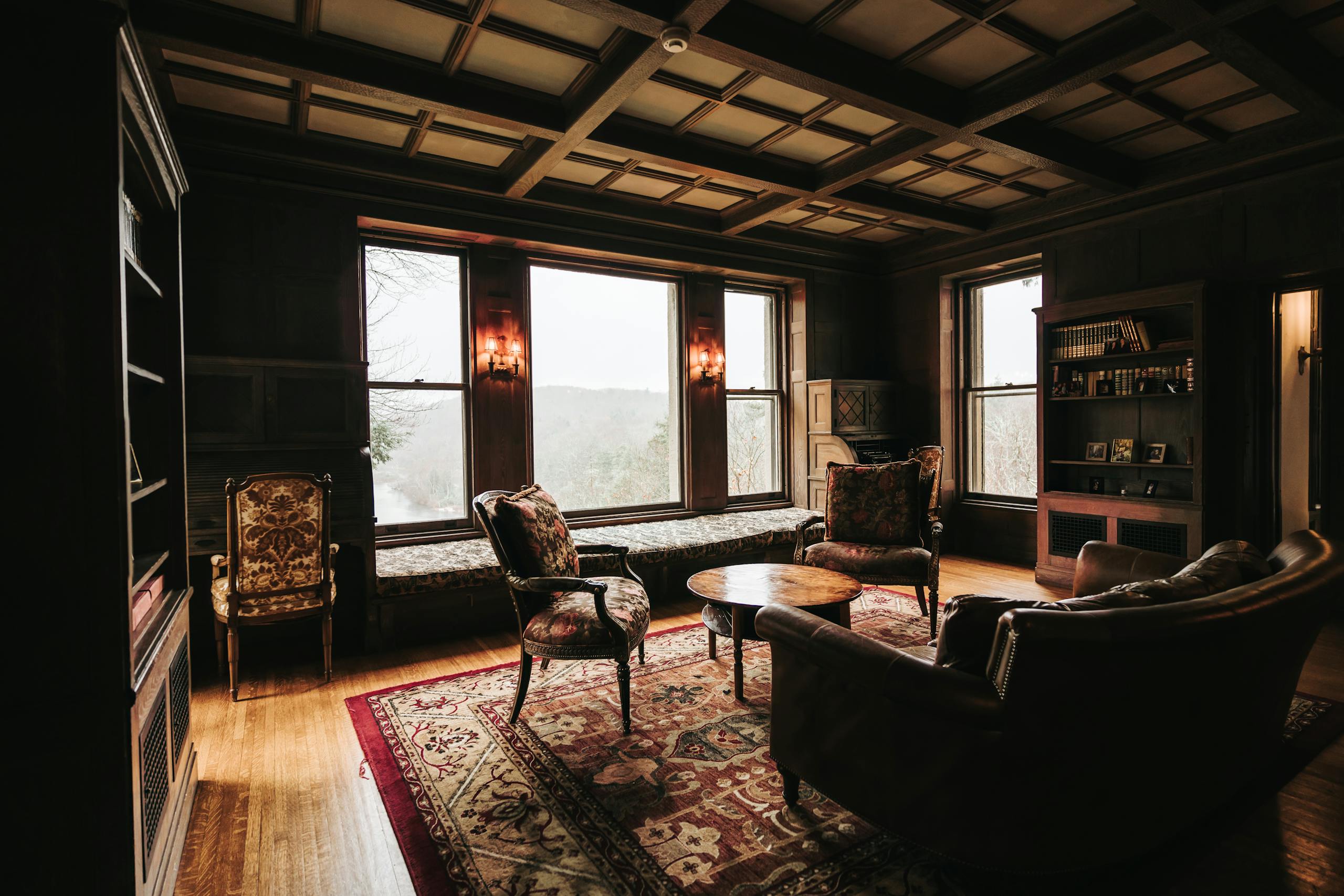
Walk into the home office of almost any serious quant, or any intellectually driven introvert for that matter, and you’ll notice the books. Not as decoration, though they often look good. As infrastructure.
The introvert’s relationship with books is worth taking seriously as an environmental design element. A well-chosen library in a home workspace does several things at once. It provides reference material. It signals to the person working there what kind of thinking is expected of them. It creates a particular quality of atmosphere that supports sustained intellectual engagement.
There are books written specifically about the homebody experience and what it means to build a life oriented around home, and a good homebody book can be as much a permission slip as it is a read. Permission to take your preferences seriously. Permission to stop treating your instincts as something to overcome.
When I finally started reading about introversion with any seriousness, probably a decade into my agency career, something shifted in how I understood my own leadership. I stopped trying to diagnose what was wrong with me in client dinners and started understanding what I actually needed to bring my best thinking to work. The books were part of that.
The PMC research on personality and environmental preferences suggests that the spaces introverts create tend to reflect their inner world in ways that are functionally meaningful, not just aesthetically personal. The quant’s library isn’t incidental to their performance. It’s part of the system.
How Do You Build Your Own Version of a Quant Paradise?
You start by taking your actual needs seriously instead of your imagined obligations.
Most introverts I’ve talked with over the years have a clear sense of what their ideal environment would feel like. Quieter. More ordered. Better lit, or more softly lit, depending on the person. Fewer surfaces covered in things that demand attention. More space for the kind of thinking they actually want to do.
The gap between that ideal and what they’ve actually built tends to come from two sources. One is resources, which is real and worth acknowledging. The other is permission, which is entirely internal.
Building a space around your own cognitive needs feels self-indulgent to a lot of introverts who’ve spent years accommodating extroverted defaults. It’s not. It’s the same logic the hedge fund founder uses when they set up their home office: what does this space need to do, and what does it need to stop doing?
If you’re putting together a space or looking for additions that actually serve an introvert’s way of working and resting, our homebody gift guide covers the kinds of items that make a real difference rather than just filling space. The difference between a space that drains you and one that restores you is often a series of small, considered choices.
Toward the end of my agency years, I finally redesigned my home office with the same rigor I would have applied to a client brief. What’s the objective? What does success look like? What needs to be present, and what needs to be removed? The result was the most productive space I’d ever worked in, and it looked, from the outside, like a very comfortable room with good bookshelves and no unnecessary furniture. Exactly what it needed to be.

The negotiation between who we are and what the world expects us to be is something introverts manage constantly. As a Harvard analysis of introverts in negotiation contexts notes, introverts bring real strengths to high-stakes situations, particularly their capacity for careful preparation and strategic patience. Those same traits, applied to the design of a home environment, produce spaces that genuinely work.
The homebody in a hoodie building a quant paradise isn’t opting out of the world. They’re building the conditions under which they can engage with it most effectively. That’s not a consolation prize. That’s a strategy.
And if you want to keep building on this idea, the full Introvert Home Environment hub is where we pull together everything from sensory design to recovery spaces to the deeper philosophy of building a home that actually fits you.
About the Author
Keith Lacy is an introvert who’s learned to embrace his true self later in life. After 20 years in advertising and marketing leadership, including running agencies and managing Fortune 500 accounts, Keith now channels his experience into helping fellow introverts understand their strengths and build fulfilling careers. As an INTJ, he brings analytical depth and authentic perspective to every article, drawing from both professional expertise and personal growth.
Frequently Asked Questions
Are introverts better suited to quantitative and analytical careers?
Introversion doesn’t determine aptitude for any specific field, but many introverts find that analytical careers align well with their natural preferences. Work that rewards sustained concentration, independent problem-solving, and depth over breadth tends to suit people who draw energy from internal processing. Quantitative finance, data science, research, and similar fields often provide the kind of focused, low-interruption work environment where introverts tend to thrive. That said, introverts succeed across every industry, and extroverts work in quant finance too. The match is about environment and work style, not personality type alone.
How can an introvert design a home office that supports deep work?
Start with the fundamentals: acoustic control, lighting that doesn’t strain your eyes, and a layout that minimizes visual clutter. Beyond that, think about what the space is actually for. A home office built for sustained analytical thinking needs different things than one built for creative work or client calls. Remove anything that demands attention without earning it. Add what genuinely supports your process, whether that’s reference books, a second monitor, or a particular quality of silence. The goal is a space that disappears into the background so your thinking can come forward.
Is being a homebody compatible with professional ambition?
Completely, and in many cases the two reinforce each other. Some of the most ambitious and high-performing professionals across finance, technology, research, and the arts have built careers that center on home-based deep work. The homebody orientation, preferring controlled environments, valuing solitude, investing in a personal space that supports sustained focus, is entirely compatible with serious professional achievement. The key distinction is between avoiding life and curating the conditions under which you engage with it most effectively. Many homebodies are doing the latter.
Why do so many high-performing introverts prefer working from home?
Environmental control is a significant factor in cognitive performance for many introverts. Shared workspaces introduce variables, noise levels, interruptions, social obligations, temperature, and lighting that introverts often find genuinely costly rather than mildly inconvenient. Working from home removes many of those variables and allows introverts to build conditions that match how their minds actually work. The result, for many, is qualitatively better output: not just more of the same, but a different grade of thinking that’s harder to access in environments designed for extroverted interaction patterns.
What’s the difference between introversion and being a homebody?
Introversion is a personality trait describing how someone processes stimulation and where they draw their energy, typically from internal reflection and solitude rather than external social interaction. Being a homebody is a lifestyle orientation describing a preference for spending time at home rather than in social or public settings. The two often overlap significantly, since introverts frequently find home environments more restorative and less draining than public ones, but they’re not identical. Some extroverts are homebodies by circumstance or preference, and some introverts are highly mobile and social. The overlap is real and common, but neither term fully contains the other.