

Hosting houseguests as an introvert isn’t just logistically complicated. It touches something deeper: the one place you’ve carefully built for restoration suddenly belongs to someone else’s energy, schedule, and needs. Dealing with houseguests as an introvert means learning to protect your recharge time without making your guests feel unwelcome, and that balance is more achievable than it probably feels right now.
Nobody warns you about this when you’re younger. You say yes to the visit, you’re genuinely happy to see the people you love, and then somewhere around day two you realize you’re exhausted in a way that has nothing to do with sleep. Your home, the place that holds you together, has temporarily become a social environment. And for those of us who are wired the way we are, that shift is significant.
Our Introvert Home Environment hub covers a wide range of ways to shape your living space around how you actually function, and houseguest dynamics sit right at the heart of that conversation. Because your home isn’t just where you sleep. It’s where you become yourself again after a long day of being around people.
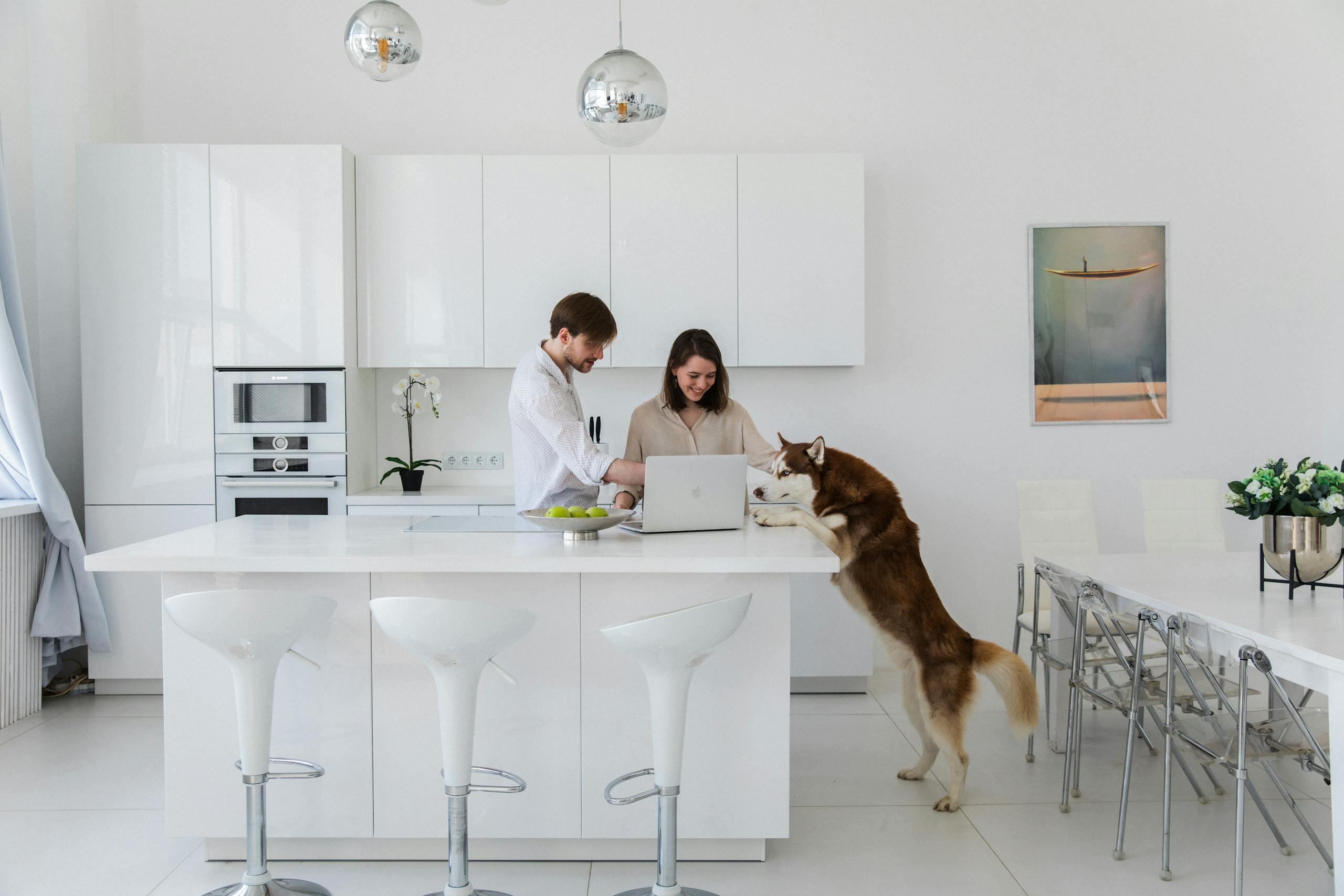
Why Does Having Houseguests Feel So Draining for Introverts?
There’s a particular kind of exhaustion that comes from being “on” inside your own home. Outside, you can leave a conversation. You can step away from a meeting, close your office door, take the long route to the parking lot. At home with guests, the social environment follows you into every room. Even the kitchen becomes a place where you might run into someone and feel obligated to engage.
What’s your personality type?
Take our free 40-question assessment and get a detailed personality profile with dimension breakdowns, context analysis, and personalised insights.
Discover Your Type8-12 minutes · 40 questions · Free
I remember the first time I hosted a client and his wife for a long weekend at my place. He was a senior marketing director at one of our Fortune 500 accounts, a warm and genuinely likeable person. I was glad to have him there. By Saturday evening, though, I was struggling. Not because anything had gone wrong. Simply because I’d been socially available for forty-eight hours straight, with no natural off-ramp. I smiled through dinner, poured another glass of wine, laughed at the right moments. And then I lay awake at midnight staring at the ceiling, completely wired and completely depleted at the same time.
What was happening wasn’t rudeness or a character flaw. It was biology and wiring. Introverts process social interaction through a longer internal loop than extroverts do. Research published in PubMed Central has examined how introversion relates to differences in arousal thresholds and how introverts tend to reach overstimulation more quickly in sustained social environments. A houseguest visit is essentially a sustained social environment with no natural exit.
Add to that the loss of your routines. Your morning quiet. Your particular way of moving through the house before anyone else is awake. The specific silence you’ve built your recovery around. When guests are in the house, all of that gets reorganized around their presence. And for those of us who find deep meaning in our home environments, that reorganization costs something real.
What Does Your Home Actually Mean to You as an Introvert?
Before you can figure out how to handle guests well, it helps to understand what’s actually at stake. For many introverts, home isn’t just shelter. It’s a carefully calibrated environment that supports the kind of deep internal processing we rely on. The specific chair where you read. The corner of the couch that’s yours. The morning hour before anyone needs anything from you.
I’ve spent a lot of time thinking about this, partly because running an agency meant my professional life was relentlessly social. Presentations, pitches, client dinners, team check-ins, strategy sessions. My home was the counterweight to all of that. It was where I could finally stop performing and just exist. So when someone moved into that space, even temporarily and even someone I cared about, the stakes felt higher than they probably looked from the outside.
If you identify as a highly sensitive person as well as an introvert, the dynamic intensifies further. Sensitivity to sensory input, other people’s emotional states, and disruptions to routine all converge during a houseguest visit. The principles behind HSP minimalism speak directly to this: when your environment is thoughtfully simplified and protected, you have more capacity to handle the inevitable intrusions. A cluttered, overstimulating home makes hosting even harder. A calm, intentional one gives you some buffer.
Your home is also where you do the quiet work of being yourself. That’s not a small thing. It’s worth protecting thoughtfully, not defensively, but with genuine intention.
How Do You Set Expectations Before Guests Even Arrive?
Most of the difficulty around houseguests happens because nobody said anything ahead of time. The guest assumes open access to your time and company. You assume they’ll understand when you need space. Neither of those assumptions gets spoken aloud, and by day two, both of you are handling an unspoken tension.
Pre-visit communication is where the whole experience gets shaped. Not a formal negotiation, just an honest, warm conversation about what the visit will look like. Something like: “I’m so glad you’re coming. Fair warning, I’m an early riser and I usually keep my mornings pretty quiet. We’ll have plenty of time together in the afternoons and evenings.” That single sentence does a lot of work. It sets a rhythm, it signals that your alone time isn’t personal, and it gives your guest a framework so they’re not left guessing.
I got better at this after years of not doing it. In my agency days, I was trained to manage client expectations precisely and early. The same principle applies here. When you tell someone what to expect, you remove the anxiety of ambiguity for both of you. Guests generally don’t want to impose. They just don’t know where the lines are unless you draw them gently.
A few things worth establishing before arrival:
- Your morning routine and whether you’re available during it
- Whether there are any parts of the house that are genuinely off-limits or private
- What the general daily rhythm looks like (meals, activities, downtime)
- How long the visit is, with a clear end date if possible
- Whether you’ll be working during any portion of the visit
None of this needs to be delivered as a list of rules. Weave it into the excitement of the visit. “We can do dinner at that place I told you about on Friday, and I’ll probably need Saturday morning to catch up on some work, but we’ll have the whole afternoon.” That’s a plan, not a disclaimer.
How Do You Create Space for Yourself During the Visit?
Even with the best pre-visit communication, you still need actual strategies for protecting your energy once guests are in the house. Good intentions don’t automatically translate into sustainable behavior over a three-day visit.
One of the most effective things I’ve found is building legitimate alone time into the structure of the day rather than trying to steal it. There’s a difference between disappearing and scheduling. If you announce at 9 AM that you’re going for a solo walk and you’ll be back by 10:30, nobody feels abandoned. You’ve given the visit a shape, and your recharge time is part of that shape. Contrast that with quietly retreating to your room and hoping no one notices. The second approach breeds guilt for you and confusion for your guests.
Structure your days with some natural solo anchors: a morning run, an hour of reading before bed, a solo errand in the afternoon. These aren’t escapes. They’re the rhythm of a real person’s real life, and guests who know you well will respect them. Guests who don’t know you well will actually appreciate having a clear structure to work with.
Your physical space matters too. If you have a home office or a room that’s clearly yours, use it without apology. Close the door. Put on headphones. Signal through the environment that you’re in a different mode. Many introverts find that the homebody couch dynamic, that specific relationship with a personal space of comfort and quiet, becomes harder to access when guests are around. Reclaiming even a corner of it, a specific chair, a particular spot, can restore more than you’d expect.
Online connection can also serve as a pressure valve during long visits. When the social energy of the house gets heavy, stepping away to engage in lower-stakes interaction, whether that’s a quiet online community or even chat rooms built around introvert-friendly connection, can provide a middle ground between full social engagement and complete isolation. It’s not avoidance. It’s modulation.

How Do You Handle the Guilt That Comes With Needing Space?
This is the part nobody talks about enough. The practical strategies are relatively straightforward. The harder work is managing the internal narrative that says needing space makes you a bad host, a cold person, someone who doesn’t really care.
That narrative is wrong, but it’s persistent. I carried it for a long time. I’d be mid-conversation with a guest and feel the familiar pull toward quiet, and immediately feel ashamed of it. As if wanting to be alone meant I didn’t value the person in front of me. The two things have nothing to do with each other. Introversion isn’t a preference for solitude over people. It’s a different energy economy. You can genuinely love someone and still need to step away from them to refill.
What helped me was reframing the purpose of my alone time. When I took a solo hour during a visit, I came back more present, more patient, more genuinely engaged. The alternative, pushing through the depletion and staying “available,” produced a version of me that was physically present but internally absent. My guests got less of me, not more, when I refused to take the breaks I needed.
There’s also something worth examining in how we interpret our guests’ reactions. Many introverts assume that any moment of stepping away will be read as rejection. Often, it isn’t. People are generally more self-sufficient than we give them credit for. A guest who’s told “I’ll be back in an hour, help yourself to anything in the kitchen” usually does exactly that, without feeling abandoned. We project our own sensitivity onto their experience in ways that aren’t always accurate.
A piece from Psychology Today on why introverts crave deeper conversations gets at something relevant here: introverts aren’t avoiding connection. They’re seeking a specific quality of it. When you take the space you need and return refreshed, the connection you offer is genuinely deeper. That’s not a rationalization. It’s how the wiring actually works.
What Do You Do When the Visit Goes Longer Than Planned?
Extended visits are their own category of challenge. A weekend is manageable with the right strategies. A week, or an open-ended stay, requires a different level of intentionality.
The most important thing with longer visits is establishing a daily rhythm that includes your non-negotiables. Not as a favor to yourself, but as the actual structure of the household during this period. Breakfast is at a certain time. Mornings are quieter. Evenings are social. This isn’t rigid. It’s just a framework that prevents the visit from becoming a continuous open-ended social event with no natural breathing room.
For genuinely long stays, I’d also recommend being honest about what you need to keep functioning. I once had a family member stay for two weeks while between apartments. By day five, I was struggling in ways that were starting to affect my work. I had a client presentation that week, and I couldn’t get the focused preparation time I needed. What finally helped was a direct, kind conversation: “I need a couple of hours of quiet work time each morning. It’s not about you, it’s just how I function. After noon, I’m all yours.” That conversation should have happened on day one. It happened on day five, and it changed everything.
Longer visits also benefit from some built-in separate activity time. Encourage your guest to explore the area independently, visit other people they know locally, or simply have their own agenda for portions of the day. This isn’t about getting rid of them. It’s about making the visit sustainable for both of you. A guest who has their own things to do during parts of the day is usually a happier guest. And you’re a better host when you’ve had the time to recover.
If you’re thinking about what to offer guests to make their independent time more enjoyable, or what to give someone who’s planning a longer stay at your place, the homebody gift guide has some genuinely thoughtful options. Things that support quiet, self-sufficient enjoyment without requiring your constant presence as entertainment. Similarly, if you want to send a guest home with something that honors the slower, more intentional way of living you both value, browsing gifts for homebodies might give you some ideas that go beyond the standard host gift.

How Do You Handle Guests Who Don’t Respect Your Boundaries?
Most guests, when given clear and kind information, will respect what you need. But some won’t, whether through obliviousness, a different social wiring, or a genuine mismatch in expectations. That situation requires a more direct response.
Extroverted guests, in particular, sometimes genuinely don’t understand why you’d want to be alone when company is available. They’re not being malicious. They’re processing through a completely different framework. For them, solitude is something you endure, not something you seek. When I managed extroverted team members at my agency, I watched them interpret a colleague’s closed door as a sign of conflict or unhappiness, never as a simple preference for quiet. The same dynamic plays out in home environments.
When a guest repeatedly interrupts your alone time or seems genuinely puzzled by your need for it, a brief explanation goes a long way. Not a lecture on introversion, just a human moment: “I recharge by having some quiet time, it doesn’t mean anything is wrong, I’ll be great company once I’ve had an hour to myself.” Most people, once they understand that your withdrawal isn’t about them, relax considerably.
For guests who continue to push past that, you’re in boundary-holding territory. Psychology Today’s framework for introvert-extrovert conflict resolution offers a useful structure: acknowledge the difference, name what you need specifically, agree on a workable middle ground. success doesn’t mean win an argument about personality types. It’s to find a version of the visit that works for both people.
What you want to avoid is the slow simmer of resentment that builds when you keep accommodating past your actual capacity. That resentment eventually surfaces in ways that are harder to repair than a direct early conversation would have been. Saying “I need some time alone this afternoon” on day two is far easier than managing the fallout of having pushed through five days of depletion and finally snapping.
What Can You Do After Guests Leave to Restore Your Home?
The end of a houseguest visit has its own particular quality. There’s often genuine relief, sometimes mixed with affection and even a little sadness if it was someone you love. And then there’s the work of reclaiming your space.
I’ve come to treat the post-visit reset as a real ritual, not a chore. Putting the guest room back in order, returning the common areas to their usual arrangement, doing the laundry, restocking the kitchen. Each of those actions is also a small act of reclaiming. You’re restoring the environment to the one that holds you, and there’s something genuinely satisfying about that process when you approach it consciously.
Beyond the physical reset, give yourself permission to be genuinely quiet for a day or two after a visit. Don’t immediately fill the recovered solitude with obligations. Sit with the book you’ve been meaning to read. There’s a reason so many introverts find themselves drawn to what I’d call the literature of the homebody life, books about slowness, about intentional living, about finding richness in ordinary domestic moments. A good homebody book after a draining visit can feel like coming home twice.
The post-visit period is also a good time to reflect on what worked and what didn’t. Did you communicate your needs clearly enough before the visit? Were there moments where you could have taken a break but didn’t? What would you do differently next time? This isn’t self-criticism. It’s the kind of quiet after-action review that introverts are actually quite good at, using the analytical capacity that often goes underutilized in the social performance of the visit itself.
One thing that’s helped me enormously over the years is understanding that my home environment needs active maintenance, not just passive enjoyment. The choices I make about how I structure my space, my time, and my social commitments all feed into whether I’m functioning well or running on empty. A visit that went badly is data, not a verdict on your worth as a host or a friend.

How Do You Stay a Generous Host Without Losing Yourself?
There’s a version of this conversation that can tip into something that sounds like: protect yourself at all costs, minimize social exposure, treat guests as a threat to your wellbeing. That’s not what I’m advocating. Genuine hospitality matters. Connection matters. The people who visit your home, whether family, old friends, or colleagues, are part of a life that’s richer for having them in it.
What I’m talking about is sustainable generosity. The kind that doesn’t require you to disappear in order to give it. When you manage your energy well during a visit, you’re actually more present, more warm, more genuinely engaged with the people you’re hosting. You’re not just physically in the room. You’re actually there.
Some of the best conversations I’ve had with guests happened after I’d taken the space I needed. I’d come back from a solo walk or a quiet hour in my office and find my guest in a reflective mood, and we’d end up talking about something real. Not small talk, not logistics, but the kind of exchange that actually feeds introverts, the deeper kind. Those moments wouldn’t have happened if I’d been grinding through social performance for six hours straight. I wouldn’t have had the attention or the openness for them.
Hospitality, at its best, is about making someone feel genuinely welcome in your space. That’s not the same as being available every moment. Sometimes the most welcoming thing you can do is create an environment that’s calm, well-stocked, and comfortable enough that your guest can settle in without needing you to entertain them constantly. A home that feels good to be in, that has a good book on the side table, a comfortable place to sit, food in the kitchen, is its own form of welcome.
The connection between environment and wellbeing is well-established, and it applies to your guests as much as to you. When your home is a genuinely restorative space, the people who visit it feel that. They don’t need you to perform hospitality. They just need to be in a place that feels good.
So protect your energy, yes. Set your expectations clearly, absolutely. Take the solo walks and the quiet mornings and the closed office door. And then come back to the people you love with the full version of yourself, the one that only shows up when you’ve actually had the space to exist. That’s not a compromise between being a good host and being an introvert. That’s what good hosting looks like when you’re honest about who you are.
If you want to go deeper on how your home environment shapes your wellbeing and how to build a space that genuinely supports the way you’re wired, the full Introvert Home Environment hub is worth exploring. There’s a lot there about creating the conditions for the kind of quiet, intentional life that actually sustains you.
About the Author
Keith Lacy is an introvert who’s learned to embrace his true self later in life. After 20 years in advertising and marketing leadership, including running agencies and managing Fortune 500 accounts, Keith now channels his experience into helping fellow introverts understand their strengths and build fulfilling careers. As an INTJ, he brings analytical depth and authentic perspective to every article, drawing from both professional expertise and personal growth.
Frequently Asked Questions
Is it normal for introverts to feel exhausted after hosting houseguests?
Completely normal, and very common. Introverts restore their energy through solitude and quiet, so a sustained period of social availability, even with people they genuinely love, draws down their reserves in a way that extroverts don’t experience in the same way. The exhaustion isn’t a sign that something is wrong with you or that you don’t care about your guests. It’s simply how your energy system works. The solution isn’t to avoid hosting, but to build in the recovery time you need throughout the visit rather than waiting until it’s over.
How do I tell houseguests I need alone time without seeming rude?
Framing matters enormously here. Rather than framing alone time as something you need away from your guests, frame it as part of your regular routine. “I always take a morning walk” or “I usually spend an hour reading before bed” positions your solitude as a personal habit rather than a reaction to their presence. Telling guests ahead of the visit, before any tension has developed, also makes the conversation much easier. Most people respond well to honesty delivered warmly. A simple “I recharge by having some quiet time, it doesn’t mean anything is wrong” is usually all it takes.
What if my houseguest is an extrovert who wants to be social constantly?
Extroverted guests sometimes genuinely don’t understand the need for solitude because their own energy works differently. They’re not being inconsiderate, they’re operating from a different framework. A brief, non-defensive explanation helps: “I love spending time with you, and I also need some solo time to function well. It’s just how I’m wired.” Building structured independent time into the visit, encouraging them to explore the area or pursue their own interests for parts of the day, gives both of you what you need. It’s not rejection. It’s a sustainable visit structure.
How long is too long for a houseguest visit when you’re an introvert?
There’s no universal answer, since it depends on your relationship with the guest, the size of your home, and how well you’ve established boundaries. Many introverts find that two to three days is manageable with good communication and built-in alone time. A week or longer requires a more deliberate daily structure, including protected morning or evening time, and honest conversations about your working and recharge needs. Open-ended visits with no clear end date are the hardest, because the absence of a defined endpoint removes the psychological relief of knowing recovery is coming. Whenever possible, establish a clear end date before the visit begins.
How do I recover after a draining houseguest visit?
Give yourself genuine permission to be quiet for a day or two after guests leave. Resist the urge to immediately fill the recovered solitude with social obligations or productivity. Do the physical reset of your home, returning it to its usual arrangement, which is itself a restorative act. Then settle into the things that most replenish you: reading, walking, cooking, whatever quiet activity reconnects you to yourself. Reflect briefly on what worked and what you’d do differently next time, not as self-criticism but as useful information for the next visit. Your home is your recovery environment. Let it do its job.