
Being a homebody isn’t a personality flaw or a phase you’ll eventually grow out of. It’s a way of living that centers rest, depth, and intentional space as genuine priorities rather than consolation prizes for people who haven’t figured out how to be social yet.
My name is Keith Lacy, and I ran advertising agencies for over two decades. I attended more client dinners, industry conferences, and mandatory networking events than I can count. And for most of that time, I genuinely believed that my preference for being home meant something was wrong with me. It took years of unlearning to understand that the life I kept retreating to wasn’t a lesser version of living. It was the version that actually fit.

If you’ve ever felt the quiet pull toward your own space at the end of a long day, or noticed how much clearer your thinking gets when the noise of the world finally settles, you already understand something that takes most people years to accept. Home isn’t where you go when you’ve given up. It’s where you go when you know yourself.
There’s a broader conversation happening around how introverts relate to their home environments, and I’ve been exploring that in depth over at the Introvert Home Environment hub. But this particular piece is about something more personal: what it actually feels like to live as a homebody, from the inside out.
What Does the Life of a Homebody Actually Look Like Day to Day?
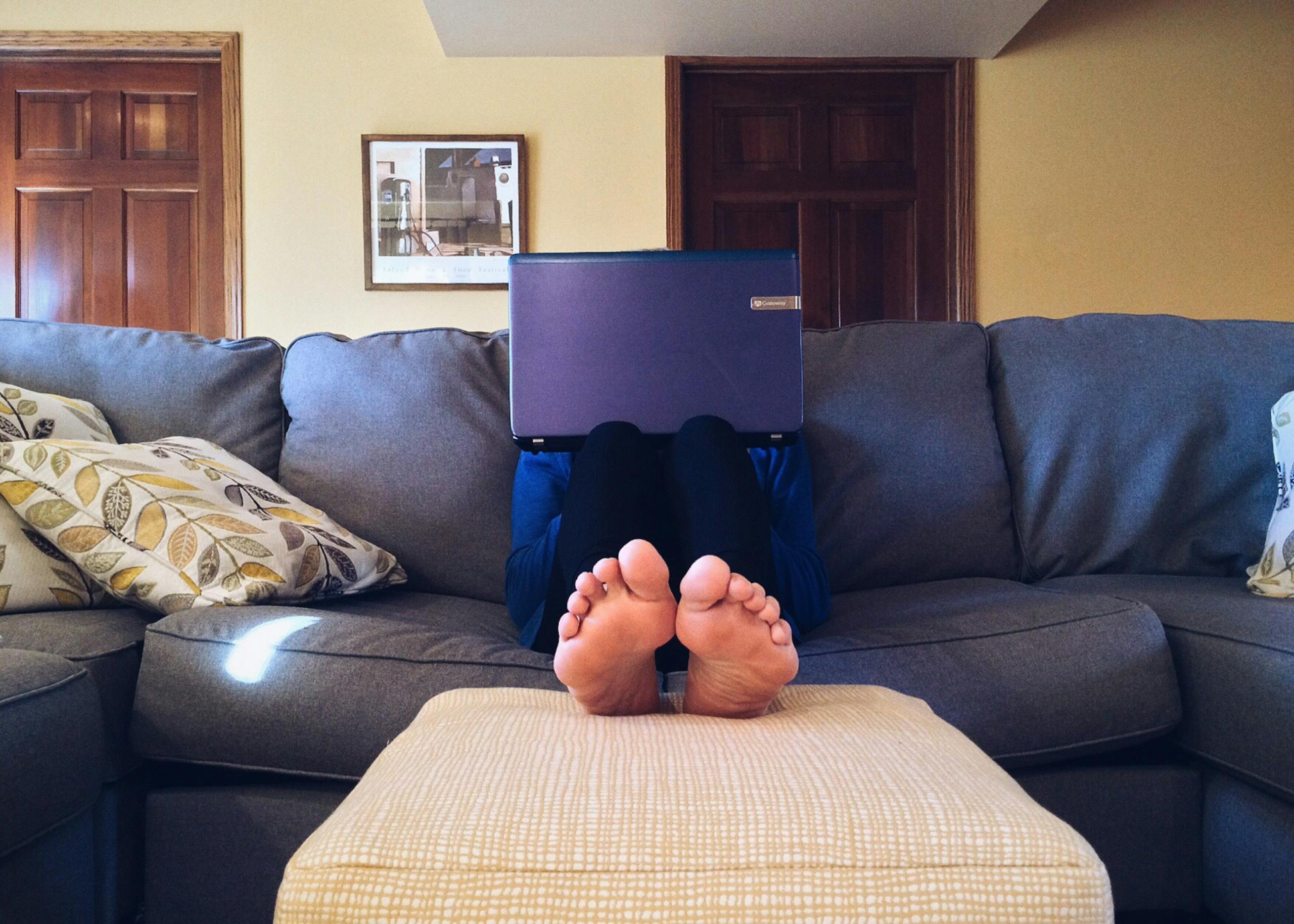
People who haven’t lived this way tend to imagine it as passive. Lying on the couch, watching television, avoiding the world. And sure, some of that happens. A good evening on the homebody couch with a book or a show you’ve been looking forward to is genuinely restorative, not lazy. But the daily texture of a homebody’s life is richer than that caricature suggests.
What’s your personality type?
Take our free 40-question assessment and get a detailed personality profile with dimension breakdowns, context analysis, and personalised insights.
Discover Your Type8-12 minutes · 40 questions · Free
My mornings at home have always been the most productive hours of my professional life. Before email, before calls, before the agency opened and the noise started, I’d spend an hour or two at my kitchen table thinking through strategy. Not because I was avoiding work, but because that quiet space was where my best thinking lived. I’d arrive at the office with more clarity than colleagues who’d been networking over breakfast.
A homebody’s day tends to be shaped around the texture of the space itself. There’s a rhythm to it: the particular light in the morning, the sounds of a familiar environment, the way certain rooms hold certain kinds of thinking. When you’re deeply at home in your home, you stop experiencing it as a backdrop and start experiencing it as a collaborator.
That sounds abstract until you’ve felt it. But most homebodies know exactly what I mean. There’s a specific kind of focus that only arrives when you’re somewhere you trust completely.
Is Being a Homebody the Same as Being an Introvert?
Not exactly, though there’s significant overlap. Introversion is a personality trait centered on where you draw your energy. Introverts recharge through solitude and quiet, while extroverts recharge through social contact. Being a homebody is more of a lifestyle orientation, a genuine preference for home-based living over frequent social outings or busy public environments.
Most introverts are homebodies by nature. The logic follows: if social interaction costs you energy rather than generating it, you’re going to prefer environments that don’t demand it constantly. Home becomes the place where you can finally stop performing and start actually living.

That said, some extroverts are homebodies too, particularly those who’ve built rich creative lives or who work from home and have found that the domestic environment suits their work style. And some introverts push themselves to be more socially active than their natural inclinations suggest, often at real cost to their wellbeing.
What connects introverts and homebodies most deeply is the relationship to depth. A Psychology Today piece on depth in conversation captures something I’ve long believed: people wired for internal processing tend to find shallow social environments genuinely draining rather than just mildly boring. Home offers the possibility of depth on your own terms. You choose the conversation, the book, the project, the silence.
How Does a Homebody Build a Life That Actually Works?
One of the things I’ve noticed, both in my own life and in conversations with other introverts, is that homebodies often underinvest in their home environments. There’s a strange guilt attached to spending time, money, or attention on making your home genuinely wonderful. As if doing so would confirm the worst things people say about you: that you’re antisocial, that you’ve given up, that you’re hiding.
That guilt is worth examining and then setting aside completely.
If you’re going to spend a significant portion of your life at home, and most homebodies do, then the quality of that environment matters enormously. Not in a materialistic way. In a functional, psychological, and even spiritual way. Your home is where you recover, create, think, and become. It deserves your attention.
For those who are also highly sensitive, this is doubly true. The principles behind HSP minimalism speak directly to something I’ve experienced myself: when your environment is cluttered, overstimulating, or chaotic, your inner life suffers. Simplifying your space isn’t about aesthetics. It’s about creating the conditions your nervous system actually needs.
During the busiest years of running my agency, I kept my home office deliberately spare. One desk, one lamp, one shelf of books I was actively using. Not because I was minimalist by philosophy, but because I’d learned through trial and error that visual clutter translated directly into mental clutter for me. The clarity of the space supported the clarity of the thinking.
Building a life that works as a homebody means thinking seriously about what your space enables. Does it support the activities that matter most to you? Does it have zones for different kinds of energy, a place for focused work, a place for genuine rest, a place for creative exploration? These aren’t luxuries. They’re infrastructure.
What Do Homebodies Actually Do With All That Time at Home?
This question always makes me smile a little, because it reveals the assumption underneath it: that time at home is time without content, time that must be justified or filled with visible productivity to count.
Homebodies read. Deeply, widely, and with the kind of sustained attention that’s increasingly rare. A good homebody book isn’t just entertainment. It’s a whole relationship with ideas that unfolds over days or weeks, returning to passages, following threads into other books, letting the thinking settle and resurface in unexpected moments.

They cook, often with the same meditative attention. They tend gardens, build things, write things, make things. They pursue creative projects that require long uninterrupted stretches of time, the kind of time that’s almost impossible to find when your calendar is full of social obligations.
They also connect, just differently. Online spaces that allow for thoughtful, text-based conversation have been genuinely meaningful for many homebodies. Chat rooms for introverts and similar online communities offer something that crowded parties rarely do: the chance to engage with ideas and people at your own pace, without the sensory overwhelm of in-person social environments.
And they rest. Not as a failure state, but as a deliberate practice. The kind of rest that involves genuinely doing nothing for a while, letting the mind wander, allowing boredom to exist without immediately filling it. There’s real value in that kind of unstructured time, and work published in PubMed Central on psychological restoration points to the genuine mental health benefits of restorative environments, which home, for many people, represents most fully.
How Do You Handle the Social Pressure That Comes With Being a Homebody?
This is where the life of a homebody gets genuinely complicated, because the pressure is real and it comes from people who care about you as often as it comes from strangers.
I spent years managing this in a professional context. Agency culture, particularly in the years I was building my business, was deeply extroverted. Client entertainment, team happy hours, industry events, the expectation was constant presence and visible enthusiasm for all of it. I learned to participate without pretending to love it, and to protect my home time with the same discipline I applied to client deadlines.
What helped most was being honest about my preferences without framing them as deficiencies. I stopped apologizing for leaving events early. I stopped over-explaining why I’d rather meet for coffee than attend a networking dinner. I started treating my preferences as information about myself rather than problems to be managed.
That shift didn’t happen overnight. It required a kind of internal permission that took years to grant myself. But once I stopped treating my homebody tendencies as something to overcome, I was able to be much more direct with the people around me, and most of them respected it more than I’d expected.
What I’ve found, both personally and in conversations with other introverts, is that the social pressure tends to ease when you stop treating it as a verdict. Other people’s discomfort with your preferences is their work to do, not yours. You can be warm, engaged, and genuinely connected to the people who matter to you while still living a life that’s primarily centered at home.
What’s the Relationship Between Being a Homebody and Mental Health?
This one deserves honest treatment, because the answer isn’t simply “homebodies are healthier” or “homebodies are at risk.” It’s more nuanced than either of those positions.
For introverts and highly sensitive people, having regular access to quiet, low-stimulation environments isn’t optional. It’s genuinely necessary for psychological stability. When I went through the most demanding period of my agency career, managing a major account transition while simultaneously dealing with a difficult staffing situation, the thing that kept me functional was protecting my home time fiercely. Not socializing more to manage stress. Coming home earlier, staying home more deliberately, and using that space to process what was happening.

That’s not avoidance. That’s self-knowledge applied to stress management.
At the same time, it’s worth being honest that isolation and genuine connection are different things, and that a homebody life that has drifted into genuine loneliness deserves attention. PubMed Central research on social connection and wellbeing consistently points to meaningful relationships as a core component of psychological health, not frequent social contact, but depth and quality of connection.
The homebody life, at its best, isn’t about cutting off connection. It’s about choosing the forms of connection that actually nourish you rather than performing the forms that are socially expected. That distinction matters enormously.
Burnout recovery, which I’ve navigated more than once across my career, almost always brought me back to the same place: home, quiet, and a deliberate slowing down of everything. The Frontiers in Psychology research on restorative environments aligns with what I experienced intuitively: familiar, low-demand spaces support recovery in ways that busy, stimulating ones simply can’t replicate.
How Do You Celebrate and Honor a Homebody Life?
One of the things I’ve come to believe is that homebodies are often the last people to invest in the things that would make their home lives genuinely richer. There’s still that background guilt at work, the sense that spending on comfort or beauty or pleasure at home is somehow indulgent in a way that spending on travel or experiences isn’t.
That’s worth flipping entirely.
If someone you love is a homebody, the most thoughtful thing you can do is honor that rather than try to pull them out of it. A well-chosen gift for a homebody isn’t a hint to get out more. It’s an acknowledgment that their way of living is legitimate and worth supporting. And if you’re looking for ideas, the homebody gift guide I put together covers everything from cozy home essentials to tools that genuinely support a rich home-based life.
Beyond gifts, celebrating a homebody life means building rituals around it. The Saturday morning that belongs entirely to you. The reading hour that doesn’t get sacrificed to other obligations. The dinner you cook slowly and eat without distraction. These aren’t small things. They’re the architecture of a life that fits.
My own rituals have shifted over the years, but the core has stayed the same: mornings protected for thinking, evenings that wind down rather than ramp up, and a home environment that I’ve invested in deliberately because I spend real time in it and it deserves that investment.

What Does It Mean to Fully Embrace the Life of a Homebody?
Full embrace looks different for everyone, but there’s a common thread: it requires dropping the story that this way of living is temporary or compensatory. It’s not the life you’re living while you wait for the courage to live differently. It’s the life you’ve chosen because you know yourself well enough to know what actually works for you.
That’s a significant thing. Most people spend enormous amounts of time and energy pursuing lives that look good from the outside without ever asking whether they feel right from the inside. Homebodies, when they stop apologizing and start inhabiting their preferences fully, are doing something genuinely countercultural: choosing depth over performance, comfort over status, and quiet over noise.
There’s also something worth saying about identity here. The life of a homebody isn’t static. It grows and deepens as you do. The books you read, the projects you pursue, the thinking you do in quiet rooms, all of that accumulates into a rich inner life that shapes how you move through the world, even when you do venture out into it.
I’m a more effective person in the world because of the time I spend away from it. The thinking I do at home, the recovery I allow myself, the depth I cultivate in quiet, all of it makes me sharper, more present, and more genuinely engaged when I do interact with other people. My introversion isn’t a limitation on my professional life. It’s been one of its most consistent assets.
The life of a homebody, lived with intention and without apology, is a full life. Not a lesser one.
There’s much more to explore about how introverts relate to their home environments, from the specific ways sensitive people experience domestic space to the practical side of designing a home that genuinely supports your personality. All of that lives in the Introvert Home Environment hub, and I’d encourage you to spend some time there if this piece resonated with you.
About the Author
Keith Lacy is an introvert who’s learned to embrace his true self later in life. After 20 years in advertising and marketing leadership, including running agencies and managing Fortune 500 accounts, Keith now channels his experience into helping fellow introverts understand their strengths and build fulfilling careers. As an INTJ, he brings analytical depth and authentic perspective to every article, drawing from both professional expertise and personal growth.
Frequently Asked Questions
Is being a homebody a sign of depression or social anxiety?
Not inherently. Being a homebody is a lifestyle preference, not a symptom. Many people genuinely thrive in home-centered lives because that environment suits their personality, energy levels, and values. That said, if your preference for staying home is accompanied by persistent low mood, avoidance of things you used to enjoy, or significant distress about social situations, those experiences are worth exploring with a mental health professional. The difference lies in whether home feels like a chosen sanctuary or a place you’re retreating to out of fear or despair.
Can you be a homebody and still have a fulfilling social life?
Absolutely. A fulfilling social life is about the quality and depth of your connections, not the frequency or volume of social events you attend. Many homebodies maintain deeply meaningful friendships and relationships while spending most of their time at home. They tend to prefer one-on-one or small group interactions over large gatherings, and they often invest more thoughtfully in the relationships they do have. The homebody approach to social life is selective rather than absent.
How do you deal with people who pressure you to go out more?
Honest, calm communication tends to work better than either capitulating or becoming defensive. Framing your preferences as genuine rather than circumstantial helps: “I genuinely prefer evenings at home” lands differently than “I’m just tired tonight.” You don’t owe anyone an extended justification for how you choose to spend your time. Being warm and direct, without apologizing for your preferences, tends to earn more respect over time than constant negotiation or excuse-making.
What are the genuine benefits of living as a homebody?
People who spend significant time at home often develop deeper creative practices, more sustained focus, and richer inner lives than those who are constantly externally stimulated. Home environments offer the kind of quiet and predictability that supports recovery from stress, deep thinking, and sustained creative work. For introverts specifically, regular access to low-stimulation environments is genuinely restorative in ways that support both mental health and professional performance. The benefits are real and well worth defending.
How can I make my home environment better support a homebody lifestyle?
Start by thinking about what activities and states of mind matter most to you, and then ask whether your space supports them. Create distinct zones for different kinds of energy: a place for focused work, a place for genuine rest, a place for creative exploration. Reduce visual clutter, which many introverts and sensitive people experience as genuinely distracting rather than just aesthetically unpleasant. Invest in comfort without guilt. Your home is infrastructure for your life, and it deserves the same intentional attention you’d give to any other important system.